 Italiano
  English
| 0 Comments | James Whitfield
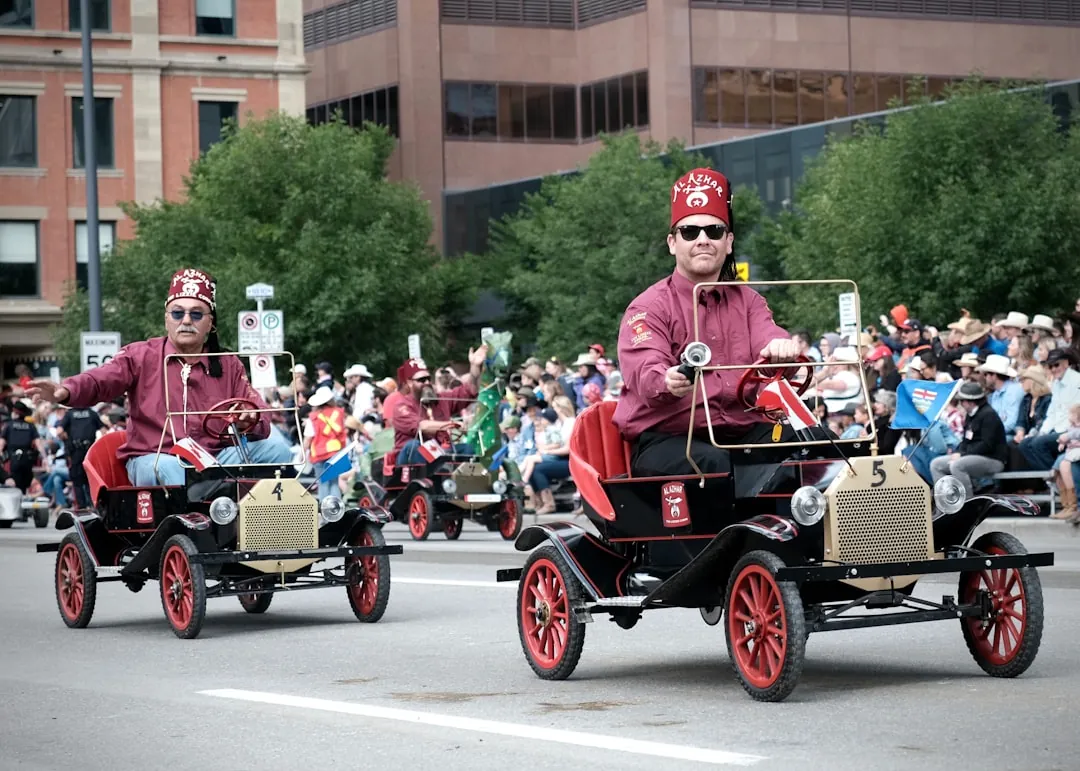
Shriners International is the most publicly recognizable Masonic-affiliated organization in the United States, and also one of the most misunderstood. The men in red fezzes driving miniature cars in parades are not a separate fraternal tradition; they are Master Masons who have chosen to join an appendant body formally known as the Ancient Arabic Order Nobles of the Mystic Shrine, founded in New York City in 1870. Every Shriner has already passed through the degrees of a Masonic Blue Lodge. The reverse is not true: the majority of Freemasons never become Shriners. That asymmetry, all Shriners are Masons but not all Masons are Shriners, is the single most important fact for understanding how these two organizations relate. Beyond the membership structure, the two differ considerably in purpose, tone, and public profile. Freemasonry is a philosophical and initiatic fraternity with roots traceable to the operative stonemasons’ guilds of medieval Europe. The Shriners built something different on that foundation: a fraternal order dedicated to fellowship, pageantry, and, most consequentially, a hospital system that has provided pediatric specialty care to millions of children regardless of their families’ ability to pay.
The Organizational Relationship: How Shriners Fit Within Freemasonry
Shriners and Freemasonry are directly connected: every member of Shriners International must first be a Master Mason in good standing, making the Shrine an appendant body of Freemasonry rather than an independent fraternity. The relationship is hierarchical in one direction only. No Masonic membership, no Shrine membership, full stop.
That single prerequisite defines the entire organizational relationship. Shriners International, formally incorporated under its own charter and governed by its own Imperial Council, sets its own dues, elects its own officers, and pursues its own philanthropic mission centered on pediatric medical care. It does not report to any grand lodge, and no grand lodge dictates its internal affairs. The connection to Freemasonry is a membership gate, not a chain of command. Popular accounts tend to collapse the two into one organization or, conversely, treat them as entirely unrelated. Neither picture is accurate.
The asymmetry runs deeper than most casual readers expect. Estimates from the Masonic Service Association suggest that the vast majority of Master Masons never pursue any appendant body at all. The three degrees of the Blue Lodge, the foundational local lodge where all Masonic membership begins, are complete in themselves. Nothing in Masonic tradition requires a third-degree Mason to join the Scottish Rite, the York Rite, the Shrine, or any other voluntary organization. The Shrine is, in that sense, an optional destination for Masons who want a particular combination of fraternal fellowship and charitable engagement, not a higher tier that all Masons are expected to reach.
What “Appendant Body” Actually Means
An appendant body is an organization that appends itself to the Blue Lodge system without replacing or superseding it. Think of the Blue Lodge as the trunk of a tree: it confers the three foundational degrees (Entered Apprentice, Fellowcraft, and Master Mason) and constitutes the core of Masonic life. Appendant bodies are the branches. They grow from the same root, they require that root to exist, but they extend in their own directions with their own ceremonies, titles, and purposes. A Mason who joins an appendant body does not leave the Blue Lodge behind; lodge dues and attendance remain separate obligations. The appendant body simply adds another layer of fraternal activity on top of the foundation already in place.
Shriners International fits this model precisely. Its 1870 founding in New York (discussed in a later section) was never intended to replace lodge membership. The original organizers were active lodge members who wanted a lighter, more socially oriented fraternal experience alongside their regular Masonic work. The “appendant” structure formalized that intent: the Shrine would draw its membership exclusively from men who had already committed to the Masonic fraternity, while remaining free to define its own character.
Shriners vs. Scottish Rite vs. York Rite: Placing the Order in Context
Shriners International is one of several well-known appendant bodies, and situating it among the others helps clarify what makes it distinctive. The Scottish Rite confers degrees numbered four through thirty-two (with the honorary thirty-third degree awarded for distinguished service), building an elaborate philosophical and allegorical system on top of the Blue Lodge’s three degrees. The York Rite, organized through Royal Arch Chapters, Councils of Royal and Select Masters, and Commanderies of Knights Templar, offers a different set of additional degrees with stronger Christian thematic content. Both the Scottish Rite and the York Rite extend and elaborate on Masonic symbolism and ritual in ways that are recognizably continuous with Blue Lodge work.
The Shrine sits in a different register. Its ceremonial content draws on a theatrical pseudo-Oriental aesthetic, its philanthropy is institutionalized through a network of children’s hospitals, and its public identity is defined as much by its charitable work as by any ritual content. Where the Scottish Rite and York Rite deepen the philosophical dimension of Masonic membership, the Shrine broadens the social and humanitarian one. A Mason can join any combination of these bodies, all of them, or none. The Masonic appendant body ecosystem is explicitly designed to offer options, not obligations.
History of the Ancient Arabic Order Nobles of the Mystic Shrine
The Orientalist Aesthetic: Where the Fez and the Name Came From
The founding story of the Ancient Arabic Order Nobles of the Mystic Shrine is, by any measure, more theatrical than mystical. In the early 1870s, actor William J. Florence and physician Walter M. Fleming developed the concept in New York City, drawing not from any genuine Arabic or Islamic tradition but from the Orientalist stage aesthetics fashionable across American and European popular culture at the time. Florence had attended a theatrical banquet in Marseille hosted with a Middle Eastern theme and returned to New York with notes, costumes, and a conviction that this visual vocabulary could anchor a new fraternal order. Fleming, who had the organizational temperament Florence lacked, helped formalize the ritual and structure. The fez, the scimitar, the crescent and star, the elaborate Arabic-sounding titles: all of it was deliberate invention, a costume rather than a confession of faith. The name itself, “Ancient Arabic Order Nobles of the Mystic Shrine,” was constructed to evoke mystery and exoticism, not to claim historical lineage from any Arabic institution. Scholars of fraternal history, including researchers cited in Lynn Dumenil’s work on American fraternal culture, have consistently characterized the founding aesthetic as a product of nineteenth-century Orientalism rather than any cross-cultural exchange.
Growth and the Hospital System: From Social Club to Philanthropic Institution
The Imperial Council, the organization’s national governing body, was formally constituted in 1876, giving the order a centralized structure that allowed rapid expansion. By the early twentieth century, membership had grown to hundreds of thousands across North America, making the Shriners one of the largest and most visible fraternal bodies on the continent. For its first several decades the organization functioned primarily as a social and ceremonial club, notable for its parades, its circuses, and its reputation for convivial gatherings that stood in deliberate contrast to the more solemn ritual character of the Masonic lodges from which its members were drawn.
The transformation into a philanthropic institution began in 1922, when the first Shriners Hospital for Crippled Children opened in Shreveport, Louisiana. The timing was not accidental: the Progressive Era had shifted public expectations of large civic organizations toward measurable charitable output, and the Shriners responded with a commitment that would define their public identity for the rest of the century. The hospital network eventually expanded to twenty-two facilities across the United States, Canada, and Mexico, specializing in pediatric orthopedics, burns, cleft lip and palate, and spinal cord injuries, all provided at no cost to families regardless of ability to pay. That philanthropic infrastructure is now the organization’s primary public-facing purpose.
In 2010, the organization officially rebranded as Shriners International, retiring the original name after more than a century. The decision reflected two converging pressures: a desire to foreground the charitable mission rather than the ceremonial identity, and a broader cultural reckoning with the Orientalist framing baked into the founding era’s aesthetics. The new name is deliberately neutral, anchored in the hospital network’s international reach rather than in the theatrical Arabic imagery that William J. Florence sketched out from a Marseille dinner party in the 1860s. The fez, for the record, remains.
Membership Requirements: The Path From Freemason to Shriner
The path into Shriners International runs directly through the Masonic lodge system, with no detour around it. A man must first be raised to the third degree of Freemasonry, earning the title of Master Mason in a recognized Blue Lodge, before he can petition a Shrine Center. This prerequisite has remained constant throughout the organization’s history, even as other requirements have shifted considerably over the decades. The Masonic foundation is not ceremonial window dressing; the Shriners were conceived from the outset as an appendant body drawing its membership exclusively from the fraternal pool that Blue Lodges produce. Once the Master Mason degree is conferred, a candidate may approach any local Shrine Center, submit a formal petition, and undergo review by a membership committee before participating in the initiation ceremony that formally admits him to the order.
The 2000 Rule Change and Its Impact on Membership
For most of the organization’s history, a Master Mason degree alone was not sufficient. Prospective Shriners were also required to hold either the 32nd degree of the Scottish Rite or the full chivalric sequence of the York Rite, culminating in the Knights Templar. That dual-membership requirement meant joining the Shriners involved navigating two separate appendant bodies before arriving at a third. In 2000, Shriners International voted to eliminate that additional layer, making the Master Mason degree the sole Masonic prerequisite for membership.
The practical effect was substantial. Thousands of Master Masons who had never pursued the Scottish Rite or York Rite suddenly became eligible candidates, significantly broadening the potential membership pool at a time when fraternal organizations across the board were contending with declining enrollment. Critics within the fraternity argued that the change diluted the organization’s character; supporters countered that it removed an unnecessary barrier without touching the Masonic foundation that defines the Shriners’ identity. The debate has not entirely disappeared from lodge conversations in the years since.
Financial and Time Commitment: What Prospective Members Should Know
Coverage of the Shriners rarely addresses the practical costs involved, which leaves interested candidates with unrealistic expectations. Initiation fees vary by Shrine Center but typically fall between $150 and $300, with annual dues generally running $100 to $200 depending on the temple and its local operating costs. These figures sit on top of whatever dues a member already pays to his Blue Lodge and, if applicable, to the Scottish Rite or York Rite bodies he belongs to. The cumulative annual cost of active participation across multiple Masonic bodies can reach several hundred dollars, worth considering before petitioning.
Time commitment is similarly variable. Shrine Centers hold regular stated meetings, typically monthly, and many sponsor parades, ceremonials, and charitable events that members are encouraged to attend. The Shriners Hospitals for Children network, the organization’s most publicly visible philanthropic activity, relies heavily on volunteer support from local temples. A member who joins primarily for the social dimension and participates modestly will find the time demands manageable; one who takes on committee roles or temple leadership can expect a significantly larger investment. The difference between Shriners and Freemasonry in terms of culture is partly this: Shrine Centers tend toward a more festive, civic-facing atmosphere, which shapes both the calendar and the expectations placed on active members.
Masonic Degrees vs. Shriner Degrees: A Structural Comparison
A persistent misconception frames Shriner membership as a kind of promotion, as though a man who joins Shriners International has climbed past his lodge brothers to some elevated Masonic rank. The organizational structure tells a different story. Freemasonry’s foundational body, known as the Blue Lodge (or Craft Lodge), confers exactly three degrees: Entered Apprentice (1°), Fellow Craft (2°), and Master Mason (3°). Every recognized Masonic jurisdiction in the world treats the Master Mason degree as the complete, self-sufficient credential of a Freemason. Nothing that follows it in any appendant body changes that baseline status.
| Organization | Type | Degrees Conferred | Primary Focus | Masonic Prerequisite |
|---|---|---|---|---|
| Blue Lodge (Craft Lodge) | Foundational | 1° Entered Apprentice, 2° Fellow Craft, 3° Master Mason | Moral instruction through stonemason allegory | None (entry point) |
| Scottish Rite | Appendant | 4°–32° (honorary 33°) | Philosophical and ethical elaboration of Craft degrees | Master Mason (3°) |
| York Rite | Appendant | Chapter, Council, and Commandery bodies | Christian-oriented degrees; Templar chivalric tradition | Master Mason (3°) |
| Shriners International | Appendant (fraternal/philanthropic) | None (single-tier membership) | Philanthropy, fellowship, Shriners Hospitals network | Master Mason (3°) |
The table makes the lateral nature of Shriner membership visible in a way that prose sometimes obscures. The Scottish Rite adds degrees numbered up to the 32nd, and the honorary 33rd is awarded for distinguished service. The York Rite organizes its additional work into chapters, councils, and commanderies. Shriners International, by contrast, confers no additional Masonic degrees at all. A man who joins a Shrine temple holds exactly the same Masonic rank the morning after his Shrine initiation as he did the evening before it. What he has gained is membership in a separate organization with its own culture, regalia, and charitable mission, not a new position on any Masonic ladder.
Why the “Higher Than a Mason” Question Persists
The confusion is understandable. Appendant bodies like the Scottish Rite use degree numbers that run well past the Blue Lodge’s third, which implies progression to anyone unfamiliar with how Masonic structures actually work. Add the Shriners’ distinctive fez, their high-profile parades, and the public visibility of the Shriners Hospitals for Children network, and it becomes easy to assume that Shrine membership represents some apex of Masonic achievement. It does not. The United Grand Lodge of England and American grand lodges alike are consistent on this point: the Master Mason degree is the summit of Masonic rank. The Scottish Rite, York Rite, Shriners, and dozens of other bodies represent additional commitment and a different focus, not a higher station.
Lateral Membership and What It Actually Signals
Describing Shriner membership as “lateral” is not a demotion in disguise. It accurately reflects that a man joining Shriners International is choosing a particular kind of Masonic-adjacent community, one organized around philanthropy and fellowship rather than around the conferral of degrees. The Shriners International Masonic connection is real and structural (the Master Mason prerequisite is non-negotiable), but the relationship is one of affiliation, not hierarchy. A lodge member who never joins the Shrine is no less a Mason than one who does. The reverse is equally true: a Shriner who has not pursued the Scottish or York Rite has not skipped any required Masonic step. Both paths are complete in their own terms.
Want to learn more?
Symbols, Regalia, and Ritual: Where the Two Organizations Diverge
The Fez: History and Symbolism of the Shrine’s Most Visible Emblem
Few pieces of headwear carry as much immediate cultural recognition as the red felt fez with its black tassel. When William J. Florence and Walter M. Fleming designed the Ancient Arabic Order Nobles Mystic Shrine in 1870, they reached for an Orientalist aesthetic that was fashionable in American theatrical and fraternal circles of the period. The fez, borrowed from Ottoman and North African dress, fit the invented Arabian Nights atmosphere they were constructing. It was, in the most precise sense, a theatrical prop that became a permanent institutional symbol. Over the following century it transformed from costume piece into a widely understood shorthand for charitable purpose, most visibly associated with the Shriners Hospitals for Children network. Today the fez appears on parade floats, bumper stickers, and fundraising materials with no expectation that observers will read anything Islamic into it. The organization’s own literature is clear that the headwear is ceremonial, not religious, in character. The crescent and scimitar emblem stitched onto the front of the fez reinforces the same Orientalist vocabulary: both symbols belong entirely to the Shrine’s invented ceremonial language and have no counterpart in standard Masonic iconography. A lodge room contains no scimitars; a Shrine temple contains no square and compass on its primary regalia.
Initiation Rituals and Ceremonial Practices in the Shrine
The character of Shrine initiation has historically differed from the tone of Masonic degree work in one immediately obvious way: it leans toward humor and pageantry rather than solemn instruction. Where a lodge confers degrees through scripted ritual, allegorical drama, and carefully memorized catechism, the Shrine’s initiation ceremonies have long been known for elaborate pranks, comic hazing elements, and theatrical spectacle. Accounts from the late nineteenth and early twentieth centuries describe candidates being subjected to mock ordeals that owed more to vaudeville than to medieval stonemason allegory. The organization reformed many of the more physically demanding elements over the decades, but the ceremonial culture retained its reputation for festivity over formality. This distinction matters when comparing the two bodies: the square and compass, the apron, and the letter G that every Shriner encountered in his Blue Lodge years are entirely absent from Shrine ceremonies, which operate within a separate symbolic vocabulary built around the sphinx, the crescent, and the invented persona of a desert brotherhood. The two ritual systems sit in adjacent rooms, so to speak, but share no furniture. A candidate who has never sat in a Masonic lodge cannot enter a Shrine temple, which is precisely why the Masonic prerequisite remains non-negotiable, but once inside, he encounters nothing that would look familiar from the third degree. The Shrine built its own ceremonial world from scratch, and the boundary between that world and the broader Masonic tradition has always been deliberate and clearly maintained.
Understanding Shriners and Freemasonry as distinct symbolic systems, rather than as a single unified tradition, is the key to reading the regalia correctly. A Shriner wearing his fez at a parade is not displaying Masonic symbols. He is displaying Shrine symbols. The Masonic emblems live in the lodge room he attended before he ever applied to the Shrine, and they stay there.
Religion, Beliefs, and the ‘Are Shriners Muslim?’ Question
Few questions about the organization surface more reliably than “are Shriners Muslim?” The short answer is no, and the longer answer reveals something instructive about how nineteenth-century fraternal culture worked. When William J. Florence and Walter M. Fleming co-founded the Ancient Arabic Order Nobles Mystic Shrine in 1870, they were borrowing an aesthetic, not adopting a theology. Florence had attended a theatrical performance in Marseille featuring an Ottoman-themed banquet, found the pageantry irresistible, and decided it would make excellent fraternal atmosphere. The fez, the crescent-and-star emblem, the scimitars, the very name of the order: all of it was costume, assembled from the Western world’s romanticized image of the Islamic Orient. No imam was consulted. No Islamic authority endorsed the organization. The Arabic imagery is, in the precise sense of the word, theatrical.
What Religion Do Shriners Practice?
Shriners International holds no collective religious identity beyond the broad theistic requirement inherited from its Masonic prerequisite. Because full membership in a recognized Masonic lodge is required before a man can petition the Shrine, the same foundational rule applies: a candidate must profess belief in a Supreme Being. The specific nature of that Supreme Being is left to the individual. In practice, given that American Freemasonry drew its membership overwhelmingly from Protestant Christian backgrounds throughout the nineteenth and twentieth centuries, the Shrine’s membership has reflected the same demographic. A 2010 survey by the Masonic Service Association of North America found that the majority of American Masons identified as Protestant Christian, with smaller proportions identifying as Catholic, Jewish, or belonging to other traditions. Shrine membership mirrors that composition closely.
The question of Christian membership carries a specific institutional complication worth noting. The Catholic Church’s prohibition on Masonic affiliation, reaffirmed by the Congregation for the Doctrine of the Faith on November 26, 1983, states that Catholics who join Masonic associations are in a state of grave sin and may not receive Holy Communion. Because Shrine membership requires prior Masonic membership, that prohibition extends to the Shrine by logical consequence. A Catholic cannot join a recognized Masonic lodge without violating Church teaching, and therefore cannot reach the Shrine at all. The Church’s position makes no specific statement about the Shrine independently; it does not need to. The Masonic prerequisite handles the exclusion automatically. As for Islamic religious authorities, no major scholarly body within Islam has issued a ruling specifically targeting the Shrine, though several have addressed Freemasonry broadly. The organization’s use of Islamic imagery has not, in any documented case, been interpreted as an expression of genuine Islamic practice by Muslim scholars or institutions.
Shriners Hospitals for Children: The Philanthropic Mission That Defines the Order
Shriners Hospitals for Children was founded in 1922, growing out of a resolution passed at the Shriners International Imperial Session the previous year. What began as a single facility in Shreveport, Louisiana, expanded into a network of 22 hospitals operating across the United States, Canada, and Mexico. The specializations the system developed over the following decades reflect deliberate choices rather than accidental drift: orthopedics, burn care, spinal cord injuries, and cleft lip and palate treatment became the four clinical pillars of an institution that now ranks among the most recognized pediatric specialty networks in North America. For most of its history, the system provided care entirely free of charge to any patient under 18 who met the clinical criteria, regardless of the family’s ability to pay. That policy, sustained for over nine decades, became the organization’s most powerful public identity, arguably eclipsing its fraternal origins in the broader cultural imagination.
In 2015, Shriners Hospitals for Children updated its financial model in response to long-term sustainability pressures. The revised approach allows the organization to bill private insurance and, where applicable, Medicaid and Medicare, when patients carry coverage. The no-refusal commitment for families who cannot pay remained intact. The change was pragmatic, not ideological: the endowment that had underwritten the free-care model for generations was not inexhaustible, and leadership determined that capturing available insurance reimbursements was preferable to reducing the number of facilities or the scope of services. Critics within the fraternity objected; supporters pointed out that billing a family’s insurer while charging the family nothing is not the same as billing the family. The distinction is meaningful, even if it complicated a simpler story the organization had told about itself for decades.
Funding for the hospital network flows primarily from three sources: member contributions from Shrine temples across North America, estate gifts and bequests from donors both inside and outside the fraternity, and the Shriners International endowment, historically one of the largest held by any fraternal organization in the world. The Shriners Hospitals for Children endowment alone has been reported at several billion dollars in total assets, placing the philanthropic arm in a different financial category from most fraternal charities. The visible fundraising activities associated with Shriners, including circus performances and parade appearances, represent a comparatively small share of total revenue but serve a different function: they sustain local temple engagement and public visibility in communities where the hospitals themselves may be hundreds of miles away.
Organizational Structure: How Shriners International Governs Its Hospital Network
Shriners Hospitals for Children operates as a separately incorporated 501(c)(3) charitable organization, legally distinct from Shriners International, the fraternal body. The two entities share a historical origin and a governance relationship, but they maintain separate boards, separate finances, and separate legal identities. Shriners International elects the board of directors that oversees the hospital corporation, which means the fraternal membership retains ultimate governance authority over the charitable mission. This structure is unusual among major hospital networks, most of which are university-affiliated, religiously sponsored, or governed by independent nonprofit boards with no formal membership body behind them.
The practical effect of this arrangement is that decisions about hospital closures, expansions, or policy changes (such as the 2015 billing reform) pass through a governance process that involves elected fraternal representatives, not only professional healthcare administrators. That dynamic has occasionally produced tension, particularly when financial realities have required closing specific facilities. The fraternal membership tends to view each hospital as a community institution with deep local roots; the administrative leadership must weigh network-wide sustainability. The relationship between the two bodies is functional but not frictionless, which is probably what one should expect from an organization that has been running a major hospital system through a fraternal governance model for over a century.
Modern Evolution: Women, Membership Trends, and Controversies
The Shriners International of the early twenty-first century is a recognizably different organization from the one that packed civic auditoriums in the 1970s. Membership peaked at more than 940,000 in that decade, a figure that made the Shrine one of the largest fraternal bodies in North America. By the 2020s, that number had contracted to roughly 200,000, a decline that tracks closely with the broader erosion of fraternal participation across the United States. The Elks, the Rotary, the Knights of Columbus, and virtually every comparable organization have experienced parallel losses; the Shriners are not an outlier, though the scale of their philanthropic infrastructure makes the trajectory more consequential than it might be for a smaller body. In response, Shriners International has pursued outreach campaigns and, most structurally significant, the 2000 decision to remove the Scottish Rite or York Rite prerequisite, allowing any Master Mason in good standing to petition for membership directly.
Women and the Shrine: Current Status and Affiliated Organizations
Full fraternal membership in Shriners International remains restricted to men, consistent with the requirements of the Masonic bodies from which the organization draws its membership pool. Women may participate through companion organizations, the most prominent of which is the Ladies Oriental Shrine of North America, founded in 1914. These are affiliated groups, not subsidiary membership tracks; a woman joining the Ladies Oriental Shrine does not thereby acquire Shrine or Masonic standing. The distinction matters because it is sometimes misrepresented in both directions: critics frame it as simple exclusion, while promotional materials occasionally imply a fuller integration than the organizational structure actually supports.
The question of gender inclusion in Freemasonry is broader than any single appendant body can resolve. Several co-Masonic and women-only Masonic jurisdictions operate independently of mainstream grand lodges, but Shriners International, drawing its membership from those mainstream lodges, is bound by their membership criteria. Whether that changes in coming decades is an open institutional question. For now, the Shrine’s position mirrors that of the United Grand Lodge of England and most US grand lodges: fraternal membership is male, affiliated participation is available to women, and the two categories are not equivalent.
Financial Transparency and Historical Initiation Controversies
Two controversies have followed the organization with some persistence. The first concerns the financial relationship between the fraternal body and Shriners Hospitals for Children. Investigative reporting in the 1990s and early 2000s raised questions about the ratio of donated funds reaching direct patient care versus organizational overhead, prompting Shriners International to publish more detailed financial disclosures and to restructure the governance relationship between the hospitals and the parent fraternity. Independent charity evaluators have since rated the hospital network positively, though the earlier scrutiny left a lasting imprint on public perception. The second controversy involves initiation practices. Early Shrine ceremonies incorporated hazing-style elements, some of them physically uncomfortable and others designed for theatrical humiliation, that were common in late nineteenth-century fraternal culture and broadly considered acceptable at the time. These practices were largely discontinued by the final decades of the twentieth century, and current initiation rituals bear little resemblance to the accounts documented in exposés from the 1920s through the 1960s. Both controversies are part of the organization’s institutional record; neither defines it exclusively.
FAQ
Do you have to be a Freemason to become a Shriner?
Yes. Every member of Shriners International must first hold the third degree in a recognized Blue Lodge, that is, the rank of Master Mason. There is no pathway into the organization that bypasses this requirement. Before a rule change in 2000, candidates also needed to have completed either the Scottish Rite 32nd degree or the York Rite’s Knights Templar degree. That additional step was eliminated, but the foundational Masonic prerequisite remains firmly in place.
The lodge comes first. No exceptions are on record.
What is the difference between a Freemason and a Shriner?
The core distinction is structural. Freemasonry is a philosophical and initiatic fraternity built around three foundational degrees. Shriners International is an appendant body, a separate organization that requires Masonic membership as an entry condition, not an internal Masonic rank.
All Shriners are Master Masons; the majority of Master Masons are not Shriners. The two organizations also differ in emphasis: Blue Lodge Masonry centers on degree work, moral philosophy, and ritual instruction, while the Shriners place greater weight on fellowship, pageantry, and charitable activity, most visibly through their pediatric hospital network.
Are Shriners Muslim, or is the organization affiliated with Islam?
No. The Arabic and Islamic visual vocabulary associated with the group, the fez, the crescent and scimitar emblem, the name Ancient Arabic Order of the Nobles of the Mystic Shrine, was a theatrical invention of the order’s founders in the 1870s, designed to reflect the Orientalist aesthetic then fashionable in American popular culture. It was costume and atmosphere, not theology.
Shriners International requires belief in a Supreme Being (a requirement inherited from its Masonic prerequisite) but holds no affiliation with Islam or any other specific religion. Historically, membership in the United States has drawn predominantly from Christian backgrounds.
Is a Shriner higher in rank than a regular Mason?
No. Joining Shriners International is a lateral move into a separate fraternal organization, not a promotion within any Masonic hierarchy. The group confers no additional Masonic degrees and carries no authority over Blue Lodge standing.
A Master Mason who joins holds precisely the same Masonic rank as one who does not. The difference is organizational affiliation and personal interest, nothing more. Anyone suggesting otherwise is confusing institutional breadth with vertical advancement.
What charitable work do Shriners International and their hospitals perform?
Shriners Hospitals for Children, founded in 1922, operates a network of 22 pediatric specialty hospitals across North America. The facilities focus on orthopedics, burn care, spinal cord injuries, and cleft lip and palate treatment. For most of the network’s history, care was provided entirely free of charge to patients and families.
Since 2015, the hospitals bill insurance carriers where coverage exists, while maintaining a firm no-refusal policy for families without the means to pay. The network is funded primarily through member contributions and the Shriners International endowment, historically one of the largest philanthropic pools operated by a fraternal organization in the United States.
