 Italiano
 English

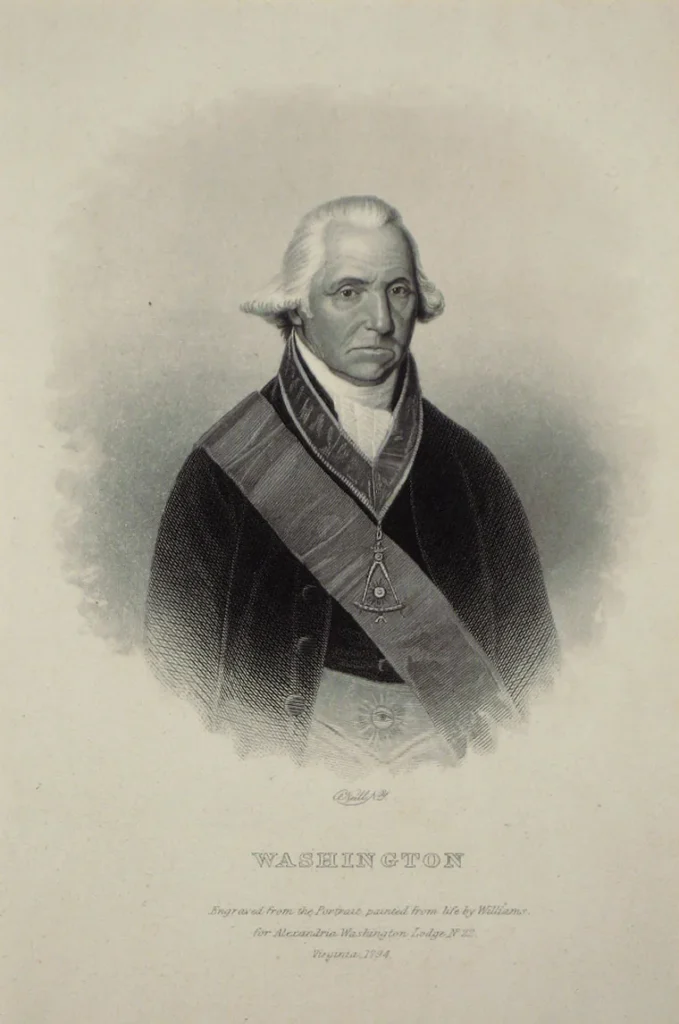
Fourteen men who held the office of President of the United States were confirmed Freemasons, from George Washington, initiated at Fredericksburg Lodge No. 4 in Virginia in 1752, to Gerald Ford, who received his Masonic degrees in 1949 and remained a member of Columbia Lodge No. 3 in Washington, D.C., until his death in 2006. That span of more than two centuries covers roughly one in three presidents across the nation’s first two hundred years. The number is striking, but the more instructive question is why. Freemasonry in eighteenth- and nineteenth-century America was not a fringe society or a secret cabal. It was one of the most prominent civic institutions in the English-speaking world, offering a structured network of educated, civic-minded men bound by oaths of mutual support and a shared moral vocabulary. For ambitious men navigating the early Republic, the lodge was less a mystery school than a professional and philosophical community. This article presents the verified historical record: who these fourteen presidents were, what Masonic rank they attained, how the fraternity may have shaped their thinking, and why the tradition faded from the American presidency after 1976.
The Complete List of Masonic Presidents: All 14 Confirmed
Fourteen presidents of the United States have been confirmed as Freemasons through lodge records, grand lodge documentation, or contemporaneous historical sources. The roster of masonic presidents spans from George Washington, initiated in 1752, to Gerald Ford, who served as the 38th Master of the 14th degree in the Scottish Rite. No president inaugurated after Ford has held verified Masonic membership.
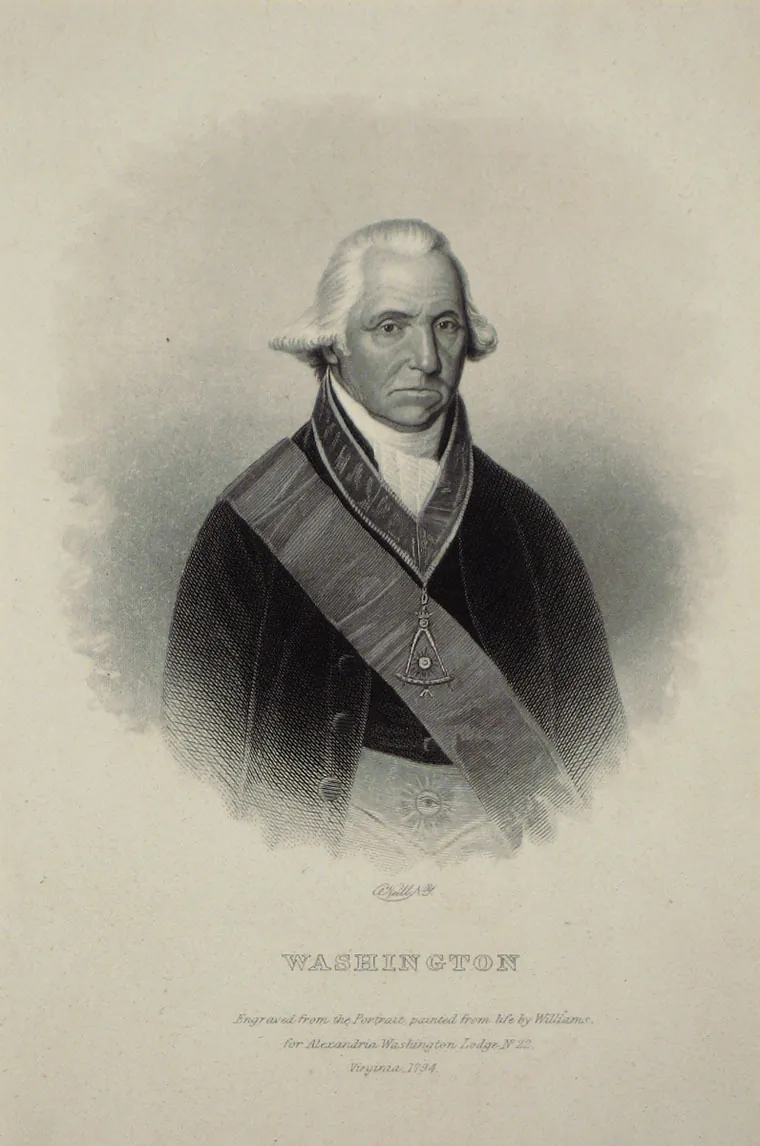
The table below draws from grand lodge archives, the Masonic Service Association of North America, and the records of the Supreme Council, 33°, Southern Jurisdiction. Degree designations follow standard Masonic classifications: the third degree (Master Mason) is the highest degree of the Blue Lodge, while the 32° and 33° refer to the Scottish Rite appendant body. The honorary 33° is conferred by the Supreme Council and is distinct from the earned 32°.
| President | Presidential Term | Lodge Name & State | Highest Masonic Degree Attained |
|---|---|---|---|
| George Washington | 1789-1797 | Alexandria Lodge No. 22, Virginia | Master Mason (3°); Past Master |
| James Monroe | 1817-1825 | Williamsburg Lodge No. 6, Virginia | Master Mason (3°) |
| Andrew Jackson | 1829-1837 | Harmony Lodge No. 1, Tennessee | Master Mason (3°); Grand Master of Tennessee |
| James K. Polk | 1845-1849 | Columbia Lodge No. 31, Tennessee | Master Mason (3°) |
| James Buchanan | 1857-1861 | Lodge No. 43, Pennsylvania | Master Mason (3°) |
| Andrew Johnson | 1865-1869 | Greeneville Lodge No. 119, Tennessee | Master Mason (3°); Grand Master of Tennessee |
| James A. Garfield | 1881 | Magnolia Lodge No. 20, Ohio | Master Mason (3°) |
| William McKinley | 1897-1901 | Hiram Lodge No. 21, Ohio | Master Mason (3°) |
| Theodore Roosevelt | 1901-1909 | Matinecock Lodge No. 806, New York | Master Mason (3°) |
| William Howard Taft | 1909-1913 | Kilwinning Lodge No. 356, Ohio | Master Mason (3°) |
| Warren G. Harding | 1921-1923 | Marion Lodge No. 70, Ohio | 32° Scottish Rite |
| Franklin D. Roosevelt | 1933-1945 | Holland Lodge No. 8, New York | 32° Scottish Rite |
| Harry S. Truman | 1945-1953 | Belton Lodge No. 450, Missouri | 33° (Honorary), Grand Master of Missouri |
| Gerald R. Ford | 1974-1977 | Malta Lodge No. 465, Michigan | 32° Scottish Rite; Honorary 33° |
Two names appear frequently in popular lists but belong in a separate category: Thomas Jefferson and Abraham Lincoln. Neither has been verified through lodge records or credible contemporaneous documentation. Jefferson’s alleged membership rests on a handful of disputed letters and circumstantial association with Masonic figures; Lincoln’s supposed initiation has never been corroborated by any lodge archive. Rigorous sources, including the Masonic Service Association, do not include either man in the confirmed roster. Repeating unverified claims alongside documented members does a disservice to historical accuracy, and this article declines to do so.
Why Freemasonry Appealed to America’s Founding-Era Leaders
The question of why so many prominent Americans in the eighteenth and nineteenth centuries joined Masonic lodges has a straightforward answer, even if the full picture is more textured. In a young nation with no established aristocracy, no national university system, and deep sectarian divisions among its Protestant, Catholic, and dissenting communities, the lodge offered something genuinely rare: a structured, respected, cross-denominational space where a Virginia planter, a Boston merchant, and a Philadelphia lawyer could sit together under the same moral framework and call one another Brother. That was not a small thing in 1790.
Freemasonry and the Enlightenment Ideal
The fraternity’s philosophical vocabulary was drawn almost entirely from Enlightenment sources. Reason, virtue, the perfectibility of the individual, the brotherhood of mankind, the rejection of arbitrary authority in favor of earned merit: these were the operating assumptions of Masonic ritual, and they were also the operating assumptions of the men who drafted the Constitution. The lodge did not produce the Enlightenment, but it institutionalized its values in a form that could be practiced weekly, in ceremony and in fellowship, rather than merely read in pamphlets. For men like Washington, Franklin, and their contemporaries, membership represented ideological coherence as much as social affiliation. The symbolism of the working tools, the square, the compass, the plumb line, framed moral conduct in the language of craft and precision rather than theology, which made the institution broadly accessible to men whose specific religious commitments varied considerably. Scholars of early American religious history, including Steven Bullock in his 1996 study Revolutionary Brotherhood, have documented how this theological neutrality was precisely the feature that made the fraternity attractive to an educated class navigating a pluralist republic.
The Lodge as Civic Infrastructure
Practical considerations reinforced the philosophical ones. Before bar associations formalized legal credentials, before chambers of commerce organized commercial networks, and before the telegraph made distant correspondence easy, the Masonic lodge functioned as a reliable credentialing system. A Mason traveling from Charleston to Philadelphia could present himself at a local lodge, demonstrate his membership through ritual recognition, and receive introductions to reputable men in that city. Masonic endorsement on a letter of introduction carried real weight in an era when personal vouching was the primary mechanism of professional trust. Lodge membership also signaled a certain temperamental reliability: the fraternity’s emphasis on self-governance, the control of passions, and charitable behavior toward fellow members created a shared behavioral expectation that served roughly the function a professional reference serves today. For a young man of ambition in the early Republic, joining a well-regarded lodge was not a mystical act. It was a sensible investment in a vetted social network at a time when such networks were the primary infrastructure of civic and commercial life.
This combination of ideological alignment and practical utility explains why the list of confirmed Masonic presidents clusters so heavily in the founding era and the nineteenth century, before alternative civic institutions, the Rotary Club, the bar association, the university alumni network, had matured enough to fulfill comparable functions. As those alternatives proliferated, the lodge’s unique position gradually eroded, and with it, the near-automatic membership of politically ambitious men.
George Washington: The Fraternity’s Most Prominent Symbol
George Washington’s Masonic career is one of the best-documented in American fraternal history, precisely because the records survived. The minutes of Fredericksburg Lodge No. 4 in Virginia confirm that Washington was initiated as an Entered Apprentice on November 4, 1752, at age twenty. He was passed to the degree of Fellowcraft on March 3, 1753, and raised to Master Mason on August 4, 1753. Those dates are not disputed. What has been disputed, endlessly, is what they mean about the man who would later command the Continental Army and serve as the first President of the United States. The short answer is that they mean he was a Freemason, a committed one by the standards of his era, and that the fraternity has spent the two centuries since his death insisting they mean considerably more than that.
Washington’s active lodge involvement reached its formal peak in 1788, when he was elected Worshipful Master of Alexandria Lodge No. 22 in Virginia, the year before his first inauguration. That timing has fueled considerable interpretive enthusiasm, though the election was largely honorific, recognizing his stature rather than demanding intensive administrative labor. His correspondence from the presidential years tells a more nuanced story. In a letter to the Grand Lodge of Massachusetts in 1797, Washington wrote that he had been “an infrequent visitor” to lodge meetings during his presidency, a candid admission that sits awkwardly alongside the mythology of the all-seeing Masonic statesman. He was careful, in both public and private writing, not to conflate the fraternity’s purposes with those of the federal government. The two institutions, in his own framing, occupied separate spheres.
The Capitol Cornerstone Ceremony of 1793
On September 18, 1793, Washington presided over the laying of the U.S. Capitol’s cornerstone in full Masonic regalia, accompanied by members of Alexandria Lodge No. 22 and Maryland Lodge No. 9. The Alexandria Gazette documented the ceremony in detail, describing the Masonic rites performed, the corn, wine, and oil deposited in the cornerstone, and the President’s prominent role. The event was public, reported in the press, and entirely consistent with the period’s practice of using Masonic ceremonial forms for civic occasions, a tradition borrowed from British guild custom. What the ceremony was not was evidence of Masonic governance of the Republic. The Constitution had been ratified four years earlier by a process that had nothing to do with lodge procedure, and the men who designed the Capitol’s architecture were not selected for fraternal affiliation. The ceremony was symbolic in exactly the way Masonic ceremonies are always symbolic: meaningful to participants, legible to the public, and architecturally inert.
Separating the Man from the Mythology
Post-mortem Masonic hagiography moved quickly. Within years of Washington’s death in 1799, lodge publications and fraternal orations had elevated him to a figure of near-sacred fraternal significance. Portraits showed him in apron and regalia; eulogies described his presidency as an expression of Masonic virtue; the Alexandria-Washington Lodge, renamed in his honor, became a pilgrimage site. The historical record supports a rather more modest interpretation. Washington valued the fraternity, maintained his membership across decades, and lent his name and presence to its ceremonies when asked. He also spent long stretches of his presidency without attending a single lodge meeting, corresponded with grand lodges more out of courtesy than conviction, and never publicly argued that Masonic principles should shape federal policy. He was, in short, a prominent member of a voluntary association, not a prophet of its teachings. The distinction matters, not because it diminishes Washington, but because conflating the two has done measurable damage to honest historical understanding of both the man and the institution.
From James Monroe to William McKinley: Masonic Presidents of the 19th Century
The nineteenth century produced the largest concentration of Freemason occupants of the White House, spanning a period when fraternal lodges served as genuine civic infrastructure across the young republic. James Monroe, initiated into Williamsburg Lodge No. 6 in Virginia, was among the earliest in this cohort. James K. Polk, James Buchanan, James Garfield, and William McKinley each maintained documented lodge affiliations, with Garfield receiving his degrees at Columbus Lodge No. 30 in Ohio and McKinley affiliated with Hiram Lodge No. 21 in Virginia before his political career accelerated. What distinguished several of these men was not merely membership but active participation, including the pursuit of multiple Masonic degrees and, in at least two cases, elevation to the highest administrative office a state grand lodge could confer.
The broader political context of the era complicates any straightforward narrative about fraternal membership and public life. The Anti-Masonic Party, active from roughly 1828 to 1838, was the first significant third party in American electoral history and the only one organized around explicit opposition to a private fraternal organization. Its emergence reshaped how candidates calculated the visibility of their lodge affiliations, and it produced the country’s first national nominating convention, in 1831. Several of the confirmed masonic presidents in this period navigated that charged atmosphere with varying degrees of discretion.
Andrew Jackson and the Anti-Masonic Backlash
Andrew Jackson’s fraternal resume was unusually extensive for a sitting president. He had been affiliated with Harmony Lodge No. 1 in Tennessee and served as Grand Master of the Grand Lodge of Tennessee from 1822 to 1824, making him the senior Masonic authority in his state during that period. This high profile became politically consequential after the 1826 disappearance of William Morgan, a New York stonemason who had threatened to publish an expose of Masonic ritual. The subsequent public fury coalesced into the Anti-Masonic Party, and Jackson, as one of the most visibly prominent Freemasons in American public life, became a focal point for its rhetoric. His opponents could not easily separate the man from the institution. Jackson won the presidency regardless, in 1828 and again in 1832, but the Morgan Affair illustrated a durable political reality: fraternal membership, when sufficiently publicized, could function as a genuine electoral liability rather than a neutral biographical footnote. The episode is a useful corrective to any assumption that Masonic networks translated automatically into political advantage.
Andrew Johnson: Grand Master in the White House
Andrew Johnson’s Masonic career is among the most thoroughly documented of any president. He was raised a Master Mason at Greeneville Lodge No. 119 in Tennessee and served as Grand Master of the Grand Lodge of Tennessee in 1859, a decade before his presidency. His continued participation in lodge activities during the Reconstruction years offers historians a specific case study in how fraternal membership operated in practice. The Masonic Service Association and various grand lodge records indicate that Johnson attended lodge meetings and maintained fraternal correspondence throughout his time in office, behavior consistent with an active rather than nominal member. What those records do not show is any evidence that lodge networks directed or substantially shaped his contested Reconstruction policies. His political conflicts with Congress, culminating in his 1868 impeachment by the House of Representatives, played out entirely within constitutional and partisan channels. The Johnson record illustrates the central historiographical point about the freemason presidents list as a whole: lodge membership was a social and fraternal reality for these men, not a parallel system of governance operating beneath the visible one.
Want to learn more?
Theodore Roosevelt to Gerald Ford: Masonic Presidents of the 20th Century
The twentieth century produced four confirmed lodge members among American presidents, though the depth of their Masonic engagement varied considerably. Theodore Roosevelt was raised a Master Mason in Matinecock Lodge No. 806 in Oyster Bay, New York, in 1901, the same year he assumed the presidency following the assassination of William McKinley. Warren G. Harding held membership in Marion Lodge No. 70 in Ohio and was initiated in 1920, though his lodge activity was limited compared to his predecessors. Franklin D. Roosevelt attained the 32nd degree in the Scottish Rite and served as Grand Master of the Order of DeMolay’s Legion of Honor, a role that reflected genuine engagement rather than ceremonial affiliation. Together, these men represent a period when fraternal membership remained a natural extension of civic life for ambitious Americans across both parties.
Harry S. Truman: The Most Masonically Active Modern President
No occupant of the White House has left a more thoroughly documented fraternal record than Harry S. Truman. Initiated into Belton Lodge No. 450 in Missouri in 1909, Truman advanced steadily through the degrees and served as Grand Master of the Grand Lodge of Missouri in 1940, a position of genuine administrative responsibility within the state’s Masonic structure. He subsequently received the 33rd degree of the Scottish Rite, the honorary rank conferred by the Supreme Council on members of distinguished service. Unlike some presidents whose lodge memberships read more as biographical footnotes, Truman attended lodge meetings with regularity, including during his years in the White House. He spoke publicly about the fraternity on multiple occasions, and the Harry S. Truman Library holds a substantial collection of Masonic correspondence and memorabilia that researchers have drawn on to document his involvement. The Masonic Service Association of North America has cited Truman’s record as among the most complete of any American president. For Truman, the fraternity was not a credential to be listed and forgotten; it was a sustained commitment that ran parallel to his political career for more than four decades.
Gerald Ford: The End of a Presidential Tradition
Gerald Ford was initiated into Columbia Lodge No. 3 in Washington, D.C., in 1949, and he is the last president for whom lodge membership has been confirmed by credible documentary evidence. His Masonic affiliation was never a central feature of his public identity, but it was genuine, and he received the Scottish Rite degrees as well. Ford’s presidency, which ended in January 1977, marks a quiet closing point in what had been an intermittent but recurring pattern across American political history.
The absence of a confirmed lodge member among the nine presidents who followed Ford is not coincidental. Sociologists of American civic life, most notably Robert Putnam in his 2000 study Bowling Alone, have documented a broad post-1960s decline in participation across fraternal, civic, and voluntary organizations, from the Elks and Rotary to Freemasonry itself. The Masonic Service Association of North America has acknowledged that total lodge membership in the United States peaked in the mid-1950s at roughly four million active members, and has declined substantially since. The pattern among presidents mirrors the pattern in the general population. Fraternal membership was once a near-automatic feature of professional male civic identity in America; by the late twentieth century it had become optional, then unusual, then rare among public figures who might once have considered it a standard credential. Ford did not know, when he took his degrees, that he was closing a chapter. But the record makes him the endpoint of a tradition that stretched from George Washington’s initiation in 1752 to the final years of the most organizationally saturated era in American life.
Masonic Degrees and Roles: What These Presidents Actually Achieved
Freemasonry operates on a degree system that popular culture routinely misrepresents, so clarifying what the presidential Masons actually achieved within the fraternity matters for any honest historical account. Every lodge worldwide recognizes three foundational degrees: Entered Apprentice, Fellow Craft, and Master Mason. Together these constitute what Masons call the “Blue Lodge,” the complete, self-contained core of the fraternal tradition. A man who receives the third degree and never progresses further is, by every meaningful Masonic standard, a full member. George Washington fits exactly this profile. He was raised to the degree of Master Mason at Fredericksburg Lodge No. 4 in Virginia in 1753 and, despite his fame and the lodges that claimed association with him, he never pursued the appendant bodies that offered additional degrees. His Masonic involvement was real but relatively modest in organizational terms, a fact that gets lost whenever his image appears on speculative diagrams of “secret hierarchies.”
Beyond the Blue Lodge, two major appendant bodies extend the degree structure further: the Scottish Rite, which adds degrees numbered 4 through 32 and reserves the 33rd as an honorary distinction conferred by the Supreme Council for exceptional service; and the York Rite, which offers its own sequence through the Royal Arch, Cryptic Council, and Commandery. Among the masonic presidents, Harry S. Truman is the clearest example of deep involvement with the appendant system. He received the 33rd degree of the Scottish Rite’s Southern Jurisdiction and served as Grand Master of the Grand Lodge of Missouri in 1940 and 1941. Franklin D. Roosevelt similarly held the 33rd degree, conferred in 1933. The distinction between a president who reached the Scottish Rite’s honorary apex and one who remained a Blue Lodge Mason is not a measure of moral worth or political influence, but it does indicate something concrete about the time and commitment each man invested in the fraternity.
Elected leadership within the lodge structure tells a similar story of genuine organizational engagement. The title of Worshipful Master designates the elected presiding officer of a local lodge, a working administrative role rather than a spiritual rank, regardless of how the title sounds to outsiders. Grand Master of a state grand lodge sits one level above that, representing the elected head of all lodges within a jurisdiction. Andrew Jackson served as Grand Master of the Grand Lodge of Tennessee from 1822 to 1824. Andrew Johnson held the same office in Tennessee, elected in 1859. Truman’s Missouri grand mastership places him in the same category. These were not ceremonial honors handed to famous men after the fact; they required election by lodge delegates and active participation in grand lodge governance. The contrast with presidents whose Masonic membership amounted to initiation followed by decades of absence is significant, and any serious freemason presidents list should account for it. Affiliation and engagement are not the same thing, and the degree records make that distinction visible.
Disputed Cases, Misattributions, and the Limits of the Historical Record
Popular culture has never been especially careful about the difference between a man who admired Masonic ideals and a man who actually petitioned a lodge, received degrees, and signed the membership rolls. The result is a floating list of “Masonic presidents” that expands or contracts depending on the agenda of whoever is citing it. Two names appear on that inflated list with particular regularity: Abraham Lincoln and Thomas Jefferson. Neither belongs there, and the reasons why illuminate the evidentiary standards that serious historians apply to the question.
Lincoln’s case is the more thoroughly documented of the two, which makes the misattribution all the more striking. He expressed genuine interest in Freemasonry, and at least one account records that he considered petitioning Tyrian Lodge No. 333 in Springfield, Illinois, shortly before his 1860 presidential campaign. His own reported explanation for not proceeding was that joining on the eve of an election would look opportunistic rather than sincere. No lodge minutes, no grand lodge register, and no contemporaneous record of any kind documents an initiation. The Masonic Service Association has addressed this question directly, and the conclusion is consistent: Lincoln was never made a Mason. Posthumous claims to the contrary rely on anecdote, not documentation.
Jefferson’s situation is different in character but equally clear in outcome. His name circulates in Masonic contexts largely because of his intellectual proximity to the Enlightenment figures who shaped the fraternity’s philosophical vocabulary, his friendship with confirmed Masons such as Benjamin Franklin, and the surface resemblance between Jeffersonian political ideals and Masonic moral rhetoric. None of that constitutes membership. No lodge record, no initiation certificate, and no contemporaneous Masonic correspondence places Jefferson inside a lodge as a member. Association with ideas, or even with people, is not the same as fraternal affiliation.
Why Misattribution Persists
The conflation of Enlightenment-era political philosophy with Masonic membership has deep roots and serves multiple audiences. Admirers of the fraternity benefit from a longer and more illustrious roster. Conspiracy theorists benefit from a narrative in which the Founding Fathers were collectively operating as a Masonic cell, quietly encoding their allegiances into the republic’s institutions. Both groups are working backward from a conclusion, and the historical record is an inconvenience rather than a guide.
The evidentiary standard for confirmed masonic presidents is not especially demanding by the norms of historical scholarship, but it does require at least one of the following: surviving lodge minutes recording the candidate’s initiation, passing, and raising; an entry in a grand lodge register; or documentation by multiple independent contemporaneous sources, such as newspaper accounts, personal correspondence, or official Masonic communications. Posthumous claims, family tradition, and circumstantial association with Masonic symbolism do not meet that threshold. The fraternity’s cultural prestige, particularly in the eighteenth and nineteenth centuries, created strong incentives to claim famous men as members after the fact. Separating those claims from the documented record is straightforward in principle, even when it is uncomfortable for those who prefer the longer list.
The Decline of Freemasonry Among American Political Leaders After 1976
Gerald Ford, initiated into Columbia Lodge No. 3 in Grand Rapids, Michigan, in 1949 and raised to the 33rd degree of the Scottish Rite’s honorary ranks in 1962, stands as the last confirmed Freemason to occupy the White House. His presidency ended in January 1977, and in the nearly five decades since, no occupant of the Oval Office has held verified lodge membership. That gap is not a coincidence. It reflects a convergence of demographic, cultural, and political forces that reshaped American public life across the final quarter of the twentieth century and into the twenty-first.
The numbers tell the clearest part of the story. The Masonic Service Association of North America estimates that US lodge membership peaked at roughly 4.1 million in 1959, a high-water mark that coincided almost exactly with the postwar era of civic joinership that also filled Rotary clubs, Elks lodges, and Knights of Columbus chapters to capacity. By 2023, that figure had fallen below 1.1 million, a decline of more than seventy percent in six decades. Sociologist Robert Putnam documented this broader collapse of associational life in Bowling Alone (2000), arguing that Americans progressively disengaged from formal civic institutions across the post-1960s decades. Freemasonry was not singled out by this trend; it was simply one of its most visible casualties. When lodge membership ceases to be a routine feature of elite professional networks, it also ceases to be a natural stepping-stone for ambitious politicians. The pool of politically active Masons shrank, and so did the likelihood of any given presidential candidate belonging to one.
There is also a structural disincentive specific to the modern media environment. Presidential campaigns now operate under a level of biographical scrutiny that would have been unimaginable to Franklin Roosevelt or Harry Truman. Any affiliation with an organization that conducts private rituals, restricts its membership, and has accumulated centuries of conspiratorial folklore becomes a liability to be managed rather than a credential to be displayed. This is not a reflection of Freemasonry’s actual character (the historical record shows a fraternity far more concerned with civic virtue and charitable work than with political coordination), but of how such associations read in a media cycle shaped partly by conspiracy-adjacent narratives. The reputational calculus has shifted. A candidate who might have worn a Masonic ring proudly in 1952 would, in the contemporary environment, more likely keep that affiliation quiet or allow it to lapse entirely. The result is a political class that is, for the first time in American history, almost entirely composed of what earlier generations would have called non-Masonic presidents, not by ideological design, but by the quiet arithmetic of cultural change.
FAQ
How many US presidents were Freemasons?
Fourteen US presidents have been confirmed as Freemasons based on surviving lodge records and grand lodge documentation. The list opens with George Washington, initiated in 1752, and closes with Gerald Ford, who received his degrees in 1949.
Several other presidents appear on popular lists but lack verifiable documentation. Abraham Lincoln is the most prominent example: no lodge record, petition, or initiation certificate has ever surfaced to support the claim. Historians generally treat unverified attributions with caution, and reputable Masonic bodies do not include Lincoln in their official tallies.
Was George Washington an active Freemason during his presidency?
Washington’s Masonic credentials are well-documented. He was raised to Master Mason at Fredericksburg Lodge No. 4 in 1753 and was elected Worshipful Master of Alexandria Lodge No. 22 in 1788, the year before he took office.
His own correspondence tells a more nuanced story. In a 1798 letter, Washington acknowledged that he had not attended lodge more than once or twice in the preceding thirty years. During his two presidential terms he was deliberate about keeping his fraternal and governmental roles separate, attending only a handful of Masonic functions. Confirmed membership and active participation are two distinct things, and Washington’s record illustrates that distinction clearly.
Who was the last Masonic president of the United States?
Gerald Ford, the 38th president (1974 to 1977), is the last confirmed occupant of the White House to hold lodge membership. Ford received his degrees at Columbia Lodge No. 3 in Washington, D.C., in 1949 and remained an active member until his death on December 26, 2006.
No president since Ford has been verified as a lodge member by any grand lodge record or credible primary source. Occasional claims surface in online discussions, but none have been substantiated through the kind of documentary evidence, petition records, initiation certificates, and grand lodge correspondence, that historians require.
Did Freemasonry directly influence presidential policy decisions?
No documented evidence connects lodge directives to specific legislation, executive orders, or foreign policy choices. The historical record does not support that kind of direct, traceable line.
What it does support is something more diffuse. The fraternity offered a shared civic vocabulary, a network of trusted professional relationships, and a stated commitment to certain ethical principles. For presidents who were active members before taking office, those factors likely shaped character and social connections rather than policy in any mechanical sense. Historians treat the influence as cultural and relational, not institutional or conspiratorial.
Why did Freemasonry decline among American presidents after 1976?
The pattern reflects a broader contraction of formal fraternal life across American society. The Masonic Service Association reports that US lodge membership peaked at approximately 4.1 million in 1959 and had fallen below 1.1 million by the 2020s. Fewer elite professionals join such organizations today, and that shift is visible at every level of public life, not just the presidency.
A second factor is the media environment. Fraternal secrecy, even the relatively mild variety practiced in lodge settings, carries reputational complexity for figures operating under intense public scrutiny. For ambitious politicians, the calculus of membership has changed considerably since the mid-20th century.