Articles by James Whitfield

Order of the Eastern Star: History, Membership, and Masonic Connection

Eastern United States landscape from space, geographic reference for Order of the Eastern Star

The Order of the Eastern Star is the largest Masonic-affiliated organization in the world that admits both men and women, with an active membership historically exceeding one million across thousands of local chapters. Founded in its modern form by Rob Morris in 1850, the OES draws its symbolism and ethical framework from five heroines of the Old and New Testaments, Adah, Ruth, Esther, Martha, and Electa, each representing a distinct moral virtue. Despite its deep structural ties to Freemasonry, the Order is not a Masonic lodge: it is an appendant body, meaning membership is open to Master Masons in good standing and their eligible female relatives. That distinction matters. The OES operates its own rituals, elects its own officers, and pursues its own charitable programs, yet it has never claimed to be Freemasonry itself. For anyone who has encountered the five-pointed star emblem on a ring, a lapel pin, or a chapter-house door and wondered what it signifies, this article traces the organization from its antebellum American origins to its present-day structure, controversies, and global reach.

What Is the Order of the Eastern Star?

The Order of the Eastern Star is a Masonic appendant body founded in the United States that admits both men and women, making it one of the most inclusive organizations within the broader Masonic family. Established in its current form in 1868, it operates alongside Freemasonry without being part of the lodge system proper, and draws its ritual symbolism from five heroines of Biblical narrative.

Eastern United States landscape from space, geographic reference for Order of the Eastern Star
Photo: Jeff Schmaltz, MODIS Land Rapid Response Team, NASA GSFC (wikimedia)

The organization’s stated mission is moral and charitable rather than initiatory in the strictly Masonic sense. Where a Masonic lodge confers degrees that advance a member through philosophical and allegorical instruction reserved for men, the OES frames its ritual work around five allegorical figures drawn from scripture, each representing a distinct virtue: fidelity, constancy, loyalty, faith, and love. Charitable programs, community service, and the cultivation of those virtues are the practical expressions of those ideals in chapter life.

Appendant Body vs. Masonic Lodge: A Key Distinction

The phrase “appendant body” carries a precise meaning in the Masonic family of organizations. An appendant body is affiliated with Freemasonry and typically requires a Masonic connection for at least some of its members, but it governs itself independently and does not confer the three degrees of Craft Masonry (Entered Apprentice, Fellow Craft, and Master Mason). The OES fits that definition exactly. Membership is open to Master Masons in good standing and to their qualified female relatives, specifically wives, daughters, mothers, sisters, and widows who meet the chapter’s requirements. This structure means the organization is neither a Masonic lodge nor a wholly separate fraternal body. It occupies a defined intermediate position common across the wider Masonic world, alongside bodies such as the Scottish Rite and the Shrine, but with the significant difference that women form the majority of its membership.

Grand chapters of the OES operate at the state or jurisdictional level and set their own bylaws, subject to the general framework established by the General Grand Chapter, organized in 1876. No grand lodge of Freemasonry holds direct authority over an OES chapter, though the Masonic connection remains a structural requirement for male members and shapes the organization’s identity in fundamental ways.

The Five Heroines and Their Symbolic Roles

The ritual framework of the OES is built around five women from the Hebrew Bible and the New Testament, each assigned a color, an emblem, and a virtue that her story is held to exemplify. Adah, identified with Jephthah’s daughter from the Book of Judges, represents fidelity and is associated with the color blue and the emblem of the sword and veil. Ruth, the Moabite widow whose loyalty to Naomi is the subject of the Book of Ruth, stands for constancy and is represented by yellow and a sheaf of wheat. Esther, the Persian queen whose courage saved her people, embodies loyalty and is associated with white and the crown and scepter. Martha, the sister of Lazarus in the Gospel of John, represents faith and is assigned the color green and the broken column. Electa, drawn from the Second Epistle of John and interpreted as a figure of early Christian charity, represents love and is associated with red and the cup.

These five figures are not presented as objects of veneration but as allegorical pillars, in the same tradition that operative stonemasons’ tools became moral metaphors in Craft Masonry. The ritual uses their stories to anchor abstract virtues in narrative, giving members a shared symbolic vocabulary that informs both ceremony and the organization’s broader charitable identity.

History and Founding of the Order of the Eastern Star

Rob Morris and the Pre-1868 Degrees

Rob Morris was born in 1818 in Massachusetts and spent much of his professional life as an educator in Kentucky, where he also rose to prominence within Freemasonry, eventually serving as Grand Master of the Grand Lodge of Kentucky in 1858. His concern, from as early as the 1840s, was a practical one: the fraternal and moral instruction that lodge membership provided was, by Masonic rule, available only to men. The wives, mothers, and daughters of Master Masons had no equivalent structure. Morris responded by developing a set of initiatory degrees drawing on biblical narratives, each degree associated with a woman from scripture whose conduct illustrated a specific virtue. He began conferring these degrees informally around 1850, traveling from state to state, working with individual families and small gatherings rather than through any chartered body. There was no permanent governing structure, no standardized ritual text, and no mechanism for a chapter to sustain itself once Morris moved on. The early Order existed, in effect, as a set of ideas carried in one man’s notebooks and memory.

Robert Macoy and the General Grand Chapter

The transformation from a traveling lecturer’s project into a durable institution required a different kind of mind. Robert Macoy, a New York publisher and Freemason with extensive experience producing Masonic reference works, acquired the rights to Morris’s ritual material and published a standardized version in 1868. That publication did more than fix the ceremonial text: it established the framework for a General Grand Chapter, a governing body capable of chartering subordinate chapters, setting uniform membership requirements, and maintaining consistency across jurisdictions. Where Morris had conferred degrees on an ad hoc basis, Macoy’s system allowed any properly constituted chapter to initiate new members according to the same script and the same symbolic structure. This reproducibility was the organizational engine the Order had previously lacked, and the 1868 publication remains, for practical purposes, the founding document of the modern institution.

Growth Through the 20th Century

The Order of the Eastern Star expanded steadily through the final decades of the 19th century and accelerated in the early 20th, benefiting from the same conditions that drove growth across American fraternal organizations: rising urban populations, a middle class with disposable time for civic participation, and a cultural appetite for ritual, ceremony, and organized philanthropy. By the mid-20th century, membership had reached well over one million, making it one of the largest fraternal organizations in the world open to both men and women. The OES offered women a formal role within the Masonic family of organizations at a time when most civic institutions maintained strict gender separation. Membership has declined since that peak, a trajectory shared by virtually every fraternal body in the United States after the 1960s. The General Grand Chapter, headquartered in Washington, D.C., continues to coordinate chapters across more than a dozen countries, sustaining an international presence that reflects the organization’s reach well beyond its American origins.

The Order of the Eastern Star Symbol, Emblem, and Visual Identity

The emblem of the Order of the Eastern Star is an interlaced five-pointed star, technically a pentagram, with each of its five points assigned a distinct color and a corresponding biblical heroine. Blue belongs to Adah, the daughter of Jephthah; yellow to Ruth; white to Esther; green to Martha; and red to Electa. At the center of the star sits the letter F, standing for “Fairest Among Thousands,” a phrase drawn from the Song of Solomon and adopted as a central motto of the Order. The color assignments are not decorative choices made for aesthetic appeal. Each hue is tied to a specific degree narrative, and members learn the correspondences as part of the ritual instruction that structures the five degrees of the Order. The overall design functions as a mnemonic, encoding the sequence of the heroines and their associated virtues into a single, immediately recognizable image.

Woman in formal ceremonial regalia representing Eastern Star member attire
Photo: Andrei Zhaboklitskii (unsplash)

Misreadings of the Inverted Star

The star is conventionally depicted with one point facing downward, a heraldic orientation that has generated persistent misinterpretation in popular media and online commentary. Critics, particularly those inclined toward conspiracy frameworks, have conflated this orientation with the inverted pentagram used in certain occult traditions, treating the visual similarity as evidence of hidden meaning. The OES’s own published literature addresses this directly: the point-down orientation is a compositional convention that allows the five colored points to frame the central letter and the surrounding emblematic devices in a balanced arrangement. Masonic scholars who have written on the subject, including Robert Macoy, whose 1868 work The Adoptive Rite Ritual provided much of the foundational structure for the Order, make no reference to any esoteric significance in the star’s orientation. The heraldic context matters here. Point-down stars appear throughout European heraldry and military insignia with no occult association whatsoever; the United States Deputy Marshal’s badge, to take one mundane example, has used a downward-pointing star for well over a century. Treating the OES emblem as occult iconography requires ignoring both the Order’s documented explanations and the broader history of the symbol in Western visual culture. The emblem is, in practice, a teaching device: a structured visual summary of the five degree narratives, designed to be memorized and recognized, not decoded for hidden meaning.

Degrees, Ritual, and Ceremony in the OES

The Chapter Room and Officer Stations

An OES chapter meets in a room arranged around the geometry of the five-pointed star, the Order’s central emblem. The five points of that star correspond to the five heroines, and the seating of officers around the room traces the same shape. At the east sits the Worthy Matron, the presiding officer of the chapter and, by convention, a woman. Beside her sits the Worthy Patron, a Master Mason who serves as the chapter’s male co-presider, a structural requirement that preserves the Masonic connection without granting him executive authority over the chapter’s business. Named stations also include the Associate Matron, the Associate Patron, the Secretary, the Treasurer, and the Star Points, each of whom embodies one of the five heroines during the conferral of degrees. The physical arrangement is not decorative convention; it is a working diagram that participants are expected to understand before initiation is complete.

The five degrees of the Order of the Eastern Star correspond, one to one, with the five heroines: Adah (the daughter, associated with the color blue and the virtue of fidelity), Ruth (the widow, white, constancy), Esther (the wife, yellow, loyalty), Martha (the sister, green, faith), and Electa (the mother, red, love). Each degree confers a specific password, a hand sign, and a passage of Scripture anchoring its moral lesson. Completing all five in sequence constitutes full initiation into the chapter. Candidates who have completed only some degrees are considered partially initiated and may not participate in the full range of chapter work.

The ritual occupies a distinct position within the broader Masonic family. It does not replicate or paraphrase any of the three Craft degrees worked in a regular Masonic lodge, and it employs different signs and words entirely. Robert Macoy’s 1868 standardization of the ritual script brought uniformity across chapters that had previously operated from manuscript variations, and printed editions have appeared regularly since. The OES is consequently among the more openly documented bodies in the Masonic-affiliated world: its ritual has been published commercially, is available in research libraries, and is not treated as a guarded secret in the way some lodge workings are. The General Grand Chapter has periodically revised the script, but the five-heroine framework and the chapter-room geometry have remained structurally unchanged since Macoy’s codification.

Want to learn more?

Learn more

/freemasonry-lodges-rites/” title=”Freemasonry Lodges and Rites”>Masonic lodges and their rites for a structured overview of how each body relates to the others.”

Membership Requirements, Eligibility, and How to Join

Eligibility for the Order of the Eastern Star rests on a specific kinship requirement rather than a general application open to any interested adult. Women seeking membership must demonstrate a qualifying relationship to a Master Mason in good standing, meaning a man who has received the third degree of Freemasonry and whose lodge dues are current. Accepted relationships vary slightly by jurisdiction but typically include wife, daughter, mother, sister, half-sister, widow, and stepdaughter. Master Masons themselves are eligible for OES membership regardless of whether any of their female relatives have joined, making the organization genuinely co-ed rather than simply an auxiliary. Belief in a Supreme Being is also a universal requirement, reflecting the same foundational expectation found throughout the broader Masonic family of organizations.

The application process follows a petition-and-ballot model familiar to anyone acquainted with how Masonic lodges admit candidates. A prospective member submits a written petition to a local chapter, typically with the endorsement of a current member in good standing. An investigating committee, usually three chapter members, then contacts the petitioner to verify eligibility and assess general suitability. The full chapter votes by ballot, and a unanimous or near-unanimous affirmative result is required in most jurisdictions before an initiation date is set. Initiation involves five degree ceremonies corresponding to the five heroines of the ritual, each conveying a moral lesson through dramatic presentation. Financial obligations differ by chapter and state grand chapter, but the General Grand Chapter’s published guidance places typical annual dues between $50 and $150; most chapters also charge a one-time initiation fee assessed separately from ongoing dues.

Finding a Local Chapter

Chapter directories are maintained at the state or jurisdictional level by each Grand Chapter, not by the General Grand Chapter in Washington, D.C. The General Grand Chapter’s official website provides a jurisdiction directory that serves as the authoritative starting point for locating the appropriate Grand Chapter for any given state or country. From there, a prospective member can identify active local chapters, confirm meeting schedules, and obtain contact information for the chapter’s Worthy Matron, the presiding officer who typically handles initial inquiries. Chapters in rural areas may be fewer but often maintain active membership rolls; urban areas commonly support multiple chapters within a single county.

OES vs. Other Masonic Appendant Bodies: Eligibility at a Glance

The OES occupies a distinctive position within the broader Masonic family because it admits both men and women, a characteristic that sets it apart from most other appendant bodies. The Ancient and Accepted Scottish Rite and the York Rite are open only to Master Masons, meaning men. Shriners International similarly restricts membership to Master Masons or members of the Scottish or York Rites. Organizations such as the Order of the Amaranth and the White Shrine of Jerusalem share the OES’s mixed-gender model, but neither approaches its scale or geographic reach. For women who hold no Masonic degree themselves, an OES chapter is effectively the primary point of formal entry into the Masonic-affiliated world, making the kinship requirement both a gatekeeping mechanism and a bridge between the all-male lodge structure and a wider community of participation.

Organizational Structure and Leadership

The Order of the Eastern Star operates through a three-tier governance structure that mirrors, in broad outline, the jurisdictional layering familiar from Craft Masonry, while departing from it in one consequential detail: the organization’s highest elected office at the local level is reserved exclusively for a woman. That structural choice is not incidental. It is the clearest institutional expression of the Order’s mixed-gender identity, built into the rulebook from the chapter floor upward.

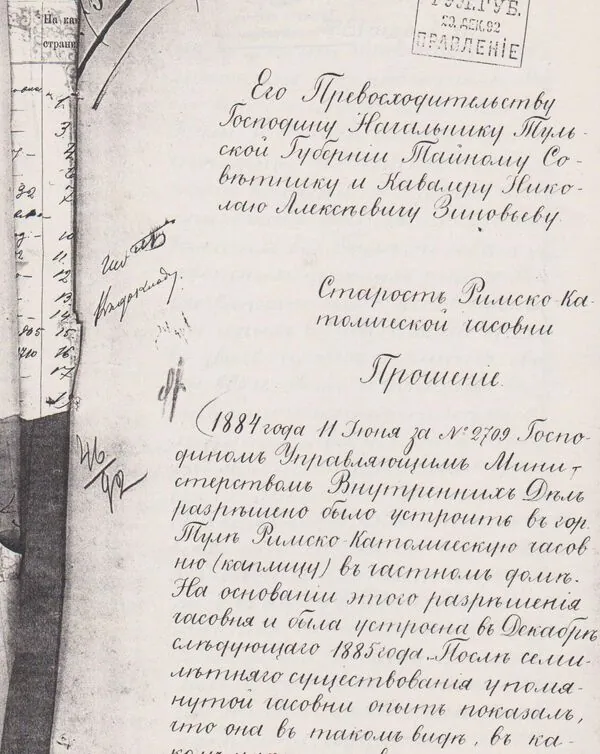
Historical manuscript letter documenting 19th century correspondence and archival records
Photo: Fanny (Appleton) Longfellow (1817-1861) (wikimedia)
Governance Tier Leadership Title(s) Geographic Scope Primary Function
Local Chapter Worthy Matron (woman) and Worthy Patron (Master Mason) Single community or city Conducts ritual work, charitable programs, and member initiation
State Grand Chapter Grand Worthy Matron and Grand Worthy Patron State or national jurisdiction Coordinates local chapters, sets supplementary rules, grants charters
General Grand Chapter General Grand Matron and General Grand Patron International Sets overarching policy, ritual standards, and inter-jurisdictional relations

At the local level, each chapter is led jointly by a Worthy Matron and a Worthy Patron. The Worthy Matron must always be a woman; the Worthy Patron must always be a Master Mason in good standing, the one position in chapter leadership that requires a Masonic credential. This dual-leadership model is not ceremonial symmetry for its own sake. It reflects the foundational premise that the Order belongs equally to both its female and affiliated male members, with neither subordinate to the other in the chapter’s day-to-day governance. State-level Grand Chapters sit above the local units, coordinating chapters within their jurisdiction and issuing supplementary regulations that operate within the framework set by the international body. That international body, the General Grand Chapter, was established in 1876 and today functions as the supreme governing authority, setting ritual standards and managing relations between jurisdictions worldwide. The arrangement places the Order of the Eastern Star in a structurally distinct category within the broader Masonic family: unlike the male-dominated hierarchy of Craft Masonry, where no elected office at any tier is reserved for women, the OES institutionalizes female leadership at every level of its governance pyramid.

Prince Hall Order of the Eastern Star and Black Chapters

The Prince Hall Order of the Eastern Star did not emerge as a separate institution by choice. Its origins trace directly to the racial exclusions that shaped American fraternal life from the colonial era onward. When Prince Hall and fourteen other free Black men were initiated into a British Army lodge in Boston in 1775, and later founded African Lodge No. 459 under a charter from the United Grand Lodge of England in 1784, they established a parallel Masonic lineage that would eventually encompass affiliated bodies including an Eastern Star tradition of its own. Mainstream lodges and grand chapters refused membership to African Americans well into the twentieth century, and the Prince Hall OES developed under separate grand chapter governance as a direct consequence. Despite the different administrative structure, the ritual framework mirrors that of the General Grand Chapter: the same five heroines, the same emblematic star, the same five-pointed symbolism drawn from Scripture. The separation was jurisdictional and racial, not theological or ritual.

Prince Hall OES chapters have functioned as significant civic anchors in African American communities throughout their history, often in contexts where other institutional support was absent or hostile. Scholarship funds for students pursuing higher education, voter registration drives during periods when Black political participation faced active suppression, and community health programs addressing disparities in medical access have all been documented areas of Prince Hall OES engagement. The Heroines of Jericho and other appendant bodies sometimes operated alongside these chapters, extending the network of mutual aid. This civic record is not incidental to the organization’s identity; it reflects the same impulse toward collective improvement that motivated the founding generation of Prince Hall Masons, who petitioned the Massachusetts legislature for the abolition of slavery in 1777.

Recognition and the Path Toward Unity

The question of formal recognition between Prince Hall grand chapters and their mainstream counterparts has followed an uneven and slow-moving trajectory, closely paralleling developments in Craft Masonry itself. In Craft Masonry, the shift began gaining momentum in the 1990s, when a number of mainstream state grand lodges began extending formal recognition to Prince Hall grand lodges, acknowledging a shared ritual heritage that segregation had artificially divided. Some OES grand chapters followed suit, extending reciprocal recognition that allows members of recognized bodies to visit each other’s meetings, a practical expression of fraternal unity. As of the mid-2020s, however, the process remains incomplete. Several state grand chapters on both sides have not acted, and recognition is granted jurisdiction by jurisdiction rather than through any single national decision, since neither the General Grand Chapter nor the Prince Hall General Grand Chapter can compel its constituent state chapters to act. What formal recognition means in practice varies as well: in some jurisdictions it amounts to full intervisitation rights and joint programming; in others it is largely symbolic. The incremental nature of this process reflects both the decentralized governance structure of the OES family and the broader, still-unfinished work of reconciling institutions that segregation divided.

Charitable Programs, Modern Relevance, and Controversies

The General Grand Chapter of the Order of the Eastern Star administers charitable programs concentrated in three areas: vision care, Alzheimer’s disease research, and educational scholarships. Producing a single philanthropic total is difficult by design. Individual grand chapters, each with its own endowment and governance, direct funds toward regional priorities, from rural health clinics in the American South to literacy programs in the Midwest. The General Grand Chapter’s national initiatives represent only a portion of the OES’s aggregate charitable activity, which is decentralized by institutional structure rather than neglect. Membership numbers tell a parallel story. Peak enrollment came in the mid-twentieth century, when the OES counted millions of members across North America. Subsequent decades brought steady attrition, a pattern consistent with nearly every Masonic-family organization and with fraternal and civic associations more broadly. The General Grand Chapter has responded with targeted outreach and, in select jurisdictions, has relaxed eligibility criteria to widen the pool of prospective members beyond the traditional requirement of a close Masonic family connection.

Religious Objections and the Oath Question

The objections raised against the OES by certain religious bodies track closely with those historically directed at Freemasonry. The Catholic Church’s longstanding prohibition on Masonic membership, articulated most recently in a 1983 declaration from the Congregation for the Doctrine of the Faith, has been interpreted by a number of dioceses as extending to appendant and adoptive bodies, including the OES. The reasoning centers on the incompatibility of secret oath-taking with Catholic sacramental obligations and on the organization’s non-denominational theological framework, which acknowledges a generic Supreme Being without specifying a Christian identity. Some Protestant denominations have issued comparable cautions. The Southern Baptist Convention, for example, adopted a 1993 report characterizing Masonic ritual as inconsistent with Christian doctrine, a position that some congregations have applied to affiliated organizations by extension. The OES has not issued formal doctrinal responses to these positions; its official materials consistently describe the Order as a fraternal, not a religious, body, and note that membership requires a personal belief in a Supreme Being rather than adherence to any specific creed.

The so-called inverted-star controversy, a recurring claim that the OES five-pointed star constitutes an occult symbol when oriented with one point downward, has circulated in certain religious and conspiratorial literature since at least the early twentieth century. Historians of fraternal organizations note that the OES star predates the symbol’s association with any occult movement and that the Order’s own ritual literature assigns each point of the star to a specific biblical heroine, with no esoteric geometric meaning implied. The Anti-Defamation League has similarly noted that the inverted pentagram’s association with Satanism is a comparatively recent cultural attribution, not an ancient or inherent one.

Famous Members and Cultural Footprint

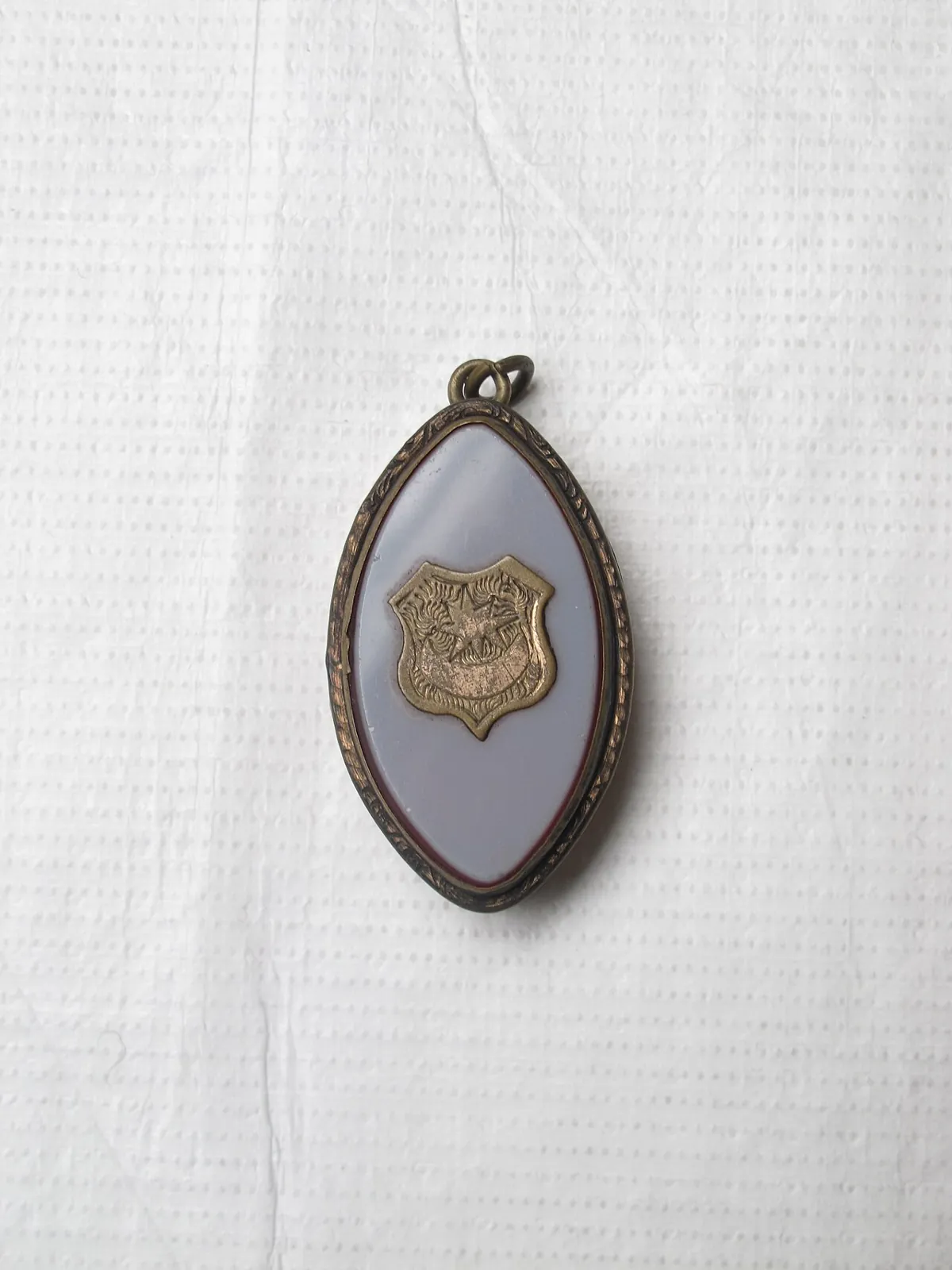
The OES’s membership rolls across the twentieth century included figures of considerable civic and cultural significance, particularly within African American communities served by the Prince Hall Order of the Eastern Star. Educators, civil rights organizers, and community leaders affiliated with Prince Hall chapters used the Order’s network as an organizational infrastructure at a time when many public institutions remained segregated. The Order’s presence in American material culture is equally tangible: OES rings, pendants bearing the five-pointed star emblem, and embroidered regalia have been documented in museum collections from the Smithsonian to regional historical societies. Chapter houses, many of them built between 1900 and 1950, survive in small towns and mid-sized cities across the country, their architecture often reflecting the civic ambitions of the communities that funded them. For collectors and historians alike, these material traces offer a record of the Order’s reach that membership statistics alone cannot fully convey.

FAQ

What is the Order of the Eastern Star and how does it differ from Freemasonry?

The Order of the Eastern Star is a Masonic appendant body, meaning it operates within the broader Masonic family of organizations but is structurally separate from the Craft lodge system. Unlike Craft lodges, which remain male-only in most jurisdictions, this organization admits both Master Masons and their qualified female relatives.

The OES confers five degrees, each built around a Biblical heroine, and operates under its own General Grand Chapter governance structure rather than a grand lodge. Membership neither grants nor requires Masonic degrees. It is a parallel institution with its own ritual, its own officers, and its own charitable mission.

Who is eligible to join the Order of the Eastern Star?

Eligibility falls into two categories. A Master Mason in good standing may petition directly. A woman may join if she holds a qualifying relationship to a Master Mason, typically as a wife, daughter, mother, sister, half-sister, stepdaughter, or widow.

Specific rules vary by jurisdiction, and individual state grand chapters may apply additional criteria. The General Grand Chapter’s official website (easternstar.org) publishes current eligibility requirements organized by state grand chapter, making it the authoritative starting point for anyone researching their own eligibility.

What does the Order of the Eastern Star believe in?

The OES is organized around five moral virtues: fidelity, constancy, loyalty, faith, and love. Each virtue is embodied by one of five Biblical heroines, Adah, Ruth, Esther, Martha, and Electa, who form the symbolic core of the five degrees.

The organization requires a belief in a Supreme Being but is explicitly non-denominational, welcoming members across Christian, Jewish, and other faith traditions. Its stated mission pairs moral self-improvement with active charitable service, consistent with the broader Masonic tradition of linking personal virtue to civic responsibility.

How can you tell if someone is a member of the Eastern Star?

The most recognizable identifier is the five-pointed star emblem, worn on rings, pins, or pendants. Each point of the star carries one of five colors (blue, yellow, white, green, and red) corresponding to the five heroines and their associated virtues. Chapter houses and meeting halls typically display the emblem on exterior signage.

Beyond visual markers, membership is not secret. Unlike certain aspects of Masonic ritual, affiliation with this appendant body is something members are generally free to acknowledge openly, and many do so through jewelry, car emblems, and social media profiles.

What charitable causes does the Order of the Eastern Star support?

At the national level, the General Grand Chapter has directed funds toward vision care programs, Alzheimer’s disease research, and educational scholarships, reflecting a long-standing institutional commitment to health and access to education.

Individual state grand chapters maintain their own endowments and set their own philanthropic priorities, which commonly include children’s welfare, disaster relief, and community health initiatives. The result is a decentralized charitable structure: national programs provide a consistent framework, while local chapters retain meaningful autonomy over how and where funds are deployed in their communities.

Masonic Lodge: Structure, History, and How the Institution Works

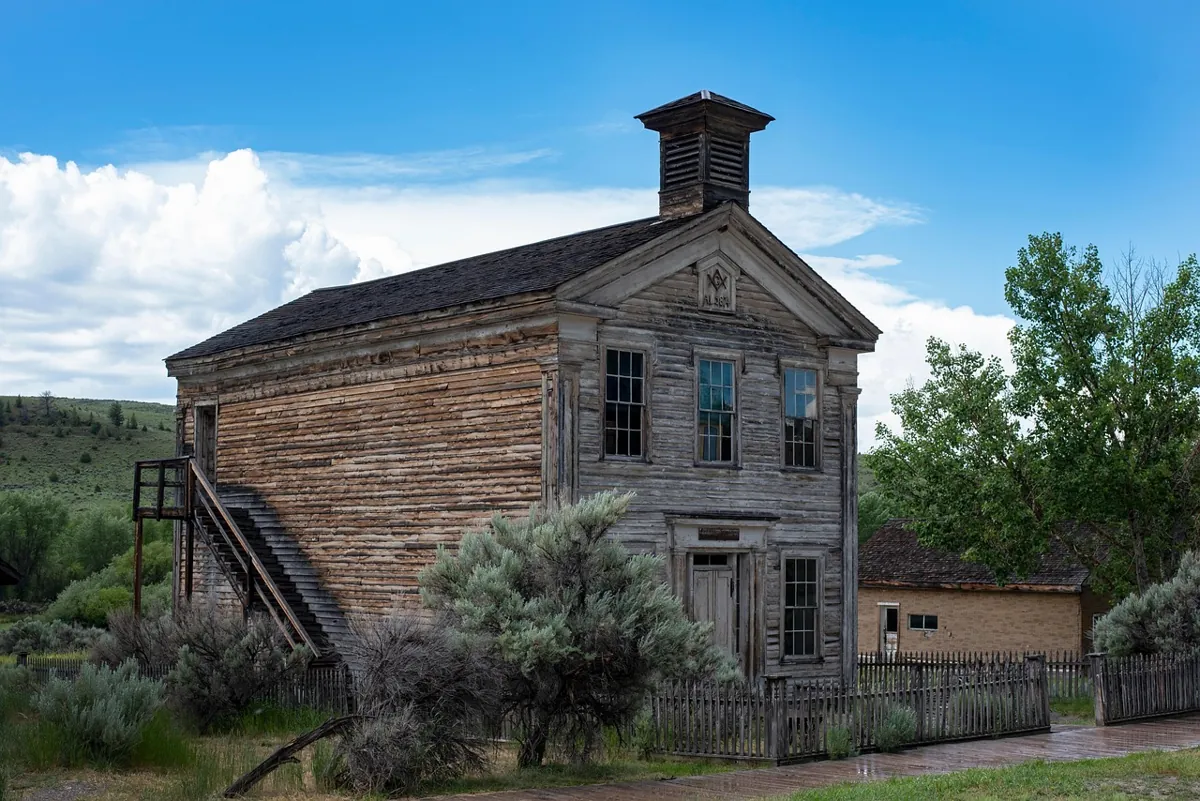
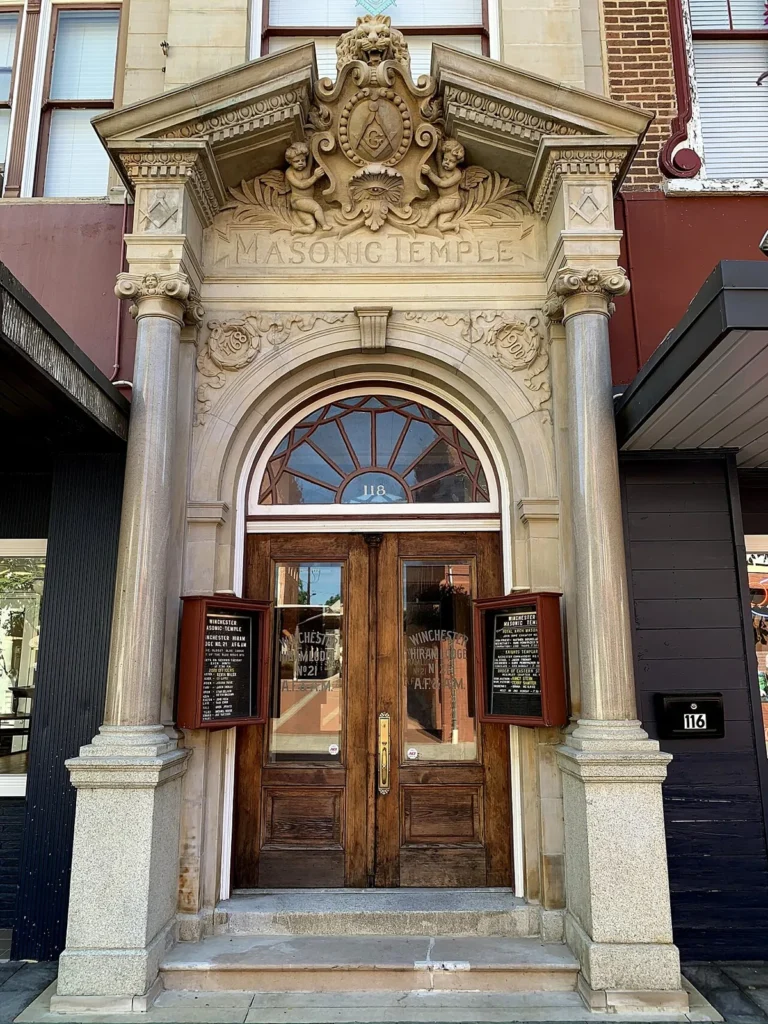
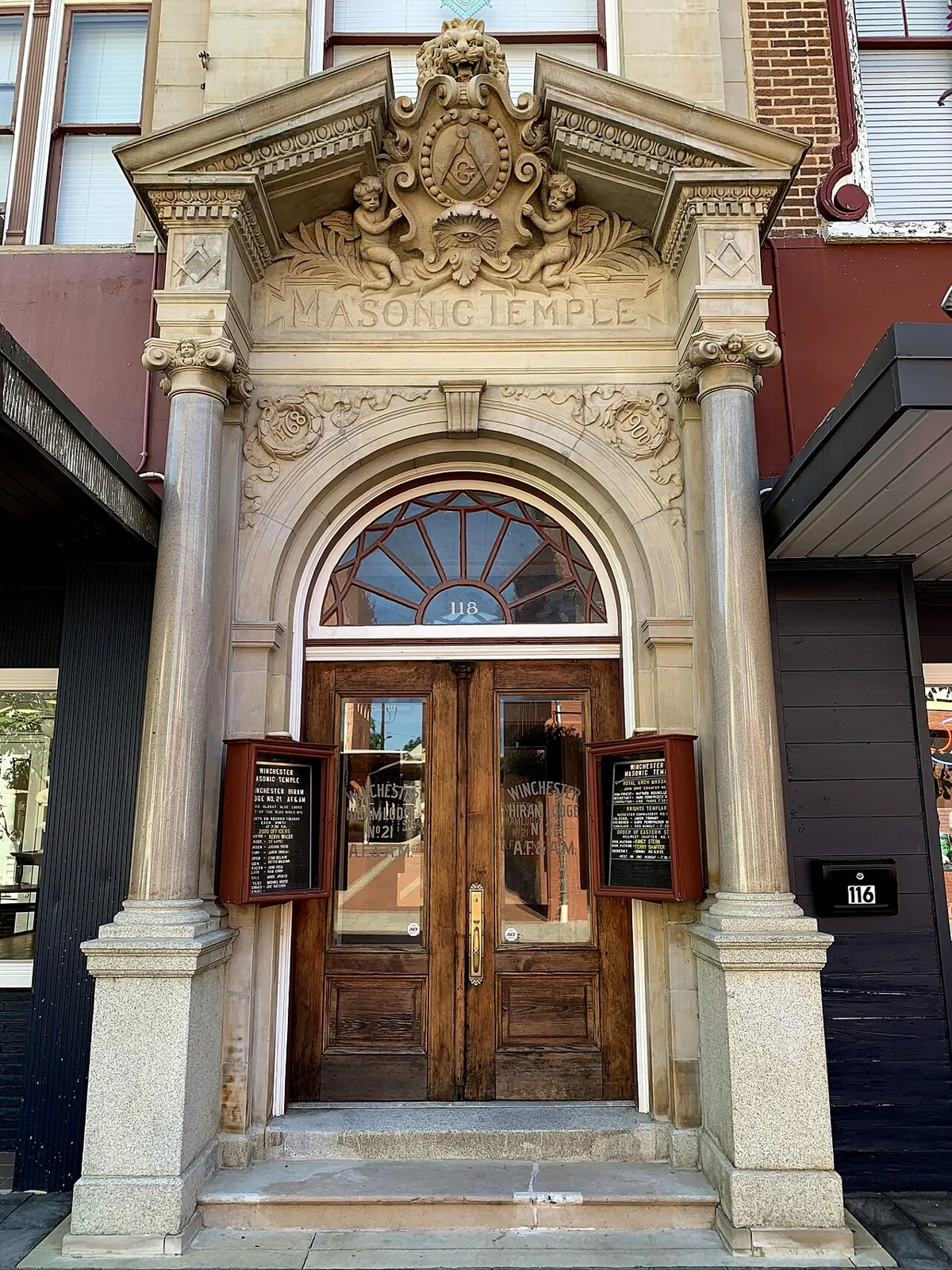
Historic listed building facade exemplifying masonic lodge architecture

A Masonic lodge is the fundamental organizational unit of Freemasonry, the local body in which members meet, confer degrees, conduct ritual, and carry out the fraternity’s charitable and civic work. The word “lodge” predates the modern fraternity: operative stonemasons of medieval Europe used it to describe the shelter built beside a cathedral site where craftsmen gathered, stored tools, and settled disputes. When speculative Freemasonry coalesced into a formal institution on June 24, 1717, with the founding of the Premier Grand Lodge of England, that architectural term became the permanent name for every local chapter the fraternity would ever form. Today, the United Grand Lodge of England alone recognizes more than 7,000 lodges on its rolls, and grand lodge systems across the United States, Canada, and the wider world account for tens of thousands more. Understanding what a Masonic lodge is, how it is organized, what happens inside it, and what its members actually do, cuts through two centuries of rumor and replaces speculation with institutional fact.

What Is a Masonic Lodge?

A Masonic lodge is the fundamental, self-governing unit of Freemasonry: a chartered body authorized to initiate candidates, confer degrees, and conduct the fraternity’s ritual work. Each lodge operates under a warrant issued by a grand lodge, which grants it jurisdiction over a defined territory or membership. Without that charter, no body can legally function as a Masonic lodge.

Historic listed building facade exemplifying masonic lodge architecture
Photo: No Swan So Fine (wikimedia)

The word itself carries centuries of occupational history. Medieval operative masons used the term to describe the workshop structure built adjacent to a cathedral or castle site, a place where craftsmen stored tools, sheltered from weather, and settled disputes according to guild custom. When speculative Freemasonry emerged as a fraternal institution in the early eighteenth century, it inherited both the vocabulary and the organizational logic of those working lodges. The parallel is more than poetic: the lodge was already a self-contained community with its own hierarchy, its own rules of entry, and its own body of transmitted knowledge. Speculative Freemasonry simply translated that model from stone-cutting to moral instruction.

In contemporary usage, the word does double duty. It refers to the membership body itself (the lodge votes, initiates, and elects officers) and, colloquially, to the physical premises where that body assembles. A lodge in the first sense can technically meet anywhere it holds warrant to meet; the building is incidental. The distinction matters because a lodge that loses its meeting hall does not cease to exist, while a lodge that loses its charter from the grand lodge ceases to exist entirely, regardless of how fine its building may be.

Lodge vs. Freemasonry: Clarifying the Distinction

Freemasonry is the fraternity considered as a whole, a worldwide network of initiatic traditions sharing common ritual elements, symbols, and ethical commitments. A lodge is one local instantiation of that fraternity, roughly analogous to the relationship between a religion and a single congregation. Catholicism is not reducible to any one parish; Freemasonry is not reducible to any one lodge. This distinction matters practically because lodges vary considerably in culture, membership, and emphasis even within the same grand lodge jurisdiction. Two lodges meeting in the same city may share the same ritual text and yet feel entirely different in character.

It also matters historically. When the first grand lodge was constituted in London on June 24, 1717, it did not create Freemasonry from nothing. It created a governing structure above lodges that already existed and already had their own working customs. The grand lodge was, from the start, a coordinating body rather than a founding one, which is why debates about Masonic origins consistently return to the lodges themselves rather than to any central institution.

The Lodge Charter and Grand Lodge Authority

The charter, also called a warrant or dispensation depending on the jurisdiction, is the foundational legal instrument of every lodge. Issued by the relevant grand lodge, it specifies the lodge’s name, number, and location, and authorizes it to initiate candidates and confer the degrees recognized by that grand lodge. A lodge operating without a valid warrant is considered clandestine under mainstream Masonic law, and its members and initiates are generally not recognized by regular grand lodges worldwide.

The United Grand Lodge of England, whose Book of Constitutions has shaped Masonic governance across dozens of jurisdictions since 1723, is explicit on this point: no lodge may confer a degree without proper authority, and that authority flows entirely from the warrant. Revocation of a charter (which grand lodges have exercised in cases of misconduct or dormancy) effectively dissolves the lodge as a legal Masonic body. Members may petition to join other lodges individually, but the lodge as an institution simply ceases. The charter is not a formality. It is the institution.

History and Origins of the Masonic Lodge

The word “lodge” entered the vocabulary of organized stonemasonry long before it acquired any philosophical meaning. In 14th-century Scottish building records, the term referred to a physical structure on a cathedral or castle construction site: a covered workspace where masons stored tools, took shelter, and conducted the administrative business of the craft. These were functional buildings, not ceremonial ones. What they provided was a model of self-governing organization that proved remarkably durable. The men who met inside them developed their own customs, oaths, and methods of recognizing fellow craftsmen, and those customs did not disappear when the building was finished.

From Operative to Speculative: The 17th-Century Transition

The formal shift from craft guild to philosophical fraternity can be traced with unusual precision. The Schaw Statutes of 1598 and 1599, issued by William Schaw as Master of Work to the Scottish Crown, imposed written regulations on Scottish mason lodges for the first time. They required lodges to keep records, examine members on their knowledge of the craft, and maintain a hierarchical structure of wardens and fellows. These statutes introduced institutional oversight into what had previously been informal trade custom. Then, in 1600, the records of the Lodge of Edinburgh, Mary’s Chapel No. 1, document the admission of a non-operative member: John Boswell of Auchinleck, a laird with no apparent connection to the building trades. This is the earliest verified instance of speculative Freemasonry in the historical record, predating the English grand lodge by more than a century.

Historians debate the reasons for this transition, but the pattern is consistent across Scottish and later English sources. Educated gentlemen were admitted alongside working craftsmen, bringing with them an interest in the allegorical and philosophical dimensions of the builder’s trade. By the mid-17th century in England, figures such as Elias Ashmole (admitted in 1646, as recorded in his own diary) were joining lodges with no professional stake in stonework whatsoever. The craft lodge had become something else, though it retained the vocabulary, the tools, and the organizational structure of its operative origins.

The 1717 Founding and the Spread of the Grand Lodge System

On June 24, 1717, four London lodges meeting at the Goose and Gridiron alehouse in St. Paul’s Churchyard established the Premier Grand Lodge of England, the first governing body of its kind. The institutional innovation mattered as much as the founding date. By creating a grand lodge empowered to issue warrants authorizing new subordinate lodges, the founders established a scalable administrative template. Any group of Freemasons anywhere could petition for a warrant, receive official recognition, and operate under a shared constitutional framework. This model proved extraordinarily exportable.

Within thirteen years of the 1717 founding, warranted lodges were operating in France, Spain, and the American colonies. By 1800, the system spanned Europe, the Caribbean, and the entire eastern seaboard of North America. The Provincial Grand Lodge of New York was established under English warrant in 1781, while lodges in Philadelphia and Boston had been active since the 1730s. Each jurisdiction adapted local customs and, in some cases, developed distinct rites, but the structural principle remained constant: a grand lodge at the apex, issuing warrants to subordinate bodies, each governing its own internal affairs according to a written constitution. Every mainstream Masonic jurisdiction in the world today still operates on that same architecture, a notable degree of institutional continuity for a system now more than three centuries old.

Types of Masonic Lodges

Not all Masonic lodges are the same institution wearing the same clothes. The term covers a spectrum of organizations, from the foundational Craft lodge where every Freemason begins to highly specialized bodies focused on scholarship or additional degree work. Understanding the distinctions matters, because conflating them is one of the more reliable ways to misread how Freemasonry actually operates as a network of institutions.

Ancient fortress ruins symbolizing enduring masonic heritage and tradition
Photo: Deepank Ranka (wikimedia)
Lodge Type Primary Purpose Degrees or Orders Conferred Prerequisite Membership Governing Body
Blue Lodge (Craft Lodge) Foundational Masonic membership and degree work Entered Apprentice, Fellow Craft, Master Mason (1°–3°) None (entry point) State or Provincial Grand Lodge
Scottish Rite Additional degree work and philosophical instruction 4th through 32nd degree (33rd by invitation) Master Mason in a Craft lodge Supreme Council (Northern or Southern Jurisdiction in the US)
York Rite Chivalric and capitular degree work Chapter, Council, and Commandery orders Master Mason in a Craft lodge Grand Chapter, Grand Council, Grand Commandery (by state)
Lodge of Research Masonic history and scholarship No new degrees conferred Master Mason in a Craft lodge Warranted by the relevant Grand Lodge

The Blue Lodge and Its Appendant Bodies

The Blue Lodge, also called the Craft lodge, is where Freemasonry’s three foundational degrees are conferred: Entered Apprentice, Fellow Craft, and Master Mason. Every other Masonic body treats Master Mason status as a non-negotiable prerequisite. The Scottish Rite extends the degree system from the 4th through the 32nd, with the honorary 33rd conferred by invitation only. The York Rite pursues a parallel track through Chapter, Council, and Commandery bodies. Organizations like Shriners International and the Order of the Eastern Star are concordant rather than strictly Masonic in the Craft sense; they maintain their own meeting structures and membership criteria, though all require prior Craft lodge membership for their male members.

Lodges of Research and Prince Hall Freemasonry

A smaller but intellectually significant category is the Lodge of Research. Quatuor Coronati Lodge No. 2076, founded in London in 1884 and warranted by the United Grand Lodge of England, is the oldest and most cited example. It publishes Ars Quatuor Coronatorum, an annual volume of Masonic scholarship that remains a primary reference for historians working in this area. Lodges of this type hold regular meetings and confer no new degrees; their output is papers, not ritual.

Separately, Prince Hall Freemasonry represents a historically distinct parallel jurisdiction with deep significance. African Lodge No. 459 received its charter directly from the Grand Lodge of England in 1784, making its lineage unambiguous. For much of the 19th and 20th centuries, mainstream grand lodges refused to recognize Prince Hall grand lodges on racial grounds. That position has shifted substantially: by the early 2000s, the majority of mainstream US grand lodges had extended formal recognition, though a small number had not, a fact the Masonic Service Association has documented in its jurisdictional surveys.

Lodge Organization and Internal Structure

A Masonic lodge is not a loose gathering of like-minded individuals who show up when convenient. It is a formally constituted body with a defined chain of command, parliamentary rules, and a governing hierarchy that has remained largely consistent since the United Grand Lodge of England codified its constitutional framework in 1815. Understanding how that structure operates internally is essential to understanding what the institution actually is, as distinct from what popular culture imagines it to be.

Officers and Their Roles

At the head of every lodge sits the Worshipful Master, elected annually by the membership and invested with authority over all meetings, degree ceremonies, and matters of lodge discipline. The title “Worshipful” is an archaic honorific, equivalent in usage to the “Worshipful Company” designations still carried by London’s livery companies. Below the Worshipful Master, the officer line descends through the Senior Warden, Junior Warden, Treasurer, Secretary, Senior Deacon, Junior Deacon, Senior Steward, Junior Steward, and Tyler, the last of whom guards the outer door of the lodge room against unannounced visitors.

Each position carries a symbolic function alongside its administrative one. The Senior Warden traditionally “closes the lodge at the end of the day’s labor,” a phrase borrowed directly from the operative stonemason’s worksite, where a warden would signal the end of the working day. The Junior Warden “calls the craft from labor to refreshment,” a reference to the midday meal break. The symbolism is not incidental. The entire officer structure is designed to mirror the progressive hierarchy of a medieval craft guild, reinforcing the fraternity’s claim to operative masonry as its conceptual ancestor. Whether that genealogy is historically literal or allegorical is a separate question, but the organizational logic it produces is coherent and consistent across jurisdictions.

Stated Communications vs. Special Meetings

Lodge business is conducted at two distinct types of meetings. The “stated communication” is a regular business meeting, typically held once or twice a month on a fixed schedule published in the lodge’s bylaws. At a stated communication, the lodge handles petitions for membership, financial reports, committee updates, and any other administrative matters that fall within its remit. These meetings follow Robert’s Rules of Order, or an equivalent parliamentary procedure, alongside the lodge’s own bylaws, which must be approved by the relevant grand lodge before they take effect.

A “special communication,” by contrast, is called for a specific purpose: conferring one of the three degrees on a candidate, addressing urgent business that cannot wait for the next stated meeting, or hosting a visiting dignitary. Special communications are not open-agenda gatherings. The notice convening the meeting must state its purpose, and business outside that stated purpose is generally not in order. This distinction keeps the lodge’s ceremonial and administrative functions from bleeding into each other in ways that would dilute both.

The Grand Lodge as Governing Authority

No lodge operates in isolation. Every chartered lodge functions under the constitution and edicts of its grand lodge, the sovereign body for a given jurisdiction, typically a U.S. state or a country. The grand lodge sets the ritual standard, issues and revokes charters, hears appeals from members disciplined at the lodge level, and publishes annual proceedings that serve as the official record of Masonic governance in that jurisdiction. The Grand Lodge of Massachusetts, chartered in 1792, and the United Grand Lodge of England, formed in 1813 through the merger of two rival grand lodges, are among the oldest continuously operating examples of this model.

Between stated communications, the lodge’s ongoing work falls to standing committees: a charity committee directing philanthropic disbursements, an investigation committee that evaluates petitions for membership and reports to the full lodge, and an audit committee that reviews the treasurer’s accounts. These committees are where much of the practical work of Masonic lodge organization actually happens, quietly and without ceremony, in the same way that any civic institution depends on its working groups rather than its formal assemblies to keep the lights on.

Want to learn more?

Learn more

Degrees, Rituals, and Ceremonies Inside the Lodge

The Three Degrees: A Progression of Symbolic Instruction

Freemasonry structures its core instruction across three degrees, each conferred in a formal ceremony inside the lodge room. The first, Entered Apprentice, introduces the candidate to the basic moral framework of the fraternity: the importance of integrity, the obligation of secrecy, and the symbolic significance of the rough ashlar, the unfinished stone that represents the uninstructed self. The second degree, Fellow Craft, widens the lens considerably. The candidate is introduced to the seven liberal arts and sciences, a curriculum inherited from medieval scholasticism, and the working tools of this degree, particularly the square and the level, carry explicit lessons about moral uprightness and social equality. The third degree, Master Mason, is the culmination. It centers on the legend of Hiram Abiff, described in Masonic tradition as the chief architect of Solomon’s Temple, a figure drawn loosely from the biblical account in 1 Kings. The narrative dramatizes Hiram’s murder at the hands of three ruffians who sought to extort from him the secrets of a Master Mason, his refusal, his death, and the subsequent search for his body. Themes of fidelity in the face of mortal threat and the symbolic promise of resurrection give the third degree its gravity. Anderson’s Constitutions of 1723, the foundational governing document of speculative Freemasonry, does not spell out the ritual in detail, but it establishes the three-degree framework that lodges across the English-speaking world have followed ever since.

What Lodge Meetings Actually Look Like

A stated communication, which is the standard term for a regular scheduled meeting of a Masonic lodge, follows a structure that would be recognizable to any member of any chartered lodge in the United States or the United Kingdom, regardless of when or where they were raised. The meeting opens with a formal ritual: the lodge is called to order by the Worshipful Master, the Volume of Sacred Law (typically the Bible in English-speaking jurisdictions, though the choice reflects the membership’s composition) is opened on the altar, prayer is offered, and officers are examined at their stations to confirm the lodge is properly formed. What follows is, in practical terms, a standard organizational meeting. Minutes from the previous communication are read and approved, the treasurer reports on finances, correspondence from the grand lodge is reviewed, and petitions from prospective members are considered. Degree work, when scheduled, takes place within this same meeting, typically after the administrative business concludes. The lodge then closes with a ritual that mirrors the opening: prayer, a formal dismissal of officers, and the closing of the Volume of Sacred Law. The whole structure has remained largely consistent since the early eighteenth century. A Mason from a lodge warranted in 1750 would find the rhythm of a contemporary stated communication familiar, even if the specific wording of some ritual passages has been refined by individual grand lodge jurisdictions over the centuries. It is, as one Masonic scholar once observed, a board meeting wrapped in allegory, and neither description cancels the other.

The working tools used during degree ceremonies, including the gavel, the plumb, the square, and the compass, are not decorative props. Each carries an explicit didactic function: the gavel represents the force of conscience shaping conduct, the plumb stands for rectitude, the square for morality, and the compass for the boundary a person draws around their own desires. The ceremonies are theatrical in form, drawing on allegorical drama and passages of moral philosophy, but their stated purpose is instructional rather than performative. Whether a candidate absorbs that instruction depends, as with any educational format, on the candidate.

Masonic Lodge Premises: The Building and the Room

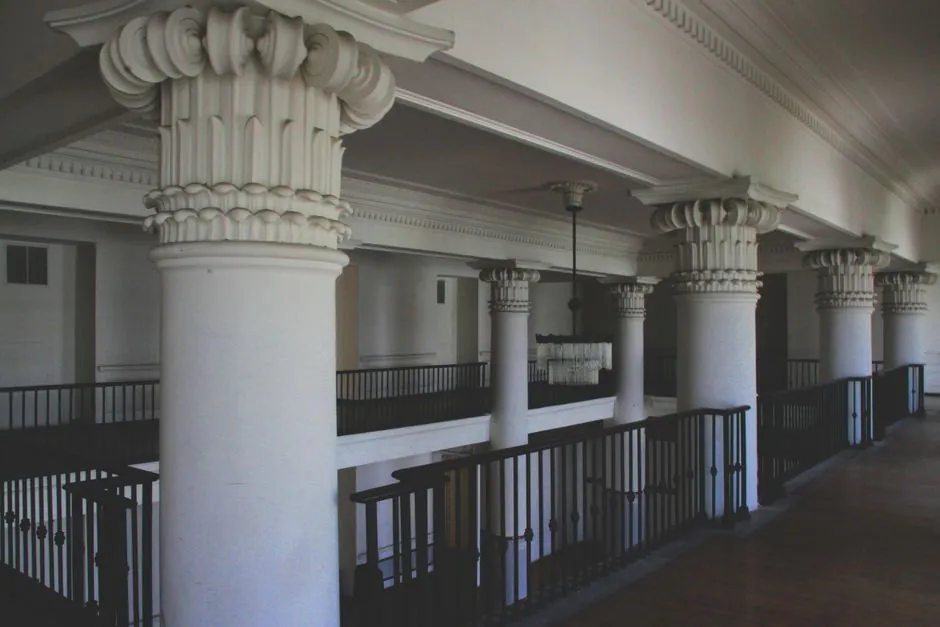
The room in which a lodge meets is not simply a meeting hall. Its layout follows a symbolic geography that has been consistent across jurisdictions for centuries. The Worshipful Master presides from the East, the Senior Warden from the West, and the Junior Warden from the South. These positions correspond to the sun’s arc across the sky, a correspondence that Masonic ritual makes explicit: the East represents the place of light and learning, the West the close of labor, and the South the meridian sun at its height. The arrangement means that every officer’s physical location in the room carries a stated meaning, not just a procedural one. Lodge buildings themselves vary enormously. A Masonic lodge may meet in a purpose-built temple of considerable architectural ambition, in a rented civic hall, or in a room above a hardware store. The House of the Temple in Washington, D.C., completed in 1915 and serving as the headquarters of the Scottish Rite’s Southern Jurisdiction, is among the most architecturally ambitious fraternal buildings in the United States. Numerous historic lodge buildings across the country are listed on state and national registers of historic places. None of this architectural range affects a lodge’s standing within the fraternity. Grand lodge recognition depends on regularity of practice, not the grandeur of the premises.

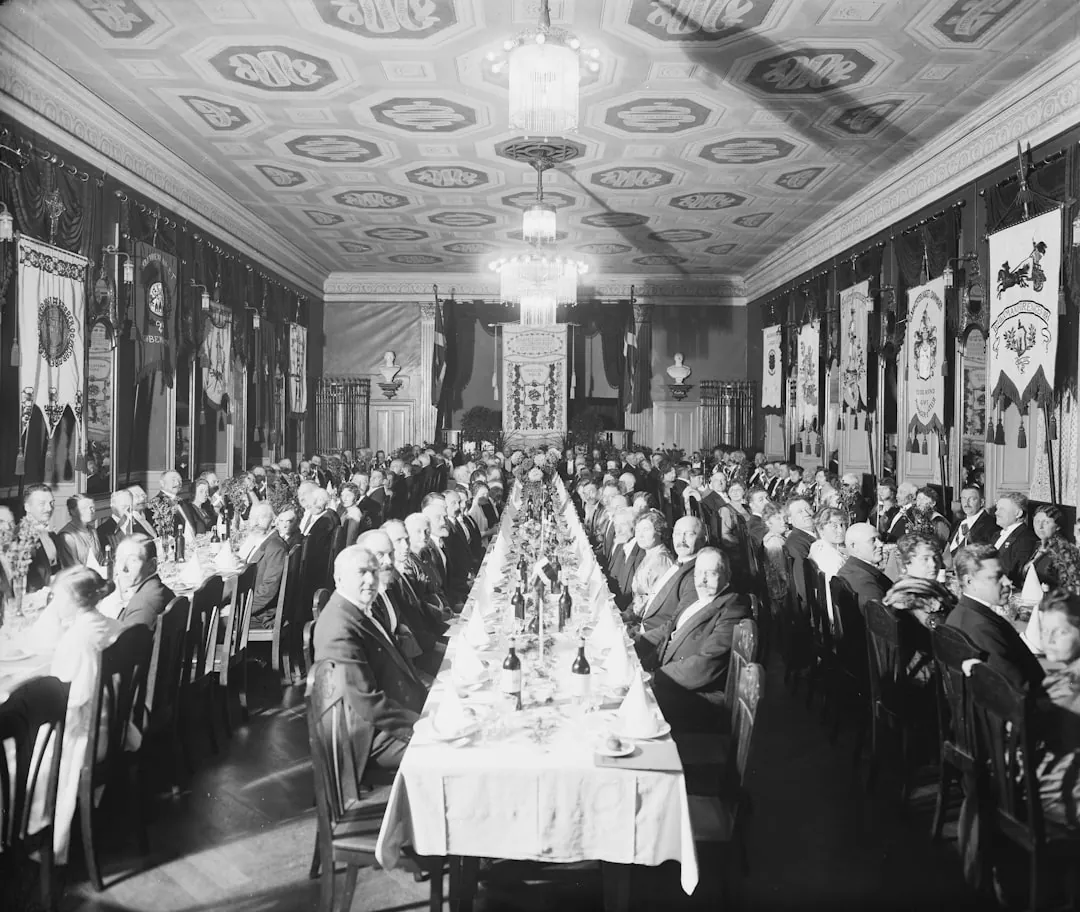
Members gathered around table discussing masonic lodge business and fellowship
Photo: Joel Mott (unsplash)

Symbolic Furnishings and Their Meanings

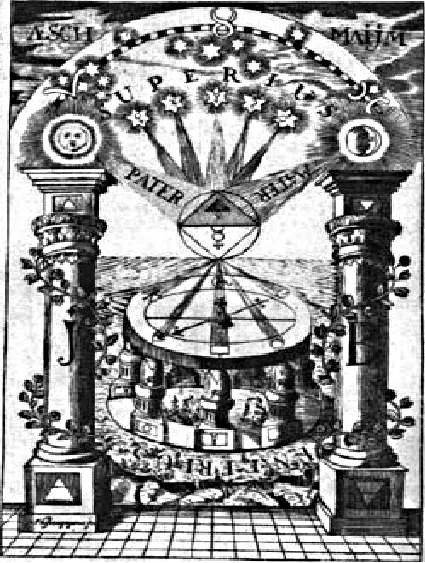
At the center of the lodge room stands the altar, and on it rest what Masonic tradition calls the three Great Lights: the Volume of Sacred Law (most commonly a Bible in Anglo-American lodges, though the specific text varies by jurisdiction and membership), the square, and the compasses. These are not ornamental. Each is a teaching instrument, and their significance is explained to candidates during the degree ceremonies. The square represents morality and right conduct; the compasses, the boundary of passions and desires. The Volume of Sacred Law is open during all lodge proceedings as a reminder of the obligations being undertaken. Two pillars, named Jachin and Boaz after the pillars described in the First Book of Kings as standing at the entrance to Solomon’s Temple, flank the lodge room. The checkered floor, in black and white squares, is among the most immediately recognizable features of any lodge interior. Masonic monitors (the printed guides to ritual that many jurisdictions publish openly) describe it as representing the duality of human experience: light and darkness, virtue and vice, the interplay of opposites that moral life requires navigating. Taken together, these furnishings transform an otherwise ordinary room into a structured teaching environment, which is precisely what Masonic ritual intends them to do.

Charitable Work, Community Service, and Modern Lodge Activities

The popular image of a lodge as a closed room full of ritual and secrecy accounts for perhaps one evening a month of actual lodge activity. The rest of the calendar tells a different story. The Masonic Service Association of North America estimates that Freemasons in the United States donate more than $2 million per day to charitable causes, a figure that spans hospital programs, scholarship funds, veterans’ outreach, and disaster relief operations. Individual lodges run blood drives, food pantries, and community improvement projects that operate entirely in public view, with no initiation required to benefit from them. Shriners International, whose membership requires Master Mason status, operates a network of 22 Shriners Children’s hospitals providing free or reduced-cost pediatric care across North America. That network alone represents one of the largest privately funded pediatric healthcare systems in the world, and it is about as far from a secret society as a children’s hospital can get.

Masonic Scholarships and Educational Programs

Most grand lodges and a good number of individual lodges administer scholarship funds open to members’ families or, in many cases, the general public. These are not token gestures: the Scottish Rite, Southern Jurisdiction administers the Perpetual Foundation, which has distributed millions of dollars in educational grants since its establishment, while state-level grand lodges from California to Massachusetts maintain their own scholarship programs, many of which advertised awards for the 2025-2026 academic year on publicly accessible websites. The criteria, application deadlines, and award amounts are published openly. This is a concrete, verifiable form of civic engagement that rarely surfaces in popular coverage of the fraternity, which tends to fixate on the ceremonial side of lodge life at the expense of the mundane but consequential work of writing scholarship checks.

Educational philanthropy has deep roots in the institution’s history. The premise that a man improves himself through study and reflection is embedded in the degree system itself, and many lodges have translated that internal emphasis on self-improvement into external programs that fund the education of people who will never attend a stated meeting.

Declining Membership and the Modern Lodge’s Response

Peak US Masonic membership reached approximately 4.1 million in 1959, a high-water mark that coincided with the broader postwar enthusiasm for fraternal organizations, civic clubs, and voluntary associations of every description. By 2023, the Masonic Service Association placed the figure closer to 1.1 million, a contraction of roughly 75 percent over six decades. Grand lodge annual reports across multiple jurisdictions document the trend without much ambiguity, and the Scottish Rite Research Society has published analyses examining its causes, which include demographic shifts, changing leisure patterns, and the general decline of membership-based organizations that sociologist Robert Putnam described in Bowling Alone (2000). The response from grand lodges has been practical rather than panicked: revised petition processes that reduce waiting periods, one-day class conferrals of degrees, mentorship programs pairing new members with experienced ones, and increased public programming designed to make the lodge visible in its community before a man ever considers joining. Whether these adaptations will stabilize membership remains an open question, but the institutional self-awareness driving them is at least clear-eyed about the scale of the problem.

How to Find a Masonic Lodge

Locating a Masonic lodge is considerably more straightforward than the institution’s reputation for secrecy might suggest. Every US state maintains a grand lodge with an official website, and virtually all of them include a lodge locator tool that allows searches by city, county, or zip code. The Masonic Service Association of North America also provides a state-by-state directory that consolidates contact information for all recognized grand lodges across the country, making it a useful single point of entry for researchers working across multiple jurisdictions. In England and Wales, the United Grand Lodge of England’s Find a Lodge tool serves the same function; the Grand Lodge of Scotland and the Grand Lodge of Ireland maintain equivalent directories covering their respective territories.

It is worth noting that many lodges hold what are called stated communications, which sometimes include a public dinner, a lecture, or a community event open to interested visitors. Attendance at these occasions carries no obligation to petition for membership and no expectation of any formal commitment. For readers who do want to understand the petition process, the appropriate resource is the grand lodge website for their specific jurisdiction, since fees, residency requirements, and procedural steps vary considerably from state to state and from country to country. The grand lodge, not a third-party guide, is the authoritative source on those particulars.

FAQ

What is the difference between a Masonic lodge and Freemasonry?

Freemasonry is the fraternity in its entirety: its philosophy, initiatic traditions, and global membership spanning hundreds of thousands of men across dozens of jurisdictions. A Masonic lodge is a single, chartered local unit of that fraternity, holding a warrant from a grand lodge that grants it the authority to meet and confer degrees.

The relationship is structurally comparable to a religion and one of its congregations. The broader institution sets doctrine, standards, and governance; the local body is where members actually gather, practice ritual, and conduct business. No lodge operates independently. Its charter can be suspended or revoked by the grand lodge that issued it.

What is the purpose of a Masonic lodge?

The United Grand Lodge of England’s Book of Constitutions defines three core functions: conferring the degrees of Freemasonry, conducting the fraternity’s formal business, and promoting the moral and social improvement of its members. These remain the constitutional baseline across most regular jurisdictions worldwide.

In practice, individual lodges layer considerable charitable and community activity on top of that baseline. Fundraising for local causes, scholarship programs, and disaster relief contributions are common, though the scale and focus vary significantly by jurisdiction and by the culture of each individual lodge. The institution does not mandate a single charitable model.

How often do Masonic lodges meet?

Most lodges hold a stated communication (a regular business meeting) once or twice a month, generally on a fixed weeknight. The schedule is set by the lodge’s bylaws and approved by its grand lodge. Beyond routine business, special communications are called as needed, typically to confer a degree on a candidate.

At the grand lodge level, an annual communication brings together elected representatives from every constituent lodge once per year. That annual assembly handles legislation, elections of grand officers, and the formal governance of the jurisdiction as a whole.

What are the three degrees of Freemasonry?

The three degrees conferred in a Craft lodge (also called a Blue Lodge in North American usage) are Entered Apprentice (First Degree), Fellow Craft (Second Degree), and Master Mason (Third Degree). Each involves a ceremonial conferral built around allegorical content drawn from the traditions of operative stonemasonry.

The progression is sequential and cannot be skipped. Completing the Third Degree is a prerequisite for membership in any appendant or concordant body, including the Scottish Rite and the Ancient Arabic Order of the Nobles of the Mystic Shrine (the Shriners). The three-degree structure has been the standard framework since at least the early eighteenth century.

Can women join a Masonic lodge?

Mainstream regular Freemasonry, as recognized by the United Grand Lodge of England, restricts membership to men. That standard has been consistent since the 1717 founding of the first grand lodge in London.

Several parallel bodies operate outside that recognition. The Order of Women Freemasons, founded in the UK in 1908, and various co-Masonic orders worldwide admit women under their own grand lodge structures. Separately, the Order of the Eastern Star is a mixed-gender appendant body open to Master Masons and their female relatives. These organizations are real and well-documented; they simply operate on different constitutional footing from the regular grand lodge system.

33rd Degree Freemason: Meaning, Requirements, and the Scottish Rite’s Highest Honor

33rd degree freemason ring displaying ornate masonic insignia

The 33rd degree Freemason holds a title that has generated more mythology per syllable than almost any other designation in fraternal history. In reality, it is an honorary degree conferred by the Supreme Council of the Scottish Rite upon members who have rendered exceptional service to Freemasonry and their broader communities, not a secret rank unlocking hidden power or esoteric knowledge. The Scottish Rite, one of several appendant bodies a Master Mason may join after completing the three foundational degrees of the Craft, organizes its initiatory work across 29 additional degrees (the 4th through the 32nd). The 33rd stands apart: it cannot be earned through attendance or ritual progression alone. It is conferred by election, based on documented merit and sustained contribution. The Supreme Council, 33°, Southern Jurisdiction, USA, the oldest Supreme Council in the world, founded in Charleston, South Carolina, on May 31, 1801, has defined and administered this degree for over two centuries. Understanding what the 33rd degree actually represents requires tracing the structure of the Scottish Rite, the criteria the Supreme Council applies, and the documented history behind a number that conspiracy culture has thoroughly misread.

33rd degree freemason ring displaying ornate masonic insignia
Photo: Luan Fonseca (unsplash)

What Is the 33rd Degree in Freemasonry?

A 33rd degree Freemason holds an honorary distinction conferred by a Scottish Rite Supreme Council, awarded not through sequential initiation but by election. The degree recognizes exceptional service to Freemasonry and the broader community. It is the highest honor the Scottish Rite can bestow, and it carries no additional ritual content beyond what a 32nd degree Mason already receives.

That clarification matters because the most persistent misconception frames this honor as the top rung of a ladder, something climbed through years of progressive initiation. The Scottish Rite’s degree system does work that way for the first thirty-two degrees, each conferred in sequence with its own ceremonial instruction. The thirty-third operates on an entirely different logic. A Supreme Council, acting as a body, elects recipients from among those who have already completed the 32nd degree and demonstrated sustained, distinguished service. No amount of attendance, memorization, or ritual participation automatically qualifies a Mason for it. The formal title conferred on most recipients in the Southern Jurisdiction of the United States is Inspector General Honorary, a designation that appears in the Supreme Council’s own statutes and clarifies the honorific rather than administrative nature of the award.

What the degree does not confer is equally worth establishing. Recipients gain no access to secret teachings withheld from 32nd degree Masons, no additional ritual content, and no governing authority within their home lodge. The Supreme Council of the Southern Jurisdiction, headquartered in Washington, D.C., has been explicit in its published materials: the thirty-third is a service award, a recognition of what a Mason has contributed rather than a passport to hidden knowledge. Conspiracy narratives that treat it as the threshold of an inner circle capable of directing governments or financial systems find no support in any primary Masonic document. The degree’s significance is honorific, and within the Scottish Rite’s administrative structure it is also a prerequisite for appointment to certain supervisory roles, but that function is far removed from the shadowy omnipotence popular culture tends to project onto it.

The Difference Between the 32nd and 33rd Degrees

The 32nd degree, titled Master of the Royal Secret, is the highest degree a Scottish Rite Mason completes through the regular initiatory sequence. A candidate progresses through the degree system, participates in the conferral ceremonies, and upon completion holds the 32nd degree as a permanent credential. Every Scottish Rite Mason who finishes the full curriculum holds it. The thirty-third is something else entirely. Conferred by election on top of the 32nd, it means no Mason can receive it without first holding the degree below, but holding the 32nd creates no entitlement to the thirty-third. The gap between the two is not a matter of additional coursework or ritual; it is a qualitative distinction between what a Mason has done within the fraternity and for the wider community over years or decades.

Inspector General Honorary vs. Sovereign Grand Inspector General

Popular coverage of the thirty-third degree rarely distinguishes between its two principal titles, but the difference is constitutionally significant. The title Inspector General Honorary applies to the overwhelming majority of recipients: Masons elected to the degree in recognition of their service, who hold it as an honor without holding a seat on the Supreme Council itself. The title Sovereign Grand Inspector General, by contrast, is reserved for the thirty-three active members who constitute the Supreme Council, the governing body of the Scottish Rite jurisdiction. These active members hold administrative authority over the jurisdiction and are limited by the Supreme Council’s own rules to exactly thirty-three seats, a number that carries its own symbolic resonance within the degree’s historical design. The two titles are not interchangeable, and conflating them obscures how the Scottish Rite’s governance actually functions.

History and Origins of the 33rd Degree

From the Rite of Perfection to the Scottish Rite

The Scottish Rite did not emerge fully formed in 1801. Its roots reach back to the 25-degree Rite of Perfection, a system developed in France around 1754 and subsequently carried to the Caribbean, where it took hold in the French colonial lodges of Saint-Domingue (present-day Haiti). Over the following decades, additional degrees were appended to this framework as the rite traveled between Europe, the Caribbean, and the American colonies, accumulating ritual content from multiple Masonic traditions until the structure grew unwieldy enough to demand formal consolidation. That consolidation arrived on May 31, 1801, when John Mitchell and Frederick Dalcho established the Supreme Council, 33°, Southern Jurisdiction, in Charleston, South Carolina, the oldest Supreme Council in the world, according to Masonic historians.

The 33rd degree was not an afterthought grafted onto an existing system; it was designed from the outset as the governing degree of the Supreme Council itself, conferring authority on the body responsible for administering all the degrees below it. The number thirty-three carried symbolic weight, loosely associated with the traditional age of Christ at the crucifixion and with numerological significance in esoteric traditions, but its primary function at the founding was organizational: the degree defined who held supreme jurisdiction over the rite.

Albert Pike and the Codification of the Degrees

The Charleston founding established the structure, but ritual content remained inconsistent across jurisdictions for decades. That changed when Albert Pike took office as Sovereign Grand Commander of the Southern Jurisdiction in 1859, a post he held until his death in 1891. Pike undertook a comprehensive rewrite of the Scottish Rite’s ritual work, producing philosophical commentaries and revised ceremonial texts that culminated in his 1872 publication Morals and Dogma of the Ancient and Accepted Scottish Rite of Freemasonry. The book is dense and eclectic, drawing on sources ranging from Kabbalah and Neoplatonism to comparative religion. That eclecticism has made it a perennial target for conspiracy writers who lift passages out of context to imply the rite endorses Luciferianism or occult practice. The Supreme Council’s own scholarship has addressed these misreadings repeatedly. What Pike actually produced was a Victorian-era philosophical synthesis, reflecting the broad reading habits of a nineteenth-century intellectual rather than any doctrinal statement of Masonic belief. His influence on how the 33rd degree’s symbolism is understood in the Southern Jurisdiction remains substantial, even as the Supreme Council revised its ritual materials in 1974 and again in subsequent decades to reflect contemporary practice.

The Northern Masonic Jurisdiction, headquartered in Lexington, Massachusetts and operating its own Supreme Council since 1813, follows the same broad honorific framework but administers its own criteria independently. The two jurisdictions are coordinate, not hierarchical: neither governs the other, and a 33rd degree conferred in one carries no formal authority in the other’s territory. This structural distinction matters for anyone researching specific recipients, since the criteria, nomination processes, and historical records are maintained separately by each body.

The Scottish Rite Degree Structure: The Road From the 4th to the 32nd

The Scottish Rite does not begin from scratch. A candidate must already hold the third degree of the Blue Lodge, the rank of Master Mason, before petitioning to enter the Scottish Rite system. From that foundation, the degrees proceed through four distinct administrative bodies, each responsible for conferring a specific cluster of degrees. Understanding this architecture is essential to grasping why the 33rd degree occupies a category entirely separate from everything that precedes it.

Scottish Rite Body Degree Range Thematic Focus
Lodge of Perfection 4th, 14th Ancient craft allegory, the legend of Hiram Abiff extended, and the search for the lost word
Chapter of Rose Croix 15th, 18th Themes of death, resurrection, and philosophical inquiry drawn from Rosicrucian and Christian allegorical traditions
Council of Kadosh 19th, 30th Chivalric and philosophical allegory, exploring duty, knighthood, and moral courage across historical settings
Consistory 31st, 32nd Master of the Royal Secret: synthesis of the preceding degrees into a culminating statement on Masonic philosophy

The degrees within each body are best understood as a curriculum rather than a ladder of command. Progressing from the 4th to the 32nd does not grant a Mason administrative authority over those at lower numerical degrees. Each ceremony presents a philosophical or allegorical lesson, drawing on historical settings that range from the Temple of Solomon to medieval Crusader orders. Albert Pike, whose 1871 work Morals and Dogma remains the most widely cited commentary on Scottish Rite symbolism, described the degrees collectively as an exploration of moral philosophy through dramatic allegory. The Scottish Rite’s own Supreme Council, 33°, Southern Jurisdiction, has framed the sequence in similar terms in its official publications.

The 32nd degree, formally titled Master of the Royal Secret, is where a candidate completes the full instructional arc of the initiatory system. It is the highest degree a Scottish Rite Mason earns through participation in the degree work itself. The 33rd degree operates under an entirely different logic: it is not conferred through a ritual curriculum but awarded by the Supreme Council as a recognition of service. That distinction is the central fact around which any honest account of the scottish rite 33rd degree must be organized, and it is one the degree’s own governing body has never obscured.

Requirements and Qualifications for the 33rd Degree

The path to the 33rd degree is not a ladder with numbered rungs. It is, formally speaking, an act of recognition: the Supreme Council identifies individuals whose service has already distinguished them, rather than rewarding candidates who have simply waited long enough. The starting point is unambiguous. A candidate must hold the 32nd degree of the Scottish Rite, and the nomination must come from a sitting 33rd degree Mason. Self-nomination is structurally impossible. The process begins with a peer’s judgment, not a personal application. Once a nomination is submitted, the Supreme Council evaluates the nominee’s record across three broad categories: service to the Scottish Rite specifically, contributions to the wider community, and conduct that consistently reflects the fraternity’s stated principles. Seniority alone carries no weight in this assessment. A Mason who has held the 32nd degree for thirty years without meaningful engagement will not advance on the strength of tenure. A Mason who has spent a decade in active leadership, charitable work, and educational programming stands on considerably stronger ground.

The Southern Jurisdiction’s Supreme Council confers the degree at its biennial session, a scheduling detail that carries a practical consequence: the number of new recipients in any given cycle is inherently limited. That limitation is deliberate. Restricting the conferral to a fixed ceremonial occasion, rather than processing nominations on a rolling basis, preserves the distinction’s weight. The Supreme Council has been explicit, in its own publications and official communications, that sustained and documented service is the primary criterion, not the passage of time. There is no published minimum tenure, but the pattern across documented recipients suggests that most have been active Scottish Rite Masons for well over a decade before their names are formally put forward.

How Long Does It Take to Reach the 33rd Degree?

Because the 33rd degree is honorary and elective rather than a sequential step any Mason can work toward, no defined timeline governs the process. The Supreme Council of the Southern Jurisdiction does not publish a minimum service requirement, and the Northern Masonic Jurisdiction operates under similarly discretionary criteria. In practice, however, the record of documented recipients points consistently toward long-term engagement. A decade of active Scottish Rite involvement is closer to a floor than a ceiling for most honorees. What the Supreme Council is looking for is a demonstrated pattern, not a milestone date, which means that the quality and consistency of a Mason’s contributions matter far more than the calendar.

The Nomination and Election Process

A sitting 33rd degree Mason submits a formal written recommendation to the Supreme Council, outlining the nominee’s Masonic record and civic contributions in documented detail. The Supreme Council then reviews that record before putting the nomination to a vote among its active members. The mechanics here are worth noting, because they bear a closer resemblance to the election procedures of learned honorary societies (think the American Academy of Arts and Sciences or a university’s honorary degree committee) than to any notion of a secret initiation ritual. The vote is conducted by peers who have themselves met the same standard. A nomination that cannot survive that scrutiny does not advance. For those researching 33rd degree freemason requirements, the clearest summary is this: distinguished service, a credible nominator, and a successful vote before an informed body of equals.

Want to learn more?

Learn more

Fraternal brotherhood gathering representing masonic lodge membership
Photo: Michael Thomson (unsplash)

The Role and Responsibilities of a 33rd Degree Mason

The responsibilities attached to the 33rd degree divide along a clear structural line. Honorary recipients, formally titled Inspector General Honorary, function primarily as ambassadors of the Supreme Council within their home valley or jurisdiction. In practice, this means representing the Scottish Rite’s values at local events, supporting recruitment and retention of members in the lower degrees, and mentoring brothers progressing through the numbered degrees of the rite. The title carries genuine expectation of continued engagement; it is not, in the language of the Supreme Council’s own literature, a retirement honor. Active members of the Supreme Council itself carry a heavier administrative load. These Sovereign Grand Inspectors General vote on governing policy, participate in the election of the Sovereign Grand Commander (the rite’s chief executive officer), and exercise oversight of the organization’s charitable and educational infrastructure. The distinction between honorary and active membership is therefore not merely ceremonial; it maps directly onto different levels of institutional accountability.

That philanthropic infrastructure is substantial enough to be worth naming precisely. The Scottish Rite’s RiteCare Childhood Language Program operates a network of clinics across the United States, providing speech-language therapy to children regardless of their families’ Masonic affiliation or ability to pay. According to the Supreme Council, Southern Jurisdiction’s published reports, 33rd degree Masons in leadership positions play a significant administrative role in sustaining and expanding that program at both the valley and jurisdictional level. None of this translates into civil authority of any kind. The degree confers no legal standing, no governmental privilege, and no formal influence over any institution outside the fraternal structure itself. The “secret power” narrative that circulates around the scottish rite 33rd degree collapses almost immediately against the documented reality: the actual responsibilities are committee work, mentorship, philanthropy administration, and organizational governance. None of it requires secrecy, and all of it is consistent with how any large civic fraternity manages its senior membership.

Symbolism of the 33rd Degree: The Number, the Ring, and the Regalia

The symbolism attached to the 33rd degree is frequently overstated in popular commentary, and just as frequently misattributed. Within the Scottish Rite’s own published literature, the number 33 carries a straightforward organizational meaning: the rite comprises 33 degrees, and the Supreme Council limits its active membership, the Sovereign Grand Inspectors General, to 33 individuals at any one time. That structural correspondence is the primary documented reason for the number’s significance, not numerological mysticism or coded theology. Popular writers have drawn connections between 33 and the traditional age of Christ at the crucifixion, or to sequences in Kabbalistic numerology, but no official doctrinal publication of either the Northern or Southern Jurisdiction has adopted those interpretations as part of the degree’s formal meaning. They remain popular glosses, not institutional doctrine.

The physical regalia associated with the degree is ceremonial in the most literal sense: it marks rank at official Scottish Rite functions and carries no claim to talismanic or supernatural properties. The most recognizable item is the distinctive black cap bearing a gold double-headed eagle, worn by members who have received the honor at formal assemblies. Recipients also receive a gold ring, traditionally engraved with the double-headed eagle and the numeral 33. The ring serves as a mark of recognition within the fraternity, functioning much as a class ring or professional insignia does in secular contexts. The Supreme Council’s own publications describe these objects in terms of fraternal honor and organizational identity, not as instruments of power or esoteric activation.

The Double-Headed Eagle: Symbol of the Scottish Rite

The double-headed eagle, sometimes identified by historians as the “Eagle of Lagash” after its ancient Mesopotamian antecedents, is the primary emblem of the Scottish Rite and appears prominently on the ring, cap, and other regalia associated with the highest degree. As a heraldic device, it has a documented history stretching back through the Holy Roman Empire, the Byzantine court, and medieval European nobility, long predating any Masonic organization. The Scottish Rite adopted it as an organizational emblem, not as a symbol with Masonic-exclusive or occult significance. Albert Pike’s Morals and Dogma (1871) discusses the eagle’s historical and allegorical dimensions at length, but Pike himself was explicit that the symbol’s meaning derived from its broader heraldic and philosophical heritage rather than from any secret Masonic revelation. Treating the double-headed eagle as evidence of hidden occult purpose requires ignoring several centuries of mainstream European heraldry in which the same image appeared on imperial seals, cathedral facades, and royal coats of arms.

How Many 33rd Degree Masons Are There?

The active membership of a Supreme Council, those holding the full title of Sovereign Grand Inspector General, is constitutionally capped at 33. Beyond that inner circle, the total number of living honorary 33rd degree recipients is considerably larger, since the honor has been conferred annually for well over a century. The Supreme Council, Southern Jurisdiction, does not publish a comprehensive enumerated list of all living honorary members, a fact that has fueled speculation about a “secret list” of powerful initiates. The more prosaic explanation is that membership records are maintained as internal fraternal documents, consistent with the record-keeping practices of most private civic organizations. Researchers who have cross-referenced obituaries, lodge histories, and Supreme Council proceedings have confirmed that thousands of honorary degrees have been conferred since the 19th century, making the total population of living recipients a matter of archival research rather than conspiratorial concealment. The Scottish Rite, Southern Jurisdiction’s official website provides publicly accessible information about the degree’s criteria and history, which is not the behavior of an organization intent on suppressing its own membership rolls.

Misconceptions and Conspiracy Theories About the 33rd Degree

Few symbols in American fraternal culture attract as much unfounded speculation as the 33rd degree of the Scottish Rite. The claims are familiar: a hidden governing elite, secret initiation rites that reveal doctrines concealed from ordinary members, and shadowy coordination with financial or political power structures. None of these claims survives contact with the primary sources. The Supreme Council, 33°, Southern Jurisdiction, publishes its proceedings from biennial sessions, and those proceedings document the conferral criteria, the names of recipients, and the structure of the honor in plain institutional language. There is no governing body of 33rd degree recipients directing world affairs, because no such body exists in the Supreme Council’s own organizational framework.

The conflation of the Scottish Rite with the Bavarian Illuminati deserves particular attention, because it is historically illiterate on its own terms. The Bavarian Illuminati was founded on May 1, 1776, by Adam Weishaupt, a professor of canon law at the University of Ingolstadt, and it was dissolved by government decree of the Elector of Bavaria in 1785, effectively ceasing to exist by 1787. The Scottish Rite’s 33rd degree was not formalized until the Supreme Council was established in Charleston, South Carolina, in 1801, fourteen years after the Illuminati had already collapsed. The two organizations were never affiliated, never shared membership criteria, and operated in entirely different national and institutional contexts. Treating them as interchangeable is not a matter of contested interpretation; it is a straightforward error of chronology.

The Albert Pike Misquotation Problem

Albert Pike, who served as Sovereign Grand Commander of the Southern Jurisdiction from 1859 to 1891, is the figure most frequently distorted in conspiracy literature about the Scottish Rite. His major work, Morals and Dogma of the Ancient and Accepted Scottish Rite of Freemasonry (1871), is a dense, allegorical text written for an audience already familiar with the degree structure, drawing on Neoplatonic philosophy, Kabbalistic allegory, and comparative religion. Conspiracy writers routinely strip sentences from their rhetorical context and present them as literal policy statements. The Supreme Council itself has addressed this pattern directly in its own publications, noting that Pike wrote in the symbolic register of the degrees and not as a political manifesto. The most damaging fabrication is a letter allegedly written by Pike in 1871 predicting three world wars in explicit detail. No original document of this letter has ever been located. The British Museum, responding to inquiries as early as 1977, confirmed that no such letter exists in its holdings, despite claims that it was once displayed there. The letter is a forgery, and its continued circulation says more about the appetite for conspiratorial narrative than about anything Pike actually wrote.

Why the “Secret List” Narrative Persists

Because the Supreme Council does not maintain a publicly searchable, real-time database of every living honorary 33rd degree recipient, critics interpret the absence of such a database as deliberate concealment. The logic is circular: the absence of a comprehensive public roster is itself treated as evidence of secrecy, which is then treated as evidence of hidden power. In practice, the names of honorary recipients are announced at biennial sessions of the Supreme Council and recorded in the published proceedings of those sessions, which are available to academic researchers and Masonic historians. The proceedings are not classified documents. They are institutional records of a private fraternal organization, comparable in accessibility to the annual reports of any private membership body. The gap between “not published in a searchable online format” and “deliberately hidden from the public” is significant, and conflating the two is a failure of basic evidentiary reasoning, not a discovery of concealment.

Notable 33rd Degree Masons in History

The Supreme Council, 33°, Southern Jurisdiction, publishes biennial proceedings listing all newly elected honorary and active members at the thirty-third degree. That document is the starting point for any serious fact-checking, and it eliminates a large portion of the names that circulate on unverified online lists. What remains is a shorter but far more defensible roster of historically significant recipients.

Among the most thoroughly documented figures is J. Edgar Hoover, who served as director of the Federal Bureau of Investigation from 1924 to 1972. Hoover received the thirty-third degree from the Southern Jurisdiction, a fact recorded in the Supreme Council’s own published records and corroborated in mainstream biographical sources, including Curt Gentry’s 1991 biography. Senator Strom Thurmond and General Douglas MacArthur are similarly documented as honorary recipients during the twentieth century, their elevations noted in fraternal proceedings of the period. All three held positions of considerable public authority, which is why their Masonic affiliations attract recurring attention.

That attention tends to generate more heat than light. The presence of prominent public figures among Scottish Rite 33rd degree recipients is sometimes treated as circumstantial evidence of coordinated institutional influence. A more grounded reading, consistent with how historians approach similar fraternal organizations, is that Freemasonry has historically attracted civic-minded individuals from professional and public life, much as Rotary International or the Knights of Columbus have done. Membership within such organizations reflects shared cultural networks, not operational control of government agencies. The fraternity’s own stated criteria for the honorary degree center on service to the Rite and to the broader community, criteria that, by definition, tend to produce a list weighted toward individuals who were already active in public roles before any Masonic recognition was conferred.

Historical masonic text documenting degrees and initiation practices
Photo: Brett Jordan (unsplash)

FAQ

Can you become a 33rd degree Mason without being nominated?

No. The degree is conferred exclusively by election within the Supreme Council, and the process begins with a formal nomination by a sitting 33rd degree Mason. There is no application form, no examination, and no petition a candidate can file on his own behalf.

The Supreme Council of the Southern Jurisdiction’s own published guidelines confirm that nomination and subsequent election by active members are the only recognized path to conferral. A Mason who has not been nominated cannot advance to this level, regardless of seniority or personal accomplishment within the lodge.

Is the 33rd degree the highest degree in Freemasonry?

It is the highest degree within the Scottish Rite, but Freemasonry is not a single unified system with one apex. The York Rite has its own degree structure culminating in the chivalric orders of the Knights Templar. These two rites operate independently, and neither subordinates itself to the other.

Across all recognized grand lodges, the foundational three degrees of the Blue Lodge (Entered Apprentice, Fellowcraft, and Master Mason) are considered the essential core of the fraternity. Appendant bodies, including the Scottish Rite, build upon that foundation rather than replace it.

What is the difference between the 32nd and 33rd degrees?

The 32nd degree, Master of the Royal Secret, is the highest degree a Scottish Rite Mason completes through the regular initiatory sequence. It is open to any eligible member who participates in the degree work and follows the established curriculum.

The 33rd degree is honorary and elective, conferred by the Supreme Council on 32nd degree Masons who have demonstrated exceptional service to the fraternity or to the broader community. The honor also carries genuine administrative responsibilities: active members holding the degree serve as Sovereign Grand Inspectors General and participate directly in governing the Supreme Council, a role the 32nd degree does not include.

How many 33rd degree Masons are there in the United States?

The Supreme Council, Southern Jurisdiction, caps its active membership at exactly 33 Sovereign Grand Inspectors General at any one time. The total number of living honorary recipients, designated Inspector General Honorary, is considerably larger but is not published as a single consolidated public list.

The Northern Masonic Jurisdiction operates its own Supreme Council with a comparable governance structure. Any precise global count circulating on social media or conspiracy-adjacent websites should be treated with skepticism: none of those figures are sourced from official Supreme Council records, and the Supreme Councils themselves do not publish a unified registry.

Do 33rd degree Masons have secret beliefs or doctrines unavailable to other Masons?

No credible primary source supports this claim. The Supreme Council’s own publications describe the conferral ceremony as one of honor and rededication to service, not as a revelation of hidden doctrine inaccessible to other members.

Albert Pike’s Morals and Dogma (1871), the text most frequently cited as supposed proof of concealed teaching, was distributed freely to Scottish Rite members for decades and has long been available in public libraries and digitized archives. A text handed out at degree conferrals and catalogued by the Library of Congress does not fit any reasonable definition of a secret document. The Supreme Council itself eventually made the volume optional reading rather than standard issue.

Prince Hall Freemasonry: History, Structure, and Legacy in America

Ceremonial initiation ritual representing Prince Hall Freemasonry's formal membership traditions

Prince Hall Freemasonry is not a splinter movement or a parallel curiosity. It is one of the oldest and most consequential branches of American Freemasonry, with a documented founding that predates the United States Constitution. On March 6, 1775, a British Army lodge in Boston initiated Prince Hall and fourteen other free Black men, making them the first African Americans to enter the Masonic fraternity on American soil. When postwar American lodges refused to recognize them, Hall petitioned the Premier Grand Lodge of England directly and received a charter for African Lodge No. 459 on September 29, 1784. That charter was legitimate, traceable, and has never been revoked. What followed over the next two and a half centuries was the construction of an independent Masonic institution that would become deeply intertwined with the struggle for civil rights, Black intellectual life, and community self-determination across the United States. Today, Prince Hall Freemasonry encompasses forty-four recognized Grand Lodges, operates in every US state and several countries, and maintains the same three-degree Blue Lodge structure practiced in mainstream Masonry, with a history that is, in several respects, more thoroughly documented than many of its counterparts.

Who Was Prince Hall?

Prince Hall Freemasonry is the tradition of Masonic lodges founded by and for African Americans, tracing its institutional origin to 1775 when Prince Hall and fourteen other free Black men were initiated into a British military lodge in Boston. The tradition grew into a parallel grand lodge system that today encompasses millions of members across the United States and beyond.

Ceremonial initiation ritual representing Prince Hall Freemasonry's formal membership traditions
Photo: bima (pexels)

The man behind that founding was born around 1735, though the precise circumstances of his birth remain a subject of historical debate. Some researchers place his origins in Barbados; others argue for Boston itself. What the documentary record does confirm is his presence in Boston by the 1760s, his status as a free Black man, and his increasingly prominent role in the civic life of colonial Massachusetts. Hall was a Methodist minister, a leather worker by trade, and an activist whose reform commitments extended well beyond any single institution. In 1777, he was among the signatories of a petition submitted to the Massachusetts legislature calling for the abolition of slavery, a document co-signed by other free Black Bostonians and notable for its careful legal reasoning. A decade later, in 1787, he submitted a separate petition requesting that the Commonwealth establish a school for Black children, an appeal that illustrates the breadth of his vision: fraternal legitimacy was one tool among several in a sustained campaign for civic equality.

Understanding that context is essential to reading Hall’s Masonic career accurately. He did not seek initiation as a curiosity or a social aspiration. For a free Black man navigating a society structured to deny him standing, membership in a recognized fraternal order represented a claim to moral and civic personhood that the surrounding culture was determined to withhold.

Hall’s Initiation at British Military Lodge No. 441

On March 6, 1775, Prince Hall and fourteen other free Black men were initiated into Lodge No. 441, attached to the 38th Regiment of Foot of the British Army, then garrisoned in Boston. The event is not a matter of legend or oral tradition: it is recorded in surviving lodge minutes, making it one of the most thoroughly documented initiations in early American Masonic history. The timing is striking. The battles of Lexington and Concord were still six weeks away, and Boston was a city under mounting political tension. That a British military lodge would initiate a group of free Black colonists in that atmosphere speaks to the universalist language of Masonic brotherhood, however inconsistently that language was applied in practice.

The African Lodge Permit and Its Limitations

Following their initiation, Hall’s group did not receive a full lodge charter. Instead, Lodge No. 441 granted them a permit authorizing the men to meet, march in Masonic processions, and conduct Masonic burial rites for deceased members. The permit explicitly excluded one central Masonic function: the conferral of degrees. In practical terms, Hall’s group could assemble under Masonic identity but could not initiate new members or advance existing ones through the ritual degrees that define full lodge activity. This restriction was not incidental. It defined the group’s subordinate status within the existing structure and made clear that recognition from a higher authority was necessary. Hall responded by writing directly to the Premier Grand Lodge of England in London, beginning the correspondence that would eventually produce a full charter and set the institutional foundation for African American Freemasonry as an independent tradition.

The Founding of African Lodge No. 459

On September 29, 1784, the Premier Grand Lodge of England granted a charter to a group of Black Freemasons in Boston, Massachusetts, making official what American lodges had repeatedly refused to acknowledge: that Prince Hall and his brethren had a legitimate claim to Masonic standing. Hall had first sought recognition from provincial American lodges and, after those requests were turned away without recorded justification, directed his petition across the Atlantic. The English response was unambiguous. The charter named Hall as Master and authorized the formation of a properly constituted lodge under English authority, not a self-created body operating outside recognized Masonic jurisdiction.

The 1784 Charter: Legitimacy and Its Documentation

The original charter is a matter of documented historical record, held and referenced by Prince Hall Masonic bodies as the foundational proof of their institutional legitimacy. Its existence is not disputed by serious Masonic historians. African Lodge No. 459 was formally constituted on May 6, 1787, in Boston, the three-year gap between the charter’s issuance and the lodge’s formal constitution explained by the practical realities of transatlantic communication and the physical delivery of documents across an ocean in the late eighteenth century. What the charter established was that the lodge operated under full English authority. This distinction has been central to every recognition debate that followed over the next two centuries: African American Freemasonry in the Prince Hall tradition did not invent its own credentials. It received them from the same source that warranted lodges throughout the British Empire.

The lodge’s number, 459, placed it within the regular registry of the Premier Grand Lodge, alongside hundreds of other warranted lodges worldwide. When American grand lodges later claimed that Prince Hall bodies were irregular or clandestine, they were making a jurisdictional and political argument, not a historical one. The charter’s text contradicted that framing directly.

From African Lodge to Prince Hall Grand Lodge

Hall’s organizational ambitions extended well beyond Boston. In 1792, he facilitated the formation of a second lodge in Philadelphia and a third in Providence, Rhode Island, establishing the skeleton of what would become a national network. These were not splinter groups or informal gatherings; they were constituted under the authority African Lodge No. 459 had inherited from England, and they represented the first deliberate effort to build an interconnected structure of African American Freemasonry across multiple states.

Prince Hall died in December 1807, before that network reached its full institutional form. In the years following his death, the surviving lodges reorganized. African Lodge eventually renamed itself the Prince Hall Grand Lodge in his honor, formalizing the transition from a single warranted lodge into an independent Masonic jurisdiction capable of warranting new lodges on its own authority. That shift, from subordinate lodge to sovereign grand lodge, is the structural moment from which the entire modern Prince Hall Grand Lodge system descends. By the early nineteenth century, what had begun as one petition to London had become the institutional foundation for a parallel Masonic universe, operating across American cities with its own hierarchy, its own officers, and its own documented chain of authority reaching back to 1784.

Prince Hall Freemasonry vs. Mainstream Freemasonry: Recognition and Distinction

The question of recognition has defined the institutional relationship between Prince Hall Masons and mainstream American Freemasonry for nearly two centuries. That relationship, for most of its history, was not one of fraternal acknowledgment but of deliberate exclusion dressed in procedural language. Understanding how that changed, and where things stand today, requires separating the bureaucratic terminology from the social history underneath it.

Founding figure Prince Hall, originator of African American Freemasonry legacy
Photo: According to the site Grand Logde of British Culumbia and Yucon[2], the portrait is unattributed.[3] (wikimedia)
Dimension Prince Hall Freemasonry Mainstream (Predominantly White) US Freemasonry
Founding Authority Charter granted by the Provincial Grand Lodge of England (1784); descended from African Lodge No. 459 Derived from grand lodges established after the 1717 founding of the Premier Grand Lodge of England
UGLE Recognition Status Formally recognized as regular by the United Grand Lodge of England in 1994 Long-standing recognition by UGLE; varies by individual grand lodge
Current Mutual Recognition (US) Recognized by a majority of US mainstream grand lodges as of the early 2000s Most have extended formal recognition; a small number of Southern grand lodges were the last holdouts
Ritual and Degree Structure Three-degree Blue Lodge system; same working tools and comparable ritual texts Three-degree Blue Lodge system; same working tools and comparable ritual texts

The “Clandestine” Label and Its Racial Origins

Masonic historians, including those writing for the Masonic Service Association, have documented at length that the “clandestine” designation applied to Prince Hall lodges had no defensible basis in Masonic procedure. African Lodge No. 459 held a legitimate charter issued by the Premier Grand Lodge of England in 1784. Its founding was, by any technical standard, regular. The label “clandestine” in Masonic usage ordinarily signals a lodge operating without proper authority, conducting irregular initiations, or violating the landmarks of the Craft. None of those conditions applied. What did apply was racial segregation, operating through institutional channels that preferred procedural-sounding language to an honest accounting of their motives. The designation persisted across the 19th century and well into the 20th, effectively barring Prince Hall Masons from visitation rights and inter-lodge recognition that white members took as a given.

Recognition Restored: From 1994 to the Present

The turning point at the international level came in 1994, when the United Grand Lodge of England formally recognized Prince Hall Grand Lodges as regular constituent bodies of Freemasonry. That endorsement carried considerable weight: the UGLE is widely regarded as the oldest continuously operating grand lodge in the world, and its recognition effectively settled the question of regularity on the global stage. Within the United States, the process moved more slowly and unevenly. By the early 2000s, a majority of mainstream state grand lodges had extended formal mutual recognition to their Prince Hall counterparts, though several grand lodges in the South were among the last to act. Ritually and structurally, the convergence was never really in question. Prince Hall Freemasonry operates the same three-degree Blue Lodge system, employs the same working tools (the square, the compasses, the plumb, and the level), and follows ritual texts closely comparable to those used in mainstream lodges. The differences between the two traditions have always been institutional and historical, rooted in the politics of race in America, not in any divergence of Masonic doctrine or practice.

Organization and Structure of Prince Hall Grand Lodges

Prince Hall Freemasonry operates through a decentralized network of forty-four Prince Hall Grand Lodges, each sovereign within its own jurisdiction. This structure mirrors mainstream American Masonry almost exactly: no single national body governs all Prince Hall grand lodges, and each jurisdiction sets its own membership requirements, dues schedules, and charitable programs within the broader framework of Masonic landmarks. The oldest of these bodies is the Most Worshipful Prince Hall Grand Lodge, Free and Accepted Masons, based in Massachusetts, which traces its direct institutional lineage to African Lodge No. 459, the original charter granted by the United Grand Lodge of England in 1784. That unbroken lineage gives the Massachusetts grand lodge a particular historical authority within the broader Prince Hall community, though it exercises no formal administrative power over its sister grand lodges in other states.

The Three Degrees in Prince Hall Lodges

Like all regular Masonic bodies, Prince Hall lodges confer the three foundational degrees of Blue Lodge Freemasonry: Entered Apprentice, Fellowcraft, and Master Mason. The progression is sequential and obligatory. A candidate enters as an Entered Apprentice, advances to Fellowcraft upon demonstrating proficiency, and completes the foundational curriculum upon receiving the Master Mason degree. Prince Hall lodges confer these degrees using ritual forms substantially consistent with those of mainstream American grand lodges, with content built around moral instruction through allegorical drama and the symbolism of medieval stonemasonry. No higher degree within the appendant bodies is accessible to a candidate who has not first been raised to Master Mason.

The conferral of these degrees is the primary activity of any constituent lodge, and the quality of that work has long been a point of institutional pride. Grand lodge inspection systems, which vary by jurisdiction, exist partly to ensure the ritual is performed with care and that candidates receive a meaningful experience rather than a perfunctory ceremony.

Appendant Bodies: Eastern Star, Scottish Rite, and York Rite

Master Masons who seek further Masonic education have access to a range of concordant and appendant bodies operating within the Prince Hall tradition. The Prince Hall Scottish Rite confers degrees from the Fourth through the Thirty-Second (and, by special honor, the Thirty-Third), organized into valley bodies corresponding to the Scottish Rite’s standard chapter, council, and consistory structure. The Prince Hall York Rite similarly offers Royal Arch chapters, Cryptic councils, and Commanderies of Knights Templar for those who wish to pursue that branch of Masonic development.

Among all the appendant bodies, the Order of the Eastern Star has historically carried particular social and cultural weight in African American Freemasonry. Founded on a co-ed model that formally includes women affiliated with Master Masons, the Eastern Star provided a recognized institutional space for women at a time when most civic and fraternal organizations excluded them entirely. In Prince Hall communities throughout the twentieth century, Eastern Star chapters often served as anchors of mutual aid, charitable work, and community organizing alongside the lodges themselves. Each of these appendant bodies operates under its own governing structure, separate from the grand lodge system, but membership eligibility runs through the Blue Lodge degrees that every Prince Hall Mason holds as the foundation of his Masonic identity.

Want to learn more?

Learn more

Prince Hall Freemasonry and African American History

Prince Hall Freemasonry has never been a purely ceremonial institution. From its earliest years, the lodge served as one of the most consequential platforms for Black civic life in American history. Prince Hall himself demonstrated this immediately: in 1777 and again in 1787, he submitted formal petitions to the Massachusetts General Court calling for the abolition of slavery. These documents rank among the earliest organized anti-slavery petitions in the young republic, and they were drafted not by a political party or a church congregation but by the master of African Lodge No. 459. The lodge was, from the outset, a mechanism for collective advocacy, not merely a venue for ritual and fellowship.

Mutual Aid and Community Infrastructure

Before Black-accessible banks, hospitals, or insurance companies existed, Prince Hall lodges provided members with death benefits, legal advocacy, and community solidarity. That function made the fraternity indispensable to free Black communities in both the North and South. Throughout the 19th century, as public institutions either excluded African Americans outright or offered them degraded access, the lodge network stepped into the gap. Members pooled resources to cover funeral costs, support widows and orphans, and retain legal counsel for brothers facing discriminatory prosecution. This mutual aid infrastructure was not incidental to the fraternity’s purpose; for many members, it was the most immediate and practical reason to join. Historian Loretta Williams, in her study of Black Freemasonry, documents how these networks of material support gave free Black communities a degree of economic resilience that would otherwise have been structurally impossible in antebellum America.

The same network extended into political resistance. Prince Hall lodges provided organizational cover and logistical support for conductors and stationmasters connected to the Underground Railroad. The abolitionist press, including publications associated with figures such as Martin Delany, who was himself a committed Prince Hall Mason, drew heavily on lodge membership rolls for contributors, subscribers, and distributors. Delany’s career as a physician, journalist, and later a Union Army officer illustrates how the lodge functioned as a professional and ideological incubator, not simply a fraternal club.

Prince Hall Masonry and the Civil Rights Movement

The tradition of civic engagement carried forward with remarkable continuity into the 20th century. Several of the most consequential figures in the American civil rights movement held membership in Prince Hall lodges. Thurgood Marshall, who argued Brown v. Board of Education before the Supreme Court in 1954 and later became the first African American Justice, was a Prince Hall Mason. So was Medgar Evers, the NAACP field secretary in Mississippi whose assassination in June 1963 galvanized national attention. The lodge did not simply produce individuals who happened to be activists; it provided organizational infrastructure, a philosophical vocabulary rooted in the language of equality and brotherly obligation, and a ready network of trusted relationships across city and state lines. The Harlem Renaissance of the 1920s and 1930s similarly concentrated a striking number of Prince Hall Masons among its leading intellectual and artistic figures, from W.E.B. Du Bois’s broader circle to the professional networks that sustained Black publishing, law, and medicine in New York. For African American professional life across two centuries, membership in Prince Hall Masonry functioned as both a credential and a community, in a society that systematically withheld both from Black men.

Notable Prince Hall Masons Throughout History

The roster of documented Prince Hall Masons reads less like a membership list and more like a syllabus for African American history. Among the earliest figures, Absalom Jones and Richard Allen, both founders of the African Methodist Episcopal Church in 1816, maintained ties to Prince Hall lodges in Philadelphia during the late eighteenth and early nineteenth centuries. Their fraternal affiliations were not incidental. The lodge provided organizational infrastructure, networks of mutual aid, and a framework of structured brotherhood that reinforced the institutional ambitions driving their religious work. Frederick Douglass, whose break with William Lloyd Garrison in the 1840s signaled a new phase of abolitionist strategy, held documented connections to the fraternity, as did Booker T. Washington and W.E.B. Du Bois. The fact that Washington and Du Bois, whose public disagreements over accommodation versus agitation defined a generation of political debate, shared a common fraternal tradition is historically striking. The lodge, it appears, was broad enough to contain men who agreed on almost nothing else.

Historic Lunenburg settlement reflecting colonial-era community foundations of Prince Hall Freemasonry
Photo: André Carrotflower (wikimedia)

The twentieth century extended that pattern into law, politics, and civil rights organizing. Thurgood Marshall, who argued Brown v. Board of Education before the United States Supreme Court in 1954, was a Prince Hall Mason, a detail that places the fraternity squarely inside one of the most consequential legal moments in American constitutional history. Medgar Evers, co-founder of the Mississippi chapter of the NAACP and a civil rights martyr assassinated in June 1963, also held Prince Hall affiliation. Moving into electoral and activist politics, Jesse Jackson and Al Sharpton both maintained documented connections to the fraternity, alongside a substantial number of mayors, state governors, and members of Congress across the latter half of the century. The cumulative picture is not of a secret society steering events from behind closed doors, but of a civic institution that attracted men already oriented toward public life and collective responsibility, and gave them a common ritual vocabulary to go with it.

Membership Requirements and the Path to Joining

The requirements for joining a Prince Hall lodge follow the same foundational criteria that govern mainstream Freemasonry across North America. Candidates must be adult men, with the minimum age set at either eighteen or twenty-one depending on the jurisdiction. They must profess a belief in a Supreme Being, present themselves as men of good moral character, and, critically, petition the lodge of their own free will. The fraternity does not solicit members; the expectation, rooted in Masonic tradition since the earliest operative guilds, is that a man approaches the lodge rather than the other way around. Prospective candidates are encouraged to identify their state’s Prince Hall Grand Lodge through official grand lodge websites or to make direct contact with a lodge in their area. No central recruitment apparatus exists, and that is by design.

One point deserves particular clarity, because it is frequently misunderstood: Prince Hall Freemasonry is not racially exclusive. Membership is open to men of any background who meet the standard requirements. The fraternity’s African American identity is historical and cultural, a product of the circumstances under which African Lodge No. 459 was chartered in 1784 and the century of exclusion that followed. It is not a membership criterion. Once a candidate submits a formal petition, a lodge committee conducts an investigation, typically involving personal interviews and character references, before the membership votes by ballot. A favorable ballot from current members is required for admission. The process is deliberate, and intentionally so: the lodge is admitting a brother for life, not a dues-paying subscriber.

Charitable and Community Service Programs

Community service is not an optional add-on within Prince Hall Masonry. It is treated as a direct expression of the fraternity’s founding values, which were shaped by men navigating a society that denied them basic civic rights. Prince Hall lodges across the country maintain active scholarship programs, funding college education for students who would otherwise lack access. Voter registration drives, a practice with deep roots in the post-Reconstruction era, remain a visible priority in many jurisdictions. Literacy initiatives, mentorship programs, and disaster relief efforts round out a service portfolio that reflects the fraternity’s long-standing position that moral improvement and community uplift are inseparable obligations. The Masonic Service Association of North America has documented similar commitments across mainstream lodges, but within the African American Freemasonry tradition, these programs carry an additional historical weight: they extend a mission that Prince Hall himself articulated in his 1797 charge to the African Lodge.

Regional Variations: State-by-State Lodge Landscape

The forty-four Prince Hall Grand Lodges operating across the United States function as fully independent sovereign bodies. This means that dues structures, meeting schedules, specific charitable priorities, and even certain procedural details vary from one jurisdiction to the next. The Most Worshipful Prince Hall Grand Lodge of Massachusetts, which traces its lineage directly to the 1784 charter, operates under a distinct set of bylaws from, say, its counterpart in California or Texas. For prospective members, this decentralization has a practical implication: information gathered from one state’s grand lodge website may not accurately reflect the requirements or programs of a lodge two states over. Researchers studying the broader landscape of African American fraternal organizations face the same variability. The authoritative source for any jurisdiction-specific question is always the relevant state grand lodge, not a generalized overview. Consulting those bodies directly remains the only reliable path to accurate, current information.

Prince Hall Freemasonry in the 21st Century

Precise membership figures for Prince Hall Masonry are not centrally published, and the fraternity’s decentralized structure across dozens of independent grand lodges makes a single authoritative count difficult to establish. Masonic researchers and historians, including those writing for the Phylaxis Society, a scholarly body dedicated to Prince Hall Masonic research, estimate active membership in the hundreds of thousands across the United States, with additional lodges operating in the United Kingdom, Canada, the Caribbean, and West Africa. That geographic spread reflects both the historical diaspora of the fraternity’s founding generation and its continued resonance among communities of African descent worldwide. Lodge records and grand lodge proceedings show that peak membership, like that of mainstream American fraternal organizations, occurred somewhere in the mid-twentieth century, with a gradual contraction beginning in the 1960s and continuing through subsequent decades.

The normalization of mutual recognition between Prince Hall grand lodges and mainstream (predominantly white) grand lodges represents one of the most consequential structural shifts in American Masonry over the past thirty years. As of the early 2020s, the vast majority of mainstream grand lodges in the United States have formally extended recognition to their Prince Hall counterparts, a process that gained serious momentum in the 1990s. The United Grand Lodge of England had recognized Prince Hall grand lodges decades earlier, creating quiet but persistent institutional pressure on American bodies to follow. Full recognition means that members of recognized grand lodges may visit one another’s lodges, a privilege denied for most of American Masonic history on grounds that most historians now characterize plainly as racial exclusion. The remaining holdouts are few, and their position is increasingly anomalous within the broader Masonic world.

Contemporary Challenges and Modernization

Prince Hall grand lodges are navigating pressures familiar to every American fraternal organization: an aging membership base, competition from other civic and professional networks, and the persistent challenge of explaining institutional relevance to generations who did not grow up with fraternal culture as a social default. For Prince Hall Masonry, these challenges carry additional weight. The fraternity is not simply a membership organization managing a decline in dues revenue; it is the custodian of a documented history of resistance, institution-building, and civic leadership stretching back to 1775. That history is both an asset and a responsibility. Grand lodges across the country have responded with varying degrees of urgency, investing in digital outreach, academic partnerships, and public programming that connects the fraternity’s archive to contemporary conversations about African American civic life and historical memory. Online forums, social media communities, and podcasts dedicated to African American Freemasonry have introduced the fraternity’s story to younger audiences who may arrive through an interest in Black history broadly before developing any specifically Masonic curiosity. Whether that visibility translates into sustained membership growth remains an open question, but it has shifted the fraternity’s public profile, moving it further from the margins of popular historical awareness and closer to the center of serious scholarly and cultural attention.

FAQ

What is the difference between Prince Hall Freemasonry and regular Freemasonry?

The ritual core is identical. Both traditions work the same three-degree Blue Lodge structure, use the same working tools, and operate on the same foundational principles of brotherly love, relief, and truth. The distinction is institutional and historical, not philosophical.

Prince Hall lodges were established because white American lodges refused to recognize free Black Masons in the 18th century. That exclusion forced a parallel institutional structure into existence. The United Grand Lodge of England formally recognized Prince Hall Grand Lodges as regular in 1994, and a majority of mainstream US grand lodges have since extended mutual recognition, acknowledging what the historical record had long made clear: the two traditions share the same legitimate Masonic lineage.

Who was Prince Hall and why did he found his own Masonic lodge?

Prince Hall (c. 1735-1807) was a free Black man, Methodist minister, and civic activist based in Boston. In 1775, he and fourteen other free Black men were initiated by a British Army lodge attached to the 38th Regiment of Foot. That initiation was entirely regular. The problem came after the Revolutionary War, when American lodges declined to recognize them.

Hall did not choose separation. He responded to exclusion by petitioning the Premier Grand Lodge of England directly, and in 1784 received a legitimate charter establishing African Lodge No. 459. The founding of a distinct institution was a consequence of discrimination, not a preference for segregation. Hall remained an outspoken abolitionist until his death in 1807.

Is Prince Hall Freemasonry open to men who are not African American?

Yes. No racial restriction exists in the membership requirements. The fraternity’s African American identity is historical and cultural, rooted in the circumstances of its 18th-century founding, but eligibility criteria center on moral character, a belief in a Supreme Being, and being an adult male.

Men of any background who meet those standards and are accepted by a lodge’s membership may petition for initiation. Individual Prince Hall Grand Lodges set their own specific eligibility rules within that framework, so requirements can vary by jurisdiction. The principle is consistent: membership is defined by character, not ancestry.

How many Prince Hall Masons are there today?

No single centralized membership figure is published. Estimates from Masonic historians and researchers place active membership in the hundreds of thousands, spread across forty-four US Prince Hall Grand Lodges and additional international jurisdictions in the Caribbean, Canada, and West Africa.

Like mainstream American Masonry, the fraternity reached peak membership in the mid-20th century and has experienced gradual decline since. Even so, it remains one of the largest African American fraternal organizations in the United States, with a civic and cultural footprint that extends well beyond its formal membership rolls.

What degrees and ranks exist in Prince Hall Freemasonry?

The foundational structure consists of three degrees: Entered Apprentice (First Degree), Fellowcraft (Second Degree), and Master Mason (Third Degree). These are conferred in the Blue Lodge and are identical in structure to those worked in mainstream regular Masonry worldwide.

Master Masons may pursue additional degrees through appendant bodies. The Prince Hall Scottish Rite confers degrees numbered from the 4th through the 33rd, expanding on Masonic allegory and philosophy. The Prince Hall York Rite offers a separate sequence of degrees and orders. Neither appendant body supersedes the Master Mason degree, which remains the foundational rank within the tradition.

Hiram Abiff: The Masonic Legend, the Biblical Figure, and the Allegory Behind the Third Degree

Valparaiso Chapter Royal Arch Masons charter token honoring Hiram Abiff

Hiram Abiff is the central figure of the most consequential allegory in Freemasonry: the legend of the Master Mason degree. According to Masonic tradition, he was the chief architect of Solomon’s Temple, a man of unmatched skill and moral integrity who was murdered by three fellow craftsmen when he refused to reveal the secrets of a Master Mason. His death, discovery, and symbolic resurrection form the dramatic core of the third-degree initiation ceremony practiced in Blue Lodges around the world. Yet Hiram Abiff is not purely a Masonic invention. Two figures named Hiram appear in the Hebrew Bible, one a king and one a craftsman, and scholars, theologians, and Freemasons have debated for centuries how much of the legend derives from Scripture and how much was constructed by the fraternity itself. This article separates the biblical record from the Masonic allegory, traces the historical evolution of the legend from the earliest operative guild manuscripts through the speculative lodges of the eighteenth century, and examines what the story is actually designed to teach.

Valparaiso Chapter Royal Arch Masons charter token honoring Hiram Abiff
Photo: Steve Shook from Moscow, Idaho, USA (wikimedia)

Who Was Hiram Abiff? Historical Identity vs. Masonic Character

Hiram Abiff is the central figure of the Masonic third degree: a master architect and builder of Solomon’s Temple whose murder and posthumous vindication form the structural allegory of the most widely practiced Masonic ritual in the world. The biblical craftsman on whom this character is based appears in 1 Kings and 2 Chronicles, but the lodge figure is a substantial allegorical expansion, not a biographical portrait.

Two distinct figures named Hiram appear in those same scriptural accounts, and conflating them is the most common error readers bring to this subject. The first is Hiram, King of Tyre, a Phoenician monarch and political ally of Solomon who supplied cedar and skilled labor for the Temple project. The second is a craftsman, identified in 1 Kings 7:14 as Hiram (or Huram) and in 2 Chronicles 2:13 as Huram-abi, sent by the king to serve as chief artificer of the Temple’s metalwork and ornamental detail. These are two separate individuals, connected by diplomacy and shared geography, not by kinship or role. Masonic tradition focuses entirely on the craftsman, not the king, though the two names have generated persistent confusion in popular writing for centuries.

The Biblical Craftsman: Huram-abi in 1 Kings and 2 Chronicles

The scriptural profile of the craftsman is brief but specific. First Kings 7:14 describes him as “a widow’s son of the tribe of Naphtali, and his father was a man of Tyre, a worker in brass.” Second Chronicles 2:14 offers a slightly different account, identifying his mother as “a woman of the daughters of Dan.” The two passages agree on his Tyrian father, his widowed mother, and his extraordinary skill in working with brass, bronze, linen, and fine fabric. They disagree on the mother’s tribal affiliation, Naphtali in Kings versus Dan in Chronicles, a discrepancy that has occupied biblical commentators since at least the medieval period. Some harmonize the two by suggesting the mother was born of the tribe of Dan but lived in Naphtali; others treat it as a straightforward scribal variation between two independent source traditions. Neither account gives the craftsman a dramatic biography. He is introduced, his credentials are listed, and his work on the two great pillars Jachin and Boaz and the molten sea is described in considerable technical detail. He is not said to die violently, to possess secret knowledge, or to withhold any word or sign. The narrative simply ends.

What Race Was Hiram Abiff? Ancestry and Scholarly Debate

The question of the craftsman’s ethnic identity follows directly from the tribal discrepancy above. If his mother belonged to the tribe of Naphtali or Dan, she was Israelite by lineage. His father was Tyrian, meaning Phoenician, a Semitic but non-Israelite people closely related linguistically and culturally to the Canaanites. The craftsman was therefore of mixed Israelite and Phoenician descent, a detail that carries interpretive weight in both the biblical and Masonic traditions. Some 19th-century Masonic writers, drawing on the universalist rhetoric common to the fraternity, emphasized the mixed ancestry as evidence that the Temple was built through the cooperation of peoples across ethnic lines, a symbolic reading the text itself does not explicitly support but does not contradict. Modern biblical scholarship treats the craftsman as a historical figure of the early Iron Age whose precise genealogy cannot be verified outside the scriptural record. The King James Version, which most English-speaking Masonic ritual draws upon, uses the spelling “Hiram” in both books, which is why the name in lodge usage became standardized in that form rather than the more technically accurate “Huram-abi.” The racial or ethnic framing of the question, which appears frequently in online searches, reflects later interpretive traditions rather than anything the text itself adjudicates.

Hiram Abiff in the Bible: Scriptural References and Their Limits

Key Bible Verses: A Close Reading of 1 Kings 7 and 2 Chronicles 2

Two passages form the entire scriptural foundation for the figure later elaborated in Masonic tradition. The first, 1 Kings 7:13-14 in the King James Version, reads: “And king Solomon sent and fetched Hiram out of Tyre. He was a widow’s son of the tribe of Naphtali, and his father was a man of Tyre, a worker in brass: and he was filled with wisdom, and understanding, and cunning to work all works in brass. And he came to king Solomon, and wrought all his work.” The second, 2 Chronicles 2:13-14, is a parallel account in which King Huram of Tyre introduces the craftsman to Solomon, describing him as the son of a woman of the daughters of Dan and a father from Tyre, skilled in gold, silver, brass, iron, stone, and timber. The two passages differ slightly on the mother’s tribal affiliation, a discrepancy biblical commentators have noted for centuries without resolution. What neither passage contains is any account of the craftsman’s death, any conflict with subordinates, or any secret knowledge entrusted to him. The text is a personnel introduction, not a narrative of martyrdom.

The phrase “Hiram Abiff” as a proper name does not appear verbatim anywhere in the King James Bible. The Hebrew underlying the Chronicles passage uses a construction that scholars of biblical Hebrew render as abi, meaning “his father” or, in an honorific sense, “master” or “chief artificer.” It functions as a title denoting seniority or expertise, comparable to the way “father” is used elsewhere in the Hebrew Bible to indicate a founder or master of a craft. The transliteration “Abiff” entered English Masonic usage as a rendering of this Hebrew term, but the shift from occupational title to surname was a development within the fraternal tradition, not a feature of the scriptural text. Biblical scholars, including those working within the KJV tradition, treat “Huram-abi” as a descriptive phrase: Huram, the master craftsman.

Did Hiram Abiff Build Solomon’s Temple? What the Text Actually Says

The question of whether the biblical Huram-abi designed or built Solomon’s Temple is answered fairly directly by the scriptural record: he did not, at least not in any architectural sense. According to 1 Kings 6 and 7, the Temple’s dimensions, materials, and overall plan are attributed to Solomon, operating under divine instruction. Huram-abi’s contribution was specific and technical. He cast the two great bronze pillars named Jachin and Boaz, the molten sea resting on twelve bronze oxen, the ten lavers, and an array of smaller bronze vessels and implements. These were furnishings and structural metalwork of considerable importance, but the text positions him as a master artisan executing a commission rather than as the Temple’s presiding architect. Masonic scholars, including Albert Mackey in his Encyclopedia of Freemasonry (1874), openly acknowledge that the Hiramic legend, including the murder by three assailants, the loss of a secret word, and the subsequent recovery, has no basis in Scripture. The legend, as Mackey and later Masonic historians describe it, is an allegory constructed by the fraternity to convey moral and philosophical instruction, drawing on a historical name from the biblical text while departing from that text almost immediately. The craftsman of Kings and Chronicles is a real figure within the scriptural record; the protagonist of the legend of the third degree is a symbolic creation whose story the Bible neither tells nor implies.

The Masonic Legend of Hiram Abiff: The Core Allegory

Within Masonic tradition, the legend of Hiram Abiff functions as the central dramatic allegory of the fraternity’s highest initiatory degree. The story is not presented as history in any lodge catechism; it is explicitly a moral drama, a ritual narrative designed to carry symbolic instruction rather than chronicle fact. In this telling, Hiram Abiff holds the position of Grand Master of the craftsmen employed in the construction of Solomon’s Temple, and he alone possesses the Master’s Word, a secret formula understood to confer the full privileges and knowledge of a Master Mason. His refusal to surrender that word under any circumstance is the hinge on which the entire legend turns.

The narrative unfolds in three movements. Three Fellow Craft Masons, frustrated at having attained only a partial degree of knowledge and unwilling to wait for the proper time of advancement, resolve to wrest the Master’s Word from Hiram by force. They position themselves at three of the Temple’s gates: the south, west, and east. At each gate, Hiram is confronted and struck when he refuses to yield the word. The blows are delivered in sequence, with the fatal stroke administered at the east gate. Hiram Abiff falls, and the word is lost with him. Solomon, upon discovering the absence of his master craftsman, dispatches fifteen Fellow Crafts in search parties. The body is eventually located, and the legend reaches its ritual climax: the ceremonial raising of Hiram, an act that gives the Master Mason degree its defining symbolic gesture and its most enduring pedagogical meaning.

Jubela, Jubelo, and Jubelum: The Three Ruffians Examined

The three antagonists are identified in Masonic tradition by names that have attracted considerable interpretive attention: Jubela, Jubelo, and Jubelum. Collectively designated the three ruffians, they are understood within lodge instruction as personifications of moral failure rather than as historical individuals. Their names share a common Hebraic root, and Masonic commentators working in the nineteenth-century tradition of Albert Mackey’s encyclopedic scholarship have associated the triad with the vices of ignorance, ambition without merit, and impatience. Each ruffian strikes with a different implement, a detail that some interpreters read as a graduated escalation from threat to irreversible consequence. What matters symbolically is not the identity of any single ruffian but the collective act: the destruction of irreplaceable knowledge through moral violence. The three names, taken together, represent the forces that any candidate is implicitly warned against embodying.

The names Jubela, Jubelo, and Jubelum appear nowhere in the Bible. They are inventions of the Masonic ritual tradition, which is precisely the point. The legend makes no claim to biblical authority for these figures; they belong entirely to the allegorical architecture of the degree, constructed to serve a pedagogical purpose that scripture was never asked to provide.

The Hiramic Legend as Ritual Drama: Structure of the Third-Degree Ceremony

The Master Mason degree, the third and culminating degree of the Craft, is structured around a dramatic re-enactment of the Hiramic legend. The candidate does not merely hear the story recounted; he participates in it, taking on the role of Hiram within the lodge’s ritual theater. The ceremony moves through recognizable dramatic phases: exposition of the legend, the confrontation at the gates, the discovery of the body, and the raising. Masonic scholars, including W. Kirk MacNulty in his analytical work on lodge symbolism, have characterized the degree as a form of initiatory drama whose purpose is to confront the candidate with the reality of mortality and the question of what, if anything, survives it. The raising that concludes the ceremony is the lodge’s symbolic answer to that question, though Freemasonry as an institution does not prescribe a single theological interpretation of what the raising means. Individual grand lodges and individual Masons have understood it variously as a symbol of resurrection, of moral regeneration, or of the recovery of lost wisdom. The ritual holds the question open by design.

The Death of Hiram Abiff: Symbolism and Moral Instruction

The murder at the center of the Hiramic legend is not incidental drama. It is the legend’s entire point. When the three ruffians, Jubela, Jubelo, and Jubelum, demand the Master’s Word under successive threats of death, Hiram Abiff refuses each time. The ritual makes this refusal explicit and deliberate: no degree of violence justifies the betrayal of a solemn obligation. What the death of Hiram Abiff communicates, at its most direct level, is a moral proposition: fidelity to one’s word constitutes a form of integrity that survives even when the person holding it does not. The body may be lost; the obligation remains inviolate. This is not an abstract philosophical position but a practical one, dramatized in a form that initiates are meant to carry with them long after the ceremony concludes.

The structural pattern of the legend, descent, concealment, and symbolic raising, places it within a much older family of initiatory narratives. Scholars of comparative religion, most notably those working in the tradition of James George Frazer and later Mircea Eliade, have observed that the sequence of ritual death and restoration appears across a wide range of ancient cultures: the Osirian mysteries of Egypt, the Eleusinian rites of Greece, the Adonis cult of the ancient Near East. Freemasonry does not claim historical descent from these traditions, and responsible Masonic historians are careful to note that the Hiramic legend as a formal ritual narrative cannot be traced earlier than the early eighteenth century. What the parallel does suggest is that the underlying psychological grammar, the movement from darkness to light, from loss to recovery, speaks to something persistent in how human communities have structured the transmission of knowledge and identity. The legend of the third degree participates in this grammar whether or not its authors consciously intended the connection.

The introduction of the “substituted secret” after Hiram’s death adds a further layer of meaning that extends well beyond the third degree itself. Because the original Master’s Word is lost with Hiram, a substitute is adopted, and Masonic tradition treats this substitution not as a resolution but as an open wound, a permanent reminder that something genuine has been lost and has not yet been fully recovered. The higher degrees of several Masonic rites, including the Royal Arch and the Scottish Rite, are structured in part around the search for what was lost. This encoding of incompleteness is philosophically precise: it refuses the comfort of a tidy conclusion and instead positions the initiate as someone perpetually engaged in a search rather than someone who has arrived. The lesson is epistemological as much as moral.

Psychological and Philosophical Readings of the Legend

Twentieth-century interpretive frameworks have found the Hiramic legend unusually productive material. Jungian analysts, drawing on Carl Jung’s concept of individuation, have read the legend as an allegory of the self confronting its own shadow: the three ruffians representing unconscious forces that threaten the integrated personality, and the symbolic raising representing the ego’s recovery of coherence after a crisis. This reading, while not endorsed by any Masonic governing body, has circulated in both academic and fraternal literature since at least the mid-twentieth century, and it explains why the legend retains psychological resonance for initiates who have no particular interest in operative stonemasonry.

Existentialist readings, less systematic but equally persistent, emphasize the confrontation with mortality as the legend’s defining feature. The philosopher and historian of religion Manly P. Hall, whose 1928 work The Secret Teachings of All Ages remains a widely cited (if editorially uncritical) survey of esoteric symbolism, argued that Hiram Abiff functions as an archetype of the person who chooses principle over survival. Academic scholars have been more cautious, preferring to describe the legend as a moral allegory shaped by Enlightenment values around honor, duty, and the dignity of craft knowledge. Both readings agree on one point: the legend’s power lies not in any historical claim but in the ethical question it poses, which is whether integrity is worth the cost the story assigns to it.

Want to learn more?

Learn more

Craftsman shaping wood, embodying Hiram Abiff's master builder legacy
Photo: Vatsal Tyagi (unsplash)

Timeline and Evolution of the Hiramic Legend Through Masonic History

The earliest surviving documents of the operative stonemason’s craft say nothing about a murdered architect. The Regius Poem, dated to approximately 1390 and considered the oldest of the so-called Old Charges, names Euclid as the father of geometry and traces the craft’s lineage through biblical builders, but it contains no murder narrative, no three assailants, and no dramatic restoration of a lost secret. The same silence holds across the subsequent manuscript tradition, including the Cooke Manuscript (c. 1410) and the later Wilson Manuscript. Whatever the Hiramic legend is, it is not a survival from medieval guild practice.

Archaeological and Historical Evidence: What Exists and What Does Not

Archaeology offers a similarly sparse record. Excavations at and around the Temple Mount in Jerusalem have produced substantial evidence of Iron Age construction activity consistent with the biblical period attributed to Solomon, roughly the tenth century BCE. Inscriptions, architectural fragments, and tool marks attest to skilled labor at scale. What they do not produce is any reference to an individual master craftsman named Hiram Abiff, nor to any figure matching his role as described in Masonic ritual. The relevant biblical passages, 1 Kings 7 and 2 Chronicles 2 and 4, name a Tyrian craftsman sent by King Hiram of Tyre to assist Solomon, but the text treats him as one artisan among many and records no violent death. As the biblical scholar John Gray noted in his commentary on 1 Kings, the Hebrew sources are concerned with the Temple’s construction as a theological event, not with the biography of its craftsmen. No external documentary or material evidence, whether from Phoenician records, Egyptian sources, or Assyrian annals, corroborates the existence of the figure as Masonic tradition describes him.

From Operative Craft to Speculative Lodge: How the Legend Was Constructed

The scholarly consensus, represented by historians including David Stevenson and John Hamill, holds that the Hiramic legend was a deliberate allegorical composition assembled by early speculative Freemasons in the years immediately following the formation of the Premier Grand Lodge of England on June 24, 1717. The third degree, which houses the legend at its dramatic center, appears to have taken recognizable shape between roughly 1720 and 1730. James Anderson’s Constitutions of 1723 situates Hiram within a broader narrative of architectural and moral heritage, but the fullest early documentary evidence of the legend’s spread comes from Samuel Prichard’s Masonry Dissected, published in 1730. Prichard’s exposé, however hostile in intent, is invaluable to historians precisely because it records the ritual in enough detail to confirm that the murder narrative was by then standardized and widely practiced. The legend did not drift in gradually from operative tradition. It was constructed, refined, and codified within a remarkably short window by men who understood allegory as a pedagogical instrument and who drew on biblical text, classical mythology, and the moral philosophy of their era to build something new. That it feels ancient is part of its design.

Hiram Abiff Across Masonic Rites: Scottish Rite, York Rite, and Beyond

The third degree of the Blue Lodge presents the Hiramic legend as a self-contained dramatic allegory, but it is, in a precise sense, an unfinished story. The word is lost. The substitute is accepted. The candidate is raised. What the Blue Lodge does not provide is resolution, and that deliberate incompleteness is not an oversight. It is an architectural feature of the broader Masonic system, one that higher bodies in both the Scottish Rite and the York Rite are structured, at least in part, to address.

Masonic Body Degree(s) Involved Role of Hiram Abiff Key Thematic Extension
Blue Lodge (Craft Masonry) Third Degree (Master Mason) Central protagonist; murdered keeper of the Master’s Word Mortality, fidelity, and the loss of sacred knowledge
Scottish Rite 4th through 32nd Degrees Referenced as the origin of the lost word; not always dramatized directly Search for lost truth; philosophical and esoteric elaboration of the legend
York Rite (Royal Arch) Royal Arch Degree (7th in the Chapter) Absent but thematically central; his legacy drives the narrative Recovery of the lost word; the legend’s narrative resolution
York Rite (Cryptic Council) Royal Master and Select Master Degrees Referenced in relation to the construction of a secret vault Preservation of sacred knowledge before Hiram’s death

The Scottish Rite’s Philosophical Elaboration

The Scottish Rite, as codified in Albert Pike’s Morals and Dogma (1871), does not simply retell the legend of the third degree. It uses the death of the master architect as a philosophical starting point for a much wider inquiry into the nature of truth, the corruption of knowledge, and the possibility of its recovery. Several degrees between the fourth and the thirty-second dramatize events presented as occurring in the aftermath of the tragedy at the Temple: the pursuit of the three ruffians, the reorganization of the workforce, the search conducted by the inner circle of the craft. The Scottish Rite frames the Hiramic legend less as a ritual drama and more as an ongoing moral and intellectual condition, one that each degree addresses from a different angle.

The Royal Arch and the Question of Completion

Among Masonic scholars, the Royal Arch degree occupies a singular position in relation to the Hiram Abiff story. The United Grand Lodge of England’s own historical documents have described the Royal Arch as “the root, heart, and marrow of Freemasonry,” and many commentators interpret this partly in narrative terms: where the third degree ends in irresolution, the Royal Arch degree supplies what was lost. The candidate, in a setting transposed centuries forward to the period of the Second Temple, participates in a discovery allegorically framed as the recovery of the original word. Whether one reads this as a literal continuation of the Hiram Abiff story or as a parallel allegory working through the same symbolic problem, the structural relationship between the two degrees is deliberate. The Cryptic Council degrees of the York Rite add a further layer, dramatizing events set before Hiram’s death, in which provisions are made for preserving sacred knowledge against exactly the catastrophe the third degree depicts. Taken together, these bodies construct something closer to a complete mythological cycle than any single degree can contain.

Influence Beyond Freemasonry: Hiram Abiff in Western Esotericism and Popular Culture

Hiram Abiff and the Occult Tradition: Lévi, Blavatsky, and Their Successors

The Hiramic legend did not remain the exclusive property of Masonic lodges. By the mid-nineteenth century it had migrated into the broader current of Western esotericism, where writers with their own theological agendas were happy to repurpose it. Eliphas Lévi, the French occultist whose Dogme et Rituel de la Haute Magie (1854-1856) shaped a generation of esoteric thought, treated the legend as a fragment of universal initiatic wisdom, linking it to Hermetic, Kabbalistic, and Neoplatonic frameworks that most Masonic ritual writers would have found foreign to their intent. For Lévi, the death and symbolic resurrection of the master architect encoded a universal mystery of spiritual death and rebirth, a reading that owes more to his own syncretic project than to anything found in the Book of Constitutions or the standard working of the third degree. Helena Blavatsky, writing in Isis Unveiled (1877) and The Secret Doctrine (1888), went further, positioning the figure within a vast comparative mythology that included Osiris, Dionysus, and other dying-and-rising archetypes. Blavatsky argued explicitly that Freemasonry had preserved, in degraded form, fragments of an ancient mystery tradition, a claim most Masonic historians regard as speculative and historically unfounded. Rudolf Steiner, before his break with Theosophy, continued this pattern of absorbing Masonic symbolism into frameworks the originating institution never endorsed. The practical consequence for researchers is straightforward: when an occult or New Age text cites the legend of the third degree, it is almost certainly citing a reinterpreted version filtered through one or more of these nineteenth-century intermediaries, not the Masonic ritual itself.

Hiram Abiff in Film, Fiction, and Conspiracy Culture

Popular culture has engaged with the figure across a wide spectrum of fidelity. On the more responsible end, serious historical fiction and documentary productions have drawn on credible Masonic sources, including the work of scholars such as John Hamill of the United Grand Lodge of England, to dramatize the legend with reasonable accuracy. The figure appears in novels exploring the Knights Templar connection, a tradition Masonic historians acknowledge as largely mythological but culturally significant, and in documentary series produced for major broadcasters that treat the ritual’s symbolic function with appropriate nuance. The conspiracy-driven end of the spectrum is considerably less careful. A substantial body of online video content and self-published literature presents the legend as evidence of occult control, secret bloodlines, or coded communications between an alleged global elite, claims that require ignoring both the actual text of Masonic ritual and the extensive historical scholarship on the fraternity’s origins. These productions typically lift iconography associated with the master architect, the trowel, the sprig of acacia, the unfinished monument, and recontextualize it within narratives that have no basis in the primary sources. Hiram Abiff tattoo imagery has followed a parallel trajectory into broader symbolic culture: the square and compasses, the acacia branch, and stylized representations of the master builder appear frequently in body art communities where the specific Masonic context is often only loosely understood, absorbed instead into a generalized vocabulary of craft, mortality, and esoteric symbolism. Powerful allegorical figures tend to escape the institutions that generated them. What distinguishes credible engagement from sensationalism is whether the source material is consulted or merely raided for atmosphere.

The reach of the Hiramic legend into these varied contexts reflects the symbolic density of the story itself. A tale involving architectural genius, betrayal, death, and the preservation of sacred knowledge travels well across cultural boundaries. That portability comes with a cost: the further the figure moves from its Masonic context, the more it accumulates meanings its originators never assigned to it. Researchers approaching the subject through film, fiction, or esoteric literature should trace any specific claim back to a primary Masonic source before accepting it as representative of what the fraternity actually teaches.

What the Hiram Abiff Legend Is Not: Separating Allegory from Conspiracy

The Hiramic legend is, by the fraternity’s own account, a piece of initiatory drama. Albert Mackey, whose Encyclopedia of Freemasonry (1874) remains one of the most cited reference works in Masonic scholarship, was unambiguous on the point: the legend functions as moral and philosophical allegory, not as a report of events that occurred in Jerusalem circa 950 BCE. W.L. Wilmshurst, writing in The Meaning of Masonry (1922), reinforced the same position from a more mystical angle, arguing that the legend’s power derives precisely from its symbolic architecture, not from any claim to historicity. The fraternity publishes this commentary openly. Grand lodge libraries, Masonic study circles, and standard ritual commentaries have explained the legend’s allegorical intent for well over two centuries. Treating the third-degree ceremony as a concealed factual narrative is not a heterodox reading that the order suppresses; it is simply a misreading of the genre, roughly equivalent to interpreting Aesop’s fables as zoological field notes.

Speculative theories that decode the story as a cryptic reference to Jacques de Molay, the last Grand Master of the Knights Templar executed in 1314, or as a transposition of the Osiris myth from ancient Egyptian religion, circulate widely in popular literature and online commentary. These interpretations exist, they have named proponents, and some Masonic writers have found the comparative mythology interesting as an intellectual exercise. What they are not is Masonic doctrine. No grand lodge, no mainstream ritual authority, and no recognized Masonic body teaches that the Hiram Abiff symbol encodes a political agenda or memorializes a specific historical martyr under a pseudonym. The distinction matters because conflating a speculative theory with institutional teaching is precisely the move that generates conspiracy narratives. The legend of the third degree is a structured allegory about fidelity, mortality, and the transmission of knowledge. Its meaning is, by design, explicit to those who engage it seriously, and the fraternity has never been secretive about that framing.

Masonic initiate in white robes contemplates Hiram Abiff's sacred teachings
Photo: Mikhail Nilov (pexels)

FAQ

Was Hiram Abiff a real historical figure?

No external historical or archaeological evidence confirms the existence of a craftsman matching the description found in Masonic tradition. The biblical figure Huram-abi, referenced in 1 Kings 7 and 2 Chronicles 2, is a genuine scriptural character, but the murder narrative attached to him in the third degree has no counterpart in any ancient text, inscription, or excavation record.

Albert Mackey, in his Encyclopedia of Freemasonry, addresses this directly: the legend is a moral allegory, not a biographical account. Masonic scholars have consistently held this position. The figure’s value lies in what he represents, not in any claim to documented biography.

Is Hiram Abiff mentioned in the Bible?

A craftsman named Huram-abi appears in 1 Kings 7:13-14 and 2 Chronicles 2:13-14 as a skilled metalworker commissioned by Solomon to cast bronze furnishings for the Temple. The text describes his parentage (a Tyrian father, a mother from the tribe of Dan or Naphtali, depending on the passage) and his technical expertise.

What the Bible does not contain is any account of a murder, three assailants, a concealed word, or a symbolic raising. The scriptural record ends with his professional accomplishments. The allegorical narrative built around this figure in the third degree extends far beyond anything the text records, and no credible biblical commentary treats the two accounts as equivalent.

What is the Hiramic Legend?

The Hiramic Legend is the central allegory of the Master Mason degree. It narrates how the Grand Master of the craftsmen building Solomon’s Temple was confronted by three Fellow Craft Masons, traditionally named Jubela, Jubelo, and Jubelum, who demanded the Master’s Word before its proper time. When he refused, they struck him down at the three gates of the Temple.

His body was subsequently discovered and, in the ritual’s climax, he is symbolically raised. The legend conveys specific moral lessons: fidelity to obligation, integrity under pressure, and a Masonic framework for understanding mortality. It functions as drama, not as historical narrative.

What does the death of Hiram Abiff symbolize in Freemasonry?

His death represents the supreme test of moral integrity: the willingness to accept personal destruction rather than violate a sworn obligation. The refusal to yield under coercion, even at fatal cost, is the legend’s central ethical proposition.

His symbolic raising carries a complementary meaning. W.L. Wilmshurst, writing in The Meaning of Masonry (1922), interpreted this moment as an allegory of spiritual death and regeneration, applicable to every candidate who passes through the third degree. Most Masonic commentators treat the sequence as a philosophical framework for confronting mortality, not as a literal or supernatural claim.

Why is Hiram Abiff important across different Masonic rites?

The Blue Lodge third degree establishes the foundational allegory, but both the Scottish Rite and the York Rite extend the narrative through their higher degrees. The Royal Arch degree is the most significant of these extensions. The United Grand Lodge of England has described the Royal Arch as the completion of the Master Mason degree, and it is widely regarded as resolving the legend’s central unfinished element: the recovery of what was lost at the craftsman’s death.

This continuity gives the figure a structural role across the entire degree system. He is not confined to a single ceremony but serves as the connective thread linking the Blue Lodge to the appendant bodies that build upon it.

Masonic Symbolism: A Complete Guide to Freemasonry’s Visual Language

Engraved masonic symbolism on glass tumbler featuring compass, square, and fronds

Masonic symbolism is one of the most misread visual languages in Western cultural history. Since the formal founding of the first Grand Lodge in London on June 24, 1717, Freemasonry has communicated its moral and philosophical teachings almost entirely through symbols: working tools, geometric forms, architectural elements, and allegorical figures drawn from operative stonemasonry, classical antiquity, and scripture. The Square and Compasses, the Letter G, the All-Seeing Eye, the acacia sprig, the beehive: each carries a specific instructional meaning within the lodge, and each has accumulated centuries of interpretation, misinterpretation, and outright myth outside it. This article maps the full landscape of Masonic symbolism, covering what the major symbols are, where they came from, how their meanings shift across different rites and degrees, and why they have attracted so much attention from historians, conspiracy theorists, and curious observers alike. The goal is straightforward: accurate, sourced explanation over sensationalism.

What Masonic Symbolism Is, and What It Is Not

Masonic symbolism is a structured visual language through which Freemasonry communicates its moral and philosophical teachings. Drawn primarily from the tools and vocabulary of medieval stonemasonry, the system assigns ethical meanings to physical instruments, from the square and compass to the plumb line, and uses those meanings as the primary instructional medium of lodge degree work.

Engraved masonic symbolism on glass tumbler featuring compass, square, and fronds
Photo: Unknown authorUnknown author (wikimedia)

Freemasonry describes itself as a speculative fraternity, a term that distinguishes its intellectual and moral concerns from the practical, or operative, craft of building in stone. That distinction is not incidental; it is the conceptual engine behind the entire symbolic program. The tools a working mason carried to a building site became, in the speculative lodge, metaphors for how a person ought to conduct a life. Albert Mackey’s Encyclopedia of Freemasonry (1874), still one of the most cited reference works on the subject, catalogs these symbols in detail and is freely available to anyone who looks for it. Masonic symbols are not secret in the sense of being concealed. Ritual monitors, grand lodge publications, and scholarly encyclopedias have documented them for more than two centuries. What the fraternity does protect is the experiential dimension of ritual: the specific ceremonial context in which a symbol is presented to a candidate for the first time. The symbol itself can be described; the moment of its presentation is what members regard as private. Understanding that distinction resolves most of the confusion that surrounds public discussions of the topic.

The Operative-to-Speculative Transition

The shift from craft guild to philosophical fraternity did not happen overnight. Historians of the institution generally point to the late 17th century as the period when speculative members, gentlemen with no training in stonecutting, began joining operative lodges in Scotland and England in significant numbers. By June 24, 1717, when four London lodges formed the first Grand Lodge of England at the Goose and Gridiron alehouse in St. Paul’s Churchyard, the operative membership had become a minority. The tools remained, but their referents changed entirely. A plumb line that once tested whether a wall was vertical became a symbol of upright conduct. A level that once checked horizontal surfaces became an emblem of equality among members. The transition was pragmatic as much as philosophical: a fraternity that had lost its original trade needed a coherent reason to keep the working-tool vocabulary, and moral allegory provided exactly that rationale.

How Symbols Function Within Lodge Ritual

Within the degree structure of a Masonic lodge, each symbol is formally introduced and explained to candidates at a specific point in their initiation or advancement. This is not casual or improvised. The explanations follow scripted charges and lectures that have been refined over generations, and in many jurisdictions they are drawn from printed monitors, official guides that grand lodges publish and distribute openly. A candidate encountering the square for the first time does not simply see an object; the presiding officer delivers a prepared address explaining what moral quality the tool is meant to represent. The pedagogical intent is explicit and deliberate. Masonic ritual and symbolism are therefore inseparable in practice: the symbol carries its meaning only because the ritual context activates it, which is precisely why the fraternity treats the two as related but distinct. One is a visual sign anyone can examine; the other is a structured experience the lodge reserves for its members.

The Square and Compasses: Freemasonry’s Core Symbol

Two interlocking tools, one measuring angles and one drawing circles, have become the most widely recognized emblem in the fraternity’s history. The square, a right-angle instrument, carries a moral charge in Masonic teaching: it represents the obligation to act squarely toward others, measuring one’s conduct against an ethical standard as precisely as a craftsman checks a joint. The compasses, the drafting instrument used to draw circles and arcs, carry a complementary meaning oriented inward rather than outward. Where the square governs relations with others, the compasses symbolize self-restraint, the deliberate circumscription of one’s own desires within rational and ethical limits. Together, these two tools form the visual core of masonic symbolism, and their combined image appears on lodge buildings, grave markers, jewelry, official documents, and fraternal regalia across every continent where the fraternity has established itself. A third element, the Letter G at the center, is treated separately in the section that follows; the three components together constitute the single most reproduced piece of Masonic iconography in existence.

Historical Antecedents in Craft Guilds

The square and compasses did not originate as symbols. They were tools, used daily by operative stonemasons throughout medieval Europe to cut stone, lay foundations, and raise cathedrals. Guild records from the operative building trades, including marks registered by masons’ guilds in England and Germany as early as the thirteenth century, show both instruments appearing in craftsmen’s personal marks and in the decorative programs of the buildings they constructed. The Regius Manuscript, dated by scholars to approximately 1390 and considered the oldest known Masonic document, references the working tools of the mason’s trade in terms that would later be formalized into symbolic instruction. When speculative Freemasonry coalesced in the early eighteenth century, it inherited these tools not as invented metaphors but as objects already embedded in the cultural memory of building craft. The symbolic meanings assigned to them in lodge ritual were, in that sense, a formalization of associations that operative tradition had been accumulating for centuries.

Cathedral building records from sites including Strasbourg and York add further context. The lodge, the on-site workshop where masons planned, stored tools, and conducted guild business, was the physical and organizational precursor to the speculative lodge, and the instruments used there carried professional prestige long before they carried philosophical weight.

Variations Across Jurisdictions

The combined emblem is not rendered identically everywhere. The position of the compasses relative to the square carries degree-specific meaning that differs by jurisdiction and grand lodge tradition. In some representations, both points of the compasses appear above the square, a configuration associated in certain traditions with a particular degree of initiation. In others, both points fall below, or one point appears above and one below, each arrangement understood within its ritual context as a marker of the candidate’s progress through the degrees. The United Grand Lodge of England and the various grand lodges of the United States do not all follow identical conventions, and Masonic scholars such as Albert Mackey, whose Encyclopedia of Freemasonry (first published in 1874) remains a standard reference, document these jurisdictional differences without resolving them into a single authoritative reading. What remains constant across all variations is the pairing of the two instruments as complementary moral principles, one pointing outward toward social obligation, the other pointing inward toward personal discipline. That consistency across otherwise divergent traditions is a large part of what gives the emblem its durability as a fraternal identifier.

The Letter G: Geometry, Deity, and Debate

Few elements in masonic iconography generate as much scholarly friction as the single letter suspended at the center of the square and compasses. The Letter G carries at least two simultaneous readings in standard lodge ritual. The first is Geometry, described in Masonic monitors as the “noblest of sciences” and the intellectual foundation upon which operative stonemasonry, and by extension speculative Freemasonry, was built. The second is the Grand Architect of the Universe, the deliberately non-denominational term Freemasonry uses to acknowledge a supreme being without prescribing any particular theology. Both meanings are treated as active within the ritual context, not as competing alternatives but as overlapping layers, which is exactly the kind of symbolic ambiguity the fraternity tends to favor.

The third interpretation surfaces primarily in American jurisdictions, where some ritual monitors gloss the letter simply as God in the plain English sense. British and Continental lodges are generally less explicit on this point, keeping the theological register at the more abstract level of the Grand Architect. The underlying debate about which meaning came first is not new. In his Encyclopedia of Freemasonry (1874), Albert Mackey argued that Geometry was the original and primary referent, and that the theological reading developed as a later overlay once speculative Masonry had absorbed more explicitly religious language. Mackey’s position has never been conclusively settled: later scholars, including those writing for the Masonic Service Association of North America, have pointed to ritual texts that treat the theological meaning as equally foundational. What the debate illustrates, more than any definitive answer, is that freemasonry symbols and meanings were never designed to resolve into a single, fixed interpretation. The Letter G is not a riddle with one correct solution; it is a prompt for reflection, and Masonic ritual is comfortable leaving it exactly that way.

The All-Seeing Eye and the Eye of Providence

The Eye of Providence predates Freemasonry by a considerable margin. A watchful divine eye appears in ancient Egyptian religious iconography as the Eye of Horus, a symbol of protection and royal power. By the Renaissance, Christian artists had adapted the image into a Trinitarian emblem, placing a single eye within a triangle to represent God’s omniscience. When the Continental Congress commissioned the Great Seal of the United States in 1776, the Eye of Providence was already a well-established piece of Western religious visual vocabulary. The three principal designers of the 1782 seal, Charles Thomson, William Barton, and Secretary of Congress Thomson working from earlier committee drafts, were not documented Freemasons. The State Department’s own historical records on the Great Seal make no mention of Masonic influence on the eye motif. The symbol arrived in masonic iconography by adoption, not by invention.

Ornate masonic regalia including embroidered apron and silk collar with initials
Photo: Unknown authorUnknown author (wikimedia)

The Eye on the Dollar Bill: Separating Fact from Folklore

The claim that the eye on the one-dollar bill is a Masonic symbol has achieved the status of settled fact in popular culture. The historical record does not support it. The reverse of the Great Seal, which carries the unfinished pyramid and the Eye of Providence, was not printed on any US currency until 1935, when Secretary of the Treasury Henry Morgenthau and Secretary of Agriculture Henry Wallace recommended its inclusion on the redesigned dollar bill. Wallace, who championed the design, had an interest in esoteric symbolism, but his documented affiliations were with Theosophy, not Freemasonry. The 1782 design committee left no correspondence, minutes, or annotation connecting the eye to lodge ritual. As the US State Department’s Bureau of Public Affairs has noted in its official history of the seal, the pyramid and eye were intended to convey permanence and divine oversight of the new nation. Freemasonry is not mentioned. The persistence of the Masonic attribution owes more to the visual similarity between the seal’s eye and lodge imagery than to any documented genealogy.

The All-Seeing Eye in Lodge Furnishings and Tracing Boards

Whatever its origins elsewhere, the Eye of Providence holds a genuine and documented place within masonic ritual and symbolism. Lodges began incorporating the symbol into their furnishings and visual programs during the late eighteenth century, a period when Enlightenment-era Freemasonry was actively borrowing from classical, biblical, and allegorical traditions to build its symbolic vocabulary. In lodge settings, the eye is typically positioned above the altar or rendered prominently on the First Degree tracing board, a painted or printed teaching aid used to explain the lodge’s symbolic furniture to newly initiated members. Its meaning in this context is specific and relatively modest: it serves as a reminder of moral accountability, representing the Grand Architect of the Universe who observes every Mason’s conduct regardless of whether a lodge officer is watching. The freemasonry symbols and meanings associated with the eye are ethical rather than cosmological. It is not a claim about hidden knowledge or supernatural power; it is a conscience prompt rendered in paint and plaster. That function, straightforward as it is, has not prevented the symbol from accumulating centuries of projection from outside the fraternity.

Want to learn more?

Learn more

Working Tools and Architectural Symbols

Every tool a stonemason carried to a building site had a measurable, practical purpose. Freemasonry’s genius, if one wants to call it that, was to reassign those purposes inward: the instrument that checked a wall’s straightness became a prompt to examine one’s own conduct. This principle of moral application governs the entire system of masonic symbolism as it operates through the Blue Lodge degrees, where specific working tools are formally presented to the candidate at each stage of initiation.

Degree Working Tool(s) Symbolic Meaning (per ritual monitors)
Entered Apprentice (First Degree) 24-inch gauge and common gavel The gauge divides the day into labor, refreshment, and service to God and a worthy distressed brother; the gavel teaches the removal of vices and superfluities from conduct.
Fellowcraft (Second Degree) Square, level, and plumb The square measures actions by the standard of morality; the level reminds that all men meet on equal footing; the plumb directs upright conduct.
Master Mason (Third Degree) Trowel Spreads the cement of brotherly love and affection that unites the fraternity into one common mass.

Beyond the working tools, the physical lodge room is arranged as a symbolic representation of Solomon’s Temple, drawing directly on the description in 1 Kings 7. The two bronze pillars named Jachin and Boaz, which stood at the porch of the historical Temple, are reproduced at the entrance of every lodge. The mosaic pavement underfoot, a black-and-white checkered floor, represents the ground floor of the Temple and carries the broader lesson that human life alternates between joy and sorrow. The tracing board stands as a portable encyclopedia of degree imagery, while the central altar holds the Volume of Sacred Law open during every working. A second tier of emblems, including the beehive (industry), the acacia sprig (immortality), the ark and anchor (hope and well-grounded trust in God), and the hourglass (the swift passage of time), appears in ritual lectures and lodge art without being formally assigned to any single degree. These form the supporting vocabulary of masonic iconography, present throughout but not tied to a specific moment of initiation.

The Masonic Apron: A Working Tool Worn, Not Displayed

The white lambskin apron holds a distinction no other emblem in the fraternity can claim: it is worn by every initiate from the moment of the first degree onward. Albert Mackey’s Encyclopedia of Freemasonry (1874) calls it “the most important and significant of all Masonic symbols,” and the standard American ritual monitor describes it as “more ancient than the Golden Fleece or Roman Eagle, more honorable than the Star and Garter.” The origin is entirely practical. Operative stonemasons wore leather aprons to protect themselves from stone dust, mortar, and the sharp edges of their tools. Speculative Freemasonry inherited the garment and transformed it into a reminder that the fraternity grew from a tradition of skilled physical labor. The apron’s whiteness carries a secondary layer of meaning: purity of conduct expected of the initiate. As a member advances through the degrees, the apron’s decorations change, with blue borders and specific emblems added at the Fellowcraft and Master Mason levels, making the garment a wearable record of progression through the lodge system.

Unlike most Masonic symbols, the apron is not mounted on a wall or printed in a monitor. It is put on, which makes it unique as a piece of masonic ritual and symbolism that operates through the body rather than through the eye.

Tracing Boards as Visual Encyclopedias

Before painted panels became standard lodge furnishings, the symbols of each degree were drawn on the floor in chalk before every meeting and then erased by the newest initiate at the close, a practice that served both instruction and security. By the late eighteenth century, these floor drawings had migrated onto portable boards, first painted on canvas and later printed, that could be displayed during degree work and stored afterward. Each of the three Blue Lodge degrees has its own tracing board, densely packed with the symbols relevant to that stage: the first-degree board typically shows the two pillars, the mosaic pavement, the ladder of Jacob, and the tools of the Entered Apprentice; the third-degree board centers on the sprig of acacia and the imagery of mortality associated with the Master Mason degree. The United Grand Lodge of England holds a significant collection of historical boards dating to the early nineteenth century. These objects function as the closest thing Freemasonry has to a visual catechism: a lodge officer working through the lecture of a degree could point to each element in turn, turning the board into a structured teaching aid rather than mere decoration. For historians of freemasonry symbols and meanings, tracing boards are primary sources of the first order, preserving iconographic conventions that oral ritual alone would never have transmitted so consistently.

Masonic Symbolism Across Rites: Blue Lodge, Scottish Rite, and York Rite

Not every Freemason travels the same symbolic road. The three degrees of the Blue Lodge, collectively known as Craft Masonry, form the universal foundation upon which all further Masonic work rests. Every man who has received the third degree holds the complete symbolic inheritance of the fraternity in its original form. The Scottish Rite and the York Rite are appendant bodies, optional paths that elaborate on that foundation rather than supplanting it. Understanding this architecture matters: a Master Mason who never joins an appendant body has not missed a hidden layer of the tradition. He has simply stayed on the main floor.

The Scottish Rite extends the symbolic vocabulary across 29 additional degrees, numbered 4° through 32°, plus the honorary 33°. Albert Pike’s Morals and Dogma (1871), the most exhaustive American commentary on these degrees, draws explicitly on Kabbalistic, Hermetic, Rosicrucian, and chivalric traditions. Pike framed this as philosophical allegory rather than literal doctrine, a distinction that later readers have not always honored. The degrees introduce figures such as the double-headed eagle (adopted as the emblem of the 32nd degree), alchemical color sequences, and elaborated Temple mythology that extend the stonemason metaphor into broader esoteric territory. The York Rite takes a different path, organizing its work through the Chapter (Royal Arch degrees), the Council (Cryptic degrees), and the Commandery (chivalric degrees). The Royal Arch degree centers on the recovery of a “lost word” and the symbolic geometry of the keystone arch, presenting the arch as a completion of the earlier degree work in a way the Scottish Rite does not replicate.

The 32nd and 33rd Degrees: What the Numbers Actually Signify

Popular culture has invested considerable drama in the higher degree numbers, particularly the 33rd. The reality is more procedural. The 32nd degree of the Scottish Rite is the highest degree regularly conferred on members in good standing, typically awarded after a multi-day reunion or class. The 33rd degree is an honorary distinction voted on by the Supreme Council and awarded to members who have rendered distinguished service to the fraternity or to the broader community. It confers no additional ritual content unavailable elsewhere and carries no governing authority over lower-degree Masons. The Supreme Council of the Southern Jurisdiction of the United States states this plainly in its own published materials. The numbers are markers of progression through a structured curriculum, not rungs on a ladder of secret knowledge.

Symbol Overlap and Divergence Between Rites

Certain symbols appear in every Masonic context regardless of rite: the Square and Compasses, the letter G, the working tools, and the lambskin apron are universal. A Blue Lodge Mason and a 32nd-degree Scottish Rite Mason share this core visual language completely. Where the rites diverge is in their proprietary emblems. The double-headed eagle, formally known as the Eagle of Lagash in historical iconography, belongs specifically to the Scottish Rite and carries no official standing in Blue Lodge or York Rite ritual. The Royal Arch keystone, conversely, is central to York Rite Chapter work but peripheral in the Scottish Rite’s symbolic scheme. This divergence is not a contradiction; it reflects the fact that each appendant body developed its own iconographic tradition across separate institutional histories. Recognizing which symbols are universal and which are rite-specific is the first step toward reading masonic iconography with any precision.

The Historical Evolution of Masonic Symbols

The visual language of Freemasonry did not arrive fully formed. It accumulated over centuries, shaped by guild traditions, Enlightenment philosophy, and the organizational ambitions of men who understood that shared symbols create shared identity. Tracing that accumulation requires separating what is genuinely old from what merely looks old, a distinction the fraternity’s own historians have not always been eager to make.

Historic Masonic temple building showcasing architectural grandeur and institutional significance
Photo: Warren LeMay from Chicago, IL, United States (wikimedia)

The earliest documentary evidence for proto-Masonic thought appears in two medieval manuscripts: the Regius Poem (c. 1390) and the Cooke Manuscript (c. 1410). Both treat geometry and the builder’s craft as morally instructive, framing the mason’s work as a form of ethical discipline. Neither document references the Square and Compasses as emblems. The iconic interlocked tools that now function as the fraternity’s universal shorthand are conspicuously absent from these foundational texts, which suggests their symbolic elevation came considerably later. James Anderson’s Constitutions of the Free-Masons, published on January 17, 1723, codified the fraternity’s organizational principles and its mythologized history, but devoted surprisingly little attention to iconographic detail. The systematic cataloging of freemasonry symbols and meanings developed across the 18th and 19th centuries through writers such as William Preston, Thomas Smith Webb, and, most comprehensively, Albert Mackey, whose Encyclopedia of Freemasonry (1874) became the reference text most lodges still cite today.

The Victorian era produced the elaborate visual vocabulary that contemporary observers tend to assume is ancient. Between roughly 1800 and 1900, Masonic regalia, jewelry, and lodge furnishings were standardized and aestheticized to a degree that earlier generations of speculative Masons would not have recognized. Much of what is now perceived as timeless masonic iconography was, in practical terms, a product of nineteenth-century craft production, fraternal competition, and the broader Victorian appetite for ceremonial pageantry. This does not diminish the symbols’ significance within the tradition; it simply locates their current form in a specific historical moment rather than in an unbroken line from antiquity.

Ancient Egypt, Solomon’s Temple, and the Question of Origins

Freemasonry has always presented its own origins as legendary rather than literal, and that distinction matters enormously when evaluating claims about Egyptian hieroglyphs or Solomonic architecture. The fraternity’s ritual narrative locates its symbolic ancestry in the construction of the First Temple in Jerusalem, specifically in the figure of Hiram Abiff, the master craftsman described in 1 Kings and 2 Chronicles. References to ancient Egypt appear in certain higher degrees and in the iconographic borrowings of the 18th century, a period when Egyptomania was fashionable across European intellectual culture long before the Rosetta Stone was deciphered. The obelisk, the pyramid, and the All-Seeing Eye all carried Egyptian associations in the popular imagination of the 1700s, and Masonic ritual absorbed that cultural moment.

No credible historical evidence establishes an organizational or doctrinal link between ancient Egyptian priesthoods and the speculative lodges that emerged in early modern Britain. The United Grand Lodge of England, founded on June 24, 1717, makes no such claim in its official constitutional documents. What Freemasonry presents, and what its own ritual texts consistently frame as allegory, is a symbolic lineage: the builder as moral archetype, Solomon’s Temple as a model of ordered human endeavor, Egypt as a reservoir of ancient wisdom. Treating these narratives as literal history misreads the genre. Treating them as meaningless decoration misreads the tradition. The honest position, and the one most Masonic scholars now hold, is that the fraternity’s symbolic origins are early modern, its allegorical origins are genuinely ancient, and the two are not the same thing.

Masonic Symbols in Architecture, Regalia, and Public Space

The symbolic vocabulary of Freemasonry was never confined to the lodge room. From the orientation of the building itself to the jewels worn by officers, the fraternity translated its core ideas into physical form with a consistency that reflects deliberate design rather than decorative habit. Lodge buildings frequently align their principal room on an east-to-west axis, mirroring the daily path of the sun, a choice that reinforces the symbolic role of the East as the seat of wisdom and light. Three lights, representing the sun, the moon, and the Master of the lodge, are positioned at specific stations within the room. The three classical column orders, Doric, Ionic, and Corinthian, appear in Masonic architecture as direct references to the three degrees of Craft Masonry, each order paired with a specific officer and a corresponding moral quality. These are not aesthetic choices borrowed from a pattern book. They are a built argument about the relationship between structure, order, and moral instruction.

The claim that Washington, D.C.’s street plan encodes Masonic symbols, most often a pentagram pointing toward the White House, is one of the more persistent examples of Masonic iconography being read into unrelated material. The documented record does not support it. The original city plan was designed by Pierre Charles L’Enfant, a French-born engineer who was not a Freemason. The supposed pentagram is incomplete: one of its five points is simply absent, which tends to undermine the theory that a geometrically precise secret symbol was being deliberately embedded. The U.S. Commission of Fine Arts has found no credible evidence of intentional Masonic encoding in the city’s layout. George Washington did lay the Capitol’s cornerstone with Masonic ceremony in September 1793, a fact that is historically documented and entirely public, but a ceremonial cornerstone and a city-wide symbolic diagram are very different things.

At the level of material culture, masonic ritual and symbolism find expression in the regalia worn by lodge officers. Grand lodge regulations codify these objects precisely. The Worshipful Master wears a square as his jewel of office, the most direct possible statement of his role as the embodiment of moral rectitude within the lodge. The past master’s jewel pairs a set of compasses with a representation of the sun, marking the transition from active leadership to earned seniority. In Scottish Rite chapter rooms, collar jewels specific to each of the higher degrees carry imagery drawn from the degree’s central allegory, whether that is a pelican feeding its young (the 18th degree, Knight Rose Croix) or a Teutonic cross (the 32nd degree, Sublime Prince of the Royal Secret). These are not ornamental flourishes. They are, as grand lodge publications consistently describe them, mnemonic devices worn on the body.

Masonic Symbolism in Music and Literature: Mozart’s The Magic Flute

Wolfgang Amadeus Mozart’s 1791 opera Die Zauberflöte (The Magic Flute) is the most thoroughly documented example of masonic symbolism in the Magic Flute tradition of artistic expression. Mozart was initiated into the Viennese lodge Zur Wohltätigkeit (Beneficence) in December 1784 and remained an active member until his death. The opera’s Masonic content is not a matter of scholarly conjecture. The overture opens with three solemn chords, a direct reference to the three knocks used in Masonic ritual. The protagonist Tamino undergoes trials of silence, fire, and water before achieving enlightenment, a narrative arc that maps closely onto the initiatory structure of the Craft degrees. The high priest Sarastro presides over a temple of wisdom and solar symbolism, his name almost certainly derived from Zoroaster, a figure associated in 18th-century esoteric thought with ancient priestly knowledge. Mozart’s librettist Emanuel Schikaneder was himself a Freemason, which makes the collaboration less a case of coded secrecy and more a case of two initiates writing openly for an audience they expected to understand the references. The opera premiered two months before Mozart’s death, and its symbolic architecture has been analyzed in detail by musicologists including Jacques Chailley, whose 1968 study The Magic Flute, Masonic Opera remains a standard reference on the subject.

Misconceptions, Conspiracy Theories, and What the Symbols Actually Say

Few subjects attract as much confident misinformation as masonic symbolism. The most persistent claim is that the symbols encode a blueprint for world government, a hidden agenda visible only to initiates. This theory collapses almost immediately under scrutiny. The meanings of Masonic symbols are not secret: they are published in widely available ritual monitors, reference texts that American grand lodges began printing for public distribution as early as the nineteenth century. Jeremy Cross’s True Masonic Chart (1819) reproduced the iconography and its explanations in full. No credible historian, including those who have spent careers in fraternal history at institutions like the Masonic Service Association of North America, has produced evidence of a coordinated political conspiracy built around these symbols. The square and compasses mean what the ritual monitors say they mean: tools of moral geometry, reminders to keep conduct within ethical bounds.

The Illuminati Conflation

A separate and equally durable misconception fuses Masonic iconography with the imagery of the Bavarian Illuminati. The historical record here is specific. Adam Weishaupt founded the Illuminati on May 1, 1776, at the University of Ingolstadt. The organization was banned by Elector Karl Theodor of Bavaria in 1785 and had effectively ceased to exist by 1787, a lifespan of roughly eleven years. During that period, Weishaupt did recruit some Freemasons into his organization, using lodge networks as a social infrastructure. That tactical overlap produced a permanent but historically inaccurate association in the popular imagination. The two bodies had distinct rituals, distinct symbols, and distinct purposes. Treating their iconographies as interchangeable is roughly equivalent to conflating the symbols of the Red Cross with those of the Swiss Confederation because both use a cross on a contrasting background and one borrowed the other’s visual logic.

The Catholic Church’s Position

The Catholic Church’s objections to Freemasonry are sometimes cited as evidence that the symbols carry anti-Christian or occult content. The actual documentary record tells a more precise story. Pope Clement XII’s bull In Eminenti, issued in 1738, condemned Freemasonry on two principal grounds: the nature of the oaths members swore to secrecy, and what the Church characterized as a naturalistic philosophy that placed reason and universal brotherhood above confessional allegiance. Subsequent papal documents, including the Congregation for the Doctrine of the Faith’s 1983 declaration under Cardinal Ratzinger, maintained those same objections without adding any charge that the symbols themselves are occult instruments. The Church’s concern is theological and disciplinary, rooted in questions of loyalty and oath-taking, not in a finding that the square, the compasses, or the letter G carry demonic significance. Reporting the Church’s position accurately means neither dismissing it nor inflating it into something the documents do not say.

FAQ

What is the meaning of the Square and Compasses in Freemasonry?

The Square represents moral rectitude, the idea of acting “on the square” with others in everyday conduct. The Compasses symbolize self-discipline: the ability to contain personal desires within ethical limits, much as a draftsman uses the instrument to define a boundary and stay within it.

Together, the two tools form the fraternity’s most universally recognized emblem, appearing on lodge buildings, official documents, and Masonic jewelry worldwide. Albert Mackey’s Encyclopedia of Freemasonry (1874) remains the standard reference for their ritual interpretation and is the first stop for anyone seeking a primary-source grounding in their meaning.

Why do Freemasons use symbols rather than plain language in their rituals?

The symbolic method was inherited from medieval operative stonemasons’ guilds, where trade knowledge passed through practical demonstration rather than written manuals. When speculative lodges emerged in the early eighteenth century, they kept the approach as a deliberate pedagogical choice: a well-chosen image engages memory and invites reflection in ways that a direct statement rarely does.

The Masonic Service Association has noted an additional practical benefit: symbolic language allows members from widely different religious and cultural backgrounds to find shared moral ground without requiring doctrinal agreement. The symbol holds the meaning; the member supplies the interpretation within their own tradition.

What does the Letter G represent in Masonic symbolism?

In most English-speaking jurisdictions, the Letter G carries a dual reference. It stands for Geometry, described in ritual as the foundational science underlying both architecture and moral order, and for God (or the Grand Architect of the Universe), Freemasonry’s non-denominational term for a supreme being.

American ritual monitors tend to foreground the theological reading; British and Continental traditions more often emphasize Geometry. Mackey, in his Encyclopedia of Freemasonry, argued that the geometric meaning was historically primary and that the theological reading developed as a later interpretive layer. Both readings coexist in active use today.

Are Masonic symbols different across the Scottish Rite, York Rite, and Blue Lodge?

The three Blue Lodge degrees establish a symbolic foundation common to all Masonic bodies. Certain emblems, the Square and Compasses, the apron, and the altar among them, appear across every rite without significant variation.

Beyond that shared core, the rites diverge. The Scottish Rite’s additional degrees (4° through 32°) expand the vocabulary with Kabbalistic, Hermetic, and chivalric imagery, most systematically cataloged in Albert Pike’s Morals and Dogma (1871). The York Rite draws more heavily on biblical and architectural sources, with particular emphasis on the Royal Arch keystone. The differences are additive rather than contradictory: each rite builds on the same foundation with its own thematic emphasis.

Do Masonic symbols have a connection to the Catholic Church’s opposition to Freemasonry?

The Catholic Church’s opposition is grounded in canon law and theology, not in any claim that the fraternity’s emblems are inherently anti-Christian or occult. The Church’s position was first formalized in Pope Clement XII’s In Eminenti in 1738 and reaffirmed by the Congregation for the Doctrine of the Faith in 1983. Both documents cite concerns about secret oaths and religious indifferentism as the basis for the prohibition.

The iconography itself, squares, compasses, pillars, and working tools, is not the subject of the Church’s objection. Treating the opposition as evidence of hidden occult content in the imagery is a misreading of the primary documents, which are a matter of public record and straightforward to consult.

Masonic Lodges: Structure, Rites, and How They Work

Historic listed building housing Masonic lodge headquarters

A Masonic lodge is the fundamental unit of Freemasonry, the local body where members meet, confer degrees, and conduct the fraternity’s business. The word “lodge” predates the modern fraternity by centuries, rooted in the temporary shelters medieval stonemasons erected beside cathedral construction sites. When the first Grand Lodge was constituted in London on June 24, 1717, it did not create the lodge concept; it standardized and federated lodges that already existed. Today, the Grand Lodge of England‘s official records recognize thousands of constituent lodges worldwide, and the Masonic Service Association of North America estimates more than 1,100 lodges operating across the United States alone. Yet despite their ubiquity, Masonic lodges remain widely misunderstood, alternately imagined as secret cabals or dismissed as little more than dinner clubs for older men. Neither characterization survives close examination. This article traces the lodge from its operative origins through its speculative transformation, explains how lodges are organized and governed, describes what actually happens at a meeting, and addresses the persistent myths that obscure a straightforward institutional history.

What Is a Masonic Lodge?

A Masonic lodge is the fundamental chartered unit of Freemasonry, functioning simultaneously as an organized body of members and as the physical space where those members convene. Every Freemason belongs to a specific lodge, not to the broader fraternity in the abstract. Each lodge operates under a formal warrant issued by a Grand Lodge, without which it holds no recognized standing.

Historic listed building housing Masonic lodge headquarters
Photo: No Swan So Fine (wikimedia)

The word “lodge” has carried this dual weight since at least the operative stonemason guilds of medieval Europe, where it described both the workshop built against a cathedral wall and the brotherhood of craftsmen who labored inside it. That ambiguity was inherited wholesale by speculative Freemasonry when the first Grand Lodge was constituted in London on June 24, 1717. Today the term still moves freely between meanings depending on context: a Mason might say he “belongs to a lodge” (the organization) or that the ceremony was held “in the lodge” (the room), and both usages are technically precise. Most jurisdictions recognize only lodges of men, though co-Masonic and women-only bodies exist in several countries and will be addressed later in this article.

The Lodge as Organizational Unit

Each lodge is a self-governing body, chartered by its Grand Lodge and identified by a proper name and a number on the Grand Lodge register. The numbering system matters more than it might appear: it establishes seniority, tracks a lodge’s unbroken warrant, and allows researchers to trace institutional lineage back centuries. Fredericksburg Lodge No. 4 in Virginia still holds the same warrant under which George Washington was initiated in 1752, making its register entry a primary historical document.

Governance follows a standard elected-officer structure. A Worshipful Master presides, supported by a Senior Warden and a Junior Warden, a Treasurer, a Secretary, and a series of ceremonial officers whose titles (Deacon, Steward, Tyler) descend directly from the vocabulary of operative craft guilds. Officers are elected annually by the lodge’s own members, giving each lodge a degree of democratic self-determination that sits somewhat surprisingly inside what outsiders often imagine as a rigidly hierarchical institution. The Grand Lodge above it sets doctrine and Masonic law; the lodge itself manages its own affairs within those boundaries.

The Lodge as Physical Space

The lodge room is designed to function as a three-dimensional allegory. Its layout follows a consistent symbolic geography regardless of whether the building is a purpose-built Masonic temple or a rented hall. The East, where the Worshipful Master sits, represents wisdom and the rising sun. The West and South are assigned to the Senior and Junior Wardens respectively, completing a solar circuit that frames every meeting as a symbolic passage from darkness to light.

Three columns or pillars, typically labeled Wisdom, Strength, and Beauty, mark the officers’ stations and reference the three principal supports that Masonic ritual assigns to the fraternity. At the center of the room stands the altar, on which the lodge’s Volume of Sacred Law rests open during all formal proceedings. Alongside it sit the square and compasses, the most recognizable instruments in Masonic symbolism. Tracing boards, painted panels depicting the symbols of each of the three craft degrees, hang or stand in the room as visual teaching aids, a practice documented in lodge inventories as far back as the early eighteenth century. The architecture, in short, is not decorative. It is the first lesson.

History and Origins of Masonic Lodges

From Operative to Speculative: The 17th-Century Shift

The word “lodge” originally described something entirely practical: a temporary shelter erected at a building site where medieval stonemasons stored their tools, took meals, and resolved disputes according to guild rules. The Regius Manuscript, dated to approximately 1390 and held in the British Library, is the earliest surviving written evidence of organized Masonic practice. It sets out a code of conduct for operative craftsmen, covering everything from proper behavior toward a master to the obligation not to poach a fellow mason’s work. These were trade regulations, not philosophical allegories. The lodge was, in the most literal sense, a job site.

The transformation began quietly in the late 17th century, when English lodges started admitting men who had no connection to the building trades. These “accepted” Masons, as they came to be called, were gentlemen, scholars, and minor aristocrats drawn to the lodge’s ritual framework and its culture of confidential discussion. The antiquarian Elias Ashmole recorded his own initiation into a lodge at Warrington on October 16, 1646, making his diary entry one of the earliest firsthand accounts of a non-craftsman joining. By the 1680s and 1690s, London lodges were meeting in taverns rather than on building sites, and the proportion of working stonemasons in attendance had dropped sharply. The craft’s vocabulary, with its squares, compasses, and plumb lines, remained intact. The purpose had shifted from trade regulation to moral philosophy.

Historical Evolution of Lodge Practices

The founding moment of modern speculative Freemasonry is conventionally dated to June 24, 1717, when four London lodges convened at the Goose and Gridiron Alehouse in St. Paul’s Churchyard and constituted the Premier Grand Lodge of England. This body introduced centralized governance, standardized ritual language, and the concept of a Grand Lodge as an overarching authority to which individual lodges owed formal recognition. James Anderson’s Constitutions of 1723 codified the obligations and landmarks that lodges were expected to observe, giving the fraternity its first widely circulated governing document.

The 18th century was not a period of smooth institutional unity. By the 1750s, a rival body calling itself the Grand Lodge of the Antients had formed, accusing the Premier Grand Lodge of departing from authentic lodge traditions. The two bodies operated in parallel for decades, each recognizing its own affiliated lodges and disputing the legitimacy of the other’s degrees. That rivalry ended on December 27, 1813, when the two Grand Lodges merged to form the United Grand Lodge of England (UGLE), the governing body that continues to set the standard for mainstream Anglo-American lodge practice today. The merger agreement, known as the Articles of Union, established the three-degree structure (Entered Apprentice, Fellow Craft, and Master Mason) as the definitive framework for Masonic lodges, settling a debate that had persisted for more than half a century. Across the Atlantic, Masonic lodges in America had already proliferated rapidly through the colonial and revolutionary periods, each operating under a warrant from one of the competing English or Irish Grand Lodges, and they carried those institutional divisions with them into the new republic.

Types of Masonic Lodges and Rites

Freemasonry is not a single, uniform institution. Across roughly three centuries of organized existence, it has produced a wide range of lodge types differentiated by the ritual system they practice, the gender policies they observe, and whether they hold recognition from a mainstream Grand Lodge. Understanding these distinctions matters before attempting to navigate any list of Masonic lodges or assess what membership in a specific body actually entails.

Candlelit ritual space central to Masonic lodge ceremonies
Photo: Mike Labrum (unsplash)
Rite Primary Jurisdiction Number of Degrees Notable Characteristics
York Rite United States, United Kingdom 3 (Craft) + additional bodies up to Royal Arch Encompasses Chapter, Council, and Commandery bodies; strong presence in American Masonic lodges in America
Scottish Rite United States, Latin America, continental Europe 4-32, plus an honorary 33rd Governed in the US by two Supreme Councils (Northern and Southern Jurisdictions); degrees are conferred in reunion cycles
Emulation Rite England and Wales 3 (Craft) Standardized working approved by the United Grand Lodge of England; emphasizes precise ritual memorization
French (Modern) Rite France, francophone jurisdictions 7 Developed in the late 18th century; associated with the Grand Orient de France, which removed the requirement of belief in a Supreme Being in 1877

The rite a lodge works determines the structure of its ceremonies, the number of Freemasonry degrees it confers, and in some cases the theological premises it operates under. A lodge working the Emulation Rite in London and a lodge working the Scottish Rite in New Orleans are both practicing Freemasonry, but their ritual vocabularies differ considerably. Neither is more “authentic” than the other; they represent parallel traditions that developed in different national contexts.

Regular vs. Irregular Lodges: What the Distinction Means

The terms regular and irregular (sometimes clandestine) describe a lodge’s standing within the international framework of recognized Freemasonry, not the quality of its ceremonies. The United Grand Lodge of England, which functions as a de facto benchmark for recognition worldwide, sets out formal criteria in its Basic Principles for Grand Lodge Recognition. These include a requirement that every lodge work under a warranted Grand Lodge, that candidates profess belief in a Supreme Being, and that the Volume of the Sacred Law be open during lodge proceedings. A lodge or Grand Lodge that departs from these criteria risks losing recognition, which carries a practical consequence: members of regular lodges are generally prohibited from visiting irregular ones, and vice versa. The Grand Orient de France has not been recognized by the United Grand Lodge of England since 1877, precisely because of its removal of the theological requirement. This matters for lodge membership requirements and for the portability of a member’s Masonic standing across jurisdictions.

“Clandestine” carries a harsher implication than “irregular.” Mainstream Masonic authorities reserve it for bodies that actively misrepresent themselves as regular, rather than simply operating outside the recognition framework. Most irregular lodges do not hide their status; they operate under a different set of governing principles.

Women in Freemasonry and Co-Masonic Lodges

Mainstream Grand Lodges, including the United Grand Lodge of England and the major American Grand Lodges, restrict membership to men. This policy is longstanding and rooted in the operative guild traditions from which speculative Freemasonry claims descent. Parallel organizations have existed for well over a century, however. Co-Masonic lodges, which admit both men and women, are represented internationally by Le Droit Humain, founded in Paris in 1893 when Maria Deraismes was initiated into a French lodge and subsequently co-founded a mixed-gender order with Georges Martin. Separately, the Order of Women Freemasons, established in the United Kingdom in 1908, operates lodges exclusively for women and works the same degrees as mainstream male lodges. Neither body holds recognition from the United Grand Lodge of England or its affiliated Grand Lodges, which means their members and male mainstream Masons cannot formally visit each other’s lodges. These organizations exist, they have documented histories, and they practice recognizable Masonic ritual. Whether mainstream bodies should extend recognition to them is a question those bodies continue to debate internally, and it falls outside the scope of historical description.

Lodge Organization and Structure

Officers and Leadership Roles

A functioning lodge operates through a defined set of elected and appointed officers, each carrying both a practical responsibility and a symbolic role rooted in the operative stonemason tradition the fraternity claims as its allegorical heritage. At the head sits the Worshipful Master, the lodge’s presiding officer for a one-year term. The title can mislead modern readers: “worshipful” here is archaic English for “honorable,” the same usage found in the formal address of English mayors and judges. No religious veneration is implied. Below the Worshipful Master, two elected deputies help govern the lodge room: the Senior Warden, who oversees proceedings when the Master is absent and traditionally superintends the Fellow Craft degree, and the Junior Warden, responsible for the brethren’s welfare during refreshment periods and associated with the Entered Apprentice degree. The Secretary maintains records, correspondence, and dues collection; the Treasurer manages lodge finances under bylaws approved by the Grand Lodge. Appointed officers fill the remaining ceremonial and logistical posts. Deacons (Senior and Junior) serve as messengers and escorts during ritual work, guiding candidates through the degree ceremonies. Stewards manage hospitality, particularly the festive board or lodge dinner that follows formal meetings in many jurisdictions. The Tyler, sometimes spelled Tiler, stands outside the lodge room door, armed with a sword in ceremonial tradition, to ensure that only properly credentialed members enter. Each office, even the most logistical, carries a layer of symbolic meaning that the lodge’s ritual instruction is designed to illuminate over time.

The Relationship Between a Lodge and Its Grand Lodge

Individual lodges do not exist in isolation. Every warranted lodge holds its charter from a Grand Lodge, the sovereign governing body for a given state or nation. In the United States, each of the fifty states maintains its own Grand Lodge, a structure dating to the formation of the Grand Lodge of Virginia in 1778 and the subsequent proliferation of state-level bodies as the republic expanded westward. This federated arrangement gives individual lodges considerable autonomy in day-to-day affairs: they set their own meeting schedules, elect their own officers, and manage their own finances within the parameters of Grand Lodge-approved bylaws. On matters of greater constitutional weight, the Grand Lodge is the final authority. It issues and can revoke charters, establishes the ritual standards that all subordinate lodges must follow, sets minimum membership requirements, and serves as the appellate body when disciplinary disputes cannot be resolved locally. The United Grand Lodge of England, founded on June 24, 1717, operates on the same federated principle at the national level, as does the Grand Lodge of Scotland, established in 1736. Grand Lodges also control the question of recognition: a lodge whose parent Grand Lodge is not recognized by another Grand Lodge is, by that second body’s standards, “irregular,” and its members cannot visit or participate in recognized lodges. This recognition framework is the primary mechanism through which regular and irregular lodges are distinguished, a distinction that carries real consequences for how broadly a lodge’s membership credentials are accepted across jurisdictions worldwide.

Want to learn more?

Learn more

Lodge Meetings, Rituals, and the Three Degrees

A Masonic lodge meeting is, at its core, a business meeting conducted inside a ceremonial frame. The Masonic Service Association reports that the typical lodge convenes eight to ten times per year, with stated (regular) meetings held on a fixed calendar and additional called meetings scheduled specifically for degree work. A stated meeting follows a recognizable parliamentary agenda: the lodge opens with a formal ceremony, proceeds through the reading of minutes, financial reports, and correspondence, then moves to balloting on petitions from candidates before closing with another prescribed ceremony. The ritual wrapper around that governance is not theater for its own sake. It reinforces the fraternity’s central premise that ordinary civic and moral duties carry weight worth marking with deliberate attention.

The three degrees of Craft Freemasonry, Entered Apprentice, Fellowcraft, and Master Mason, form the universal foundation of the system practiced in every recognized lodge worldwide. Each degree is delivered as a scripted dramatic presentation, drawing on the allegorical construction of Solomon’s Temple as described in the Hebrew scriptures. The candidate moves through each degree in sequence, and the narrative grows progressively more elaborate. The third degree, Master Mason, centers on the legend of Hiram Abiff, the Temple’s chief architect, and his fate at the hands of three assailants who sought to extract the secrets of a Master Mason by force. Historian Mark Tabbert, in his work on American Freemasonry, has noted that the legend functions as a morality allegory about integrity under duress, not as a claim to historical fact. The degrees are not secret in the sense that their existence is hidden; the ritual content is confidential, but the overall structure has been documented extensively in published exposés dating back to the 1720s.

What the Number 3-5-7 Means in Masonic Ritual

The sequence 3, 5, and 7 appears repeatedly in lodge ritual and is one of the more frequently searched questions about Masonic practice. The practical explanation is structural: these numbers correspond to the minimum number of officers required to open each of the three degrees respectively. A lodge cannot open in the First Degree (Entered Apprentice) without at least three officers present; the Second Degree (Fellowcraft) requires five; the Third Degree (Master Mason) requires seven. The numbers also carry symbolic resonance within the ritual’s allegorical system, referencing architectural proportions associated with classical antiquity and, in some ritual texts, the steps of a Pythagorean staircase. The symbolism is described within the lodge as illustrative of moral and philosophical principles, not numerological magic. Ritual monitors published by American grand lodges confirm this reading explicitly.

Beyond the numerical minimum, each degree has a full complement of officers with distinct titles and functions: the Worshipful Master presides from the East, the Senior and Junior Wardens sit in the West and South respectively, and a range of deacons, stewards, and a tyler (the officer who guards the outer door) fill supporting roles. This officer structure mirrors, in miniature, the guild hierarchy that Masonic tradition claims as its symbolic ancestry.

Lodge Facilities, Architecture, and Social Events

The physical building where a lodge meets is commonly called a temple or hall, though the terminology varies by region. Many older American lodge buildings, particularly those constructed between 1880 and 1930, display neoclassical or Egyptian Revival architectural details: columns referencing Jachin and Boaz (the twin pillars of Solomon’s Temple), mosaic tile floors in black and white, and a ceiling sometimes painted to represent the celestial canopy. These features are deliberate extensions of the ritual symbolism into built space, intended to reinforce the allegorical environment of the lodge room itself. Architecturally significant lodge buildings survive in cities from Boston to San Francisco, and several are listed on the National Register of Historic Places.

The lodge’s social dimension is often overlooked in discussions focused on ritual. Most lodges organize dinners before or after stated meetings, charitable fundraisers open to the wider community, and family nights that include members’ spouses and children. These events sustain membership engagement in the long stretches between degree work and keep the lodge financially viable. The distinction between the tyled lodge (the formal, members-only ritual meeting) and the social activities surrounding it matters. Critics who characterize the fraternity as purely secretive tend to ignore the considerable portion of lodge life that takes place in full public view, over a potluck dinner or a pancake breakfast.

Masonic Lodges in America: Geographic Distribution and State Grand Lodges

The United States has no single national Grand Lodge. Each state operates its own sovereign Grand Lodge, and Washington, D.C. maintains a separate one, bringing the total to 51 recognized jurisdictions across the country. These bodies function independently, each setting membership requirements, approving ritual variations, and maintaining its own roster of subordinate lodges. The arrangement reflects the decentralized character of American civic life, which means a lodge in rural Kentucky and one in downtown San Francisco operate under entirely different governing documents, even while sharing the same foundational degrees and obligations.

Gothic Revival architecture typical of 19th-century Masonic lodge buildings
Photo: w_lemay (wikimedia)

The Masonic Service Association of North America tracks membership trends across these jurisdictions, and the numbers tell a striking story. US membership peaked at roughly 4 million in the 1950s, when fraternal organizations of all kinds enjoyed exceptional popularity. Today that figure stands at approximately 1 million active members distributed across thousands of lodges, a decline that mirrors broader trends in civic association membership documented by Robert Putnam in Bowling Alone (2000). Historically dense states include Virginia, home to Fredericksburg Lodge No. 4 where George Washington was initiated in 1752, and Pennsylvania, site of the oldest continuously operating lodge in the country. Ohio, Michigan, and Florida round out the states with the largest concentrations of active lodges, a distribution that tracks closely with population centers and 19th-century settlement patterns in the Midwest and South.

How to Find a Masonic Lodge Near You

Locating a lodge is straightforward in practical terms. Every state Grand Lodge maintains a public directory of its chartered lodges, typically searchable by city or county on the Grand Lodge’s official website. The Masonic Service Association of North America also provides a jurisdiction-by-jurisdiction directory at msana.com, which links directly to each Grand Lodge’s contact page. Many lodges also hold open-house events, particularly around Masonic anniversaries in late June, offering an informal introduction to the lodge building and its members with no obligation or formal petition required.

Searching “lodge near me” will surface results of varying reliability. The most accurate information comes from the official Grand Lodge directory of the relevant state, not from third-party listing aggregators, which are frequently out of date. Lodge contact details change when officers rotate annually, so a direct call or email to the Grand Lodge secretary’s office is the most dependable approach for current meeting schedules or membership information. For those simply curious about the physical spaces, many historic lodge buildings are listed on the National Register of Historic Places and open to the public as architectural landmarks, entirely separate from any fraternal activity inside.

Membership, Dues, and the Joining Process

Eligibility for membership in mainstream US Masonic lodges rests on three requirements: the candidate must be an adult male (typically at least eighteen years old, though some jurisdictions set the minimum at twenty-one), must be of good moral character as judged by existing members, and must profess a belief in a Supreme Being. That last requirement is deliberately non-sectarian. The specific deity, faith tradition, or theological framework is left entirely to the candidate. A Christian, a Muslim, a Jew, a Deist, and a Sikh can in principle sit in the same lodge room, provided each affirms some form of divine governance of the universe. Avowed atheists are not eligible under the constitutions of most grand lodges in the United States, a position the United Grand Lodge of England has maintained since at least the 1723 Constitutions of the Free-Masons compiled by James Anderson.

The joining process follows a sequence that has remained largely consistent for more than two centuries. A prospective member submits a petition to the lodge, naming two current members willing to sponsor him. A committee then conducts a background investigation, interviewing the candidate and, in some jurisdictions, his references. The full lodge membership votes by secret ballot, historically conducted with actual black and white balls dropped into a box. Under the traditional rule, a single negative vote (the “black ball,” which gave English the verb “to blackball”) was sufficient to reject a petition, though many jurisdictions have since revised the threshold to two or three negative votes. If the ballot is favorable, the candidate is initiated through the three symbolic degrees of Entered Apprentice, Fellow Craft, and Master Mason, each conferred in a separate lodge meeting with its own ritual, obligation, and working-tool symbolism. The full sequence from petition to Master Mason can take anywhere from a few months to over a year, depending on the lodge’s meeting schedule and the candidate’s availability.

Cost of Membership and Dues Structure

Financial obligations in American lodges are modest by most fraternal-organization standards, but they vary enough that any figure cited here should be treated as a general range. A one-time initiation fee covering all three degrees typically runs between $100 and $300 in most jurisdictions, though lodges in major metropolitan areas sometimes charge more. Annual dues, which fund operating costs, building maintenance, and charitable activities, generally fall between $100 and $400 per year across the United States, according to figures reported by individual grand lodge secretaries. Lodges affiliated with historic buildings or active social programs tend toward the higher end of that range.

Members who later seek admission to appendant bodies (organizations that confer additional degrees beyond the third, such as the Scottish Rite or the York Rite) pay separate dues to each body they join. Those fees are entirely optional and are not required for full standing as a Master Mason. The lodge secretary is the authoritative source for the precise initiation fee and annual dues of any specific lodge, since grand lodges do not publish a uniform national rate. The dues model was built to keep the fraternity accessible across a broad economic range, a principle traceable to the craft guild origins that inform so much of its lodge organization and structure.

Common Misconceptions About Masonic Lodges

Few institutions attract as many confident mischaracterizations as Freemasonry, and most cluster around three persistent myths: that the fraternity operates in secret, that it functions as a competing religion, and that it sits at the center of some coordinated global power structure. Each claim collapses under modest scrutiny.

The “secret society” label is the easiest to dispatch. Masonic lodges are listed in public telephone directories, maintain websites, and in many jurisdictions post signage on their buildings. The Masonic Service Association of North America publishes lodge locators openly. Members wear lapel pins, display emblems on vehicles, and routinely identify themselves. What lodges do protect is the specific wording of certain ritual obligations and the modes of recognition used between members, a practice closer to a professional guild’s trade confidence than to any operational secrecy. An organization that advertises its address and publishes its annual charitable disbursements is not, by any reasonable definition, hidden.

The conflation of Freemasonry with the Bavarian Illuminati deserves equal precision. The historical Illuminati was founded on May 1, 1776, by Adam Weishaupt, a professor of canon law at the University of Ingolstadt. The Elector of Bavaria banned the organization in 1785; it had effectively ceased to exist by 1787. While a small number of individuals held membership in both organizations simultaneously, the two were structurally, philosophically, and organizationally distinct. No credible historical record documents a merger, a coordinating body, or a shared chain of command. The conspiracy narrative that fuses the two relies on the coincidence of overlapping membership, a standard that would implicate virtually every learned society operating in late eighteenth-century Europe.

Is the Masonic Lodge Religious?

This question deserves a careful answer. Freemasonry requires candidates to profess belief in a Supreme Being, but it prescribes no specific theology, recognizes no particular scripture as authoritative, and employs no ordained clergy. The lodge room contains a Volume of the Sacred Law, which may be a Bible, a Torah, a Quran, or another text depending on the member taking an obligation, a practice that underscores the fraternity’s deliberately non-sectarian structure. The United Grand Lodge of England’s Book of Constitutions states explicitly that discussion of religion and politics is prohibited at lodge meetings, precisely to prevent the fraternity from becoming an arena for sectarian dispute.

The Catholic Church’s position is more nuanced than popular accounts suggest. Canon 1374 of the 1983 Code of Canon Law prohibits Catholics from joining associations that plot against the Church, and a 1983 declaration from the Congregation for the Doctrine of the Faith, then headed by Cardinal Joseph Ratzinger, affirmed that Catholics who enroll in Masonic associations are in a state of grave sin. The Church’s objection rests primarily on concerns about religious indifferentism (the implication that all religious paths are equivalent) and the binding nature of Masonic oaths, not on any claim that Freemasonry is itself a religion. Some Protestant denominations and certain Islamic scholars have raised similar concerns through their own doctrinal frameworks. Reporting these positions accurately does not require endorsing any of them; the fraternity maintains that its requirement of theistic belief is a moral threshold, not a theological statement, and that members remain free to practice their own faith without interference from the lodge.

FAQ

What happens at a Masonic lodge meeting?

A typical stated meeting opens and closes with a brief ceremonial ritual, then moves through standard organizational business: reading the minutes, reviewing finances, voting on membership petitions, and scheduling upcoming degree work. The Masonic Service Association describes this format as combining “the formality of a deliberative assembly with the symbolism of an initiatic tradition.”

When a candidate is being initiated, a scripted allegorical presentation known as the degree ceremony replaces or supplements the regular business agenda. The tone is formal throughout. Members are expected to arrive on time, address the presiding officer by title, and observe the procedural customs of the jurisdiction.

How much does it cost to join a Masonic lodge?

Costs vary by jurisdiction and by individual lodge. In most US jurisdictions, a one-time initiation fee falls between $100 and $300, with annual dues typically ranging from $100 to $400. These figures cover the three-degree conferral and ongoing membership in the local body.

Members who later join appendant bodies, such as the Scottish Rite or York Rite, pay separate fees to those organizations. For current figures specific to any given lodge, the lodge secretary is the authoritative source. Published ranges online are useful for budgeting but should not substitute for a direct inquiry.

Can women join Masonic lodges?

Mainstream Grand Lodges in the US and UK restrict membership to adult males. Several parallel organizations, however, confer the same three degrees in mixed-gender or women-only settings. Le Droit Humain, a co-Masonic order founded in France in 1893, admits both men and women. The Order of Women Freemasons, established in England in 1908, operates as an exclusively female body.

Neither organization is recognized by mainstream Grand Lodges, but both operate openly, maintain their own charters, and follow recognizable degree structures. The distinction is jurisdictional and administrative, not a judgment on the legitimacy of either tradition.

What are the three degrees of Freemasonry, and what do they mean?

The three degrees are Entered Apprentice (first degree), Fellowcraft (second degree), and Master Mason (third degree). Each is conferred through an allegorical dramatic presentation loosely based on the construction of Solomon’s Temple and the legend of the architect Hiram Abiff. The progression is understood as a sequence of moral and philosophical instruction, not religious initiation.

Full membership rights, including the right to vote on lodge business and petitions, are granted upon reaching the Master Mason degree. The Entered Apprentice and Fellowcraft degrees are preparatory stages, each with their own obligations, symbols, and working-tool lectures.

What is the difference between a lodge and a Grand Lodge?

A lodge is the local body where members meet, confer degrees, and conduct fraternal business. It operates under a charter issued by a governing authority. A Grand Lodge is that governing authority for a given jurisdiction, typically a single US state or a nation. It sets ritual standards, grants or revokes lodge charters, and manages relations with other Grand Lodges internationally.

One point that surprises many newcomers: there is no single international Grand Lodge above them all. Each Grand Lodge is sovereign within its own jurisdiction, and inter-jurisdictional recognition is negotiated bilaterally, based on criteria each body sets for itself.

Masonic Rituals: Purpose, Degrees, and Ceremonial Practice Explained

Religious ceremony reflecting ceremonial traditions found in Masonic rituals

Masonic rituals are structured ceremonial performances through which candidates advance through the degrees of Freemasonry, receiving moral instruction by way of allegory, symbol, and dramatic re-enactment. The earliest documented lodge rituals date to the 1696 Edinburgh Register House manuscript, predating the founding of the Premier Grand Lodge of England on June 24, 1717, by more than two decades. From that point forward, ritual became the connective tissue of the fraternity: the mechanism by which a stonemason’s guild vocabulary was transformed into a system of ethical philosophy. Three degrees form the core of what is called the Blue Lodge (Entered Apprentice, Fellowcraft, and Master Mason), and each confers its own obligations, symbols, and working-tool allegories. Despite centuries of speculation, leaked manuscripts, and online PDFs of varying accuracy, the rituals themselves are less sensational than their reputation suggests. They are, at their core, a theater of moral instruction, one that has remained remarkably consistent across jurisdictions while adapting, quietly, to each era it has passed through.

What Are Masonic Rituals?

Masonic rituals are scripted ceremonial procedures combining spoken word, symbolic gesture, and structured allegory, enacted by a lodge when conferring degrees upon candidates. They are not religious rites, occult practices, or theatrical performances staged for entertainment. Their purpose is moral instruction delivered through direct experience rather than lecture or text.

Religious ceremony reflecting ceremonial traditions found in Masonic rituals
Photo: Konstantin Kitsenuik (unsplash)

In Masonic usage, the word “ritual” has a precise technical meaning. It refers to a standardized written text, accompanied by a defined sequence of physical movements and symbolic gestures, that a lodge follows when admitting and advancing a candidate through the degrees of the Craft. The text is largely memorized by the officers conducting the ceremony, a practice that preserves both accuracy and solemnity. Different grand lodges maintain their own authorized versions, which is why “working the ritual” varies in detail between an English lodge operating under the United Grand Lodge of England and a lodge in the American South working the Webb-Preston tradition. The architecture of the ceremony, however, remains consistent: candidate, officers, symbolic furniture, and a narrative drawn from the allegory of the medieval stonemason’s craft.

The philosophical function of this structure is deliberate. Freemasonry’s moral philosophy, centered on brotherly love, relief, and truth, is not delivered to candidates through a pamphlet or a reading list. It is enacted. The candidate moves through the lodge room, takes obligations, handles working tools, and participates in dramatic sequences representing the journey from ignorance toward enlightenment, from the rough ashlar to the perfect ashlar. The lesson is experiential by design, drawing on a long tradition of initiatic pedagogy that predates Freemasonry and appears in various forms across historical fraternal and philosophical societies.

One distinction deserves emphasis because it is frequently misunderstood. Masonic lodge ceremonies open with a prayer and require that every candidate profess a belief in a Supreme Being, a requirement stated explicitly in most grand lodge constitutions. This has led some observers to treat the lodge as a quasi-religious institution. The Masonic Service Association and the United Grand Lodge of England have both addressed this directly: Freemasonry does not define the nature of that Supreme Being, prescribe any doctrinal position, or offer a path to salvation. A lodge might include a Christian, a Muslim, a Jew, and a Sikh among its members, each understanding the opening prayer through the lens of his own tradition. The ceremony is not worship. It is, in the organization’s own framing, a system of morality veiled in allegory and illustrated by symbols.

Origins and Historical Development of Masonic Rituals

The documentary trail for Masonic rituals begins not in London in 1717 but in Edinburgh in 1696. The Edinburgh Register House manuscript, dated to that year, is the earliest known written record of Masonic catechetical exchanges: the question-and-answer sequences used to test a candidate’s knowledge of lodge custom. Its existence confirms that formalized ceremonial practice predates the Premier Grand Lodge of England by at least two decades, and almost certainly by much longer. Scholars such as David Stevenson, in The Origins of Freemasonry (1988), have traced recognizable lodge structures in Scotland back to the late sixteenth century, suggesting that what the 1717 founders codified was an inheritance, not an invention.

From Guild Custom to Speculative Allegory

The transition from operative to speculative Masonry, which gathered pace through the late seventeenth century, did not discard the material culture of the working stonemason. It reinterpreted it. The leather apron worn to protect clothing from stone dust became an emblem of honest labor and moral purity. The square and compasses, instruments of physical measurement, were recast as tools for measuring conduct. The lodge itself, originally the on-site workshop where masons ate, slept, and settled disputes, was reconceived as a philosophical space structured around the cardinal points of the compass. This reframing was neither sudden nor uniform: operative and speculative members coexisted in many early lodges, and the allegorical layer was built incrementally over decades rather than declared at a single founding moment.

The 1723 Constitutions of James Anderson, commissioned by the Premier Grand Lodge, codified membership rules, lodge governance, and the obligations of a Mason toward his brethren. What Anderson conspicuously did not codify was ritual procedure itself. The ceremonial content was left unwritten, transmitted orally and by demonstration. That deliberate omission was not an oversight. It reflected both a desire to protect the forms from public scrutiny and a recognition that no single version yet commanded universal agreement. The pattern of omitting ritual detail from official printed documents has persisted in grand lodge governance to the present day.

The Antients, the Moderns, and the 1813 Union

In 1751, a rival body calling itself the Grand Lodge of England According to the Old Institutions was established, its members quickly nicknamed the “Antients” by their opponents. The original 1717 Grand Lodge, by contrast, was labeled the “Moderns,” a term its members found less flattering than intended. The schism was partly social, partly ethnic (the Antients drew heavily from Irish and working-class constituencies), and substantially ritual. The Antients accused the Moderns of having altered or abandoned elements of the traditional ceremony, including the Royal Arch, which the Antients regarded as integral to the third degree rather than a separate appendant body. Each Grand Lodge operated its own ritual variants for sixty-two years, producing a generation of English-speaking lodges with divergent ceremonial practice.

The Articles of Union signed on December 27, 1813, merged the two bodies into the United Grand Lodge of England and charged a Lodge of Reconciliation with producing a single, agreed ritual. The resulting compromise, ratified in 1816, forms the backbone of what is practiced in mainstream English lodges today. It did not, however, eliminate all variation. The Lodge of Reconciliation’s work was transmitted orally and never printed in an authorized text, which meant that regional differences and lodge-specific customs survived the merger. The 1813 union resolved the constitutional schism; it did not produce a single frozen ceremony, and the variation that traces back to those competing traditions remains audible in lodges across the English-speaking world.

The Three Degrees of Freemasonry: A Ritual Breakdown

First Degree: Entered Apprentice

The Entered Apprentice degree is the formal threshold of Blue Lodge membership, and its structure reflects that liminal quality with deliberate care. Before the ceremony begins, the candidate is prepared in an anteroom: divested of metal objects, partially undressed in a way that renders him symbolically vulnerable, and hoodwinked (blindfolded). The blindfold is not theatrical pageantry. It enacts the central theme of the degree, the passage from darkness into light, resolved at the moment of obligation when the hoodwink is removed and the candidate first perceives the lodge in full assembly. The working tools presented at this stage are the 24-inch gauge and the common gavel. The gauge teaches the division of the day into labor, refreshment, and service; the gavel teaches the removal of rough edges of conduct and character. Both are stonemason’s tools repurposed as moral instruments, a pattern that runs through every subsequent degree. An obligation, a solemn pledge administered on the Volume of Sacred Law, binds the candidate to the fraternity’s principles before he receives the recognition signs and words that identify him to other Entered Apprentices.

Second Degree: Fellowcraft

The Fellowcraft degree advances the candidate from foundational moral instruction toward intellectual development, and the shift in emphasis is architecturally encoded. The central allegory is the ascent of a winding staircase leading to the middle chamber of King Solomon’s Temple, where the Fellow Craft receives wages, meaning knowledge and its rewards. The staircase passes through a porch flanked by two great pillars, known in Masonic tradition as Jachin and Boaz, names drawn from the description of Solomon’s Temple in 1 Kings 7:21. Their symbolic meanings, stability and strength respectively, are explained in the degree’s lecture. That lecture also introduces the seven liberal arts and sciences: grammar, rhetoric, logic, arithmetic, geometry, music, and astronomy. Geometry receives particular emphasis, reflecting the operative stonemason’s dependence on it and the speculative Mason’s identification of it with the study of nature and the divine order underlying creation. The obligation and recognition signs of this degree are distinct from those of the first, marking a genuine advancement rather than a repetition.

Third Degree: Master Mason and the Legend of Hiram Abiff

The Master Mason degree occupies a different register from the two that precede it. Where the Entered Apprentice and Fellowcraft degrees are largely instructional, the third is dramatic, organized around the Legend of Hiram Abiff, the mythical architect of Solomon’s Temple. According to the legend, Hiram possessed the secrets of a Master Mason and was accosted by three ruffians who demanded those secrets. When he refused, they killed him. His body was eventually discovered and, in a ceremony that forms the emotional core of the degree, the candidate re-enacts Hiram’s fate and his symbolic restoration to life. The allegory is transparent in its intent: a meditation on mortality, on the integrity required to keep faith under mortal pressure, and on the fraternal bonds that persist beyond death. The Masonic Service Association of North America describes it as “the most solemn and moving ceremony in the Masonic system,” and most ritual scholars who have examined the degree concur that its power lies precisely in its refusal to resolve the legend neatly. The secrets lost with Hiram are never fully recovered, only substituted, a detail the degree treats not as failure but as a permanent reminder of human limitation. Completion of the Master Mason degree confers full rights within the Blue Lodge, though appendant bodies such as the Scottish Rite (which extends to the 32nd degree) and the York Rite build additional ceremonial structures on this foundation, each elaborating themes introduced in the three Blue Lodge degrees.

Symbols and Allegories in Masonic Ritual

Working Tools as Moral Instruments

At each of the three degrees, the candidate receives a formal presentation of working tools drawn directly from operative stonemasonry. The twenty-four-inch gauge and common gavel appear in the First Degree; the square and compasses dominate the Second; the trowel, along with the plumb and level, feature in the Third. None of these objects are handed over as souvenirs. Each comes with a scripted explanation that translates the physical function of the tool into a prescription for ethical conduct. The square, which a stonemason uses to test right angles, becomes in this context an instruction to regulate one’s actions by the moral law. The level, which ensures a horizontal surface, is presented as an emblem of equality among members regardless of social rank. The plumb, which tests vertical alignment, stands for uprightness of character. What makes this pedagogy distinctive is its sequencing: the candidate handles or observes the object within a dramatic ceremonial moment before the verbal explanation arrives. The symbol is encountered experientially first. The lesson follows. This is allegory functioning as a teaching method, not decoration, embedding abstract ethical concepts in a sensory and theatrical context that is far harder to forget than a lecture.

Masonic regalia including apron and collar worn during lodge rituals
Photo: Unknown authorUnknown author (wikimedia)

The trowel deserves particular attention. In operative masonry it spreads the cement that binds stones together. In speculative practice, Masonic ritual and symbolism assigns it the function of spreading the cement of brotherly love and affection. The metaphor is deliberately humble. There is no claim to cosmic transformation here, only the persistent, practical work of holding a community together. That combination of craft vocabulary and speculative philosophy is precisely what the founders of the premier Grand Lodge, established in London on June 24, 1717, inherited from the manuscript charges of the operative guilds and chose to preserve.

The Lodge Room as Symbolic Architecture

The physical space in which ceremonies take place is not a neutral meeting room rearranged for effect. The lodge room is a designed symbolic environment, and its layout is specified in ritual working. The room is oriented on an east-west axis: the Worshipful Master sits in the east, where the sun rises, and the Senior Warden in the west, where it sets. The Junior Warden occupies the south, representing the sun at its meridian height. This arrangement maps the officers’ roles onto the arc of the day, with the Master as the source of light and instruction. The altar, positioned at the center or toward the east depending on the jurisdiction, holds the Volume of the Sacred Law, the square, and the compasses: the three Great Lights of the lodge. The mosaic pavement beneath the feet of the candidate, a black-and-white checkered floor, represents the mingled good and evil of human existence, a visual reminder that the work of moral improvement takes place in an imperfect world.

Decorative elements in the lodge room carry equivalent weight. The letter G, suspended above the Master’s chair in many jurisdictions, refers simultaneously to geometry (the foundational science of the operative craft) and to the Great Architect of the Universe, the non-denominational term Freemasonry uses to acknowledge a supreme principle without prescribing a specific theology. The blazing star and the All-Seeing Eye appear in lodge furnishings and degree lectures as layered references to divine watchfulness and the pursuit of knowledge. Both symbols predate Freemasonry by centuries and entered lodge iconography from Renaissance emblematic literature and Christian devotional art. Treating them as occult insignia mistakes the library for the conspiracy.

Want to learn more?

Learn more

/understanding-masonic-symbols/” title=”Understanding Masonic Symbols”>Masonic symbols and their documented meanings.”

The Role of Lodge Officers in Masonic Ceremonies

A Masonic lodge ceremony is not a solo performance. It is a coordinated production with a defined cast, each officer occupying a specific physical position in the lodge room and carrying a scripted ceremonial function. The spatial arrangement is itself meaningful: the principal officers are stationed according to an astronomical allegory that maps the sun’s daily arc onto the architecture of the room, so that the lodge’s geography becomes part of the ritual’s symbolic argument.

Office Title Symbolic Position in Lodge Room Primary Ceremonial Function
Worshipful Master East (rising sun) Presides over all ceremonies; confers degrees; opens and closes the lodge
Senior Warden West (setting sun) Assists the Master; calls the lodge from labor to refreshment
Junior Warden South (meridian sun) Oversees the craft at midday; monitors conduct during refreshment
Senior Deacon Right of the Master Carries messages from Master to Senior Warden; guides the candidate
Junior Deacon Right of the Senior Warden Guards the inner door; assists in conducting the candidate through degrees
Tyler (Tiler) Outside the outer door Guards the entrance with a drawn sword; ensures only initiates are present

The Worshipful Master holds the executive and ritualistic authority of the lodge from the East, delivering key lectures, conferring each degree, and pronouncing the formal opening and closing. The Senior and Junior Wardens in the West and South complete the solar triangle, their duties calibrated to represent different phases of the working day, a deliberate piece of astronomical allegory built into the lodge’s spatial logic. The two Deacons function as choreographed messengers: their physical movement through the lodge room, conducting the candidate from station to station, is not improvised but scripted, forming the kinetic backbone of the degree ceremony. The Tyler’s role is the oldest of all. Guarding the outer door with a drawn sword, the office appears in lodge records that predate the formation of the Premier Grand Lodge in 1717, suggesting it was inherited directly from the operative guild practices that Freemasonry drew upon when it formalized its structure. What holds the whole system together is rehearsal. Many jurisdictions assign degree teams, groups of officers who practice their parts collectively and treat the ceremony with the discipline of theatrical production. The Anderson Constitutions of 1723 already emphasized the importance of proper form in lodge proceedings, and that expectation has never quietly gone away.

Standardization and Variation: Rites, Jurisdictions, and the Question of Uniformity

The three degrees of the Blue Lodge form the bedrock of Freemasonry across virtually every jurisdiction on earth, yet anyone who assumes that uniformity extends to the precise wording, physical choreography, or supplementary lectures is in for a surprise. Grand lodges are sovereign bodies, and that sovereignty has always included the authority to govern ritual practice within their own territories. The result, across three centuries of independent development, is a global family of ceremonies that share a recognizable skeleton while differing considerably in the flesh that surrounds it. Variation is not a flaw in the system; it is a structural feature of a federation that has never had a single international governing authority.

Scottish Rite and York Rite: Beyond the Blue Lodge

For Masons who complete the three foundational degrees and seek further ceremonial work, two principal appendant bodies offer extended degree systems. The Scottish Rite, administered in the United States by two separate jurisdictions (the Southern Jurisdiction, headquartered in Washington, D.C., and the Northern Masonic Jurisdiction), extends the degree sequence from the 4th through the 32nd, with the honorary 33rd conferred by election for distinguished service. Each of these degrees carries its own ritual drama, drawing on themes from biblical history, chivalric tradition, and philosophical allegory. The Supreme Council of the Southern Jurisdiction, established in Charleston, South Carolina, in 1801, is the oldest Supreme Council in the world and serves as the organizational model for Scottish Rite bodies in dozens of countries.

The York Rite offers a parallel rather than a sequential path. It comprises three bodies: the Royal Arch Chapter, the Council of Royal and Select Masters (Cryptic Masonry), and the Commandery of Knights Templar. Each confers its own set of degrees or orders, with the Royal Arch in particular holding a special place in English Freemasonry, where it has been considered since 1813 as the formal completion of the third degree. A Mason need not pursue either appendant body; both are optional extensions of the Masonic initiation ritual framework, not prerequisites for full standing in a Blue Lodge.

Ritual Workings in England vs. the United States

The United Grand Lodge of England (UGLE) takes an unusually structured approach to ritual variation. Rather than prescribing a single authorized text, the UGLE recognizes several distinct ritual “workings,” each with a documented history and an approved status. Emulation working, developed and preserved by the Emulation Lodge of Improvement founded in 1823, is the most widely practiced. Taylor’s working, Oxford working, and Bristol working are among the other recognized variants, each differing in phrasing, certain ceremonial details, and the structure of the explanatory lectures. All are valid; none are identical. The Bristol working, notably, has preserved elements of pre-union practice that other workings revised after the 1813 merger of the Antients and Moderns grand lodges.

In the United States, the picture is more diffuse. Each of the fifty-plus grand lodge jurisdictions (one per state, plus several for Washington, D.C., and U.S. territories) maintains its own ritual, and there is no federal body with authority to standardize them. Some American lodges work from printed monitors, which are semi-public guides that accompany the secret oral portions; others rely on manuscript traditions passed down through lodge instruction. This decentralized landscape means that a Mason traveling from a lodge in Virginia to one in California may notice meaningful differences in the ceremony’s structure and language, even within the same three degrees. The existence of printed ritual exposés, beginning with Samuel Prichard’s Masonry Dissected in 1730, has long made portions of the ritual text accessible outside lodge walls, yet the tradition of oral transmission and memorization persists as a deliberate pedagogical choice. The point, as Masonic educators have consistently argued, is not secrecy for its own sake but the discipline of internalization: a candidate who has memorized a catechism has engaged with it differently than one who has simply read it.

Psychological and Philosophical Dimensions of Ritual Participation

Freemasonry has never pretended its ceremonies are merely administrative. From the earliest codified statements of Masonic purpose, the ritual framework was understood as a teaching mechanism, not a formality. The Anderson Constitutions of 1723 describe the fraternity’s aim as making good men better through shared moral instruction, and William Preston’s Illustrations of Masonry (1772) elaborated this into a systematic philosophy: that moral lessons absorbed through dramatic experience leave a deeper impression than the same lessons delivered by lecture. Preston’s argument was essentially pedagogical. A candidate who enacts a symbolic journey retains its meaning differently than one who simply reads about it. The degree structure reinforces this effect through deliberate repetition: each ceremony builds on the one before it, and when a raised Mason later witnesses a new candidate’s initiation, the familiar words and gestures arrive with accumulated meaning. The lodge, in this reading, is less a meeting room than a classroom that never quite closes.

Candlelit atmosphere setting the solemn tone of Masonic ritual spaces
Photo: Dmax Tran (pexels)

Scholars outside the fraternity have reached comparable conclusions through different routes. Anthropologist Victor Turner, writing in the 1960s and 1970s on the structure of initiatory rites across cultures, identified what he called liminality: the threshold state in which a candidate is temporarily suspended between social identities, neither what they were nor yet what they will become. Turner observed that this structural feature, threshold crossing followed by symbolic death and rebirth and then reintegration into community, recurs across widely separated ritual traditions. Masonic degree work exhibits each of these phases with notable clarity, a point noted by several ritual studies scholars who have examined the degrees without endorsing any particular metaphysical interpretation of them. What these frameworks collectively suggest is that the ceremonies function on a cognitive level regardless of the candidate’s prior beliefs: the scripted, repetitive structure creates a distinct register of attention that ordinary social gatherings do not produce. Participants consistently report a heightened sense of occasion. Whether that translates into lasting moral improvement is a matter the individual lodge member must assess for themselves. The documented intent, preserved in printed monitors and ritual manuals going back to the eighteenth century, is that it should.

Modern Adaptations and the Enduring Tradition

Freemasonry in the late twentieth century faced a demographic reality that no amount of ceremonial gravity could postpone: membership in many grand lodges declined sharply after the 1960s peak, and the fraternity responded with practical adjustments. The most contested of these is the “one-day class,” a format in which all three degrees are conferred in a single compressed session rather than across separate lodge meetings spread over months. Critics within the fraternity argue that the compression strips the degrees of the reflective intervals that give them meaning; proponents counter that a candidate who actually shows up and receives the degrees is preferable to one who never petitions at all. The debate has not been resolved, and grand lodges remain divided on the practice. On a quieter front, digital tools have entered the lodge room through the side door: in several US and UK jurisdictions, officers now use dedicated apps or audio recordings to assist with the demanding memorization that ritual work requires. Older members sometimes regard this as a concession too far, though the irony is that printed ritual monitors, which are themselves a relatively modern convenience, once provoked similar objections.

The question of who may participate in these ceremonies is, strictly speaking, a jurisdictional one. Mainstream grand lodges recognized by the United Grand Lodge of England do not admit women, and that position has remained consistent. The parallel tradition of co-Masonic and women’s grand lodges, however, has operated openly since the Order of Women Freemasons was formally constituted in England in 1908, conferring the same three-degree structure with equivalent ritual content. Whatever one makes of the jurisdictional boundaries, the existence of these bodies confirms that the ritual framework itself is not considered gender-specific by a significant portion of the broader Masonic world. Beneath all of these adaptations, the core texts of the three degrees have remained structurally stable for well over two centuries. The obligations, the symbolic lectures, and the principal dramatic sequences that appear in Preston’s Illustrations of Masonry (first published in 1772) are recognizable in lodge workings performed today. That durability is partly institutional conservatism, and partly something more straightforward: the ceremonies work as vehicles for the ideas they carry, and there has been little pressure to replace what still functions.

Common Misconceptions About Masonic Rituals

Few subjects attract as much confident misinformation as Masonic ceremonies, and the misinformation tends to cluster around the same handful of misunderstandings. Addressing them directly, with sources, is more useful than a general disclaimer.

On Secrecy: What Lodges Actually Protect

The idea that Masonic ritual is locked behind impenetrable secrecy collapsed some time in the 18th century. Samuel Prichard’s Masonry Dissected, published in 1730, provided a detailed account of lodge ceremonies just thirteen years after the founding of the United Grand Lodge of England, and it became one of the best-selling pamphlets of the decade. Anti-Masonic literature in the 19th century, particularly following the Morgan Affair of 1826, produced further exposés in the United States. Today, detailed ritual texts for multiple jurisdictions circulate freely online. What lodges protect is not the content of the ceremonies but the solemnity of the experience: the difference between reading a screenplay and sitting in the theater. Members are asked not to trivialize the work, not to conceal it from historians.

Masonic Ritual and Religious Conflict

A persistent claim holds that Masonic lodge ceremony constitutes a rival religion or is incompatible with Christian practice. The historical record is more precise than that. The Catholic Church’s prohibition on Masonic membership dates to Pope Clement XII’s papal bull In Eminenti, issued in 1738, and the concern cited was the combination of secrecy and oath-taking, not the ritual content itself. The Congregation for the Doctrine of the Faith reaffirmed the prohibition in a 1983 declaration, again on procedural rather than doctrinal grounds. Many Protestant denominations and Jewish congregations have historically placed no such restriction on members. The ceremonies themselves invoke a non-denominational concept of a Supreme Being and draw heavily on Old Testament building imagery, particularly the construction of Solomon’s Temple. This is architectural allegory, not liturgy.

The Hiram Abiff Legend, the Illuminati Conflation, and the “8-Hour Rule”

Online searches for “weird” or “dark” Masonic initiation ritual frequently surface the legend of Hiram Abiff, the architect of Solomon’s Temple whose murder and symbolic resurrection form the dramatic core of the Third Degree. The legend is allegorical theater in the tradition of medieval mystery plays, not a literal enactment of violence. No candidate is harmed; the drama is explicitly understood by all participants as moral allegory about integrity and mortality. Conflating it with genuine violence requires either willful misreading or reliance on satirical accounts that were never intended as documentation.

The conflation with the Bavarian Illuminati is a separate error with a long pedigree. Adam Weishaupt’s organization, founded on May 1, 1776, and dissolved by electoral decree in 1785, was a distinct Enlightenment-era secret society that briefly recruited some Freemasons as individual members. It had its own structure, its own goals, and its own rituals. The Masonic Service Association and mainstream Masonic historians are consistent on this point: the two organizations were never unified, and the Illuminati ceased to function as an institution before the 19th century began. Finally, the so-called “8-hour rule” referenced in online forums is neither universal nor mystical. It is a practical guideline present in some jurisdictions, recommending that candidates not be intoxicated within eight hours of a ceremony, for the straightforward reason that initiation requires sustained attention. Different grand lodges handle this differently; none treat it as a cosmic requirement.

FAQ

What exactly happens during a Masonic initiation ritual?

The First Degree ceremony, known as the Entered Apprentice, follows a structured sequence that has remained broadly consistent since the early eighteenth century. The candidate is prepared in an anteroom, admitted to the lodge in a manner prescribed by the jurisdiction’s approved working, and then guided through a series of symbolic actions: an obligation taken on the Volume of Sacred Law, the presentation of working tools (the twenty-four-inch gauge and common gavel), and a symbolic movement from darkness to light.

The experience is theatrical and allegorical rather than physically demanding. Its moral themes, covering duty, self-improvement, and the search for knowledge, are consistent across all recognized grand lodges, even where the precise choreography differs.

Are Masonic rituals really secret, and why?

The broad outline of degree ceremonies has been publicly documented since Samuel Prichard’s Masonry Dissected, published in 1730, which printed a detailed exposure of lodge proceedings and became an immediate bestseller. What members protect through obligation (not legal enforcement) are the specific recognition signs, words, and tokens used to identify a fellow Mason.

The rationale is twofold: partly historical, rooted in the guild tradition of protecting trade knowledge, and partly philosophical. The fraternity holds that previewing a ceremony in full diminishes the experiential impact of its symbolism. Secrecy, in this reading, is a pedagogical tool as much as a protective one.

How long does it take to complete all three degrees of Masonic ritual?

In most jurisdictions, each of the three Blue Lodge degrees is conferred at a separate lodge meeting, so completion takes a minimum of several months. The actual timeline depends on lodge scheduling, meeting frequency, and whether the candidate can demonstrate sufficient proficiency in the catechetical questions from the preceding degree before advancing.

Some American grand lodges permit what are commonly called one-day classes, which compress all three degrees into a single session. The practice is permitted but debated within the fraternity: critics argue it trades depth of experience for convenience, while proponents point to accessibility for candidates with demanding schedules.

Do all Masonic lodges perform the same rituals?

No. The three-degree Blue Lodge structure is near-universal among recognized grand lodges, but the specific wording, physical choreography, and supplementary lectures vary by jurisdiction and approved working. The United Grand Lodge of England alone recognizes several distinct workings, including Emulation, Taylor’s, and Bristol, each with its own authorized text. American grand lodges are similarly varied, with each state grand lodge maintaining its own approved ritual.

Appendant bodies add further complexity. The Scottish Rite confers degrees numbered four through thirty-two (plus the honorary thirty-third), and the York Rite adds its own chapter, council, and commandery degrees, all with distinct ritual texts and themes.

How are Masonic rituals different from religious ceremonies?

Lodge ceremonies open with prayer and require candidates to affirm belief in a Supreme Being, but they are not acts of worship and carry no denominational affiliation. The United Grand Lodge of England’s Book of Constitutions explicitly states that Freemasonry is not a religion and does not substitute for one. The moral instruction delivered through its ceremonies uses broadly theistic language while remaining doctrinally neutral.

That distinction satisfies most Protestant denominations and has allowed members of many faiths to participate without perceived conflict. It has not, however, resolved the Catholic Church’s longstanding objections: the Vatican’s 1983 Declaration on Masonic Associations reaffirmed that Catholic membership in Masonic lodges remains forbidden.

What Does the Letter G Mean in Freemasonry?

what does the letter G mean in Freemasonry — illustrazione 1

Suspended at the center of the Square and Compasses, the letter G is arguably the most recognized and most misunderstood element in Masonic iconography. To the casual observer it looks like a typographical accident; to the initiated, it carries layered meanings that Masonic scholars have debated for centuries. The dominant interpretation holds that G stands simultaneously for Geometry and for God, or in the more theologically neutral Masonic phrasing, the Grand Architect of the Universe. Yet neither explanation fully exhausts the symbol. A third reading, rooted in esoteric tradition, points toward Gnosis, the pursuit of spiritual knowledge. A fourth, less commonly cited in lodge manuals but present in older Masonic literature, frames G as the Generative Principle, the creative force underlying all matter. The symbol’s precise origin is itself contested: documentary evidence places it in English lodge iconography no earlier than the mid-eighteenth century, though its conceptual roots run considerably deeper. This article traces each of those meanings in turn, examines how different Masonic jurisdictions and rites have interpreted the letter, and separates documented Masonic teaching from the conspiracy theories that have attached themselves to this single, deceptively simple glyph.

The Two Official Meanings: Geometry and God

What does the letter G mean in Freemasonry? Most Masonic jurisdictions formally recognize two answers: Geometry, the foundational science of the stonemason’s craft, and God (rendered in lodge ritual as the Grand Architect of the Universe), the supreme being to whom a Mason’s moral work is oriented. Both meanings are official, and both coexist by design.

what does the letter G mean in Freemasonry, illustrazione 1
Photo: en:User:Cameltrader (wikimedia)

The dual reading is not an accident of sloppy symbolism. The United Grand Lodge of England‘s published ritual materials treat the letter, when displayed in the center of the square and compass, as a reminder of divine presence during lodge proceedings. Crucially, the phrasing “Grand Architect of the Universe” is deliberate in its generality. As the UGLE’s own explanatory literature makes clear, the lodge does not legislate the theological identity of that Architect. A Christian, a Jew, a Muslim, and a Deist can each read the same symbol through the lens of their own tradition without doctrinal conflict. The letter functions as a placeholder for the sacred, not as a confession of faith.

Geometry earns its place in that same frame through a line of reasoning that runs through centuries of Masonic pedagogy. The medieval stonemason’s guild depended on geometry as its primary operative science: the calculation of load-bearing arches, the setting of cornerstones, the proportioning of facades. When speculative Freemasonry inherited that symbolic vocabulary after the founding of the Premier Grand Lodge on June 24, 1717, geometry carried forward as the discipline that makes the hidden order of creation legible to human reason. The third-degree lecture preserved in many Anglo-American jurisdictions describes geometry as “the first and noblest of sciences,” the one through which the natural world reveals its underlying structure. In that framing, the two meanings of the letter G are not competing definitions but concentric ones: geometry is the method, and the Grand Architect is the source of the order that geometry discloses. One reads the symbol as a craft reference; the other reads it as a theological one. Masonic teaching holds, with characteristic tidiness, that both readings point toward the same truth.

Geometry: The Mathematical Foundation of the Craft

Medieval operative stonemasons did not treat geometry as an academic abstraction. It was the practical science behind every arch, vault, and flying buttress, the discipline that separated a master builder from a laborer. When speculative Freemasonry formally organized under the Premier Grand Lodge of England on June 24, 1717, it inherited that reverence wholesale. The working tools changed from literal instruments into moral metaphors, but geometry retained its status as the master-science of the Craft. That continuity of respect is precisely why the letter G carries such conceptual weight in the lodge room: it names the discipline that made the cathedral possible before it named anything else.

Sacred Geometry and the Working Tools

The square, the compasses, and the plumb line are not decorative props. Each is a geometric instrument with a specific function: the square tests right angles, the compasses describe circles and measure distances, and the plumb line establishes a true vertical. Taken together, they constitute a portable geometry kit, the same one an operative mason would have carried to a building site in the thirteenth century. The letter G, understood as a reference to geometry, acts as a conceptual anchor that unifies all three under a single intellectual principle. It reminds the Fellow Craft that the tools are not merely isolated symbols of virtue; they are expressions of one coherent science, each instrument a different application of the same underlying discipline. The symbolism is tighter than it first appears: the compasses literally draw the letter’s circular arc, and the square provides the straight lines that complete any geometric construction.

Anderson’s Constitutions and the Geometry Emphasis

The clearest early printed evidence for geometry’s privileged position in Masonic thought appears in The Constitutions of the Free-Masons, compiled by the Reverend James Anderson and published in 1723 under the authority of the Premier Grand Lodge. Anderson describes geometry as “the basis of architecture” and frames it as the science most worthy of a Mason’s serious attention, placing it above the other six liberal arts in practical and moral importance. This was not a casual editorial choice. Anderson was constructing a legitimizing narrative for a fraternity that had recently transitioned from operative craft to gentlemen’s philosophical society, and grounding Masonic identity in geometry gave the organization an intellectually respectable lineage traceable to Euclid, Pythagoras, and the builders of Solomon’s Temple. The 1723 text matters because it anchors the symbolic use of G in a datable, citable document rather than leaving it entirely to oral tradition. In the Fellow Craft degree, the letter is formally introduced alongside an extended treatment of the liberal arts and sciences, with geometry singled out as the most exalted of the seven. Researchers examining Masonic symbol meaning across different rites consistently find this degree as the primary locus where the G receives its geometric interpretation, a consistency that reflects Anderson’s foundational influence on Masonic ritual development throughout the eighteenth century.

God and the Grand Architect of the Universe

Why ‘Grand Architect’ Rather Than a Specific Divine Name

Freemasonry has, since the formation of the Premier Grand Lodge in London on June 24, 1717, required its members to profess belief in a Supreme Being. What it has never required is agreement on that Being’s name, nature, or tradition. The phrase Grand Architect of the Universe, rendered in Masonic shorthand as G.A.O.T.U., was a deliberate solution to a real institutional problem: how to maintain a shared ritual vocabulary across a fraternity whose membership included Anglicans, Catholics, Deists, and, in later centuries, Jews, Muslims, and practitioners of other faiths. An architectural metaphor applied to divinity carried enough resonance across traditions to function as common ground without collapsing into the creed of any single one. The builder-God appears in Plato’s Timaeus, in Enlightenment natural theology, and in the Book of Proverbs. The phrase belonged to no denomination and therefore offended none.

what does the letter G mean in Freemasonry, illustrazione 2
Photo: Sergey Zolkin (unsplash)

The letter G suspended in the lodge room operates within this framework as a visual anchor. Just as a cross, a menorah, or a mihrab orients worshippers within a specifically religious space, the G orients lodge members toward the idea of divine presence without prescribing its theological content. The United Grand Lodge of England’s official statements consistently describe this function in non-denominational terms, emphasizing that each member understands the symbol through the lens of his own faith. That framing is not evasion. It is the architectural logic of an institution built to hold theological diversity without fracturing over it.

Jurisdictional variation complicates the picture. In nineteenth-century American Freemasonry, particularly in jurisdictions shaped by Protestant revivalism, the G was frequently glossed in lodge catechisms and instructional pamphlets as standing explicitly for God in the Christian sense. Albert Mackey’s Encyclopedia of Freemasonry (1874) acknowledges this tendency while insisting it represents local practice rather than universal doctrine. The distinction matters: what a Grand Lodge in Virginia taught its candidates in 1850 does not define what a lodge in Edinburgh or Cairo understood the same symbol to mean. The letter G is less a fixed theological statement than a deliberate opening, a symbol whose meaning each tradition fills from its own reservoir.

Ancient Origins and the Historical Evolution of the Symbol

The letter G did not appear in the earliest visual vocabulary of organized Freemasonry. The Premier Grand Lodge was established on June 24, 1717, yet the earliest confirmed visual evidence of a G placed within the Square and Compasses dates to English lodge tracing boards and printed frontispieces from the 1730s and 1740s, a full generation after that founding moment. This gap matters. It suggests the symbol was not a founding element but an accretion, adopted as the fraternity formalized its iconographic language during a period of rapid institutional growth.

Scholars writing under the auspices of the Quatuor Coronati Lodge, warranted in 1886, have noted something that complicates any claim of universal symbolism: the G is, in practice, an English and American convention. Continental European lodges, including those operating under French and German grand bodies, routinely omit it from their iconography. Scottish lodges show similar variation. The symbol’s absence from these traditions is not an oversight; it reflects the fact that no foundational Masonic document ever mandated the G as a required element. What looks like a universal emblem to an American observer is, from a comparative perspective, a regional preference that hardened into orthodoxy.

The eighteenth-century expansion of Freemasonry across the American colonies accelerated that hardening considerably. As lodges multiplied from Massachusetts to Virginia, they drew heavily on English models, carrying the G into lodge rooms, aprons, and printed materials with consistent enthusiasm. By the time of the early Republic, the letter had become so embedded in Anglophone Masonic culture that later generations would treat it as timeless rather than contingent. The contrast with French and German lodge iconography, where the letter G Masonic symbol simply does not appear, is the clearest evidence that its dominance was a historical accident of transmission rather than a metaphysical necessity.

Modern Scholarly Debate on the G’s True Origin

Researchers affiliated with the Quatuor Coronati Lodge and independent Masonic historians continue to debate whether the G entered lodge iconography primarily for theological reasons (standing for God or the Great Architect), geometric ones (referencing Geometry as the foundational operative science), or pedagogical ones (serving as a mnemonic device for candidates receiving the Freemasonry G symbol explained in the context of degree instruction). None of these explanations rules out the others, and that overlap is precisely what makes consensus elusive. A symbol that can simultaneously invoke the divine, the mathematical, and the instructional resists reduction to a single origin story.

No definitive archival evidence has settled the question. The Masonic historian Robert Macoy, writing in the nineteenth century, favored the theological reading. Later researchers, including contributors to Ars Quatuor Coronatorum (the lodge’s published transactions), have pushed back with documentary analysis suggesting the geometric interpretation held priority in early printed catechisms. What both camps agree on is that the symbol’s meaning was almost certainly layered from the beginning, with different ritual contexts activating different readings. Treating any single interpretation as the correct one imposes a false tidiness on a tradition that has always been comfortable with productive ambiguity.

Want to learn more?

Learn more

/understanding-masonic-symbols/” title=”Understanding Masonic Symbols”>Masonic symbols explained, where the Square and Compasses, the All-Seeing Eye, and the checkered floor are examined with the same historical rigor applied here.”

Gnosis and the Generative Principle: Esoteric Interpretations

Albert Pike and the Esoteric Tradition

Albert Pike’s Morals and Dogma of the Ancient and Accepted Scottish Rite of Freemasonry, published in 1871, remains the most cited source for esoteric readings of Masonic symbolism, and the letter G is no exception. Pike drew on Neoplatonic, Hermetic, and Gnostic philosophy, weaving a dense interpretive framework around symbols that most lodge members encountered in far simpler terms. For Pike, the G carried associations with Gnosis, the Greek word for direct, experiential spiritual knowledge as opposed to received belief. This was not a claim about what the symbol officially meant; Pike was explicit that his interpretations were personal and speculative. The 1871 preface to Morals and Dogma states plainly that “every one is entirely free to reject and dissent from whatsoever herein may seem to him to be untrue or unsound.” That disclaimer is routinely ignored by both enthusiastic esotericists and alarmed critics, which tells you something about how motivated readers approach a 900-page book.

The “Generative Principle” reading, also present in some nineteenth-century Continental Masonic literature, frames the symbol as a representation of creative force in nature. The intellectual lineage runs through Hermetic philosophy and its concept of a universal animating principle, ideas that circulated widely in European learned culture from the Renaissance onward and found a receptive audience in the higher-degree systems that developed after the founding of the Scottish Rite. Within this interpretive tradition, the letter is not merely an initial but a glyph pointing toward the source of natural order and regeneration. The connection to sacred geometry reinforces this reading: geometry, in Neoplatonic thought, was not just a practical discipline but a map of the rational structure underlying creation.

Both the Gnostic and Generative Principle interpretations belong to a distinct minority strand within Masonic thought. They are largely absent from Blue Lodge ritual, where the standard explanations of Geometry and the Grand Architect remain the operative framework. These esoteric readings surface primarily in Scottish Rite philosophical literature and in the writings of individual scholars working within the fraternal tradition. Treating them as hidden doctrine, or as the “real” meaning concealed beneath official teaching, misrepresents how Masonic symbolism actually functions: a layered system in which multiple readings coexist, none formally displacing the others. The Masonic G symbol is, in this sense, genuinely polysemous, and the fraternity has never moved to resolve that ambiguity by decree.

Variations Across Masonic Jurisdictions and Rites

The assumption that the letter G carries a single, universally agreed-upon meaning across all of Freemasonry collapses quickly under scrutiny. Masonic practice is not monolithic: it is organized through independent grand lodges and distinct rites, each with its own working tools, ritual texts, and symbolic emphases. The result is a patchwork of interpretations that varies not just by country but by the specific body a Mason affiliates with. A table of representative jurisdictions illustrates the range.

what does the letter G mean in Freemasonry, illustrazione 3
Photo: Art Projects MKCL KF (wikimedia)
Jurisdiction / Rite Displays G in Square and Compasses Primary Interpretation Additional Esoteric Layer
Blue Lodge (US, UK, Canada, Australia) Yes Geometry and/or God (Grand Architect) No
Grand Orient de France tradition (France, Belgium, Latin America) No Symbol not formally used; geometry concept retained in ritual language No
Scottish Rite (higher degrees) Yes (in Blue Lodge context) Geometry and Grand Architect, with expanded Kabbalistic and philosophical layers Yes
York Rite Yes Dual meaning: Geometry and God, without elaboration beyond the Craft degrees No

English-speaking jurisdictions in the United States, the United Kingdom, Canada, and Australia almost universally place the letter at the center of the square and compasses emblem. Lodges operating under the Grand Orient de France tradition, including those in Belgium and much of Latin America, typically omit it entirely. This is not an oversight: the Grand Orient’s 1877 revision of its constitution removed the requirement to acknowledge a Supreme Being, and the letter’s theological connotation made it a contested presence in those working environments. The symbol simply does not appear in their standard regalia or lodge rooms.

Scottish Rite Elaboration vs. York Rite Restraint

Within American Freemasonry, the Scottish Rite’s higher degrees introduce interpretive layers that go well beyond the Blue Lodge’s straightforward geometry-and-God framework. Ritual monitors associated with the Scottish Rite, including Albert Pike’s Morals and Dogma (1871), treat the letter as a gateway into broader philosophical and numerological discussion, connecting it to concepts of divine creative principle across multiple religious traditions. The York Rite, by contrast, preserves the simpler dual reading without elaboration, treating the symbol as settled rather than as an invitation to further inquiry.

Regional Protestant Influence in the American South

Geography added another variable inside the United States. Lodges in the American South historically placed heavier emphasis on the theological reading, a pattern that scholars of American religious history have linked to the region’s dominant Protestant culture. In communities where lodge membership and church membership overlapped significantly, the letter’s identification with God carried practical social weight that geometry alone could not. This regional inflection did not represent official grand lodge doctrine so much as a cultural habit that shaped how ritual language was delivered and understood from the lodge floor.

The G in Masonic Ritual and the Lodge Room

In a traditional lodge room, the letter G does not sit quietly in a corner. It appears as a luminous symbol suspended in the east, the cardinal direction that governs the Master’s chair and, in Masonic symbolism, represents the origin of light and knowledge. Depending on the jurisdiction and the lodge’s furnishings, it may hang above the Worshipful Master, appear at the center of the tracing board, or be incorporated into the lodge’s official seal. Its placement is not decorative. The east, as the direction of sunrise, carries deliberate symbolic weight in lodge architecture: the Worshipful Master opens the lodge from that position because light, in the allegorical grammar of the fraternity, proceeds from the east outward. The G, positioned there, participates in that same directional logic, functioning as a visual anchor for the ideas the lodge is meant to embody.

The moment when the letter’s meaning is formally addressed in ritual occurs during the Fellow Craft degree, the second of the three degrees in the York Rite and its equivalents. At that point in the degree sequence, the candidate has already received basic moral instruction in the Entered Apprentice degree. The Fellow Craft degree pivots toward intellectual and spiritual inquiry, introducing the seven liberal arts and sciences, with geometry occupying the foremost position. The appearance of the G at this juncture is deliberate: it marks a transition from conduct to contemplation, from the working tools of behavior to the broader questions of order, creation, and the candidate’s relationship to what Masonic ritual calls the Grand Architect of the Universe. Most printed ritual monitors available to researchers, including early editions of Duncan’s Masonic Ritual and Monitor (first published in 1866), reproduce the Fellow Craft lecture in a form that makes this pedagogical sequence explicit.

The G Within the Square and Compasses

The Square and Compasses are the most immediately recognizable emblem associated with the fraternity, reproduced on rings, lapel pins, building facades, and the covers of countless Masonic publications. Each tool carries its own symbolic freight: the square references moral rectitude and the obligation to act on the level with others, while the compasses suggest the discipline of circumscribing desire and keeping conduct within measured limits. Taken together, they represent the union of practical ethics and reasoned self-governance. The G at their center transforms this pairing into something more than a logo. It introduces a third element, one that points simultaneously toward geometry as the intellectual foundation of the builder’s craft and toward the divine presence that, in Masonic teaching, underlies all created order. The result is a unified visual statement about the relationship between human skill, moral geometry, and a governing intelligence beyond the individual craftsman. That compression of meaning into a single emblem explains why the symbol travels so well outside the lodge room, and why it continues to prompt questions from people who encounter it with no prior knowledge of Masonic symbol meaning or fraternal context. The G does not resolve the tension between its two primary referents; it holds them together, which is precisely what makes it worth examining.

Common Misconceptions and Conspiracy Theories About the Masonic G

The most persistent conspiracy claim attached to the letter G holds that it encodes a secret allegiance to the Bavarian Illuminati or some broader world-governing cabal. The historical record does not support this. The Bavarian Illuminati was founded on May 1, 1776, by Adam Weishaupt, a professor of canon law at the University of Ingolstadt. The Elector of Bavaria banned the organization in 1785, and it had effectively ceased to exist by 1787. The Masonic square and compass with its central G, by contrast, was already appearing in lodge documents and engravings decades before the Illuminati existed, and it continued to appear on lodge buildings, aprons, and printed materials long after that organization dissolved. The two groups shared some overlapping membership in certain German-speaking regions during a narrow historical window, but no institutional merger occurred, no shared doctrine was established, and no credible primary source supports the claim of a unified hidden agenda. Conflating them is a category error, not a discovery.

A second misconception treats the G visible on Masonic lodge facades and fraternal rings as a covert signal of hidden power. This reading inverts the actual situation: the symbol has been displayed openly and publicly for nearly three centuries because it is a fraternal emblem, not a cipher. Lodges in eighteenth-century Britain and colonial America placed the square and compass on their buildings as a straightforward declaration of identity, the same way a guild would hang its arms above a workshop door. There is nothing clandestine about a symbol carved in stone above a front entrance. Some online commentary also draws a connection between the Masonic G symbol and the gravitational constant G, formalized in physics during the late nineteenth century. The coincidence is purely typographical. The gravitational constant derives from Newtonian mechanics and the work of scientists including Henry Cavendish, whose 1798 torsion-balance experiment measured gravitational attraction with no reference to fraternal symbolism whatsoever. The letter G was simply the next available variable in a sequence of physical constants. No etymological, historical, or institutional thread connects the two uses of the same letter.

FAQ

Does the letter G mean the same thing in every Masonic lodge?

No. English-speaking jurisdictions, particularly in the United States and United Kingdom, consistently interpret the G as standing for Geometry and God (or the Grand Architect of the Universe). Many Continental European lodges, including those operating under the Grand Orient de France, do not display the symbol at all, reflecting a broader philosophical split over whether belief in a Supreme Being should be required of members.

Meaning also shifts across degree systems. The Scottish Rite introduces esoteric interpretive layers largely absent from standard Blue Lodge ritual, so even within a single national tradition, the symbol carries different weight depending on the context in which a Mason encounters it.

Why is the G placed at the center of the Square and Compasses?

The placement is pedagogical rather than decorative. The Square and Compasses represent the working tools of operative stonemasons repurposed as moral instruments, and the letter at their center identifies the animating principle behind that moral geometry. Its position signals that neither tool carries full meaning without the intellectual and spiritual framework the symbol represents.

Whether a lodge interprets that framework as God, the Grand Architect of the Universe, or Geometry itself, the visual logic holds: the surrounding instruments point inward toward a governing idea, not outward toward any external authority. The design is a diagram of priority, not merely an arrangement of emblems.

When was the letter G first added to Masonic symbolism?

The earliest documented appearances occur in English tracing boards and printed lodge materials from the 1730s and 1740s, roughly one to two decades after the formation of the Premier Grand Lodge of England on June 24, 1717. The adoption was gradual, not the result of any single governing decree.

Masonic historians affiliated with the Quatuor Coronati Lodge, the premier research lodge founded in London in 1884, have noted that the emblem was never universally adopted across all jurisdictions, which explains the variation in its use that persists to the present day.

Is the Masonic G connected to conspiracy theories about secret world control?

No credible historical evidence supports that connection. The emblem is a publicly displayed fraternal symbol that lodges have used openly on buildings, publications, and regalia for nearly three centuries. Far from concealing it, Masonic bodies have incorporated it into architecture and printed materials that anyone can examine.

Claims linking it to the Illuminati or hidden governance conflate two historically unrelated organizations. The Bavarian Illuminati, founded by Adam Weishaupt on May 1, 1776, was dissolved by government decree in 1785 and had no institutional continuity with Freemasonry before or after its suppression. The conflation is a modern rhetorical habit, not a historical finding.

What is the Generative Principle, and how does it relate to the Masonic G?

The Generative Principle is an esoteric interpretation found primarily in nineteenth-century philosophical Masonic literature, most notably in Albert Pike’s Morals and Dogma (1871). It frames the symbol as representing the creative force underlying all nature, drawing on Neoplatonic and Hermetic philosophy rather than on standard lodge catechism.

This reading is not part of Blue Lodge ritual instruction and was never adopted as binding Masonic doctrine. Pike himself was explicit on that point, describing such interpretations as personal speculation intended for readers who wished to explore the deeper philosophical currents behind fraternal symbolism, not as authoritative teaching that any lodge was obliged to transmit.

/it/simbolismo-occhio-onniveggente/” title=”The All-Seeing Eye”>All-Seeing Eye, and the checkered floor are examined with the same historical rigor applied here.”

Sacred Geometry in Freemasonry: Symbols, Ratios, and Ritual Meaning

Lincoln penny displaying Masonic Square and Compass sacred geometry symbol

Geometry occupies a singular place in Masonic philosophy, not merely as a branch of mathematics, but as the language through which order, proportion, and meaning are believed to be inscribed into the natural world. The second section of the Fellowcraft degree, as recorded in William Preston’s Illustrations of Masonry (1772), declares geometry “the foundation of Freemasonry” and the “noblest of sciences.” That claim has shaped lodge instruction, ritual symbolism, and architectural practice for centuries. Sacred geometry, a term that extends basic geometric principle into the realm of spiritual and philosophical significance, sits at the intersection of Masonic intellectual tradition and its symbolic vocabulary. The square and compass, the letter G, the proportions of a lodge room, the layout of Solomon’s Temple, each draws on geometric relationships that Masons have treated as evidence of a rational, ordered creation. This article traces those connections from their historical roots in medieval operative craft to their current role in speculative Freemasonry, examining specific ratios, symbols, degrees, and esoteric parallels along the way.

Lincoln penny displaying Masonic Square and Compass sacred geometry symbol
Photo: Timdwilliamson (wikimedia)

What Is Sacred Geometry in Freemasonry?

Sacred geometry in Freemasonry is the practice of treating specific shapes, ratios, and proportions as carriers of philosophical and moral meaning. Where conventional geometry describes spatial relationships in purely mathematical terms, the Masonic tradition assigns those same relationships symbolic weight, drawing on Neoplatonic and Hermetic frameworks that circulated widely across early modern Europe.

That distinction is not incidental. Freemasonry did not invent the idea that geometric forms could carry meaning beyond measurement. Neoplatonic thinkers, working from Plato’s Timaeus, had long argued that number and proportion were the organizing principles of creation. Hermetic writers of the Renaissance amplified this view, treating geometry as a bridge between the material and the intelligible. When speculative Freemasonry consolidated in the early eighteenth century, it inherited these frameworks and adapted them for its own ritual and moral instruction. The result was a symbolic vocabulary in which the square, the compass, and the ratio of a perfectly proportioned arch were not just tools of the trade. They were allegories for virtue, reason, and the relationship between human effort and a larger ordering principle.

Geometry vs. Sacred Geometry: Where the Line Falls

Ordinary geometry is a descriptive discipline. It measures angles, calculates areas, and establishes spatial relationships with no reference to meaning beyond the mathematical. Sacred geometry takes those same relationships and assigns them philosophical weight. A right angle is not merely useful for squaring a wall; in Masonic catechisms, it becomes a symbol of moral rectitude. The equilateral triangle does not only describe a stable structural form; it represents balance and, in some ritual contexts, a triune principle. Masonic ritual makes this distinction explicit rather than leaving it implied. The working tools of each degree are introduced with formal explanations of their symbolic application, a practice that separates the lodge from the workshop in precisely this way.

Why Freemasonry Calls Geometry the ‘Noblest of Sciences’

William Preston’s Illustrations of Masonry, first published in 1772, provides the clearest early articulation of this position. Preston frames geometry as the intellectual foundation of the craft, arguing that measurable proportion and moral virtue are linked rather than parallel. His text describes geometry as the science “by which the architect raises his superstructure in just proportion,” then extends that logic directly to the formation of character. This is not a casual metaphor. Preston was systematizing a curriculum, and geometry sat at its center because it offered something rare: a discipline that was both rigorously demonstrable and endlessly allegorical. A lodge could point to Euclid and to virtue in the same breath, and Preston’s Illustrations made that connection a formal part of Masonic education for generations of members on both sides of the Atlantic.

Historical Origins of Geometry in Masonic Tradition

The connection between sacred geometry Freemasonry scholars study today and the practical knowledge of medieval builders is not metaphorical. It is historical. Operative stonemasons who raised the great Gothic cathedrals of Europe worked without calculus, without engineering software, and often without formal written instruction. What they had instead were geometric ratios, passed down through guild apprenticeships and encoded in manuscript constitutions that predate the speculative lodge by three centuries.

The Medieval Operative Mason and the Geometric Toolkit

The 3-4-5 right triangle was the operative mason’s most reliable field instrument. A rope knotted at twelve equal intervals could be arranged into a triangle with sides of three, four, and five units, producing a perfect right angle at the corner where the shorter sides met. This is a direct application of the Pythagorean theorem, and cathedral builders used it to lay foundations, align walls, and set keystones long before the theorem was a school exercise. The vesica piscis, formed by the intersection of two circles of equal radius, provided a proportional framework for arched windows and vaulted ceilings. The golden section appeared in facade proportions at sites including Chartres and Notre-Dame de Paris, whether by deliberate calculation or accumulated craft intuition remains a matter of scholarly debate. Compass-and-straightedge construction was not decorative. It was structural. The square, the level, and the plumb rule were measuring instruments before they became Masonic geometry symbols laden with moral meaning.

When operative guilds declined in the late 17th century, their tools did not disappear. They migrated into the symbolic vocabulary of the speculative lodges that replaced them. The compass that once scribed an arch became an emblem of circumscribed behavior. The square that once checked a stone’s face became a symbol of moral rectitude. The geometry in Masonic ritual preserved the form of these instruments while transforming their function entirely.

From the Old Charges to the 1723 Constitutions

The Old Charges, a body of manuscript constitutions dating from the Regius Poem of approximately 1390 onward, already framed geometry as the queen of the seven liberal arts and the foundation of all craft knowledge. The Regius Poem states explicitly that masonry depends upon geometry, and several later manuscripts in the same tradition repeat the claim with variations. These documents were not philosophical treatises. They were guild regulations, read aloud at admissions ceremonies to establish the legitimacy and antiquity of the craft. Geometry was positioned not as one skill among many but as the master science from which all building knowledge derived.

James Anderson’s Constitutions of the Free-Masons, published in 1723 under the authority of the United Grand Lodge of England (founded on June 24, 1717), carried this tradition into the speculative era with deliberate continuity. Anderson traced the lineage of Masonic geometry from Euclid through the builders of Solomon’s Temple and on to the cathedral architects of medieval Europe, arriving finally at the London lodges of his own time. The argument was genealogical as much as philosophical: speculative Masons were the rightful heirs of a geometric tradition stretching back to antiquity. Whether Anderson’s historical claims hold up to modern scrutiny (many do not), the Constitutions succeeded in codifying Freemasonry and mathematics as inseparable, a pairing that has defined the fraternity’s self-understanding ever since.

The Philosophical Foundation: ‘God Geometrizes’

The aphorism “God geometrizes” sits at the heart of how sacred geometry Freemasonry absorbed and formalized centuries of philosophical tradition. Plutarch, in his Quaestiones Convivales, attributed the phrase to Plato. The idea is straightforward: divine intelligence does not act arbitrarily. It expresses itself through proportion, ratio, and measurable order. For 18th-century Masons, many of whom held Deist sympathies, this was not a poetic flourish. It was a theological statement. A creator who geometrizes is a creator whose work can be studied, admired, and partially understood through reason and observation. That alignment between geometry and rational theology made the aphorism a natural fit for lodge philosophy.

Hermetic philosophy reinforced this view from a different angle. Circulating through Renaissance Europe in the form of texts attributed to Hermes Trismegistus, Hermeticism treated number and geometric form as the hidden grammar of creation. The universe, in this framework, was not chaos shaped by whim. It was a structured emanation, readable by those trained to see its patterns. Early Masonic thinkers drew on this tradition directly. The lodge room itself, with its checkered floor, its pillars, and its orientation toward the east, reflects a cosmological model in which space is not neutral but symbolically charged and geometrically organized.

The Grand Architect of the Universe and Geometric Order

The Grand Architect of the Universe (G.A.O.T.U.) is the term Masonic ritual uses for the supreme being required of all candidates. It is deliberately non-confessional. A Christian, a Jew, a Muslim, and a Deist can each stand in the same lodge and address the same concept without doctrinal conflict. What the G.A.O.T.U. specifies is not a religion but a function: the intelligence behind measurable, proportioned creation. The square and compasses on the altar are not decorative. They represent the tools by which that intelligence, in Masonic symbolic logic, brought the universe into ordered existence. Geometry is not just a human discipline in this reading. It is the method of creation itself.

This framing kept Freemasonry theologically inclusive while still demanding a metaphysical commitment. Members were not asked to agree on scripture. They were asked to agree that the cosmos has structure, and that structure implies a structuring intelligence. The geometry in lodge symbolism is the evidence offered for that claim.

Hermeticism, Kabbalah, and Their Masonic Intersections

Hermetic and Kabbalistic traditions contributed distinct but compatible frameworks to Masonic symbolism, particularly in the higher degrees. The Scottish Rite, which extends to the 32nd degree, incorporates numerological patterns and geometric arrangements that reflect both traditions. Kabbalah’s Tree of Life, with its ten sefirot arranged in a specific geometric configuration, informed certain degree structures and ritual imagery. Hermeticism contributed the idea that the adept, through study and initiation, could perceive the underlying mathematical order that ordinary perception misses.

Neither tradition was adopted wholesale or uncritically. Masonic ritual filtered these influences through its own symbolic vocabulary, producing a system that borrows the intellectual architecture of Hermeticism and Kabbalah without formally committing to either. The result is a body of Masonic geometry symbols that carry layered meanings, accessible at different levels depending on the degree and the attentiveness of the individual member. Scholars such as Antoine Faivre, whose work on Western esotericism is widely cited in academic literature, have traced these currents in detail, noting that Freemasonry functioned as one of the primary vehicles through which Renaissance esoteric ideas survived into the modern period.

Key Sacred Geometry Symbols and Their Masonic Meanings

Sacred geometry in Freemasonry is not a single symbol but a coordinated vocabulary of forms, each carrying a precise allegorical charge within the lodge’s ritual instruction. The square and compass are the most widely recognized pair in that vocabulary. The square, a right-angle instrument, represents moral rectitude and the regulation of earthly conduct. The compass governs the drawing of circles, and by extension, the setting of boundaries around desire and spiritual aspiration. Together, the two tools frame a complete ethical program: measure what is below, circumscribe what reaches upward.

Symbol Name Geometric Property Masonic Allegorical Meaning
Square Fixed right angle (90°) Moral rectitude; regulation of earthly conduct
Compass Defines a circle from a fixed center Boundaries of desire; spiritual aspiration kept in proportion
Letter G Central point within the emblem Geometry as discipline; the Grand Architect of the Universe
Point Within a Circle Equal radius in all directions from a center The individual bounded by duty; balance of personal and social obligation
Equilateral Triangle Three equal sides; three 60° angles Balance, perfection, and the tripartite nature of creation

The letter G, suspended at the center of the square and compass in lodge iconography, performs a deliberate double duty. It stands simultaneously for Geometry and for the Grand Architect of the Universe, collapsing the mathematical and the theological into a single glyph. This compression is not accidental. Masonic catechisms from the eighteenth century consistently treat the two meanings as inseparable: to understand geometric proportion is, within the lodge’s symbolic framework, to apprehend something of the ordering intelligence behind creation. Other forms extend the same logic. The point within a circle teaches the Mason to keep conduct within the circle of duty. The checkered floor of black and white squares encodes the Pythagorean contrast of light and shadow. The double cube, used as the form of the Sanctum Sanctorum in Solomonic tradition, encodes a specific volumetric ratio that Masonic monitors describe as emblematic of perfection through proportion.

The Square and Compass as Geometric Instruments

Both tools are drawn directly from the operative stonemason’s workshop, where the square tested the accuracy of a stone’s face and the compass transferred measurements across a working drawing. Their elevation to emblems of virtue is a deliberate act of symbolic translation. William Preston documented this process in his Illustrations of Masonry, first published in 1772, arguing that the working tools of the craft carried moral instruction precisely because they were practical instruments first. The symbolism gains weight from the reality. A square that cannot test a true right angle is useless on a building site, and a virtue that cannot be applied to daily conduct is equally hollow. Preston’s framework insists on that parallel, and it has shaped Masonic monitors in Britain and the United States ever since.

The Equilateral Triangle and Its Degree Associations

The equilateral triangle, with all sides equal and all interior angles fixed at 60°, appears prominently in the Royal Arch and Scottish Rite degrees. Its geometric perfection makes it a natural vehicle for ideas of balance and completeness. In Royal Arch ritual, the triangle is associated with the recovery of lost knowledge, its three points sometimes linked to wisdom, strength, and beauty. Within the Scottish Rite, particularly at the higher degrees, the form recurs as a symbol of the tripartite nature of creation. The equilateral triangle also connects Freemasonry’s symbolic language to a much older tradition: Pythagoras considered the equilateral triangle the first perfect figure, and that philosophical inheritance passed through Renaissance Neoplatonism before finding a home in lodge instruction. The geometry is simple. The interpretive tradition built around it is anything but.

Want to learn more?

Learn more

Golden ratio proportions demonstrated through Fibonacci sequence double square geometry
Photo: Frédéric Beatrix (wikimedia)

Specific Ratios and Proportions in Masonic Symbolism

Sacred geometry in Freemasonry is not purely decorative. The symbolic language of the craft encodes specific mathematical relationships, and three of them recur with enough consistency across Masonic ritual, lodge design, and educational literature to deserve close examination: the Pythagorean 3-4-5 triangle, the golden ratio (φ ≈ 1.618), and the Fibonacci sequence that converges toward it. Each one carries a distinct role inside the fraternity’s symbolic architecture, and each has a documented history within Masonic instruction that predates modern interest in sacred mathematics.

The Pythagorean Theorem in the Fellowcraft Degree

The 47th Problem of Euclid, which most readers know as the Pythagorean theorem, holds a formal place in Masonic ritual. In many jurisdictions, it serves as the emblem of the Past Master, displayed on his jewel of office. Its appearance in the Fellowcraft degree is deliberate. The degree presents operative stonemasonry as the foundation of speculative philosophy, and the 3-4-5 right triangle is the simplest whole-number proof that the theorem works in practice. A triangle with sides measuring 3, 4, and 5 units will always produce a perfect right angle. Medieval builders used knotted ropes in exactly this configuration to square foundations. Masonic ritual reclaims that practical tool as philosophical instruction: the same mathematical law that governed the quarry governs the mind. Albert Mackey’s Encyclopedia of Freemasonry (1874) describes the 47th Problem as “that sublime proposition which is the foundation of all Masonic geometry,” a phrase that signals how seriously 19th-century Masonic scholars took the connection between geometry in Masonic ritual and operative craft tradition.

The choice of Euclid’s numbering, rather than Pythagoras’s name alone, is also significant. Masonic ritual consistently references Euclid’s Elements as the codification of geometric knowledge passed from antiquity through the medieval guilds. The theorem is not presented as an abstract curiosity. It is framed as evidence of a continuous intellectual lineage from ancient builders to the lodge room.

The Golden Ratio in Lodge Architecture and Regalia

The golden ratio is harder to pin down in Masonic sources than the Pythagorean theorem, but the evidence is not absent. Several 18th- and 19th-century lodge rooms in England and the United States were proportioned with length-to-width ratios approximating 1.618, a figure that Masonic writers of the period linked explicitly to what they called “divine proportion,” borrowing the term from Luca Pacioli’s 1509 mathematical treatise of the same name. The altar furniture of certain lodges, including the volume of sacred law stand and the tracing board frames, shows similar proportioning. Whether these choices were always intentional or sometimes the product of craftsmen working within a broader European architectural tradition is a question historians debate. What is clear is that Masonic educational literature from the mid-19th century onward treats φ as a meaningful ratio, not an incidental one.

The Fibonacci sequence enters this discussion because its successive terms (1, 1, 2, 3, 5, 8, 13…) produce ratios that converge on φ as the numbers grow. Masonic writers citing the sequence in lodge educational materials typically use it to illustrate mathematical order in natural forms: the spiral of a nautilus shell, the branching of a tree, the arrangement of seeds in a sunflower. The argument is consistent with the G.A.O.T.U. framework at the center of Masonic theology. If the Great Architect designed the universe, the reasoning goes, then mathematical harmony is evidence of that design. The sequence functions as a rhetorical bridge between observable nature and the symbolic geometry of the lodge, rather than as a ritual element in its own right. Masonic geometry symbols of this kind operate in the space between mathematics and metaphor, which is precisely what makes them durable across centuries of fraternal instruction.

Sacred Geometry in Masonic Architecture and Temple Design

Sacred geometry in Freemasonry finds its most tangible expression not in ritual alone, but in stone, proportion, and architectural intention. From the symbolic blueprint of Solomon’s Temple to the precisely measured lodge rooms of the nineteenth century, geometric principles have shaped the physical spaces where Masonic work takes place. The connection is deliberate, documented, and traceable across centuries of lodge design.

Solomon’s Temple as the Geometric Archetype

The First Book of Kings (chapter 6) records the Temple’s dimensions: sixty cubits long, twenty wide, and thirty high. That 1:3 ratio between width and length is not incidental. Masonic ritual treats these proportions as a geometric and moral ideal. The Temple is not a ruin to be excavated or a building to be literally reconstructed. It functions as a blueprint, a standard against which the lodge room, and by extension the individual Mason, is symbolically measured.

This reading of the Temple as moral geometry has deep roots. Anderson’s Constitutions of 1723 placed the Temple at the center of the fraternity’s founding mythology, describing Solomon as the Grand Master of a lodge of architects. Later Masonic ritual elaborated this framework considerably. By the time the Scottish Rite degrees were codified in the nineteenth century, the Temple’s proportions had become a recurring reference point for discussions of harmony, balance, and the relationship between part and whole. The structure was never purely historical in this context. It was, from the beginning, an argument about ratio.

The Lodge Room as Sacred Space: Orientation and Proportion

A traditional Masonic lodge room encodes its geometry through layout. The room runs east to west, with the Worshipful Master seated in the east, the direction of the rising sun and the symbolic source of light and knowledge. The altar sits at the geometric center of the floor. At the entrance stand two pillars, named Jachin and Boaz after the twin columns described in 1 Kings 7:21, flanking the threshold as they flanked the porch of Solomon’s Temple.

The mosaic pavement, the black-and-white checkered floor found in most traditional lodge rooms, reinforces the geometric character of the space. Its grid pattern is not decorative in origin. Masonic monitors, the printed guides to ritual that lodges have published since the eighteenth century, consistently describe the pavement as representing the ground floor of Solomon’s Temple and, by extension, the duality of human experience. The grid is a geometric statement before it is an aesthetic one.

Notable lodge buildings have carried these principles into monumental architecture. The House of the Temple in Washington, D.C., completed in 1915 and designed by architect John Russell Pope, features thirty-three exterior columns, each standing thirty-three feet high. The reference is explicit: thirty-three is the highest degree of the Scottish Rite. Pope’s design also draws on the Mausoleum at Halicarnassus, one of the Seven Wonders of the Ancient World, connecting the building to a longer tradition of architecture understood as symbolic statement. The building is not a lodge room in the conventional sense, but it demonstrates how Masonic geometry symbols scale from the intimate space of a ritual chamber to the public face of a major civic structure.

Sacred Geometry Across Masonic Rites and Degrees

Sacred geometry in Freemasonry does not appear uniformly across all degrees and rites. Each branch of the fraternity engages with geometric symbolism at a different depth, and the contrast is instructive. What begins as practical moral instruction in the Blue Lodge becomes, in the higher degrees of the Scottish and York Rites, a more elaborate philosophical framework drawing on Pythagorean, Hermetic, and Kabbalistic sources.

The Blue Lodge: Working Tools and the Fellowcraft Lecture

The first three degrees, collectively known as the Blue Lodge, introduce geometry through the working tools of the stonemason: the twenty-four inch gauge, the common gavel, the square, the level, the plumb, and the compasses. The Fellowcraft degree (second degree) delivers what Masonic ritual texts call the “Middle Chamber lecture,” which names geometry as the foundation of all the liberal arts and sciences. The language is deliberate. Geometry is presented as a moral discipline, not a metaphysical one. A candidate learns that the square tests right angles and that the plumb ensures uprightness, and both tools carry explicit ethical meanings. The emphasis at this stage is practical and allegorical rather than esoteric. Geometry teaches proportion, honesty, and precision, virtues a good craftsman and a good citizen share equally.

The York Rite’s Royal Arch degree takes a markedly different approach. Its central narrative concerns the rediscovery of a lost word and a lost geometrical key, framed as wisdom concealed beneath the ruins of Solomon’s Temple and recovered by the Temple’s original architects. The geometry here is not a teaching aid. It is presented as recovered sacred knowledge, the intellectual inheritance of the master builders who first raised the Temple. This narrative structure gives the York Rite its distinctive character: geometry becomes an object of quest rather than a tool of instruction.

Albert Pike and the Scottish Rite’s Geometric Philosophy

Albert Pike’s Morals and Dogma of the Ancient and Accepted Scottish Rite of Freemasonry, published in 1871, remains the most extensive English-language treatment of geometric symbolism within Masonic degree work. Pike devotes substantial passages to geometric allegory in several of the higher degrees, including the 25th degree (Knight of the Brazen Serpent) and the 32nd degree (Master of the Royal Secret). He draws connections between Pythagorean number theory, Hermetic cosmology, and the symbolic architecture of the degrees, arguing that the ancient philosophers encoded universal truths in geometric form and that Masonic ritual preserves traces of that tradition. Pike was careful, however, to frame his interpretations as personal reading rather than binding doctrine. In his own preface he wrote that the Scottish Rite had “no authoritative interpretation” of its symbols and that each Mason was free to find his own meaning. That caveat matters. Morals and Dogma is a work of one man’s scholarship, not a creed. Scholars such as S. Brent Morris, writing for the Scottish Rite Research Society, have noted that Pike drew heavily on the comparative religion literature of his era, much of which has since been revised or superseded. The Scottish Rite’s engagement with Masonic geometry symbols is therefore best understood as a 19th-century synthesis of available classical and esoteric sources, ambitious in scope and historically significant, but not a uniform or officially mandated theology of geometry.

Critiques and Alternative Perspectives on Sacred Geometry in Modern Freemasonry

Not every Masonic scholar accepts the framing of sacred geometry Freemasonry enthusiasts have popularized over the past century. A significant strand of academic criticism holds that the term “sacred geometry,” as it is now commonly applied to Masonic symbolism, is largely a 20th-century retrofit. Earlier Masonic writers, from the 18th-century constitutions of James Anderson onward, treated geometry as moral metaphor. They used the square, the level, and the plumb line to illustrate ethical conduct. They did not weight those tools with the esoteric cosmology the phrase now implies. Scholars such as those published in peer-reviewed Masonic studies journals have noted that period lodge records and manuscript rituals rarely, if ever, invoke ratios like phi or sequences like Fibonacci. The connections are asserted in popular books and documentary films. They are almost never sourced to a lodge minute, a degree ritual, or a letter from an 18th-century Grand Lodge officer.

The distinction is not a minor technical quibble. It carries real weight for credibility. Describing Masonic geometric symbolism as historically documented allegory is a defensible, well-supported position. The fraternity’s founders drew on classical geometry as an intellectual and moral framework, and that connection is traceable in primary sources. Claiming that the same symbols encode cosmic ratios or universal mathematical truths is a different argument entirely, and a far less supportable one. Critics inside Freemasonry, including some grand lodge historians, have pushed back against what they see as an inflation of the tradition’s symbolic claims. Their concern is practical: when Masonic geometry symbols are presented as keys to hidden universal laws, the fraternity’s actual, documented history gets buried under speculation. The symbols of Freemasonry are rich enough on their own terms. They do not need a layer of unverifiable mysticism to be historically interesting or intellectually serious.

Historic Masonic Temple architecture showcasing sacred geometric design principles
Photo: Erik Mclean (pexels)

FAQ

What is the difference between geometry and sacred geometry in Freemasonry?

Ordinary geometry is the mathematical study of shapes, angles, and spatial relationships. Sacred geometry assigns those same relationships symbolic or philosophical significance, treating certain proportions as reflections of a higher rational order rather than purely practical measurements.

Freemasonry operates in both registers simultaneously. The square, the plumb, and the level began as the operative mason’s working instruments. In speculative Freemasonry, they became vehicles for moral allegory. William Preston’s Illustrations of Masonry (1772) makes this dual function explicit, presenting geometric principles as equally valid for building stone walls and for building character.

What does ‘God geometrizes’ mean in Masonic philosophy?

The phrase is traced to Plato via Plutarch and holds that divine intelligence expresses itself through geometric proportion and measurable order. Freemasonry adopted it as a philosophical anchor for the concept of the Grand Architect of the Universe, a deliberately non-denominational supreme being understood as the rational source of creation.

As a theological position, it aligns closely with Deism, the view that reason and natural law rather than revealed scripture define the relationship between creator and creation. Deism was widely influential among 18th-century Masonic founders, which explains why the phrase found such a comfortable home in lodge philosophy without endorsing any single religious tradition.

How is sacred geometry used in Masonic rituals and degrees?

Geometric symbolism enters Masonic ritual primarily through the working tools presented at each degree. The square and compass appear across all three Blue Lodge degrees. The 47th Problem of Euclid, better known as the Pythagorean theorem, holds a central place in the Fellowcraft degree and serves as the emblem of the Past Master.

Higher degrees in the Scottish and York Rites engage more elaborate frameworks, drawing on Pythagorean, Hermetic, and Kabbalistic traditions. Albert Pike’s Morals and Dogma (1871) documents these layers in considerable detail, treating geometric symbolism as a philosophical inheritance rather than a set of operative instructions.

What are the main sacred geometry symbols in Freemasonry?

The most prominent are the square and compass, the letter G (representing both Geometry and the Grand Architect of the Universe), the equilateral triangle, and the point within a circle. The double cube altar, the checkered floor of the lodge room, and the twin pillars Jachin and Boaz also carry documented geometric significance.

Each of these is addressed in Masonic catechisms and degree lectures as a vehicle for moral instruction. Masonic ritual manuals consistently frame them as symbols to be interpreted, not objects to be venerated, a distinction the fraternity has maintained since the speculative tradition took shape after 1717.

Why do Freemasons emphasize geometry so heavily in their teachings?

The emphasis reflects the fraternity’s foundational origin story. Freemasonry traces its symbolic lineage to the builders of Solomon’s Temple and the medieval cathedral architects, for whom geometry was the master science of the craft. When operative masonry gave way to speculative Freemasonry, geometry was retained as the moral and philosophical core of lodge instruction.

The Fellowcraft degree lecture, as preserved in Preston’s Illustrations of Masonry, calls geometry “the foundation of Freemasonry”, a designation that has shaped lodge teaching for over two centuries. The practical skill of the working mason became, in speculative hands, a framework for reasoning about proportion, order, and ethical conduct.

Blog

Insights, reflections and news from the world of Freemasonry.

View the full Blog