 Italiano
  English
| 0 Comments | James Whitfield
A Masonic lodge is the fundamental organizational unit of Freemasonry, the local body in which members meet, confer degrees, conduct ritual, and carry out the fraternity’s charitable and civic work. The word “lodge” predates the modern fraternity: operative stonemasons of medieval Europe used it to describe the shelter built beside a cathedral site where craftsmen gathered, stored tools, and settled disputes. When speculative Freemasonry coalesced into a formal institution on June 24, 1717, with the founding of the Premier Grand Lodge of England, that architectural term became the permanent name for every local chapter the fraternity would ever form. Today, the United Grand Lodge of England alone recognizes more than 7,000 lodges on its rolls, and grand lodge systems across the United States, Canada, and the wider world account for tens of thousands more. Understanding what a Masonic lodge is, how it is organized, what happens inside it, and what its members actually do, cuts through two centuries of rumor and replaces speculation with institutional fact.
What Is a Masonic Lodge?
A Masonic lodge is the fundamental, self-governing unit of Freemasonry: a chartered body authorized to initiate candidates, confer degrees, and conduct the fraternity’s ritual work. Each lodge operates under a warrant issued by a grand lodge, which grants it jurisdiction over a defined territory or membership. Without that charter, no body can legally function as a Masonic lodge.
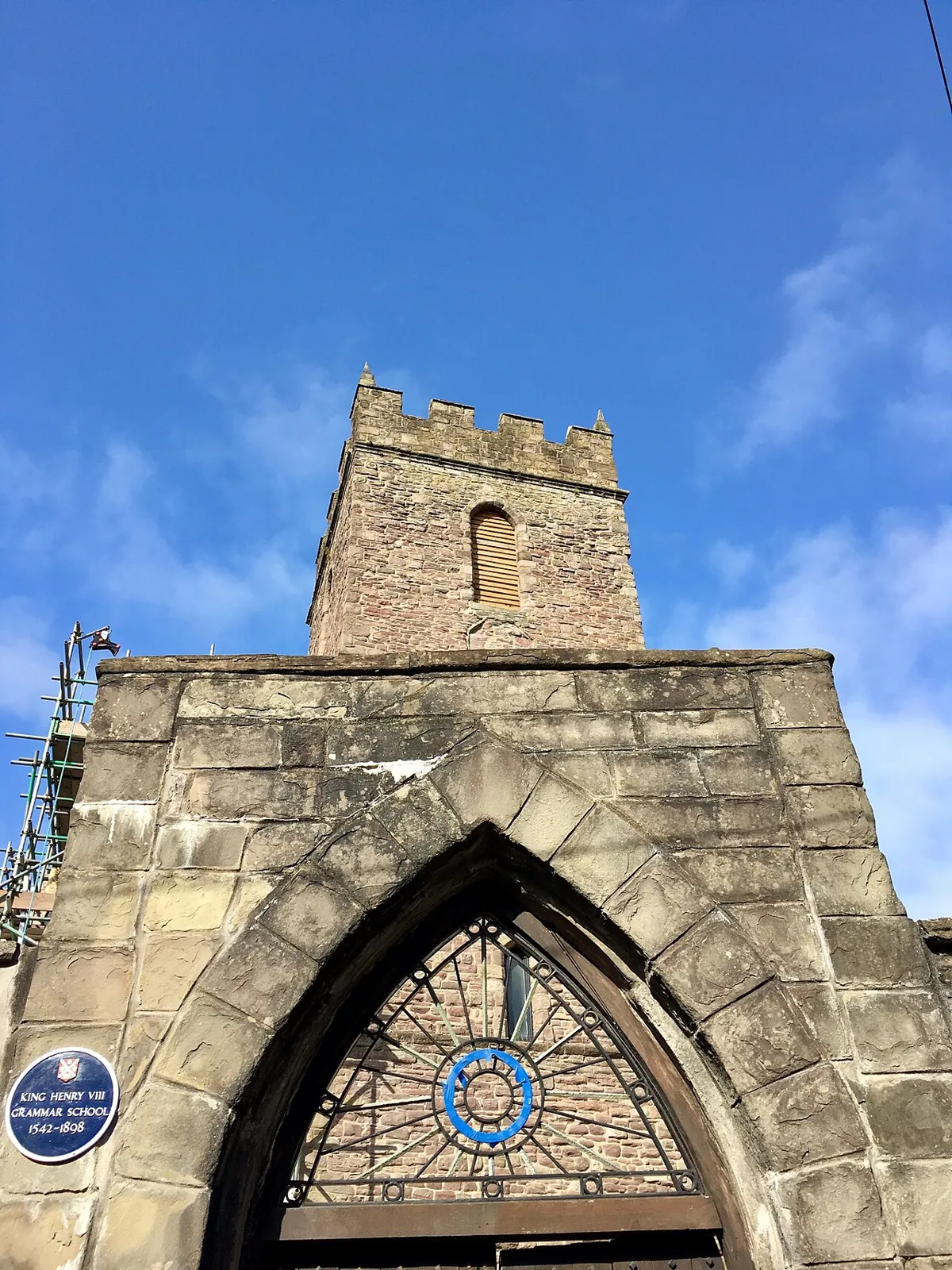
The word itself carries centuries of occupational history. Medieval operative masons used the term to describe the workshop structure built adjacent to a cathedral or castle site, a place where craftsmen stored tools, sheltered from weather, and settled disputes according to guild custom. When speculative Freemasonry emerged as a fraternal institution in the early eighteenth century, it inherited both the vocabulary and the organizational logic of those working lodges. The parallel is more than poetic: the lodge was already a self-contained community with its own hierarchy, its own rules of entry, and its own body of transmitted knowledge. Speculative Freemasonry simply translated that model from stone-cutting to moral instruction.
In contemporary usage, the word does double duty. It refers to the membership body itself (the lodge votes, initiates, and elects officers) and, colloquially, to the physical premises where that body assembles. A lodge in the first sense can technically meet anywhere it holds warrant to meet; the building is incidental. The distinction matters because a lodge that loses its meeting hall does not cease to exist, while a lodge that loses its charter from the grand lodge ceases to exist entirely, regardless of how fine its building may be.
Lodge vs. Freemasonry: Clarifying the Distinction
Freemasonry is the fraternity considered as a whole, a worldwide network of initiatic traditions sharing common ritual elements, symbols, and ethical commitments. A lodge is one local instantiation of that fraternity, roughly analogous to the relationship between a religion and a single congregation. Catholicism is not reducible to any one parish; Freemasonry is not reducible to any one lodge. This distinction matters practically because lodges vary considerably in culture, membership, and emphasis even within the same grand lodge jurisdiction. Two lodges meeting in the same city may share the same ritual text and yet feel entirely different in character.
It also matters historically. When the first grand lodge was constituted in London on June 24, 1717, it did not create Freemasonry from nothing. It created a governing structure above lodges that already existed and already had their own working customs. The grand lodge was, from the start, a coordinating body rather than a founding one, which is why debates about Masonic origins consistently return to the lodges themselves rather than to any central institution.
The Lodge Charter and Grand Lodge Authority
The charter, also called a warrant or dispensation depending on the jurisdiction, is the foundational legal instrument of every lodge. Issued by the relevant grand lodge, it specifies the lodge’s name, number, and location, and authorizes it to initiate candidates and confer the degrees recognized by that grand lodge. A lodge operating without a valid warrant is considered clandestine under mainstream Masonic law, and its members and initiates are generally not recognized by regular grand lodges worldwide.
The United Grand Lodge of England, whose Book of Constitutions has shaped Masonic governance across dozens of jurisdictions since 1723, is explicit on this point: no lodge may confer a degree without proper authority, and that authority flows entirely from the warrant. Revocation of a charter (which grand lodges have exercised in cases of misconduct or dormancy) effectively dissolves the lodge as a legal Masonic body. Members may petition to join other lodges individually, but the lodge as an institution simply ceases. The charter is not a formality. It is the institution.
History and Origins of the Masonic Lodge
The word “lodge” entered the vocabulary of organized stonemasonry long before it acquired any philosophical meaning. In 14th-century Scottish building records, the term referred to a physical structure on a cathedral or castle construction site: a covered workspace where masons stored tools, took shelter, and conducted the administrative business of the craft. These were functional buildings, not ceremonial ones. What they provided was a model of self-governing organization that proved remarkably durable. The men who met inside them developed their own customs, oaths, and methods of recognizing fellow craftsmen, and those customs did not disappear when the building was finished.
From Operative to Speculative: The 17th-Century Transition
The formal shift from craft guild to philosophical fraternity can be traced with unusual precision. The Schaw Statutes of 1598 and 1599, issued by William Schaw as Master of Work to the Scottish Crown, imposed written regulations on Scottish mason lodges for the first time. They required lodges to keep records, examine members on their knowledge of the craft, and maintain a hierarchical structure of wardens and fellows. These statutes introduced institutional oversight into what had previously been informal trade custom. Then, in 1600, the records of the Lodge of Edinburgh, Mary’s Chapel No. 1, document the admission of a non-operative member: John Boswell of Auchinleck, a laird with no apparent connection to the building trades. This is the earliest verified instance of speculative Freemasonry in the historical record, predating the English grand lodge by more than a century.
Historians debate the reasons for this transition, but the pattern is consistent across Scottish and later English sources. Educated gentlemen were admitted alongside working craftsmen, bringing with them an interest in the allegorical and philosophical dimensions of the builder’s trade. By the mid-17th century in England, figures such as Elias Ashmole (admitted in 1646, as recorded in his own diary) were joining lodges with no professional stake in stonework whatsoever. The craft lodge had become something else, though it retained the vocabulary, the tools, and the organizational structure of its operative origins.
The 1717 Founding and the Spread of the Grand Lodge System
On June 24, 1717, four London lodges meeting at the Goose and Gridiron alehouse in St. Paul’s Churchyard established the Premier Grand Lodge of England, the first governing body of its kind. The institutional innovation mattered as much as the founding date. By creating a grand lodge empowered to issue warrants authorizing new subordinate lodges, the founders established a scalable administrative template. Any group of Freemasons anywhere could petition for a warrant, receive official recognition, and operate under a shared constitutional framework. This model proved extraordinarily exportable.
Within thirteen years of the 1717 founding, warranted lodges were operating in France, Spain, and the American colonies. By 1800, the system spanned Europe, the Caribbean, and the entire eastern seaboard of North America. The Provincial Grand Lodge of New York was established under English warrant in 1781, while lodges in Philadelphia and Boston had been active since the 1730s. Each jurisdiction adapted local customs and, in some cases, developed distinct rites, but the structural principle remained constant: a grand lodge at the apex, issuing warrants to subordinate bodies, each governing its own internal affairs according to a written constitution. Every mainstream Masonic jurisdiction in the world today still operates on that same architecture, a notable degree of institutional continuity for a system now more than three centuries old.
Types of Masonic Lodges
Not all Masonic lodges are the same institution wearing the same clothes. The term covers a spectrum of organizations, from the foundational Craft lodge where every Freemason begins to highly specialized bodies focused on scholarship or additional degree work. Understanding the distinctions matters, because conflating them is one of the more reliable ways to misread how Freemasonry actually operates as a network of institutions.
| Lodge Type | Primary Purpose | Degrees or Orders Conferred | Prerequisite Membership | Governing Body |
|---|---|---|---|---|
| Blue Lodge (Craft Lodge) | Foundational Masonic membership and degree work | Entered Apprentice, Fellow Craft, Master Mason (1°–3°) | None (entry point) | State or Provincial Grand Lodge |
| Scottish Rite | Additional degree work and philosophical instruction | 4th through 32nd degree (33rd by invitation) | Master Mason in a Craft lodge | Supreme Council (Northern or Southern Jurisdiction in the US) |
| York Rite | Chivalric and capitular degree work | Chapter, Council, and Commandery orders | Master Mason in a Craft lodge | Grand Chapter, Grand Council, Grand Commandery (by state) |
| Lodge of Research | Masonic history and scholarship | No new degrees conferred | Master Mason in a Craft lodge | Warranted by the relevant Grand Lodge |
The Blue Lodge and Its Appendant Bodies
The Blue Lodge, also called the Craft lodge, is where Freemasonry’s three foundational degrees are conferred: Entered Apprentice, Fellow Craft, and Master Mason. Every other Masonic body treats Master Mason status as a non-negotiable prerequisite. The Scottish Rite extends the degree system from the 4th through the 32nd, with the honorary 33rd conferred by invitation only. The York Rite pursues a parallel track through Chapter, Council, and Commandery bodies. Organizations like Shriners International and the Order of the Eastern Star are concordant rather than strictly Masonic in the Craft sense; they maintain their own meeting structures and membership criteria, though all require prior Craft lodge membership for their male members.
Lodges of Research and Prince Hall Freemasonry
A smaller but intellectually significant category is the Lodge of Research. Quatuor Coronati Lodge No. 2076, founded in London in 1884 and warranted by the United Grand Lodge of England, is the oldest and most cited example. It publishes Ars Quatuor Coronatorum, an annual volume of Masonic scholarship that remains a primary reference for historians working in this area. Lodges of this type hold regular meetings and confer no new degrees; their output is papers, not ritual.
Separately, Prince Hall Freemasonry represents a historically distinct parallel jurisdiction with deep significance. African Lodge No. 459 received its charter directly from the Grand Lodge of England in 1784, making its lineage unambiguous. For much of the 19th and 20th centuries, mainstream grand lodges refused to recognize Prince Hall grand lodges on racial grounds. That position has shifted substantially: by the early 2000s, the majority of mainstream US grand lodges had extended formal recognition, though a small number had not, a fact the Masonic Service Association has documented in its jurisdictional surveys.
Lodge Organization and Internal Structure
A Masonic lodge is not a loose gathering of like-minded individuals who show up when convenient. It is a formally constituted body with a defined chain of command, parliamentary rules, and a governing hierarchy that has remained largely consistent since the United Grand Lodge of England codified its constitutional framework in 1815. Understanding how that structure operates internally is essential to understanding what the institution actually is, as distinct from what popular culture imagines it to be.
Officers and Their Roles
At the head of every lodge sits the Worshipful Master, elected annually by the membership and invested with authority over all meetings, degree ceremonies, and matters of lodge discipline. The title “Worshipful” is an archaic honorific, equivalent in usage to the “Worshipful Company” designations still carried by London’s livery companies. Below the Worshipful Master, the officer line descends through the Senior Warden, Junior Warden, Treasurer, Secretary, Senior Deacon, Junior Deacon, Senior Steward, Junior Steward, and Tyler, the last of whom guards the outer door of the lodge room against unannounced visitors.
Each position carries a symbolic function alongside its administrative one. The Senior Warden traditionally “closes the lodge at the end of the day’s labor,” a phrase borrowed directly from the operative stonemason’s worksite, where a warden would signal the end of the working day. The Junior Warden “calls the craft from labor to refreshment,” a reference to the midday meal break. The symbolism is not incidental. The entire officer structure is designed to mirror the progressive hierarchy of a medieval craft guild, reinforcing the fraternity’s claim to operative masonry as its conceptual ancestor. Whether that genealogy is historically literal or allegorical is a separate question, but the organizational logic it produces is coherent and consistent across jurisdictions.
Stated Communications vs. Special Meetings
Lodge business is conducted at two distinct types of meetings. The “stated communication” is a regular business meeting, typically held once or twice a month on a fixed schedule published in the lodge’s bylaws. At a stated communication, the lodge handles petitions for membership, financial reports, committee updates, and any other administrative matters that fall within its remit. These meetings follow Robert’s Rules of Order, or an equivalent parliamentary procedure, alongside the lodge’s own bylaws, which must be approved by the relevant grand lodge before they take effect.
A “special communication,” by contrast, is called for a specific purpose: conferring one of the three degrees on a candidate, addressing urgent business that cannot wait for the next stated meeting, or hosting a visiting dignitary. Special communications are not open-agenda gatherings. The notice convening the meeting must state its purpose, and business outside that stated purpose is generally not in order. This distinction keeps the lodge’s ceremonial and administrative functions from bleeding into each other in ways that would dilute both.
The Grand Lodge as Governing Authority
No lodge operates in isolation. Every chartered lodge functions under the constitution and edicts of its grand lodge, the sovereign body for a given jurisdiction, typically a U.S. state or a country. The grand lodge sets the ritual standard, issues and revokes charters, hears appeals from members disciplined at the lodge level, and publishes annual proceedings that serve as the official record of Masonic governance in that jurisdiction. The Grand Lodge of Massachusetts, chartered in 1792, and the United Grand Lodge of England, formed in 1813 through the merger of two rival grand lodges, are among the oldest continuously operating examples of this model.
Between stated communications, the lodge’s ongoing work falls to standing committees: a charity committee directing philanthropic disbursements, an investigation committee that evaluates petitions for membership and reports to the full lodge, and an audit committee that reviews the treasurer’s accounts. These committees are where much of the practical work of Masonic lodge organization actually happens, quietly and without ceremony, in the same way that any civic institution depends on its working groups rather than its formal assemblies to keep the lights on.
Want to learn more?
Degrees, Rituals, and Ceremonies Inside the Lodge
The Three Degrees: A Progression of Symbolic Instruction
Freemasonry structures its core instruction across three degrees, each conferred in a formal ceremony inside the lodge room. The first, Entered Apprentice, introduces the candidate to the basic moral framework of the fraternity: the importance of integrity, the obligation of secrecy, and the symbolic significance of the rough ashlar, the unfinished stone that represents the uninstructed self. The second degree, Fellow Craft, widens the lens considerably. The candidate is introduced to the seven liberal arts and sciences, a curriculum inherited from medieval scholasticism, and the working tools of this degree, particularly the square and the level, carry explicit lessons about moral uprightness and social equality. The third degree, Master Mason, is the culmination. It centers on the legend of Hiram Abiff, described in Masonic tradition as the chief architect of Solomon’s Temple, a figure drawn loosely from the biblical account in 1 Kings. The narrative dramatizes Hiram’s murder at the hands of three ruffians who sought to extort from him the secrets of a Master Mason, his refusal, his death, and the subsequent search for his body. Themes of fidelity in the face of mortal threat and the symbolic promise of resurrection give the third degree its gravity. Anderson’s Constitutions of 1723, the foundational governing document of speculative Freemasonry, does not spell out the ritual in detail, but it establishes the three-degree framework that lodges across the English-speaking world have followed ever since.
What Lodge Meetings Actually Look Like
A stated communication, which is the standard term for a regular scheduled meeting of a Masonic lodge, follows a structure that would be recognizable to any member of any chartered lodge in the United States or the United Kingdom, regardless of when or where they were raised. The meeting opens with a formal ritual: the lodge is called to order by the Worshipful Master, the Volume of Sacred Law (typically the Bible in English-speaking jurisdictions, though the choice reflects the membership’s composition) is opened on the altar, prayer is offered, and officers are examined at their stations to confirm the lodge is properly formed. What follows is, in practical terms, a standard organizational meeting. Minutes from the previous communication are read and approved, the treasurer reports on finances, correspondence from the grand lodge is reviewed, and petitions from prospective members are considered. Degree work, when scheduled, takes place within this same meeting, typically after the administrative business concludes. The lodge then closes with a ritual that mirrors the opening: prayer, a formal dismissal of officers, and the closing of the Volume of Sacred Law. The whole structure has remained largely consistent since the early eighteenth century. A Mason from a lodge warranted in 1750 would find the rhythm of a contemporary stated communication familiar, even if the specific wording of some ritual passages has been refined by individual grand lodge jurisdictions over the centuries. It is, as one Masonic scholar once observed, a board meeting wrapped in allegory, and neither description cancels the other.
The working tools used during degree ceremonies, including the gavel, the plumb, the square, and the compass, are not decorative props. Each carries an explicit didactic function: the gavel represents the force of conscience shaping conduct, the plumb stands for rectitude, the square for morality, and the compass for the boundary a person draws around their own desires. The ceremonies are theatrical in form, drawing on allegorical drama and passages of moral philosophy, but their stated purpose is instructional rather than performative. Whether a candidate absorbs that instruction depends, as with any educational format, on the candidate.
Masonic Lodge Premises: The Building and the Room
The room in which a lodge meets is not simply a meeting hall. Its layout follows a symbolic geography that has been consistent across jurisdictions for centuries. The Worshipful Master presides from the East, the Senior Warden from the West, and the Junior Warden from the South. These positions correspond to the sun’s arc across the sky, a correspondence that Masonic ritual makes explicit: the East represents the place of light and learning, the West the close of labor, and the South the meridian sun at its height. The arrangement means that every officer’s physical location in the room carries a stated meaning, not just a procedural one. Lodge buildings themselves vary enormously. A Masonic lodge may meet in a purpose-built temple of considerable architectural ambition, in a rented civic hall, or in a room above a hardware store. The House of the Temple in Washington, D.C., completed in 1915 and serving as the headquarters of the Scottish Rite’s Southern Jurisdiction, is among the most architecturally ambitious fraternal buildings in the United States. Numerous historic lodge buildings across the country are listed on state and national registers of historic places. None of this architectural range affects a lodge’s standing within the fraternity. Grand lodge recognition depends on regularity of practice, not the grandeur of the premises.
Symbolic Furnishings and Their Meanings
At the center of the lodge room stands the altar, and on it rest what Masonic tradition calls the three Great Lights: the Volume of Sacred Law (most commonly a Bible in Anglo-American lodges, though the specific text varies by jurisdiction and membership), the square, and the compasses. These are not ornamental. Each is a teaching instrument, and their significance is explained to candidates during the degree ceremonies. The square represents morality and right conduct; the compasses, the boundary of passions and desires. The Volume of Sacred Law is open during all lodge proceedings as a reminder of the obligations being undertaken. Two pillars, named Jachin and Boaz after the pillars described in the First Book of Kings as standing at the entrance to Solomon’s Temple, flank the lodge room. The checkered floor, in black and white squares, is among the most immediately recognizable features of any lodge interior. Masonic monitors (the printed guides to ritual that many jurisdictions publish openly) describe it as representing the duality of human experience: light and darkness, virtue and vice, the interplay of opposites that moral life requires navigating. Taken together, these furnishings transform an otherwise ordinary room into a structured teaching environment, which is precisely what Masonic ritual intends them to do.
Charitable Work, Community Service, and Modern Lodge Activities
The popular image of a lodge as a closed room full of ritual and secrecy accounts for perhaps one evening a month of actual lodge activity. The rest of the calendar tells a different story. The Masonic Service Association of North America estimates that Freemasons in the United States donate more than $2 million per day to charitable causes, a figure that spans hospital programs, scholarship funds, veterans’ outreach, and disaster relief operations. Individual lodges run blood drives, food pantries, and community improvement projects that operate entirely in public view, with no initiation required to benefit from them. Shriners International, whose membership requires Master Mason status, operates a network of 22 Shriners Children’s hospitals providing free or reduced-cost pediatric care across North America. That network alone represents one of the largest privately funded pediatric healthcare systems in the world, and it is about as far from a secret society as a children’s hospital can get.
Masonic Scholarships and Educational Programs
Most grand lodges and a good number of individual lodges administer scholarship funds open to members’ families or, in many cases, the general public. These are not token gestures: the Scottish Rite, Southern Jurisdiction administers the Perpetual Foundation, which has distributed millions of dollars in educational grants since its establishment, while state-level grand lodges from California to Massachusetts maintain their own scholarship programs, many of which advertised awards for the 2025-2026 academic year on publicly accessible websites. The criteria, application deadlines, and award amounts are published openly. This is a concrete, verifiable form of civic engagement that rarely surfaces in popular coverage of the fraternity, which tends to fixate on the ceremonial side of lodge life at the expense of the mundane but consequential work of writing scholarship checks.
Educational philanthropy has deep roots in the institution’s history. The premise that a man improves himself through study and reflection is embedded in the degree system itself, and many lodges have translated that internal emphasis on self-improvement into external programs that fund the education of people who will never attend a stated meeting.
Declining Membership and the Modern Lodge’s Response
Peak US Masonic membership reached approximately 4.1 million in 1959, a high-water mark that coincided with the broader postwar enthusiasm for fraternal organizations, civic clubs, and voluntary associations of every description. By 2023, the Masonic Service Association placed the figure closer to 1.1 million, a contraction of roughly 75 percent over six decades. Grand lodge annual reports across multiple jurisdictions document the trend without much ambiguity, and the Scottish Rite Research Society has published analyses examining its causes, which include demographic shifts, changing leisure patterns, and the general decline of membership-based organizations that sociologist Robert Putnam described in Bowling Alone (2000). The response from grand lodges has been practical rather than panicked: revised petition processes that reduce waiting periods, one-day class conferrals of degrees, mentorship programs pairing new members with experienced ones, and increased public programming designed to make the lodge visible in its community before a man ever considers joining. Whether these adaptations will stabilize membership remains an open question, but the institutional self-awareness driving them is at least clear-eyed about the scale of the problem.
How to Find a Masonic Lodge
Locating a Masonic lodge is considerably more straightforward than the institution’s reputation for secrecy might suggest. Every US state maintains a grand lodge with an official website, and virtually all of them include a lodge locator tool that allows searches by city, county, or zip code. The Masonic Service Association of North America also provides a state-by-state directory that consolidates contact information for all recognized grand lodges across the country, making it a useful single point of entry for researchers working across multiple jurisdictions. In England and Wales, the United Grand Lodge of England’s Find a Lodge tool serves the same function; the Grand Lodge of Scotland and the Grand Lodge of Ireland maintain equivalent directories covering their respective territories.
It is worth noting that many lodges hold what are called stated communications, which sometimes include a public dinner, a lecture, or a community event open to interested visitors. Attendance at these occasions carries no obligation to petition for membership and no expectation of any formal commitment. For readers who do want to understand the petition process, the appropriate resource is the grand lodge website for their specific jurisdiction, since fees, residency requirements, and procedural steps vary considerably from state to state and from country to country. The grand lodge, not a third-party guide, is the authoritative source on those particulars.
FAQ
What is the difference between a Masonic lodge and Freemasonry?
Freemasonry is the fraternity in its entirety: its philosophy, initiatic traditions, and global membership spanning hundreds of thousands of men across dozens of jurisdictions. A Masonic lodge is a single, chartered local unit of that fraternity, holding a warrant from a grand lodge that grants it the authority to meet and confer degrees.
The relationship is structurally comparable to a religion and one of its congregations. The broader institution sets doctrine, standards, and governance; the local body is where members actually gather, practice ritual, and conduct business. No lodge operates independently. Its charter can be suspended or revoked by the grand lodge that issued it.
What is the purpose of a Masonic lodge?
The United Grand Lodge of England’s Book of Constitutions defines three core functions: conferring the degrees of Freemasonry, conducting the fraternity’s formal business, and promoting the moral and social improvement of its members. These remain the constitutional baseline across most regular jurisdictions worldwide.
In practice, individual lodges layer considerable charitable and community activity on top of that baseline. Fundraising for local causes, scholarship programs, and disaster relief contributions are common, though the scale and focus vary significantly by jurisdiction and by the culture of each individual lodge. The institution does not mandate a single charitable model.
How often do Masonic lodges meet?
Most lodges hold a stated communication (a regular business meeting) once or twice a month, generally on a fixed weeknight. The schedule is set by the lodge’s bylaws and approved by its grand lodge. Beyond routine business, special communications are called as needed, typically to confer a degree on a candidate.
At the grand lodge level, an annual communication brings together elected representatives from every constituent lodge once per year. That annual assembly handles legislation, elections of grand officers, and the formal governance of the jurisdiction as a whole.
What are the three degrees of Freemasonry?
The three degrees conferred in a Craft lodge (also called a Blue Lodge in North American usage) are Entered Apprentice (First Degree), Fellow Craft (Second Degree), and Master Mason (Third Degree). Each involves a ceremonial conferral built around allegorical content drawn from the traditions of operative stonemasonry.
The progression is sequential and cannot be skipped. Completing the Third Degree is a prerequisite for membership in any appendant or concordant body, including the Scottish Rite and the Ancient Arabic Order of the Nobles of the Mystic Shrine (the Shriners). The three-degree structure has been the standard framework since at least the early eighteenth century.
Can women join a Masonic lodge?
Mainstream regular Freemasonry, as recognized by the United Grand Lodge of England, restricts membership to men. That standard has been consistent since the 1717 founding of the first grand lodge in London.
Several parallel bodies operate outside that recognition. The Order of Women Freemasons, founded in the UK in 1908, and various co-Masonic orders worldwide admit women under their own grand lodge structures. Separately, the Order of the Eastern Star is a mixed-gender appendant body open to Master Masons and their female relatives. These organizations are real and well-documented; they simply operate on different constitutional footing from the regular grand lodge system.
