Italiano
  English
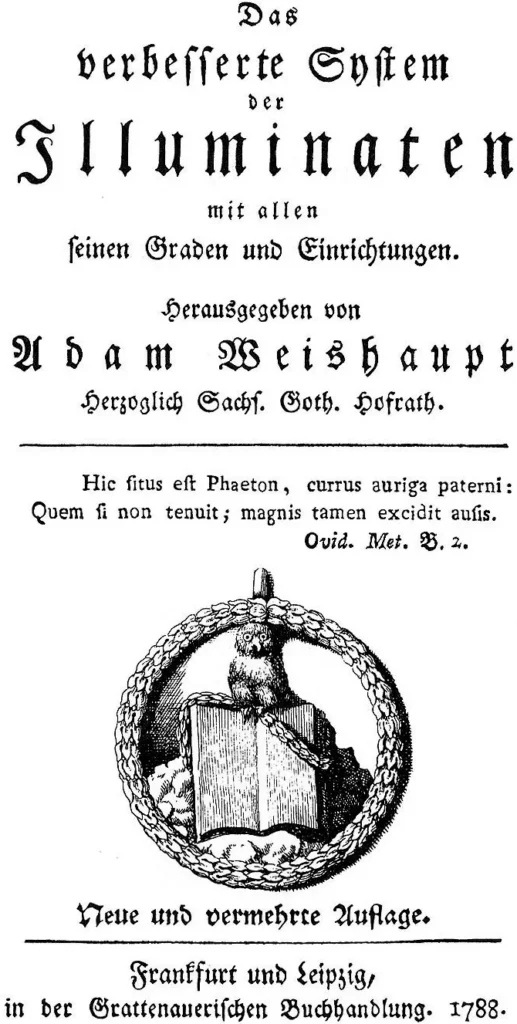
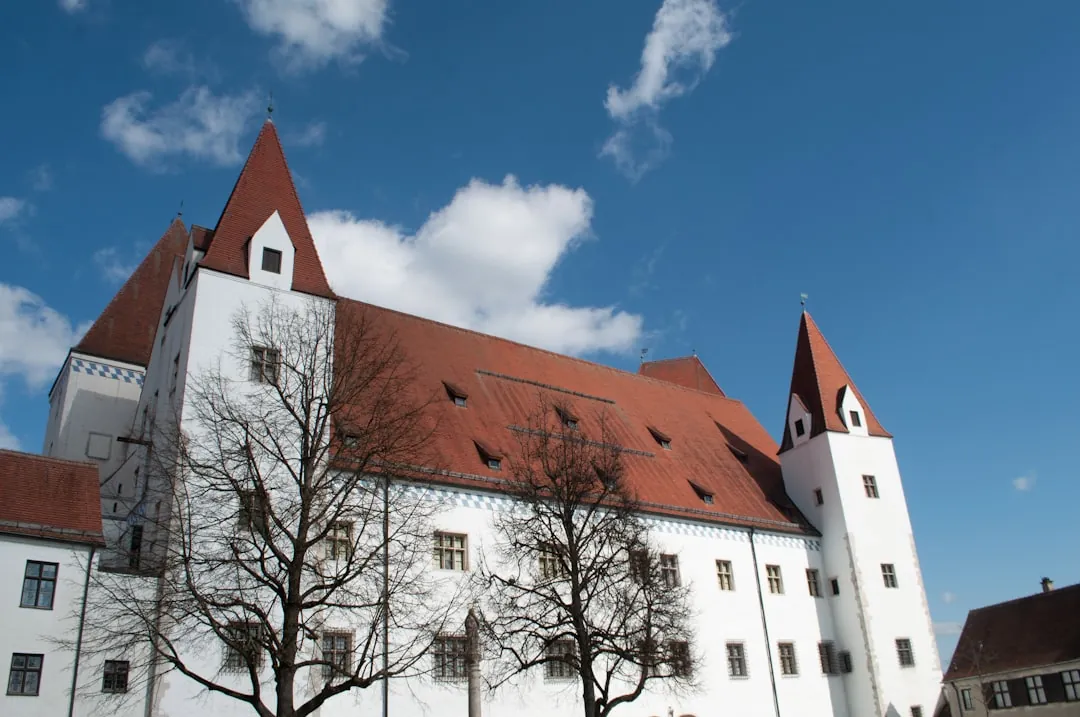
The Bavarian Illuminati was founded on May 1, 1776, by Adam Weishaupt, a professor of canon law at the University of Ingolstadt. It was banned by the Elector of Bavaria in 1785 and had effectively ceased to exist by 1787, a lifespan of roughly eleven years. Freemasonry, by contrast, traces its institutional origins to the founding of the Premier Grand Lodge of England on June 24, 1717, and continues to operate across more than 160 countries today. These are two different organizations, with different founders, different purposes, different structures, and different fates. Yet the conflation of freemasonry and the Illuminati has become one of the most persistent myths in modern popular culture, fueled by selective reading, pop-culture shorthand, and a long tradition of anti-Masonic literature that predates the internet by centuries. This article untangles the two, examines what each organization actually was, traces how and why the confusion took hold, and evaluates the historical evidence, primary sources included, so readers can assess the record for themselves.
Two Organizations, Two Founding Moments
Freemasonry and the Illuminati are two historically distinct organizations with separate founders, separate founding dates, and separate institutional purposes. Freemasonry’s Premier Grand Lodge was established in London in 1717. The Bavarian Illuminati was founded in 1776, nearly six decades later, by a single German academic with a specific political agenda.
The surface-level confusion between the two is understandable, if not excusable. Both organizations emerged from the same broad intellectual climate of European Enlightenment, both attracted educated men who valued reason over received dogma, and both operated with degrees of secrecy that made them irresistible to later conspiracy theorists. That shared atmosphere, however, is not the same as shared leadership, shared membership rolls, or shared purpose. Tracing each institution back to its actual founding moment makes the distinction plain.
The Premier Grand Lodge of England and the 1717 Founding
On June 24, 1717, four London lodges gathered at the Goose and Gridiron alehouse in St. Paul’s Churchyard and constituted the first Grand Lodge, creating Freemasonry’s earliest centralized institutional framework. The date was deliberate: the feast of St. John the Baptist, a day already observed by operative stonemasons’ guilds. The four lodges, whose precise names remain a matter of some historical dispute, elected Anthony Sayer as the first Grand Master, a title that carried administrative rather than ceremonial weight at this early stage.
The organizational structure gained its definitive written form six years later, when the Reverend James Anderson published the Constitutions of the Free-Masons in 1723. The Anderson Constitutions codified the obligations of members, the hierarchy of officers, and the regulations governing lodge conduct. Crucially, they also articulated the fraternity’s religious position: a Mason was expected to believe in a Supreme Being but was not bound to any particular denomination, a deliberately broad formulation designed to accommodate the religiously diverse merchant and professional classes of Georgian England. By 1717, Freemasonry already had a published rulebook, elected officers, and a multi-lodge administrative structure. It was, in short, an institution.
Adam Weishaupt and the Order of the Illuminati
Adam Weishaupt founded the Order of the Illuminati on May 1, 1776, at the University of Ingolstadt in Bavaria, where he held the chair of canon law. His motivations were specific and, in their own context, coherent. Weishaupt was deeply hostile to what he saw as Jesuit dominance over Bavarian intellectual life, to the unchecked authority of monarchical government, and to organized superstition masquerading as religious truth. The Illuminati was his instrument for cultivating a network of rationalist reformers who might, over time, influence European political culture from within existing institutions.
The structure Weishaupt designed reflected this goal. Members were organized into small, compartmentalized cells, with each recruit knowing only the identities of those immediately above and below them in the hierarchy. This was not mystical architecture; it was operational security borrowed from Jesuit organizational models, turned against the Jesuits themselves (a detail Weishaupt appreciated). At its peak, the Order claimed somewhere between 650 and 2,500 members across German-speaking Europe, depending on which historian’s estimate one accepts. It was banned by the Elector of Bavaria in 1785 and had effectively ceased to exist by 1787. The bavarian illuminati freemasonry connection that conspiracy culture insists upon rests largely on the fact that Weishaupt briefly considered using Masonic lodge networks as a recruitment channel, a plan he largely abandoned after finding the existing fraternal culture incompatible with his tightly controlled cell structure.
The Bavarian Illuminati: Ideology, Structure, and Rapid Suppression
Enlightenment Philosophy as the Illuminati’s Core Mission
Adam Weishaupt was not building a mystery school. He was building a political instrument. The Order of the Illuminati, founded on May 1, 1776, in Ingolstadt, Bavaria, had an explicit and documented agenda: to replace superstition with reason, to weaken the grip of the Catholic Church on Bavarian civic life, and to cultivate a class of rational administrators capable of reforming governance from within existing institutions. These goals are not inferred from rumor. They are recorded in the Order’s own internal papers, seized by Bavarian authorities at Landshut in 1786 and published by the Bavarian government as evidence of sedition. Weishaupt wrote in one circular that the Order’s purpose was “to make of the human race, without any distinction of nation, condition, or profession, one good and happy family.” The language is utopian; the method was conspiratorial secrecy, which he considered a practical necessity given the political climate.
The Order’s degree structure borrowed its surface vocabulary from Masonic lodge ritual: initiates passed through grades including Novice, Minerval, and Illuminatus Minor before reaching the higher grades reserved for the inner circle. The cosmetic resemblance to lodge organization was deliberate. Weishaupt recruited heavily from existing Masonic lodges in Bavaria precisely because those networks already contained educated, reform-minded men accustomed to sworn secrecy. But the structural parallel masked a fundamental difference of purpose. Freemasonry’s degree system is oriented toward moral allegory and philosophical self-improvement. The Illuminati’s grades were a screening mechanism, designed to identify ideologically reliable members who could be trusted with increasingly explicit anti-clerical and anti-monarchical doctrine. The ritual trappings were, by Weishaupt’s own account, a recruitment convenience rather than a spiritual framework.
The 1785 Suppression and the Robison-Barruel Myth
The Elector of Bavaria, Karl Theodor, issued edicts banning secret societies in 1784 and again in 1785, the second edict naming the Illuminati directly. The 1786 raid on the home of member Xavier Zwack at Landshut produced a cache of correspondence that confirmed the government’s suspicions and publicly exposed the membership list. By 1787, the organization had effectively ceased to function. Its lifespan was eleven years. What it could not control was its posthumous reputation. In 1797, the Scottish scientist John Robison published Proofs of a Conspiracy Against All the Religions and Governments of Europe, arguing that the Illuminati had survived suppression, infiltrated Freemasonry across Europe, and engineered the French Revolution. In 1797 and 1798, the French Jesuit Abbé Augustin Barruel published his four-volume Memoirs Illustrating the History of Jacobinism, advancing a nearly identical thesis with more elaborate documentation, most of it fabricated or misread. Neither Robison nor Barruel provided credible evidence that the Illuminati had survived Karl Theodor’s edicts, and no serious historian of the French Revolution, from Albert Mathiez to William Doyle, has accepted their framework. What they did accomplish was the permanent welding together of two distinct organizations in the popular imagination. The conflation of freemasonry and the illuminati that saturates modern conspiracy culture is, in traceable historical terms, their legacy, not the product of any actual institutional connection.
Freemasonry: Structure, Degrees, and Global Reach
The Masonic Degree Hierarchy Explained
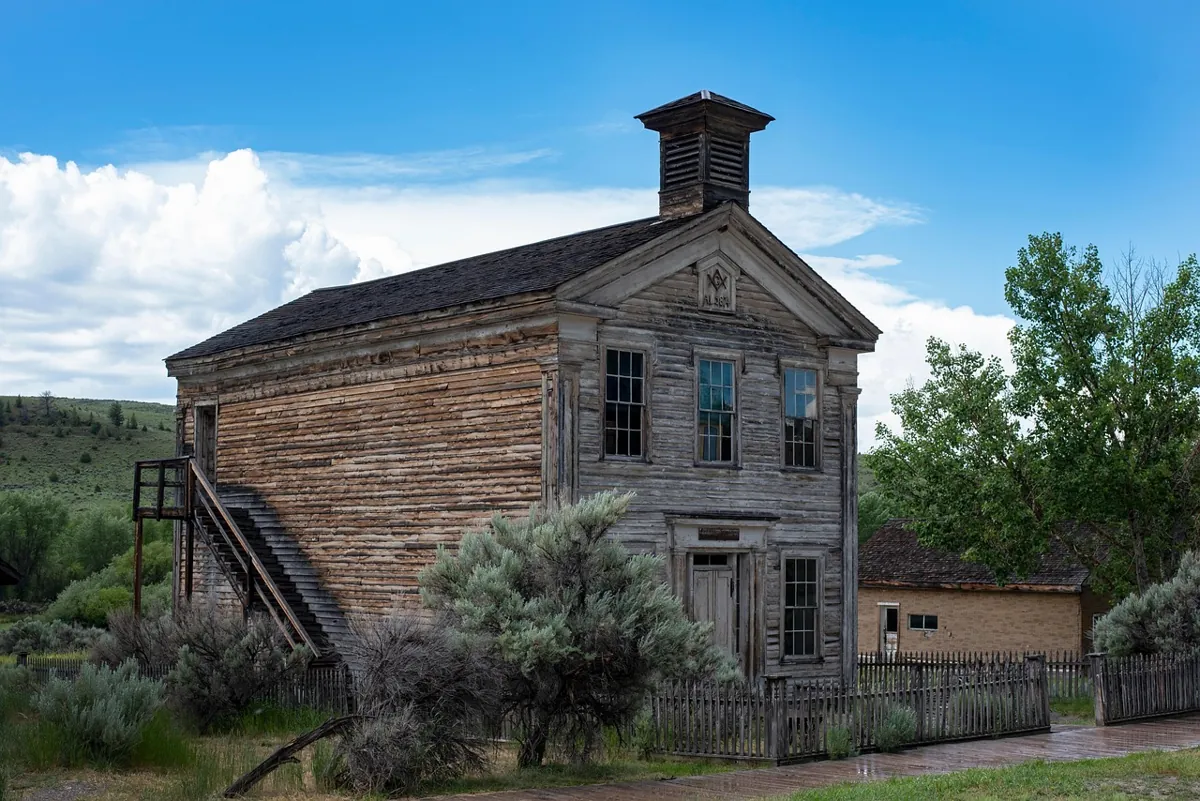
Freemasonry is organized around a degree system, and “degree” here means something specific: a formal ceremony conferring membership at a particular level, complete with ritual, obligation, and working-tool symbols tied to the allegorical trade of operative stonemasonry. Every regular Masonic jurisdiction in the world recognizes the same three foundational degrees, collectively housed in what is called the Blue Lodge. A candidate begins as an Entered Apprentice, advances to Fellowcraft, and completes the core curriculum as a Master Mason. The third degree, with its dramatic narrative centered on the legendary architect Hiram Abiff, is the one most Masons consider the heart of the entire system. Everything beyond it is supplementary.
And there is a great deal beyond it. Two major appendant bodies extend the degree system for Master Masons who choose to continue. The Scottish Rite confers degrees numbered 4th through 33rd, though the 33rd is an honorary distinction awarded for distinguished service rather than a sequential step. The York Rite follows a parallel track, organized into Chapters, Councils, and Commanderies, with its own sequence of degrees emphasizing Christian symbolism more explicitly than the Blue Lodge does. Shriners International, formally the Ancient Arabic Order of the Nobles of the Mystic Shrine, requires Scottish or York Rite membership and is as well known for its charitable hospitals as for its fezzes. None of these bodies replace the Blue Lodge. They are additions, not alternatives, and a Master Mason who never joins any of them remains a fully recognized Freemason in every jurisdiction that matters.
Geographic Spread and Regional Variations
Freemasonry spread from its 1717 organizational founding in London with remarkable speed. Grand Lodges were established in Ireland in 1725, Scotland in 1736, and across Continental Europe and the American colonies within decades. The Masonic Service Association of North America and the United Grand Lodge of England both estimate current worldwide membership at roughly six million, with the United States accounting for the largest single concentration, somewhere between one and two million depending on the reporting year. That figure represents a sharp contraction from the mid-twentieth century peak, when American lodge rolls exceeded four million.
The most significant institutional divergence in global Masonry is the split between Anglo-American lodges and the Grand Orient of France, founded in 1773. Anglo-American jurisdictions require candidates to profess a belief in a Supreme Being, a requirement the United Grand Lodge of England considers non-negotiable for recognition. The Grand Orient of France removed that requirement in 1877, opening membership to atheists and agnostics on the grounds that requiring a theological position contradicts Enlightenment principles of rational inquiry. The result is a formal schism: the UGLE does not recognize the Grand Orient as a regular Masonic body, and the feeling is largely mutual. This distinction matters for any honest account of enlightenment secret societies and their legacy, because it shows that “Freemasonry” is not a monolithic institution with a single doctrine. It is a family of related organizations sharing ritual architecture but divided on foundational questions of theology and governance, a fact that conspiracy narratives almost never acknowledge.
Illuminati vs. Freemasons: A Direct Comparison
The conflation of these two organizations collapses under the weight of basic biographical and institutional facts. Freemasonry traces its formal, documented origins to the founding of the Premier Grand Lodge of England on June 24, 1717, in London. The Bavarian Illuminati was founded on May 1, 1776, by Adam Weishaupt at the University of Ingolstadt, in what is now Germany. That is a fifty-nine-year gap between two organizations established by different men, in different countries, operating under explicitly different stated purposes. The table below places the key attributes side by side.
| Attribute | Freemasonry | Bavarian Illuminati |
|---|---|---|
| Founded | June 24, 1717 (Premier Grand Lodge of England) | May 1, 1776 (Ingolstadt, Bavaria) |
| Founder | Four London lodges acting collectively | Adam Weishaupt, professor of canon law |
| Stated Purpose | Moral improvement through allegorical ritual and fraternal fellowship | Combating superstition, religious influence over public life, and political abuses |
| Structure | Decentralized lodge system; independent grand lodges by jurisdiction | Hierarchical and cell-based, modeled partly on Jesuit organization |
| Lifespan | Continuous operation for over three centuries | Approximately eleven years (1776 to 1787) |
| Current Status | Active worldwide; millions of members across recognized grand lodges | Dissolved by Bavarian government decree; no legitimate successor organization |
Membership overlap between the two did exist, and honesty requires acknowledging it. Weishaupt’s recruitment strategy deliberately targeted Masonic lodges, particularly in the Strict Observance rite, because those networks offered educated, already-organized men sympathetic to Enlightenment ideals. Some individuals held membership in both bodies simultaneously. However, organizational overlap is not organizational identity. The Illuminati maintained its own separate initiation hierarchy, its own internal correspondence system, and its own political objectives that Masonic constitutions of the era neither endorsed nor shared. The United Grand Lodge of England has never recognized the Bavarian Illuminati as a Masonic body, and no credible Masonic historian has argued otherwise. Shared members prove social proximity among educated Europeans of the 1780s, nothing more structural than that.
Want to learn more?
/history-of-freemasonry/” title=”History of Freemasonry”>History of Freemasonry section of this site provides a chronological account of the fraternity’s origins, institutional development, and global spread, sourced from grand lodge archives and peer-reviewed historical scholarship.”
Why Conspiracy Theories Keep Conflating the Two
The template was set in 1797, when two books appeared almost simultaneously and proved far more durable than the organizations they described. John Robison’s Proofs of a Conspiracy and Augustin Barruel’s Mémoires pour servir à l’histoire du jacobinisme each argued, with varying degrees of documentary creativity, that the French Revolution had been engineered by a network of secret societies operating through Masonic lodges. Neither author distinguished carefully between the Bavarian Illuminati (dissolved a decade earlier) and Freemasonry (a functioning institution with tens of thousands of members). The conflation was convenient: both organizations prized ritual secrecy, both drew on Enlightenment ideals of reason and brotherhood, and both were opaque enough to absorb almost any accusation. That combination of genuine obscurity and ideological threat proved irresistible to readers already shaken by revolutionary violence. The pamphlet logic those two books established has not changed in two hundred years. Secret society plus Enlightenment rhetoric plus closed ritual equals sinister global plot. Every subsequent iteration of the conspiracy narrative, from 19th-century broadsheets to 21st-century Reddit threads, is essentially a reprint of Robison and Barruel with updated graphics.
The Morgan Affair and the Rise of Anti-Masonic Politics in America
Suspicion of Freemasonry in the United States did not require the Illuminati myth to gain political traction. In September 1826, William Morgan, a disaffected Mason living in Batavia, New York, disappeared after announcing plans to publish an exposé of Masonic ritual. He was never found. The circumstances pointed to abduction by local lodge members, and several men were eventually convicted on related charges, though sentences were light. The public reaction was disproportionate in the best possible way for historians: it produced the Anti-Masonic Party, which contested the 1828 presidential election and became the first significant third party in American history. The party held the first-ever national nominating convention in 1831, a procedural innovation that outlasted the organization itself. What the Morgan Affair demonstrates is that anxiety about fraternal secrecy operated as an independent force in American civic culture, entirely separate from any European Illuminati mythology. Voters who had never heard of Adam Weishaupt were prepared to organize politically against an institution they perceived as placing private loyalty above public accountability. That suspicion, rooted in specifically American republican anxieties about elite cabals, created a cultural receptivity that later conspiracy narratives about enlightenment secret societies would exploit without needing to build from scratch.
The Anti-Masonic movement faded by the mid-1830s, absorbed largely into the Whig Party, but the underlying concern never fully dissolved. It resurfaced in the anti-Catholic nativism of the 1840s, in Populist-era suspicions of banking conspiracies, and eventually in the 20th-century literature that wove Freemasonry, the Illuminati, and a rotating cast of shadowy elites into a single unified narrative. Each revival borrowed credibility from the previous one, regardless of whether the underlying evidence had changed.
How Conspiracy Narratives Evolved in Popular Culture and Media
Dan Brown’s 2000 novel Angels and Demons introduced the Illuminati to a generation of readers who had not encountered Robison or Barruel, and it did so with the novelist’s prerogative: atmosphere over accuracy. Brown acknowledged the historical Illuminati’s dissolution but treated its fictional survival as a premise rather than a problem. The book sold tens of millions of copies. Its influence on how readers understand the relationship between conspiracy theories freemasonry and the Illuminati is difficult to overstate, precisely because it was consumed as entertainment rather than history, leaving impressions without inviting scrutiny. Films, video games, and documentary-style YouTube productions followed the same logic, each adding a new visual vocabulary (pyramid imagery, the eye of Providence masonic symbol, shadowy handshakes) while stripping away the historical context that would complicate the narrative.
The algorithmic architecture of contemporary social media has accelerated this process in ways that Robison could not have imagined. Recommendation systems on YouTube and similar platforms are optimized for engagement, and engagement correlates strongly with novelty and emotional arousal. A video claiming that Freemasons and the Illuminati jointly control global finance generates more clicks than a video explaining that the Bavarian Illuminati dissolved in 1787 and left no institutional successor. The result is an information environment where the conflation of the two organizations is continuously reinforced, not because the evidence supports it, but because the incentive structure rewards the claim. Historians and archivists produce corrections; the algorithm buries them. Understanding that mechanism does not require a conspiracy theory to explain it. It requires only a basic familiarity with how attention economies work.
Symbols and Rituals: What the Evidence Actually Shows
The Eye of Providence: Egyptian, Christian, and Masonic
The Eye of Providence is perhaps the single most misrepresented symbol in popular discussions of freemasonry and the illuminati. Its history is long, thoroughly documented, and almost entirely unconnected to either organization for most of its existence. The symbol appears in ancient Egyptian religious art, where the Eye of Horus served as a protective emblem. By the Renaissance, Christian iconographers had adopted a triangulated eye to represent the all-seeing nature of the Holy Trinity, a usage visible in dozens of European church paintings and altarpieces from the fifteenth and sixteenth centuries. When Charles Thomson and William Barton incorporated the Eye of Providence into the reverse of the Great Seal of the United States in 1782, they were drawing on that Christian iconographic tradition, not on any Masonic or Illuminati source. The Congressional record from that year contains no Masonic correspondence, no Illuminati influence, and no esoteric agenda. Thomson himself described the eye as representing “the eye of Providence favoring the American cause.” Weishaupt’s Bavarian Illuminati, founded in 1776, had no documented presence in American statecraft by 1782, and the organization would be banned entirely within three more years.
Freemasonry did eventually incorporate the Eye of Providence into lodge iconography, most prominently in the nineteenth century, but this adoption came well after the symbol had already circulated widely through Christian art and civic heraldry. Treating the eye as a Masonic invention requires ignoring roughly four centuries of prior usage. Its appearance in Masonic contexts reflects the same broad Enlightenment visual vocabulary that many fraternal and civic organizations drew upon, not a secret lineage connecting lodges to Weishaupt’s order.
Masonic Craft Symbols and Their Actual Origins
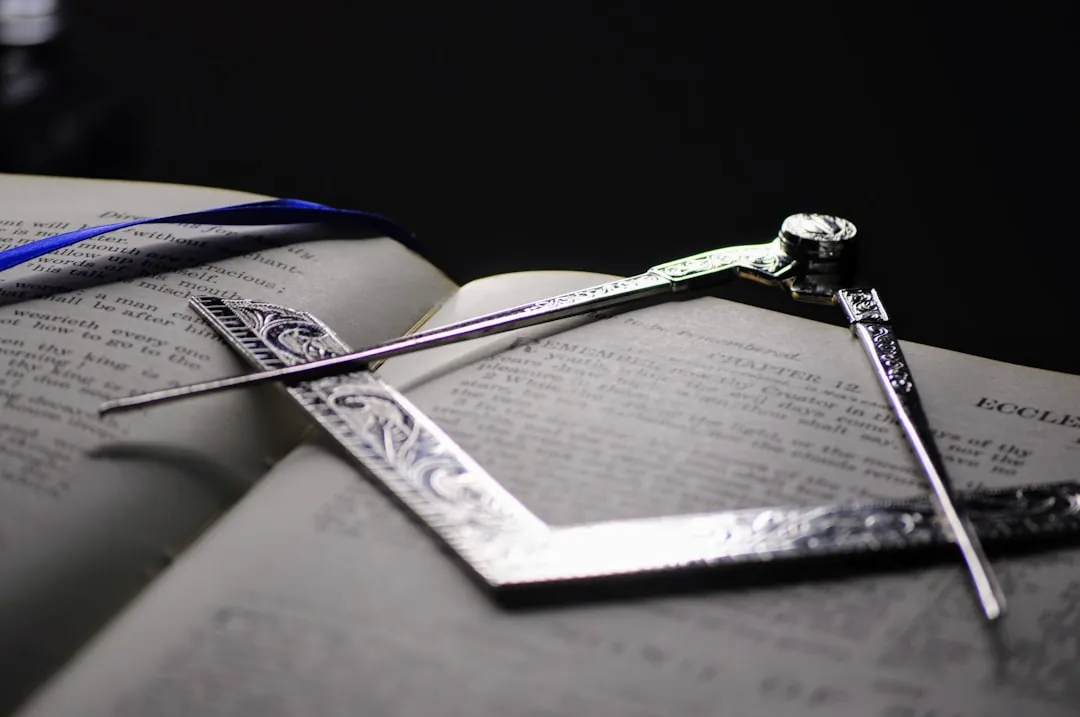
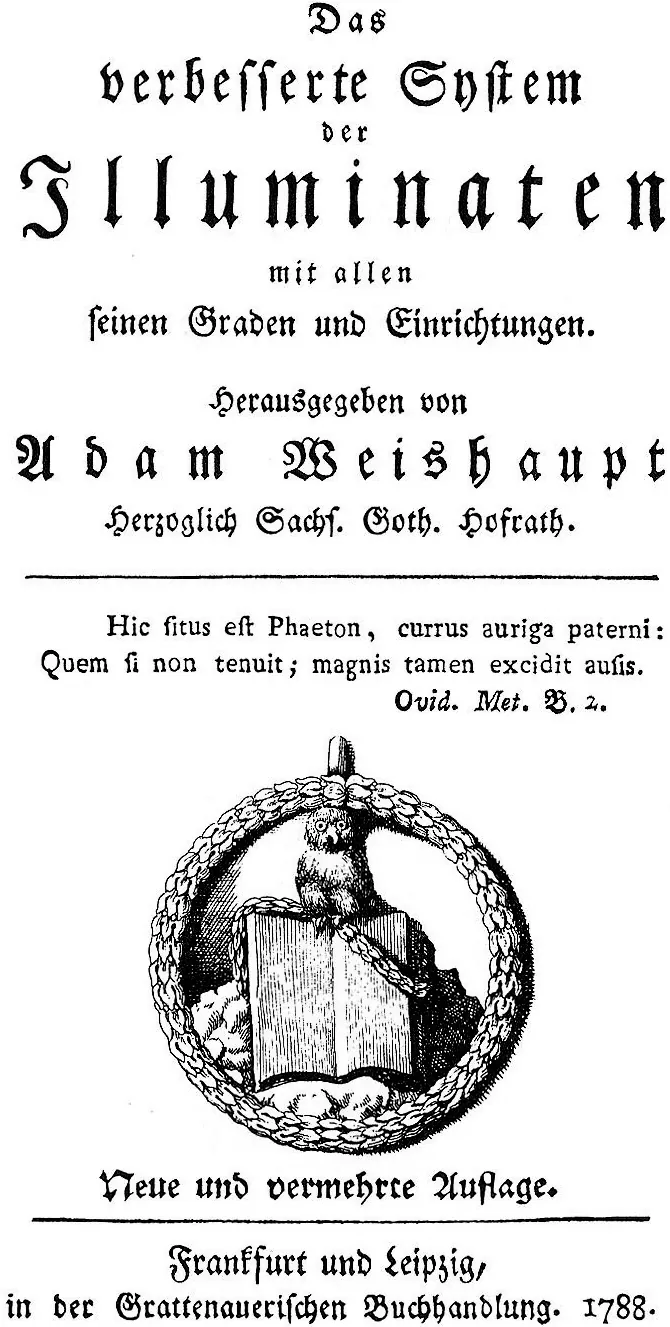
The square and compass, the letter G, and the lambskin apron share a provenance that has nothing to do with philosophical secret societies. Each traces directly to the working practices of operative stonemason guilds in medieval Europe. The square and compass were literal tools of the trade, used to test right angles and draw geometric figures on stone. When speculative Freemasonry formalized its rituals in the early eighteenth century, it retained these instruments as moral allegories: the square representing virtue and honest conduct, the compass representing the boundary a person draws around their own desires. The Masonic Service Association of North America has documented this craft-guild lineage in detail, noting that guild lodges in Scotland and England used similar working-tool symbolism in their operative traditions long before 1717. The letter G, which appears at the center of the square and compass emblem, is generally interpreted within lodge tradition as standing for both Geometry and the Grand Architect of the Universe, a reference to the intellectual heritage of stonemasonry rather than to any Illuminati ritual. Weishaupt’s order, by contrast, organized itself around classical academic imagery. Its primary emblem was the Owl of Minerva, borrowed from ancient Greek and Roman iconography as a symbol of wisdom and rational inquiry. The owl appears nowhere in standard Masonic regalia. These are two distinct symbolic vocabularies, assembled by two distinct organizations for two distinct purposes, and conflating them requires either a significant misreading of the primary sources or a willingness to ignore them entirely.
Historical Figures and the Alleged Connections
Few rhetorical moves are more common in conspiracy literature than the name-drop: list enough famous men in proximity to a secret society, and the association does the argumentative work for you. The Founding Fathers are particularly vulnerable to this treatment, because several of them were, in fact, Freemasons, and at least one of them owned Illuminati documents. The historical record, however, is considerably more precise than the insinuation.
George Washington’s 1798 Letter: The Primary Source Record
George Washington was initiated into Fredericksburg Lodge No. 4 on November 4, 1752, at age twenty, and remained a Freemason until his death in 1799. His Masonic affiliation is among the best-documented facts of his biography. What is less frequently cited is what he actually wrote when the Illuminati question was put to him directly. On October 24, 1798, Washington replied to Reverend G. W. Snyder, who had sent him a copy of John Robison’s Proofs of a Conspiracy and expressed alarm about Illuminati infiltration of American lodges. Washington’s response, preserved in the Library of Congress, is unambiguous:
“It was not my intention to doubt that, the Doctrines of the Illuminati, and principles of Jacobinism had not spread in the United States. On the contrary, no one is more truly satisfied of this fact than I am. The idea that I meant to convey, was, that I did not believe that the Lodges of Free Masons in this Country had, as Societies, endeavoured to propagate the diabolical tenets of the first, or pernicious principles of the latter.”
Washington was not denying that Enlightenment radicalism had reached American shores. He was denying, explicitly and in writing, that Masonic lodges had served as its vehicle. For a claim supposedly built on Masonic-Illuminati unity, the testimony of the most famous Mason in American history cuts rather sharply in the opposite direction.
Benjamin Franklin’s case is similarly instructive. Franklin was a Freemason and, during his years as American minister to France, a prominent member of the Parisian lodge Les Neuf Soeurs, where he counted Voltaire among his fellow initiates. No credible primary source, however, places him inside the Bavarian Illuminati. Intellectual overlap with Enlightenment ideals is not organizational membership, and no historian of the period has produced documentary evidence connecting Franklin to Weishaupt’s order.
Thomas Jefferson presents the most nuanced case. Jefferson did own a copy of the Illuminati’s constitutions and, in an 1800 letter to Bishop James Madison (a cousin of the future president), he described Adam Weishaupt as “an enthusiastic philanthropist” whose goals were “the diffusion of moral and political instruction.” Jefferson was defending Weishaupt’s Enlightenment principles against what he considered hysterical overreaction, not confessing membership. Intellectual sympathy and organizational enrollment are distinct categories, and collapsing them is precisely the logical error that keeps conspiracy theories about secret societies circulating long after the historical record has closed the question. Jefferson never claimed to be an Illuminatus, and no initiation record has ever surfaced to suggest otherwise.
Modern Illuminati Claims and the State of the Historical Evidence
No credible primary-source evidence supports the existence of a continuous Illuminati organization running from 1787 to the present day. The claim rests on three methodological failures: inference from coincidence, reliance on documents later identified as forgeries, and circular citation in which one conspiracy text cites another as its source, which in turn cites the first. Vernon Stauffer’s 1918 academic study, New England and the Bavarian Illuminati, remains a landmark precisely because it traced both the organization’s documented dissolution and the subsequent myth-making apparatus in meticulous detail. Stauffer demonstrated that the American panic over Illuminati infiltration in the 1790s, stoked by figures such as the Reverend Jedidiah Morse, was driven almost entirely by secondary rumor rather than any verifiable organizational activity on American soil. Subsequent historians of Enlightenment secret societies have reinforced that conclusion. The Bavarian state’s own suppression records, the defection memoirs of former members, and the correspondence of Adam Weishaupt himself in his post-Illuminati exile all point the same way: the organization collapsed, its leadership scattered, and no successor body inherited either its membership rolls or its institutional structure.
What fills the documentary vacuum is not evidence but branding. Commercial entities operating under the Illuminati name, from merchandise storefronts and subscription websites to the music-industry mythology that surfaces periodically on social media, are marketing constructs rather than signs of organizational continuity. The conspiracy theories freemasonry discourse and the parallel Illuminati discourse share this structural problem: they treat the persistence of a symbol or a name as proof that the underlying organization persists. By that logic, a Halloween costume shop selling Masonic aprons would constitute evidence of Masonic activity. Conflating brand recognition with institutional survival is not history; it is folklore at best, and at worst a deliberate commercial exploit of audiences who have never had access to the primary sources.
Comparison with Other Secret Societies: Knights Templar and Skull and Bones
Situating the Illuminati within the broader landscape of historical secret societies clarifies where genuine organizational overlap exists and where it does not. The Masonic Knights Templar degree is a documented case of real overlap: it is a chivalric appendant body within York Rite Freemasonry, formally organized in the United States under the Grand Encampment of Knights Templar (incorporated 1816), and it borrows the name and imagery of the medieval military order as symbolic material, not as a claim of lineal descent. The connection is explicit, acknowledged, and entirely internal to the Masonic ritual system. Skull and Bones at Yale, founded in 1832, presents a different picture. It is a private collegiate society with no documented Masonic charter, no formal ritual borrowing from lodge practice, and no organizational link to the historical Bavarian Illuminati. Its reputation for secrecy has made it a frequent addition to lists of “connected” elite organizations, but reputation is not documentation. The historical record rewards precision: some secret societies share symbols, some share personnel at the individual level, and very few share institutional structure. Conflating all three categories is the analytical error that keeps freemasonry and the illuminati perpetually entangled in public imagination long after the archival record has separated them.
FAQ
Are Freemasons and the Illuminati the same organization?
No. The two organizations had different founders, different structures, and different stated purposes. Freemasonry was formally established in London on June 24, 1717; the Bavarian Illuminati was founded in Ingolstadt on May 1, 1776, by Adam Weishaupt, a professor of canon law. The gap between them is nearly six decades.
Some early Illuminati members also held Masonic membership, but that overlap reflects the social networks of German Enlightenment intellectuals, not any organizational merger. The Bavarian government suppressed the Illuminati by decree in 1785. The two groups were never unified, and treating them as interchangeable collapses a historical distinction the primary sources make perfectly clear.
Did the Illuminati really control world governments?
The historical record does not support this claim. At its peak, Weishaupt’s order had an estimated 650 to 2,500 members, concentrated almost entirely in German-speaking territories. It was dissolved by government decree within eleven years of its founding, not the profile of an organization running world affairs.
The idea of secret-society control over governments originates with two polemical works published in 1797: John Robison’s Proofs of a Conspiracy and Abbé Barruel’s Memoirs Illustrating the History of Jacobinism. Both were written explicitly to blame the French Revolution on hidden networks. Historians of the period regard them as politically motivated rather than reliable primary sources.
What is the Eye of Providence, and did the Illuminati put it on the US dollar?
The Eye of Providence depicts an eye within a triangle, representing divine watchfulness. It appears in Renaissance Christian art well before either Freemasonry or Weishaupt’s order existed, which makes claims of Illuminati authorship anachronistic by definition.
The symbol was incorporated into the Great Seal of the United States in 1782 by Charles Thomson and William Barton. Neither man is documented as an Illuminati member. The reverse of the Great Seal (the side featuring the Eye of Providence) did not appear on currency until 1935, roughly 150 years after the Bavarian organization had been dissolved. The timeline alone rules out the popular attribution.
How long did the Bavarian Illuminati actually exist?
Approximately eleven years. Weishaupt founded the order on May 1, 1776. The Elector of Bavaria issued edicts banning secret societies in 1784 and 1785. In 1786, authorities seized Illuminati correspondence at Landshut, exposing the membership list and internal documents. The organization had effectively ceased to function by 1787.
No credible primary-source evidence supports any claim of organizational continuity beyond that date. What persisted after 1787 was not the order itself but a growing body of polemical literature attributing world events to its supposed survival, which is a very different thing from the thing itself.
Did Benjamin Franklin belong to the Illuminati?
No credible primary source places Benjamin Franklin in the Bavarian Illuminati. Franklin was a documented Freemason, a member of St. John’s Lodge in Philadelphia and, during his years in France, of the Parisian lodge Les Neuf Soeurs. His Masonic affiliations are well-attested. His Illuminati membership is not attested at all.
Thomas Jefferson, not Franklin, is the Founding Father most associated with intellectual sympathy toward Weishaupt’s Enlightenment principles, expressed in private correspondence. But sympathy for an idea is not membership in an organization, and Jefferson’s letters fall well short of any documented affiliation with the order.