Freemasonry Myths and Truths

Masonic Ritual: History, Structure, and Symbolic Meaning

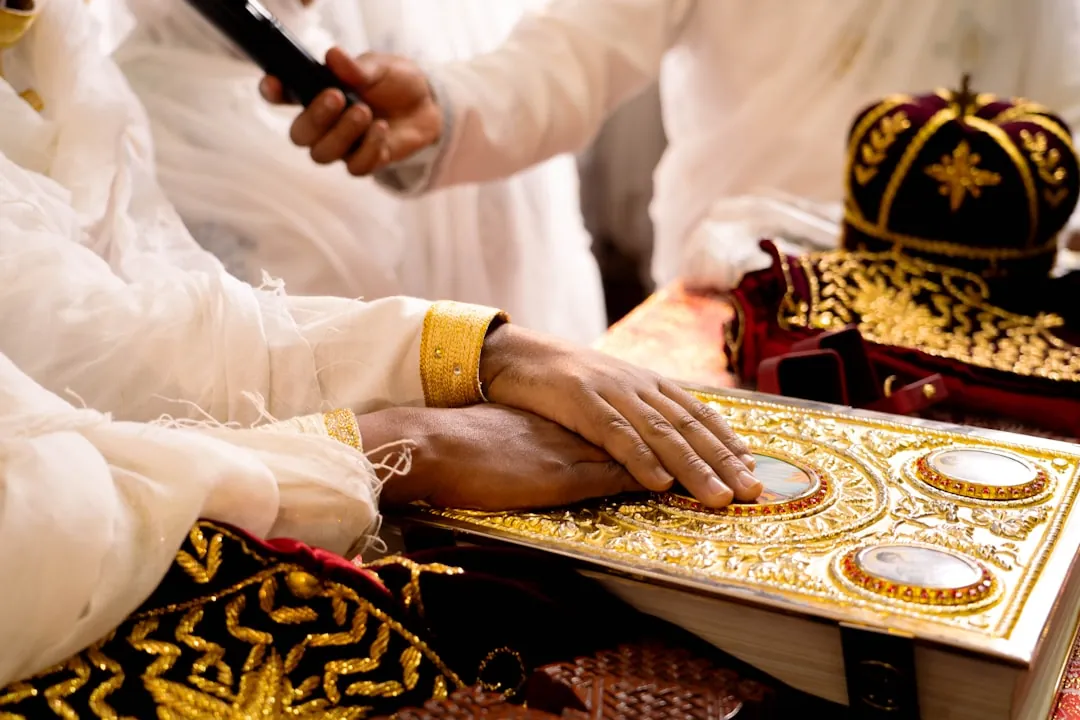
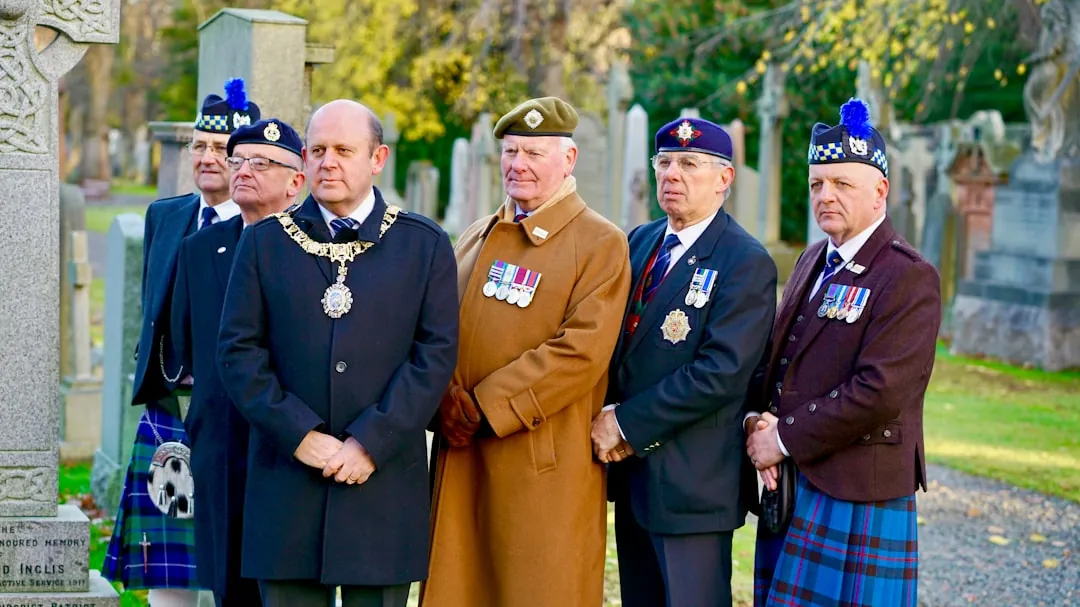
Masonic ritual participants gathered in formal brotherhood assembly

Masonic ritual is the structured ceremonial practice at the heart of Freemasonry, a sequence of dramatic allegories, symbolic gestures, and moral instruction that has been performed in recognizable form since at least the early eighteenth century. The first Grand Lodge was constituted in London on June 24, 1717, and the ritual framework codified in the decades that followed remains the template for lodge work practiced across more than 170 countries today. That longevity is not accidental. Masonic ritual functions simultaneously as an initiation rite, a mnemonic system for ethical teaching, and a mechanism for fraternal cohesion, three purposes that any serious examination of the subject must hold together. What it is not, despite a persistent popular mythology, is a vehicle for secret oaths of political allegiance or occult power. The ceremonies draw on operative stonemason tradition, Renaissance humanism, and Protestant scripture, filtered through the Enlightenment sensibility of the men who formalized them. This article traces the historical origins of that framework, explains the structure of each of the three degrees, examines the symbols and officers who animate the ritual, and addresses the regional variations and modern transmission challenges that shape how Masonic ceremony is practiced today.

What Is Masonic Ritual? A Working Definition

Masonic ritual is a formalized sequence of allegorical drama, symbolic gesture, and moral instruction that structures the internal life of a Freemasons’ lodge. It is not a religious liturgy, a political ceremony, or an occult rite. The framework has been standardized since the early 18th century, with its foundations documented in primary sources that remain publicly available.

Masonic ritual participants gathered in formal brotherhood assembly
Photo: Samuel Tsegaye Visuals (unsplash)

The term covers more ground than most outsiders assume. It encompasses the opening and closing procedures that begin and end every lodge meeting, the degree conferrals through which a candidate advances from Entered Apprentice to Fellow Craft to Master Mason, and the catechetical review (a structured question-and-answer exchange) that follows each degree to confirm the candidate’s comprehension of what he has just experienced. Anderson’s Constitutions of 1723, the earliest printed regulatory document of the premier Grand Lodge, already presupposed an established ceremonial framework. The United Grand Lodge of England‘s Book of Constitutions, in its successive editions, codified that framework further. Neither document invented the ritual from whole cloth; both reflect practices that had been accumulating in operative and speculative lodge culture for decades before 1717.

Ritual vs. Ceremony vs. Symbolism: Clarifying the Terms

Popular writing about Freemasonry uses “ritual,” “ceremony,” and “symbolism” as interchangeable synonyms. They are not. Ritual refers to the enacted procedure in its entirety: the scripted sequence of words, movements, and dramatic exchanges that constitute a lodge’s formal working. Ceremony is a narrower term for a single discrete event within that larger procedure, such as the first-degree initiation or the installation of a new Worshipful Master. Symbolism is the interpretive layer applied to both: the system of meaning that explains why a candidate approaches the altar in a particular posture, or why the working tools of each degree carry specific moral weight.

Conflating these three categories is the source of considerable confusion, both in sensationalist coverage and in well-intentioned popular history. A cable-tow is a physical object used in ritual; it becomes a symbol when the lodge explains what obligation and trust it represents. The distinction matters because critics of Freemasonry sometimes treat the symbolic interpretation as if it were the literal content of the procedure, while defenders sometimes dismiss the procedure itself as “merely symbolic” to deflect scrutiny. Both moves misrepresent how the system actually works. Masonic scholars such as Albert Mackey, writing in his Encyclopedia of Freemasonry (1874), were careful to maintain this distinction, even if later popularizers were not.

Historical Origins and Evolution of Masonic Ritual

The documented history of masonic ritual does not begin in candlelit lodge rooms or with gentlemen philosophers debating Enlightenment ideals. It begins, more prosaically, with working stonemasons in medieval England and the manuscript charges they carried to govern their craft. The Regius Manuscript, dated to approximately 1390, and the Cooke Manuscript, dated to approximately 1410, are the earliest surviving texts linking organized stonemason guilds to proto-Masonic obligations: moral duties, rules of conduct, and the expectation that a craftsman’s character was as important as his skill with a chisel. These documents describe nothing resembling a modern lodge ceremony, but they establish the intellectual and ethical vocabulary that speculative Freemasonry would later inherit wholesale. Ritual, in this context, was never invented from scratch. It was adapted, layered, and refined across centuries.

From Operative Guilds to Speculative Lodges

The transition from operative to speculative Masonry was gradual rather than sudden, accelerating through the 17th century as educated gentlemen, clergy, and aristocrats began joining guilds that had no practical need of their stonecutting abilities. What these new members brought was an appetite for allegory. The apron, worn by working masons to protect their clothing from stone dust, was reinterpreted as a symbol of labor and moral purity. The working tools, the square, the level, the plumb rule, stopped being instruments of construction and became metaphors for ethical self-improvement. The examination of a craftsman’s competence, once a practical test of trade knowledge, evolved into the ritual examination of a candidate’s moral readiness. This metaphorical transformation is not a later invention or a revisionist reading. Scottish lodge records from the early 17th century, including those of Lodge Mother Kilwinning, show non-operative members appearing alongside working masons well before the 1717 institutional watershed. The physical customs of the building site became the symbolic grammar of the lodge room.

Anderson’s Constitutions and the Codification of 1723

When the Premier Grand Lodge of London was formed on June 24, 1717, it represented an institutional consolidation rather than a philosophical invention. The organizational framework that gave this new body its regulatory coherence arrived six years later with the publication of The Constitutions of the Free-Masons by the Reverend James Anderson in 1723. Anderson’s text provided the first printed rulebook for lodge conduct: it outlined the duties of officers, the obligations of members, and the moral principles governing fraternal behavior. It did not publish ritual in the modern sense, since the actual ceremonial working was communicated orally and never committed to print in Anderson’s era, but it established the template of governance and moral expectation that grand lodges around the world still reference today. The 1723 Constitutions also made a notable theological adjustment, replacing the medieval requirement of Christian belief with a broader obligation to believe in “the religion in which all men agree,” a formulation that allowed the fraternity to expand across confessional boundaries. Later milestones compounded this codification. William Preston’s Illustrations of Masonry (1772) and Thomas Smith Webb’s Freemason’s Monitor (1797) standardized much of what American lodges practice today, giving the Preston-Webb tradition its enduring shape. What emerges from this long arc is a clear pattern: ritual texts in Freemasonry are living documents, revised by grand lodge committees and shaped by historical circumstance, not fixed scripture handed down unchanged from a single founding moment.

The Structure of a Lodge Meeting: Opening, Degree Work, and Closing

A lodge meeting follows a precise procedural architecture that any Freemason traveling from London to Louisville would recognize. The meeting opens with a formal ritual sequence in which the Worshipful Master declares the lodge “at labor” at a specified degree, confirms that all officers are at their stations, and invokes a non-denominational prayer. Nothing in that sequence is improvised. The language, the physical movements, and the order of events are drawn from the jurisdiction’s authorized ritual monitor, and deviations are noted and corrected. Once the lodge is formally opened, business may be conducted: minutes read, petitions considered, correspondence handled. The dramatic centerpiece of any lodge meeting, though, is degree work, the ceremonial conferral of the Entered Apprentice, Fellowcraft, or Master Mason degree upon a candidate. A full degree conferred properly can occupy an entire evening, which is why many lodges schedule degree nights separately from stated communications. The closing ritual mirrors the opening with equal formality: officers are acknowledged by station, the lodge is declared “at refreshment” (the traditional phrase for adjournment), and members are dismissed with a formal charge that varies by jurisdiction but typically calls on brothers to practice the craft’s moral teachings in daily life.

Large ceremonial hall hosting masonic ritual gathering and proceedings
Photo: MERLIN S (unsplash)

The Role of Ritual Officers and Their Responsibilities

The lodge’s ritual structure depends on a defined hierarchy of officers, each assigned specific ceremonial functions that cannot simply be redistributed on the night. The Worshipful Master presides from the East, directs all degree work, and is the sole authority who can open or close the lodge. The Senior Warden, stationed in the West, oversees the lodge “at labor” and assumes the Master’s authority in his absence. The Junior Warden, in the South, is responsible for the lodge “at refreshment” and traditionally supervises the conduct of members during breaks. The two Deacons, Senior and Junior, serve as messengers and escorts, guiding candidates through the physical movements of a degree and carrying communications between officers. Stewards assist the Junior Warden and prepare candidates before they enter the lodge room. The most singular office is the Tyler, who stands outside the lodge door, armed in many jurisdictions with a drawn sword, and ensures that no uninitiated person gains entry. The Tyler also prepares candidates immediately before their admission. Each of these roles carries specific words, gestures, and positions that must be executed in sequence for the degree to be considered properly conferred under most grand lodge constitutions.

Memorization and the Oral Tradition of Ritual Transmission

Ritual is not learned from a script handed to a new officer on his first night. Most grand lodges transmit their working through a mentorship system known as proficiency, in which an experienced Mason coaches a candidate or new officer through the required catechisms, responses, and charges until they can be delivered from memory. This oral tradition is deliberate. The United Grand Lodge of England, along with most North American grand lodges, discourages reading from a printed monitor during degree work on the grounds that reliance on a text breaks ceremonial continuity and signals to the candidate that the lodge has not done the work of preparation. Some jurisdictions go further: their ritual monitors, sometimes called “cipher books,” encode the working in abbreviated or symbolic notation precisely to prevent a non-initiate from reconstructing the full degree from the printed page alone. The practical result is that Masonic ritual is transmitted the way legal oral argument or liturgical chant once was, through repetition, correction, and sustained mentorship over months. A brother who has “passed proficiency” in a given degree has demonstrated that the material lives in his memory, not on a lectern in front of him.

The Three Degrees of Freemasonry: What Each Teaches

Freemasonry structures its core instruction around three progressive degrees, each building on the last in symbolic depth and moral expectation. The degrees are not academic credentials or military ranks. They are, as the United Grand Lodge of England describes them, a system of “moral and philosophical instruction” conveyed through ceremony, working tools, and allegory. Each degree presents a candidate with a specific set of symbols and a specific lesson, delivered in a form designed to be memorable precisely because it is dramatic.

Degree Name Symbolic Role Primary Working Tools Central Moral Theme
Entered Apprentice (First Degree) The new candidate, entering the craft 24-inch gauge, common gavel Self-improvement and the discipline of time
Fellowcraft (Second Degree) The journeyman, advancing in knowledge Square, level, plumb rule Intellectual cultivation and moral uprightness
Master Mason (Third Degree) The completed craftsman, facing mortality Trowel (and the tools of the previous degrees) Fidelity, mortality, and the immortality of virtue

The Entered Apprentice degree introduces the candidate to the lodge and its officers, and presents two working tools whose symbolism is deliberately practical in origin. The 24-inch gauge represents the division of the day into labor, refreshment, and service to God and a worthy brother. The common gavel represents the work of removing the rough edges of personal conduct. The lesson is straightforward: before a person can build anything of value for others, the raw material of the self must be shaped. The Fellowcraft degree widens the scope considerably. Its working tools, the square, the level, and the plumb rule, address morality, equality, and rectitude of conduct respectively. This degree also incorporates the liberal arts and sciences, with geometry receiving particular emphasis. The traditional explanation, drawn from standard ritual texts including the widely published Richardson’s Monitor of Freemasonry (1860), holds that geometry underlies all the arts and is the foundation on which the moral architecture of the craft rests.

The Hiram Abiff Legend and the Third Degree

The masonic initiation ceremony of the third degree centers on one of the most elaborate pieces of allegorical theater in any fraternal tradition. Hiram Abiff, identified in the ritual as the master architect of Solomon’s Temple and described as “the widow’s son,” is said to have possessed the secrets of a Master Mason. According to the legend as performed in lodge, three ruffians, each demanding those secrets, murder him in succession when he refuses to reveal them. His body is discovered, and the secrets are declared lost. The legend is not presented as history, and responsible Masonic sources have never claimed it as such. The name Hiram appears in the Hebrew Bible (1 Kings 7) as a skilled craftsman sent by the King of Tyre, but the elaborate narrative surrounding his death and the subsequent search for his body is the craft’s own allegorical construction, developed in recognizable form by the early eighteenth century.

The symbolic purpose of the narrative is a meditation on three things: fidelity to obligation, the universality of mortality, and the persistence of virtue beyond death. The candidate, during the 3rd degree masonic ritual, participates in a dramatic re-enactment that places them in the role of Hiram. The effect is intended to be contemplative rather than theatrical. As Masonic scholar Albert Mackey wrote in his Encyclopedia of Freemasonry (1874), the legend “is not a history but a philosophical myth.” That distinction matters. The drama works precisely because it operates at the level of symbol, not biography.

Want to learn more?

Learn more

/masonic-symbolism/” title=”Masonic Symbolism Explained”>Masonic symbolism.”

Symbols and Their Significance in Masonic Ritual

Three objects sit at the center of every properly constituted lodge: the Square and Compasses, the Volume of the Sacred Law, and the Tracing Board. Each carries a specific allegorical weight explained explicitly during the degrees, leaving little room for guesswork about intended meaning. The Square and Compasses are the most universally recognized emblem in Freemasonry. The square, borrowed directly from operative stonemasonry, represents morality and right conduct, the standard by which a Mason is expected to measure his actions toward others. The compasses represent the discipline of keeping desire and passion within proper bounds. Neither symbol is presented as mystical. Both are rooted in the physical tools that medieval guild craftsmen used daily, and the ritual makes that derivation explicit. The Volume of the Sacred Law, placed open on the altar during every meeting, functions as a symbol of the divine standard by which members are expected to measure their conduct. The VSL is not fixed to a single text. Depending on the candidate’s faith, it may be the Bible, the Quran, the Torah, the Vedas, or another scripture that individual recognizes as authoritative. The United Grand Lodge of England’s Book of Constitutions addresses this directly, affirming that no single religious text is privileged above others in the lodge room. The Tracing Board, a painted or printed diagram displayed during each degree, serves as a visual curriculum. It illustrates the symbols and allegories under discussion in that particular degree, functioning more like a lecturer’s slide than a sacred icon. Popular accounts sometimes treat it as a mystical artifact, which misreads its practical pedagogical purpose.

Working Tools as Moral Metaphors

Each of the three degrees introduces a specific set of working tools drawn from the stonemason’s trade, and each tool is assigned a precise ethical meaning within the masonic initiation ceremony. In the First Degree, the candidate is presented with the 24-inch gauge, used by operative masons to measure stone, here reinterpreted as a symbol for dividing the day among labor, refreshment, and service. The common gavel, used to knock off rough edges from stone, represents the work of subduing personal faults and impulses. The chisel, which refines stone to its finished form, stands for the cultivation of the mind through education.

The Second Degree introduces the square, the level, and the plumb rule. The square, again, signifies morality. The level represents equality, the recognition that all members stand on the same ground regardless of social rank outside the lodge. The plumb rule signifies rectitude of conduct, the commitment to act uprightly in all circumstances. The Third Degree brings the skirret, pencil, and compasses, each tied to principles of planning, recording, and self-governance. The trowel, associated in some rites with the Third Degree or with the Mark Master degree in the York Rite, carries a particularly direct metaphor: spreading the cement of brotherly love to unite members into a coherent whole. What is notable across all these presentations is their consistency. The ritual does not claim that these tools possess power. It claims, straightforwardly, that they illustrate principles worth practicing, grounding masonic ritual and symbolism firmly in the craft tradition from which the fraternity draws its foundational language.

Fraternal Recognition: Grips, Signs, and Words

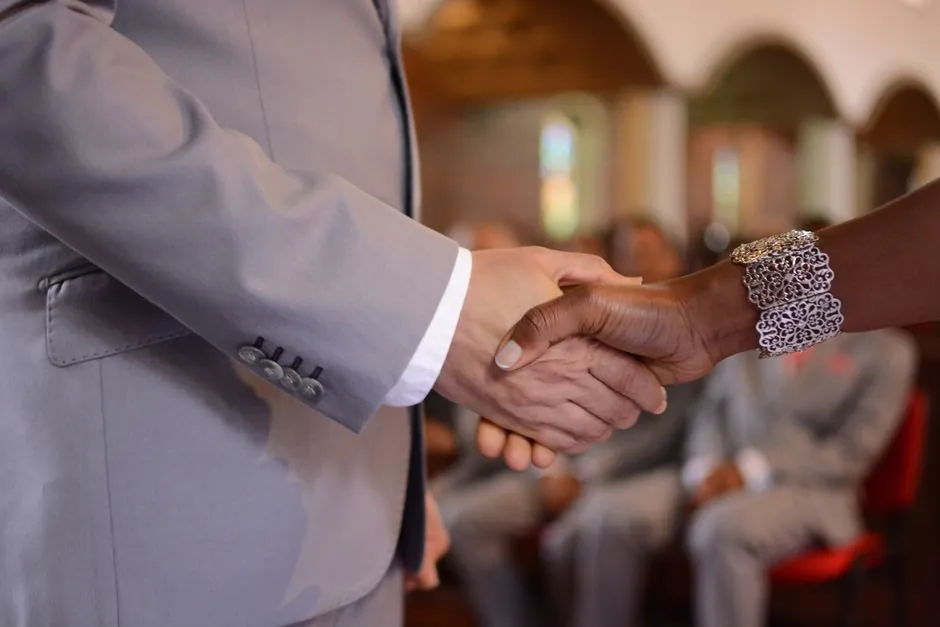
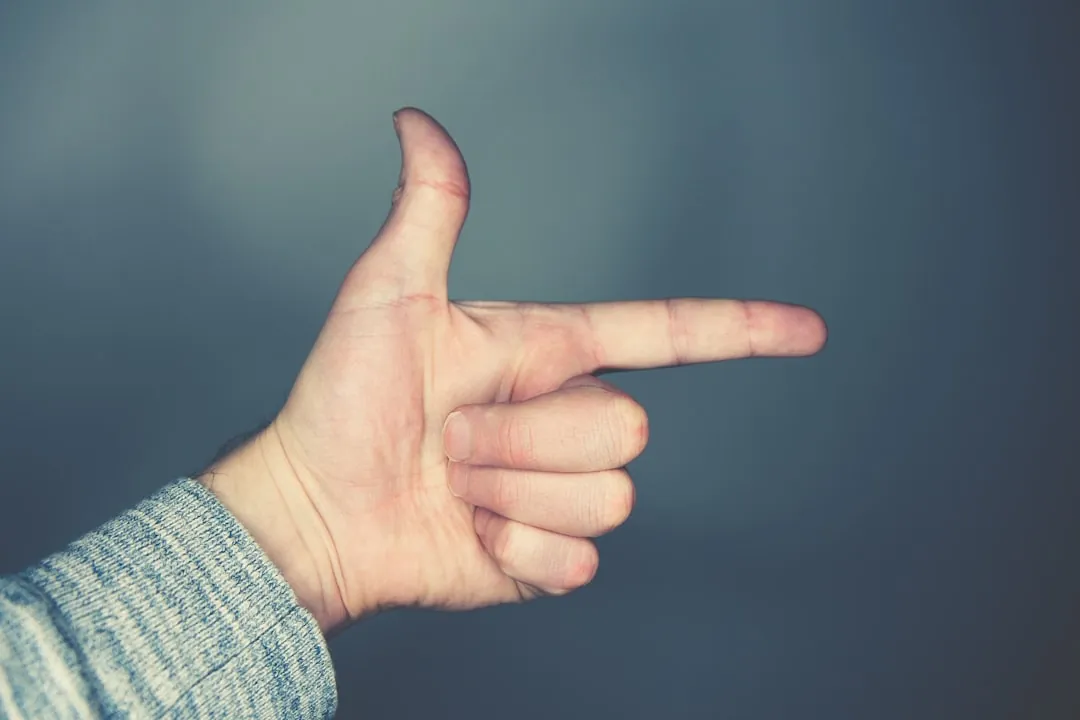
Every degree of the Craft confers three things on the candidate: a grip, a sign, and a word. Collectively, these fraternal recognition methods served a function that was entirely practical before it became ceremonial. A journeyman stonemason traveling from York to London in the fifteenth century had no diploma to present, no guild card to show. What he had was a handshake and a password, recognized by the master of a new lodge as proof that the man had been properly trained. The system migrated into speculative Freemasonry and was formalized as the fraternity expanded in the eighteenth century, with each of the three degrees of Freemasonry carrying its own distinct set of tokens. The grip is exchanged at close quarters; the sign is a physical gesture performed at a distance; the word, sometimes communicated in syllables between two parties rather than spoken whole, confirms the degree attained. Together they allow a Mason to identify himself to a brother he has never met, in any city where a lodge is warranted.

Secret masonic hand gesture demonstrating ritual sign recognition
Photo: Johannes W (unsplash)

These tokens are what Freemasons actually mean when they speak of Masonic secrecy. The moral teachings of the fraternity, the allegorical drama of the degrees, the explanations of the working tools: none of this is hidden. The United Grand Lodge of England has published its Book of Constitutions openly since 1723, and the philosophical content of the ritual has been in print for nearly as long. What is withheld, by solemn obligation, is the specific vocabulary of recognition, because its value depends entirely on restricted circulation. The irony, noted by historians of the fraternity, is that this particular secret has been widely available since Samuel Prichard published Masonry Dissected in 1730, a pamphlet that laid out grips, signs, and words in enough detail to embarrass the Grand Lodge of England into revising some of its own ritual. Prichard was followed by a long tradition of exposé literature, so the masonic ritual meaning behind these tokens is accessible to any curious reader willing to spend an afternoon in a library. The obligation to keep them remains; the concealment, practically speaking, does not.

Regional and Jurisdictional Variations in Ritual Practice

One of the most persistent misconceptions about Freemasonry is that every lodge, in every country, performs an identical ceremony. The reality is considerably more varied. The United Grand Lodge of England (UGLE), founded on June 24, 1717, operates under its own constitution and has authorized several distinct ritual workings, the most widely practiced of which is the Emulation working, codified in the early nineteenth century and still used by a majority of English lodges today. Across the Atlantic, American grand lodges, each sovereign within its own state, have largely converged on the Preston-Webb tradition, a working shaped by the lectures of William Preston and later standardized by Thomas Smith Webb in his 1797 Freemason’s Monitor. Yet even within the United States, “standardized” is a relative term. A lodge in Massachusetts and one in Texas confer the same three degrees, but the precise wording of obligations, the arrangement of floor-work, and the cadence of catechetical instruction can differ enough that a visiting Mason from one state occasionally needs a moment to orient himself in another. Each state grand lodge maintains its own authorized ritual book, and deviations from that text are a matter of some constitutional seriousness.

The variation does not stop at geography. Different eras of Masonic history produced competing ritual families, and those families persist. The Ancient and Accepted Scottish Rite extends the degree system from three to thirty-three, each additional degree staging its own ritual drama, drawing on themes from Solomonic legend, medieval chivalry, Rosicrucian allegory, and Enlightenment philosophy. These degrees are elaborate in their own right, but they carry a crucial caveat: only the first three degrees, the so-called Blue Lodge degrees, are universal. Every Freemason, regardless of jurisdiction, has passed through those three. The higher degrees of the Scottish Rite, and the parallel structure of the York Rite, are voluntary extensions available only to those who have already completed the foundational work.

York Rite and Scottish Rite: Appendant Bodies and Their Rituals

The York Rite and the Scottish Rite are the two principal appendant bodies in American Freemasonry, each with its own ritual architecture. The York Rite is itself a cluster of three separate bodies: the Chapter (Royal Arch Masonry, degrees four through seven in its numbering), the Council (Cryptic Masonry), and the Commandery (Knights Templar, a body that explicitly invokes Christian chivalric symbolism). Each body confers its own degrees through independent ceremonies, and membership in one does not automatically confer membership in another. The Scottish Rite, by contrast, is a single administrative structure that confers the fourth through thirty-third degrees, organized into four bodies: Lodge of Perfection, Chapter of Rose Croix, Council of Kadosh, and Consistory. The thirty-third degree is an honorary rank conferred by the Supreme Council, not earned through sequential ritual work. Both rites are voluntary, both require the three Blue Lodge degrees as a prerequisite, and neither supersedes the authority of the grand lodge that governs a Mason’s home lodge. They are, in the language of Masonic governance, appendant rather than superior.

Masonic Secrecy, Misconceptions, and the Public Record

The idea that Masonic ritual exists in a hermetically sealed vault of secrecy is, at this point, historically difficult to defend. James Anderson’s Constitutions of the Free-Masons, published in 1723, laid out the moral and philosophical framework of the fraternity in plain English, available to anyone who could afford a copy. Seven years later, Samuel Prichard’s Masonry Dissected (1730) provided a detailed exposé of ritual dialogue and degree structure that went through multiple print runs and became something of a bestseller. The moral content, the allegorical architecture, the philosophical underpinnings: none of it has been genuinely hidden from the reading public for nearly three centuries. What grand lodges do protect, and what they describe openly as a matter of fraternal obligation rather than operational secrecy, is the specific system of recognition: the grips, the signs, and the passwords that allow members to identify one another. That is closer in function to a private club’s membership card than to state-level classified intelligence.

Conspiracy theories that frame the lodge room as a staging ground for political control or occult practice share a common methodological flaw: they rarely engage with the primary sources. The United Grand Lodge of England publishes its constitutions and regulatory documents on its official website. Those documents describe, in unremarkable institutional prose, an organization committed to charity, moral self-improvement, and fraternal fellowship. The gap between that published record and the “shadow government” narrative is not one that careful reading tends to close in the conspiracy theorist’s favor. The popular online framing of “weird Masonic ritual” compounds the problem by treating theatrical allegory as though it were literal practice, which is roughly the same interpretive error as reading a production of Hamlet as a firsthand account of Danish court intrigue. Allegory is the point; the drama is the vehicle, not the destination.

Psychological and Sociological Dimensions of Ritual Participation

Understanding why ritual participation matters to its members requires looking beyond the lodge room to what sociologists and anthropologists have documented about group cohesion. Robert Putnam’s research on social capital, most fully developed in Bowling Alone (2000), identifies fraternal organizations as historically significant generators of what he calls “bonding social capital,” the dense networks of trust and mutual obligation that form within tightly defined groups. Ritual is not incidental to this function; it is central to it. Shared ceremonial experience, particularly initiation, creates what anthropologists term a “liminal” transition, a structured passage from one social identity to another that binds participants to the group through the memory of a shared ordeal or commitment. Arnold van Gennep’s foundational work on rites of passage (1909) and Victor Turner’s subsequent elaboration of liminality both apply directly to the three-degree structure of the fraternity, which moves a candidate through separation, transition, and reincorporation in a sequence that mirrors initiation rites documented across cultures and centuries. This is not unique to the lodge. Military academies, religious orders, and collegiate fraternities employ structurally similar mechanisms. What distinguishes the Masonic version is the density of symbolic reference layered onto that structure, and the deliberate use of the stonemason’s craft as a moral vocabulary that translates across denominational and national lines.

FAQ

What exactly happens during a Masonic ritual ceremony?

A lodge ceremony follows a precise, scripted sequence. The lodge is formally opened at a specified degree, officers take their appointed stations, and the business of the evening proceeds according to a fixed order. When a candidate is present, a degree is conferred through an allegorical drama that incorporates symbolic working tools, formal charges, and fraternal recognition tokens.

The Masonic Service Association describes the experience as “a system of moral instruction veiled in allegory and illustrated by symbols.” Nothing in the ceremony is physically harmful or legally irregular. The drama is theatrical and didactic, closer in structure to a morality play than to anything more sensational.

Are all Masonic rituals the same across different lodges?

No. Each grand lodge jurisdiction maintains its own authorized working, and there are 51 grand lodge jurisdictions in the United States alone, plus independent grand lodges operating in over 170 countries. The three-degree structure and core symbolism remain consistent across jurisdictions, but wording, floor-work, and ceremonial detail vary considerably.

A Mason transferring from an English Emulation lodge to an American Preston-Webb lodge will recognize the underlying framework but may find the specific language and movements noticeably different. The architecture is shared; the interior decoration is not.

Why do Freemasons keep their rituals secret?

The protected elements are specific fraternal recognition tokens, including grips, signs, and words, undertaken as a matter of obligation at initiation. The moral and philosophical content of each degree is another matter entirely. Samuel Prichard’s Masonry Dissected, published in 1730, documented the teachings of each degree in considerable detail, and printed ritual books have followed ever since.

The United Grand Lodge of England has stated plainly that Freemasonry “is not a secret society” but rather “a society with secrets.” The distinction matters: the institution is publicly known and openly discussed; only the specific recognition system is withheld.

What are the three degrees of Freemasonry and what do they teach?

The three degrees are Entered Apprentice (First Degree), Fellowcraft (Second Degree), and Master Mason (Third Degree). The first introduces the candidate to the lodge and emphasizes personal self-improvement. The second shifts focus toward intellectual development, drawing on the framework of the seven liberal arts and sciences. The third presents the allegorical legend of Hiram Abiff, a meditation on fidelity and mortality that forms the emotional and philosophical core of the Blue Lodge curriculum.

All three degrees must be completed before a Mason is eligible to petition any of the appendant bodies, such as the Scottish Rite or the York Rite.

Do Masonic rituals have religious significance?

Candidates are required to affirm a belief in a Supreme Being before initiation, and lodge ceremonies include non-denominational prayer alongside reference to a Volume of the Sacred Law, which may be the Bible, the Quran, the Torah, or another recognized scripture depending on the candidate’s tradition. The institution does not prescribe a specific theology and does not function as a religion.

Religious responses to Freemasonry vary widely. The Catholic Church reaffirmed its prohibition on Catholic membership in a 1983 Vatican declaration. Many Protestant denominations and other faith traditions take no such position and permit participation. Each tradition’s stance reflects its own doctrinal reasoning, not any single universally agreed-upon assessment of what lodge ceremonies involve.

33rd Degree Freemason: Meaning, Requirements, and the Scottish Rite’s Highest Honor

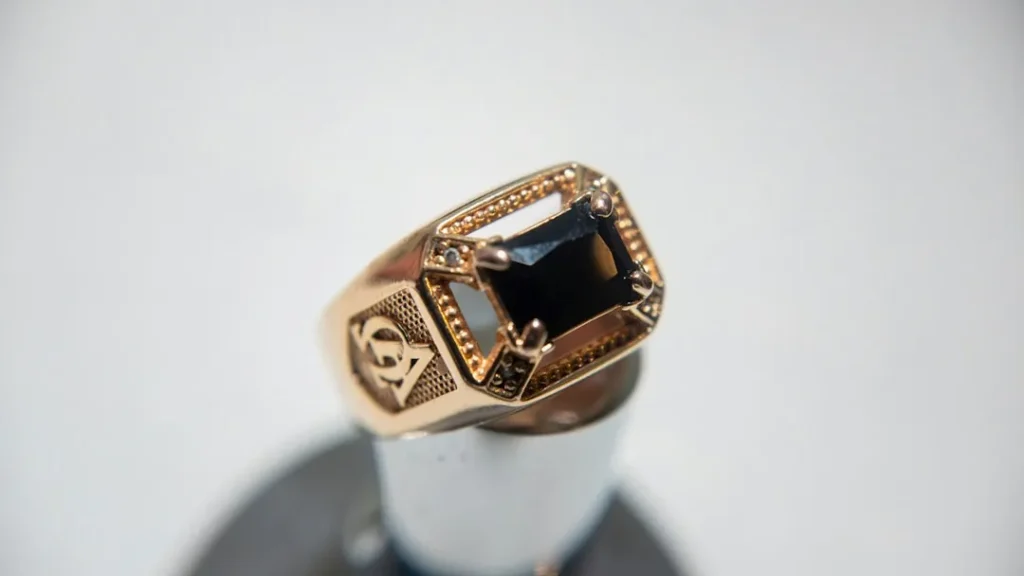
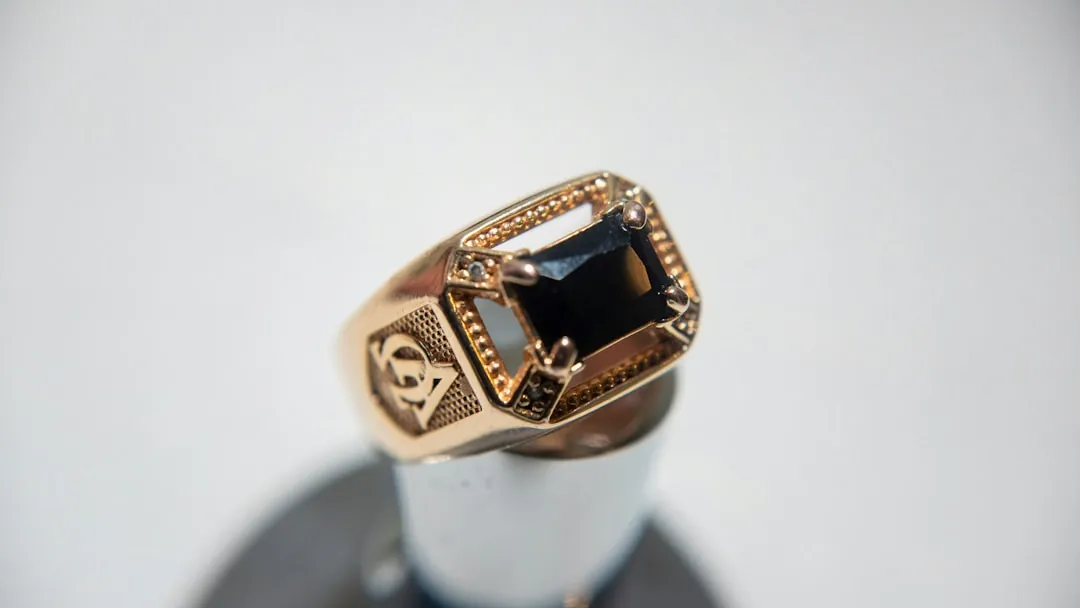
33rd degree freemason ring displaying ornate masonic insignia

The 33rd degree Freemason holds a title that has generated more mythology per syllable than almost any other designation in fraternal history. In reality, it is an honorary degree conferred by the Supreme Council of the Scottish Rite upon members who have rendered exceptional service to Freemasonry and their broader communities, not a secret rank unlocking hidden power or esoteric knowledge. The Scottish Rite, one of several appendant bodies a Master Mason may join after completing the three foundational degrees of the Craft, organizes its initiatory work across 29 additional degrees (the 4th through the 32nd). The 33rd stands apart: it cannot be earned through attendance or ritual progression alone. It is conferred by election, based on documented merit and sustained contribution. The Supreme Council, 33°, Southern Jurisdiction, USA, the oldest Supreme Council in the world, founded in Charleston, South Carolina, on May 31, 1801, has defined and administered this degree for over two centuries. Understanding what the 33rd degree actually represents requires tracing the structure of the Scottish Rite, the criteria the Supreme Council applies, and the documented history behind a number that conspiracy culture has thoroughly misread.

33rd degree freemason ring displaying ornate masonic insignia
Photo: Luan Fonseca (unsplash)

What Is the 33rd Degree in Freemasonry?

A 33rd degree Freemason holds an honorary distinction conferred by a Scottish Rite Supreme Council, awarded not through sequential initiation but by election. The degree recognizes exceptional service to Freemasonry and the broader community. It is the highest honor the Scottish Rite can bestow, and it carries no additional ritual content beyond what a 32nd degree Mason already receives.

That clarification matters because the most persistent misconception frames this honor as the top rung of a ladder, something climbed through years of progressive initiation. The Scottish Rite’s degree system does work that way for the first thirty-two degrees, each conferred in sequence with its own ceremonial instruction. The thirty-third operates on an entirely different logic. A Supreme Council, acting as a body, elects recipients from among those who have already completed the 32nd degree and demonstrated sustained, distinguished service. No amount of attendance, memorization, or ritual participation automatically qualifies a Mason for it. The formal title conferred on most recipients in the Southern Jurisdiction of the United States is Inspector General Honorary, a designation that appears in the Supreme Council’s own statutes and clarifies the honorific rather than administrative nature of the award.

What the degree does not confer is equally worth establishing. Recipients gain no access to secret teachings withheld from 32nd degree Masons, no additional ritual content, and no governing authority within their home lodge. The Supreme Council of the Southern Jurisdiction, headquartered in Washington, D.C., has been explicit in its published materials: the thirty-third is a service award, a recognition of what a Mason has contributed rather than a passport to hidden knowledge. Conspiracy narratives that treat it as the threshold of an inner circle capable of directing governments or financial systems find no support in any primary Masonic document. The degree’s significance is honorific, and within the Scottish Rite’s administrative structure it is also a prerequisite for appointment to certain supervisory roles, but that function is far removed from the shadowy omnipotence popular culture tends to project onto it.

The Difference Between the 32nd and 33rd Degrees

The 32nd degree, titled Master of the Royal Secret, is the highest degree a Scottish Rite Mason completes through the regular initiatory sequence. A candidate progresses through the degree system, participates in the conferral ceremonies, and upon completion holds the 32nd degree as a permanent credential. Every Scottish Rite Mason who finishes the full curriculum holds it. The thirty-third is something else entirely. Conferred by election on top of the 32nd, it means no Mason can receive it without first holding the degree below, but holding the 32nd creates no entitlement to the thirty-third. The gap between the two is not a matter of additional coursework or ritual; it is a qualitative distinction between what a Mason has done within the fraternity and for the wider community over years or decades.

Inspector General Honorary vs. Sovereign Grand Inspector General

Popular coverage of the thirty-third degree rarely distinguishes between its two principal titles, but the difference is constitutionally significant. The title Inspector General Honorary applies to the overwhelming majority of recipients: Masons elected to the degree in recognition of their service, who hold it as an honor without holding a seat on the Supreme Council itself. The title Sovereign Grand Inspector General, by contrast, is reserved for the thirty-three active members who constitute the Supreme Council, the governing body of the Scottish Rite jurisdiction. These active members hold administrative authority over the jurisdiction and are limited by the Supreme Council’s own rules to exactly thirty-three seats, a number that carries its own symbolic resonance within the degree’s historical design. The two titles are not interchangeable, and conflating them obscures how the Scottish Rite’s governance actually functions.

History and Origins of the 33rd Degree

From the Rite of Perfection to the Scottish Rite

The Scottish Rite did not emerge fully formed in 1801. Its roots reach back to the 25-degree Rite of Perfection, a system developed in France around 1754 and subsequently carried to the Caribbean, where it took hold in the French colonial lodges of Saint-Domingue (present-day Haiti). Over the following decades, additional degrees were appended to this framework as the rite traveled between Europe, the Caribbean, and the American colonies, accumulating ritual content from multiple Masonic traditions until the structure grew unwieldy enough to demand formal consolidation. That consolidation arrived on May 31, 1801, when John Mitchell and Frederick Dalcho established the Supreme Council, 33°, Southern Jurisdiction, in Charleston, South Carolina, the oldest Supreme Council in the world, according to Masonic historians.

The 33rd degree was not an afterthought grafted onto an existing system; it was designed from the outset as the governing degree of the Supreme Council itself, conferring authority on the body responsible for administering all the degrees below it. The number thirty-three carried symbolic weight, loosely associated with the traditional age of Christ at the crucifixion and with numerological significance in esoteric traditions, but its primary function at the founding was organizational: the degree defined who held supreme jurisdiction over the rite.

Albert Pike and the Codification of the Degrees

The Charleston founding established the structure, but ritual content remained inconsistent across jurisdictions for decades. That changed when Albert Pike took office as Sovereign Grand Commander of the Southern Jurisdiction in 1859, a post he held until his death in 1891. Pike undertook a comprehensive rewrite of the Scottish Rite’s ritual work, producing philosophical commentaries and revised ceremonial texts that culminated in his 1872 publication Morals and Dogma of the Ancient and Accepted Scottish Rite of Freemasonry. The book is dense and eclectic, drawing on sources ranging from Kabbalah and Neoplatonism to comparative religion. That eclecticism has made it a perennial target for conspiracy writers who lift passages out of context to imply the rite endorses Luciferianism or occult practice. The Supreme Council’s own scholarship has addressed these misreadings repeatedly. What Pike actually produced was a Victorian-era philosophical synthesis, reflecting the broad reading habits of a nineteenth-century intellectual rather than any doctrinal statement of Masonic belief. His influence on how the 33rd degree’s symbolism is understood in the Southern Jurisdiction remains substantial, even as the Supreme Council revised its ritual materials in 1974 and again in subsequent decades to reflect contemporary practice.

The Northern Masonic Jurisdiction, headquartered in Lexington, Massachusetts and operating its own Supreme Council since 1813, follows the same broad honorific framework but administers its own criteria independently. The two jurisdictions are coordinate, not hierarchical: neither governs the other, and a 33rd degree conferred in one carries no formal authority in the other’s territory. This structural distinction matters for anyone researching specific recipients, since the criteria, nomination processes, and historical records are maintained separately by each body.

The Scottish Rite Degree Structure: The Road From the 4th to the 32nd

The Scottish Rite does not begin from scratch. A candidate must already hold the third degree of the Blue Lodge, the rank of Master Mason, before petitioning to enter the Scottish Rite system. From that foundation, the degrees proceed through four distinct administrative bodies, each responsible for conferring a specific cluster of degrees. Understanding this architecture is essential to grasping why the 33rd degree occupies a category entirely separate from everything that precedes it.

Scottish Rite Body Degree Range Thematic Focus
Lodge of Perfection 4th, 14th Ancient craft allegory, the legend of Hiram Abiff extended, and the search for the lost word
Chapter of Rose Croix 15th, 18th Themes of death, resurrection, and philosophical inquiry drawn from Rosicrucian and Christian allegorical traditions
Council of Kadosh 19th, 30th Chivalric and philosophical allegory, exploring duty, knighthood, and moral courage across historical settings
Consistory 31st, 32nd Master of the Royal Secret: synthesis of the preceding degrees into a culminating statement on Masonic philosophy

The degrees within each body are best understood as a curriculum rather than a ladder of command. Progressing from the 4th to the 32nd does not grant a Mason administrative authority over those at lower numerical degrees. Each ceremony presents a philosophical or allegorical lesson, drawing on historical settings that range from the Temple of Solomon to medieval Crusader orders. Albert Pike, whose 1871 work Morals and Dogma remains the most widely cited commentary on Scottish Rite symbolism, described the degrees collectively as an exploration of moral philosophy through dramatic allegory. The Scottish Rite’s own Supreme Council, 33°, Southern Jurisdiction, has framed the sequence in similar terms in its official publications.

The 32nd degree, formally titled Master of the Royal Secret, is where a candidate completes the full instructional arc of the initiatory system. It is the highest degree a Scottish Rite Mason earns through participation in the degree work itself. The 33rd degree operates under an entirely different logic: it is not conferred through a ritual curriculum but awarded by the Supreme Council as a recognition of service. That distinction is the central fact around which any honest account of the scottish rite 33rd degree must be organized, and it is one the degree’s own governing body has never obscured.

Requirements and Qualifications for the 33rd Degree

The path to the 33rd degree is not a ladder with numbered rungs. It is, formally speaking, an act of recognition: the Supreme Council identifies individuals whose service has already distinguished them, rather than rewarding candidates who have simply waited long enough. The starting point is unambiguous. A candidate must hold the 32nd degree of the Scottish Rite, and the nomination must come from a sitting 33rd degree Mason. Self-nomination is structurally impossible. The process begins with a peer’s judgment, not a personal application. Once a nomination is submitted, the Supreme Council evaluates the nominee’s record across three broad categories: service to the Scottish Rite specifically, contributions to the wider community, and conduct that consistently reflects the fraternity’s stated principles. Seniority alone carries no weight in this assessment. A Mason who has held the 32nd degree for thirty years without meaningful engagement will not advance on the strength of tenure. A Mason who has spent a decade in active leadership, charitable work, and educational programming stands on considerably stronger ground.

The Southern Jurisdiction’s Supreme Council confers the degree at its biennial session, a scheduling detail that carries a practical consequence: the number of new recipients in any given cycle is inherently limited. That limitation is deliberate. Restricting the conferral to a fixed ceremonial occasion, rather than processing nominations on a rolling basis, preserves the distinction’s weight. The Supreme Council has been explicit, in its own publications and official communications, that sustained and documented service is the primary criterion, not the passage of time. There is no published minimum tenure, but the pattern across documented recipients suggests that most have been active Scottish Rite Masons for well over a decade before their names are formally put forward.

How Long Does It Take to Reach the 33rd Degree?

Because the 33rd degree is honorary and elective rather than a sequential step any Mason can work toward, no defined timeline governs the process. The Supreme Council of the Southern Jurisdiction does not publish a minimum service requirement, and the Northern Masonic Jurisdiction operates under similarly discretionary criteria. In practice, however, the record of documented recipients points consistently toward long-term engagement. A decade of active Scottish Rite involvement is closer to a floor than a ceiling for most honorees. What the Supreme Council is looking for is a demonstrated pattern, not a milestone date, which means that the quality and consistency of a Mason’s contributions matter far more than the calendar.

The Nomination and Election Process

A sitting 33rd degree Mason submits a formal written recommendation to the Supreme Council, outlining the nominee’s Masonic record and civic contributions in documented detail. The Supreme Council then reviews that record before putting the nomination to a vote among its active members. The mechanics here are worth noting, because they bear a closer resemblance to the election procedures of learned honorary societies (think the American Academy of Arts and Sciences or a university’s honorary degree committee) than to any notion of a secret initiation ritual. The vote is conducted by peers who have themselves met the same standard. A nomination that cannot survive that scrutiny does not advance. For those researching 33rd degree freemason requirements, the clearest summary is this: distinguished service, a credible nominator, and a successful vote before an informed body of equals.

Want to learn more?

Learn more

Fraternal brotherhood gathering representing masonic lodge membership
Photo: Michael Thomson (unsplash)

The Role and Responsibilities of a 33rd Degree Mason

The responsibilities attached to the 33rd degree divide along a clear structural line. Honorary recipients, formally titled Inspector General Honorary, function primarily as ambassadors of the Supreme Council within their home valley or jurisdiction. In practice, this means representing the Scottish Rite’s values at local events, supporting recruitment and retention of members in the lower degrees, and mentoring brothers progressing through the numbered degrees of the rite. The title carries genuine expectation of continued engagement; it is not, in the language of the Supreme Council’s own literature, a retirement honor. Active members of the Supreme Council itself carry a heavier administrative load. These Sovereign Grand Inspectors General vote on governing policy, participate in the election of the Sovereign Grand Commander (the rite’s chief executive officer), and exercise oversight of the organization’s charitable and educational infrastructure. The distinction between honorary and active membership is therefore not merely ceremonial; it maps directly onto different levels of institutional accountability.

That philanthropic infrastructure is substantial enough to be worth naming precisely. The Scottish Rite’s RiteCare Childhood Language Program operates a network of clinics across the United States, providing speech-language therapy to children regardless of their families’ Masonic affiliation or ability to pay. According to the Supreme Council, Southern Jurisdiction’s published reports, 33rd degree Masons in leadership positions play a significant administrative role in sustaining and expanding that program at both the valley and jurisdictional level. None of this translates into civil authority of any kind. The degree confers no legal standing, no governmental privilege, and no formal influence over any institution outside the fraternal structure itself. The “secret power” narrative that circulates around the scottish rite 33rd degree collapses almost immediately against the documented reality: the actual responsibilities are committee work, mentorship, philanthropy administration, and organizational governance. None of it requires secrecy, and all of it is consistent with how any large civic fraternity manages its senior membership.

Symbolism of the 33rd Degree: The Number, the Ring, and the Regalia

The symbolism attached to the 33rd degree is frequently overstated in popular commentary, and just as frequently misattributed. Within the Scottish Rite’s own published literature, the number 33 carries a straightforward organizational meaning: the rite comprises 33 degrees, and the Supreme Council limits its active membership, the Sovereign Grand Inspectors General, to 33 individuals at any one time. That structural correspondence is the primary documented reason for the number’s significance, not numerological mysticism or coded theology. Popular writers have drawn connections between 33 and the traditional age of Christ at the crucifixion, or to sequences in Kabbalistic numerology, but no official doctrinal publication of either the Northern or Southern Jurisdiction has adopted those interpretations as part of the degree’s formal meaning. They remain popular glosses, not institutional doctrine.

The physical regalia associated with the degree is ceremonial in the most literal sense: it marks rank at official Scottish Rite functions and carries no claim to talismanic or supernatural properties. The most recognizable item is the distinctive black cap bearing a gold double-headed eagle, worn by members who have received the honor at formal assemblies. Recipients also receive a gold ring, traditionally engraved with the double-headed eagle and the numeral 33. The ring serves as a mark of recognition within the fraternity, functioning much as a class ring or professional insignia does in secular contexts. The Supreme Council’s own publications describe these objects in terms of fraternal honor and organizational identity, not as instruments of power or esoteric activation.

The Double-Headed Eagle: Symbol of the Scottish Rite

The double-headed eagle, sometimes identified by historians as the “Eagle of Lagash” after its ancient Mesopotamian antecedents, is the primary emblem of the Scottish Rite and appears prominently on the ring, cap, and other regalia associated with the highest degree. As a heraldic device, it has a documented history stretching back through the Holy Roman Empire, the Byzantine court, and medieval European nobility, long predating any Masonic organization. The Scottish Rite adopted it as an organizational emblem, not as a symbol with Masonic-exclusive or occult significance. Albert Pike’s Morals and Dogma (1871) discusses the eagle’s historical and allegorical dimensions at length, but Pike himself was explicit that the symbol’s meaning derived from its broader heraldic and philosophical heritage rather than from any secret Masonic revelation. Treating the double-headed eagle as evidence of hidden occult purpose requires ignoring several centuries of mainstream European heraldry in which the same image appeared on imperial seals, cathedral facades, and royal coats of arms.

How Many 33rd Degree Masons Are There?

The active membership of a Supreme Council, those holding the full title of Sovereign Grand Inspector General, is constitutionally capped at 33. Beyond that inner circle, the total number of living honorary 33rd degree recipients is considerably larger, since the honor has been conferred annually for well over a century. The Supreme Council, Southern Jurisdiction, does not publish a comprehensive enumerated list of all living honorary members, a fact that has fueled speculation about a “secret list” of powerful initiates. The more prosaic explanation is that membership records are maintained as internal fraternal documents, consistent with the record-keeping practices of most private civic organizations. Researchers who have cross-referenced obituaries, lodge histories, and Supreme Council proceedings have confirmed that thousands of honorary degrees have been conferred since the 19th century, making the total population of living recipients a matter of archival research rather than conspiratorial concealment. The Scottish Rite, Southern Jurisdiction’s official website provides publicly accessible information about the degree’s criteria and history, which is not the behavior of an organization intent on suppressing its own membership rolls.

Misconceptions and Conspiracy Theories About the 33rd Degree

Few symbols in American fraternal culture attract as much unfounded speculation as the 33rd degree of the Scottish Rite. The claims are familiar: a hidden governing elite, secret initiation rites that reveal doctrines concealed from ordinary members, and shadowy coordination with financial or political power structures. None of these claims survives contact with the primary sources. The Supreme Council, 33°, Southern Jurisdiction, publishes its proceedings from biennial sessions, and those proceedings document the conferral criteria, the names of recipients, and the structure of the honor in plain institutional language. There is no governing body of 33rd degree recipients directing world affairs, because no such body exists in the Supreme Council’s own organizational framework.

The conflation of the Scottish Rite with the Bavarian Illuminati deserves particular attention, because it is historically illiterate on its own terms. The Bavarian Illuminati was founded on May 1, 1776, by Adam Weishaupt, a professor of canon law at the University of Ingolstadt, and it was dissolved by government decree of the Elector of Bavaria in 1785, effectively ceasing to exist by 1787. The Scottish Rite’s 33rd degree was not formalized until the Supreme Council was established in Charleston, South Carolina, in 1801, fourteen years after the Illuminati had already collapsed. The two organizations were never affiliated, never shared membership criteria, and operated in entirely different national and institutional contexts. Treating them as interchangeable is not a matter of contested interpretation; it is a straightforward error of chronology.

The Albert Pike Misquotation Problem

Albert Pike, who served as Sovereign Grand Commander of the Southern Jurisdiction from 1859 to 1891, is the figure most frequently distorted in conspiracy literature about the Scottish Rite. His major work, Morals and Dogma of the Ancient and Accepted Scottish Rite of Freemasonry (1871), is a dense, allegorical text written for an audience already familiar with the degree structure, drawing on Neoplatonic philosophy, Kabbalistic allegory, and comparative religion. Conspiracy writers routinely strip sentences from their rhetorical context and present them as literal policy statements. The Supreme Council itself has addressed this pattern directly in its own publications, noting that Pike wrote in the symbolic register of the degrees and not as a political manifesto. The most damaging fabrication is a letter allegedly written by Pike in 1871 predicting three world wars in explicit detail. No original document of this letter has ever been located. The British Museum, responding to inquiries as early as 1977, confirmed that no such letter exists in its holdings, despite claims that it was once displayed there. The letter is a forgery, and its continued circulation says more about the appetite for conspiratorial narrative than about anything Pike actually wrote.

Why the “Secret List” Narrative Persists

Because the Supreme Council does not maintain a publicly searchable, real-time database of every living honorary 33rd degree recipient, critics interpret the absence of such a database as deliberate concealment. The logic is circular: the absence of a comprehensive public roster is itself treated as evidence of secrecy, which is then treated as evidence of hidden power. In practice, the names of honorary recipients are announced at biennial sessions of the Supreme Council and recorded in the published proceedings of those sessions, which are available to academic researchers and Masonic historians. The proceedings are not classified documents. They are institutional records of a private fraternal organization, comparable in accessibility to the annual reports of any private membership body. The gap between “not published in a searchable online format” and “deliberately hidden from the public” is significant, and conflating the two is a failure of basic evidentiary reasoning, not a discovery of concealment.

Notable 33rd Degree Masons in History

The Supreme Council, 33°, Southern Jurisdiction, publishes biennial proceedings listing all newly elected honorary and active members at the thirty-third degree. That document is the starting point for any serious fact-checking, and it eliminates a large portion of the names that circulate on unverified online lists. What remains is a shorter but far more defensible roster of historically significant recipients.

Among the most thoroughly documented figures is J. Edgar Hoover, who served as director of the Federal Bureau of Investigation from 1924 to 1972. Hoover received the thirty-third degree from the Southern Jurisdiction, a fact recorded in the Supreme Council’s own published records and corroborated in mainstream biographical sources, including Curt Gentry’s 1991 biography. Senator Strom Thurmond and General Douglas MacArthur are similarly documented as honorary recipients during the twentieth century, their elevations noted in fraternal proceedings of the period. All three held positions of considerable public authority, which is why their Masonic affiliations attract recurring attention.

That attention tends to generate more heat than light. The presence of prominent public figures among Scottish Rite 33rd degree recipients is sometimes treated as circumstantial evidence of coordinated institutional influence. A more grounded reading, consistent with how historians approach similar fraternal organizations, is that Freemasonry has historically attracted civic-minded individuals from professional and public life, much as Rotary International or the Knights of Columbus have done. Membership within such organizations reflects shared cultural networks, not operational control of government agencies. The fraternity’s own stated criteria for the honorary degree center on service to the Rite and to the broader community, criteria that, by definition, tend to produce a list weighted toward individuals who were already active in public roles before any Masonic recognition was conferred.

Historical masonic text documenting degrees and initiation practices
Photo: Brett Jordan (unsplash)

FAQ

Can you become a 33rd degree Mason without being nominated?

No. The degree is conferred exclusively by election within the Supreme Council, and the process begins with a formal nomination by a sitting 33rd degree Mason. There is no application form, no examination, and no petition a candidate can file on his own behalf.

The Supreme Council of the Southern Jurisdiction’s own published guidelines confirm that nomination and subsequent election by active members are the only recognized path to conferral. A Mason who has not been nominated cannot advance to this level, regardless of seniority or personal accomplishment within the lodge.

Is the 33rd degree the highest degree in Freemasonry?

It is the highest degree within the Scottish Rite, but Freemasonry is not a single unified system with one apex. The York Rite has its own degree structure culminating in the chivalric orders of the Knights Templar. These two rites operate independently, and neither subordinates itself to the other.

Across all recognized grand lodges, the foundational three degrees of the Blue Lodge (Entered Apprentice, Fellowcraft, and Master Mason) are considered the essential core of the fraternity. Appendant bodies, including the Scottish Rite, build upon that foundation rather than replace it.

What is the difference between the 32nd and 33rd degrees?

The 32nd degree, Master of the Royal Secret, is the highest degree a Scottish Rite Mason completes through the regular initiatory sequence. It is open to any eligible member who participates in the degree work and follows the established curriculum.

The 33rd degree is honorary and elective, conferred by the Supreme Council on 32nd degree Masons who have demonstrated exceptional service to the fraternity or to the broader community. The honor also carries genuine administrative responsibilities: active members holding the degree serve as Sovereign Grand Inspectors General and participate directly in governing the Supreme Council, a role the 32nd degree does not include.

How many 33rd degree Masons are there in the United States?

The Supreme Council, Southern Jurisdiction, caps its active membership at exactly 33 Sovereign Grand Inspectors General at any one time. The total number of living honorary recipients, designated Inspector General Honorary, is considerably larger but is not published as a single consolidated public list.

The Northern Masonic Jurisdiction operates its own Supreme Council with a comparable governance structure. Any precise global count circulating on social media or conspiracy-adjacent websites should be treated with skepticism: none of those figures are sourced from official Supreme Council records, and the Supreme Councils themselves do not publish a unified registry.

Do 33rd degree Masons have secret beliefs or doctrines unavailable to other Masons?

No credible primary source supports this claim. The Supreme Council’s own publications describe the conferral ceremony as one of honor and rededication to service, not as a revelation of hidden doctrine inaccessible to other members.

Albert Pike’s Morals and Dogma (1871), the text most frequently cited as supposed proof of concealed teaching, was distributed freely to Scottish Rite members for decades and has long been available in public libraries and digitized archives. A text handed out at degree conferrals and catalogued by the Library of Congress does not fit any reasonable definition of a secret document. The Supreme Council itself eventually made the volume optional reading rather than standard issue.

Masonic Symbolism: A Complete Guide to Freemasonry’s Visual Language

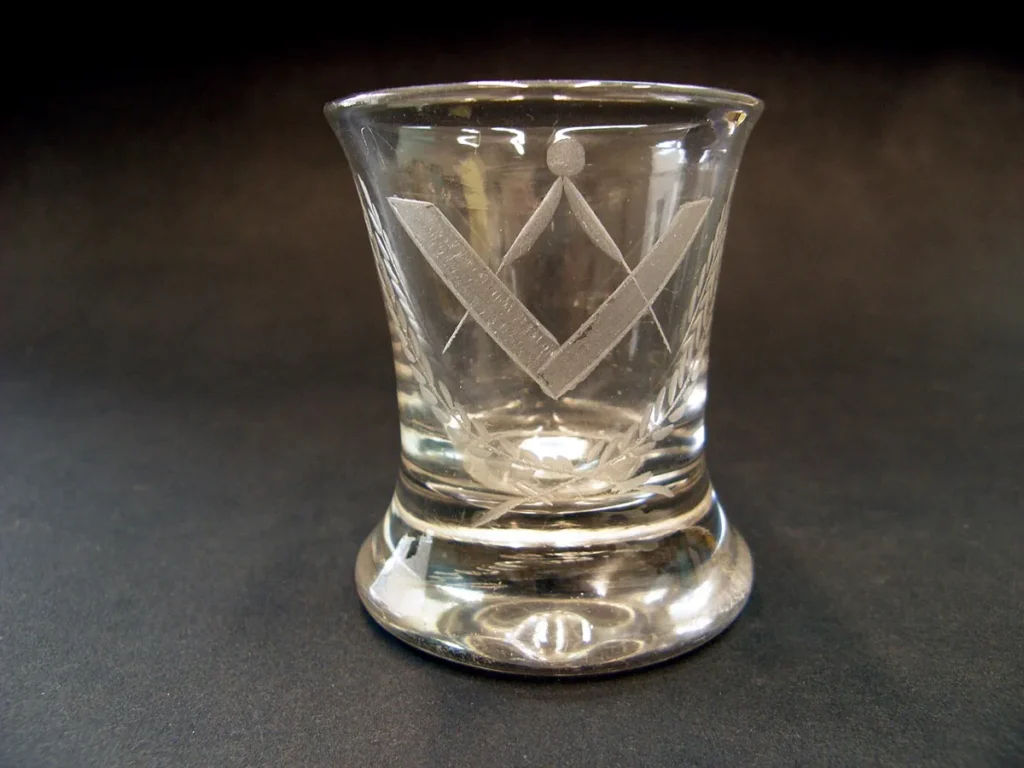
Engraved masonic symbolism on glass tumbler featuring compass, square, and fronds

Masonic symbolism is one of the most misread visual languages in Western cultural history. Since the formal founding of the first Grand Lodge in London on June 24, 1717, Freemasonry has communicated its moral and philosophical teachings almost entirely through symbols: working tools, geometric forms, architectural elements, and allegorical figures drawn from operative stonemasonry, classical antiquity, and scripture. The Square and Compasses, the Letter G, the All-Seeing Eye, the acacia sprig, the beehive: each carries a specific instructional meaning within the lodge, and each has accumulated centuries of interpretation, misinterpretation, and outright myth outside it. This article maps the full landscape of Masonic symbolism, covering what the major symbols are, where they came from, how their meanings shift across different rites and degrees, and why they have attracted so much attention from historians, conspiracy theorists, and curious observers alike. The goal is straightforward: accurate, sourced explanation over sensationalism.

What Masonic Symbolism Is, and What It Is Not

Masonic symbolism is a structured visual language through which Freemasonry communicates its moral and philosophical teachings. Drawn primarily from the tools and vocabulary of medieval stonemasonry, the system assigns ethical meanings to physical instruments, from the square and compass to the plumb line, and uses those meanings as the primary instructional medium of lodge degree work.

Engraved masonic symbolism on glass tumbler featuring compass, square, and fronds
Photo: Unknown authorUnknown author (wikimedia)

Freemasonry describes itself as a speculative fraternity, a term that distinguishes its intellectual and moral concerns from the practical, or operative, craft of building in stone. That distinction is not incidental; it is the conceptual engine behind the entire symbolic program. The tools a working mason carried to a building site became, in the speculative lodge, metaphors for how a person ought to conduct a life. Albert Mackey’s Encyclopedia of Freemasonry (1874), still one of the most cited reference works on the subject, catalogs these symbols in detail and is freely available to anyone who looks for it. Masonic symbols are not secret in the sense of being concealed. Ritual monitors, grand lodge publications, and scholarly encyclopedias have documented them for more than two centuries. What the fraternity does protect is the experiential dimension of ritual: the specific ceremonial context in which a symbol is presented to a candidate for the first time. The symbol itself can be described; the moment of its presentation is what members regard as private. Understanding that distinction resolves most of the confusion that surrounds public discussions of the topic.

The Operative-to-Speculative Transition

The shift from craft guild to philosophical fraternity did not happen overnight. Historians of the institution generally point to the late 17th century as the period when speculative members, gentlemen with no training in stonecutting, began joining operative lodges in Scotland and England in significant numbers. By June 24, 1717, when four London lodges formed the first Grand Lodge of England at the Goose and Gridiron alehouse in St. Paul’s Churchyard, the operative membership had become a minority. The tools remained, but their referents changed entirely. A plumb line that once tested whether a wall was vertical became a symbol of upright conduct. A level that once checked horizontal surfaces became an emblem of equality among members. The transition was pragmatic as much as philosophical: a fraternity that had lost its original trade needed a coherent reason to keep the working-tool vocabulary, and moral allegory provided exactly that rationale.

How Symbols Function Within Lodge Ritual

Within the degree structure of a Masonic lodge, each symbol is formally introduced and explained to candidates at a specific point in their initiation or advancement. This is not casual or improvised. The explanations follow scripted charges and lectures that have been refined over generations, and in many jurisdictions they are drawn from printed monitors, official guides that grand lodges publish and distribute openly. A candidate encountering the square for the first time does not simply see an object; the presiding officer delivers a prepared address explaining what moral quality the tool is meant to represent. The pedagogical intent is explicit and deliberate. Masonic ritual and symbolism are therefore inseparable in practice: the symbol carries its meaning only because the ritual context activates it, which is precisely why the fraternity treats the two as related but distinct. One is a visual sign anyone can examine; the other is a structured experience the lodge reserves for its members.

The Square and Compasses: Freemasonry’s Core Symbol

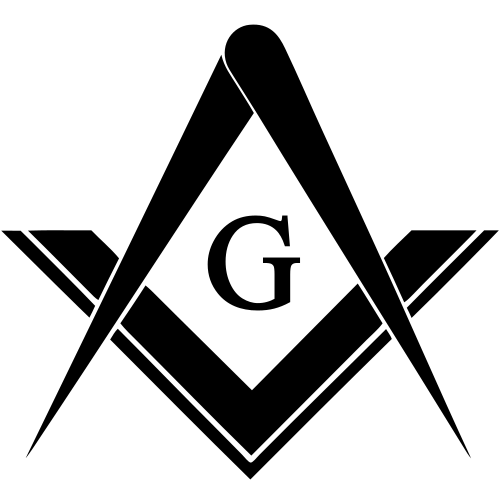
Two interlocking tools, one measuring angles and one drawing circles, have become the most widely recognized emblem in the fraternity’s history. The square, a right-angle instrument, carries a moral charge in Masonic teaching: it represents the obligation to act squarely toward others, measuring one’s conduct against an ethical standard as precisely as a craftsman checks a joint. The compasses, the drafting instrument used to draw circles and arcs, carry a complementary meaning oriented inward rather than outward. Where the square governs relations with others, the compasses symbolize self-restraint, the deliberate circumscription of one’s own desires within rational and ethical limits. Together, these two tools form the visual core of masonic symbolism, and their combined image appears on lodge buildings, grave markers, jewelry, official documents, and fraternal regalia across every continent where the fraternity has established itself. A third element, the Letter G at the center, is treated separately in the section that follows; the three components together constitute the single most reproduced piece of Masonic iconography in existence.

Historical Antecedents in Craft Guilds

The square and compasses did not originate as symbols. They were tools, used daily by operative stonemasons throughout medieval Europe to cut stone, lay foundations, and raise cathedrals. Guild records from the operative building trades, including marks registered by masons’ guilds in England and Germany as early as the thirteenth century, show both instruments appearing in craftsmen’s personal marks and in the decorative programs of the buildings they constructed. The Regius Manuscript, dated by scholars to approximately 1390 and considered the oldest known Masonic document, references the working tools of the mason’s trade in terms that would later be formalized into symbolic instruction. When speculative Freemasonry coalesced in the early eighteenth century, it inherited these tools not as invented metaphors but as objects already embedded in the cultural memory of building craft. The symbolic meanings assigned to them in lodge ritual were, in that sense, a formalization of associations that operative tradition had been accumulating for centuries.

Cathedral building records from sites including Strasbourg and York add further context. The lodge, the on-site workshop where masons planned, stored tools, and conducted guild business, was the physical and organizational precursor to the speculative lodge, and the instruments used there carried professional prestige long before they carried philosophical weight.

Variations Across Jurisdictions

The combined emblem is not rendered identically everywhere. The position of the compasses relative to the square carries degree-specific meaning that differs by jurisdiction and grand lodge tradition. In some representations, both points of the compasses appear above the square, a configuration associated in certain traditions with a particular degree of initiation. In others, both points fall below, or one point appears above and one below, each arrangement understood within its ritual context as a marker of the candidate’s progress through the degrees. The United Grand Lodge of England and the various grand lodges of the United States do not all follow identical conventions, and Masonic scholars such as Albert Mackey, whose Encyclopedia of Freemasonry (first published in 1874) remains a standard reference, document these jurisdictional differences without resolving them into a single authoritative reading. What remains constant across all variations is the pairing of the two instruments as complementary moral principles, one pointing outward toward social obligation, the other pointing inward toward personal discipline. That consistency across otherwise divergent traditions is a large part of what gives the emblem its durability as a fraternal identifier.

The Letter G: Geometry, Deity, and Debate

Few elements in masonic iconography generate as much scholarly friction as the single letter suspended at the center of the square and compasses. The Letter G carries at least two simultaneous readings in standard lodge ritual. The first is Geometry, described in Masonic monitors as the “noblest of sciences” and the intellectual foundation upon which operative stonemasonry, and by extension speculative Freemasonry, was built. The second is the Grand Architect of the Universe, the deliberately non-denominational term Freemasonry uses to acknowledge a supreme being without prescribing any particular theology. Both meanings are treated as active within the ritual context, not as competing alternatives but as overlapping layers, which is exactly the kind of symbolic ambiguity the fraternity tends to favor.

The third interpretation surfaces primarily in American jurisdictions, where some ritual monitors gloss the letter simply as God in the plain English sense. British and Continental lodges are generally less explicit on this point, keeping the theological register at the more abstract level of the Grand Architect. The underlying debate about which meaning came first is not new. In his Encyclopedia of Freemasonry (1874), Albert Mackey argued that Geometry was the original and primary referent, and that the theological reading developed as a later overlay once speculative Masonry had absorbed more explicitly religious language. Mackey’s position has never been conclusively settled: later scholars, including those writing for the Masonic Service Association of North America, have pointed to ritual texts that treat the theological meaning as equally foundational. What the debate illustrates, more than any definitive answer, is that freemasonry symbols and meanings were never designed to resolve into a single, fixed interpretation. The Letter G is not a riddle with one correct solution; it is a prompt for reflection, and Masonic ritual is comfortable leaving it exactly that way.

The All-Seeing Eye and the Eye of Providence

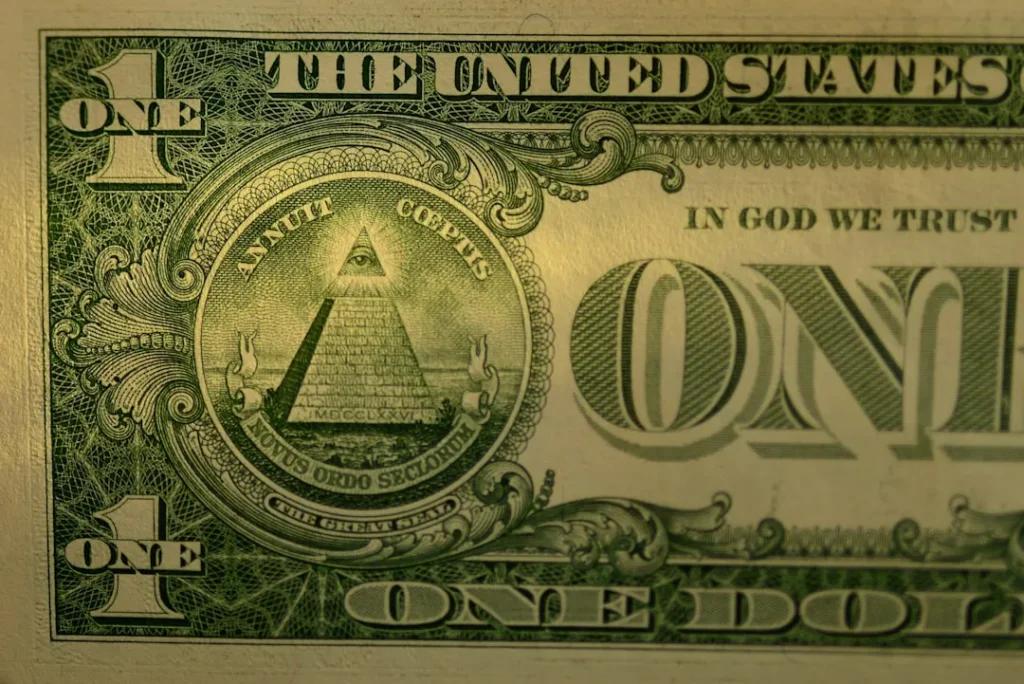
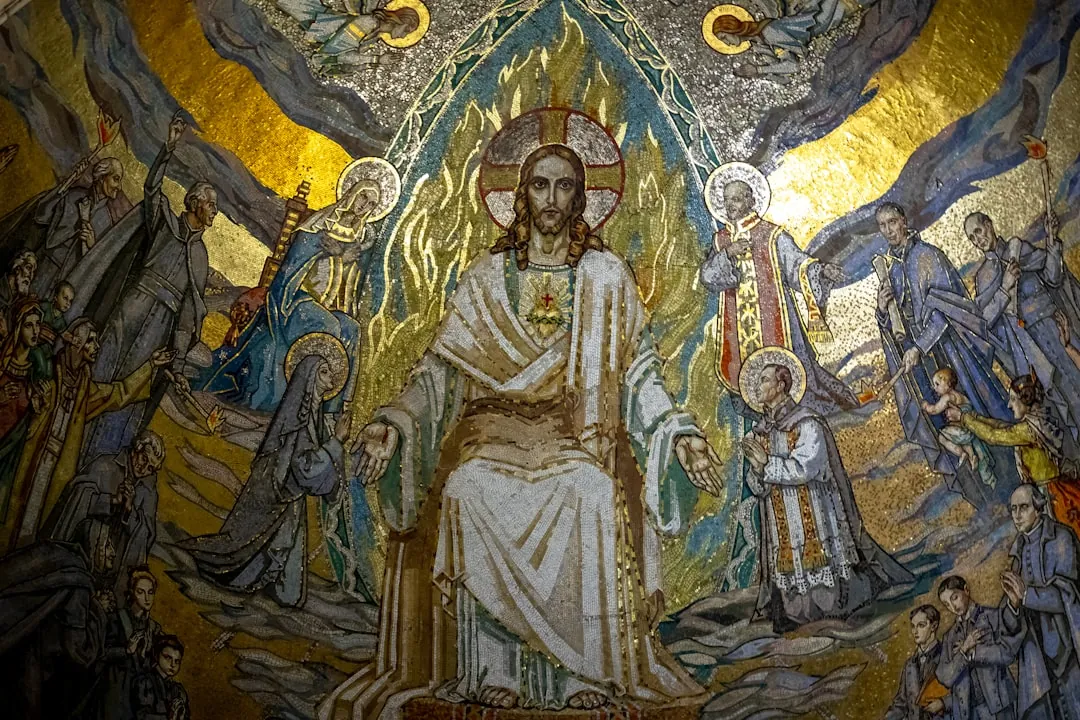
The Eye of Providence predates Freemasonry by a considerable margin. A watchful divine eye appears in ancient Egyptian religious iconography as the Eye of Horus, a symbol of protection and royal power. By the Renaissance, Christian artists had adapted the image into a Trinitarian emblem, placing a single eye within a triangle to represent God’s omniscience. When the Continental Congress commissioned the Great Seal of the United States in 1776, the Eye of Providence was already a well-established piece of Western religious visual vocabulary. The three principal designers of the 1782 seal, Charles Thomson, William Barton, and Secretary of Congress Thomson working from earlier committee drafts, were not documented Freemasons. The State Department’s own historical records on the Great Seal make no mention of Masonic influence on the eye motif. The symbol arrived in masonic iconography by adoption, not by invention.

Ornate masonic regalia including embroidered apron and silk collar with initials
Photo: Unknown authorUnknown author (wikimedia)

The Eye on the Dollar Bill: Separating Fact from Folklore

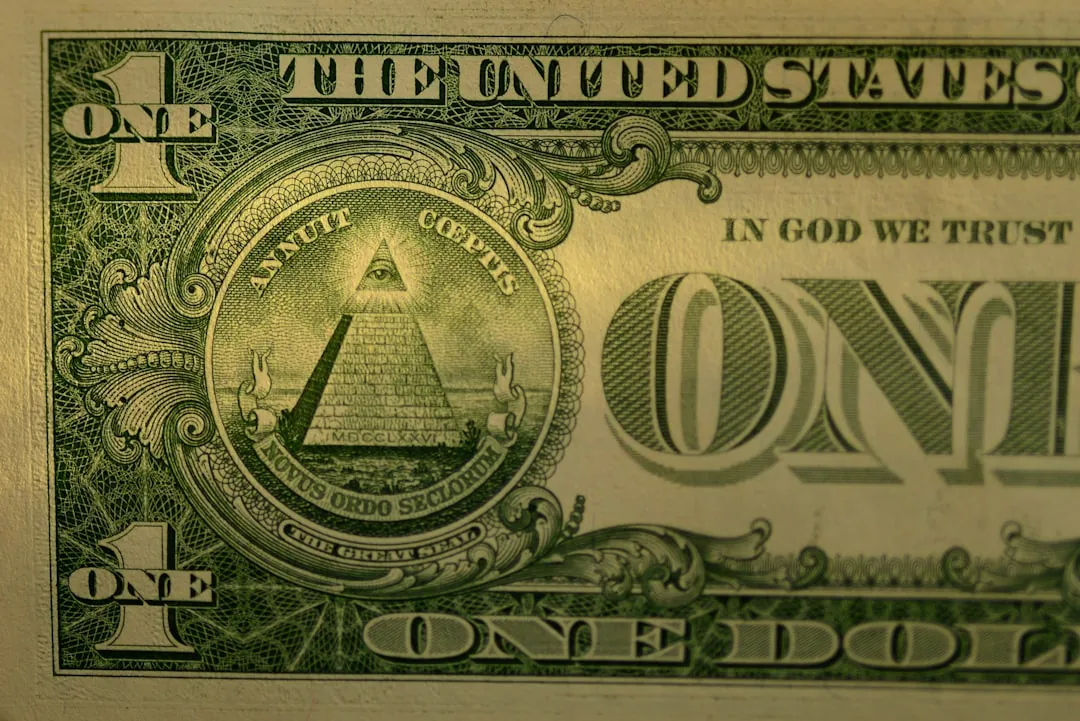
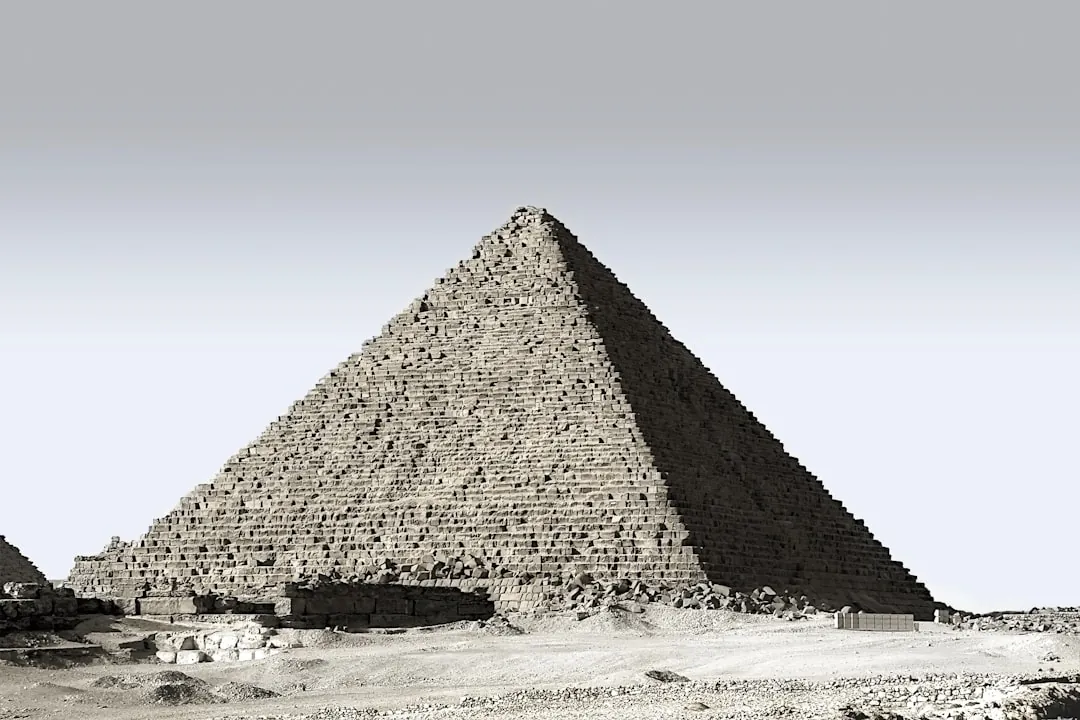
The claim that the eye on the one-dollar bill is a Masonic symbol has achieved the status of settled fact in popular culture. The historical record does not support it. The reverse of the Great Seal, which carries the unfinished pyramid and the Eye of Providence, was not printed on any US currency until 1935, when Secretary of the Treasury Henry Morgenthau and Secretary of Agriculture Henry Wallace recommended its inclusion on the redesigned dollar bill. Wallace, who championed the design, had an interest in esoteric symbolism, but his documented affiliations were with Theosophy, not Freemasonry. The 1782 design committee left no correspondence, minutes, or annotation connecting the eye to lodge ritual. As the US State Department’s Bureau of Public Affairs has noted in its official history of the seal, the pyramid and eye were intended to convey permanence and divine oversight of the new nation. Freemasonry is not mentioned. The persistence of the Masonic attribution owes more to the visual similarity between the seal’s eye and lodge imagery than to any documented genealogy.

The All-Seeing Eye in Lodge Furnishings and Tracing Boards

Whatever its origins elsewhere, the Eye of Providence holds a genuine and documented place within masonic ritual and symbolism. Lodges began incorporating the symbol into their furnishings and visual programs during the late eighteenth century, a period when Enlightenment-era Freemasonry was actively borrowing from classical, biblical, and allegorical traditions to build its symbolic vocabulary. In lodge settings, the eye is typically positioned above the altar or rendered prominently on the First Degree tracing board, a painted or printed teaching aid used to explain the lodge’s symbolic furniture to newly initiated members. Its meaning in this context is specific and relatively modest: it serves as a reminder of moral accountability, representing the Grand Architect of the Universe who observes every Mason’s conduct regardless of whether a lodge officer is watching. The freemasonry symbols and meanings associated with the eye are ethical rather than cosmological. It is not a claim about hidden knowledge or supernatural power; it is a conscience prompt rendered in paint and plaster. That function, straightforward as it is, has not prevented the symbol from accumulating centuries of projection from outside the fraternity.

Want to learn more?

Learn more

Working Tools and Architectural Symbols

Every tool a stonemason carried to a building site had a measurable, practical purpose. Freemasonry’s genius, if one wants to call it that, was to reassign those purposes inward: the instrument that checked a wall’s straightness became a prompt to examine one’s own conduct. This principle of moral application governs the entire system of masonic symbolism as it operates through the Blue Lodge degrees, where specific working tools are formally presented to the candidate at each stage of initiation.

Degree Working Tool(s) Symbolic Meaning (per ritual monitors)
Entered Apprentice (First Degree) 24-inch gauge and common gavel The gauge divides the day into labor, refreshment, and service to God and a worthy distressed brother; the gavel teaches the removal of vices and superfluities from conduct.
Fellowcraft (Second Degree) Square, level, and plumb The square measures actions by the standard of morality; the level reminds that all men meet on equal footing; the plumb directs upright conduct.
Master Mason (Third Degree) Trowel Spreads the cement of brotherly love and affection that unites the fraternity into one common mass.

Beyond the working tools, the physical lodge room is arranged as a symbolic representation of Solomon’s Temple, drawing directly on the description in 1 Kings 7. The two bronze pillars named Jachin and Boaz, which stood at the porch of the historical Temple, are reproduced at the entrance of every lodge. The mosaic pavement underfoot, a black-and-white checkered floor, represents the ground floor of the Temple and carries the broader lesson that human life alternates between joy and sorrow. The tracing board stands as a portable encyclopedia of degree imagery, while the central altar holds the Volume of Sacred Law open during every working. A second tier of emblems, including the beehive (industry), the acacia sprig (immortality), the ark and anchor (hope and well-grounded trust in God), and the hourglass (the swift passage of time), appears in ritual lectures and lodge art without being formally assigned to any single degree. These form the supporting vocabulary of masonic iconography, present throughout but not tied to a specific moment of initiation.

The Masonic Apron: A Working Tool Worn, Not Displayed

The white lambskin apron holds a distinction no other emblem in the fraternity can claim: it is worn by every initiate from the moment of the first degree onward. Albert Mackey’s Encyclopedia of Freemasonry (1874) calls it “the most important and significant of all Masonic symbols,” and the standard American ritual monitor describes it as “more ancient than the Golden Fleece or Roman Eagle, more honorable than the Star and Garter.” The origin is entirely practical. Operative stonemasons wore leather aprons to protect themselves from stone dust, mortar, and the sharp edges of their tools. Speculative Freemasonry inherited the garment and transformed it into a reminder that the fraternity grew from a tradition of skilled physical labor. The apron’s whiteness carries a secondary layer of meaning: purity of conduct expected of the initiate. As a member advances through the degrees, the apron’s decorations change, with blue borders and specific emblems added at the Fellowcraft and Master Mason levels, making the garment a wearable record of progression through the lodge system.

Unlike most Masonic symbols, the apron is not mounted on a wall or printed in a monitor. It is put on, which makes it unique as a piece of masonic ritual and symbolism that operates through the body rather than through the eye.

Tracing Boards as Visual Encyclopedias

Before painted panels became standard lodge furnishings, the symbols of each degree were drawn on the floor in chalk before every meeting and then erased by the newest initiate at the close, a practice that served both instruction and security. By the late eighteenth century, these floor drawings had migrated onto portable boards, first painted on canvas and later printed, that could be displayed during degree work and stored afterward. Each of the three Blue Lodge degrees has its own tracing board, densely packed with the symbols relevant to that stage: the first-degree board typically shows the two pillars, the mosaic pavement, the ladder of Jacob, and the tools of the Entered Apprentice; the third-degree board centers on the sprig of acacia and the imagery of mortality associated with the Master Mason degree. The United Grand Lodge of England holds a significant collection of historical boards dating to the early nineteenth century. These objects function as the closest thing Freemasonry has to a visual catechism: a lodge officer working through the lecture of a degree could point to each element in turn, turning the board into a structured teaching aid rather than mere decoration. For historians of freemasonry symbols and meanings, tracing boards are primary sources of the first order, preserving iconographic conventions that oral ritual alone would never have transmitted so consistently.

Masonic Symbolism Across Rites: Blue Lodge, Scottish Rite, and York Rite

Not every Freemason travels the same symbolic road. The three degrees of the Blue Lodge, collectively known as Craft Masonry, form the universal foundation upon which all further Masonic work rests. Every man who has received the third degree holds the complete symbolic inheritance of the fraternity in its original form. The Scottish Rite and the York Rite are appendant bodies, optional paths that elaborate on that foundation rather than supplanting it. Understanding this architecture matters: a Master Mason who never joins an appendant body has not missed a hidden layer of the tradition. He has simply stayed on the main floor.

The Scottish Rite extends the symbolic vocabulary across 29 additional degrees, numbered 4° through 32°, plus the honorary 33°. Albert Pike’s Morals and Dogma (1871), the most exhaustive American commentary on these degrees, draws explicitly on Kabbalistic, Hermetic, Rosicrucian, and chivalric traditions. Pike framed this as philosophical allegory rather than literal doctrine, a distinction that later readers have not always honored. The degrees introduce figures such as the double-headed eagle (adopted as the emblem of the 32nd degree), alchemical color sequences, and elaborated Temple mythology that extend the stonemason metaphor into broader esoteric territory. The York Rite takes a different path, organizing its work through the Chapter (Royal Arch degrees), the Council (Cryptic degrees), and the Commandery (chivalric degrees). The Royal Arch degree centers on the recovery of a “lost word” and the symbolic geometry of the keystone arch, presenting the arch as a completion of the earlier degree work in a way the Scottish Rite does not replicate.

The 32nd and 33rd Degrees: What the Numbers Actually Signify

Popular culture has invested considerable drama in the higher degree numbers, particularly the 33rd. The reality is more procedural. The 32nd degree of the Scottish Rite is the highest degree regularly conferred on members in good standing, typically awarded after a multi-day reunion or class. The 33rd degree is an honorary distinction voted on by the Supreme Council and awarded to members who have rendered distinguished service to the fraternity or to the broader community. It confers no additional ritual content unavailable elsewhere and carries no governing authority over lower-degree Masons. The Supreme Council of the Southern Jurisdiction of the United States states this plainly in its own published materials. The numbers are markers of progression through a structured curriculum, not rungs on a ladder of secret knowledge.

Symbol Overlap and Divergence Between Rites

Certain symbols appear in every Masonic context regardless of rite: the Square and Compasses, the letter G, the working tools, and the lambskin apron are universal. A Blue Lodge Mason and a 32nd-degree Scottish Rite Mason share this core visual language completely. Where the rites diverge is in their proprietary emblems. The double-headed eagle, formally known as the Eagle of Lagash in historical iconography, belongs specifically to the Scottish Rite and carries no official standing in Blue Lodge or York Rite ritual. The Royal Arch keystone, conversely, is central to York Rite Chapter work but peripheral in the Scottish Rite’s symbolic scheme. This divergence is not a contradiction; it reflects the fact that each appendant body developed its own iconographic tradition across separate institutional histories. Recognizing which symbols are universal and which are rite-specific is the first step toward reading masonic iconography with any precision.

The Historical Evolution of Masonic Symbols

The visual language of Freemasonry did not arrive fully formed. It accumulated over centuries, shaped by guild traditions, Enlightenment philosophy, and the organizational ambitions of men who understood that shared symbols create shared identity. Tracing that accumulation requires separating what is genuinely old from what merely looks old, a distinction the fraternity’s own historians have not always been eager to make.

Historic Masonic temple building showcasing architectural grandeur and institutional significance
Photo: Warren LeMay from Chicago, IL, United States (wikimedia)

The earliest documentary evidence for proto-Masonic thought appears in two medieval manuscripts: the Regius Poem (c. 1390) and the Cooke Manuscript (c. 1410). Both treat geometry and the builder’s craft as morally instructive, framing the mason’s work as a form of ethical discipline. Neither document references the Square and Compasses as emblems. The iconic interlocked tools that now function as the fraternity’s universal shorthand are conspicuously absent from these foundational texts, which suggests their symbolic elevation came considerably later. James Anderson’s Constitutions of the Free-Masons, published on January 17, 1723, codified the fraternity’s organizational principles and its mythologized history, but devoted surprisingly little attention to iconographic detail. The systematic cataloging of freemasonry symbols and meanings developed across the 18th and 19th centuries through writers such as William Preston, Thomas Smith Webb, and, most comprehensively, Albert Mackey, whose Encyclopedia of Freemasonry (1874) became the reference text most lodges still cite today.

The Victorian era produced the elaborate visual vocabulary that contemporary observers tend to assume is ancient. Between roughly 1800 and 1900, Masonic regalia, jewelry, and lodge furnishings were standardized and aestheticized to a degree that earlier generations of speculative Masons would not have recognized. Much of what is now perceived as timeless masonic iconography was, in practical terms, a product of nineteenth-century craft production, fraternal competition, and the broader Victorian appetite for ceremonial pageantry. This does not diminish the symbols’ significance within the tradition; it simply locates their current form in a specific historical moment rather than in an unbroken line from antiquity.

Ancient Egypt, Solomon’s Temple, and the Question of Origins

Freemasonry has always presented its own origins as legendary rather than literal, and that distinction matters enormously when evaluating claims about Egyptian hieroglyphs or Solomonic architecture. The fraternity’s ritual narrative locates its symbolic ancestry in the construction of the First Temple in Jerusalem, specifically in the figure of Hiram Abiff, the master craftsman described in 1 Kings and 2 Chronicles. References to ancient Egypt appear in certain higher degrees and in the iconographic borrowings of the 18th century, a period when Egyptomania was fashionable across European intellectual culture long before the Rosetta Stone was deciphered. The obelisk, the pyramid, and the All-Seeing Eye all carried Egyptian associations in the popular imagination of the 1700s, and Masonic ritual absorbed that cultural moment.

No credible historical evidence establishes an organizational or doctrinal link between ancient Egyptian priesthoods and the speculative lodges that emerged in early modern Britain. The United Grand Lodge of England, founded on June 24, 1717, makes no such claim in its official constitutional documents. What Freemasonry presents, and what its own ritual texts consistently frame as allegory, is a symbolic lineage: the builder as moral archetype, Solomon’s Temple as a model of ordered human endeavor, Egypt as a reservoir of ancient wisdom. Treating these narratives as literal history misreads the genre. Treating them as meaningless decoration misreads the tradition. The honest position, and the one most Masonic scholars now hold, is that the fraternity’s symbolic origins are early modern, its allegorical origins are genuinely ancient, and the two are not the same thing.

Masonic Symbols in Architecture, Regalia, and Public Space

The symbolic vocabulary of Freemasonry was never confined to the lodge room. From the orientation of the building itself to the jewels worn by officers, the fraternity translated its core ideas into physical form with a consistency that reflects deliberate design rather than decorative habit. Lodge buildings frequently align their principal room on an east-to-west axis, mirroring the daily path of the sun, a choice that reinforces the symbolic role of the East as the seat of wisdom and light. Three lights, representing the sun, the moon, and the Master of the lodge, are positioned at specific stations within the room. The three classical column orders, Doric, Ionic, and Corinthian, appear in Masonic architecture as direct references to the three degrees of Craft Masonry, each order paired with a specific officer and a corresponding moral quality. These are not aesthetic choices borrowed from a pattern book. They are a built argument about the relationship between structure, order, and moral instruction.

The claim that Washington, D.C.’s street plan encodes Masonic symbols, most often a pentagram pointing toward the White House, is one of the more persistent examples of Masonic iconography being read into unrelated material. The documented record does not support it. The original city plan was designed by Pierre Charles L’Enfant, a French-born engineer who was not a Freemason. The supposed pentagram is incomplete: one of its five points is simply absent, which tends to undermine the theory that a geometrically precise secret symbol was being deliberately embedded. The U.S. Commission of Fine Arts has found no credible evidence of intentional Masonic encoding in the city’s layout. George Washington did lay the Capitol’s cornerstone with Masonic ceremony in September 1793, a fact that is historically documented and entirely public, but a ceremonial cornerstone and a city-wide symbolic diagram are very different things.

At the level of material culture, masonic ritual and symbolism find expression in the regalia worn by lodge officers. Grand lodge regulations codify these objects precisely. The Worshipful Master wears a square as his jewel of office, the most direct possible statement of his role as the embodiment of moral rectitude within the lodge. The past master’s jewel pairs a set of compasses with a representation of the sun, marking the transition from active leadership to earned seniority. In Scottish Rite chapter rooms, collar jewels specific to each of the higher degrees carry imagery drawn from the degree’s central allegory, whether that is a pelican feeding its young (the 18th degree, Knight Rose Croix) or a Teutonic cross (the 32nd degree, Sublime Prince of the Royal Secret). These are not ornamental flourishes. They are, as grand lodge publications consistently describe them, mnemonic devices worn on the body.

Masonic Symbolism in Music and Literature: Mozart’s The Magic Flute

Wolfgang Amadeus Mozart’s 1791 opera Die Zauberflöte (The Magic Flute) is the most thoroughly documented example of masonic symbolism in the Magic Flute tradition of artistic expression. Mozart was initiated into the Viennese lodge Zur Wohltätigkeit (Beneficence) in December 1784 and remained an active member until his death. The opera’s Masonic content is not a matter of scholarly conjecture. The overture opens with three solemn chords, a direct reference to the three knocks used in Masonic ritual. The protagonist Tamino undergoes trials of silence, fire, and water before achieving enlightenment, a narrative arc that maps closely onto the initiatory structure of the Craft degrees. The high priest Sarastro presides over a temple of wisdom and solar symbolism, his name almost certainly derived from Zoroaster, a figure associated in 18th-century esoteric thought with ancient priestly knowledge. Mozart’s librettist Emanuel Schikaneder was himself a Freemason, which makes the collaboration less a case of coded secrecy and more a case of two initiates writing openly for an audience they expected to understand the references. The opera premiered two months before Mozart’s death, and its symbolic architecture has been analyzed in detail by musicologists including Jacques Chailley, whose 1968 study The Magic Flute, Masonic Opera remains a standard reference on the subject.

Misconceptions, Conspiracy Theories, and What the Symbols Actually Say

Few subjects attract as much confident misinformation as masonic symbolism. The most persistent claim is that the symbols encode a blueprint for world government, a hidden agenda visible only to initiates. This theory collapses almost immediately under scrutiny. The meanings of Masonic symbols are not secret: they are published in widely available ritual monitors, reference texts that American grand lodges began printing for public distribution as early as the nineteenth century. Jeremy Cross’s True Masonic Chart (1819) reproduced the iconography and its explanations in full. No credible historian, including those who have spent careers in fraternal history at institutions like the Masonic Service Association of North America, has produced evidence of a coordinated political conspiracy built around these symbols. The square and compasses mean what the ritual monitors say they mean: tools of moral geometry, reminders to keep conduct within ethical bounds.

The Illuminati Conflation

A separate and equally durable misconception fuses Masonic iconography with the imagery of the Bavarian Illuminati. The historical record here is specific. Adam Weishaupt founded the Illuminati on May 1, 1776, at the University of Ingolstadt. The organization was banned by Elector Karl Theodor of Bavaria in 1785 and had effectively ceased to exist by 1787, a lifespan of roughly eleven years. During that period, Weishaupt did recruit some Freemasons into his organization, using lodge networks as a social infrastructure. That tactical overlap produced a permanent but historically inaccurate association in the popular imagination. The two bodies had distinct rituals, distinct symbols, and distinct purposes. Treating their iconographies as interchangeable is roughly equivalent to conflating the symbols of the Red Cross with those of the Swiss Confederation because both use a cross on a contrasting background and one borrowed the other’s visual logic.

The Catholic Church’s Position

The Catholic Church’s objections to Freemasonry are sometimes cited as evidence that the symbols carry anti-Christian or occult content. The actual documentary record tells a more precise story. Pope Clement XII’s bull In Eminenti, issued in 1738, condemned Freemasonry on two principal grounds: the nature of the oaths members swore to secrecy, and what the Church characterized as a naturalistic philosophy that placed reason and universal brotherhood above confessional allegiance. Subsequent papal documents, including the Congregation for the Doctrine of the Faith’s 1983 declaration under Cardinal Ratzinger, maintained those same objections without adding any charge that the symbols themselves are occult instruments. The Church’s concern is theological and disciplinary, rooted in questions of loyalty and oath-taking, not in a finding that the square, the compasses, or the letter G carry demonic significance. Reporting the Church’s position accurately means neither dismissing it nor inflating it into something the documents do not say.

FAQ

What is the meaning of the Square and Compasses in Freemasonry?

The Square represents moral rectitude, the idea of acting “on the square” with others in everyday conduct. The Compasses symbolize self-discipline: the ability to contain personal desires within ethical limits, much as a draftsman uses the instrument to define a boundary and stay within it.

Together, the two tools form the fraternity’s most universally recognized emblem, appearing on lodge buildings, official documents, and Masonic jewelry worldwide. Albert Mackey’s Encyclopedia of Freemasonry (1874) remains the standard reference for their ritual interpretation and is the first stop for anyone seeking a primary-source grounding in their meaning.

Why do Freemasons use symbols rather than plain language in their rituals?

The symbolic method was inherited from medieval operative stonemasons’ guilds, where trade knowledge passed through practical demonstration rather than written manuals. When speculative lodges emerged in the early eighteenth century, they kept the approach as a deliberate pedagogical choice: a well-chosen image engages memory and invites reflection in ways that a direct statement rarely does.

The Masonic Service Association has noted an additional practical benefit: symbolic language allows members from widely different religious and cultural backgrounds to find shared moral ground without requiring doctrinal agreement. The symbol holds the meaning; the member supplies the interpretation within their own tradition.

What does the Letter G represent in Masonic symbolism?

In most English-speaking jurisdictions, the Letter G carries a dual reference. It stands for Geometry, described in ritual as the foundational science underlying both architecture and moral order, and for God (or the Grand Architect of the Universe), Freemasonry’s non-denominational term for a supreme being.

American ritual monitors tend to foreground the theological reading; British and Continental traditions more often emphasize Geometry. Mackey, in his Encyclopedia of Freemasonry, argued that the geometric meaning was historically primary and that the theological reading developed as a later interpretive layer. Both readings coexist in active use today.

Are Masonic symbols different across the Scottish Rite, York Rite, and Blue Lodge?

The three Blue Lodge degrees establish a symbolic foundation common to all Masonic bodies. Certain emblems, the Square and Compasses, the apron, and the altar among them, appear across every rite without significant variation.

Beyond that shared core, the rites diverge. The Scottish Rite’s additional degrees (4° through 32°) expand the vocabulary with Kabbalistic, Hermetic, and chivalric imagery, most systematically cataloged in Albert Pike’s Morals and Dogma (1871). The York Rite draws more heavily on biblical and architectural sources, with particular emphasis on the Royal Arch keystone. The differences are additive rather than contradictory: each rite builds on the same foundation with its own thematic emphasis.

Do Masonic symbols have a connection to the Catholic Church’s opposition to Freemasonry?

The Catholic Church’s opposition is grounded in canon law and theology, not in any claim that the fraternity’s emblems are inherently anti-Christian or occult. The Church’s position was first formalized in Pope Clement XII’s In Eminenti in 1738 and reaffirmed by the Congregation for the Doctrine of the Faith in 1983. Both documents cite concerns about secret oaths and religious indifferentism as the basis for the prohibition.

The iconography itself, squares, compasses, pillars, and working tools, is not the subject of the Church’s objection. Treating the opposition as evidence of hidden occult content in the imagery is a misreading of the primary documents, which are a matter of public record and straightforward to consult.

The Eye on the US Dollar: Eye of Providence, the Great Seal, and the Masonic Myth

Detailed close-up revealing the eye on the dollar bill symbol

The eye floating above an unfinished pyramid on the back of every one-dollar bill is one of the most scrutinized images in American visual culture. It is called the Eye of Providence, and it has been staring at the American public since the Bureau of Engraving and Printing placed the reverse of the Great Seal of the United States on the dollar bill in 1935. The symbol predates the United States by centuries, appearing in Renaissance Christian art as a representation of divine watchfulness long before any Masonic lodge adopted it. Its presence on the dollar has fueled decades of conspiracy theories linking Freemasonry, the Illuminati, and the Founding Fathers into a single shadowy narrative. That narrative is almost entirely wrong. The actual story, involving a Philadelphia lawyer, a Swiss-born artist, and a committee that took six years and three separate design attempts to finish the job, is considerably more interesting than the myth, and considerably less sinister. This article traces the Eye of Providence from its pre-Masonic origins to its place on the Great Seal, and explains precisely how it arrived in your wallet.

Detailed close-up revealing the eye on the dollar bill symbol
Photo: rc.xyz NFT gallery (unsplash)

What Is the Eye of Providence?

The eye on the US dollar bill is formally known as the Eye of Providence, a Christian iconographic symbol representing God’s omniscient watchfulness over humanity. Enclosed in a triangle or surrounded by radiating light, it predates Freemasonry by well over a century, appearing in Catholic devotional art and Protestant illustrated Bibles from the 1500s and 1600s onward.

The symbol’s genealogy is straightforwardly theological. In Western Christian iconography, an eye set within a triangle served as a visual shorthand for the all-seeing nature of the Holy Trinity: the triangle signified the triune God, and the eye signified divine knowledge that encompasses all human action. This was not esoteric or fraternal imagery. It was mainstream devotional art, produced for parish churches, printed Bibles, and catechetical texts aimed at ordinary congregations across Catholic and Protestant Europe alike. The symbol communicated a single, uncomplicated idea: nothing escapes God’s notice.

What the Eye of Providence is not is equally important for any accurate reading of US dollar symbolism. It is not a Masonic invention, not a political cipher, and not a variant of the evil eye found in Mediterranean and Middle Eastern folk traditions. Those three categories are routinely conflated in popular writing, and each conflation produces a different interpretive error. The sections that follow address each in turn.

Eye of Providence vs. the Evil Eye: A Critical Distinction

The evil eye, known as mati in Greek and nazar in Turkish and Arabic traditions, is an apotropaic charm: an object or gesture intended to deflect misfortune, envy, or malicious supernatural attention directed at the bearer. Its logic is protective and reflexive. The Eye of Providence operates on an entirely different premise. It does not ward off a threatening gaze; it is the gaze, specifically the gaze of an omniscient deity observing human conduct. One symbol is a shield; the other is a theological claim about the nature of God. Conflating them because both involve an eye is roughly equivalent to concluding that a judge’s gavel and a carpenter’s mallet encode the same meaning because both are hammers. The visual overlap is real; the cultural genealogies are entirely separate, rooted in different geographies, different religious frameworks, and different centuries of documented use.

Early Christian and Renaissance Uses of the Symbol

The documented history of the triangular eye in Western art is specific enough to undercut any claim of Masonic origin. Jacopo Pontormo’s 1525 altarpiece at the Capponi Chapel in Florence includes an eye-in-triangle motif embedded in its sacred geometry, placing the symbol firmly within Italian Renaissance devotional painting decades before the first grand lodge was constituted in London on June 24, 1717. Flemish devotional prints of the early 1600s, produced for a broadly Protestant readership in the Low Countries, used the same triangular eye as a standard representation of divine omniscience. These were mass-produced, commercially distributed images, not the private ritual objects of any secret society. By the time Freemasonry began incorporating the symbol into its own All-Seeing Eye Freemason iconography during the 18th century, the Eye of Providence already carried roughly two hundred years of established Christian meaning. The fraternity adopted a pre-existing symbol and gave it an additional layer of allegorical interpretation. That sequence matters enormously when assessing what the symbol on the Great Seal of the United States was actually intended to communicate.

The Great Seal of the United States: A Six-Year Design Process

Committee One (1776): Franklin, Adams, and Jefferson

Congress appointed the first Great Seal committee on July 4, 1776, the same day it ratified the Declaration of Independence. The three men assigned to the task, Benjamin Franklin, John Adams, and Thomas Jefferson, were among the most intellectually formidable figures of the founding generation, and their proposals reflected it. Franklin suggested an image of Moses parting the Red Sea, with a pillar of fire overhead and Pharaoh’s army drowning in the waters, accompanied by the motto “Rebellion to Tyrants is Obedience to God.” Jefferson countered with a scene from the Book of Numbers: the children of Israel journeying through the wilderness, led by a cloud by day and a pillar of fire by night. Both proposals drew on classical allegory and deep biblical literacy. Neither included an unfinished pyramid. Neither included an eye above anything. The Swiss-born artist Pierre Du Simitière, hired as a consultant, contributed a more heraldic design featuring the Eye of Providence inside a radiant triangle, but Congress rejected the entire first committee’s submission without adopting any single element from it.

Committee Two (1780) and Committee Three (1782): Convergence on the Final Design

A second committee convened in 1780 and a third in 1782, each inheriting the rejected work of its predecessor and the accumulating stack of unused proposals. It was Francis Hopkinson, a New Jersey delegate and accomplished graphic designer who had also worked on the American flag, who introduced the unfinished pyramid into the second committee’s drafts. When that submission was also set aside, the task fell to Charles Thomson, Secretary of the Continental Congress, and Philadelphia lawyer William Barton. Working in the spring of 1782, Thomson and Barton synthesized the most viable elements from all three rounds of proposals. Barton contributed the heraldic precision; Thomson made the final editorial choices and wrote the official explanation of the symbolism. The design Congress approved on June 20, 1782 placed the Eye of Providence above a thirteen-step unfinished pyramid on the seal’s reverse. Thomson’s written explanation, submitted to Congress that same month, described the eye plainly as representing “the eye of Providence” watching over the American nation. The language is straightforwardly Christian, drawn from the same iconographic tradition that had placed the radiant eye in European church ceilings for two centuries. Thomson’s notes contain no Masonic annotation, no fraternal reference, and no coded meaning beyond what he explicitly stated.

From Seal to Dollar Bill: The 1935 Decision

A point that tends to get lost in discussions of masonic symbols on currency is how long the gap actually was between the seal’s creation and its appearance on money. The Great Seal was approved in 1782. The reverse side of that seal, carrying the pyramid and the eye, was not printed on any piece of American currency for another 153 years. The decision to include it came in 1935, when Secretary of Agriculture Henry Wallace, a man with genuine interests in esoteric philosophy and Freemasonry, brought the design to President Franklin D. Roosevelt’s attention during the redesign of the one-dollar silver certificate. Roosevelt approved the inclusion of both sides of the Great Seal on the new bill, reportedly enthusiastic about the motto Novus Ordo Seclorum, which he interpreted as signaling the New Deal’s ambitions for American society. The design has remained on the bill ever since. Wallace’s personal beliefs are historically documented and genuinely interesting; they do not, however, retroactively alter the 1782 intentions of Charles Thomson, who had been dead for over a century by the time the eye on the US dollar bill was printed.

Religious and Spiritual Origins of the All-Seeing Eye

Long before any fraternal organization adopted the triangular eye as a badge of membership, the symbol carried a specific and well-documented theological meaning in Western Christianity. Psalm 33:18 states plainly, “the eye of the Lord is on those who fear him,” and medieval and Renaissance artists took that scriptural image literally. By the sixteenth century, European painters and architects were rendering divine omniscience as a single eye set within a triangle, the three sides standing for the Father, the Son, and the Holy Spirit. The visual logic was straightforward: an abstract theological concept needed a concrete form, and the combination of an ancient ocular motif with the geometry of Trinitarian doctrine produced an image that was immediately legible to any churchgoing European.

The Eye of Providence in Catholic Tradition

Far from being a symbol of secret societies, the Eye of Providence was standard Catholic devotional imagery for generations before the first Grand Lodge was established in London on June 24, 1717. It appears on the façade of the Aachen Cathedral treasury, in Jesuit emblem books of the late sixteenth and early seventeenth centuries, and in the painted ceilings of Baroque churches from Rome to Vienna. The Jesuits, never an organization associated with theological laxity, used the image in catechetical contexts precisely because it communicated divine watchfulness without requiring a word of explanation. Institutional religious endorsement does not get much more explicit than that.

The Eye of Providence Catholic tradition is worth emphasizing because it directly undermines the claim that the symbol carries inherently Masonic meaning. When the eye appears in a seventeenth-century church fresco, it is not a coded message from a secret brotherhood. It is a piece of standard devotional vocabulary, as conventional in its context as a crucifix or a dove representing the Holy Spirit. The symbol’s later adoption by fraternal organizations borrowed from this existing reservoir of religious meaning rather than inventing something new.

Other traditions contain parallel ideas without sharing the specific visual form. Islamic theology holds divine omniscience, expressed through the Quranic attribute Al-Basir (“the All-Seeing”), as one of the ninety-nine names of God, but this concept was never rendered as a triangular eye in canonical Islamic art. Jewish tradition similarly affirms God’s watchful presence throughout the Hebrew Bible, yet the triangular-eye iconography did not develop within Jewish artistic convention. The specific visual formula, one eye inside a triangle radiating light, is a product of Western Christian artistic tradition, and its genealogy runs through church architecture and devotional printing long before it reached either a Masonic lodge or the reverse of a dollar bill. Understanding that lineage is the necessary first step toward reading us dollar symbolism accurately.

Masonic Symbolism and the Dollar Bill: Separating Fact from Fiction

Which Founding Fathers Were Actually Freemasons?

George Washington was initiated into Fredericksburg Lodge No. 4 in 1752, at age twenty. Benjamin Franklin was a member of St. John’s Lodge in Philadelphia and later served as Grand Master of Pennsylvania. Paul Revere and John Hancock also held Masonic membership. The list is real, documented, and frequently cited. What it does not establish is that Freemasonry functioned as a coordinated design bureau for the republic’s official iconography. Masonic membership among the Founders was common in the way that membership in the Church of England or attendance at certain Philadelphia clubs was common: it reflected the social networks of educated, civic-minded men of the era, not a unified ideological program. Of the six men who served across the three Great Seal committees convened between 1776 and 1782, only Franklin held documented Masonic affiliation. He was on the first committee, whose design proposals were rejected entirely. The pyramid and the eye came later, from men with no recorded lodge membership.

When Did Freemasonry Adopt the Eye of Providence?

The eye on the US dollar’s reverse traces its lineage through Charles Thomson and William Barton, who finalized the Great Seal’s design in 1782. Freemasonry’s adoption of the Eye of Providence as a fraternal emblem followed a parallel but independent track. The symbol begins appearing in American Masonic ritual illustrations and lodge decorations in the late 18th century, roughly contemporaneous with the Great Seal’s creation, not before it. Albert Mackey’s Encyclopedia of Freemasonry, first published in 1874, is direct on this point: the Eye of Providence entered Masonic iconography as a borrowing from Christian tradition, not as an original Masonic invention. Mackey describes it as representing the omniscience of God, a meaning it carried in Catholic devotional art and Protestant emblem books long before any lodge incorporated it into ritual furniture.

This matters because both the Great Seal designers and the Masonic lodges of the 18th century were drawing from the same well: a shared visual vocabulary rooted in Renaissance religious iconography, widely circulated through printed emblem books and church decoration. The Masonic Service Association, along with mainstream Masonic historians, has noted consistently that the Great Seal is not a Masonic document. The most universally recognized Masonic emblems, the square and compass, appear nowhere on it. What the seal shares with Freemasonry is a common source, not a common authorship. Treating that shared source as evidence of Masonic design is roughly equivalent to concluding that any two paintings of the Madonna are the work of the same artist because they depict the same subject.

Want to learn more?

Learn more

Spiritual symbolism contrasts with monetary eye imagery on currency
Photo: Stephanie LeBlanc (unsplash)

Why Is the Pyramid Unfinished? Decoding the Dollar’s Reverse

Charles Thomson, the Secretary of the Continental Congress, did not leave the imagery of the Great Seal’s reverse to guesswork. In his June 1782 report accompanying the seal’s adoption, he wrote that the pyramid “signifies strength and duration.” The structure’s unfinished state was deliberate: the eye of providence hovering above the truncated apex represented the conviction that the young republic’s work was far from complete, and that divine guidance would be necessary to see it through. This is not an inference drawn from esoteric tradition. It is the documented intent of the man who designed the final version, written down in plain English at the moment of adoption.

The pyramid itself carries a straightforward numerical logic that Thomson’s contemporaries would have recognized immediately. It rises in thirteen courses of stone, one for each of the original colonies. This same count appears throughout the Great Seal’s obverse: thirteen stars above the eagle, thirteen arrows in its left talon, thirteen olive leaves and thirteen berries on the branch in its right. The thirteen-unit motif was the dominant symbolic vocabulary of the founding era, a simple and legible expression of union. Reading occult geometry into the pyramid’s proportions requires ignoring the obvious in favor of the elaborate, which is rarely a sound historical method.

Decoding ‘Annuit Coeptis’ and ‘Novus Ordo Seclorum’

Both Latin mottoes were selected by Thomson and the Philadelphia lawyer William Barton, and both have traceable literary sources that have nothing to do with Masonic ritual or occult philosophy. “Annuit Coeptis,” meaning “He has favored our undertakings,” adapts a line from Book IX of Virgil’s Aeneid (“Iuppiter omnipotens, audacibus adnue coeptis”). “Novus Ordo Seclorum,” rendered as “New Order of the Ages,” derives from the fourth Eclogue of the same poet, a pastoral poem that Renaissance and early modern readers associated with the dawn of a golden age. Thomson’s own notes, preserved in the records of the Continental Congress, confirm these sources explicitly. The classicists and historians of the early American republic who have examined these documents, including Gaillard Hunt in his 1909 study The History of the Seal of the United States, have found no Masonic provenance for either phrase.

The popular reading of “Novus Ordo Seclorum” as a coded reference to a “New World Order” in the conspiratorial sense is, to put it plainly, a misreading of Virgil filtered through two centuries of paranoid imagination. The phrase announces a new historical era for a newly independent nation. That is precisely what it says, and precisely what Thomson intended it to say. Connecting it to secret societies requires substituting a documented eighteenth-century literary reference with a twentieth-century political anxiety, and calling that substitution research.

Conspiracy Theories Debunked: The Illuminati, Freemasonry, and the Dollar

How the Illuminati-Freemasonry Conflation Took Hold

The intellectual origins of the Illuminati-Freemasonry conspiracy narrative trace to two specific books published within a year of each other. In 1797, Scottish physicist John Robison published Proofs of a Conspiracy, arguing that the Bavarian Illuminati had infiltrated Masonic lodges across Europe and was secretly directing the French Revolution. The following year, French Jesuit priest Abbé Augustin Barruel released his four-volume Memoirs Illustrating the History of Jacobinism, making essentially the same argument with greater rhetorical force. Both works were widely read, translated, and cited in pulpits from Edinburgh to Boston. Both were also, as historian Vernon Stauffer documented in 1918 in New England and the Bavarian Illuminati, built on misread sources, fabricated correspondences, and a fundamental misunderstanding of how Masonic lodges actually operated. The conflation stuck anyway, because a story about hidden networks pulling revolutionary strings was considerably more satisfying than the messier truth of political upheaval driven by economic grievance and Enlightenment philosophy.

The Bavarian Illuminati that Robison and Barruel described as an immortal shadow government was, in documented historical fact, a short-lived academic fraternity. Adam Weishaupt founded it on May 1, 1776, at the University of Ingolstadt. The Elector of Bavaria banned it in 1785, and by 1787 the organization had effectively ceased to exist. The Great Seal of the United States was finalized in June 1782, three years before the Illuminati was even dissolved, and was designed by a Continental Congress committee with no documented contact with any European secret society. Charles Thomson, the Secretary of Congress who produced the final design, and William Barton, the Philadelphia lawyer who contributed the heraldic framework, left extensive correspondence about their sources. Those sources were European heraldic tradition and Christian iconography, not Weishaupt’s reading group in Bavaria.

The claim that the eye on the back of the dollar bill signals Masonic control of the US government fails a straightforward evidentiary test. None of the Great Seal’s designers were documented as active Masons at the time of the design. No Masonic lodge ever formally claimed credit for the symbol. The United Grand Lodge of England, the oldest and most authoritative Masonic body in the world, does not list the Eye of Providence as a foundational Masonic symbol in its published constitutions. What the historical record does show is that public suspicion of the image intensified sharply after 1935, when Secretary of Agriculture Henry Wallace and President Franklin D. Roosevelt approved its placement on the one-dollar bill, and again during the Cold War, when any symbol with European esoteric associations became fair game for anxious reinterpretation. Internet culture after 2000 did the rest. The symbol’s reputation for menace is a 20th-century construction layered onto a 16th-century piece of Christian devotional art. That is not a defense of any institution. It is simply what the primary sources say.

The Eye in Comparative Context: National Symbols and International Currency

The eye on the US dollar bill tends to attract outsized attention precisely because it sits on the world’s most circulated currency. That visibility can make the symbol appear uniquely American, or uniquely conspiratorial. Neither reading holds up against the historical record. Eye of Providence imagery was part of the standard visual vocabulary of Western Christian statecraft long before the United States existed, and it continued to appear on national symbols well into the nineteenth century across multiple continents.

Country or Entity Symbol Name Year Adopted Documented Symbolic Meaning
United States Reverse of the Great Seal 1782 Divine favor watching over the new republic; derived from Christian providential theology
Guatemala National Coat of Arms 1871 The Eye of Providence positioned above a scroll, representing divine oversight of the nation
City of Providence, Rhode Island Municipal Seal 1863 (revised) Direct reference to the city’s name and its founding theology of divine guidance
El Salvador National Coat of Arms 1912 Eye-in-triangle motif inherited from Central American Federal Republic heraldry, signifying providential protection

The pattern becomes even clearer when European precedents are included. Several German principalities and Swiss cantons incorporated eye-in-triangle imagery into state seals during the eighteenth century, where it functioned as a straightforward emblem of Christian governance rather than any esoteric affiliation. Latin American republics that gained independence in the 1810s and 1820s frequently borrowed the same motif from Spanish colonial religious iconography, embedding it in coats of arms that had no Masonic designers on record. What these examples collectively demonstrate is that the Eye of Providence was a shared resource, available to any designer working within the Western Christian artistic tradition. Its appearance on American currency reflects that broader inheritance. Treating it as a fraternal signature, inserted by initiates into a document that was actually drafted by a committee of lawyers and diplomats, requires ignoring the symbol’s centuries-long career as ordinary religious statecraft imagery.

Designer Intent vs. Modern Reinterpretation: How Public Perception Evolved

For the first century and a half after Congress approved the Great Seal on June 20, 1782, the Eye of Providence sitting above the unfinished pyramid attracted almost no public controversy. This was not indifference. It was familiarity. Nineteenth-century Americans, educated within a broadly Protestant visual culture saturated with Christian iconographic conventions, recognized the radiating eye as a standard representation of divine omniscience. It appeared in church architecture, printed Bibles, and civic decoration. A symbol that common required no footnote.

A Timeline of Shifting Public Perception

The inflection point arrived not in 1782 but in 1935, when President Franklin D. Roosevelt approved the placement of both sides of the Great Seal on the redesigned one-dollar bill. The decision was partly aesthetic and partly symbolic, reflecting Roosevelt’s interest in the motto Novus Ordo Seclorum as an expression of New Deal ambition. What it accomplished, unintentionally, was to give the image mass circulation on a scale its designers could never have imagined. Suddenly, hundreds of millions of Americans were handling a piece of paper featuring a pyramid crowned by a disembodied eye, and many of them had no inherited framework for reading Christian statecraft imagery. The symbol was now ubiquitous, but its original context had thinned considerably.

The mid-twentieth century supplied a ready replacement context. McCarthyism, Cold War paranoia, and a broader cultural anxiety about hidden networks of influence created the interpretive lens through which millions of Americans began to read the eye as something other than a theological commonplace. Secret organizations felt newly threatening, and the eye on the dollar bill, already stripped of its original iconographic familiarity, was available for reinterpretation. Masonic conspiracy theories, which had circulated in niche anti-Masonic literature since the 1820s, found a vastly larger audience in this climate. The symbol had not changed. The anxieties projected onto it had.

The internet era did not invent these readings; it industrialized them. Search-engine algorithms reward novelty and controversy, which means conspiratorial accounts of the eye symbol on the dollar consistently outperform sober historical analysis in algorithmic visibility. A YouTube video claiming Masonic control of the US Treasury will accumulate views faster than a peer-reviewed paper on eighteenth-century iconographic conventions, not because the former is more accurate but because it is more emotionally activating. The result is a feedback loop: conspiratorial content generates traffic, traffic generates more conspiratorial content, and the original historical record recedes further from public view with each cycle.

Ancient pyramid structure mirrors the eye symbol found on dollar bills
Photo: simon (unsplash)

FAQ

What does the eye on the US dollar bill actually mean?

The symbol is the Eye of Providence, a Christian emblem representing God’s watchful care over humanity. Its meaning on the Great Seal is not a matter of interpretation: Charles Thomson, Secretary of the Continental Congress, documented it explicitly in his June 1782 written explanation of the seal’s imagery. Thomson described the eye as signifying divine providence overseeing the new nation’s undertakings.

That explanation predates any association with secret societies by decades. The symbol arrived on the seal through a well-documented Christian iconographic tradition, not through any fraternal or occult channel, and no primary source from 1782 suggests otherwise.

Is the eye on the dollar bill a Masonic symbol?

Not by origin, and not by design intent. Freemasonry did incorporate the Eye of Providence into its own visual vocabulary during the 18th century, but it borrowed the image from the same Christian artistic tradition that shaped the Great Seal. The two men most directly responsible for the eye-and-pyramid combination, William Barton and Charles Thomson, had no documented Masonic affiliation.

The Masonic Service Association has itself stated on the record that the Great Seal is not a Masonic document. Shared iconographic heritage is not the same as shared authorship.

Who designed the eye symbol on the Great Seal?

The eye above the pyramid took its final form through the work of William Barton, a Philadelphia lawyer and heraldry expert, and Charles Thomson, during the third design committee’s deliberations in 1782. Congress approved their finished design on June 20, 1782.

Benjamin Franklin is frequently cited in connection with this imagery, but the record does not support that. Franklin served on the first committee in 1776, proposed entirely different symbolism (a scene from Exodus), and played no part in the final design. He is also the only Freemason among the early committee members, which makes his absence from the approved version worth noting.

Why is the pyramid unfinished on the dollar bill?

Again, Thomson’s 1782 explanation is the primary source. He wrote that the incomplete pyramid, with the radiant eye hovering above its capstone position, represents the conviction that the nation’s work was unfinished and that divine guidance would oversee its continuation over time.

The pyramid’s thirteen courses of stone correspond to the thirteen original colonies, consistent with the numerical symbolism that runs throughout the Great Seal’s other elements, including the thirteen stars, thirteen arrows, and thirteen leaves on the obverse side. The design is internally coherent and fully explained by its authors.

Is the eye on the dollar bill connected to the Illuminati?

No credible historical evidence supports that connection. The Bavarian Illuminati was founded on May 1, 1776, by Adam Weishaupt, a professor of canon law at the University of Ingolstadt, and was banned by the Elector of Bavaria in 1785, effectively dissolving by 1787. The Great Seal was finalized in June 1782 by a Continental Congress with no documented ties to Weishaupt’s organization.

The conflation of the two originated in 18th-century political pamphlets and was amplified by 20th-century popular culture. Historians who have examined the primary sources find the claim unsupported. The two institutions existed on different continents, operated in different languages, and pursued different stated goals.