 Italiano
  English
| 0 Comments | James Whitfield
Few symbols inside a Masonic lodge stop a first-time visitor as abruptly as the floor itself. The alternating black and white squares, precise, geometric, unavoidable, stretch from the entrance to the altar like a chessboard waiting for a game that never quite begins. This is the mosaic pavement, and Freemasons have walked across it, reflected upon it, and interpreted it for at least three centuries. The symbol’s staying power is not accidental. In Masonic teaching, the checkered floor encodes one of the fraternity’s most persistent philosophical concerns: the coexistence of opposing forces, light and darkness, virtue and vice, life and death, within the same human experience. Its roots reach back to descriptions of King Solomon’s Temple, its geometry echoes principles found in medieval cathedral floors, and its moral lesson is woven into the ritual language of the first three degrees. Understanding what the checkered floor actually means, where it came from, and why it remains central to lodge design requires separating centuries of genuine symbolism from the conspiracy-adjacent noise that has attached itself to the pattern in popular culture. What follows is that separation.
What Is the Masonic Checkered Floor?
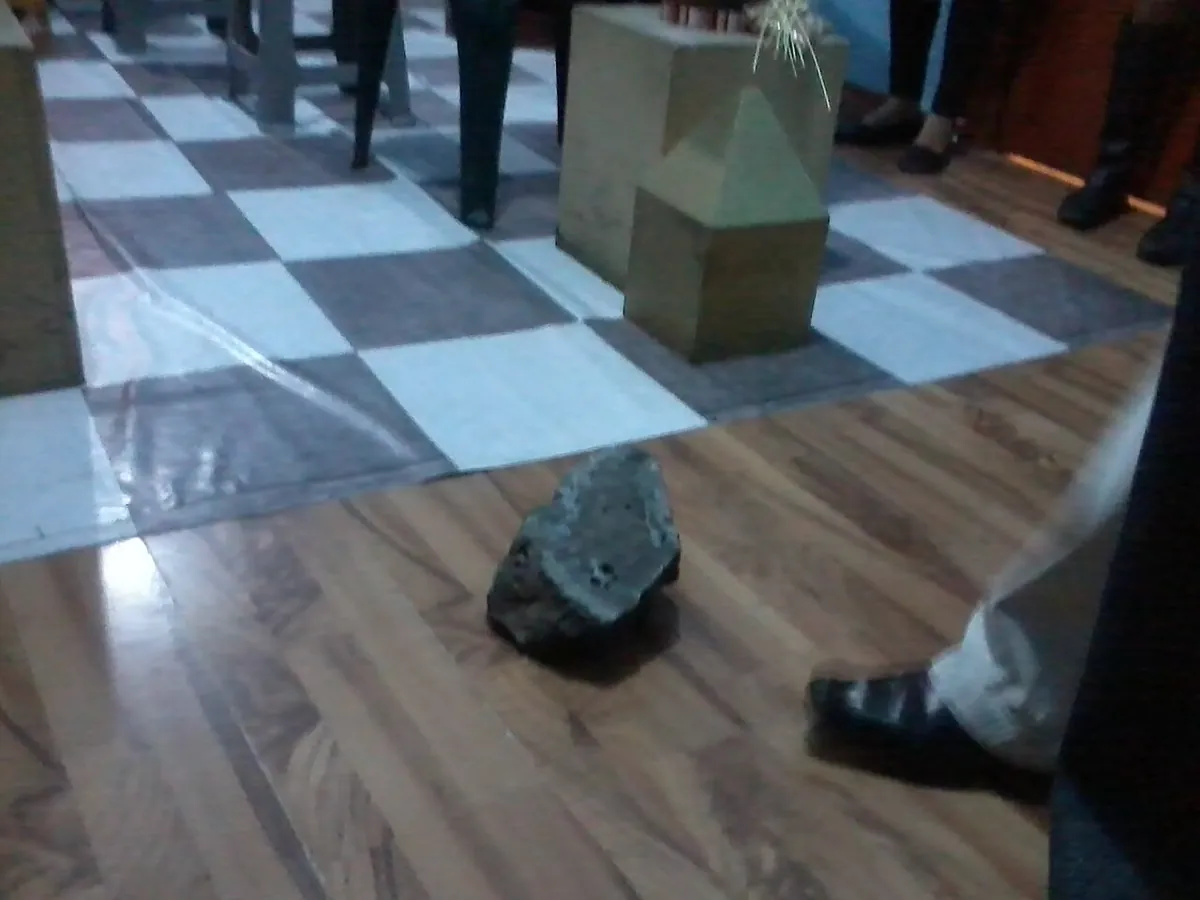
Masonic checkered floor symbolism centers on the mosaic pavement, a pattern of alternating black and white squares that covers the floor of a traditional lodge room. Masonic ritual texts classify it as one of the lodge’s three principal ornaments. Every candidate walks this floor during degree work, making it both a functional surface and a charged symbolic field.
The Three Ornaments of the Lodge
Standard Masonic monitors, the printed ritual guides used across most Anglo-American jurisdictions, list three ornaments of the lodge: the mosaic pavement, the indented tessel, and the blazing star. The indented tessel is the decorative border that frames the pavement’s edge. The blazing star, positioned at the center or overhead depending on the lodge’s tradition, completes the triad. These three elements appear together in ritual catechisms that date back at least to the mid-eighteenth century, including those published in exposure texts such as Jachin and Boaz (1762), which recorded the language then in common use among English lodges. The grouping is not decorative convention, it reflects a deliberate pedagogical structure in which each ornament carries a distinct lesson delivered during the first degree.
The mosaic pavement anchors the set. Where the blazing star gestures upward and the tessel marks a boundary, the pavement is the ground itself, the surface on which the candidate stands and moves. That positioning is intentional, and it shapes how the symbol functions within the ritual sequence.
Physical Layout in a Masonic Lodge Room
A lodge room follows a consistent orientation across most jurisdictions. The Worshipful Master sits in the east; the Senior and Junior Wardens occupy the south and west respectively. Two pillars, named Jachin and Boaz after the columns described in 1 Kings 7:21, stand near the entrance in the west. The altar sits near the center or toward the east, depending on the rite. The checkered pavement runs across the open floor between these fixed points, connecting the threshold marked by the pillars to the altar where obligations are taken.
This placement is architecturally significant. Every candidate enters through or near the pillars and crosses the pavement to reach the altar. The floor is not backdrop, it is the path. Officers’ stations frame it on three sides, and the movements prescribed in degree ritual (circumambulation, approach to the altar, retirement) all trace routes across the black and white squares. Visitors who have stood in a working lodge will recognize the effect immediately: the high-contrast geometry draws the eye downward and inward, reinforcing the sense that the space operates by different rules than an ordinary room.
Historical Origins: King Solomon’s Temple and Earlier Precedents
Masonic ritual has always been explicit about where the lodge floor comes from. The Entered Apprentice degree, as recorded in monitorial literature from the early nineteenth century onward, identifies the mosaic pavement as a representation of the ground floor of King Solomon’s Temple in Jerusalem, the structure that serves as the central architectural metaphor across all three degrees of the Craft. That identification is not incidental decoration. It anchors the entire symbolic program of the lodge room to a single, named historical building.
Biblical References and Solomon’s Temple
The scriptural foundation is thinner than Masonic tradition sometimes implies, which makes the elaboration all the more interesting. First Kings 6 and Second Chronicles 3 describe Solomon’s Temple in considerable detail, cedar paneling, gold overlay, carved cherubim, but neither passage specifies a black-and-white checkered floor. What the Bible does confirm is a polished stone floor and an inner sanctuary paved with fir wood overlaid with gold. The geometric alternation of dark and light squares is a later interpretive layer, almost certainly influenced by the floor types that medieval and early modern craftsmen already knew how to build. Masonic ritual took the scriptural skeleton and dressed it with the visual vocabulary of the working lodge. The result is a symbol that is simultaneously rooted in scripture and shaped by craft practice, a combination entirely typical of how speculative Freemasonry builds its allegorical architecture.
Some eighteenth-century exposés, including Samuel Prichard’s Masonry Dissected (1730), record the pavement as a lodge fixture already in use, suggesting the symbol was well established within a decade of the United Grand Lodge of England’s formation on June 24, 1717. The speed of that adoption points toward a pre-existing visual tradition rather than a fresh invention.
Checkered Floors in Pre-Masonic Architecture
That pre-existing tradition is well documented. Polychrome geometric pavements, including the black-and-white opus sectile technique, which cuts stone into interlocking geometric shapes, appear across Byzantine basilicas of the fifth and sixth centuries, Romanesque abbeys of the eleventh and twelfth centuries, and Gothic cathedrals built through the fourteenth. Westminster Abbey’s Cosmati pavement, laid in 1268, is one of the most celebrated examples in the English-speaking world: a complex geometric floor commissioned by King Henry III, assembled by Roman craftsmen, and still visible beneath the feet of every coronation. Comparable pavements survive at Canterbury Cathedral and at dozens of Italian and French churches. These floors were not decorative afterthoughts. Medieval theologians read geometric order as a reflection of divine proportion, and the men who cut and laid the stone, the operative masons, were the direct professional ancestors that speculative Freemasonry claims as its symbolic forebears.
That craft lineage matters for understanding Masonic checkered floor symbolism. When speculative lodges adopted the alternating pavement as a ritual emblem, they were not inventing a symbol from scratch. They were formalizing a pattern that stonemason guilds had executed in sacred spaces for centuries. The checkerboard floor arrived in the lodge room carrying the accumulated visual authority of cathedral architecture, which is precisely why it could bear the symbolic weight that Masonic ritual would go on to assign it.
The Symbolism of Black and White: Duality at the Core
William Preston’s Illustrations of Masonry (1772) is direct on the point: the alternating squares of the lodge floor represent “the vicissitudes of human life”, joy and sorrow, prosperity and adversity, virtue and vice. The pavement does not rank these forces. Black squares occupy exactly as much space as white ones, and that equal distribution carries the entire philosophical weight of the image. Remove either color, and the pattern ceases to exist. The checkered floor meaning in this context is structural, not decorative: the floor teaches that human experience arrives pre-mixed, and no amount of moral effort will sort it into tidy columns.
Duality vs. Dualism: An Important Distinction
Popular commentary, especially online, often reads the black and white squares as a Manichean symbol: good versus evil locked in cosmic warfare, two absolute forces competing for dominance. That reading misses the mark. Manichean dualism, and its theological cousins in Gnosticism and certain strands of Zoroastrianism, posits a universe split between opposing metaphysical powers. Masonic checkered floor symbolism makes no such claim. The monitorial literature frames the pavement as a moral observation, not a cosmology. The point is not that darkness and light are equal gods; the point is that a human life will contain both conditions, often in rapid succession, and the wise person learns to move through each without being destroyed by either. That is a practical ethics, not a theology of warfare.
This distinction matters because it shapes how the symbol functions inside lodge ritual. The candidate does not stand on the floor and choose a side. He stands on the whole of it, on both colors simultaneously, which is precisely the intended lesson. Wisdom, in this reading, means integration rather than victory.
The Psychological Dimension: Shadow and Light
The floor’s symbolism also points inward. Several nineteenth-century Masonic commentators, including Albert Mackey in his Encyclopedia of Freemasonry (1874), connect the pavement to the Mason’s own moral constitution, the recognition that virtue and the capacity for vice coexist in the same person. This is not a supernatural claim. It is closer to what a modern reader might recognize as moral realism: the acknowledgment that self-knowledge requires confronting one’s own shadow, not just celebrating one’s strengths. The black and white checkered floor meaning, read this way, becomes a standing prompt. Every lodge meeting begins with members literally walking across a surface that encodes this reminder. The mosaic pavement Freemasonry tradition treats the floor not as background scenery but as the first lesson of the evening, underfoot, unavoidable, and geometrically unambiguous. No single square claims the whole floor. Neither should any single quality claim the whole person.
The Mosaic Pavement as Moral Foundation
The mosaic pavement enters Masonic teaching at the earliest possible moment. In the Entered Apprentice degree, the first of three degrees in the York Rite and its many derivative systems, the lodge room itself becomes a classroom, and the floor is its opening lesson. A new initiate does not encounter the checkered pavement as background decoration. The ritual presents it as a named symbol with a named meaning, establishing from the outset that the Mason’s work unfolds on morally complex ground. Good and evil, light and shadow, prosperity and loss: the floor maps these oppositions in stone before a single word of moral instruction is spoken.
Introduction in the Entered Apprentice Degree
Thomas Smith Webb’s Freemason’s Monitor, first published in 1797 and still one of the most widely cited American ritual monitors, describes the mosaic pavement as “the beautiful flooring of a Mason’s Lodge” and identifies it explicitly as an emblem of human life. Webb’s language is direct: the pavement illustrates that “our steps are taken amidst joy and sorrow.” That phrase, or close variants of it, recurs across multiple jurisdictions, from English constitutions to American monitor traditions, suggesting a shared interpretive core even where ritual details diverge. The Entered Apprentice receives this explanation early in the degree’s instructional sequence, typically during the explanation of the lodge’s symbolic furniture. The intent is pedagogical: before the candidate learns anything else, he learns that the ground beneath him is not stable, not uniformly bright, and not uniformly dark.
What makes Masonic checkered floor symbolism distinctive as moral instruction is its insistence on embodiment. Walking across the pavement during degree ceremonies is not a procedural formality. The physical act of treading alternating black and white squares is designed to move the philosophical lesson from the intellect into the body. A candidate does not simply hear that life contains sorrow alongside joy, he crosses that argument with his feet. This technique has clear precedents in religious architecture, where labyrinth floors in medieval cathedrals served a similar function: pilgrimage compressed into a single room, the journey made literal. Masonic ritual borrows that logic and applies it to ethics rather than devotion. The result is a mosaic pavement Freemasonry uses as a kind of permanent memento mori, stitched into the architecture so that no lodge meeting begins without it underfoot.
Want to learn more?
Ritual Significance: How the Floor Guides the Mason’s Journey Through the Degrees
Circumambulation and the Pavement
The mosaic pavement is not a stage set. During initiation ceremonies across all three degrees, a candidate physically traverses the lodge floor in a series of ritual circuits known as circumambulations, structured walks that trace a deliberate path around the room’s perimeter. These circuits are not ceremonial filler. Each pass across the Masonic checkered floor symbolism reinforces the idea that moral progress is a journey taken one step at a time, on ground that is never entirely stable. The alternating black and white squares beneath the candidate’s feet make the instability literal: every step lands on light or dark, and the Mason must move with equal care regardless of which square receives the foot. Masonic ritual monitors published by grand lodges in both the United States and the United Kingdom consistently describe the pavement as the ground upon which the initiate “learns to tread with caution.” That phrasing is not poetic decoration, it is a behavioral instruction embedded in the floor itself.
In the Entered Apprentice degree, the pavement’s checkered floor meaning is introduced at its most elemental level. The candidate encounters the contrast of black and white as a straightforward moral allegory: virtue and vice, knowledge and ignorance, the ordered and the chaotic. Fellow Craft work builds on that foundation, asking the initiate to consider how opposing forces produce balance rather than paralysis. The circuits multiply in symbolic weight as the degrees advance. By the time a candidate has completed the first two degrees, the floor has shifted from backdrop to text, a surface that has been read, walked, and interpreted rather than simply crossed.
The Master Mason Degree and Mortality
The third degree transforms the pavement’s symbolism entirely. The Hiramic legend, the central dramatic narrative of the Master Mason degree, places mortality at the heart of the ritual, and the black-and-white contrast of the lodge floor acquires a new register of meaning in that context. Black no longer represents merely vice or ignorance; it represents death. White no longer represents only virtue; it represents the hope of renewal. Several Masonic ritual exposés published in the nineteenth century, including those compiled by the historian William Preston in his Illustrations of Masonry (1772), document how the mosaic pavement Freemasonry uses in lodge work is explicitly linked to the idea that every human life alternates between suffering and light, and that the Master Mason must learn to stand composed on either square. The checkerboard symbolism meaning in this degree is less about moral choice and more about existential acceptance, the recognition that darkness and light are not enemies but partners in the same pattern. Some jurisdictions use the floor’s grid to orient the candidate’s position during the degree’s most solemn moments, so that the physical geometry of black and white squares frames the symbolic death and recovery at the ritual’s core. The floor, in this reading, is not a metaphor applied after the fact. It is a designed element of the initiatic experience, as functional as the altar and as deliberate as the working tools placed upon it.
Geometric and Architectural Principles Behind the Pattern
Freemasonry’s intellectual identity is inseparable from geometry. The letter G displayed in lodge rooms carries a dual meaning, it stands for both God and Geometry, and that pairing is not decorative. The Masonic tradition traces its symbolic lineage to the operative stonemasons of the medieval period, craftsmen who used geometric principles to solve structural problems that would otherwise be insoluble. The mosaic pavement sits squarely within that tradition. Its precise, repeating grid is not merely ornamental; it is a demonstration of geometric competence, a proof-of-concept rendered in tile. When a lodge installs a checkered floor, it is, in a sense, making a statement about the intellectual values of the craft itself.
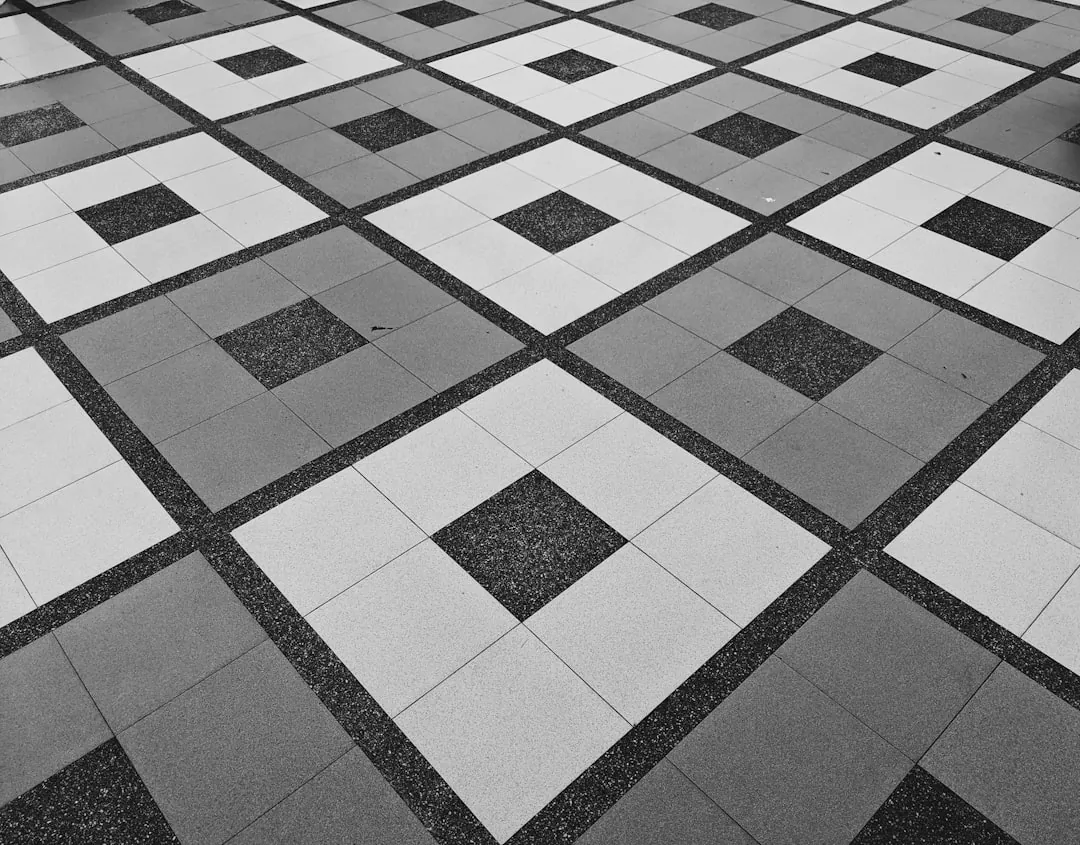
The checkerboard is a tessellation, a gap-free, overlap-free tiling of an infinite plane using a single repeating shape. Mathematically, it represents order imposed on unlimited space. Every square predicts the next; the pattern could extend forever without contradiction. Masonic ritual literature consistently frames the lodge room as a symbolic representation of the world, and the mosaic pavement as the ground on which the Mason stands while working to impose moral order on a chaotic existence. That framing maps cleanly onto the geometry. A disordered life, the ritual implies, resembles an unfinished floor: the raw material is present, but the organizing principle has yet to be applied. The same geometric logic connects the Masonic checkered floor symbolism to the broader tradition of sacred geometry that Gothic cathedral builders inherited from classical antiquity. Medieval master masons calculated their floor designs with deliberate care, using geometric progression to draw the eye from the entrance toward the altar, a spatial argument made in stone and tile rather than words. Freemasonry absorbed that architectural vocabulary and redeployed it in a ritual context. The checkerboard pavement, in this reading, is not a floor covering; it is a geometric argument about the relationship between human reason, moral discipline, and the ordered universe that both are meant to reflect.
The Checkered Floor Across Traditions: Masonic and Non-Masonic Comparisons
The Masonic checkered floor symbolism did not emerge from a vacuum. Long before any speculative lodge adopted the black and white pavement as a ritual emblem, builders, mosaicists, and heraldists across the ancient and medieval world had already laid similar patterns under the feet of emperors, bishops, and merchants. Recognizing that history is the most direct way to deflate the notion that the checkerboard is some uniquely sinister Masonic invention.
| Tradition | Period / Context | Symbolic Meaning | Key Example |
|---|---|---|---|
| Masonic | 18th century onward, speculative lodges | Duality of virtue and vice; moral instruction for initiates | The mosaic pavement described in Preston’s Illustrations of Masonry (1772) |
| Medieval Christian | 11th-15th century, European cathedrals and abbeys | Sacred threshold between secular and divine space; cosmic order | Cosmati pavement, Westminster Abbey (c. 1268) |
| Roman / Byzantine | 1st century BCE, 6th century CE, villas and basilicas | Geometric order; prestige display; no fixed symbolic canon | Opus sectile floors, Hadrian’s Villa, Tivoli (c. 125 CE) |
| Heraldic | 12th century onward, European coats of arms | Chequy pattern signals division, balance, and noble lineage | Arms of the Counts of Vexin; checky field in English and French blazon |
The medieval Christian tradition offers a particularly instructive parallel. Polychrome geometric pavements, the so-called Cosmati work produced by Roman marble craftsmen from the 12th century onward, appear in Westminster Abbey, the Basilica of San Clemente in Rome, and dozens of Italian and English churches. These floors marked the choir, the sanctuary, and the high altar: zones of heightened spiritual significance. The alternating light and dark stones were understood to map a threshold between the ordinary world and sacred ground. That interpretive logic, a floor as a liminal marker, closely mirrors the moral reading later embedded in Masonic lodge ritual, yet the two traditions developed independently. No documented transmission connects Cosmati workshops to the founders of the first Grand Lodge in 1717.
Why the Pattern Is Not Uniquely Masonic
Conspiracy-adjacent readings of the checkerboard floor tend to treat it as a covert signal: spot the pattern in a courthouse, a bank lobby, or a music video, and you have identified hidden Masonic influence. The architectural record makes short work of that argument. Roman builders used opus scutulatum, diamond and square inlays, in private villas centuries before operative stonemasonry guilds existed in their medieval form. Byzantine church floors deployed alternating stone colors as a matter of standard liturgical design. Islamic geometric tilework, particularly in Andalusian and Ottoman architecture, achieves comparable visual complexity through entirely different doctrinal logic. The checkerboard pattern is, in short, one of the most natural outcomes of laying two differently colored materials in a regular grid, a solution that skilled craftsmen across unrelated cultures reached on their own. What distinguishes the Masonic use is not the pattern itself but the specific moral and ritual commentary layered onto it: the explicit identification of black with vice and white with virtue, the instruction to tread carefully between the two. That interpretive layer is documented in lodge catechisms and ritual exposés from the 18th century onward. The geometry, however, belongs to no single tradition.
The Checkered Floor and Other Masonic Symbols: A Connected System
The mosaic pavement does not stand alone. Within the lodge room, it belongs to a coordinated set of symbols, each element reinforcing the others, each one calibrated to deliver a consistent moral message. The two great pillars, Jachin and Boaz, flank the entrance to the lodge. They mark the threshold a candidate physically crosses before setting foot on the Masonic checkered floor symbolism‘s black and white squares. Ritual texts describe these pillars as replicas of those erected at the porch of Solomon’s Temple, as recorded in 1 Kings 7:21. That architectural reference is deliberate. The candidate does not simply walk into a meeting room, he crosses a symbolic boundary between the profane world and a consecrated space. The floor and the pillars together constitute that threshold. Neither element carries full meaning without the other.
At the far end of the pavement, the square and compass rest on the altar. Their placement is not incidental. The square teaches the Mason to regulate conduct; the compass teaches him to circumscribe desire. Both virtues are demanded by the very ground underfoot, a surface that visually insists, in alternating black and white, that every step involves a choice between opposing forces. Then there is the blazing star, the third ornament of the lodge, frequently positioned at the pavement’s center. Masonic monitors, the printed guides that lodges have issued since at least the eighteenth century, describe the blazing star as a symbol of divine guidance and the light of reason. Centered on the checkerboard field, it functions as a focal point: the moral duality encoded in the floor radiates outward from this single point of luminous orientation. Taken together, the pillars, the altar tools, and the central star form what Masonic teaching presents as a complete symbolic grammar, a structured argument, laid out in stone and geometry, about the human condition and the discipline required to navigate it.
Common Misconceptions About Masonic Floor Symbolism
Few symbols in Masonic tradition attract more misreading than the black and white pavement. Some misreadings are theological, some conspiratorial, and some simply stem from unfamiliarity with the primary sources. All of them share a common flaw: they ignore three centuries of publicly available Masonic monitors, ritual commentaries, and lodge constitutions that explain the floor’s meaning in plain language. Correcting these misreadings does not require insider access, it requires reading the documents that have always been in print.
The Checkered Floor Conspiracy Theory: What the Record Actually Shows
The checkered floor conspiracy claim runs roughly as follows: the black and white pattern is a covert signal, embedded in lodge rooms and public spaces alike, that identifies the hidden allegiances of a global elite. This claim circulates widely online, but it collapses on contact with documentary evidence. The mosaic pavement’s symbolic meaning appears in full in publicly available Masonic monitors, texts printed and distributed without restriction since at least the eighteenth century. Preston’s Illustrations of Masonry (1772) describes the pavement explicitly as a teaching emblem for the lodge’s entered apprentices. There is no cipher, no hidden layer, no signal function. The floor means exactly what Masonic ritual says it means.
The pre-Masonic history of the pattern makes the conspiracy reading even harder to sustain. Opus alexandrinum pavements decorated Byzantine churches from the sixth century onward. Black and white geometric tile work appears in medieval European cathedrals, Renaissance civic halls, and Baroque palace interiors, none of which were Masonic buildings. The pattern was a prestige architectural choice long before any speculative lodge adopted it. Attributing a covert signaling function to a design that was already ubiquitous in European architecture requires dismissing that entire record, which no credible historian has found reason to do.
Religious Interpretations: Christianity, the Bible, and the Mosaic Pavement
Christian engagement with Masonic checkered floor symbolism has produced two distinct lines of interpretation, and both deserve accurate representation. The sympathetic reading, common among Masonic writers who were themselves practicing Christians, draws a direct line from the lodge floor to the pavement of Solomon’s Temple as described in 1 Kings and 2 Chronicles. Albert Mackey’s Encyclopedia of Freemasonry (1874) explicitly identifies the mosaic pavement as an allusion to the temple floor, reading the duality of black and white as a continuation of Biblical architectural symbolism rather than a departure from it. Some Anglican and Protestant commentators in the nineteenth century accepted this framing without controversy.
The critical reading, associated most prominently with formal Catholic Church positions beginning with Pope Clement XII’s In Eminenti in 1738, does not focus on the floor specifically but on Masonic ritual as a whole. More recent critics from evangelical Protestant traditions have sometimes singled out the duality symbolism as implying a theology of moral relativism, the argument being that placing light and darkness on equal footing undermines the Christian doctrine of absolute good. Masonic monitors consistently reject this reading: the pavement, they state, represents the reality of moral complexity in human life, not its endorsement. Reporting both positions accurately is straightforward; endorsing either one is outside the scope of historical analysis. What the record shows is a symbol with a documented, stable meaning that different religious traditions have interpreted through their own frameworks, which is precisely what happens to most durable symbols.
Regional variation adds a practical footnote. Some lodges outside the English-speaking world use carpet rather than tile, and a minority use color combinations other than black and white. These differences are material, not doctrinal. The symbolic meaning assigned to the mosaic pavement in Freemasonry, duality, moral vigilance, the alternating conditions of human experience, remains consistent across English-speaking jurisdictions regardless of how the floor is physically rendered.
FAQ
Why is the Masonic checkered floor black and white?
The alternating black and white squares are a deliberate representation of duality in human experience, joy and sorrow, virtue and vice, light and darkness. Neither color dominates the pattern, because neither condition dominates a life honestly examined.
Thomas Smith Webb’s Freemason’s Monitor (1797), one of the most widely cited American ritual monitors, describes the mosaic pavement explicitly as a reminder that prosperity and adversity appear in equal measure across a human life. The equal distribution of the two colors is the argument, rendered in tile rather than text.
Is the Masonic checkered floor the same as the mosaic pavement?
Yes. Mosaic pavement is the formal term found in Masonic ritual texts; the checkered floor is simply the plain-language description of the same alternating black-and-white square pattern that covers the floor of a lodge room.
The word mosaic here refers to tessellated, tiled, construction, not to Moses or Mosaic law. That said, some ritual commentators from the 18th and 19th centuries did draw that secondary connection, treating it as a layered allusion. It is a reading some jurisdictions acknowledge, but it is not the primary etymology the term carries in architectural usage.
What is the connection between the checkered floor and King Solomon’s Temple?
Masonic ritual explicitly frames the mosaic pavement as a representation of the floor of King Solomon’s Temple, the foundational architectural reference throughout the craft’s degree system. The scriptural grounding draws on 1 Kings and 2 Chronicles, both of which describe the Temple’s construction in considerable detail.
Importantly, neither biblical text describes a black-and-white checkered pattern specifically. The visual interpretation, the alternating squares, is a product of Masonic tradition elaborated from the 18th century onward, not a direct transcription of any scriptural passage. The Temple provides the symbolic address; the pattern itself is a later, reasoned addition to that address.
Do all Masonic lodges have a checkered floor?
Not universally. The mosaic pavement is prescribed as one of the three ornaments of the lodge in most English-speaking jurisdictions, alongside the indented tessel and the blazing star, but physical form varies considerably. Some lodge rooms feature actual black-and-white tile; others use a painted or carpeted representation.
The United Grand Lodge of England and most North American grand lodges recognize the pavement as a standard lodge ornament regardless of how it is rendered in a given building. The symbol’s presence matters; the material does not. Practical constraints of rented halls and historic buildings account for most of the variation.
What does walking on the checkered floor represent in Masonic ritual?
During degree ceremonies, candidates and officers circumambulate, walk prescribed ritual circuits, across the pavement. The physical act is pedagogical: moving through alternating light and dark squares enacts the philosophical lesson rather than merely stating it. The Mason’s path literally crosses both favorable and adverse conditions in sequence.
The deliberate, measured pace required by ritual reinforces a second layer of meaning: that moral conduct must be careful and intentional, not reactive. Ritual monitors across multiple jurisdictions treat the act of treading the floor as inseparable from understanding what the pattern represents, embodied instruction, in the most literal sense.
