Freemasonry Fundamentals

Masonic Lodges: Structure, Rites, and How They Work

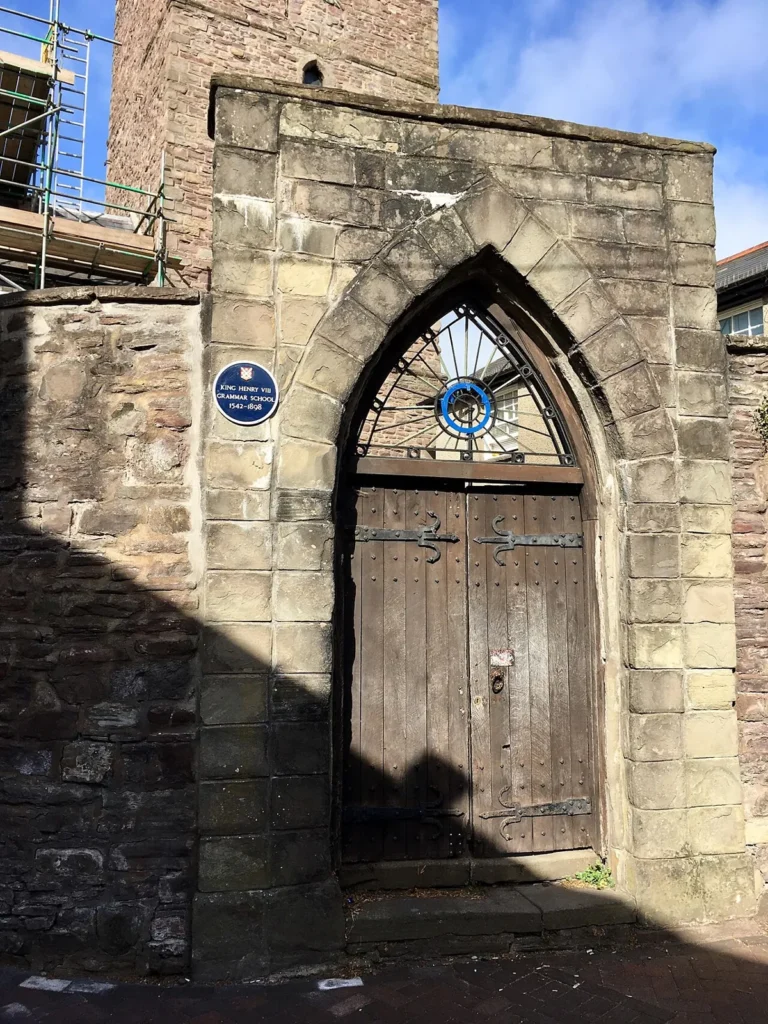
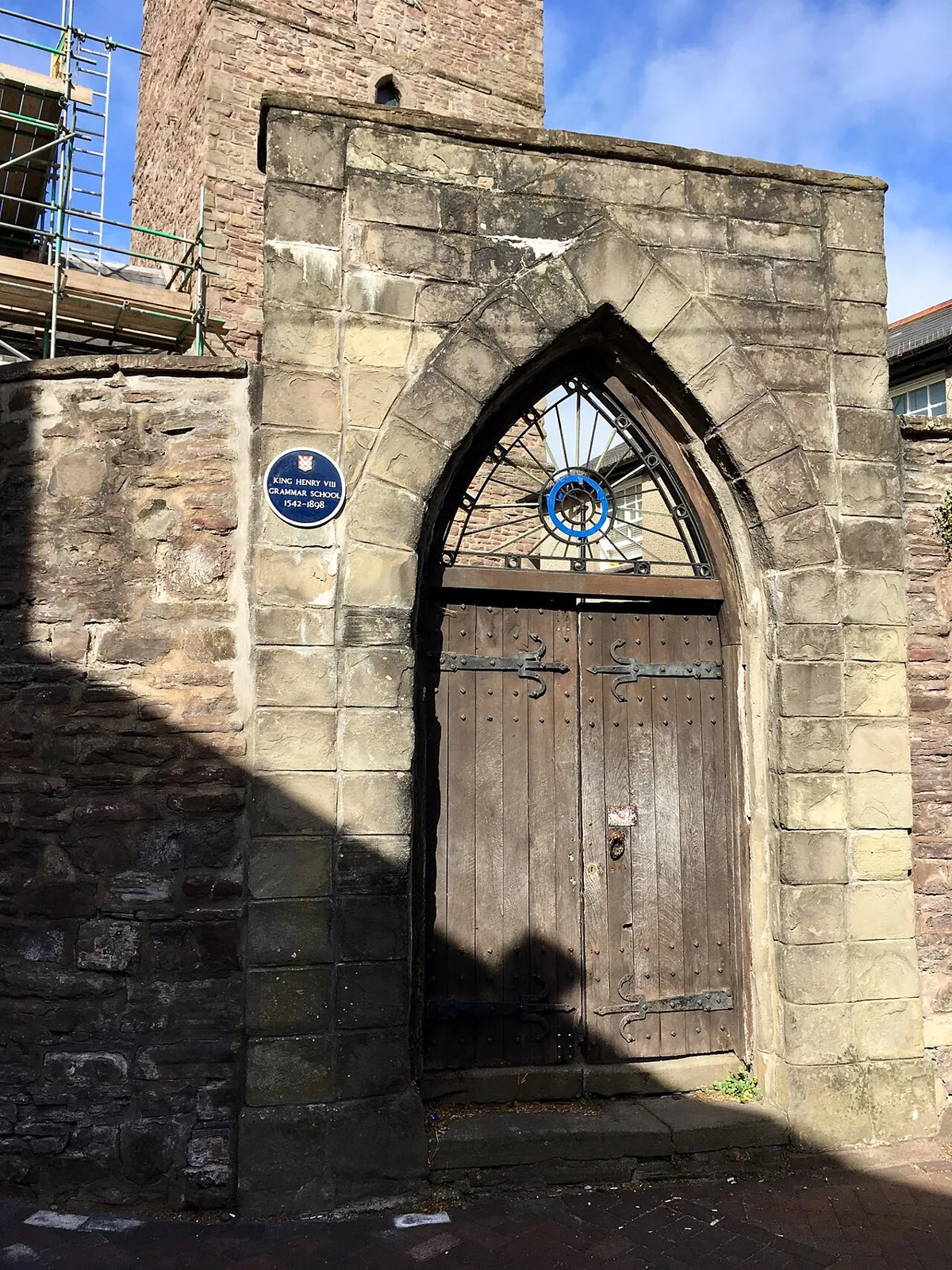
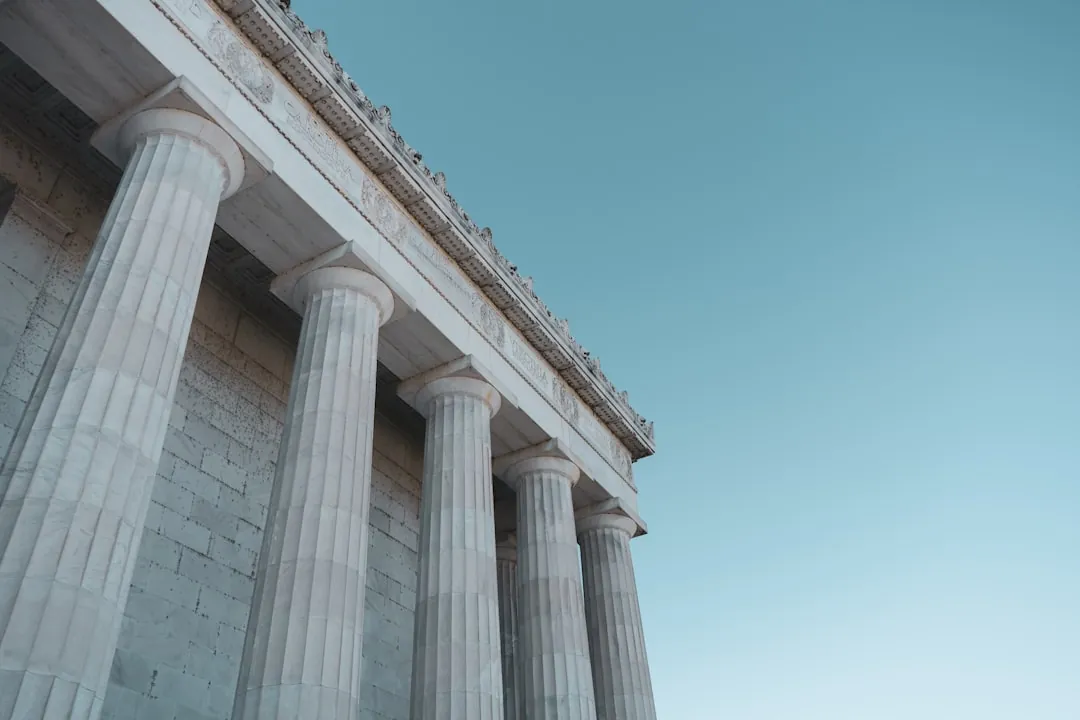
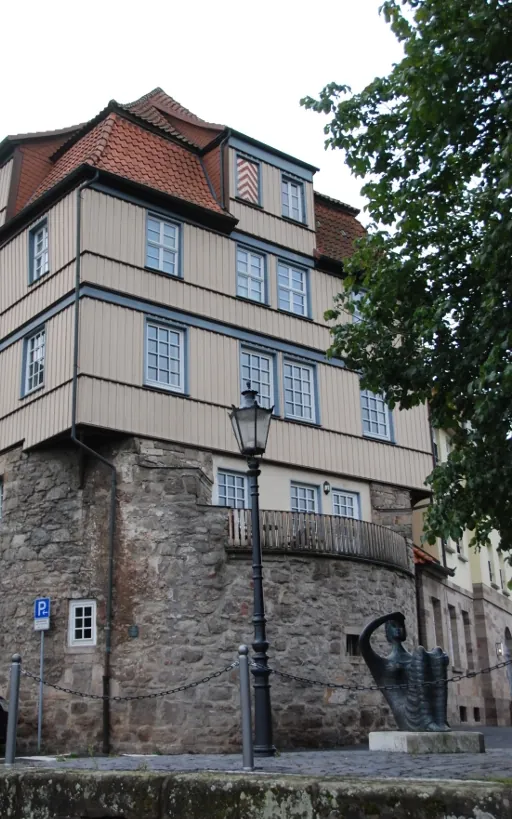
Historic listed building housing Masonic lodge headquarters

A Masonic lodge is the fundamental unit of Freemasonry, the local body where members meet, confer degrees, and conduct the fraternity’s business. The word “lodge” predates the modern fraternity by centuries, rooted in the temporary shelters medieval stonemasons erected beside cathedral construction sites. When the first Grand Lodge was constituted in London on June 24, 1717, it did not create the lodge concept; it standardized and federated lodges that already existed. Today, the Grand Lodge of England‘s official records recognize thousands of constituent lodges worldwide, and the Masonic Service Association of North America estimates more than 1,100 lodges operating across the United States alone. Yet despite their ubiquity, Masonic lodges remain widely misunderstood, alternately imagined as secret cabals or dismissed as little more than dinner clubs for older men. Neither characterization survives close examination. This article traces the lodge from its operative origins through its speculative transformation, explains how lodges are organized and governed, describes what actually happens at a meeting, and addresses the persistent myths that obscure a straightforward institutional history.

What Is a Masonic Lodge?

A Masonic lodge is the fundamental chartered unit of Freemasonry, functioning simultaneously as an organized body of members and as the physical space where those members convene. Every Freemason belongs to a specific lodge, not to the broader fraternity in the abstract. Each lodge operates under a formal warrant issued by a Grand Lodge, without which it holds no recognized standing.

Historic listed building housing Masonic lodge headquarters
Photo: No Swan So Fine (wikimedia)

The word “lodge” has carried this dual weight since at least the operative stonemason guilds of medieval Europe, where it described both the workshop built against a cathedral wall and the brotherhood of craftsmen who labored inside it. That ambiguity was inherited wholesale by speculative Freemasonry when the first Grand Lodge was constituted in London on June 24, 1717. Today the term still moves freely between meanings depending on context: a Mason might say he “belongs to a lodge” (the organization) or that the ceremony was held “in the lodge” (the room), and both usages are technically precise. Most jurisdictions recognize only lodges of men, though co-Masonic and women-only bodies exist in several countries and will be addressed later in this article.

The Lodge as Organizational Unit

Each lodge is a self-governing body, chartered by its Grand Lodge and identified by a proper name and a number on the Grand Lodge register. The numbering system matters more than it might appear: it establishes seniority, tracks a lodge’s unbroken warrant, and allows researchers to trace institutional lineage back centuries. Fredericksburg Lodge No. 4 in Virginia still holds the same warrant under which George Washington was initiated in 1752, making its register entry a primary historical document.

Governance follows a standard elected-officer structure. A Worshipful Master presides, supported by a Senior Warden and a Junior Warden, a Treasurer, a Secretary, and a series of ceremonial officers whose titles (Deacon, Steward, Tyler) descend directly from the vocabulary of operative craft guilds. Officers are elected annually by the lodge’s own members, giving each lodge a degree of democratic self-determination that sits somewhat surprisingly inside what outsiders often imagine as a rigidly hierarchical institution. The Grand Lodge above it sets doctrine and Masonic law; the lodge itself manages its own affairs within those boundaries.

The Lodge as Physical Space

The lodge room is designed to function as a three-dimensional allegory. Its layout follows a consistent symbolic geography regardless of whether the building is a purpose-built Masonic temple or a rented hall. The East, where the Worshipful Master sits, represents wisdom and the rising sun. The West and South are assigned to the Senior and Junior Wardens respectively, completing a solar circuit that frames every meeting as a symbolic passage from darkness to light.

Three columns or pillars, typically labeled Wisdom, Strength, and Beauty, mark the officers’ stations and reference the three principal supports that Masonic ritual assigns to the fraternity. At the center of the room stands the altar, on which the lodge’s Volume of Sacred Law rests open during all formal proceedings. Alongside it sit the square and compasses, the most recognizable instruments in Masonic symbolism. Tracing boards, painted panels depicting the symbols of each of the three craft degrees, hang or stand in the room as visual teaching aids, a practice documented in lodge inventories as far back as the early eighteenth century. The architecture, in short, is not decorative. It is the first lesson.

History and Origins of Masonic Lodges

From Operative to Speculative: The 17th-Century Shift

The word “lodge” originally described something entirely practical: a temporary shelter erected at a building site where medieval stonemasons stored their tools, took meals, and resolved disputes according to guild rules. The Regius Manuscript, dated to approximately 1390 and held in the British Library, is the earliest surviving written evidence of organized Masonic practice. It sets out a code of conduct for operative craftsmen, covering everything from proper behavior toward a master to the obligation not to poach a fellow mason’s work. These were trade regulations, not philosophical allegories. The lodge was, in the most literal sense, a job site.

The transformation began quietly in the late 17th century, when English lodges started admitting men who had no connection to the building trades. These “accepted” Masons, as they came to be called, were gentlemen, scholars, and minor aristocrats drawn to the lodge’s ritual framework and its culture of confidential discussion. The antiquarian Elias Ashmole recorded his own initiation into a lodge at Warrington on October 16, 1646, making his diary entry one of the earliest firsthand accounts of a non-craftsman joining. By the 1680s and 1690s, London lodges were meeting in taverns rather than on building sites, and the proportion of working stonemasons in attendance had dropped sharply. The craft’s vocabulary, with its squares, compasses, and plumb lines, remained intact. The purpose had shifted from trade regulation to moral philosophy.

Historical Evolution of Lodge Practices

The founding moment of modern speculative Freemasonry is conventionally dated to June 24, 1717, when four London lodges convened at the Goose and Gridiron Alehouse in St. Paul’s Churchyard and constituted the Premier Grand Lodge of England. This body introduced centralized governance, standardized ritual language, and the concept of a Grand Lodge as an overarching authority to which individual lodges owed formal recognition. James Anderson’s Constitutions of 1723 codified the obligations and landmarks that lodges were expected to observe, giving the fraternity its first widely circulated governing document.

The 18th century was not a period of smooth institutional unity. By the 1750s, a rival body calling itself the Grand Lodge of the Antients had formed, accusing the Premier Grand Lodge of departing from authentic lodge traditions. The two bodies operated in parallel for decades, each recognizing its own affiliated lodges and disputing the legitimacy of the other’s degrees. That rivalry ended on December 27, 1813, when the two Grand Lodges merged to form the United Grand Lodge of England (UGLE), the governing body that continues to set the standard for mainstream Anglo-American lodge practice today. The merger agreement, known as the Articles of Union, established the three-degree structure (Entered Apprentice, Fellow Craft, and Master Mason) as the definitive framework for Masonic lodges, settling a debate that had persisted for more than half a century. Across the Atlantic, Masonic lodges in America had already proliferated rapidly through the colonial and revolutionary periods, each operating under a warrant from one of the competing English or Irish Grand Lodges, and they carried those institutional divisions with them into the new republic.

Types of Masonic Lodges and Rites

Freemasonry is not a single, uniform institution. Across roughly three centuries of organized existence, it has produced a wide range of lodge types differentiated by the ritual system they practice, the gender policies they observe, and whether they hold recognition from a mainstream Grand Lodge. Understanding these distinctions matters before attempting to navigate any list of Masonic lodges or assess what membership in a specific body actually entails.

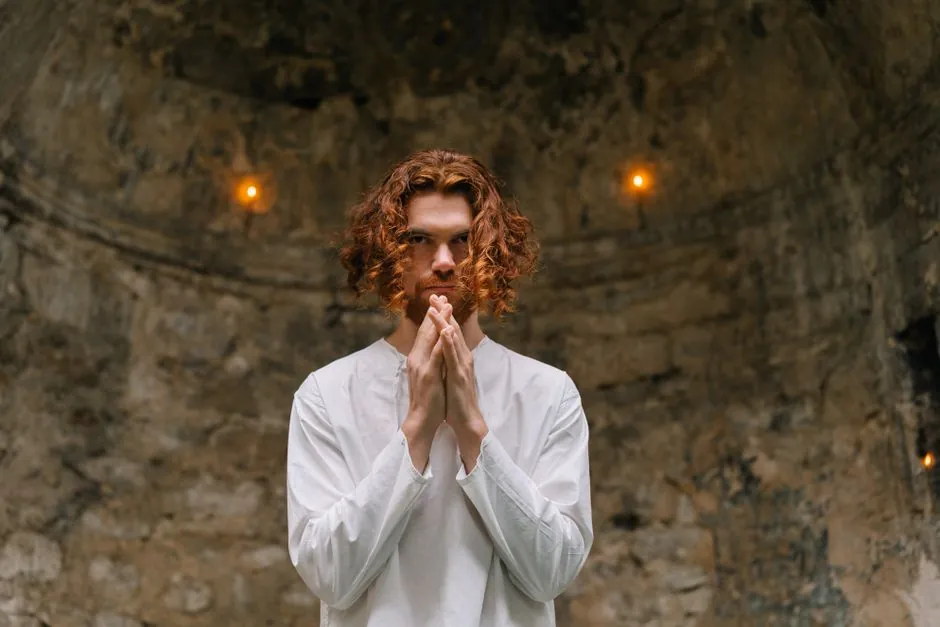
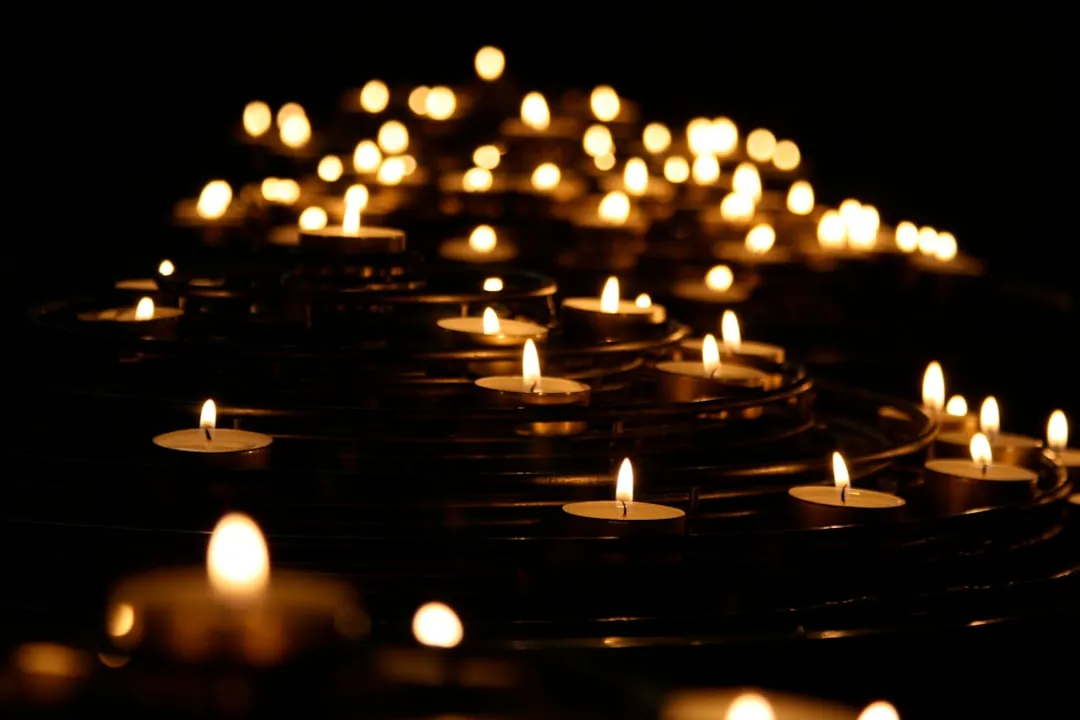
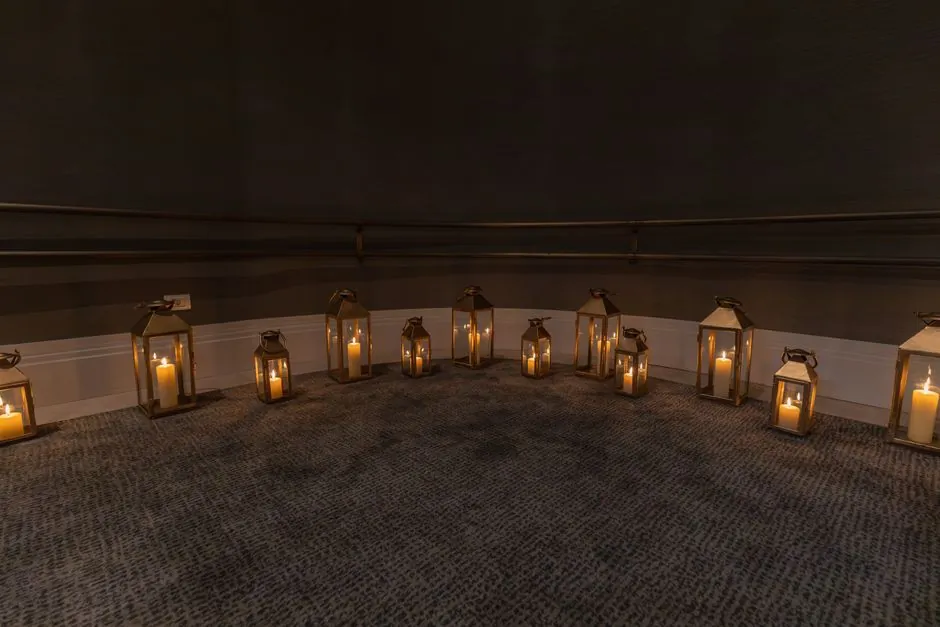
Candlelit ritual space central to Masonic lodge ceremonies
Photo: Mike Labrum (unsplash)
Rite Primary Jurisdiction Number of Degrees Notable Characteristics
York Rite United States, United Kingdom 3 (Craft) + additional bodies up to Royal Arch Encompasses Chapter, Council, and Commandery bodies; strong presence in American Masonic lodges in America
Scottish Rite United States, Latin America, continental Europe 4-32, plus an honorary 33rd Governed in the US by two Supreme Councils (Northern and Southern Jurisdictions); degrees are conferred in reunion cycles
Emulation Rite England and Wales 3 (Craft) Standardized working approved by the United Grand Lodge of England; emphasizes precise ritual memorization
French (Modern) Rite France, francophone jurisdictions 7 Developed in the late 18th century; associated with the Grand Orient de France, which removed the requirement of belief in a Supreme Being in 1877

The rite a lodge works determines the structure of its ceremonies, the number of Freemasonry degrees it confers, and in some cases the theological premises it operates under. A lodge working the Emulation Rite in London and a lodge working the Scottish Rite in New Orleans are both practicing Freemasonry, but their ritual vocabularies differ considerably. Neither is more “authentic” than the other; they represent parallel traditions that developed in different national contexts.

Regular vs. Irregular Lodges: What the Distinction Means

The terms regular and irregular (sometimes clandestine) describe a lodge’s standing within the international framework of recognized Freemasonry, not the quality of its ceremonies. The United Grand Lodge of England, which functions as a de facto benchmark for recognition worldwide, sets out formal criteria in its Basic Principles for Grand Lodge Recognition. These include a requirement that every lodge work under a warranted Grand Lodge, that candidates profess belief in a Supreme Being, and that the Volume of the Sacred Law be open during lodge proceedings. A lodge or Grand Lodge that departs from these criteria risks losing recognition, which carries a practical consequence: members of regular lodges are generally prohibited from visiting irregular ones, and vice versa. The Grand Orient de France has not been recognized by the United Grand Lodge of England since 1877, precisely because of its removal of the theological requirement. This matters for lodge membership requirements and for the portability of a member’s Masonic standing across jurisdictions.

“Clandestine” carries a harsher implication than “irregular.” Mainstream Masonic authorities reserve it for bodies that actively misrepresent themselves as regular, rather than simply operating outside the recognition framework. Most irregular lodges do not hide their status; they operate under a different set of governing principles.

Women in Freemasonry and Co-Masonic Lodges

Mainstream Grand Lodges, including the United Grand Lodge of England and the major American Grand Lodges, restrict membership to men. This policy is longstanding and rooted in the operative guild traditions from which speculative Freemasonry claims descent. Parallel organizations have existed for well over a century, however. Co-Masonic lodges, which admit both men and women, are represented internationally by Le Droit Humain, founded in Paris in 1893 when Maria Deraismes was initiated into a French lodge and subsequently co-founded a mixed-gender order with Georges Martin. Separately, the Order of Women Freemasons, established in the United Kingdom in 1908, operates lodges exclusively for women and works the same degrees as mainstream male lodges. Neither body holds recognition from the United Grand Lodge of England or its affiliated Grand Lodges, which means their members and male mainstream Masons cannot formally visit each other’s lodges. These organizations exist, they have documented histories, and they practice recognizable Masonic ritual. Whether mainstream bodies should extend recognition to them is a question those bodies continue to debate internally, and it falls outside the scope of historical description.

Lodge Organization and Structure

Officers and Leadership Roles

A functioning lodge operates through a defined set of elected and appointed officers, each carrying both a practical responsibility and a symbolic role rooted in the operative stonemason tradition the fraternity claims as its allegorical heritage. At the head sits the Worshipful Master, the lodge’s presiding officer for a one-year term. The title can mislead modern readers: “worshipful” here is archaic English for “honorable,” the same usage found in the formal address of English mayors and judges. No religious veneration is implied. Below the Worshipful Master, two elected deputies help govern the lodge room: the Senior Warden, who oversees proceedings when the Master is absent and traditionally superintends the Fellow Craft degree, and the Junior Warden, responsible for the brethren’s welfare during refreshment periods and associated with the Entered Apprentice degree. The Secretary maintains records, correspondence, and dues collection; the Treasurer manages lodge finances under bylaws approved by the Grand Lodge. Appointed officers fill the remaining ceremonial and logistical posts. Deacons (Senior and Junior) serve as messengers and escorts during ritual work, guiding candidates through the degree ceremonies. Stewards manage hospitality, particularly the festive board or lodge dinner that follows formal meetings in many jurisdictions. The Tyler, sometimes spelled Tiler, stands outside the lodge room door, armed with a sword in ceremonial tradition, to ensure that only properly credentialed members enter. Each office, even the most logistical, carries a layer of symbolic meaning that the lodge’s ritual instruction is designed to illuminate over time.

The Relationship Between a Lodge and Its Grand Lodge

Individual lodges do not exist in isolation. Every warranted lodge holds its charter from a Grand Lodge, the sovereign governing body for a given state or nation. In the United States, each of the fifty states maintains its own Grand Lodge, a structure dating to the formation of the Grand Lodge of Virginia in 1778 and the subsequent proliferation of state-level bodies as the republic expanded westward. This federated arrangement gives individual lodges considerable autonomy in day-to-day affairs: they set their own meeting schedules, elect their own officers, and manage their own finances within the parameters of Grand Lodge-approved bylaws. On matters of greater constitutional weight, the Grand Lodge is the final authority. It issues and can revoke charters, establishes the ritual standards that all subordinate lodges must follow, sets minimum membership requirements, and serves as the appellate body when disciplinary disputes cannot be resolved locally. The United Grand Lodge of England, founded on June 24, 1717, operates on the same federated principle at the national level, as does the Grand Lodge of Scotland, established in 1736. Grand Lodges also control the question of recognition: a lodge whose parent Grand Lodge is not recognized by another Grand Lodge is, by that second body’s standards, “irregular,” and its members cannot visit or participate in recognized lodges. This recognition framework is the primary mechanism through which regular and irregular lodges are distinguished, a distinction that carries real consequences for how broadly a lodge’s membership credentials are accepted across jurisdictions worldwide.

Want to learn more?

Learn more

Lodge Meetings, Rituals, and the Three Degrees

A Masonic lodge meeting is, at its core, a business meeting conducted inside a ceremonial frame. The Masonic Service Association reports that the typical lodge convenes eight to ten times per year, with stated (regular) meetings held on a fixed calendar and additional called meetings scheduled specifically for degree work. A stated meeting follows a recognizable parliamentary agenda: the lodge opens with a formal ceremony, proceeds through the reading of minutes, financial reports, and correspondence, then moves to balloting on petitions from candidates before closing with another prescribed ceremony. The ritual wrapper around that governance is not theater for its own sake. It reinforces the fraternity’s central premise that ordinary civic and moral duties carry weight worth marking with deliberate attention.

The three degrees of Craft Freemasonry, Entered Apprentice, Fellowcraft, and Master Mason, form the universal foundation of the system practiced in every recognized lodge worldwide. Each degree is delivered as a scripted dramatic presentation, drawing on the allegorical construction of Solomon’s Temple as described in the Hebrew scriptures. The candidate moves through each degree in sequence, and the narrative grows progressively more elaborate. The third degree, Master Mason, centers on the legend of Hiram Abiff, the Temple’s chief architect, and his fate at the hands of three assailants who sought to extract the secrets of a Master Mason by force. Historian Mark Tabbert, in his work on American Freemasonry, has noted that the legend functions as a morality allegory about integrity under duress, not as a claim to historical fact. The degrees are not secret in the sense that their existence is hidden; the ritual content is confidential, but the overall structure has been documented extensively in published exposés dating back to the 1720s.

What the Number 3-5-7 Means in Masonic Ritual

The sequence 3, 5, and 7 appears repeatedly in lodge ritual and is one of the more frequently searched questions about Masonic practice. The practical explanation is structural: these numbers correspond to the minimum number of officers required to open each of the three degrees respectively. A lodge cannot open in the First Degree (Entered Apprentice) without at least three officers present; the Second Degree (Fellowcraft) requires five; the Third Degree (Master Mason) requires seven. The numbers also carry symbolic resonance within the ritual’s allegorical system, referencing architectural proportions associated with classical antiquity and, in some ritual texts, the steps of a Pythagorean staircase. The symbolism is described within the lodge as illustrative of moral and philosophical principles, not numerological magic. Ritual monitors published by American grand lodges confirm this reading explicitly.

Beyond the numerical minimum, each degree has a full complement of officers with distinct titles and functions: the Worshipful Master presides from the East, the Senior and Junior Wardens sit in the West and South respectively, and a range of deacons, stewards, and a tyler (the officer who guards the outer door) fill supporting roles. This officer structure mirrors, in miniature, the guild hierarchy that Masonic tradition claims as its symbolic ancestry.

Lodge Facilities, Architecture, and Social Events

The physical building where a lodge meets is commonly called a temple or hall, though the terminology varies by region. Many older American lodge buildings, particularly those constructed between 1880 and 1930, display neoclassical or Egyptian Revival architectural details: columns referencing Jachin and Boaz (the twin pillars of Solomon’s Temple), mosaic tile floors in black and white, and a ceiling sometimes painted to represent the celestial canopy. These features are deliberate extensions of the ritual symbolism into built space, intended to reinforce the allegorical environment of the lodge room itself. Architecturally significant lodge buildings survive in cities from Boston to San Francisco, and several are listed on the National Register of Historic Places.

The lodge’s social dimension is often overlooked in discussions focused on ritual. Most lodges organize dinners before or after stated meetings, charitable fundraisers open to the wider community, and family nights that include members’ spouses and children. These events sustain membership engagement in the long stretches between degree work and keep the lodge financially viable. The distinction between the tyled lodge (the formal, members-only ritual meeting) and the social activities surrounding it matters. Critics who characterize the fraternity as purely secretive tend to ignore the considerable portion of lodge life that takes place in full public view, over a potluck dinner or a pancake breakfast.

Masonic Lodges in America: Geographic Distribution and State Grand Lodges

The United States has no single national Grand Lodge. Each state operates its own sovereign Grand Lodge, and Washington, D.C. maintains a separate one, bringing the total to 51 recognized jurisdictions across the country. These bodies function independently, each setting membership requirements, approving ritual variations, and maintaining its own roster of subordinate lodges. The arrangement reflects the decentralized character of American civic life, which means a lodge in rural Kentucky and one in downtown San Francisco operate under entirely different governing documents, even while sharing the same foundational degrees and obligations.

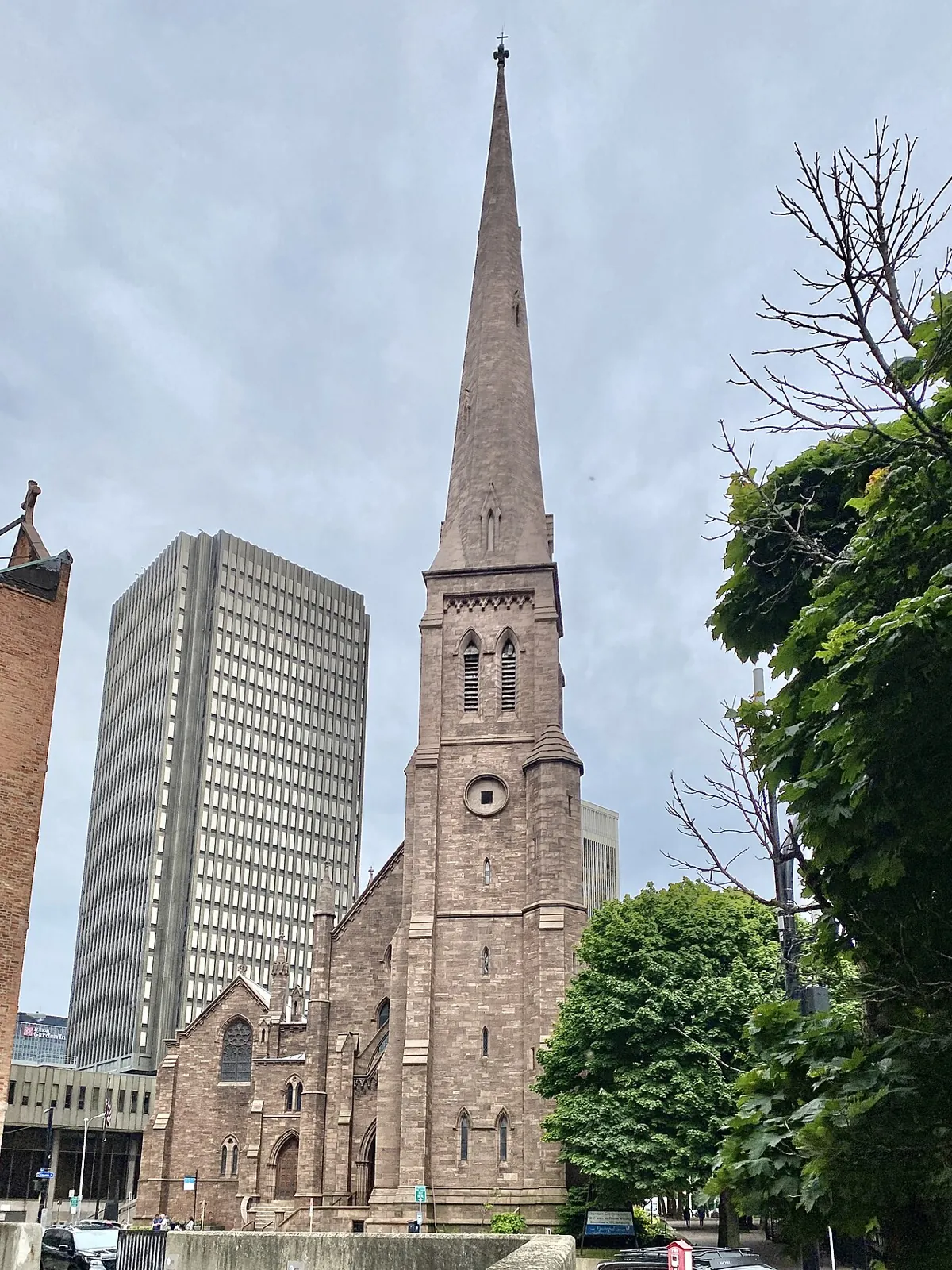
Gothic Revival architecture typical of 19th-century Masonic lodge buildings
Photo: w_lemay (wikimedia)

The Masonic Service Association of North America tracks membership trends across these jurisdictions, and the numbers tell a striking story. US membership peaked at roughly 4 million in the 1950s, when fraternal organizations of all kinds enjoyed exceptional popularity. Today that figure stands at approximately 1 million active members distributed across thousands of lodges, a decline that mirrors broader trends in civic association membership documented by Robert Putnam in Bowling Alone (2000). Historically dense states include Virginia, home to Fredericksburg Lodge No. 4 where George Washington was initiated in 1752, and Pennsylvania, site of the oldest continuously operating lodge in the country. Ohio, Michigan, and Florida round out the states with the largest concentrations of active lodges, a distribution that tracks closely with population centers and 19th-century settlement patterns in the Midwest and South.

How to Find a Masonic Lodge Near You

Locating a lodge is straightforward in practical terms. Every state Grand Lodge maintains a public directory of its chartered lodges, typically searchable by city or county on the Grand Lodge’s official website. The Masonic Service Association of North America also provides a jurisdiction-by-jurisdiction directory at msana.com, which links directly to each Grand Lodge’s contact page. Many lodges also hold open-house events, particularly around Masonic anniversaries in late June, offering an informal introduction to the lodge building and its members with no obligation or formal petition required.

Searching “lodge near me” will surface results of varying reliability. The most accurate information comes from the official Grand Lodge directory of the relevant state, not from third-party listing aggregators, which are frequently out of date. Lodge contact details change when officers rotate annually, so a direct call or email to the Grand Lodge secretary’s office is the most dependable approach for current meeting schedules or membership information. For those simply curious about the physical spaces, many historic lodge buildings are listed on the National Register of Historic Places and open to the public as architectural landmarks, entirely separate from any fraternal activity inside.

Membership, Dues, and the Joining Process

Eligibility for membership in mainstream US Masonic lodges rests on three requirements: the candidate must be an adult male (typically at least eighteen years old, though some jurisdictions set the minimum at twenty-one), must be of good moral character as judged by existing members, and must profess a belief in a Supreme Being. That last requirement is deliberately non-sectarian. The specific deity, faith tradition, or theological framework is left entirely to the candidate. A Christian, a Muslim, a Jew, a Deist, and a Sikh can in principle sit in the same lodge room, provided each affirms some form of divine governance of the universe. Avowed atheists are not eligible under the constitutions of most grand lodges in the United States, a position the United Grand Lodge of England has maintained since at least the 1723 Constitutions of the Free-Masons compiled by James Anderson.

The joining process follows a sequence that has remained largely consistent for more than two centuries. A prospective member submits a petition to the lodge, naming two current members willing to sponsor him. A committee then conducts a background investigation, interviewing the candidate and, in some jurisdictions, his references. The full lodge membership votes by secret ballot, historically conducted with actual black and white balls dropped into a box. Under the traditional rule, a single negative vote (the “black ball,” which gave English the verb “to blackball”) was sufficient to reject a petition, though many jurisdictions have since revised the threshold to two or three negative votes. If the ballot is favorable, the candidate is initiated through the three symbolic degrees of Entered Apprentice, Fellow Craft, and Master Mason, each conferred in a separate lodge meeting with its own ritual, obligation, and working-tool symbolism. The full sequence from petition to Master Mason can take anywhere from a few months to over a year, depending on the lodge’s meeting schedule and the candidate’s availability.

Cost of Membership and Dues Structure

Financial obligations in American lodges are modest by most fraternal-organization standards, but they vary enough that any figure cited here should be treated as a general range. A one-time initiation fee covering all three degrees typically runs between $100 and $300 in most jurisdictions, though lodges in major metropolitan areas sometimes charge more. Annual dues, which fund operating costs, building maintenance, and charitable activities, generally fall between $100 and $400 per year across the United States, according to figures reported by individual grand lodge secretaries. Lodges affiliated with historic buildings or active social programs tend toward the higher end of that range.

Members who later seek admission to appendant bodies (organizations that confer additional degrees beyond the third, such as the Scottish Rite or the York Rite) pay separate dues to each body they join. Those fees are entirely optional and are not required for full standing as a Master Mason. The lodge secretary is the authoritative source for the precise initiation fee and annual dues of any specific lodge, since grand lodges do not publish a uniform national rate. The dues model was built to keep the fraternity accessible across a broad economic range, a principle traceable to the craft guild origins that inform so much of its lodge organization and structure.

Common Misconceptions About Masonic Lodges

Few institutions attract as many confident mischaracterizations as Freemasonry, and most cluster around three persistent myths: that the fraternity operates in secret, that it functions as a competing religion, and that it sits at the center of some coordinated global power structure. Each claim collapses under modest scrutiny.

The “secret society” label is the easiest to dispatch. Masonic lodges are listed in public telephone directories, maintain websites, and in many jurisdictions post signage on their buildings. The Masonic Service Association of North America publishes lodge locators openly. Members wear lapel pins, display emblems on vehicles, and routinely identify themselves. What lodges do protect is the specific wording of certain ritual obligations and the modes of recognition used between members, a practice closer to a professional guild’s trade confidence than to any operational secrecy. An organization that advertises its address and publishes its annual charitable disbursements is not, by any reasonable definition, hidden.

The conflation of Freemasonry with the Bavarian Illuminati deserves equal precision. The historical Illuminati was founded on May 1, 1776, by Adam Weishaupt, a professor of canon law at the University of Ingolstadt. The Elector of Bavaria banned the organization in 1785; it had effectively ceased to exist by 1787. While a small number of individuals held membership in both organizations simultaneously, the two were structurally, philosophically, and organizationally distinct. No credible historical record documents a merger, a coordinating body, or a shared chain of command. The conspiracy narrative that fuses the two relies on the coincidence of overlapping membership, a standard that would implicate virtually every learned society operating in late eighteenth-century Europe.

Is the Masonic Lodge Religious?

This question deserves a careful answer. Freemasonry requires candidates to profess belief in a Supreme Being, but it prescribes no specific theology, recognizes no particular scripture as authoritative, and employs no ordained clergy. The lodge room contains a Volume of the Sacred Law, which may be a Bible, a Torah, a Quran, or another text depending on the member taking an obligation, a practice that underscores the fraternity’s deliberately non-sectarian structure. The United Grand Lodge of England’s Book of Constitutions states explicitly that discussion of religion and politics is prohibited at lodge meetings, precisely to prevent the fraternity from becoming an arena for sectarian dispute.

The Catholic Church’s position is more nuanced than popular accounts suggest. Canon 1374 of the 1983 Code of Canon Law prohibits Catholics from joining associations that plot against the Church, and a 1983 declaration from the Congregation for the Doctrine of the Faith, then headed by Cardinal Joseph Ratzinger, affirmed that Catholics who enroll in Masonic associations are in a state of grave sin. The Church’s objection rests primarily on concerns about religious indifferentism (the implication that all religious paths are equivalent) and the binding nature of Masonic oaths, not on any claim that Freemasonry is itself a religion. Some Protestant denominations and certain Islamic scholars have raised similar concerns through their own doctrinal frameworks. Reporting these positions accurately does not require endorsing any of them; the fraternity maintains that its requirement of theistic belief is a moral threshold, not a theological statement, and that members remain free to practice their own faith without interference from the lodge.

FAQ

What happens at a Masonic lodge meeting?

A typical stated meeting opens and closes with a brief ceremonial ritual, then moves through standard organizational business: reading the minutes, reviewing finances, voting on membership petitions, and scheduling upcoming degree work. The Masonic Service Association describes this format as combining “the formality of a deliberative assembly with the symbolism of an initiatic tradition.”

When a candidate is being initiated, a scripted allegorical presentation known as the degree ceremony replaces or supplements the regular business agenda. The tone is formal throughout. Members are expected to arrive on time, address the presiding officer by title, and observe the procedural customs of the jurisdiction.

How much does it cost to join a Masonic lodge?

Costs vary by jurisdiction and by individual lodge. In most US jurisdictions, a one-time initiation fee falls between $100 and $300, with annual dues typically ranging from $100 to $400. These figures cover the three-degree conferral and ongoing membership in the local body.

Members who later join appendant bodies, such as the Scottish Rite or York Rite, pay separate fees to those organizations. For current figures specific to any given lodge, the lodge secretary is the authoritative source. Published ranges online are useful for budgeting but should not substitute for a direct inquiry.

Can women join Masonic lodges?

Mainstream Grand Lodges in the US and UK restrict membership to adult males. Several parallel organizations, however, confer the same three degrees in mixed-gender or women-only settings. Le Droit Humain, a co-Masonic order founded in France in 1893, admits both men and women. The Order of Women Freemasons, established in England in 1908, operates as an exclusively female body.

Neither organization is recognized by mainstream Grand Lodges, but both operate openly, maintain their own charters, and follow recognizable degree structures. The distinction is jurisdictional and administrative, not a judgment on the legitimacy of either tradition.

What are the three degrees of Freemasonry, and what do they mean?

The three degrees are Entered Apprentice (first degree), Fellowcraft (second degree), and Master Mason (third degree). Each is conferred through an allegorical dramatic presentation loosely based on the construction of Solomon’s Temple and the legend of the architect Hiram Abiff. The progression is understood as a sequence of moral and philosophical instruction, not religious initiation.

Full membership rights, including the right to vote on lodge business and petitions, are granted upon reaching the Master Mason degree. The Entered Apprentice and Fellowcraft degrees are preparatory stages, each with their own obligations, symbols, and working-tool lectures.

What is the difference between a lodge and a Grand Lodge?

A lodge is the local body where members meet, confer degrees, and conduct fraternal business. It operates under a charter issued by a governing authority. A Grand Lodge is that governing authority for a given jurisdiction, typically a single US state or a nation. It sets ritual standards, grants or revokes lodge charters, and manages relations with other Grand Lodges internationally.

One point that surprises many newcomers: there is no single international Grand Lodge above them all. Each Grand Lodge is sovereign within its own jurisdiction, and inter-jurisdictional recognition is negotiated bilaterally, based on criteria each body sets for itself.

The Fellowcraft Degree: History, Symbolism, and Meaning in Freemasonry

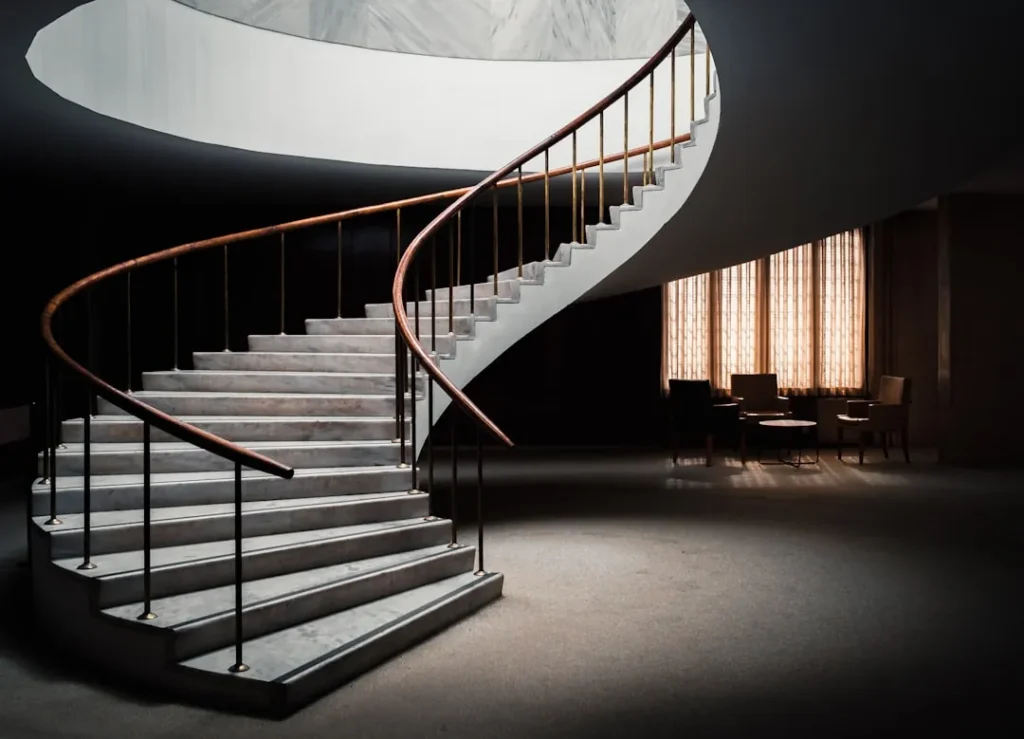
Spiral staircase symbolizing ascent through Fellowcraft degree progression

The Fellowcraft degree is the second of the three degrees conferred in a Masonic lodge, positioned between the Entered Apprentice and the Master Mason. Where the first degree marks an initiation into the fraternity, the Fellowcraft degree turns the candidate’s attention outward, toward knowledge, reason, and the liberal arts. The degree draws on the imagery of the medieval stonemason’s craft, in which an apprentice who had demonstrated sufficient competence was elevated to the rank of Fellow of the Craft, gaining both new responsibilities and new privileges within the guild. In Freemasonry, that framework becomes a vehicle for exploring themes of intellectual development, proportion, and moral order. The ritual incorporates specific symbols, the winding staircase, the two great pillars, the letter G, each carrying layered meaning that the degree’s lecture is designed to unfold. This article examines the Fellowcraft degree in full: its historical roots, its ceremonial structure, its symbolism, the distinctions between jurisdictions, and its place in the broader progression from Entered Apprentice to Master Mason.

Spiral staircase symbolizing ascent through Fellowcraft degree progression
Photo: Serhat Beyazkaya (unsplash)

What Is the Fellowcraft Degree?

The Fellowcraft degree is the second of three degrees conferred in a Blue Lodge, the foundational unit of Freemasonry. Positioned between the Entered Apprentice and the Master Mason degree, it marks a candidate’s formal progression from initiation into a deeper engagement with the fraternity’s symbolic and intellectual traditions. Its central concern is the pursuit of knowledge.

The title itself carries a precise historical weight. In the operative stonemasons’ guilds of medieval Europe, a Fellow of the Craft was a journeyman, a worker who had moved beyond the most basic apprenticeship but had not yet attained the standing of a master. Speculative Freemasonry, which emerged from those guild traditions, preserved the terminology intact. The word “fellow” here retains its older English sense of an associate or companion within a recognized trade, not a casual acquaintance. That etymology matters, because the degree’s entire symbolic architecture is built on the idea of a craftsman in motion: no longer a raw beginner, not yet a completed master, but actively engaged in the work of self-improvement.

The degree’s governing theme, the cultivation of an informed, reasoning mind, distinguishes it sharply from the first degree. Where the Entered Apprentice ritual focuses on moral foundations and the candidate’s entry into the fraternal bond, the Fellowcraft journey turns outward toward the liberal arts and sciences, toward architecture as a metaphor for intellectual construction, and toward the obligation to pursue learning as a lifelong discipline. Advancement to this degree is not automatic; a candidate must demonstrate proficiency in the Entered Apprentice degree, typically by reciting a catechism or passing an examination before the lodge, before the lodge votes to confer the second degree. That requirement is not bureaucratic gatekeeping, it reflects the graduated, merit-based structure that Freemasonry inherited directly from the guild system it memorializes.

History and Origins of the Fellowcraft Degree

From Operative Guild to Speculative Lodge

Long before Freemasonry became a fraternal institution concerned with moral philosophy, the word “fellowcraft” described something entirely practical: a working mason who had completed his apprenticeship and earned the right to wages and independent labor. Medieval operative guilds organized their workforce into three grades, Apprentice, Fellow of the Craft, and Master, each carrying distinct privileges, responsibilities, and levels of access to trade knowledge. The Fellow of the Craft occupied the middle tier: no longer a raw learner bound to a single master, but not yet a master himself. He was, in the language of the guild, a journeyman in the fullest sense of the word. When speculative Freemasonry began repurposing this hierarchy in the late 17th and early 18th centuries, it retained the structure but fundamentally reinterpreted its meaning. The chisel and the plumb line became instruments of moral instruction rather than tools of construction. The Fellow of the Craft’s traditional command of geometry, the foundational science of the medieval builder, was elevated into a symbol of rational inquiry and intellectual development, a reframing that would define the Fellowcraft degree’s character for centuries.

The earliest surviving speculative Masonic manuscripts already hint at this two-tier inheritance. The Regius Poem (c. 1390), sometimes called the Halliwell Manuscript, and the Cooke Manuscript (c. 1410) both reference a distinction between apprentice and fellow, suggesting that the operative vocabulary was being absorbed into a proto-speculative context well before any formal lodge system existed. These documents don’t describe initiation rituals in the modern sense, but they establish the conceptual architecture, a graduated system of knowledge and obligation, that speculative Freemasonry would later systematize.

Codification in the 18th Century

The founding of the Premier Grand Lodge of England on June 24, 1717, is the conventional starting point for organized speculative Freemasonry, but the three-degree structure that modern Masons recognize did not spring fully formed from that first assembly at the Goose and Gridiron Alehouse in London. The crystallization of three distinct, sequential degrees, Entered Apprentice, Fellowcraft, and Master Mason, unfolded across roughly two decades. By the 1730s, lodge records and early exposés (including Samuel Prichard’s Masonry Dissected, published in 1730) confirm that the three-degree system was operational and widely recognized, with the Fellowcraft degree occupying its now-familiar middle position.

The 1723 Constitutions of the Free-Masons, compiled by the Reverend James Anderson under the authority of the Grand Lodge, did not enumerate degree rituals in explicit detail, that was never their purpose, but they codified the organizational and philosophical framework within which the degrees would develop. Anderson’s text placed conspicuous emphasis on the seven liberal arts and sciences: grammar, rhetoric, logic, arithmetic, geometry, music, and astronomy. Geometry, Anderson wrote, is “the basis of architecture” and the foundation of Masonic knowledge. This intellectual program mapped directly onto what the Fellowcraft degree lecture would later formalize, grounding the second degree’s emphasis on education and reason in an authoritative published document. By the mid-18th century, most jurisdictions across Britain and the American colonies had standardized around this three-degree model, cementing the Fellowcraft degree’s identity as the stage of intellectual inquiry between the moral foundations of the first degree and the culminating lessons of the third.

Key Symbols of the Fellowcraft Degree and Their Meanings

Jachin and Boaz: The Two Pillars

At the threshold of King Solomon’s Temple, and at the threshold of the Fellowcraft ceremony, stand two bronze pillars whose names carry the weight of scriptural authority. The Books of Kings and Chronicles record that Hiram of Tyre cast these columns for Solomon’s Temple in Jerusalem: Jachin, rendered as “He shall establish,” and Boaz, meaning “In strength.” Together, they frame the doorway as a statement of purpose before a single step is taken inside. In the degree’s ritual narrative, passing between them marks a candidate’s movement from the outer world of uninstructed labor into a space defined by order, proportion, and moral accountability. Architecturally, the pillars draw on a well-documented tradition of monumental gateway columns in the ancient Near East; symbolically, they compress an entire theology of divine covenant into two proper nouns. The Fellowcraft degree lecture addresses both names explicitly, treating them not as decorative detail but as the first lesson in a sequence of escalating instruction.

The Winding Staircase and the Liberal Arts

The winding staircase, ascending in flights of three, five, and seven steps, is one of the most architecturally legible allegories in the Fellowcraft degree. The three lower steps correspond to the classical trivium: grammar, rhetoric, and logic, the disciplines that govern language and reasoning. The five middle steps map onto the quadrivium plus one additional science: arithmetic, geometry, music, astronomy, and, in many ritual expositions, a fifth art that varies by jurisdiction. The seven upper steps complete the count with a reference to the full liberal arts curriculum as it was codified in medieval European universities and carried forward through the Renaissance.

This is not an accident of numerology. When the speculative lodge inherited the working tools and architectural vocabulary of operative stonemasonry, it also inherited a Renaissance civic ideal, that a free person’s education should encompass both language and number. The staircase encodes that ideal structurally, so the candidate does not merely hear a lecture on the liberal arts but physically enacts an ascent toward them, step by counted step. The Fellowcraft degree lecture, as preserved in expositions published by grand lodges, pauses on each flight to explain what branch of knowledge it represents and why that knowledge matters to a person of good character.

The 47th Problem of Euclid and the Letter G

Two of the degree’s most intellectually substantive symbols converge on a single theme: the primacy of geometry as both a practical science and a moral framework. The 47th Problem of Euclid, better known as the Pythagorean theorem, the proof that the square of a right triangle’s hypotenuse equals the sum of the squares of its other two sides, appears in Masonic tradition as an emblem of the master builder’s art. It is the mathematical principle that lets a craftsman establish a true right angle without mechanical instruments, a foundational technique for anyone setting out the ground plan of a building. In the Fellowcraft context, it stands for the power of demonstrated reason: a claim anyone can verify by following the steps of the proof.

The letter G, displayed prominently within the lodge room, reinforces the same argument from a different angle. The degree’s lecture is explicit that the G carries a double reference, to Geometry, the first and most essential of the mathematical sciences, and to the Grand Architect of the Universe, the non-sectarian designation for the Supreme Being that Freemasonry employs across jurisdictions. The rough and perfect ashlars, carried forward from the Entered Apprentice degree, remain visible in the lodge as a continuing reminder that the candidate’s moral self-improvement is itself a craft, one that demands the same precision, patience, and reverence for proportion that geometry demands of the builder. In this degree, symbolism is never merely decorative; it is the curriculum.

The Fellowcraft Ceremony: Structure and Ritual Elements

The ceremony conferring the Fellowcraft degree is deliberately more elaborate than the first. Where the Entered Apprentice ritual introduces a candidate to the fraternity as a newcomer, the Fellowcraft ceremony presupposes that foundation and builds on it. Before proceedings begin, the lodge is formally “called up”, the presiding Master declares it open at the degree of Fellowcraft, a procedural distinction that changes which officers participate and what business may be conducted. Candidates don’t simply walk in and receive the degree. First, they must demonstrate proficiency in the Entered Apprentice degree through a structured examination conducted by the lodge’s officers, confirming that the material of the first degree has been studied and retained. Only after passing that examination does the candidate advance to the ceremony itself.

The Obligation and the Fellowcraft Password

At the heart of every Masonic degree ceremony lies an obligation, a formal oath administered at the altar of the lodge, usually on a Volume of Sacred Law. The Fellowcraft obligation binds the candidate to secrecy regarding the degree’s ceremonial content and to standards of fraternal conduct toward fellow members. Published Masonic handbooks, including those issued by American grand lodges for public reference, confirm the obligation’s general character: it is moral and fraternal in nature, not legal or civil, and it carries no penalties enforceable outside the lodge room. Accompanying the obligation is the Fellowcraft password, a ceremonial marker of advancement that distinguishes a Fellowcraft from an Entered Apprentice when lodge business requires that distinction to be established. Neither the obligation’s precise wording nor the password itself is reproduced here; both are treated as internal fraternal material, and their general existence and function are widely documented in works such as Albert Mackey’s Encyclopedia of Freemasonry (1874).

The password is not a secret in any dramatic or conspiratorial sense. It functions more like a guild credential, a signal of completed work and accepted standing within a specific tier of the organization.

The Fellowcraft Lecture and Charge

Following the obligation, an officer of the lodge delivers the Fellowcraft degree lecture: a formal exposition of the degree’s symbols and their moral applications, organized as a series of questions and answers. This catechetical format has roots in operative guild practice and was codified in speculative Freemasonry’s early ritual manuals. The lecture covers the significance of the two pillars at the porch of Solomon’s Temple, the winding staircase of seven steps, the liberal arts and sciences, and the tools associated with the degree, each explained as an emblem of an intellectual or ethical principle. The question-and-answer format mirrors the educational method of the medieval university and reinforces the degree’s central theme of intellectual advancement through disciplined inquiry.

The ceremony concludes with the Fellowcraft charge, a formal address delivered to the newly advanced member. Where the lecture is expository, the charge is exhortatory. It directs the new Fellowcraft to pursue learning as a lifelong obligation, to contribute to civic life, and to carry the fraternity’s values into his conduct outside the lodge. Published versions of this charge, including those in Duncan’s Masonic Ritual and Monitor (1866), emphasize scholarship and public duty in language that echoes Enlightenment ideals of the educated, responsible citizen. The charge closes the ceremony by translating the degree’s symbolism into a practical mandate: study, serve, and conduct yourself accordingly.

Want to learn more?

Learn more

Candidate in formal attire preparing for Fellowcraft degree ceremony
Photo: Arseny Togulev (unsplash)

Fellowcraft Degree vs. Entered Apprentice: Key Differences

The two opening degrees of the Blue Lodge are not simply sequential steps on a single ladder, they represent fundamentally different relationships between the candidate and the craft. The Entered Apprentice degree is a degree of initiation: the candidate is received, obligations are taken, and the most elementary landmarks of the fraternity are communicated. The second Masonic degree, by contrast, is a degree of progress. The candidate is no longer a newcomer being welcomed; he is a working member expected to engage intellectually with the symbolic instruction placed before him. That shift, from reception to participation, defines everything that distinguishes the Fellowcraft from his predecessor.

Category Entered Apprentice Fellowcraft
Degree position First degree Second degree
Primary theme Initiation and reception Progress and intellectual engagement
Working tools 24-inch gauge and common gavel Plumb, square, and level
Lodge privileges Attendance only; no voice or vote Right to speak and vote on matters within the degree (most jurisdictions)
Key symbols Rough ashlar, point within a circle Winding staircase, two pillars (Boaz and Jachin), middle chamber

The practical distinctions carry real weight. In most Anglo-American jurisdictions, an Entered Apprentice attends lodge but holds no voice in its proceedings, he observes and listens, but the governance of the lodge does not yet concern him. The Fellowcraft degree changes that standing: the advanced candidate earns the right to speak and vote on matters that fall within his degree, a privilege reflecting the fraternity’s recognition of his demonstrated commitment. The symbolic vocabulary expands in parallel. Where the Entered Apprentice’s working tools, the 24-inch gauge and common gavel, are instruments of basic moral discipline, the plumb, square, and level introduced during the Fellowcraft degree ceremony address more pointed virtues: rectitude of conduct, morality, and the equality of human standing. The fellowcraft degree lecture is also substantially longer and more discursive than its first-degree counterpart, incorporating extended instruction on the liberal arts and sciences, the architecture of Solomon’s Temple, and the allegorical ascent of the winding staircase. That length is deliberate, it signals that the candidate is now expected to absorb and reflect, not merely to receive.

Privileges, Responsibilities, and Preparation Before the Degree

Advancement through the degrees of Freemasonry is not automatic. Before a lodge confers the second Masonic degree on a candidate, that candidate must demonstrate he has absorbed what came before. In most jurisdictions, this means delivering a proficiency, a memorized catechism drawn from the Entered Apprentice degree, before the lodge or before a committee of Master Masons appointed for the purpose. The recitation covers the obligations, modes of recognition, and symbolic lessons of the first degree, and passing it is a prerequisite, not a formality. Beyond the catechism itself, preparation typically involves sustained work with a lodge mentor: reviewing the Entered Apprentice lecture, becoming comfortable with the lodge’s ritual workbook, and developing enough familiarity with the symbolic vocabulary to engage meaningfully with what the Fellowcraft degree introduces. A candidate who arrives at the ceremony having done that work will find the symbolism coherent; one who has not will find it a sequence of theatrical gestures.

The privileges that come with advancement are real, if incremental. A Fellowcraft, in most jurisdictions governed by mainstream grand lodges, may attend lodge communications open to that degree, speak on matters properly before the lodge, and in many jurisdictions cast a vote, rights that remain withheld from Entered Apprentices, who occupy the most restricted standing. Yet the Fellow Craft’s standing is still provisional. Full membership in the lodge, with the complete set of fraternal rights and responsibilities that entails, is conferred only at the Master Mason degree. A Fellowcraft sits, in a sense, on the middle step: more recognized than he was, not yet fully arrived. This graduated structure is intentional; it mirrors the symbolism of progressive instruction that runs through the entire three-degree system.

Timeline for Completing the Fellowcraft Degree

One of the most common practical questions surrounding the second degree is simply: how long does it take? The honest answer is that it depends on three overlapping variables, jurisdictional rules, proficiency requirements, and lodge scheduling. Some grand lodges mandate a minimum interval between degrees; one calendar month between the first and second degree is a common floor, though certain jurisdictions set longer minimums or leave the matter entirely to the discretion of the lodge. Others impose no fixed waiting period, placing the pace in the hands of the candidate and his mentor. What almost every jurisdiction does require is demonstrated proficiency, which means the timeline is partly determined by how quickly a candidate can commit the Entered Apprentice catechism to memory, a task that takes some men two weeks and others two months.

Lodge scheduling adds a further layer of variability. Lodges typically meet once or twice a month, and degree work must be calendared, officers must be available, and a full team assembled for the ceremony. In smaller or rural lodges, this can introduce delays that have nothing to do with the candidate’s readiness. In larger urban lodges with multiple active candidates, the schedule may move more briskly. The Masonic Service Association has noted that the average American candidate completes all three degrees within six to eighteen months of initiation, though both faster and slower trajectories are common. The Fellow Craft’s ceremony charge, delivered at the conclusion of the degree, explicitly encourages continued study, signaling that the lodge views the conferral not as an endpoint but as a transition point in an ongoing process of Masonic education.

Regional and Jurisdictional Variations in the Fellowcraft Ritual

The Emulation Rite and British Practice

The United Grand Lodge of England works the Fellowcraft degree according to the Emulation Rite, a system of ritual practice that was codified in the early nineteenth century and has remained largely stable ever since. In Emulation working, the degree’s lecture, the extended catechetical explanation of the ceremony’s symbols and moral content, is delivered in a formal question-and-answer format between lodge officers, with precise wording that lodges are expected to reproduce faithfully. This differs structurally from many American workings, where the lecture may be delivered as a continuous address by a single officer rather than as a scripted dialogue, and where individual grand lodges retain the authority to approve variations in phrasing. The result is that a candidate initiated in London and a candidate initiated in Ohio will encounter the same symbolic architecture but experience it through meaningfully different theatrical and rhetorical forms.

Across the United States, the dominant ritual framework for the Fellowcraft degree is the Preston-Webb work, a system derived from the lectures of William Preston and later standardized by Thomas Smith Webb in his 1797 Freemason’s Monitor. Webb’s influence spread rapidly through American grand lodges during the early republic, and his version of the second Masonic degree, with its structured staircase lecture, its treatment of the liberal arts and sciences, and its particular handling of the pillars Jachin and Boaz, became the template that most American candidates still encounter today. Individual state grand lodges have introduced their own authorized variations over the intervening two centuries, so the Preston-Webb work is better understood as a family of related rituals than as a single fixed text. Nevertheless, the core sequence of the Fellow Craft Degree ritual, obligation, working tools, and the ascent of the symbolic staircase, remains recognizable from jurisdiction to jurisdiction.

The Scottish Rite and the York Rite, the two principal appendant bodies in American Freemasonry, do not confer the Fellowcraft degree independently; it remains exclusively a Blue Lodge degree, worked in a chartered lodge under grand lodge authority. Both appendant systems build philosophically on the symbolism introduced at this stage, the York Rite’s Royal Arch degrees, for instance, develop themes of architectural completion that resonate directly with the Fellow Craft’s unfinished temple, but neither body re-confers or supplements the degree itself. In continental Europe, several jurisdictions under the Grand Orient tradition incorporate additional allegorical passages or present different working tools, reflecting the looser standardization that characterizes Continental Freemasonry. Despite this range of practice, the symbolic core holds: the twin pillars, the winding staircase, and the letter G appear consistently across jurisdictions, confirming that the degree’s foundational grammar is shared even when its precise vocabulary is not.

The Fellowcraft Degree in Modern Freemasonry Practice

Within contemporary lodge practice, the Fellowcraft degree occupies a sometimes uneasy middle position. In many jurisdictions, the interval between the first and second degrees is measured in weeks rather than months, and candidates occasionally pass through all three degrees in rapid succession, a pace that has generated genuine internal debate among Masonic educators. Critics within the fraternity argue that compressing the timeline risks reducing a structured intellectual curriculum to a sequence of ceremonies, stripping the second degree of the reflection its symbolism is designed to prompt. The Masonic Service Association and numerous grand lodge education committees have responded by publishing structured study guides that treat the degree as a genuine course of inquiry, not a formality to be cleared before the third degree. Several grand lodges, including those in jurisdictions such as Virginia and Massachusetts, have gone further, introducing mandatory proficiency requirements and guided reading programs that candidates must complete before advancing, precisely to ensure the Fellowcraft’s emphasis on the liberal arts, civic responsibility, and reasoned inquiry receives something more than ceremonial acknowledgment.

The degree also carries its share of misconceptions, most of them traceable to the broader mythology that surrounds Freemasonry in popular culture. To state the record plainly: the Fellowcraft degree does not confer full lodge membership, that status is reserved for the third degree, the Master Mason. It involves no passwords to power, no access to hidden hierarchies, and it appears in no credible conspiracy framework as a meaningful rank of control. The Fellowcraft degree symbolism, the two great pillars, the winding staircase, the middle chamber, is allegorical, drawn from architectural and biblical tradition, and Masonic scholars from Albert Mackey in the nineteenth century to more recent contributors in the Heredom journal have consistently framed it as a meditation on education and moral development. What makes the degree particularly relevant to modern fraternal identity, those same scholars argue, is precisely its insistence that intellectual engagement is not optional. In an era when fraternal organizations compete for members’ attention and time, a degree that demands the candidate actually think, about geometry, about civic virtue, about the relationship between knowledge and character, represents something worth preserving carefully.

Masonic lodge building representing Fellowcraft degree initiation site
Photo: Mayer Tawfik (unsplash)

FAQ

What is the Fellowcraft degree in Freemasonry?

The Fellowcraft degree is the second of three degrees conferred in a Masonic Blue Lodge, sitting between the Entered Apprentice and the Master Mason. Its central theme is the pursuit of knowledge and intellectual development, expressed through symbols drawn from the seven liberal arts and the architecture of King Solomon’s Temple.

The name carries real historical weight: “Fellow of the Craft” was a medieval guild designation for a journeyman mason who had moved beyond apprenticeship but had not yet attained the rank of master. Freemasonry preserved that terminology and layered it with allegorical meaning, making this degree the tradition’s primary meditation on learning and reason.

How long does it take to complete the Fellowcraft degree?

The timeline varies by jurisdiction and by the individual candidate’s preparation. Most grand lodges require a candidate to demonstrate proficiency in the first degree, typically through a memorized catechism, before the second ceremony is conferred. Some jurisdictions mandate a minimum waiting period between degrees; others leave the pace to the candidate and his lodge mentor.

In practice, the interval between the Entered Apprentice and the conferral of the Fellowcraft degree ranges from a few weeks to several months. Candidates are generally advised to treat that waiting period as study time, since the second degree’s symbolism builds directly on what came before.

What are the main symbols of the Fellowcraft degree?

The principal symbols introduced at this stage include the two great pillars of King Solomon’s Temple, Jachin and Boaz, and the winding staircase of three, five, and seven steps, which represents the liberal arts and sciences. The letter G, standing for Geometry and the Grand Architect of the Universe, is among the most visually prominent emblems of this degree.

The working tools, the plumb, the square, and the level, are formally presented here as well, each carrying a distinct moral application. The 47th Proposition of Euclid (the Pythagorean theorem) is also associated with this stage as an emblem of the craft’s reverence for geometry and proportion.

What privileges does a Fellowcraft have in the lodge?

In most jurisdictions, a Fellowcraft may attend lodge meetings opened at that degree, address the lodge on matters before it, and cast a vote, rights not available to Entered Apprentices.

A Fellowcraft is not yet a full lodge member, however. Full membership, along with the right to attend all lodge communications regardless of degree, is conferred only at the third degree. The precise scope of privileges varies by grand lodge jurisdiction, so candidates should consult their own lodge’s bylaws for the specifics that apply to them.

What does 47 mean in Freemasonry?

The number 47 refers to the 47th Proposition of Euclid’s Elements, the geometric proof commonly known as the Pythagorean theorem, which states that in a right-angled triangle the square of the hypotenuse equals the sum of the squares of the other two sides. Within the lodge, this proposition serves as a symbol of Freemasonry’s veneration of geometry as the foundation of architecture, order, and moral proportion.

The emblem appears on Past Master jewels in several jurisdictions, linking it to the lodge’s leadership tradition. Its presence in Masonic iconography is an homage to the intellectual heritage of the operative stonemasons from whom the fraternity traces its symbolic lineage.

The Master Mason Degree: History, Symbolism, and What It Means to Reach the Third Degree

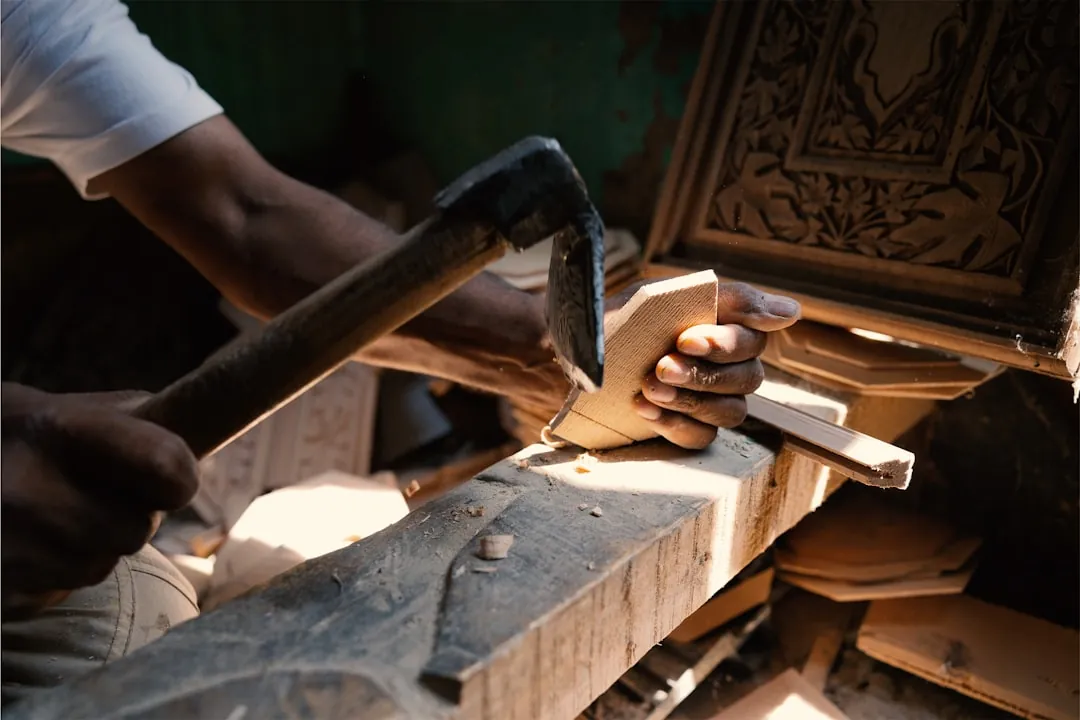
Masons collaboratively building structure symbolizing Master Mason degree progression

The Master Mason degree is the third and final degree of symbolic Freemasonry, the point at which a candidate becomes a full member of his lodge, entitled to all its rights and privileges. It is also the most dramatically structured of the three degrees, built around one of the oldest allegorical narratives in the fraternity: the legend of Hiram Abiff, the architect of Solomon’s Temple, whose fate forms the moral and ceremonial core of the entire proceeding. First codified in the ritual practices of the Premier Grand Lodge of England after its formation on June 24, 1717, the degree has since been worked in thousands of lodges across more than 150 countries, with variations in wording, regalia, and custom that reflect centuries of jurisdictional evolution. What has not varied is the degree’s central purpose: to impress upon the candidate the values of integrity, fidelity, and the acceptance of mortality as a condition of meaningful life. This article traces the degree’s origins, unpacks its symbolism, maps the path candidates typically walk to reach it, and examines what full lodge membership actually entails.

What Is the Master Mason Degree?

The Master Mason degree is the third and final degree of the Blue Lodge, the foundational unit of Freemasonry practiced worldwide. Its conferral marks a candidate’s transition from apprentice and fellowcraft to full lodge member, with voting rights, eligibility for office, and mutual recognition across jurisdictions. No further degrees are required to stand as a complete Freemason.

Masons collaboratively building structure symbolizing Master Mason degree progression
Photo: Miguel Alcântara (unsplash)

The two preceding degrees, Entered Apprentice and Fellowcraft, function as stages of preparation: the first introduces the candidate to the lodge and its obligations; the second deepens instruction in the liberal arts and sciences as understood through Masonic allegory. The third degree completes that arc, conferring not merely additional knowledge but a change in standing. Where the Entered Apprentice is a guest learning the house rules, and the Fellowcraft is a journeyman deepening his craft, the Master Mason is, in the lodge’s own language, a brother in full. The Masonic Service Association of North America describes the three degrees together as “symbolic Freemasonry”, the complete system from which all appendant bodies and higher-degree structures ultimately branch.

The third Masonic degree is often called “the highest degree in Freemasonry,” and in a meaningful sense that is true: no appendant body, not the Scottish Rite’s 33 degrees, not the York Rite’s Royal Arch or Knights Templar chapters, confers membership in the Craft itself. Those bodies elaborate, extend, or comment upon Masonic themes, but they presuppose the Blue Lodge foundation. Newcomers frequently assume the Scottish Rite’s 33rd degree supersedes the third; it does not. It supplements it. That distinction is addressed more fully in a later section.

The Blue Lodge and the Three-Degree System

The term Blue Lodge, sometimes called a Craft Lodge, refers to the basic administrative and ritual unit of Freemasonry: the local lodge chartered by a grand lodge, meeting under its own warrant, conducting the three foundational degrees. The color blue carries symbolic weight in Masonic usage, associated historically with fidelity and universality, though its precise origins as a lodge designation remain debated. The structure itself is not: three degrees, conferred in sequence, constitute the complete system of symbolic Freemasonry as codified after the formation of the United Grand Lodge of England on June 24, 1717. That consolidation, merging four London lodges into a governing grand lodge, standardized the three-degree framework that most jurisdictions worldwide still follow. The arc is deliberate: moral foundations in the first degree, intellectual development in the second, and in the third, a confrontation with mortality and integrity that the legend of the degree makes viscerally dramatic.

The Legend of Hiram Abiff: The Allegorical Heart of the Degree

The dramatic engine of the third degree is the Legend of Hiram Abiff, a narrative that surprises many first-time researchers: it does not appear in biblical scripture as Masonic ritual presents it. First Kings and Second Chronicles mention a skilled craftsman named Hiram (or Huram) sent by the King of Tyre to assist in building Solomon’s Temple, but the elaborate legend of his murder and the loss of a Master’s Word is a Masonic construction, appearing in recognizable form in early 18th-century ritual manuscripts such as the Graham Manuscript of 1726. The legend’s structure is stark: three conspirators, called ruffians in the ritual, demand the Master’s Word from Hiram and, when he refuses, kill him. The Word is lost. A search is mounted, the body discovered, and the candidate, standing in for Hiram, is symbolically raised from a figurative death. The allegory is transparent about its intent: it uses the threat of mortality to ask what a person is willing to protect, integrity, obligation, silence, at ultimate cost. As a framework for moral instruction, it proved remarkably durable. The historical roots of Freemasonry in operative stonemason guilds gave the fraternity a ready vocabulary of tools and labor; the Hiram legend gave it something rarer, a founding tragedy with genuine dramatic weight.

History and Origins of the Master Mason Degree

From Medieval Guild Craft to Speculative Masonry

The symbolic vocabulary of the third Masonic degree, working tools, the lodge conceived as a Temple, the figure of the master craftsman, did not appear fully formed in 1717. It drew on a longer tradition of operative stonemasons’ guilds, whose medieval craft organizations maintained degrees of membership distinguishing the apprentice, the fellow of the craft, and the master. When speculative Freemasonry was formalized with the founding of the Premier Grand Lodge in London on June 24, 1717, it inherited this hierarchical framework and recast it in allegorical terms. The working tools of the operative mason, the gavel, the chisel, the compasses, were retained, but their purpose shifted from practical instruction to moral and philosophical symbolism. The lodge ceased to be a building site and became, in the language of the ritual, a representation of Solomon’s Temple. This transition from craft guild to speculative fraternity is precisely why the third degree’s imagery feels simultaneously archaic and deliberate: it was designed to carry the weight of an older tradition into a new intellectual context.

The 1813 Act of Union and Ritual Standardization

For much of the eighteenth century, two rival English Grand Lodges competed over the legitimate form of Masonic practice. The Premier Grand Lodge, founded in 1717 and often called the “Moderns,” faced a sustained challenge from the Grand Lodge of the Antients, established in 1751 under the leadership of Laurence Dermott, who argued that the Moderns had corrupted or abandoned authentic ritual elements. Their disagreement was not merely organizational; it extended to the specific content and sequence of degree work, including what would become the Master Mason degree. The earliest printed account of a recognizable third degree had already appeared in Samuel Prichard’s Masonry Dissected in 1730, a text that caused considerable alarm in lodge circles precisely because it circulated ritual detail publicly, but competing versions continued to diverge across the two grand lodge systems for decades.

The rivalry ended, at least institutionally, with the Act of Union on December 27, 1813, which merged both bodies into the United Grand Lodge of England. The merger created the Lodge of Reconciliation, a working group of senior ritualists drawn from both sides and tasked with agreeing on a single authorized form of the degrees. The result was not a verbatim script, English Masonry has never published an official ritual text, but a working standard transmitted through demonstration and memory. This standard became the basis for the Emulation Rite, formalized in London in the years following 1813 and still practiced in a significant number of English lodges today. The 1813 settlement is the pivotal moment for understanding why the third degree takes the shape it does in English-derived jurisdictions. American lodges, operating through independent state Grand Lodges rather than a single national body, developed their own jurisdictional variations in parallel, meaning no single universal text governs the ritual’s precise form across all working constitutions, a decentralization that reflects the broader federal character of the historical roots of Freemasonry in the English-speaking world.

The Three Degrees of Freemasonry: Where the Master Mason Degree Fits

Freemasonry’s degree system is not a ladder of rank so much as a structured curriculum, each step building on the last in theme, symbolism, and moral expectation. The three degrees of Ancient Craft Masonry form the core of every regular lodge worldwide, and understanding where the third degree sits within that progression is essential to grasping what it actually means. The Entered Apprentice, Fellowcraft, and Master Mason degrees constitute what Masonic literature consistently calls “the degrees of Ancient Craft Masonry,” a designation that distinguishes them from the appendant bodies of the Scottish Rite or York Rite, which extend the symbolic vocabulary considerably but presuppose completion of these foundational three.

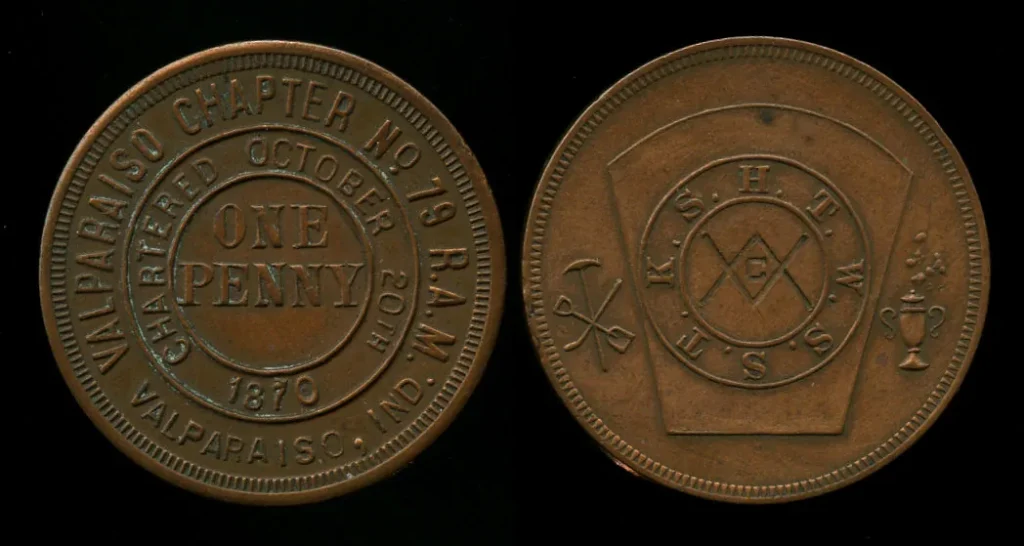
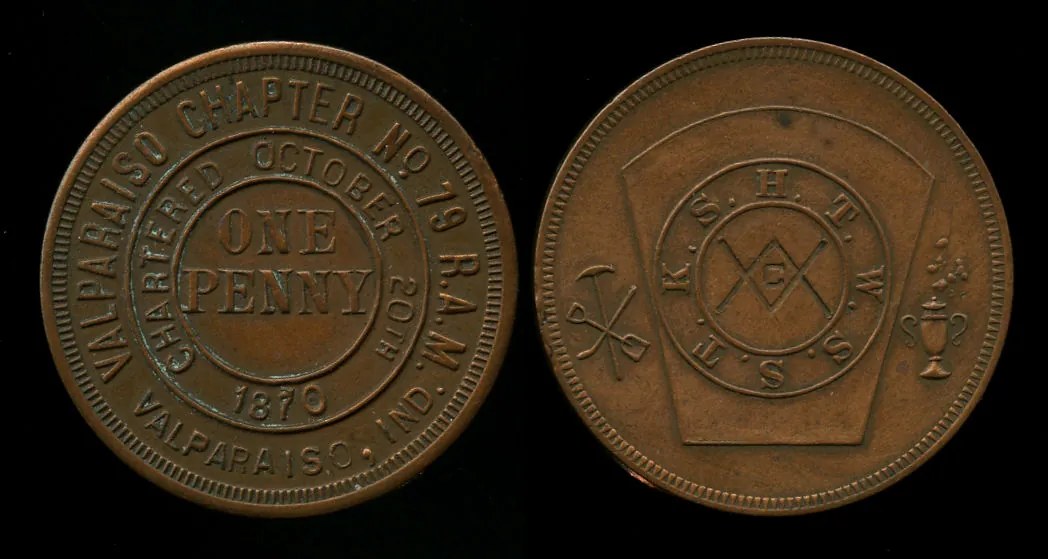
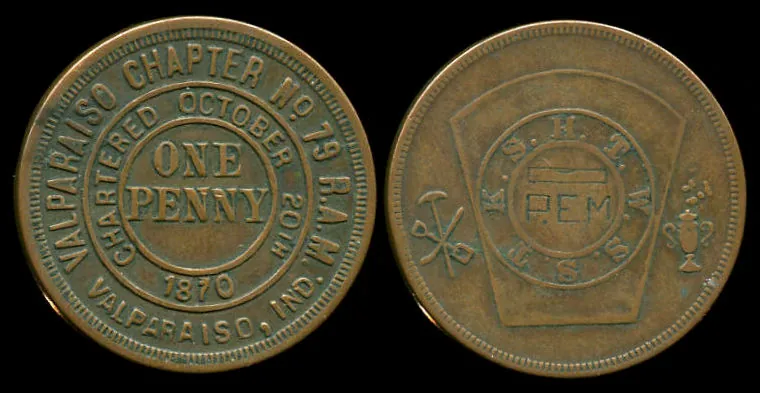
Historic Valparaiso Chapter Royal Arch Masons charter token from 1870
Photo: Steve Shook from Moscow, Idaho, USA (wikimedia)
Degree Name Symbolic Theme Key Working Tools Central Moral Lesson
Entered Apprentice (First Degree) Initiation and self-examination 24-inch gauge and common gavel Division of time; subduing the passions
Fellowcraft (Second Degree) Intellectual and moral development Plumb, square, and level Pursuit of knowledge; upright conduct
Master Mason (Third Degree) Loss, search, and recovery Skirret, pencil, and compasses Integrity under trial; mortality and fidelity

The Entered Apprentice: Foundation

The first degree places the candidate at the beginning of a symbolic working life. The 24-inch gauge, divided into thirds representing labor, refreshment, and service, and the common gavel, used to smooth rough stone, together frame the earliest lesson: moral character requires deliberate, ongoing effort. Obligations are taken, the lodge’s geometry is introduced, and the candidate begins to understand the fraternity’s vocabulary of symbol and allegory. It is, by design, an introduction rather than a destination.

The Fellowcraft: Intellectual Ascent

The second degree moves the candidate’s symbolic education into more explicitly intellectual territory. The winding staircase, traditionally associated with the seven liberal arts and sciences, serves as the central image, representing the climb toward knowledge as a moral act in itself. Grammar, rhetoric, logic, arithmetic, geometry, music, and astronomy each carry their own symbolic freight in Masonic exposition. The Fellowcraft degree does not resolve the journey; it deepens it, preparing the candidate for a far weightier experience in the third.

The Master Mason: Synthesis and Trial

Where the first two degrees move through apprenticeship and education, the third degree pivots sharply toward loss, fidelity, and mortality. The candidate’s symbolic journey no longer concerns what is being built but what is at risk of being lost, and whether it can be recovered. This narrative structure, unique among the Craft degrees in its dramatic weight, draws the earlier lessons of labor and learning into a single, demanding test of integrity. Masonic monitors across multiple jurisdictions have long described the result as the culmination of Ancient Craft Masonry, not a stepping stone to further degrees, but a complete symbolic statement in its own right.

Symbolism and Meaning of the Master Mason Degree

The Sprig of Acacia

No object in the third Masonic degree carries more symbolic weight than a small green branch. The sprig of acacia appears at the degree’s most solemn moment, marking the site where Hiram Abiff, the legendary architect of Solomon’s Temple, is said to have been buried. Its selection was not arbitrary. Acacia species, particularly Acacia nilotica, held funerary significance in ancient Egypt, where the tree was associated with Osiris and with the boundary between mortal life and whatever followed it. In the Hebrew tradition, acacia wood, shittim in the original text, was the material specified in Exodus for the construction of the Ark of the Covenant, giving the tree an additional layer of sanctity in the biblical imagination. By the time speculative Freemasonry consolidated its ritual structure in the early eighteenth century, the acacia’s dual resonance, Egyptian funerary symbolism and Judaic sacred craft, made it a natural emblem for a degree organized around mortality and enduring virtue. Masonic lecture texts across most English-speaking jurisdictions describe the sprig explicitly as a symbol of immortality: not a supernatural guarantee, but an assertion that a life lived according to moral principle outlasts the individual who lived it.

Working Tools of the Master Mason

Where the first degree presents the gavel and the twenty-four-inch gauge, and the second the square, level, and plumb, the Master Mason degree introduces a distinct set of working tools, each paired with an allegorical meaning delivered during the degree’s formal lecture. The trowel is the most prominent: Masonic lecture texts describe it as the instrument for spreading the cement of brotherly love, binding the fraternity into a coherent moral structure. The skirret, a line wound on a peg, used by operative masons to strike a straight line on a surface, represents the unerring standard of rectitude by which conduct should be measured. The pencil carries a more sobering instruction: it symbolizes the idea that every action, word, and thought is recorded by a higher moral authority, framed in terms of personal accountability rather than theological enforcement. The compasses reappear at this degree with an expanded meaning, emphasizing the circumscription of passions and desires within the bounds of reason. The logic running through all four tools is the same one that animated Enlightenment moral philosophy: virtue is not a feeling but a discipline, practiced through repeated, deliberate action.

Death, Rebirth, and the Moral Allegory

The dramatic centerpiece of the Master Mason degree, a ritual re-enactment of Hiram Abiff’s murder and the recovery of his body, is the element most frequently misread by outside observers, who sometimes describe it as a death-and-resurrection rite in the mold of ancient mystery religions. Masonic sources are consistent on this point: the ceremony is an allegory, not a supernatural claim. The candidate, playing the role of Hiram, enacts a willingness to face death rather than betray a sacred obligation. The moral instruction is straightforward and deeply Enlightenment in character, integrity is not contingent on survival. This framework connects directly to the philosophical climate in which speculative Freemasonry took its modern form. The 1723 Constitutions drafted by James Anderson, and the broader intellectual culture of early-eighteenth-century Britain, were saturated with natural-law thinking and the idea that moral virtue was a rational, demonstrable good rather than a purely theological command. The ‘Lost Word’ motif reinforces this: because Hiram died before transmitting the Master’s Word, a substitute was adopted. Standard Masonic exposition presents this not as a tragedy but as an honest acknowledgment that perfect knowledge remains beyond reach, and that the sincere pursuit of truth, imperfect, incremental, disciplined, is itself the point. It is, in other words, epistemological humility dressed in dramatic ritual.

Want to learn more?

Learn more

Requirements and the Path to Becoming a Master Mason

The path to the Master Mason degree is neither a single leap nor a formality. Across most Anglo-American jurisdictions, a candidate must satisfy a layered set of eligibility criteria before the first petition is even accepted, and those criteria are only the beginning. Standard requirements include being a man of lawful age (eighteen in some jurisdictions, twenty-one in others), a declared belief in a Supreme Being, a clean criminal record, and a petition formally endorsed by existing lodge members who can vouch for the candidate’s character. From that point, progression follows a fixed sequence: the Entered Apprentice degree comes first, then the Fellowcraft degree, and only after both have been conferred and their respective proficiency examinations passed does a candidate become eligible for the third Masonic degree. There are no shortcuts in the sequence itself, even if the pace between steps varies considerably.

On the question of timing, the Masonic Service Association notes that no single universal minimum interval between degrees is mandated across all jurisdictions. In practice, most Grand Lodge constitutions require at least four weeks between each conferral; others set the bar considerably higher, demanding several months of demonstrated proficiency before a candidate advances. Proficiency, in Masonic terms, means the ability to recite the catechism of the preceding degree, a structured series of questions and answers that tests whether the candidate has internalized the degree’s lessons rather than simply attended the ceremony. The United Grand Lodge of England’s Book of Constitutions and the individual regulations of US state Grand Lodges each govern their own members, which means the experience of a candidate in Birmingham, England, can differ meaningfully from that of a candidate in Birmingham, Alabama.

Typical Timeline: How Long Does It Take?

Most candidates who progress through the traditional route receive all three degrees over a period of roughly six months to two years. The wide range reflects genuine variables: lodge meeting frequency (some lodges confer degrees monthly, others quarterly), the candidate’s own schedule, and the stringency of proficiency requirements in a given jurisdiction. A lodge that meets twice a month and sets a four-week minimum between degrees could theoretically move a diligent candidate through all three conferrals in under six months. A lodge in a jurisdiction requiring demonstrated catechism mastery and a longer waiting period between each degree will take considerably longer. Neither pace is inherently superior, the fraternity’s own internal debates on this point have continued for decades without resolution.

One-Day Degree Programs vs. Traditional Progression

Several Grand Lodges in the United States have periodically offered what are commonly called “one-day classes,” in which all three degrees are conferred on a single candidate or group of candidates within a single day-long event. Proponents argue that the practice removes a significant barrier for men whose professional or family obligations make repeated lodge attendance difficult, and that the symbolic content of each degree remains intact regardless of the interval between conferrals. Critics within the fraternity, and they are vocal, counter that compressing months of reflection into a single day undermines the pedagogical intent of the degree system, which relies on candidates sitting with the lessons of each degree before receiving the next. The Grand Lodge of Texas has historically been among the more cautious jurisdictions on this question, while others have embraced one-day events as a membership tool. The UGLE does not recognize the one-day format as consistent with its own standards.

Geographic and Jurisdictional Variations

No single authority governs Freemasonry globally, a fact that surprises many outside the fraternity and some within it. The United Grand Lodge of England, founded on June 24, 1717, is the oldest surviving Grand Lodge, but it exercises no jurisdiction over the Grand Lodge of Scotland (established 1736), the Grand Lodge of Ireland (established 1725), or any of the fifty-one recognized Grand Lodges operating across US states and territories. Each body sets its own proficiency standards, residency requirements, and ritual practices. The UGLE, for instance, requires that a candidate be proposed and seconded by members of the lodge he is joining and complete a formal inquiry process before initiation; the Grand Lodge of California operates under a different constitutional framework with its own investigation committee procedures. These variations are not inconsistencies, they reflect the deliberately federated structure of a fraternity that has never had a pope.

The Master Mason Ceremony: Structure and Ceremonial Elements

The Role of the Worshipful Master and Lodge Officers

The Master Mason degree ceremony is not a solo performance, it is a coordinated production in which every elected officer of the lodge carries a defined responsibility. At the apex sits the Worshipful Master, who presides from the East and directs the work of the lodge throughout the evening. In most jurisdictions operating under recognized grand lodge constitutions, the Worshipful Master opens and closes the lodge in the third degree, administers the obligation to the candidate, and delivers key portions of the explanatory lecture that follows the dramatic presentation. The Senior and Junior Wardens, positioned in the West and South respectively, serve as both ceremonial anchors and deputies: they confirm the lodge is properly constituted, assist in the examination of the candidate, and can substitute for the Master in specific parts of the work when required. The Deacons, Senior and Junior, function as the candidate’s guides, conducting him through the physical movements of the ceremony with a precision that reflects months of memorized floor work. The Inner Guard and Tyler complete the structure, controlling access to the lodge room and ensuring that the degree is worked in a properly tyled, closed setting. What this layered arrangement produces is something closer to a rehearsed ensemble than a simple initiation: the communal and hierarchical character of lodge governance becomes visible in the ceremony itself, each officer’s role a living illustration of the fraternity’s broader organizational philosophy.

Masonic lodge building entrance displaying fraternal organization signage
Photo: Sean Foster (unsplash)

Common Misconceptions About the Master Mason Ritual

Few subjects attract more confident misinformation than the content of the third Masonic degree. The most persistent claim, that candidates swear blood oaths involving graphic physical penalties, has been addressed directly by Masonic authorities at the highest levels. The United Grand Lodge of England, in its published guidance on Freemasonry and the law, states explicitly that the obligations taken in lodge are not legally binding contracts, contain no penalties that any member is expected to enforce, and do not supersede a Mason’s duties to his family, employer, or the state. The historical “penalty” language that appears in older ritual texts is understood within the fraternity as symbolic and allegorical, not literal, a point the UGLE has reiterated publicly on multiple occasions since the 1980s. The Masonic Service Association of North America similarly clarifies that Masonic obligations are moral commitments to brotherly conduct, not political pledges or covert legal instruments. Claims of occult practice fare no better under scrutiny: the 3rd Degree Masonic ritual draws on biblical narrative, specifically the account of Hiram Abiff, whose story echoes themes present in the Old Testament’s account of Solomon’s Temple, and on the working tools of operative stonemasonry. There is no invocation of supernatural entities, no esoteric spell-work, and no content that a mainstream Protestant, Catholic, or Jewish observer would identify as occult in any technical sense of the word. The dramatic intensity of the Hiramic legend, combined with the ceremony’s deliberate secrecy, has historically been enough to fuel speculation; the reality, as documented in publicly available grand lodge publications, is considerably more prosaic.

The structure of the Master Mason degree ceremony itself reinforces this picture of sober, purposeful ritual theater. Most jurisdictions divide the working into two distinct sections: the first confers the degree through the candidate’s formal obligation and the dramatic re-enactment of the Hiramic legend, in which lodge officers take named speaking roles in one of the most elaborate pieces of ceremonial drama found in any fraternal organization worldwide; the second section, variously called the lecture or the long form, moves through the degree’s symbolism via a formal catechism conducted between the Worshipful Master and lodge officers, explaining the meaning of each element the candidate has just experienced. The candidate’s regalia also changes at this level: the plain white lambskin apron worn since the Entered Apprentice degree gives way to a more decorated form, its design varying by jurisdiction but consistently marking the transition to full Masonic standing. Taken together, these elements, the dramatic presentation, the explanatory lecture, and the symbolic regalia, give the Master Mason degree ceremony a layered, pedagogical character that distinguishes it from the simpler workings of the first and second degrees.

Roles, Responsibilities, and Life as a Master Mason

Receiving the third degree confers something more concrete than a title. A Master Mason gains full voting rights within the lodge, becomes eligible to hold elected or appointed office, including, after sufficient experience, the position of Worshipful Master, and earns the standing to visit other lodges under the same grand lodge jurisdiction or, with appropriate documentation, lodges in other jurisdictions entirely. Grand Lodge proceedings, including annual communications and representative assemblies, are also open to Master Masons in good standing. These are not ceremonial privileges; they constitute the actual governance structure through which Freemasonry, as a voluntary fraternal organization, makes collective decisions about membership, finance, and charitable direction.

The responsibilities that accompany those rights are equally specific. Active members are expected to contribute to lodge charitable work, whether through grand lodge foundations, local community programs, or direct relief to distressed brethren, and to serve as informal mentors to Entered Apprentices and Fellowcrafts moving through the earlier degrees. The fraternity’s three stated principles, brotherly love, relief, and truth, are not merely ceremonial language; Masonic constitutions and grand lodge handbooks consistently frame them as obligations that extend beyond the lodge room into everyday conduct. A member who collects the degree but disengages from lodge life is, in the fraternity’s own framing, failing to complete the work the ritual began.

Personal Development and the Masonic Ideal

The moral instruction woven through the Master Mason degree, integrity, fidelity to obligation, and the frank acknowledgment of human mortality, is designed to function as a daily reference point rather than a one-time dramatic experience. The Masonic Service Association of North America frames the degrees collectively as a “system of morality veiled in allegory,” with the third degree representing the culmination of that allegorical arc: the candidate confronts symbolic death and restoration as a metaphor for living with purpose. The Scottish Rite’s Morals and Dogma, compiled by Albert Pike in 1871, elaborates on the philosophical dimensions of this instruction at length, though it represents one interpretive tradition rather than universal Masonic doctrine.

Lodges vary widely in social character. A rural lodge in Tennessee may function primarily as a tight-knit community anchor, while a large urban lodge in Chicago or London draws professionally diverse membership whose common frame of reference is the shared degree experience rather than geography or occupation. That shared framework, the same ritual landmarks, the same symbolic vocabulary, the same obligations taken under the same form, is precisely what allows a Master Mason to walk into an unfamiliar lodge in another state or country and find recognizable common ground. The Master Mason journey, as Masonic literature consistently frames it, does not end with conferral of the degree. The degree is a beginning.

Beyond the Blue Lodge: What Comes After the Master Mason Degree

Earning the Master Mason degree is not an endpoint so much as a threshold. Every major appendant body in American Freemasonry, from the Scottish Rite to the York Rite to the Shrine, lists the third degree as its sole prerequisite for membership. Without it, no further Masonic advancement is possible in any recognized jurisdiction. The landscape beyond the Blue Lodge is wide, and the table below maps its principal territories.

Organization Degree Range Governing Body (US) Primary Focus US Membership Requirement
Scottish Rite (Southern Jurisdiction) 4°–32° (33° honorary) Supreme Council, 33°, SJ Philosophical and allegorical drama Master Mason in good standing
Scottish Rite (Northern Jurisdiction) 4°–32° (33° honorary) Supreme Council, 33°, NJ Philosophical and allegorical drama Master Mason in good standing
York Rite, Chapter (Royal Arch) Mark Master, Past Master, Most Excellent Master, Royal Arch General Grand Chapter of Royal Arch Masons Completion of the Blue Lodge narrative Master Mason in good standing
York Rite, Council (Cryptic Masonry) Royal Master, Select Master, Super Excellent Master General Grand Council of Cryptic Masons Solomonic temple allegory Royal Arch Mason
York Rite, Commandery (Knights Templar) Order of the Temple and others Grand Encampment of Knights Templar, USA Christian chivalric orders Royal Arch Mason; Christian belief required
Ancient Arabic Order of the Nobles of the Mystic Shrine (Shriners) N/A (social, not degree-based) Shriners International Philanthropy and fellowship Master Mason in good standing
Grotto / Tall Cedars of Lebanon N/A (social) Supreme Council, Grotto; Tall Cedars of Lebanon of NA Fraternal recreation and charity Master Mason in good standing

Scottish Rite: The 4th Through 32nd Degrees

The Scottish Rite operates through two independent jurisdictions in the United States: the Southern Jurisdiction, headquartered in Washington, D.C. (the oldest and largest, with authority over thirty-five states), and the Northern Jurisdiction, covering fifteen northeastern and midwestern states from its base in Lexington, Massachusetts. Together they confer a sequence of degrees numbered 4° through 32°, presented primarily as theatrical allegories that extend and elaborate on themes introduced in the Blue Lodge, the search for lost knowledge, the nature of moral obligation, the relationship between individual conscience and civic duty. The 33° is an honorary distinction conferred by the Supreme Council on members who have rendered exceptional service to Freemasonry or society; it is not earned through examination or progressive work. Critically, the Scottish Rite’s own governing documents describe its degrees as appendant to the Blue Lodge, not superior to it. Albert Pike’s Morals and Dogma (1871), the rite’s most cited philosophical text, repeatedly frames the higher degrees as commentaries on the first three, not replacements for them.

York Rite: Royal Arch, Cryptic Council, and Knights Templar

The York Rite is less a single organization than a confederation of three distinct bodies, each admitting candidates who hold the preceding credential. The Chapter of Royal Arch Masons is typically the first stop; its Royal Arch degree has long been described, in the language of the General Grand Chapter itself, as completing what the third degree began. The Duke of Sussex, Grand Master of the United Grand Lodge of England in the early nineteenth century, famously declared that “pure Ancient Masonry consists of three degrees, including the Supreme Order of the Holy Royal Arch,” a formulation that placed the Royal Arch not above the third degree but as its necessary complement. The Cryptic Council follows, with degrees centered on the construction and concealment of Solomon’s Temple. The Commandery of Knights Templar stands apart from the rest of the York Rite in one important respect: it requires candidates to profess a belief in the Christian faith, making it the only widely recognized Masonic-affiliated body in the United States with an explicit religious criterion beyond belief in a Supreme Being. This distinction is worth noting for any Mason exploring the York Rite path, the Commandery’s Christian requirement is not a recent policy but a feature of its foundational chivalric identity.

Taken together, the appendant bodies represent decades of optional further study rather than a mandatory hierarchy. A Master Mason who never joins the Scottish Rite or York Rite holds no lesser standing in his lodge than one who has accumulated every available degree, a point that Masonic jurisdictions are generally at pains to emphasize, and one that tends to get lost whenever the “33rd degree” is invoked as shorthand for supreme Masonic authority in popular culture.

FAQ

How long does it take to become a Master Mason?

The timeline varies considerably by jurisdiction and lodge. Most candidates complete all three degrees within six months to two years, depending on how frequently their lodge meets and how quickly they satisfy the proficiency requirements, typically memorized catechisms recited before the lodge, between each degree.

Minimum waiting periods also differ across Grand Lodges. Some US Grand Lodges permit as little as four weeks between degrees; others mandate longer intervals to ensure adequate preparation. Candidates who struggle with memorization or whose lodge meets infrequently will naturally take longer. There is no universal clock, only the requirements set by the relevant Grand Lodge and the candidate’s own pace.

Is the Master Mason degree the highest degree in Freemasonry?

Within the Blue Lodge, the foundational unit of Craft Freemasonry, it is the highest degree conferred. Appendant bodies such as the Scottish Rite (degrees 4° through 32°, plus the honorary 33°) and the York Rite offer further elaboration, but Masonic literature consistently frames these as extensions of, not replacements for, the third degree.

The United Grand Lodge of England holds an instructive official position: the Royal Arch, technically a separate ceremony, is considered to complete the third degree rather than exceed it. That framing, completion rather than supersession, reflects how most Masonic authorities regard the relationship between the Blue Lodge and appendant bodies.

What happens during the Master Mason degree ceremony?

The ceremony unfolds in two distinct sections. The first confers the degree through a formal obligation and a dramatic re-enactment of the Legend of Hiram Abiff, in which lodge officers play named roles. The legend presents a moral allegory centered on integrity under mortal threat, Hiram, the legendary architect of Solomon’s Temple, is murdered rather than reveal a sacred secret.

The second section, the lecture, explains the degree’s symbols and moral lessons through a structured catechism. Specific wording varies by jurisdiction and working form, but the Hiramic narrative and its themes of fidelity and resurrection are central to virtually every recognized version of the ritual.

Can you become a Master Mason in one day?

Some Grand Lodges, particularly in the United States, permit one-day classes in which all three degrees are conferred in a single session. The practice is genuinely controversial within the fraternity. Proponents argue it removes practical barriers to membership for men with demanding schedules; critics contend it eliminates the reflection and preparation that the intervals between separate degree nights are meant to provide.

Traditional lodges working the standard progression require distinct degree nights and a demonstrated proficiency examination between each step. Whether a candidate’s home Grand Lodge permits the accelerated format depends entirely on that jurisdiction’s regulations.

What are the requirements to become a Master Mason?

Requirements are set by each Grand Lodge and differ across jurisdictions, but common criteria include: being an adult male of lawful age (18 or 21, depending on jurisdiction), professing a belief in a Supreme Being, holding no serious criminal record, and submitting a petition endorsed by existing lodge members.

Beyond those entry conditions, a candidate must successfully complete the Entered Apprentice and Fellowcraft degrees, including any required proficiency examinations, before the third degree is conferred. The proficiency component, typically a memorized catechism recited before the lodge, is a substantive requirement, not a formality. Candidates are expected to demonstrate genuine engagement with each degree before advancing.

The Entered Apprentice Degree: First Step in Freemasonry

Entered Apprentice initiation ceremony conducted within a Masonic lodge setting

The Entered Apprentice degree is the first of three degrees conferred in a Masonic lodge, and the formal threshold through which every Freemason, from George Washington, initiated at Fredericksburg Lodge No. 4 in 1752, to the newest candidate today, has passed. It is not a ceremonial formality. The degree establishes the foundational vocabulary of Masonic symbolism, introduces the candidate to the obligations that govern lodge conduct, and situates the individual within a fraternal tradition traceable to the operative stonemasons’ guilds of medieval Europe. For the curious outsider, it answers the question of what Freemasonry actually does with a new member. For the candidate preparing for initiation, it maps the terrain ahead. This article examines the Entered Apprentice degree in full: its historical origins, the structure and meaning of the initiation ceremony, the symbols and teachings specific to the first degree, the rights and duties it confers, how it compares across different Masonic jurisdictions, and the practical steps a newly initiated Mason takes on the path toward the Fellowcraft and Master Mason degrees.

What Is an Entered Apprentice?

An Entered Apprentice is the first degree conferred upon a candidate in a Masonic lodge, marking the formal beginning of his Masonic life. The title derives from the operative stonemason’s guild tradition, in which a newly registered craftsman was “entered” on the rolls of his trade. The degree introduces the candidate to the fraternity’s foundational moral and philosophical teachings.

Entered Apprentice initiation ceremony conducted within a Masonic lodge setting
Photo: Correogsk (wikimedia)

The phrase “entered apprentice” carries more historical weight than it might first appear. In the medieval guild system, an apprentice was not merely a student, he was a legally recognized member of a craft, bound by oath, entitled to instruction, and expected to progress. When speculative Freemasonry formalized its structure with the founding of the first Grand Lodge in London on June 24, 1717, it inherited this three-tier framework almost intact: Apprentice, Fellowcraft, and Master Mason. The operative vocabulary was preserved, but the content was transformed. Where a guild apprentice learned to dress stone, the Masonic candidate is introduced to a system of moral allegory built around the working tools of the stonemason’s trade.

Symbolically, the first Masonic degree represents birth, youth, and the earliest stage of ethical formation. The candidate enters the lodge in a state of ritual darkness, a condition the degree’s ceremonial language frames as ignorance, not shame, and receives the first of several progressive lessons about conduct, conscience, and the relationship between labor and virtue. It is a beginning, deliberately incomplete, designed to make the second and third degrees both intelligible and necessary.

The Three-Degree Structure and Where the First Degree Fits

The three degrees of Freemasonry, Entered Apprentice, Fellowcraft, and Master Mason, form a single, continuous arc of moral and philosophical instruction. No degree is self-contained; each is intelligible only in relation to the others. The first degree establishes the vocabulary, the working tools, and the ethical baseline. The Fellowcraft degree broadens the scope into the liberal arts and sciences. The Master Mason degree confronts the candidate with themes of mortality and the preservation of essential knowledge. Remove the first degree and the entire structure loses its foundation.

This progressive design reflects the Masonic Service Association’s consistent description of the degrees as a “system of morality, veiled in allegory and illustrated by symbols”, a phrase that appears across grand lodge catechisms on both sides of the Atlantic. The Entered Apprentice degree is where that system is first encountered: the candidate receives his initial obligations, learns the earliest Masonic degrees progression landmarks, and begins a course of Masonic education that, in most jurisdictions, requires demonstrated proficiency, through the Entered Apprentice examination and catechism, before advancement is permitted. The degree is not a formality. It is the grammar of everything that follows.

History and Origins of the Entered Apprentice Degree

The lineage of the Entered Apprentice degree stretches back well before any lodge room existed. Medieval stonemasons organized themselves into craft guilds that relied on a formal, tiered apprenticeship system, a structure documented in the two oldest surviving texts associated with the Masonic tradition. The Regius Manuscript (c. 1390) and the Cooke Manuscript (c. 1410) both outline obligations, conduct, and the hierarchical relationship between master craftsmen and their apprentices. These were working documents for men who cut and dressed stone, not philosophical treatises, yet their insistence on moral conduct, secrecy of craft knowledge, and loyalty to the lodge anticipated much of what speculative Freemasonry would later formalize. The records of the Lodge of Edinburgh (Mary’s Chapel) No. 1, among the earliest continuous lodge records in existence, show “entered apprentice” as a distinct, recorded membership status as far back as the 1590s, placing the terminology firmly in the operative era.

From Operative Guilds to Speculative Lodges

The decisive shift came during the 17th century, when lodges in Scotland and England began admitting members who had no intention of ever laying a stone. These “accepted” or “speculative” Masons, gentlemen, intellectuals, and men of affairs, were drawn to the fraternal and philosophical dimensions of guild culture rather than its trade functions. The working-craft apprenticeship model was not abandoned; it was reimagined. The tools of the stonemason’s trade, the gavel, the chisel, the rough and perfect ashlars, were reinterpreted as emblems of moral self-improvement. An apprentice no longer learned to shape limestone; he was expected to shape his own character. This reframing gave the first Masonic degree its enduring pedagogical logic: the candidate enters rough, uninstructed, and dependent, and the degree’s symbolism maps a path toward refinement. By the time the Premier Grand Lodge of England was founded on June 24, 1717, this speculative architecture was well established, and the three-degree system, with the first degree as its gateway, was consolidated under a single governing body for the first time.

The Anderson Constitutions and the Formalization of the Degree

The document that gave the first degree its written philosophical framework was the Constitutions of the Free-Masons, compiled by the Reverend James Anderson and published in 1723 under the authority of the Premier Grand Lodge. Anderson drew on earlier manuscript traditions but produced something genuinely new: a printed, widely distributable text that codified the duties, conduct, and hierarchical position of every lodge member. For the entered apprentice specifically, the Constitutions established clear expectations, obedience to the master of the lodge, study of the liberal arts and sciences, and adherence to the moral law, framing the degree not merely as an admission ceremony but as the foundation of a progressive curriculum. The Anderson Constitutions also embedded the degree within a grander historical narrative, tracing Masonic lineage back through Solomon’s Temple to the earliest builders of civilization. Whether that lineage is literal history or symbolic mythology is a question historians have debated ever since, but its effect on the Entered Apprentice degree ritual was concrete: it gave the initiation ceremony an explicit moral and intellectual purpose that operative guild records had only implied.

The Entered Apprentice Initiation Ceremony

The Entered Apprentice initiation ceremony follows a ritual script whose precise wording varies by jurisdiction, the United Grand Lodge of England, the Scottish Constitution, and the various American grand lodges each maintain their own authorized versions, yet the dramatic structure stays consistent across mainstream Freemasonry. A candidate who has been examined and balloted upon is prepared outside the lodge room, then conducted into it in a way designed to carry specific symbolic weight. That preparation, documented in publicly available exposés dating back to Samuel Prichard’s Masonry Dissected of 1730, involves a state of ritual vulnerability: certain items are removed or adjusted to signal that the candidate enters without the marks of wealth or social rank. The point is not theatrical discomfort but deliberate leveling, the lodge room receives a person, not a profession or a fortune.

Masonic wheel symbolizing the foundational teachings of Entered Apprentice degree
Photo: Jonathan Kemper (unsplash)

The Entered Apprentice Obligation

At the heart of the Entered Apprentice initiation ceremony sits the obligation, a formal pledge administered at the altar of the lodge. In structure it resembles an oath of conduct and secrecy rather than a contractual agreement: the candidate commits to discretion regarding the modes of recognition and the proceedings of the lodge. What the obligation does not contain, according to clarifications issued by grand lodges throughout the twentieth century, are the so-called “physical penalties” that older ritual texts included in more colorful language. The United Grand Lodge of England formally amended its ritual in 1986 to make clear that such references are purely symbolic and carry no literal force. The obligation’s purpose, as Masonic commentators from Albert Mackey onward have explained, is to impress the seriousness of the pledge through solemnity of form, not to bind the candidate to anything beyond honorable conduct and reasonable discretion.

Grand lodges across the United States and the British Isles have published statements to similar effect, emphasizing that the Entered Apprentice obligation is compatible with civil law and with obligations to family, faith, and country. A man is not asked to choose the lodge over the state; he is asked to treat what passes within it with the same discretion he would extend to any private society.

The Entered Apprentice Lecture and Working Tools

Following the obligation, the ceremony moves into its explanatory phase: the Entered Apprentice lecture, a structured catechetical address delivered by the Worshipful Master or a designated officer. The lecture introduces the candidate to the symbolic geography of the lodge room, the three great lights, the lesser lights, the cardinal points, the officers’ positions, and explains the allegorical logic connecting operative stonemasonry to speculative ethics. This section of the ritual is the most thoroughly documented in publicly available Masonic monitors, the printed guides American grand lodges have issued since the early nineteenth century. Webb’s Freemason’s Monitor, first published in 1797, remains one of the most widely cited sources for the American lecture tradition.

Central to this lecture are the Working Tools of the first Masonic degree: the 24-inch gauge and the common gavel. The gauge, in operative craft, measured stone; in the Masonic allegory it represents the twenty-four hours of the day, divided symbolically among labor, refreshment, and service to God and a distressed worthy brother. The common gavel, used by operative masons to break off the rough edges of stone, is presented as an emblem of conscience, the internal instrument by which a person chips away at vice and moral irregularity to shape a character fit for the spiritual building the lodge symbolically constructs. Neither tool is presented as a literal artifact of ancient stonecraft; both are offered explicitly as symbols, a distinction the lecture establishes from the outset.

Symbols and Teachings of the First Degree

Four objects dominate the symbolic vocabulary of the first Masonic degree, each borrowed from the working tools and spatial conventions of operative stonemasonry and reassigned to moral instruction. The Entered Apprentice does not encounter abstract philosophy in the opening ritual, the teachings arrive as concrete objects with specific, named meanings, a pedagogical method the fraternity has used in essentially the same form since the standardization of ritual in the early eighteenth century.

Symbol Name Physical Object / Origin Masonic Allegorical Meaning Moral Lesson Conveyed
24-Inch Gauge Measuring rule used by operative stonemasons to mark and divide stone Division of the day into three equal parts: labor, refreshment, and service to God and a distressed worthy brother Disciplined stewardship of time as a moral obligation, not merely a practical habit
Common Gavel Mason’s hammer used to break off rough edges of stone before shaping The force of conscience applied to the self, breaking away vice, superfluity of conduct, and moral imperfection Self-improvement through sustained, deliberate effort rather than passive virtue
Northeast Corner The traditional placement of a building’s cornerstone, the foundation reference point Symbolic position of the newly initiated candidate: neither fully in darkness nor fully in light, at the beginning of a moral edifice Humility at the outset of a lifelong process of moral construction
Lambskin Apron White leather apron worn by operative masons to protect clothing during stonework Presented as “more ancient than the Golden Fleece or Roman Eagle”, the badge of a Mason and an emblem of innocence Purity of life and conduct as the foundation of Masonic identity

The Working Tools: Gauge and Gavel

The 24-inch gauge and the common gavel are presented together as the working tools of the first degree, and the pairing is deliberate. The gauge addresses how a candidate structures his time, the operative mason divided his rule into three equal sections of eight hours each, and Masonic ritual repurposes that division into a template for a balanced life: eight hours for labor, eight for rest and refreshment, eight for service. The gavel addresses character directly. Where the gauge is diagnostic, the gavel is corrective: it names the rough edges of conduct and proposes a method, conscience, applied repeatedly, for removing them. Together, the two tools frame the first degree’s central argument: that self-discipline and self-improvement are not incidental virtues but the preconditions for everything that follows in the Masonic degrees progression.

The Northeast Corner and the Lambskin Apron

The placement of the candidate in the northeast corner of the lodge is one of the more spatially precise moments in Masonic ceremony. The northeast is where a building’s cornerstone is traditionally laid, the reference point from which all other measurements proceed. The newly initiated candidate stands at that same reference point: he has received the first light of Freemasonry but has not yet built anything upon it. The position encodes humility without condescension. The lambskin apron, presented immediately afterward, carries its own layered meaning. The ritual description, that the apron is “more ancient than the Golden Fleece or Roman Eagle, and more honorable than the Star and Garter”, is a rhetorical device rather than a historical claim, situating the badge of innocence above the most prestigious chivalric orders of European tradition. As the symbolic language of Freemasonry consistently demonstrates, the objects themselves are ordinary; the weight they carry is entirely moral.

Want to learn more?

Learn more

Rights, Privileges, and Duties of an Entered Apprentice

The first Masonic degree confers membership, but membership of a particular and carefully bounded kind. An Entered Apprentice is admitted to the fraternity and may attend lodge meetings, yet in most mainstream jurisdictions that access is limited to meetings opened in the first degree. When the lodge advances its work to the Fellowcraft or Master Mason degree, the Entered Apprentice is typically asked to withdraw. The business conducted at those higher levels, including deliberations on candidates and lodge governance, remains closed to someone who has not yet passed or been raised. This tiered access is not a slight; it mirrors the original guild logic embedded in the degree structure, where a new craftsman earned his place incrementally.

Voting rights follow the same graduated logic. In the overwhelming majority of grand lodge jurisdictions, including those under the United Grand Lodge of England and most American grand lodges, an Entered Apprentice holds no vote on lodge business, cannot ballot on the admission of new candidates, and cannot hold lodge office. The obligations taken during the Entered Apprentice initiation are nonetheless substantive. The candidate swears to keep the modes of recognition confidential, to support fellow Masons in lawful endeavors, and to conduct himself with the moral uprightness the degree symbolically represents. Beyond the obligation itself, practical duties follow: regular lodge attendance is expected, and, critically, the new member must memorize the Entered Apprentice catechism, a structured series of questions and answers that demonstrate proficiency in the degree’s content. Most jurisdictions require the candidate to pass this examination before advancing to the second degree, and the Entered Apprentice examination is typically conducted before the lodge by the Senior Deacon or a designated examiner.

Can an Entered Apprentice Wear a Masonic Ring?

This question surfaces with reliable frequency on Masonic forums and in lodge anterrooms, and the honest answer is: it depends entirely on jurisdiction and local custom. Most American and British grand lodges treat the wearing of Masonic regalia, rings included, as a personal decision that the individual member may make at any degree level. There is no universal prohibition. That said, a number of lodges and some grand lodge guidance documents recommend waiting until the Masonic degrees progression is complete, that is, until the candidate has been raised to the third degree, on the grounds that the full symbolism of the fraternity is not yet conferred at the first degree stage. A ring worn before that point is not a violation of any widely codified rule, but it may prompt a quiet word from an experienced brother about local expectations. The prudent course is simply to ask the lodge secretary or a Past Master: custom varies not just between grand lodges but sometimes between lodges within the same jurisdiction.

Regalia beyond the ring, the white lambskin apron most prominently, is a different matter. The apron is presented during the degree ceremony itself, and the Entered Apprentice is both entitled and expected to wear it at lodge meetings open to the first degree. It is, as the ritual makes plain, the badge of a Mason, older in symbolism than any medal or decoration the world can bestow.

The Entered Apprentice Examination: Catechism and Memory Work

Before a candidate advances to the Fellowcraft degree, the second step in the Masonic degrees progression, he must demonstrate that the first degree’s content has been genuinely absorbed, not simply witnessed. That demonstration takes the form of a catechism: a structured series of questions and answers, sometimes called “memory work,” conducted in open lodge before the Worshipful Master and the assembled brethren. The format varies considerably by grand lodge jurisdiction. Some require a full public recitation in which the candidate answers every question aloud before the entire lodge; others permit a private examination before a committee of senior members, with the committee’s finding reported back to the lodge. Either way, the threshold is the same, proficiency must be established before advancement is permitted.

Candlelit lodge chamber welcoming new Entered Apprentice candidates to initiation
Photo: Matheus Bertelli (pexels)

The catechism itself covers more ground than a simple rehearsal of what happened on initiation night. A candidate is expected to speak to the symbolic meaning of the working tools presented during the Entered Apprentice degree ritual, the twenty-four-inch gauge and the common gavel, and to explain what each instrument is understood to represent in a moral and allegorical sense. Questions also address the modes of recognition associated with the first degree, including the Entered Apprentice password, which is communicated as part of the examination process. Grand lodges are careful to distinguish this kind of examination from rote recitation: the goal is comprehension. A candidate who can recite answers without understanding them has, in the fraternity’s view, not yet earned the right to proceed. Most grand lodges publish official study materials, cipher texts or plain-text guides depending on the jurisdiction’s preference, to support this process.

How to Prepare for the Entered Apprentice Examination

Preparation typically begins with the lodge mentor, sometimes called a “coach”, a more experienced Mason formally assigned to guide new members through the Entered Apprentice catechism and lecture. Working regularly with a mentor is the single most documented predictor of a candidate’s readiness; the mentor can correct pronunciation, clarify symbolic meanings, and simulate the lodge environment so the examination itself holds no surprises. Candidates should obtain whatever study materials their grand lodge officially sanctions, a cipher (a phonetic or abbreviated text) or, in jurisdictions that permit it, a plain-text version of the catechism, and begin review well before any scheduled examination date. Attending degree rehearsals, where the lodge practices its own ritual work, also helps candidates understand the broader ceremonial context of the questions they will be asked. Most jurisdictions specify a minimum interval between initiation and examination, commonly ranging from one month to several months, precisely to prevent a candidate from presenting before the material has had time to settle. Candidates who feel underprepared should say so to their mentor; requesting more time is not a mark against advancement, it is exactly the kind of self-awareness the Entered Apprentice obligation is meant to cultivate.

The Entered Apprentice Degree Across Different Jurisdictions

Freemasonry has no single global authority, and that structural reality shapes how the first Masonic degree is conferred and examined around the world. The United Grand Lodge of England (UGLE), founded on June 24, 1717, recognizes several distinct ritual workings within its own lodges, Emulation Rite being the most widely practiced, followed by Bristol, Oxford, and Taylor’s workings. Each preserves different cadences, gestures, and phrasings while transmitting the same core symbolic content. UGLE’s daughter grand lodges in Australia, Canada, and elsewhere have generally inherited this plurality, though many have standardized around a single preferred working within their own jurisdictions.

Jurisdiction Ritual Form Commonly Used Minimum Time Before Advancement Examination Format
United Grand Lodge of England Emulation Rite (primary); Bristol, Oxford, Taylor’s also recognized No fixed national minimum; lodge discretion applies Oral examination by lodge officers before the lodge
United States (varies by state) Webb-Preston Work and state-specific variations Typically 4 weeks to 6 months depending on grand lodge Proficiency exam, oral, written, or both, per state grand lodge rules
Grand Lodge of Scotland Scottish Rite of Craft Masonry (distinct from appendant Scottish Rite) Minimum period set by Grand Lodge of Scotland bylaws Oral examination before lodge
Order of Women Freemasons (UK) Ritual closely parallel to mainstream craft working Lodge discretion; broadly comparable to UGLE practice Oral examination format

American grand lodges present a more fragmented picture. Each of the fifty-plus grand lodges in the United States operates as a fully sovereign body, so ritual wording, catechism questions, examination format, and minimum time in the degree before advancement all differ by state. A candidate proficient in one state’s work may find the wording noticeably different if he later affiliates with a lodge elsewhere. This reflects Freemasonry’s deliberate decentralization, which has persisted since the colonial era, not a flaw in the system. What stays consistent across American jurisdictions is the symbolic architecture: the working tools, the charge, and the obligations that define the first degree experience.

A common point of confusion concerns the relationship between the craft lodge and the appendant bodies. The Scottish Rite and York Rite are separate, supplementary organizations that build upon the three craft degrees; neither confers the Entered Apprentice degree itself. That function belongs exclusively to the blue lodge, regardless of what additional rites a Mason may later pursue. Co-Masonic and women’s grand lodges, including the Order of Women Freemasons in the United Kingdom, confer their first degree using ritual structures closely parallel to mainstream craft Masonry, operating under their own sovereign grand lodge authority rather than under UGLE recognition.

Common Misconceptions About the Entered Apprentice Degree

The first degree carries more cultural baggage than almost any other initiation rite in Western fraternal history, and much of that baggage is inaccurate. The obligation taken during the ceremony is frequently described in popular media as involving graphic physical penalties. In mainstream grand lodges today, including UGLE and the majority of American grand lodges, those passages were revised or reinterpreted during the twentieth century. The Masonic Service Association and multiple grand lodge publications confirm that the obligation is understood as a moral commitment, not a threat of bodily harm. Candidates are not bound to secrecy about the existence of Freemasonry, the names of members, or the general nature of the fraternity.

A second misconception holds that receiving the first degree grants access to the full body of Masonic ritual, symbolism, and meetings. It does not. An Entered Apprentice may attend lodge meetings but is restricted from much of the business conducted in the degrees above his own. The lodge system is explicitly tiered, and advancement requires demonstrated proficiency, typically through the Entered Apprentice examination or catechism, before a candidate progresses to the Fellowcraft degree. The degree’s own symbolism makes the point plainly: the rough ashlar, representing unfinished stone, is the emblem assigned to the first-degree Mason.

From Entered Apprentice to Master Mason: The Path Ahead

Typical Timeline and What to Expect Between Degrees

The journey from the first degree to Master Mason is not a sprint. Most grand lodges in the United States and the United Kingdom mandate a minimum waiting period between each degree, commonly four weeks, though many jurisdictions set the interval at three months or longer. Advancement is also conditional on demonstrated proficiency: a candidate must pass an examination or recite a catechism before the lodge votes to confer the next degree. In practice, the full arc from Entered Apprentice to Master Mason takes a minimum of three to six months in most US and UK jurisdictions, and a significant number of candidates take a year or more, whether by circumstance or by deliberate choice to absorb the material at a measured pace.

The Fellowcraft degree, the second degree of craft lodge Masonry, shifts the emphasis from foundational obligation and working-tool symbolism toward intellectual and philosophical inquiry. Its central allegory draws on the seven liberal arts and sciences, and its ritual architecture centers on the symbolism of the middle chamber, a space the candidate approaches only after demonstrating readiness. Where the first degree is concerned with entry and orientation, the second is concerned with cultivation. The Master Mason degree, the third and culminating degree of the craft, confers full membership status: voting rights, the right to hold lodge office, and unrestricted access to the fraternity’s full institutional life. In the language of Masonic constitutions, it is the degree that makes a man a Mason in the complete sense of the term.

Modern Relevance: The Entered Apprentice Degree in Contemporary Masonic Practice

After reaching the third degree, a Mason may seek further instruction through appendant bodies, the York Rite, which includes the Chapter, Council, and Commandery; or the Scottish Rite, which extends the degree system to thirty-three numbered degrees. These are optional and supplementary. The United Grand Lodge of England and the major US grand lodges are consistent on this point: the three craft degrees are complete in themselves, and no appendant body confers a rank superior to Master Mason within the craft lodge structure. The additional degrees elaborate on themes already present in the three degrees; they do not supersede them.

Contemporary lodges have invested real effort in ensuring that the first Masonic degree functions as an effective introduction rather than a bewildering rite of passage. Mentorship programs, in which an experienced brother is formally assigned to guide a new initiate through the catechism, the lecture, and the broader culture of the lodge, have become standard practice in many jurisdictions, particularly as grand lodges have grappled with membership retention figures that dipped sharply in the late twentieth century. Updated study guides, audio resources, and structured lodge education programs now accompany what was once transmitted almost entirely through oral tradition. The degree itself has not changed in its essential structure, but the scaffolding around it has grown considerably more deliberate. For many lodges, how well a candidate is supported between initiation and the Entered Apprentice examination has become as important a question as the ritual itself, a recognition that the fraternity’s future depends not merely on conferring the degree, but on ensuring that those who receive it understand why it matters.

FAQ

What is the difference between the Entered Apprentice degree and the other Masonic degrees?

The three craft lodge degrees, Entered Apprentice, Fellowcraft, and Master Mason, form a single progressive system rather than three independent initiations. The United Grand Lodge of England’s constitution, along with most US grand lodge regulations, treats them as sequential stages of one continuous curriculum.

The first degree centers on foundational moral instruction and the candidate’s formal introduction to lodge life and its symbolic vocabulary. The Fellowcraft degree deepens that philosophical content, while the Master Mason degree completes the cycle and confers full membership status, including voting rights. A brother who holds only the first degree participates in lodge life under meaningful restrictions until that final conferral.

How long does it take to advance from Entered Apprentice to Fellowcraft?

The minimum waiting period between the first and second degrees is set by each grand lodge jurisdiction independently. Most US grand lodges mandate at least four weeks; others impose longer intervals. The practical timeline is driven by two factors: when the candidate passes the proficiency examination and when the lodge schedules its next degree conferral.

The Masonic Service Association notes that the complete journey from the first degree through Master Mason commonly takes between three and twelve months, depending on jurisdiction, lodge activity, and the individual candidate’s pace of preparation.

What are the main symbols taught in the Entered Apprentice degree?

The principal working tools of the first degree are drawn from operative stonemasonry and reinterpreted as moral allegory. The 24-inch gauge represents the division of the day into labor, refreshment, and service. The common gavel symbolizes the refinement of personal character, the removal of moral rough edges, as a stonemason dresses a rough stone.

The lambskin apron, presented during initiation, is described in lodge ritual as the badge of a Mason and an emblem of innocence. The northeast corner of the lodge room marks the symbolic position of the newly initiated brother, placed there as a cornerstone is set at the foundation of a building, a starting point, not yet a finished structure.

What is the Entered Apprentice examination and how should a candidate prepare?

The proficiency examination, sometimes called the catechism, is a structured oral test conducted either in open lodge or before a designated committee. The candidate demonstrates comprehension of the first degree by responding to a prescribed series of questions and answers, the exact form of which is determined by the relevant grand lodge.

Preparation typically involves regular sessions with a lodge-assigned mentor, study of the official cipher or plain-text materials provided by the grand lodge, and attendance at any rehearsal opportunities the lodge arranges. Candidates should expect several weeks of consistent effort; the examination is not a formality, and lodges generally do not schedule the second degree until proficiency is satisfactorily demonstrated.

Can women become Entered Apprentices in Freemasonry?

Mainstream grand lodges recognized by the United Grand Lodge of England restrict membership to men, so women are not admitted to the first degree, or any degree, within those bodies. This is a matter of constitutional definition, not informal custom.

Several co-Masonic and women’s grand lodges do confer all three craft degrees on women using ritual structures closely parallel to mainstream practice. The Order of Women Freemasons, founded in the UK in 1908, and the international order Le Droit Humain are among the most established examples. These organizations operate independently of the mainstream grand lodge system and are not recognized by it, though they maintain their own legitimate institutional histories.

Freemasonry Degrees: Structure, Symbolism, and Progression Explained

Masonic lodge members in ceremonial regalia during freemasonry degree initiation

Freemasonry degrees are not honorary titles or ranks in the conventional sense. They are structured stages of moral and philosophical instruction, each delivered through ceremony, allegory, and symbol. The modern degree system traces its formal origins to the founding of the Premier Grand Lodge of England on June 24, 1717, though the three-degree structure that defines Craft Freemasonry was largely codified by the 1730s. Beyond those three foundational degrees, Entered Apprentice, Fellowcraft, and Master Mason, a separate and historically later architecture of appendant bodies emerged, most notably the Scottish Rite, which extends the system to 33 numbered degrees, and the York Rite, which follows a parallel but distinct path. What each degree actually confers, what distinguishes a Craft degree from an appendant one, and what the widely cited “33 degrees” actually represent is what this guide covers. The confusion between these systems is widespread; this article addresses it with the specificity the subject deserves.

The Architecture of the Masonic Degree System

Freemasonry degrees organize the fraternity’s initiatic journey into a structured sequence of ritual stages. The three foundational Craft degrees, Entered Apprentice, Fellowcraft, and Master Mason, form a complete, self-contained system recognized by every regular Masonic lodge worldwide. Appendant bodies such as the Scottish Rite and York Rite extend that foundation but do not replace it.

Masonic lodge members in ceremonial regalia during freemasonry degree initiation
Photo: Quino Al (unsplash)

The distinction between Craft degrees and appendant bodies is the single most important structural concept in understanding how Masonic progression actually works. The three Craft degrees are universal: a lodge in Edinburgh, a lodge in Lagos, and a lodge in Boston all confer the same three degrees under the authority of their respective grand lodges. No further degrees are required. A man who has received the Master Mason degree, the third, holds the full standing of a Freemason in every regular jurisdiction on earth. The Scottish Rite’s numbered sequence from the 4th through the 33rd degree, and the York Rite’s chapter, council, and commandery system, are optional extensions administered by entirely separate organizations. A Master Mason may petition to join them or never do so; his standing within the Craft is unaffected either way.

The numbered sequence of Scottish Rite degrees creates the most persistent misreading of the entire system. Because the degrees run from 4 to 33, they appear at first glance to form a single ladder rising above the three Craft degrees, as though a 32nd-degree Mason outranks a Master Mason. That reading is incorrect. The Scottish Rite and the Craft lodge system run in parallel, not in strict hierarchy. The United Supreme Council, 33°, Southern Jurisdiction, USA, the oldest and largest Scottish Rite body in the Western Hemisphere, is explicit on this point in its own published literature: the 33rd degree is an honorary recognition conferred for distinguished service, not a rank that supersedes the third. The Craft degrees remain the trunk; the appendant bodies are branches.

Historical Origins of the Degree Structure

The codification of a three-degree structure did not happen overnight. Medieval operative stonemason guilds used graded distinctions, apprentice, journeyman, master, that governed access to trade secrets and determined a craftsman’s wages and responsibilities. When speculative lodges began admitting non-operative members in the late 17th century, they inherited this graduated model. The pivotal documentary moment came in 1723, when James Anderson’s Constitutions of the Free-Masons, published under the authority of the Premier Grand Lodge of England (founded June 24, 1717), formalized the lodge’s organizational principles. The three-degree framework solidified across the 1720s and 1730s as ritual content was standardized; the third degree acquired its present dramatic narrative by approximately 1730, according to Masonic historian David Stevenson’s research into early lodge records. By the mid-18th century, the three-degree model had become the recognized spine of Craft Freemasonry across Britain and its colonial extensions.

The appendant bodies emerged later and separately. The Ancient and Accepted Scottish Rite traces its formal structure to the Constitutions of 1786, though its earlier degrees circulated in French and Caribbean lodge culture decades before that. The York Rite’s component bodies developed piecemeal across the 18th and early 19th centuries. Neither tradition was engineered from the top down; both accumulated degrees over time, which explains why their numbering systems reflect historical layering rather than a single coherent philosophical blueprint.

Geographic and Jurisdictional Variations

The three-degree framework is universal in name, but its conferral is not identical across jurisdictions. In the United States, grand lodges are organized by state, 51 separate grand lodges, each sovereign within its territory, and the ritual working, the precise wording, and even the scheduling of degree conferrals can differ substantially between the Grand Lodge of New York and the Grand Lodge of Texas. In England and Wales, the United Grand Lodge of England (UGLE) maintains a single national jurisdiction and has historically exercised significant influence over what counts as “regular” Masonic practice worldwide. Continental European grand lodges, particularly in France, have long operated under different constitutional frameworks; the Grand Orient de France removed the requirement for belief in a Supreme Being in 1877, a decision that led the UGLE to withdraw recognition, a split that persists to this day and affects how degrees conferred in those jurisdictions are regarded internationally.

Beyond the Craft, jurisdictional variation becomes even more pronounced. The Scottish Rite exists in two distinct American jurisdictions, the Northern Masonic Jurisdiction and the Southern Jurisdiction, with different ritual workings for many of the same numbered degrees. Some European traditions incorporate degrees that have no direct American equivalent, and several grand lodges outside the Anglo-American tradition confer what are called “high degrees” within the Craft lodge itself rather than through a separate appendant body. The result is a global degree landscape that resists any single tidy chart, worth keeping in mind before treating any Masonic degrees list as universally definitive.

The First Degree: Entered Apprentice

The Entered Apprentice degree is the formal threshold of Freemasonry, the initiation ceremony through which a candidate is admitted into a lodge for the first time. Its central allegory is drawn from the medieval stonemason’s workshop: the candidate is compared to a rough ashlar, an uncut stone that must be shaped before it can take its place in a finished structure. That metaphor is not decorative. It frames everything that follows in the first degree, from the words spoken by the presiding officers to the working tools placed before the new member.

Three implements are presented to the Entered Apprentice as emblems of moral instruction rather than trade equipment. The 24-inch gauge, traditionally used to measure stone, is reinterpreted as a reminder to divide the day between labor, refreshment, and service. The common gavel, a stonemason’s shaping tool, represents the effort required to remove the vices and superfluities of life, a phrase that appears verbatim in most ritual texts across jurisdictions. The rough ashlar itself stands for the candidate’s unpolished state at entry, contrasted with the perfect ashlar that symbolizes the goal of moral development over a lifetime of Masonic participation. These are pedagogical devices in the tradition of craft-guild instruction, repurposed for ethical teaching, nothing more, nothing less.

Admission to this degree is not automatic. Requirements vary by grand lodge jurisdiction, but the standard process across most US and UK lodges involves a formal petition, a ballot among existing members, historically conducted with white and black balls, giving English the idiom “blackballed”, a background review, and a declaration of belief in a Supreme Being. The United Grand Lodge of England’s Book of Constitutions has required that declaration since at least the 1723 Anderson Constitutions, which specified that a Mason must “oblige himself to that Religion in which all Men agree.” The precise wording has evolved, but the requirement of theistic belief as a condition of entry has remained consistent across mainstream Craft degrees worldwide.

What the First Degree Teaches

The philosophical content of the Entered Apprentice degree centers on three qualities the candidate is expected to cultivate from the outset: silence, circumspection, and obedience. Silence, in the Masonic context, is not passivity, it refers to the discipline of listening and withholding judgment before understanding is established. Circumspection governs how a new member conducts himself both inside the lodge and in the wider world. Obedience, perhaps the most misread of the three, refers specifically to the lodge’s bylaws and the broader landmarks of the fraternity, not to any individual officer’s personal authority.

The working tools introduced at this stage are the degree’s primary teaching mechanism. Ritual manuals across multiple jurisdictions, including those published by the Masonic Service Association of North America, consistently frame these tools as ethical metaphors before any other interpretation is offered. The lesson is deliberately elementary: the first degree is designed to orient, not to overwhelm. A candidate who has just been admitted is expected to absorb the structure of the lodge, the significance of its officers, and the basic vocabulary of Masonic symbolism. The allegorical drama that becomes central in later degree progression is reserved for subsequent steps. The Entered Apprentice degree functions exactly as its name suggests, an apprenticeship, not a graduation.

The Second Degree: Fellowcraft

What the Second Degree Teaches

Where the Entered Apprentice degree orients the candidate, establishing obligations, introducing the lodge’s working tools, and grounding the new member in foundational moral principles, the Fellowcraft degree turns outward toward the life of the mind. The second degree’s central pedagogical framework is the seven liberal arts and sciences: grammar, rhetoric, logic, arithmetic, geometry, music, and astronomy. This curriculum is not original to Freemasonry; it derives directly from the classical trivium and quadrivium of medieval European universities, where the same seven disciplines formed the core of a complete education. Masonic ritual adopted this framework as an allegory for broadening moral understanding, a man who reasons clearly, communicates honestly, and grasps the order underlying the natural world is better equipped to live by the obligations he accepted in the first degree.

Geometry receives particular emphasis, a reflection of the operative stonemason heritage from which speculative Freemasonry developed. The winding staircase is the degree’s governing symbol: a passage upward, described in ritual as leading from the ground floor of King Solomon’s Temple to the middle chamber, where the Fellowcraft receives his wages. The staircase is not a literal architectural feature but a symbol of progressive attainment, each step representing a stage of intellectual and moral ascent. Both the United Grand Lodge of England’s working and the standard American ritual texts treat this imagery as an explicit encouragement to pursue learning as a lifelong practice, not a credential to be earned and set aside.

In most US jurisdictions, the transition from Entered Apprentice to Fellowcraft requires a separate lodge meeting, during which the candidate demonstrates proficiency in the first degree’s catechism before advancing. This interval, anywhere from a few weeks to several months depending on the jurisdiction and the candidate’s preparation, is itself part of the degree’s lesson: advancement is earned, not automatic. British workings sometimes compress the three Craft degrees into a shorter sequence when lodge schedules or candidate circumstances make the extended timeline impractical, though the substantive content of each degree stays the same. The Fellowcraft occupies a deliberately transitional position: neither the uninitiated outsider of the first degree nor the full member of the third. That in-between status is, by design, the point.

The Third Degree: Master Mason

The third degree, that of Master Mason, is the culmination of what Freemasonry calls the Craft degrees, and it carries a weight that the first two degrees deliberately build toward. Upon its conferral, a Mason is recognized as a full member of the fraternity, entitled to visit lodges in other jurisdictions, hold elected office, and participate in all proceedings of his lodge. The United Grand Lodge of England’s constitutions and virtually every grand lodge in North America agree on this point: the Master Mason degree is not an intermediate milestone. It is the destination of Craft Freemasonry. Everything that follows, membership in the Scottish Rite, the York Rite, or any other appendant body, is voluntary, supplemental, and only accessible to a man who has first received this degree.

Historical fortress architecture representing freemasonry's foundational principles and legacy
Photo: Prussia (wikimedia)

At the heart of the ceremony lies the legend of Hiram Abiff, identified in Masonic tradition as the principal architect of Solomon’s Temple. The narrative draws loosely from references in 1 Kings and 2 Chronicles but is substantially elaborated within Masonic ritual. It recounts Hiram’s refusal to divulge certain secrets under mortal pressure, his death at the hands of three ruffians, and his subsequent symbolic resurrection. Scholars of ritual drama, including W. Kirk MacNulty in Freemasonry: A Journey Through Ritual and Symbol, have noted that the Hiram legend functions as an initiatory allegory rather than a historical claim: the lodge is not asserting that events unfolded precisely this way, but using a dramatic narrative to convey philosophical content about fidelity, integrity, and the permanence of certain principles even in the face of death. Masonic ritual monitors, the semi-public guides published by many grand lodges, describe it in exactly those terms.

What the Third Degree Teaches

The philosophical core of the Master Mason degree centers on mortality and what ritual monitors consistently call the “lost word”, a symbol representing knowledge or perfection that is sought but never fully recovered within the degree itself. The lesson is deliberately unresolved: the candidate does not receive a complete answer, and that incompleteness is the point. The degree teaches that integrity under pressure has intrinsic value regardless of outcome, and that the pursuit of understanding, moral, intellectual, and spiritual, matters more than any claim of arrived perfection. The “lost word” is not a cipher for a hidden doctrine but a pedagogical device, a way of dramatizing the Masonic emphasis on continuous self-improvement.

Requirements and Time Commitment for Advancement

The time a candidate spends between the first, second, and third degrees varies by jurisdiction, but no recognized grand lodge confers all three in rapid succession without some interval for study and demonstrated proficiency. Most US grand lodges require a candidate to memorize and recite a catechism, a question-and-answer examination of the degree’s content, before advancing. The Grand Lodge of New York, for instance, mandates a minimum waiting period between degrees, typically measured in weeks rather than days, and requires a proficiency examination before advancement. In English lodges under the United Grand Lodge of England, the intervals tend to be longer in practice, often governed by lodge meeting schedules that space degrees across several months. What remains consistent across jurisdictions is the principle: advancement is earned through demonstrated engagement, not simply through the passage of time. A candidate who cannot satisfy his lodge’s proficiency requirement stays at his current degree until he can, a standard that reflects the fraternity’s stated emphasis on understanding over mere participation.

Want to learn more?

Learn more

Scottish Rite Degrees: The 4th Through 33rd

The Scottish Rite, formally organized on May 31, 1801, with the establishment of the Supreme Council of the Southern Jurisdiction in Charleston, South Carolina, is the most numerically expansive system of Freemasonry degrees in the world. Eligible Master Masons, those who have already completed the three Craft degrees, may receive degrees numbered 4 through 32, each conferred within one of four administrative bodies. The 33rd degree stands entirely apart: not a rung on a ladder but an honorary distinction conferred by the Supreme Council upon members who have rendered exceptional service to Freemasonry or to society.

Body Name Degree Range Thematic Focus Representative Symbol
Lodge of Perfection 4th, 14th Virtue, labor, and the legend of Hiram Abiff extended The Ineffable Name (Tetragrammaton)
Chapter of Rose Croix 15th, 18th Death, resurrection, and philosophical renewal The Rose and Cross (Pelican)
Council of Kadosh 19th, 30th Chivalric ideals, justice, and philosophical inquiry The Teutonic Cross and the double-headed eagle
Consistory 31st, 32nd Mastery of the Royal Secret and universal brotherhood The Camp of the Princes

Each body works a distinct philosophical register. The Lodge of Perfection extends the allegorical narrative of the third Craft degree, dwelling on loyalty, craft, and the search for lost knowledge. The Chapter of Rose Croix draws on Christian mystical imagery, the pelican feeding its young, the rose grafted onto the cross, framing these as moral allegories rather than theological prescriptions. The Council of Kadosh leans on medieval chivalric orders, using their historical memory to examine justice and civic responsibility. The Consistory, covering only the 31st and 32nd degrees, pulls these threads together under the “Royal Secret”, the Scottish Rite’s term for universal brotherhood, not a hidden doctrine but a moral aspiration rendered in ceremonial form.

Common Misconceptions About the 33 Degrees

Popular culture has long treated Freemasonry as a single hierarchy climbing from the 1st degree to the 33rd, a tidy pyramid that maps onto conspiracy narratives about tiered power and hidden controllers. That reading conflates two separate systems. The three Craft degrees (Entered Apprentice, Fellowcraft, and Master Mason) belong to the Blue Lodge and form a complete initiatic sequence on their own. The Scottish Rite’s degrees are appendant: they supplement the Master Mason degree but do not supersede it. A 32nd-degree Scottish Rite Mason holds no formal authority over a Master Mason who has never joined the Rite. The numbering starts at 4 to signal continuity with the three Craft degrees, a convention routinely misread as evidence of a concealed upper tier of Masonic government. The Scottish Rite’s own published constitutions are unambiguous: the degrees are educational and allegorical progressions, not grades of institutional rank.

How Many 33rd-Degree Masons Exist?

The Supreme Council of the Southern Jurisdiction, the older and larger of the two U.S. Scottish Rite supreme councils, confers the 33rd degree selectively and infrequently. Its published membership data puts active 33rd-degree members in the low thousands, against a total Scottish Rite membership that has historically run into the hundreds of thousands. The Northern Masonic Jurisdiction holds to a comparable standard. Conferral requires a formal nomination, a Supreme Council review, and a vote; the criteria explicitly emphasize distinguished service over seniority or financial contribution. That scarcity is precisely why the degree’s misrepresentation as a secret apex of global influence has proven so durable. The reality is more institutional: it functions as the Masonic equivalent of an honorary doctorate, meaningful within its context, irrelevant outside it.

York Rite Degrees and Appendant Bodies

The York Rite is one of the most misunderstood structures in Freemasonry, not because it is obscure, but because it is not a single organization. The term is a collective label for three independently governed bodies: the Chapter of Royal Arch Masons, the Council of Royal and Select Masters (sometimes called the Cryptic Rite), and the Commandery of Knights Templar. A Master Mason who pursues the York Rite path must petition each body separately; membership in one does not carry over to the others. That federated structure sets the York Rite apart from most appendant bodies in the fraternity, which operate under a single administrative umbrella.

The Royal Arch degree holds a historically weighted position within this system. The United Grand Lodge of England’s constitution describes it as the completion of the third degree, a formulation with real doctrinal weight, since it implies that the Master Mason degree is in some sense unfinished until the Royal Arch is worked. The Scottish Rite takes no such position; there, the degrees above the third are treated as supplementary elaborations rather than completions. The distinction matters for anyone trying to map the degree hierarchy across systems: the same ritual territory is understood differently depending on which tradition is doing the interpreting. York Rite degrees also carry individual names, Mark Master, Past Master, Most Excellent Master, and Royal Arch within the Chapter, for instance, rather than the numbered sequence that defines the Scottish Rite’s 32 degrees of Freemasonry.

Scottish Rite vs. York Rite: Key Differences

The two systems represent genuinely different approaches to organizing the degrees above the Craft. The Scottish Rite runs as a numbered hierarchy from the 4th through the 32nd degree (the 33rd is an honorary distinction), administered in the United States by the Northern and Southern Masonic Jurisdictions, each under its own Supreme Council. Its emphasis is philosophical and allegorical: each degree dramatizes a distinct moral or historical lesson. The Scottish Rite has a particularly strong presence in the United States, though its councils operate on every inhabited continent.

The York Rite is more prevalent in England and parts of the Commonwealth, and its three bodies each maintain their own membership rolls, officers, and ritual calendars. Where the Scottish Rite frames its degrees as a continuous philosophical progression, the York Rite’s bodies address separate thematic territories: the Chapter focuses on the recovery of lost knowledge associated with the Royal Arch, the Council works degrees tied to the construction of Solomon’s Temple, and the Commandery draws on the chivalric tradition of the medieval Knights Templar. Neither system supersedes the other. Both treat the three Craft degrees as their common foundation, and a Mason may pursue one, both, or neither without affecting his standing in the Craft lodge. The choice comes down to personal interest and what is available in his area.

Historical Evolution of the Masonic Degree System

The degree system that structures Freemasonry today did not arrive fully formed. Its roots reach back to the working practices of medieval stonemason guilds, which recognized two broad categories of membership: the Apprentice, bound to a master craftsman and learning the trade, and the Fellow of the Craft, a journeyman who had demonstrated sufficient skill to work independently. When speculative Freemasonry emerged as a distinct social and philosophical institution in the early 18th century, it inherited this two-stage framework, and then extended it. The Master Mason degree, now the third and culminating stage of Craft Freemasonry, does not appear as a formalized, separate ritual in the earliest lodge records. Masonic historians, including those writing for the Quatuor Coronati Lodge, the premier Masonic research lodge, founded in London in 1884, generally place the emergence of a distinct third degree in the 1720s, roughly a decade after the founding of the Premier Grand Lodge of England on June 24, 1717.

What followed the stabilization of those three foundational degrees was anything but stable. The mid-18th century saw an extraordinary proliferation of additional ritual grades, driven in large part by Masonic activity in France and Prussia. Bodies competed to offer increasingly elaborate ceremonial systems, each claiming ancient lineage or esoteric depth. The Rite of Perfection, precursor to the Scottish Rite, was already circulating in France by the 1750s, eventually codifying 25 degrees. By the time the Council of Emperors of the East and West formalized the system further in 1762, the degree count had expanded considerably. Scholars of Masonic history sometimes refer to this period as the degree inflation era, a moment when ritual invention outpaced institutional oversight, and when the boundary between the three foundational degrees and an expanding universe of supplementary grades became genuinely difficult to map.

The most consequential standardization effort in the English-speaking world came in 1813, when the rival Premier Grand Lodge (the Moderns) and the Grand Lodge of the Antients, which had broken away in 1751, partly over disagreements about ritual, merged to form the United Grand Lodge of England. The Articles of Union that governed the merger drew a clear institutional line: pure ancient Masonry was declared to consist of three degrees, including the Supreme Order of the Royal Arch. Everything beyond that was acknowledged to exist but was placed outside the formal definition of Craft Freemasonry. This decision did not suppress the appendant bodies; it clarified their status. The Scottish Rite, the York Rite, and other degree systems continued to develop, but they did so explicitly as extensions of, rather than replacements for, the foundational three.

The Craft Degree vs. Appendant Degree Distinction Over Time

The conceptual boundary between the three Craft degrees and the broader landscape of appendant body degrees is not merely administrative, it reflects a genuine historical tension between two impulses in Masonic culture. One impulse favored universality: a lodge system accessible to any man of good character, regardless of how far he wished to pursue additional degrees. The other favored elaboration: the belief that deeper ritual work, more extensive allegory, and more specialized symbolism offered something the Craft degrees alone could not. For most of the 18th century, these impulses competed without clear resolution, producing the chaotic degree proliferation described above.

The 1813 union gave institutional form to a compromise that had been taking shape for decades. Craft lodges would govern the foundational three degrees; separately chartered bodies, Royal Arch Chapters, Scottish Rite Valleys, York Rite Councils, would govern everything beyond. This structure persists today. A man who receives only the three Craft degrees is considered a fully recognized Freemason in every grand lodge jurisdiction worldwide. Pursuing the Scottish Rite degrees or the York Rite’s additional orders is understood as voluntary deepening, not as advancement within a single hierarchy. That distinction, hardened by two centuries of institutional practice, is essential for understanding why a 33rd degree Freemason holds an honorary distinction within one appendant body rather than a rank that supersedes the Master Mason degree held by every lodge member.

FAQ

How many degrees are there in Freemasonry?

Craft Freemasonry has three degrees: Entered Apprentice, Fellowcraft, and Master Mason. These are the only degrees recognized universally across all regular grand lodges worldwide, and they constitute the complete system of the lodge as an institution.

Appendant bodies such as the Scottish Rite extend that framework with additional numbered grades, 4th through 33rd, while the York Rite offers its own parallel sequence. Both are optional extensions. The total number of ceremonial grades any individual Mason encounters depends entirely on which appendant organizations he chooses to join after attaining the rank of Master Mason.

What is the difference between the three Craft degrees and the 33 degrees?

The three Craft grades belong to the lodge system and form the universal foundation of regular Freemasonry. The 33-grade structure associated with the Scottish Rite is a separate, optional system administered by a distinct organization, the Supreme Council, and has no authority over Craft lodge membership or standing.

The two systems run in parallel, not in sequence. A Master Mason who never joins the Scottish Rite remains a complete Freemason in every recognized sense. Conflating the two is one of the most common misconceptions about how the fraternity is actually organized.

What is the 33rd degree in Freemasonry?

The 33rd grade of the Scottish Rite is an honorary distinction, not a ritual stage that can be progressively earned or applied for. The Supreme Council confers it upon 32nd-grade members who have demonstrated exceptional service to the fraternity or the broader community, a recognition of contribution, not a reward for attendance.

The Supreme Council of the Southern Jurisdiction of the United States, established in Charleston in 1801, incorporated this honorary grade into the Scottish Rite structure from its earliest organization. Its rarity is deliberate: the distinction carries weight precisely because it is not routine.

How long does it take to advance through the Masonic degrees?

Advancement timelines vary by jurisdiction, but most US grand lodges impose a minimum interval, commonly 28 days, between each of the three Craft conferrals. Candidates are also typically required to demonstrate proficiency in the preceding grade’s work before proceeding. In practice, the full Craft progression from Entered Apprentice to Master Mason takes three to twelve months, depending on lodge schedules and individual preparation.

Scottish Rite conferrals operate on a different model. Reunion weekends can compress the 4th through 32nd grades into just a few days of ceremony, making the appendant body’s timeline considerably shorter than the foundational Craft sequence.

Are the higher degrees mandatory or optional?

Additional grades conferred by appendant bodies, whether the Scottish Rite, the York Rite, or others, are entirely optional. A Master Mason carries full standing within his Craft lodge regardless of whether he pursues any further ceremonial work. No appendant body has authority over a member’s status in the lodge.

The Supreme Council of the Scottish Rite and the various York Rite bodies are independent organizations with their own membership processes, dues structures, and governing documents. Joining any of them is a personal choice, not a requirement of regular Masonic membership.