Articles by James Whitfield

Masonic Rituals: Purpose, Degrees, and Ceremonial Practice Explained

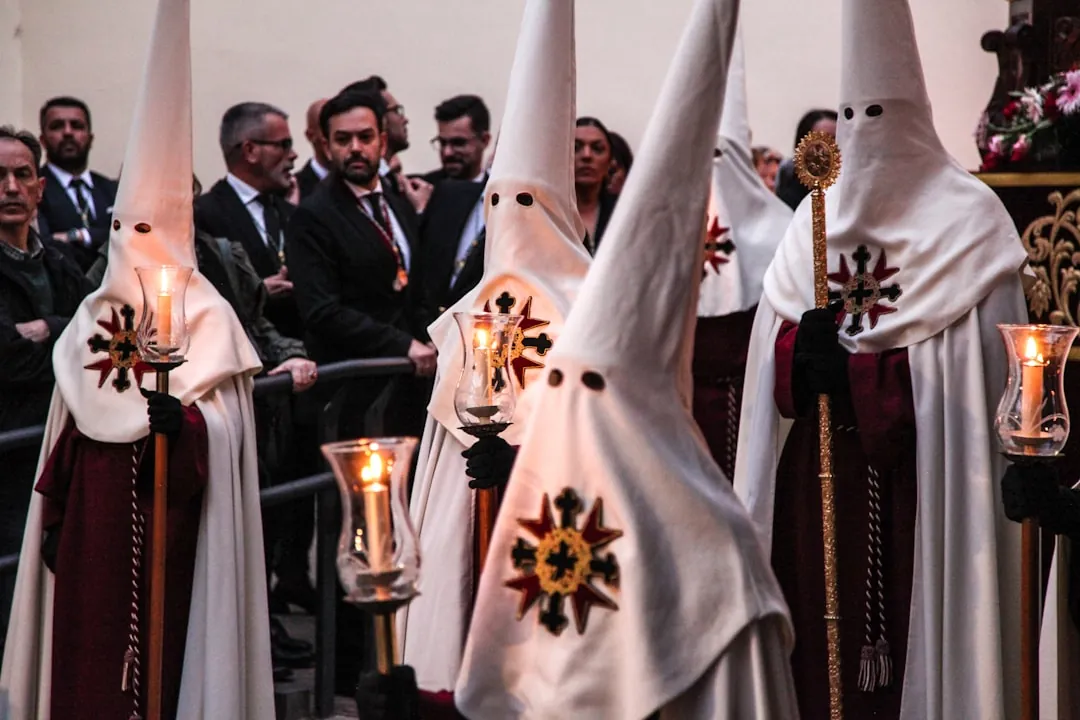
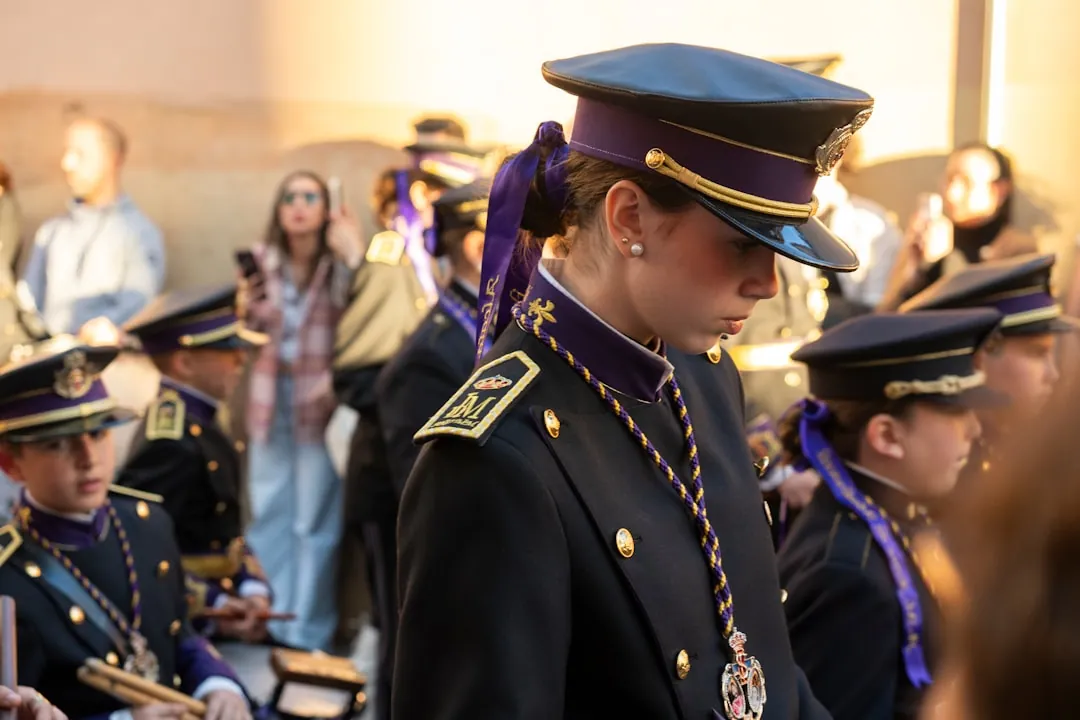
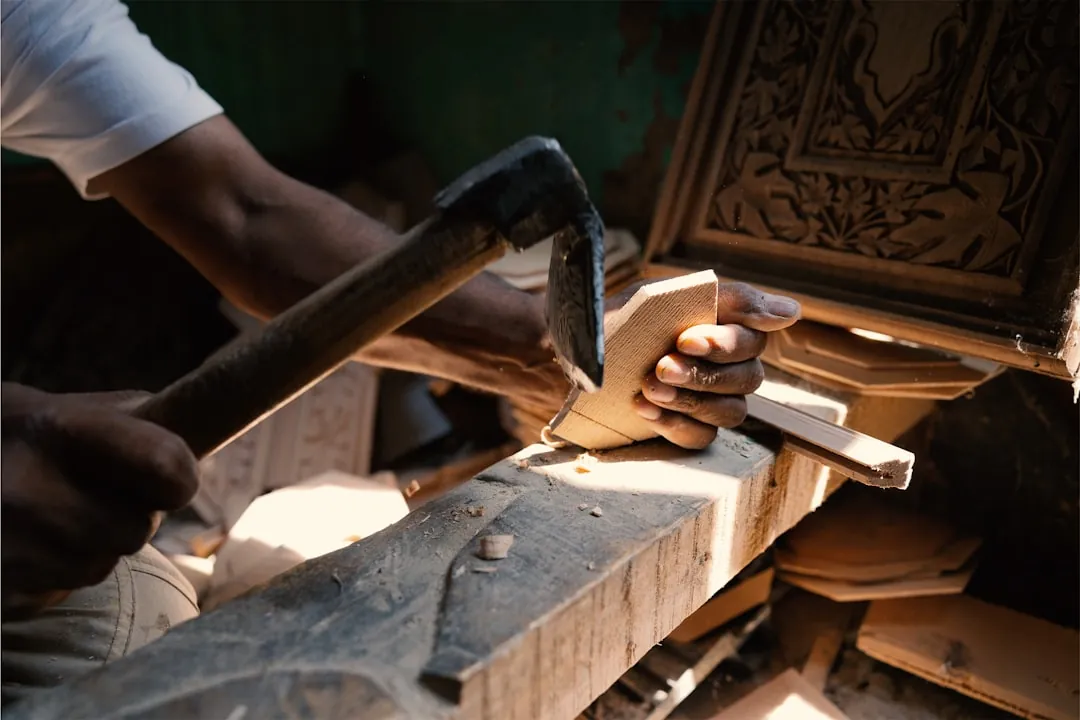
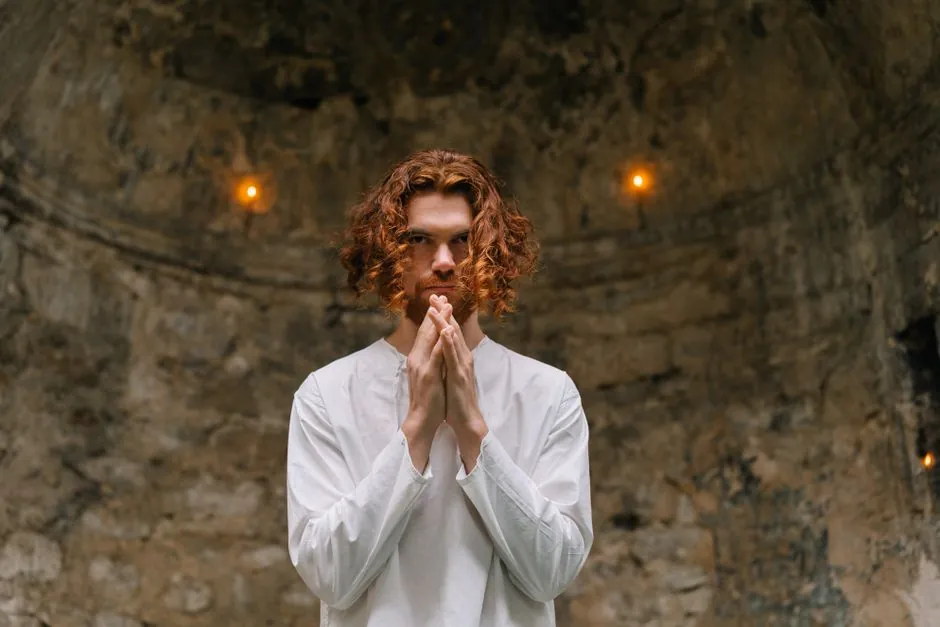
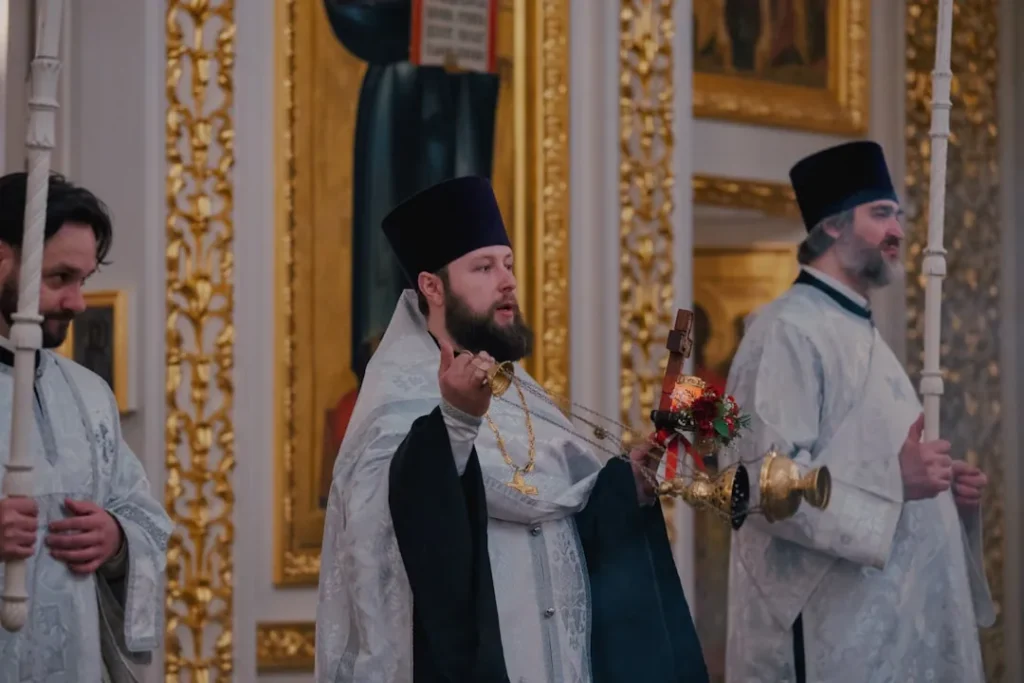
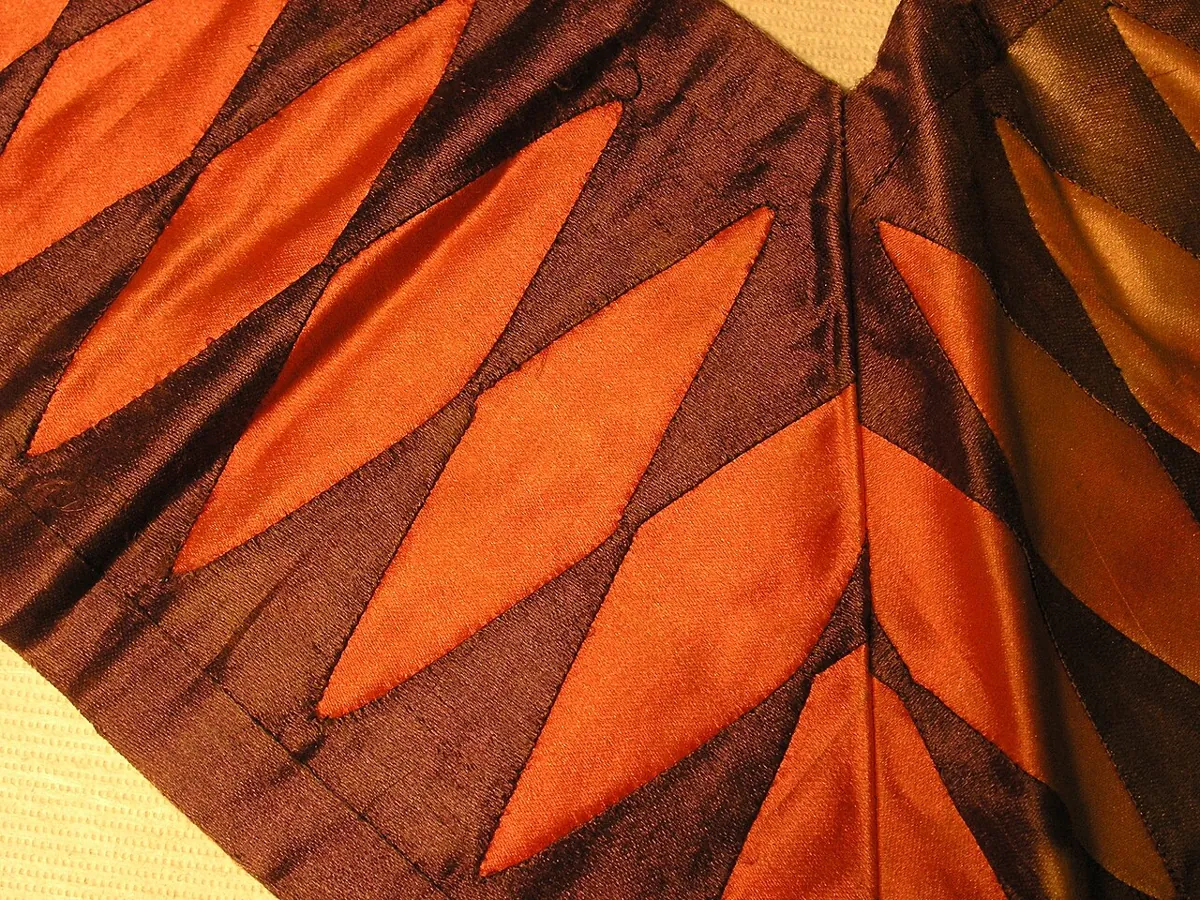
Religious ceremony reflecting ceremonial traditions found in Masonic rituals

Masonic rituals are structured ceremonial performances through which candidates advance through the degrees of Freemasonry, receiving moral instruction by way of allegory, symbol, and dramatic re-enactment. The earliest documented lodge rituals date to the 1696 Edinburgh Register House manuscript, predating the founding of the Premier Grand Lodge of England on June 24, 1717, by more than two decades. From that point forward, ritual became the connective tissue of the fraternity: the mechanism by which a stonemason’s guild vocabulary was transformed into a system of ethical philosophy. Three degrees form the core of what is called the Blue Lodge (Entered Apprentice, Fellowcraft, and Master Mason), and each confers its own obligations, symbols, and working-tool allegories. Despite centuries of speculation, leaked manuscripts, and online PDFs of varying accuracy, the rituals themselves are less sensational than their reputation suggests. They are, at their core, a theater of moral instruction, one that has remained remarkably consistent across jurisdictions while adapting, quietly, to each era it has passed through.

What Are Masonic Rituals?

Masonic rituals are scripted ceremonial procedures combining spoken word, symbolic gesture, and structured allegory, enacted by a lodge when conferring degrees upon candidates. They are not religious rites, occult practices, or theatrical performances staged for entertainment. Their purpose is moral instruction delivered through direct experience rather than lecture or text.

Religious ceremony reflecting ceremonial traditions found in Masonic rituals
Photo: Konstantin Kitsenuik (unsplash)

In Masonic usage, the word “ritual” has a precise technical meaning. It refers to a standardized written text, accompanied by a defined sequence of physical movements and symbolic gestures, that a lodge follows when admitting and advancing a candidate through the degrees of the Craft. The text is largely memorized by the officers conducting the ceremony, a practice that preserves both accuracy and solemnity. Different grand lodges maintain their own authorized versions, which is why “working the ritual” varies in detail between an English lodge operating under the United Grand Lodge of England and a lodge in the American South working the Webb-Preston tradition. The architecture of the ceremony, however, remains consistent: candidate, officers, symbolic furniture, and a narrative drawn from the allegory of the medieval stonemason’s craft.

The philosophical function of this structure is deliberate. Freemasonry’s moral philosophy, centered on brotherly love, relief, and truth, is not delivered to candidates through a pamphlet or a reading list. It is enacted. The candidate moves through the lodge room, takes obligations, handles working tools, and participates in dramatic sequences representing the journey from ignorance toward enlightenment, from the rough ashlar to the perfect ashlar. The lesson is experiential by design, drawing on a long tradition of initiatic pedagogy that predates Freemasonry and appears in various forms across historical fraternal and philosophical societies.

One distinction deserves emphasis because it is frequently misunderstood. Masonic lodge ceremonies open with a prayer and require that every candidate profess a belief in a Supreme Being, a requirement stated explicitly in most grand lodge constitutions. This has led some observers to treat the lodge as a quasi-religious institution. The Masonic Service Association and the United Grand Lodge of England have both addressed this directly: Freemasonry does not define the nature of that Supreme Being, prescribe any doctrinal position, or offer a path to salvation. A lodge might include a Christian, a Muslim, a Jew, and a Sikh among its members, each understanding the opening prayer through the lens of his own tradition. The ceremony is not worship. It is, in the organization’s own framing, a system of morality veiled in allegory and illustrated by symbols.

Origins and Historical Development of Masonic Rituals

The documentary trail for Masonic rituals begins not in London in 1717 but in Edinburgh in 1696. The Edinburgh Register House manuscript, dated to that year, is the earliest known written record of Masonic catechetical exchanges: the question-and-answer sequences used to test a candidate’s knowledge of lodge custom. Its existence confirms that formalized ceremonial practice predates the Premier Grand Lodge of England by at least two decades, and almost certainly by much longer. Scholars such as David Stevenson, in The Origins of Freemasonry (1988), have traced recognizable lodge structures in Scotland back to the late sixteenth century, suggesting that what the 1717 founders codified was an inheritance, not an invention.

From Guild Custom to Speculative Allegory

The transition from operative to speculative Masonry, which gathered pace through the late seventeenth century, did not discard the material culture of the working stonemason. It reinterpreted it. The leather apron worn to protect clothing from stone dust became an emblem of honest labor and moral purity. The square and compasses, instruments of physical measurement, were recast as tools for measuring conduct. The lodge itself, originally the on-site workshop where masons ate, slept, and settled disputes, was reconceived as a philosophical space structured around the cardinal points of the compass. This reframing was neither sudden nor uniform: operative and speculative members coexisted in many early lodges, and the allegorical layer was built incrementally over decades rather than declared at a single founding moment.

The 1723 Constitutions of James Anderson, commissioned by the Premier Grand Lodge, codified membership rules, lodge governance, and the obligations of a Mason toward his brethren. What Anderson conspicuously did not codify was ritual procedure itself. The ceremonial content was left unwritten, transmitted orally and by demonstration. That deliberate omission was not an oversight. It reflected both a desire to protect the forms from public scrutiny and a recognition that no single version yet commanded universal agreement. The pattern of omitting ritual detail from official printed documents has persisted in grand lodge governance to the present day.

The Antients, the Moderns, and the 1813 Union

In 1751, a rival body calling itself the Grand Lodge of England According to the Old Institutions was established, its members quickly nicknamed the “Antients” by their opponents. The original 1717 Grand Lodge, by contrast, was labeled the “Moderns,” a term its members found less flattering than intended. The schism was partly social, partly ethnic (the Antients drew heavily from Irish and working-class constituencies), and substantially ritual. The Antients accused the Moderns of having altered or abandoned elements of the traditional ceremony, including the Royal Arch, which the Antients regarded as integral to the third degree rather than a separate appendant body. Each Grand Lodge operated its own ritual variants for sixty-two years, producing a generation of English-speaking lodges with divergent ceremonial practice.

The Articles of Union signed on December 27, 1813, merged the two bodies into the United Grand Lodge of England and charged a Lodge of Reconciliation with producing a single, agreed ritual. The resulting compromise, ratified in 1816, forms the backbone of what is practiced in mainstream English lodges today. It did not, however, eliminate all variation. The Lodge of Reconciliation’s work was transmitted orally and never printed in an authorized text, which meant that regional differences and lodge-specific customs survived the merger. The 1813 union resolved the constitutional schism; it did not produce a single frozen ceremony, and the variation that traces back to those competing traditions remains audible in lodges across the English-speaking world.

The Three Degrees of Freemasonry: A Ritual Breakdown

First Degree: Entered Apprentice

The Entered Apprentice degree is the formal threshold of Blue Lodge membership, and its structure reflects that liminal quality with deliberate care. Before the ceremony begins, the candidate is prepared in an anteroom: divested of metal objects, partially undressed in a way that renders him symbolically vulnerable, and hoodwinked (blindfolded). The blindfold is not theatrical pageantry. It enacts the central theme of the degree, the passage from darkness into light, resolved at the moment of obligation when the hoodwink is removed and the candidate first perceives the lodge in full assembly. The working tools presented at this stage are the 24-inch gauge and the common gavel. The gauge teaches the division of the day into labor, refreshment, and service; the gavel teaches the removal of rough edges of conduct and character. Both are stonemason’s tools repurposed as moral instruments, a pattern that runs through every subsequent degree. An obligation, a solemn pledge administered on the Volume of Sacred Law, binds the candidate to the fraternity’s principles before he receives the recognition signs and words that identify him to other Entered Apprentices.

Second Degree: Fellowcraft

The Fellowcraft degree advances the candidate from foundational moral instruction toward intellectual development, and the shift in emphasis is architecturally encoded. The central allegory is the ascent of a winding staircase leading to the middle chamber of King Solomon’s Temple, where the Fellow Craft receives wages, meaning knowledge and its rewards. The staircase passes through a porch flanked by two great pillars, known in Masonic tradition as Jachin and Boaz, names drawn from the description of Solomon’s Temple in 1 Kings 7:21. Their symbolic meanings, stability and strength respectively, are explained in the degree’s lecture. That lecture also introduces the seven liberal arts and sciences: grammar, rhetoric, logic, arithmetic, geometry, music, and astronomy. Geometry receives particular emphasis, reflecting the operative stonemason’s dependence on it and the speculative Mason’s identification of it with the study of nature and the divine order underlying creation. The obligation and recognition signs of this degree are distinct from those of the first, marking a genuine advancement rather than a repetition.

Third Degree: Master Mason and the Legend of Hiram Abiff

The Master Mason degree occupies a different register from the two that precede it. Where the Entered Apprentice and Fellowcraft degrees are largely instructional, the third is dramatic, organized around the Legend of Hiram Abiff, the mythical architect of Solomon’s Temple. According to the legend, Hiram possessed the secrets of a Master Mason and was accosted by three ruffians who demanded those secrets. When he refused, they killed him. His body was eventually discovered and, in a ceremony that forms the emotional core of the degree, the candidate re-enacts Hiram’s fate and his symbolic restoration to life. The allegory is transparent in its intent: a meditation on mortality, on the integrity required to keep faith under mortal pressure, and on the fraternal bonds that persist beyond death. The Masonic Service Association of North America describes it as “the most solemn and moving ceremony in the Masonic system,” and most ritual scholars who have examined the degree concur that its power lies precisely in its refusal to resolve the legend neatly. The secrets lost with Hiram are never fully recovered, only substituted, a detail the degree treats not as failure but as a permanent reminder of human limitation. Completion of the Master Mason degree confers full rights within the Blue Lodge, though appendant bodies such as the Scottish Rite (which extends to the 32nd degree) and the York Rite build additional ceremonial structures on this foundation, each elaborating themes introduced in the three Blue Lodge degrees.

Symbols and Allegories in Masonic Ritual

Working Tools as Moral Instruments

At each of the three degrees, the candidate receives a formal presentation of working tools drawn directly from operative stonemasonry. The twenty-four-inch gauge and common gavel appear in the First Degree; the square and compasses dominate the Second; the trowel, along with the plumb and level, feature in the Third. None of these objects are handed over as souvenirs. Each comes with a scripted explanation that translates the physical function of the tool into a prescription for ethical conduct. The square, which a stonemason uses to test right angles, becomes in this context an instruction to regulate one’s actions by the moral law. The level, which ensures a horizontal surface, is presented as an emblem of equality among members regardless of social rank. The plumb, which tests vertical alignment, stands for uprightness of character. What makes this pedagogy distinctive is its sequencing: the candidate handles or observes the object within a dramatic ceremonial moment before the verbal explanation arrives. The symbol is encountered experientially first. The lesson follows. This is allegory functioning as a teaching method, not decoration, embedding abstract ethical concepts in a sensory and theatrical context that is far harder to forget than a lecture.

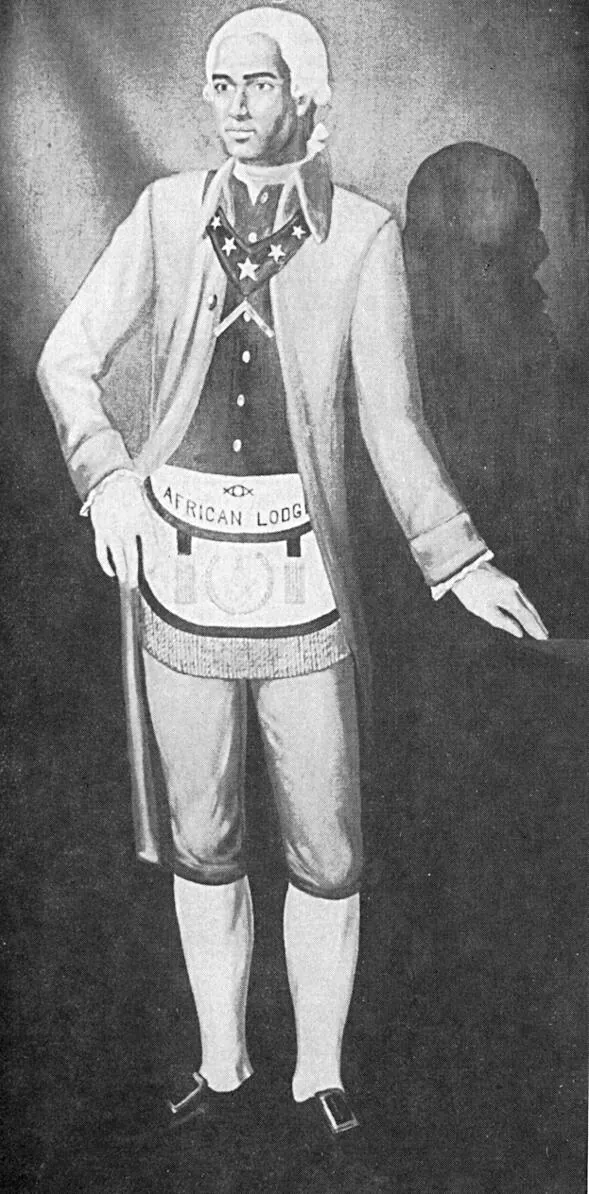
Masonic regalia including apron and collar worn during lodge rituals
Photo: Unknown authorUnknown author (wikimedia)

The trowel deserves particular attention. In operative masonry it spreads the cement that binds stones together. In speculative practice, Masonic ritual and symbolism assigns it the function of spreading the cement of brotherly love and affection. The metaphor is deliberately humble. There is no claim to cosmic transformation here, only the persistent, practical work of holding a community together. That combination of craft vocabulary and speculative philosophy is precisely what the founders of the premier Grand Lodge, established in London on June 24, 1717, inherited from the manuscript charges of the operative guilds and chose to preserve.

The Lodge Room as Symbolic Architecture

The physical space in which ceremonies take place is not a neutral meeting room rearranged for effect. The lodge room is a designed symbolic environment, and its layout is specified in ritual working. The room is oriented on an east-west axis: the Worshipful Master sits in the east, where the sun rises, and the Senior Warden in the west, where it sets. The Junior Warden occupies the south, representing the sun at its meridian height. This arrangement maps the officers’ roles onto the arc of the day, with the Master as the source of light and instruction. The altar, positioned at the center or toward the east depending on the jurisdiction, holds the Volume of the Sacred Law, the square, and the compasses: the three Great Lights of the lodge. The mosaic pavement beneath the feet of the candidate, a black-and-white checkered floor, represents the mingled good and evil of human existence, a visual reminder that the work of moral improvement takes place in an imperfect world.

Decorative elements in the lodge room carry equivalent weight. The letter G, suspended above the Master’s chair in many jurisdictions, refers simultaneously to geometry (the foundational science of the operative craft) and to the Great Architect of the Universe, the non-denominational term Freemasonry uses to acknowledge a supreme principle without prescribing a specific theology. The blazing star and the All-Seeing Eye appear in lodge furnishings and degree lectures as layered references to divine watchfulness and the pursuit of knowledge. Both symbols predate Freemasonry by centuries and entered lodge iconography from Renaissance emblematic literature and Christian devotional art. Treating them as occult insignia mistakes the library for the conspiracy.

Want to learn more?

Learn more

/understanding-masonic-symbols/” title=”Understanding Masonic Symbols”>Masonic symbols and their documented meanings.”

The Role of Lodge Officers in Masonic Ceremonies

A Masonic lodge ceremony is not a solo performance. It is a coordinated production with a defined cast, each officer occupying a specific physical position in the lodge room and carrying a scripted ceremonial function. The spatial arrangement is itself meaningful: the principal officers are stationed according to an astronomical allegory that maps the sun’s daily arc onto the architecture of the room, so that the lodge’s geography becomes part of the ritual’s symbolic argument.

Office Title Symbolic Position in Lodge Room Primary Ceremonial Function
Worshipful Master East (rising sun) Presides over all ceremonies; confers degrees; opens and closes the lodge
Senior Warden West (setting sun) Assists the Master; calls the lodge from labor to refreshment
Junior Warden South (meridian sun) Oversees the craft at midday; monitors conduct during refreshment
Senior Deacon Right of the Master Carries messages from Master to Senior Warden; guides the candidate
Junior Deacon Right of the Senior Warden Guards the inner door; assists in conducting the candidate through degrees
Tyler (Tiler) Outside the outer door Guards the entrance with a drawn sword; ensures only initiates are present

The Worshipful Master holds the executive and ritualistic authority of the lodge from the East, delivering key lectures, conferring each degree, and pronouncing the formal opening and closing. The Senior and Junior Wardens in the West and South complete the solar triangle, their duties calibrated to represent different phases of the working day, a deliberate piece of astronomical allegory built into the lodge’s spatial logic. The two Deacons function as choreographed messengers: their physical movement through the lodge room, conducting the candidate from station to station, is not improvised but scripted, forming the kinetic backbone of the degree ceremony. The Tyler’s role is the oldest of all. Guarding the outer door with a drawn sword, the office appears in lodge records that predate the formation of the Premier Grand Lodge in 1717, suggesting it was inherited directly from the operative guild practices that Freemasonry drew upon when it formalized its structure. What holds the whole system together is rehearsal. Many jurisdictions assign degree teams, groups of officers who practice their parts collectively and treat the ceremony with the discipline of theatrical production. The Anderson Constitutions of 1723 already emphasized the importance of proper form in lodge proceedings, and that expectation has never quietly gone away.

Standardization and Variation: Rites, Jurisdictions, and the Question of Uniformity

The three degrees of the Blue Lodge form the bedrock of Freemasonry across virtually every jurisdiction on earth, yet anyone who assumes that uniformity extends to the precise wording, physical choreography, or supplementary lectures is in for a surprise. Grand lodges are sovereign bodies, and that sovereignty has always included the authority to govern ritual practice within their own territories. The result, across three centuries of independent development, is a global family of ceremonies that share a recognizable skeleton while differing considerably in the flesh that surrounds it. Variation is not a flaw in the system; it is a structural feature of a federation that has never had a single international governing authority.

Scottish Rite and York Rite: Beyond the Blue Lodge

For Masons who complete the three foundational degrees and seek further ceremonial work, two principal appendant bodies offer extended degree systems. The Scottish Rite, administered in the United States by two separate jurisdictions (the Southern Jurisdiction, headquartered in Washington, D.C., and the Northern Masonic Jurisdiction), extends the degree sequence from the 4th through the 32nd, with the honorary 33rd conferred by election for distinguished service. Each of these degrees carries its own ritual drama, drawing on themes from biblical history, chivalric tradition, and philosophical allegory. The Supreme Council of the Southern Jurisdiction, established in Charleston, South Carolina, in 1801, is the oldest Supreme Council in the world and serves as the organizational model for Scottish Rite bodies in dozens of countries.

The York Rite offers a parallel rather than a sequential path. It comprises three bodies: the Royal Arch Chapter, the Council of Royal and Select Masters (Cryptic Masonry), and the Commandery of Knights Templar. Each confers its own set of degrees or orders, with the Royal Arch in particular holding a special place in English Freemasonry, where it has been considered since 1813 as the formal completion of the third degree. A Mason need not pursue either appendant body; both are optional extensions of the Masonic initiation ritual framework, not prerequisites for full standing in a Blue Lodge.

Ritual Workings in England vs. the United States

The United Grand Lodge of England (UGLE) takes an unusually structured approach to ritual variation. Rather than prescribing a single authorized text, the UGLE recognizes several distinct ritual “workings,” each with a documented history and an approved status. Emulation working, developed and preserved by the Emulation Lodge of Improvement founded in 1823, is the most widely practiced. Taylor’s working, Oxford working, and Bristol working are among the other recognized variants, each differing in phrasing, certain ceremonial details, and the structure of the explanatory lectures. All are valid; none are identical. The Bristol working, notably, has preserved elements of pre-union practice that other workings revised after the 1813 merger of the Antients and Moderns grand lodges.

In the United States, the picture is more diffuse. Each of the fifty-plus grand lodge jurisdictions (one per state, plus several for Washington, D.C., and U.S. territories) maintains its own ritual, and there is no federal body with authority to standardize them. Some American lodges work from printed monitors, which are semi-public guides that accompany the secret oral portions; others rely on manuscript traditions passed down through lodge instruction. This decentralized landscape means that a Mason traveling from a lodge in Virginia to one in California may notice meaningful differences in the ceremony’s structure and language, even within the same three degrees. The existence of printed ritual exposés, beginning with Samuel Prichard’s Masonry Dissected in 1730, has long made portions of the ritual text accessible outside lodge walls, yet the tradition of oral transmission and memorization persists as a deliberate pedagogical choice. The point, as Masonic educators have consistently argued, is not secrecy for its own sake but the discipline of internalization: a candidate who has memorized a catechism has engaged with it differently than one who has simply read it.

Psychological and Philosophical Dimensions of Ritual Participation

Freemasonry has never pretended its ceremonies are merely administrative. From the earliest codified statements of Masonic purpose, the ritual framework was understood as a teaching mechanism, not a formality. The Anderson Constitutions of 1723 describe the fraternity’s aim as making good men better through shared moral instruction, and William Preston’s Illustrations of Masonry (1772) elaborated this into a systematic philosophy: that moral lessons absorbed through dramatic experience leave a deeper impression than the same lessons delivered by lecture. Preston’s argument was essentially pedagogical. A candidate who enacts a symbolic journey retains its meaning differently than one who simply reads about it. The degree structure reinforces this effect through deliberate repetition: each ceremony builds on the one before it, and when a raised Mason later witnesses a new candidate’s initiation, the familiar words and gestures arrive with accumulated meaning. The lodge, in this reading, is less a meeting room than a classroom that never quite closes.

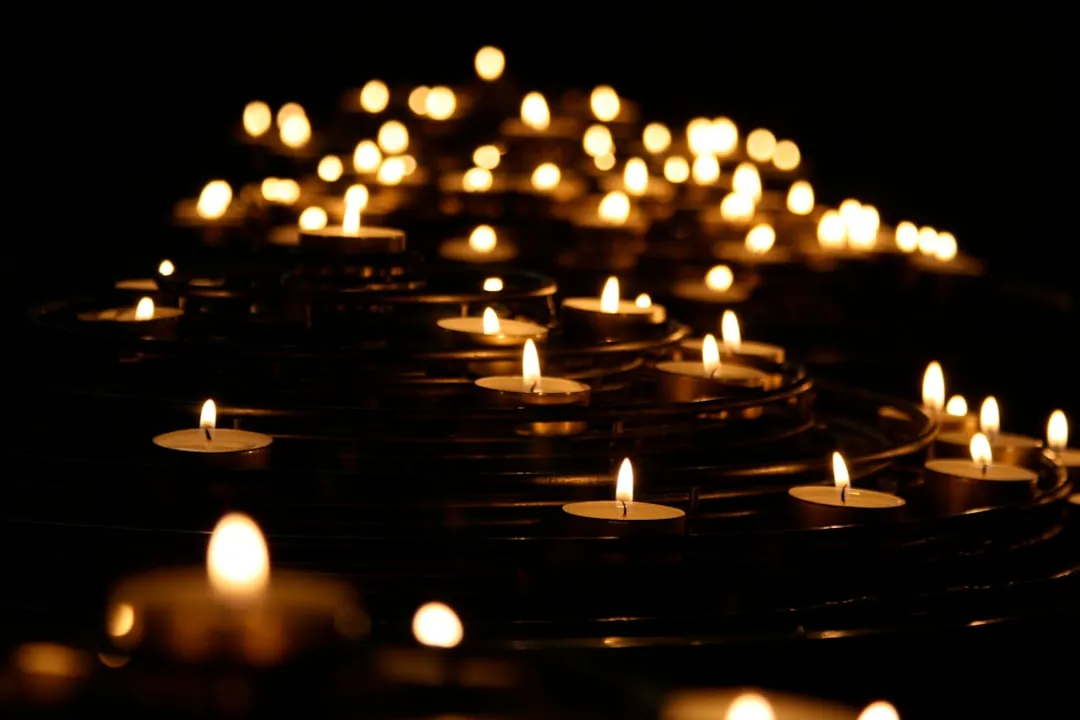
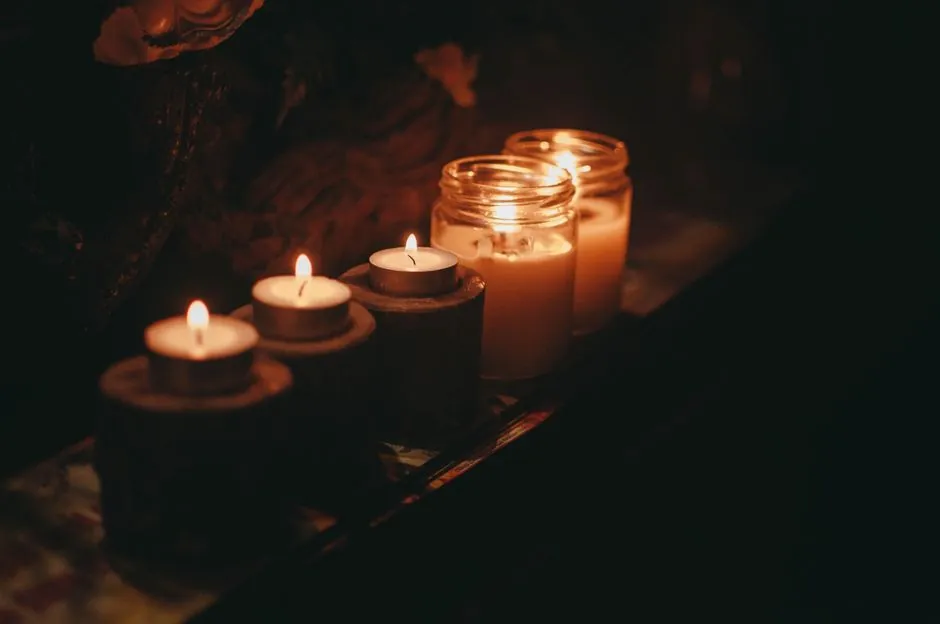
Candlelit atmosphere setting the solemn tone of Masonic ritual spaces
Photo: Dmax Tran (pexels)

Scholars outside the fraternity have reached comparable conclusions through different routes. Anthropologist Victor Turner, writing in the 1960s and 1970s on the structure of initiatory rites across cultures, identified what he called liminality: the threshold state in which a candidate is temporarily suspended between social identities, neither what they were nor yet what they will become. Turner observed that this structural feature, threshold crossing followed by symbolic death and rebirth and then reintegration into community, recurs across widely separated ritual traditions. Masonic degree work exhibits each of these phases with notable clarity, a point noted by several ritual studies scholars who have examined the degrees without endorsing any particular metaphysical interpretation of them. What these frameworks collectively suggest is that the ceremonies function on a cognitive level regardless of the candidate’s prior beliefs: the scripted, repetitive structure creates a distinct register of attention that ordinary social gatherings do not produce. Participants consistently report a heightened sense of occasion. Whether that translates into lasting moral improvement is a matter the individual lodge member must assess for themselves. The documented intent, preserved in printed monitors and ritual manuals going back to the eighteenth century, is that it should.

Modern Adaptations and the Enduring Tradition

Freemasonry in the late twentieth century faced a demographic reality that no amount of ceremonial gravity could postpone: membership in many grand lodges declined sharply after the 1960s peak, and the fraternity responded with practical adjustments. The most contested of these is the “one-day class,” a format in which all three degrees are conferred in a single compressed session rather than across separate lodge meetings spread over months. Critics within the fraternity argue that the compression strips the degrees of the reflective intervals that give them meaning; proponents counter that a candidate who actually shows up and receives the degrees is preferable to one who never petitions at all. The debate has not been resolved, and grand lodges remain divided on the practice. On a quieter front, digital tools have entered the lodge room through the side door: in several US and UK jurisdictions, officers now use dedicated apps or audio recordings to assist with the demanding memorization that ritual work requires. Older members sometimes regard this as a concession too far, though the irony is that printed ritual monitors, which are themselves a relatively modern convenience, once provoked similar objections.

The question of who may participate in these ceremonies is, strictly speaking, a jurisdictional one. Mainstream grand lodges recognized by the United Grand Lodge of England do not admit women, and that position has remained consistent. The parallel tradition of co-Masonic and women’s grand lodges, however, has operated openly since the Order of Women Freemasons was formally constituted in England in 1908, conferring the same three-degree structure with equivalent ritual content. Whatever one makes of the jurisdictional boundaries, the existence of these bodies confirms that the ritual framework itself is not considered gender-specific by a significant portion of the broader Masonic world. Beneath all of these adaptations, the core texts of the three degrees have remained structurally stable for well over two centuries. The obligations, the symbolic lectures, and the principal dramatic sequences that appear in Preston’s Illustrations of Masonry (first published in 1772) are recognizable in lodge workings performed today. That durability is partly institutional conservatism, and partly something more straightforward: the ceremonies work as vehicles for the ideas they carry, and there has been little pressure to replace what still functions.

Common Misconceptions About Masonic Rituals

Few subjects attract as much confident misinformation as Masonic ceremonies, and the misinformation tends to cluster around the same handful of misunderstandings. Addressing them directly, with sources, is more useful than a general disclaimer.

On Secrecy: What Lodges Actually Protect

The idea that Masonic ritual is locked behind impenetrable secrecy collapsed some time in the 18th century. Samuel Prichard’s Masonry Dissected, published in 1730, provided a detailed account of lodge ceremonies just thirteen years after the founding of the United Grand Lodge of England, and it became one of the best-selling pamphlets of the decade. Anti-Masonic literature in the 19th century, particularly following the Morgan Affair of 1826, produced further exposés in the United States. Today, detailed ritual texts for multiple jurisdictions circulate freely online. What lodges protect is not the content of the ceremonies but the solemnity of the experience: the difference between reading a screenplay and sitting in the theater. Members are asked not to trivialize the work, not to conceal it from historians.

Masonic Ritual and Religious Conflict

A persistent claim holds that Masonic lodge ceremony constitutes a rival religion or is incompatible with Christian practice. The historical record is more precise than that. The Catholic Church’s prohibition on Masonic membership dates to Pope Clement XII’s papal bull In Eminenti, issued in 1738, and the concern cited was the combination of secrecy and oath-taking, not the ritual content itself. The Congregation for the Doctrine of the Faith reaffirmed the prohibition in a 1983 declaration, again on procedural rather than doctrinal grounds. Many Protestant denominations and Jewish congregations have historically placed no such restriction on members. The ceremonies themselves invoke a non-denominational concept of a Supreme Being and draw heavily on Old Testament building imagery, particularly the construction of Solomon’s Temple. This is architectural allegory, not liturgy.

The Hiram Abiff Legend, the Illuminati Conflation, and the “8-Hour Rule”

Online searches for “weird” or “dark” Masonic initiation ritual frequently surface the legend of Hiram Abiff, the architect of Solomon’s Temple whose murder and symbolic resurrection form the dramatic core of the Third Degree. The legend is allegorical theater in the tradition of medieval mystery plays, not a literal enactment of violence. No candidate is harmed; the drama is explicitly understood by all participants as moral allegory about integrity and mortality. Conflating it with genuine violence requires either willful misreading or reliance on satirical accounts that were never intended as documentation.

The conflation with the Bavarian Illuminati is a separate error with a long pedigree. Adam Weishaupt’s organization, founded on May 1, 1776, and dissolved by electoral decree in 1785, was a distinct Enlightenment-era secret society that briefly recruited some Freemasons as individual members. It had its own structure, its own goals, and its own rituals. The Masonic Service Association and mainstream Masonic historians are consistent on this point: the two organizations were never unified, and the Illuminati ceased to function as an institution before the 19th century began. Finally, the so-called “8-hour rule” referenced in online forums is neither universal nor mystical. It is a practical guideline present in some jurisdictions, recommending that candidates not be intoxicated within eight hours of a ceremony, for the straightforward reason that initiation requires sustained attention. Different grand lodges handle this differently; none treat it as a cosmic requirement.

FAQ

What exactly happens during a Masonic initiation ritual?

The First Degree ceremony, known as the Entered Apprentice, follows a structured sequence that has remained broadly consistent since the early eighteenth century. The candidate is prepared in an anteroom, admitted to the lodge in a manner prescribed by the jurisdiction’s approved working, and then guided through a series of symbolic actions: an obligation taken on the Volume of Sacred Law, the presentation of working tools (the twenty-four-inch gauge and common gavel), and a symbolic movement from darkness to light.

The experience is theatrical and allegorical rather than physically demanding. Its moral themes, covering duty, self-improvement, and the search for knowledge, are consistent across all recognized grand lodges, even where the precise choreography differs.

Are Masonic rituals really secret, and why?

The broad outline of degree ceremonies has been publicly documented since Samuel Prichard’s Masonry Dissected, published in 1730, which printed a detailed exposure of lodge proceedings and became an immediate bestseller. What members protect through obligation (not legal enforcement) are the specific recognition signs, words, and tokens used to identify a fellow Mason.

The rationale is twofold: partly historical, rooted in the guild tradition of protecting trade knowledge, and partly philosophical. The fraternity holds that previewing a ceremony in full diminishes the experiential impact of its symbolism. Secrecy, in this reading, is a pedagogical tool as much as a protective one.

How long does it take to complete all three degrees of Masonic ritual?

In most jurisdictions, each of the three Blue Lodge degrees is conferred at a separate lodge meeting, so completion takes a minimum of several months. The actual timeline depends on lodge scheduling, meeting frequency, and whether the candidate can demonstrate sufficient proficiency in the catechetical questions from the preceding degree before advancing.

Some American grand lodges permit what are commonly called one-day classes, which compress all three degrees into a single session. The practice is permitted but debated within the fraternity: critics argue it trades depth of experience for convenience, while proponents point to accessibility for candidates with demanding schedules.

Do all Masonic lodges perform the same rituals?

No. The three-degree Blue Lodge structure is near-universal among recognized grand lodges, but the specific wording, physical choreography, and supplementary lectures vary by jurisdiction and approved working. The United Grand Lodge of England alone recognizes several distinct workings, including Emulation, Taylor’s, and Bristol, each with its own authorized text. American grand lodges are similarly varied, with each state grand lodge maintaining its own approved ritual.

Appendant bodies add further complexity. The Scottish Rite confers degrees numbered four through thirty-two (plus the honorary thirty-third), and the York Rite adds its own chapter, council, and commandery degrees, all with distinct ritual texts and themes.

How are Masonic rituals different from religious ceremonies?

Lodge ceremonies open with prayer and require candidates to affirm belief in a Supreme Being, but they are not acts of worship and carry no denominational affiliation. The United Grand Lodge of England’s Book of Constitutions explicitly states that Freemasonry is not a religion and does not substitute for one. The moral instruction delivered through its ceremonies uses broadly theistic language while remaining doctrinally neutral.

That distinction satisfies most Protestant denominations and has allowed members of many faiths to participate without perceived conflict. It has not, however, resolved the Catholic Church’s longstanding objections: the Vatican’s 1983 Declaration on Masonic Associations reaffirmed that Catholic membership in Masonic lodges remains forbidden.

What Does the Letter G Mean in Freemasonry?

what does the letter G mean in Freemasonry — illustrazione 1

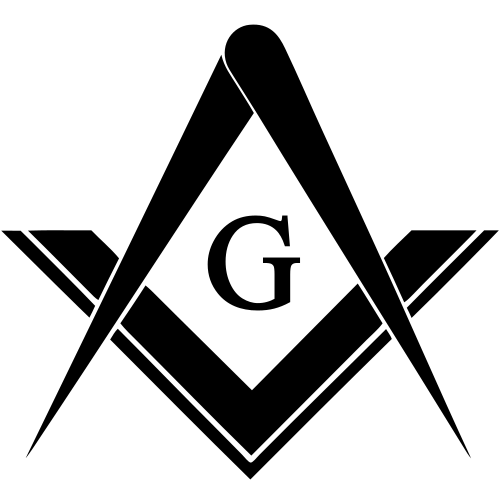
Suspended at the center of the Square and Compasses, the letter G is arguably the most recognized and most misunderstood element in Masonic iconography. To the casual observer it looks like a typographical accident; to the initiated, it carries layered meanings that Masonic scholars have debated for centuries. The dominant interpretation holds that G stands simultaneously for Geometry and for God, or in the more theologically neutral Masonic phrasing, the Grand Architect of the Universe. Yet neither explanation fully exhausts the symbol. A third reading, rooted in esoteric tradition, points toward Gnosis, the pursuit of spiritual knowledge. A fourth, less commonly cited in lodge manuals but present in older Masonic literature, frames G as the Generative Principle, the creative force underlying all matter. The symbol’s precise origin is itself contested: documentary evidence places it in English lodge iconography no earlier than the mid-eighteenth century, though its conceptual roots run considerably deeper. This article traces each of those meanings in turn, examines how different Masonic jurisdictions and rites have interpreted the letter, and separates documented Masonic teaching from the conspiracy theories that have attached themselves to this single, deceptively simple glyph.

The Two Official Meanings: Geometry and God

What does the letter G mean in Freemasonry? Most Masonic jurisdictions formally recognize two answers: Geometry, the foundational science of the stonemason’s craft, and God (rendered in lodge ritual as the Grand Architect of the Universe), the supreme being to whom a Mason’s moral work is oriented. Both meanings are official, and both coexist by design.

what does the letter G mean in Freemasonry, illustrazione 1
Photo: en:User:Cameltrader (wikimedia)

The dual reading is not an accident of sloppy symbolism. The United Grand Lodge of England‘s published ritual materials treat the letter, when displayed in the center of the square and compass, as a reminder of divine presence during lodge proceedings. Crucially, the phrasing “Grand Architect of the Universe” is deliberate in its generality. As the UGLE’s own explanatory literature makes clear, the lodge does not legislate the theological identity of that Architect. A Christian, a Jew, a Muslim, and a Deist can each read the same symbol through the lens of their own tradition without doctrinal conflict. The letter functions as a placeholder for the sacred, not as a confession of faith.

Geometry earns its place in that same frame through a line of reasoning that runs through centuries of Masonic pedagogy. The medieval stonemason’s guild depended on geometry as its primary operative science: the calculation of load-bearing arches, the setting of cornerstones, the proportioning of facades. When speculative Freemasonry inherited that symbolic vocabulary after the founding of the Premier Grand Lodge on June 24, 1717, geometry carried forward as the discipline that makes the hidden order of creation legible to human reason. The third-degree lecture preserved in many Anglo-American jurisdictions describes geometry as “the first and noblest of sciences,” the one through which the natural world reveals its underlying structure. In that framing, the two meanings of the letter G are not competing definitions but concentric ones: geometry is the method, and the Grand Architect is the source of the order that geometry discloses. One reads the symbol as a craft reference; the other reads it as a theological one. Masonic teaching holds, with characteristic tidiness, that both readings point toward the same truth.

Geometry: The Mathematical Foundation of the Craft

Medieval operative stonemasons did not treat geometry as an academic abstraction. It was the practical science behind every arch, vault, and flying buttress, the discipline that separated a master builder from a laborer. When speculative Freemasonry formally organized under the Premier Grand Lodge of England on June 24, 1717, it inherited that reverence wholesale. The working tools changed from literal instruments into moral metaphors, but geometry retained its status as the master-science of the Craft. That continuity of respect is precisely why the letter G carries such conceptual weight in the lodge room: it names the discipline that made the cathedral possible before it named anything else.

Sacred Geometry and the Working Tools

The square, the compasses, and the plumb line are not decorative props. Each is a geometric instrument with a specific function: the square tests right angles, the compasses describe circles and measure distances, and the plumb line establishes a true vertical. Taken together, they constitute a portable geometry kit, the same one an operative mason would have carried to a building site in the thirteenth century. The letter G, understood as a reference to geometry, acts as a conceptual anchor that unifies all three under a single intellectual principle. It reminds the Fellow Craft that the tools are not merely isolated symbols of virtue; they are expressions of one coherent science, each instrument a different application of the same underlying discipline. The symbolism is tighter than it first appears: the compasses literally draw the letter’s circular arc, and the square provides the straight lines that complete any geometric construction.

Anderson’s Constitutions and the Geometry Emphasis

The clearest early printed evidence for geometry’s privileged position in Masonic thought appears in The Constitutions of the Free-Masons, compiled by the Reverend James Anderson and published in 1723 under the authority of the Premier Grand Lodge. Anderson describes geometry as “the basis of architecture” and frames it as the science most worthy of a Mason’s serious attention, placing it above the other six liberal arts in practical and moral importance. This was not a casual editorial choice. Anderson was constructing a legitimizing narrative for a fraternity that had recently transitioned from operative craft to gentlemen’s philosophical society, and grounding Masonic identity in geometry gave the organization an intellectually respectable lineage traceable to Euclid, Pythagoras, and the builders of Solomon’s Temple. The 1723 text matters because it anchors the symbolic use of G in a datable, citable document rather than leaving it entirely to oral tradition. In the Fellow Craft degree, the letter is formally introduced alongside an extended treatment of the liberal arts and sciences, with geometry singled out as the most exalted of the seven. Researchers examining Masonic symbol meaning across different rites consistently find this degree as the primary locus where the G receives its geometric interpretation, a consistency that reflects Anderson’s foundational influence on Masonic ritual development throughout the eighteenth century.

God and the Grand Architect of the Universe

Why ‘Grand Architect’ Rather Than a Specific Divine Name

Freemasonry has, since the formation of the Premier Grand Lodge in London on June 24, 1717, required its members to profess belief in a Supreme Being. What it has never required is agreement on that Being’s name, nature, or tradition. The phrase Grand Architect of the Universe, rendered in Masonic shorthand as G.A.O.T.U., was a deliberate solution to a real institutional problem: how to maintain a shared ritual vocabulary across a fraternity whose membership included Anglicans, Catholics, Deists, and, in later centuries, Jews, Muslims, and practitioners of other faiths. An architectural metaphor applied to divinity carried enough resonance across traditions to function as common ground without collapsing into the creed of any single one. The builder-God appears in Plato’s Timaeus, in Enlightenment natural theology, and in the Book of Proverbs. The phrase belonged to no denomination and therefore offended none.

what does the letter G mean in Freemasonry, illustrazione 2
Photo: Sergey Zolkin (unsplash)

The letter G suspended in the lodge room operates within this framework as a visual anchor. Just as a cross, a menorah, or a mihrab orients worshippers within a specifically religious space, the G orients lodge members toward the idea of divine presence without prescribing its theological content. The United Grand Lodge of England’s official statements consistently describe this function in non-denominational terms, emphasizing that each member understands the symbol through the lens of his own faith. That framing is not evasion. It is the architectural logic of an institution built to hold theological diversity without fracturing over it.

Jurisdictional variation complicates the picture. In nineteenth-century American Freemasonry, particularly in jurisdictions shaped by Protestant revivalism, the G was frequently glossed in lodge catechisms and instructional pamphlets as standing explicitly for God in the Christian sense. Albert Mackey’s Encyclopedia of Freemasonry (1874) acknowledges this tendency while insisting it represents local practice rather than universal doctrine. The distinction matters: what a Grand Lodge in Virginia taught its candidates in 1850 does not define what a lodge in Edinburgh or Cairo understood the same symbol to mean. The letter G is less a fixed theological statement than a deliberate opening, a symbol whose meaning each tradition fills from its own reservoir.

Ancient Origins and the Historical Evolution of the Symbol

The letter G did not appear in the earliest visual vocabulary of organized Freemasonry. The Premier Grand Lodge was established on June 24, 1717, yet the earliest confirmed visual evidence of a G placed within the Square and Compasses dates to English lodge tracing boards and printed frontispieces from the 1730s and 1740s, a full generation after that founding moment. This gap matters. It suggests the symbol was not a founding element but an accretion, adopted as the fraternity formalized its iconographic language during a period of rapid institutional growth.

Scholars writing under the auspices of the Quatuor Coronati Lodge, warranted in 1886, have noted something that complicates any claim of universal symbolism: the G is, in practice, an English and American convention. Continental European lodges, including those operating under French and German grand bodies, routinely omit it from their iconography. Scottish lodges show similar variation. The symbol’s absence from these traditions is not an oversight; it reflects the fact that no foundational Masonic document ever mandated the G as a required element. What looks like a universal emblem to an American observer is, from a comparative perspective, a regional preference that hardened into orthodoxy.

The eighteenth-century expansion of Freemasonry across the American colonies accelerated that hardening considerably. As lodges multiplied from Massachusetts to Virginia, they drew heavily on English models, carrying the G into lodge rooms, aprons, and printed materials with consistent enthusiasm. By the time of the early Republic, the letter had become so embedded in Anglophone Masonic culture that later generations would treat it as timeless rather than contingent. The contrast with French and German lodge iconography, where the letter G Masonic symbol simply does not appear, is the clearest evidence that its dominance was a historical accident of transmission rather than a metaphysical necessity.

Modern Scholarly Debate on the G’s True Origin

Researchers affiliated with the Quatuor Coronati Lodge and independent Masonic historians continue to debate whether the G entered lodge iconography primarily for theological reasons (standing for God or the Great Architect), geometric ones (referencing Geometry as the foundational operative science), or pedagogical ones (serving as a mnemonic device for candidates receiving the Freemasonry G symbol explained in the context of degree instruction). None of these explanations rules out the others, and that overlap is precisely what makes consensus elusive. A symbol that can simultaneously invoke the divine, the mathematical, and the instructional resists reduction to a single origin story.
No definitive archival evidence has settled the question. The Masonic historian Robert Macoy, writing in the nineteenth century, favored the theological reading. Later researchers, including contributors to Ars Quatuor Coronatorum (the lodge’s published transactions), have pushed back with documentary analysis suggesting the geometric interpretation held priority in early printed catechisms. What both camps agree on is that the symbol’s meaning was almost certainly layered from the beginning, with different ritual contexts activating different readings. Treating any single interpretation as the correct one imposes a false tidiness on a tradition that has always been comfortable with productive ambiguity.

Want to learn more?

Learn more

/understanding-masonic-symbols/” title=”Understanding Masonic Symbols”>Masonic symbols explained, where the Square and Compasses, the All-Seeing Eye, and the checkered floor are examined with the same historical rigor applied here.”

Gnosis and the Generative Principle: Esoteric Interpretations

Albert Pike and the Esoteric Tradition

Albert Pike’s Morals and Dogma of the Ancient and Accepted Scottish Rite of Freemasonry, published in 1871, remains the most cited source for esoteric readings of Masonic symbolism, and the letter G is no exception. Pike drew on Neoplatonic, Hermetic, and Gnostic philosophy, weaving a dense interpretive framework around symbols that most lodge members encountered in far simpler terms. For Pike, the G carried associations with Gnosis, the Greek word for direct, experiential spiritual knowledge as opposed to received belief. This was not a claim about what the symbol officially meant; Pike was explicit that his interpretations were personal and speculative. The 1871 preface to Morals and Dogma states plainly that “every one is entirely free to reject and dissent from whatsoever herein may seem to him to be untrue or unsound.” That disclaimer is routinely ignored by both enthusiastic esotericists and alarmed critics, which tells you something about how motivated readers approach a 900-page book.

The “Generative Principle” reading, also present in some nineteenth-century Continental Masonic literature, frames the symbol as a representation of creative force in nature. The intellectual lineage runs through Hermetic philosophy and its concept of a universal animating principle, ideas that circulated widely in European learned culture from the Renaissance onward and found a receptive audience in the higher-degree systems that developed after the founding of the Scottish Rite. Within this interpretive tradition, the letter is not merely an initial but a glyph pointing toward the source of natural order and regeneration. The connection to sacred geometry reinforces this reading: geometry, in Neoplatonic thought, was not just a practical discipline but a map of the rational structure underlying creation.

Both the Gnostic and Generative Principle interpretations belong to a distinct minority strand within Masonic thought. They are largely absent from Blue Lodge ritual, where the standard explanations of Geometry and the Grand Architect remain the operative framework. These esoteric readings surface primarily in Scottish Rite philosophical literature and in the writings of individual scholars working within the fraternal tradition. Treating them as hidden doctrine, or as the “real” meaning concealed beneath official teaching, misrepresents how Masonic symbolism actually functions: a layered system in which multiple readings coexist, none formally displacing the others. The Masonic G symbol is, in this sense, genuinely polysemous, and the fraternity has never moved to resolve that ambiguity by decree.

Variations Across Masonic Jurisdictions and Rites

The assumption that the letter G carries a single, universally agreed-upon meaning across all of Freemasonry collapses quickly under scrutiny. Masonic practice is not monolithic: it is organized through independent grand lodges and distinct rites, each with its own working tools, ritual texts, and symbolic emphases. The result is a patchwork of interpretations that varies not just by country but by the specific body a Mason affiliates with. A table of representative jurisdictions illustrates the range.

what does the letter G mean in Freemasonry, illustrazione 3
Photo: Art Projects MKCL KF (wikimedia)
Jurisdiction / Rite Displays G in Square and Compasses Primary Interpretation Additional Esoteric Layer
Blue Lodge (US, UK, Canada, Australia) Yes Geometry and/or God (Grand Architect) No
Grand Orient de France tradition (France, Belgium, Latin America) No Symbol not formally used; geometry concept retained in ritual language No
Scottish Rite (higher degrees) Yes (in Blue Lodge context) Geometry and Grand Architect, with expanded Kabbalistic and philosophical layers Yes
York Rite Yes Dual meaning: Geometry and God, without elaboration beyond the Craft degrees No

English-speaking jurisdictions in the United States, the United Kingdom, Canada, and Australia almost universally place the letter at the center of the square and compasses emblem. Lodges operating under the Grand Orient de France tradition, including those in Belgium and much of Latin America, typically omit it entirely. This is not an oversight: the Grand Orient’s 1877 revision of its constitution removed the requirement to acknowledge a Supreme Being, and the letter’s theological connotation made it a contested presence in those working environments. The symbol simply does not appear in their standard regalia or lodge rooms.

Scottish Rite Elaboration vs. York Rite Restraint

Within American Freemasonry, the Scottish Rite’s higher degrees introduce interpretive layers that go well beyond the Blue Lodge’s straightforward geometry-and-God framework. Ritual monitors associated with the Scottish Rite, including Albert Pike’s Morals and Dogma (1871), treat the letter as a gateway into broader philosophical and numerological discussion, connecting it to concepts of divine creative principle across multiple religious traditions. The York Rite, by contrast, preserves the simpler dual reading without elaboration, treating the symbol as settled rather than as an invitation to further inquiry.

Regional Protestant Influence in the American South

Geography added another variable inside the United States. Lodges in the American South historically placed heavier emphasis on the theological reading, a pattern that scholars of American religious history have linked to the region’s dominant Protestant culture. In communities where lodge membership and church membership overlapped significantly, the letter’s identification with God carried practical social weight that geometry alone could not. This regional inflection did not represent official grand lodge doctrine so much as a cultural habit that shaped how ritual language was delivered and understood from the lodge floor.

The G in Masonic Ritual and the Lodge Room

In a traditional lodge room, the letter G does not sit quietly in a corner. It appears as a luminous symbol suspended in the east, the cardinal direction that governs the Master’s chair and, in Masonic symbolism, represents the origin of light and knowledge. Depending on the jurisdiction and the lodge’s furnishings, it may hang above the Worshipful Master, appear at the center of the tracing board, or be incorporated into the lodge’s official seal. Its placement is not decorative. The east, as the direction of sunrise, carries deliberate symbolic weight in lodge architecture: the Worshipful Master opens the lodge from that position because light, in the allegorical grammar of the fraternity, proceeds from the east outward. The G, positioned there, participates in that same directional logic, functioning as a visual anchor for the ideas the lodge is meant to embody.

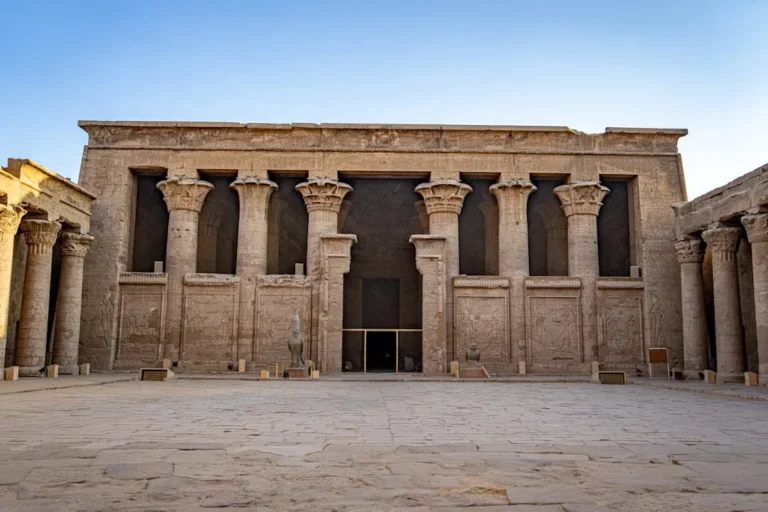
The moment when the letter’s meaning is formally addressed in ritual occurs during the Fellow Craft degree, the second of the three degrees in the York Rite and its equivalents. At that point in the degree sequence, the candidate has already received basic moral instruction in the Entered Apprentice degree. The Fellow Craft degree pivots toward intellectual and spiritual inquiry, introducing the seven liberal arts and sciences, with geometry occupying the foremost position. The appearance of the G at this juncture is deliberate: it marks a transition from conduct to contemplation, from the working tools of behavior to the broader questions of order, creation, and the candidate’s relationship to what Masonic ritual calls the Grand Architect of the Universe. Most printed ritual monitors available to researchers, including early editions of Duncan’s Masonic Ritual and Monitor (first published in 1866), reproduce the Fellow Craft lecture in a form that makes this pedagogical sequence explicit.
The G Within the Square and Compasses

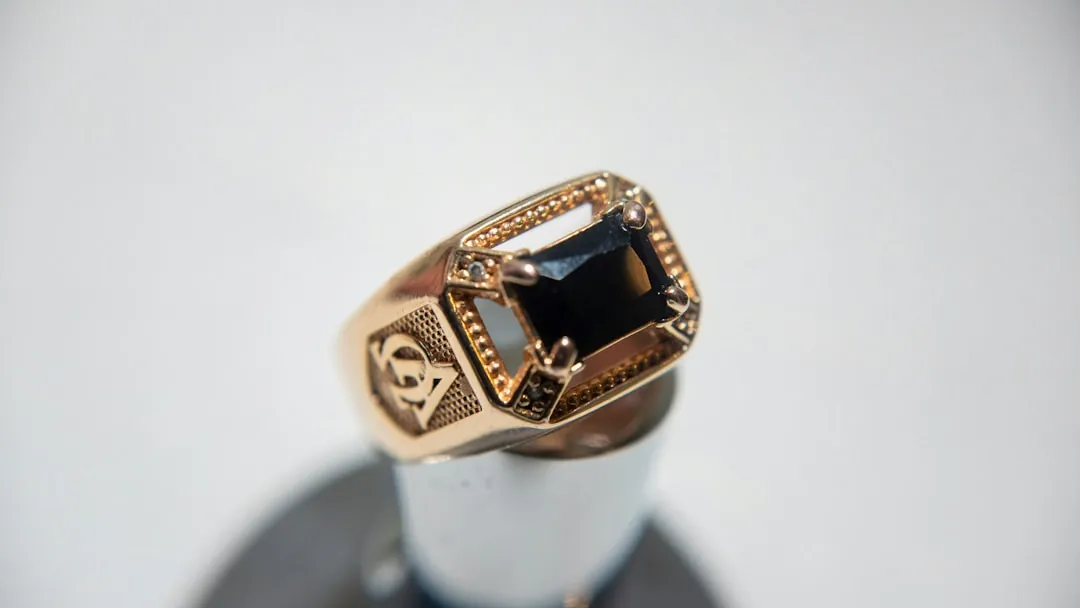
The Square and Compasses are the most immediately recognizable emblem associated with the fraternity, reproduced on rings, lapel pins, building facades, and the covers of countless Masonic publications. Each tool carries its own symbolic freight: the square references moral rectitude and the obligation to act on the level with others, while the compasses suggest the discipline of circumscribing desire and keeping conduct within measured limits. Taken together, they represent the union of practical ethics and reasoned self-governance. The G at their center transforms this pairing into something more than a logo. It introduces a third element, one that points simultaneously toward geometry as the intellectual foundation of the builder’s craft and toward the divine presence that, in Masonic teaching, underlies all created order. The result is a unified visual statement about the relationship between human skill, moral geometry, and a governing intelligence beyond the individual craftsman. That compression of meaning into a single emblem explains why the symbol travels so well outside the lodge room, and why it continues to prompt questions from people who encounter it with no prior knowledge of Masonic symbol meaning or fraternal context. The G does not resolve the tension between its two primary referents; it holds them together, which is precisely what makes it worth examining.

Common Misconceptions and Conspiracy Theories About the Masonic G

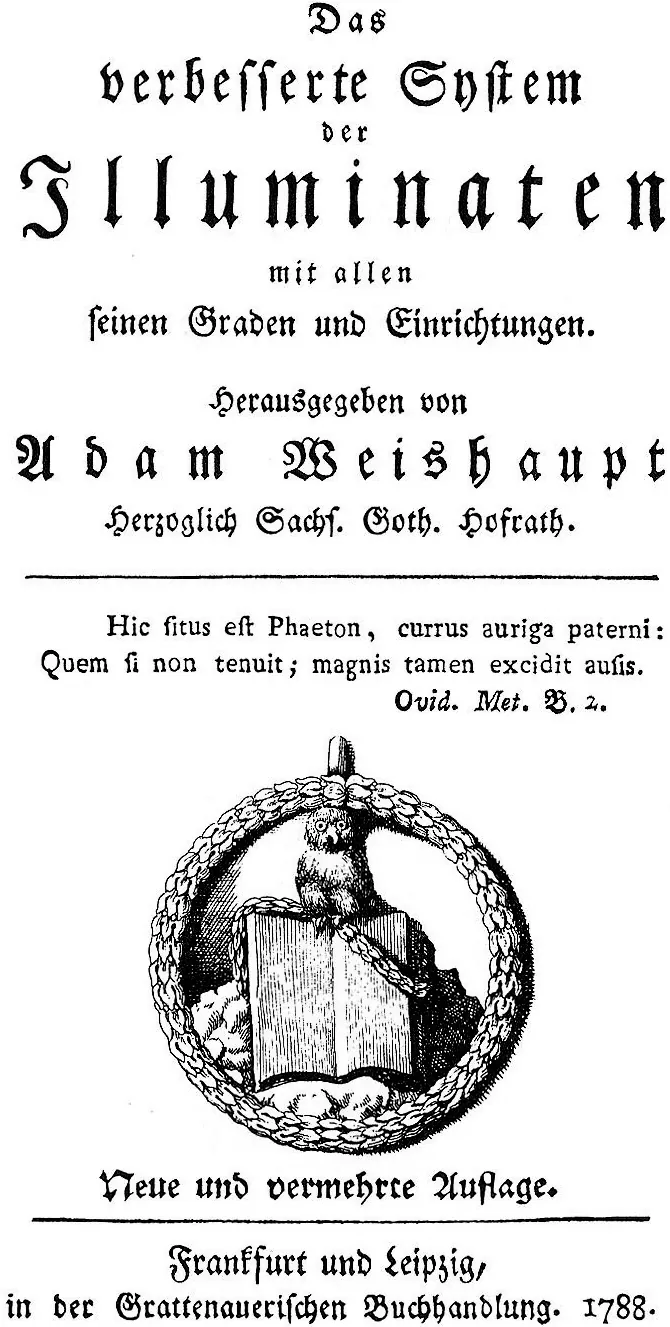
The most persistent conspiracy claim attached to the letter G holds that it encodes a secret allegiance to the Bavarian Illuminati or some broader world-governing cabal. The historical record does not support this. The Bavarian Illuminati was founded on May 1, 1776, by Adam Weishaupt, a professor of canon law at the University of Ingolstadt. The Elector of Bavaria banned the organization in 1785, and it had effectively ceased to exist by 1787. The Masonic square and compass with its central G, by contrast, was already appearing in lodge documents and engravings decades before the Illuminati existed, and it continued to appear on lodge buildings, aprons, and printed materials long after that organization dissolved. The two groups shared some overlapping membership in certain German-speaking regions during a narrow historical window, but no institutional merger occurred, no shared doctrine was established, and no credible primary source supports the claim of a unified hidden agenda. Conflating them is a category error, not a discovery.

A second misconception treats the G visible on Masonic lodge facades and fraternal rings as a covert signal of hidden power. This reading inverts the actual situation: the symbol has been displayed openly and publicly for nearly three centuries because it is a fraternal emblem, not a cipher. Lodges in eighteenth-century Britain and colonial America placed the square and compass on their buildings as a straightforward declaration of identity, the same way a guild would hang its arms above a workshop door. There is nothing clandestine about a symbol carved in stone above a front entrance. Some online commentary also draws a connection between the Masonic G symbol and the gravitational constant G, formalized in physics during the late nineteenth century. The coincidence is purely typographical. The gravitational constant derives from Newtonian mechanics and the work of scientists including Henry Cavendish, whose 1798 torsion-balance experiment measured gravitational attraction with no reference to fraternal symbolism whatsoever. The letter G was simply the next available variable in a sequence of physical constants. No etymological, historical, or institutional thread connects the two uses of the same letter.

FAQ

Does the letter G mean the same thing in every Masonic lodge?

No. English-speaking jurisdictions, particularly in the United States and United Kingdom, consistently interpret the G as standing for Geometry and God (or the Grand Architect of the Universe). Many Continental European lodges, including those operating under the Grand Orient de France, do not display the symbol at all, reflecting a broader philosophical split over whether belief in a Supreme Being should be required of members.

Meaning also shifts across degree systems. The Scottish Rite introduces esoteric interpretive layers largely absent from standard Blue Lodge ritual, so even within a single national tradition, the symbol carries different weight depending on the context in which a Mason encounters it.

Why is the G placed at the center of the Square and Compasses?

The placement is pedagogical rather than decorative. The Square and Compasses represent the working tools of operative stonemasons repurposed as moral instruments, and the letter at their center identifies the animating principle behind that moral geometry. Its position signals that neither tool carries full meaning without the intellectual and spiritual framework the symbol represents.

Whether a lodge interprets that framework as God, the Grand Architect of the Universe, or Geometry itself, the visual logic holds: the surrounding instruments point inward toward a governing idea, not outward toward any external authority. The design is a diagram of priority, not merely an arrangement of emblems.

When was the letter G first added to Masonic symbolism?

The earliest documented appearances occur in English tracing boards and printed lodge materials from the 1730s and 1740s, roughly one to two decades after the formation of the Premier Grand Lodge of England on June 24, 1717. The adoption was gradual, not the result of any single governing decree.

Masonic historians affiliated with the Quatuor Coronati Lodge, the premier research lodge founded in London in 1884, have noted that the emblem was never universally adopted across all jurisdictions, which explains the variation in its use that persists to the present day.

Is the Masonic G connected to conspiracy theories about secret world control?

No credible historical evidence supports that connection. The emblem is a publicly displayed fraternal symbol that lodges have used openly on buildings, publications, and regalia for nearly three centuries. Far from concealing it, Masonic bodies have incorporated it into architecture and printed materials that anyone can examine.

Claims linking it to the Illuminati or hidden governance conflate two historically unrelated organizations. The Bavarian Illuminati, founded by Adam Weishaupt on May 1, 1776, was dissolved by government decree in 1785 and had no institutional continuity with Freemasonry before or after its suppression. The conflation is a modern rhetorical habit, not a historical finding.

What is the Generative Principle, and how does it relate to the Masonic G?

The Generative Principle is an esoteric interpretation found primarily in nineteenth-century philosophical Masonic literature, most notably in Albert Pike’s Morals and Dogma (1871). It frames the symbol as representing the creative force underlying all nature, drawing on Neoplatonic and Hermetic philosophy rather than on standard lodge catechism.

This reading is not part of Blue Lodge ritual instruction and was never adopted as binding Masonic doctrine. Pike himself was explicit on that point, describing such interpretations as personal speculation intended for readers who wished to explore the deeper philosophical currents behind fraternal symbolism, not as authoritative teaching that any lodge was obliged to transmit.

/it/simbolismo-occhio-onniveggente/” title=”The All-Seeing Eye”>All-Seeing Eye, and the checkered floor are examined with the same historical rigor applied here.”

Sacred Geometry in Freemasonry: Symbols, Ratios, and Ritual Meaning

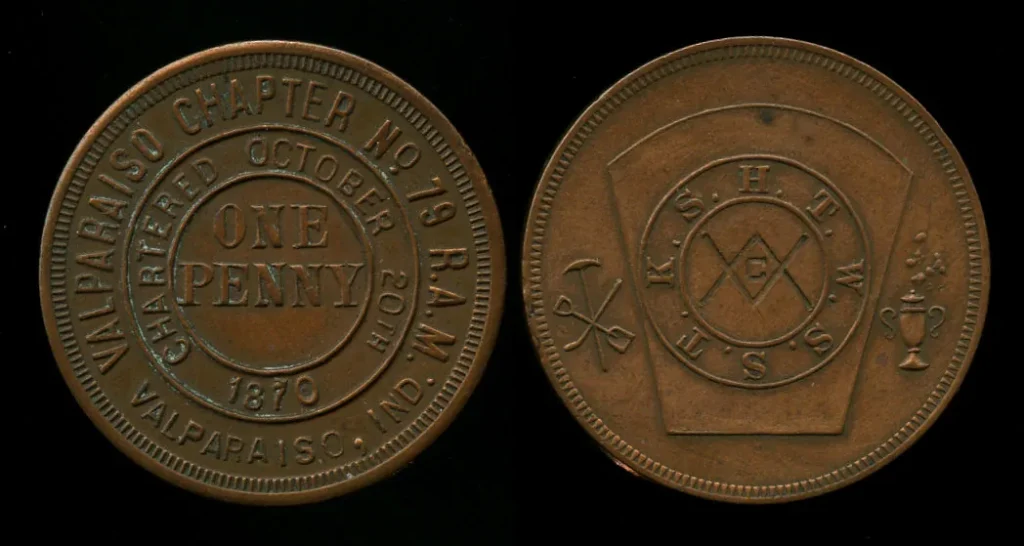
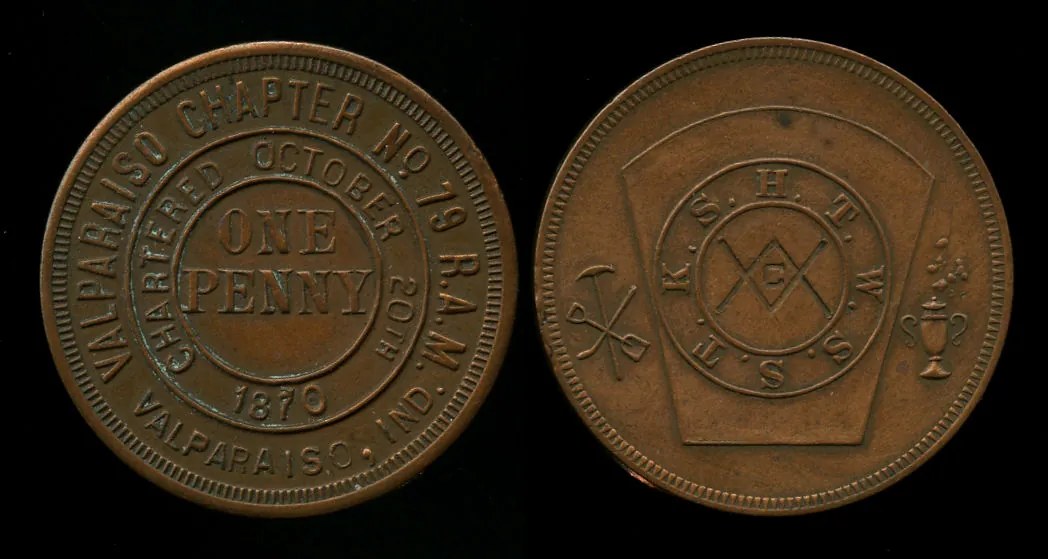
Lincoln penny displaying Masonic Square and Compass sacred geometry symbol

Geometry occupies a singular place in Masonic philosophy, not merely as a branch of mathematics, but as the language through which order, proportion, and meaning are believed to be inscribed into the natural world. The second section of the Fellowcraft degree, as recorded in William Preston’s Illustrations of Masonry (1772), declares geometry “the foundation of Freemasonry” and the “noblest of sciences.” That claim has shaped lodge instruction, ritual symbolism, and architectural practice for centuries. Sacred geometry, a term that extends basic geometric principle into the realm of spiritual and philosophical significance, sits at the intersection of Masonic intellectual tradition and its symbolic vocabulary. The square and compass, the letter G, the proportions of a lodge room, the layout of Solomon’s Temple, each draws on geometric relationships that Masons have treated as evidence of a rational, ordered creation. This article traces those connections from their historical roots in medieval operative craft to their current role in speculative Freemasonry, examining specific ratios, symbols, degrees, and esoteric parallels along the way.

Lincoln penny displaying Masonic Square and Compass sacred geometry symbol
Photo: Timdwilliamson (wikimedia)

What Is Sacred Geometry in Freemasonry?

Sacred geometry in Freemasonry is the practice of treating specific shapes, ratios, and proportions as carriers of philosophical and moral meaning. Where conventional geometry describes spatial relationships in purely mathematical terms, the Masonic tradition assigns those same relationships symbolic weight, drawing on Neoplatonic and Hermetic frameworks that circulated widely across early modern Europe.

That distinction is not incidental. Freemasonry did not invent the idea that geometric forms could carry meaning beyond measurement. Neoplatonic thinkers, working from Plato’s Timaeus, had long argued that number and proportion were the organizing principles of creation. Hermetic writers of the Renaissance amplified this view, treating geometry as a bridge between the material and the intelligible. When speculative Freemasonry consolidated in the early eighteenth century, it inherited these frameworks and adapted them for its own ritual and moral instruction. The result was a symbolic vocabulary in which the square, the compass, and the ratio of a perfectly proportioned arch were not just tools of the trade. They were allegories for virtue, reason, and the relationship between human effort and a larger ordering principle.

Geometry vs. Sacred Geometry: Where the Line Falls

Ordinary geometry is a descriptive discipline. It measures angles, calculates areas, and establishes spatial relationships with no reference to meaning beyond the mathematical. Sacred geometry takes those same relationships and assigns them philosophical weight. A right angle is not merely useful for squaring a wall; in Masonic catechisms, it becomes a symbol of moral rectitude. The equilateral triangle does not only describe a stable structural form; it represents balance and, in some ritual contexts, a triune principle. Masonic ritual makes this distinction explicit rather than leaving it implied. The working tools of each degree are introduced with formal explanations of their symbolic application, a practice that separates the lodge from the workshop in precisely this way.

Why Freemasonry Calls Geometry the ‘Noblest of Sciences’

William Preston’s Illustrations of Masonry, first published in 1772, provides the clearest early articulation of this position. Preston frames geometry as the intellectual foundation of the craft, arguing that measurable proportion and moral virtue are linked rather than parallel. His text describes geometry as the science “by which the architect raises his superstructure in just proportion,” then extends that logic directly to the formation of character. This is not a casual metaphor. Preston was systematizing a curriculum, and geometry sat at its center because it offered something rare: a discipline that was both rigorously demonstrable and endlessly allegorical. A lodge could point to Euclid and to virtue in the same breath, and Preston’s Illustrations made that connection a formal part of Masonic education for generations of members on both sides of the Atlantic.

Historical Origins of Geometry in Masonic Tradition

The connection between sacred geometry Freemasonry scholars study today and the practical knowledge of medieval builders is not metaphorical. It is historical. Operative stonemasons who raised the great Gothic cathedrals of Europe worked without calculus, without engineering software, and often without formal written instruction. What they had instead were geometric ratios, passed down through guild apprenticeships and encoded in manuscript constitutions that predate the speculative lodge by three centuries.

The Medieval Operative Mason and the Geometric Toolkit

The 3-4-5 right triangle was the operative mason’s most reliable field instrument. A rope knotted at twelve equal intervals could be arranged into a triangle with sides of three, four, and five units, producing a perfect right angle at the corner where the shorter sides met. This is a direct application of the Pythagorean theorem, and cathedral builders used it to lay foundations, align walls, and set keystones long before the theorem was a school exercise. The vesica piscis, formed by the intersection of two circles of equal radius, provided a proportional framework for arched windows and vaulted ceilings. The golden section appeared in facade proportions at sites including Chartres and Notre-Dame de Paris, whether by deliberate calculation or accumulated craft intuition remains a matter of scholarly debate. Compass-and-straightedge construction was not decorative. It was structural. The square, the level, and the plumb rule were measuring instruments before they became Masonic geometry symbols laden with moral meaning.

When operative guilds declined in the late 17th century, their tools did not disappear. They migrated into the symbolic vocabulary of the speculative lodges that replaced them. The compass that once scribed an arch became an emblem of circumscribed behavior. The square that once checked a stone’s face became a symbol of moral rectitude. The geometry in Masonic ritual preserved the form of these instruments while transforming their function entirely.

From the Old Charges to the 1723 Constitutions

The Old Charges, a body of manuscript constitutions dating from the Regius Poem of approximately 1390 onward, already framed geometry as the queen of the seven liberal arts and the foundation of all craft knowledge. The Regius Poem states explicitly that masonry depends upon geometry, and several later manuscripts in the same tradition repeat the claim with variations. These documents were not philosophical treatises. They were guild regulations, read aloud at admissions ceremonies to establish the legitimacy and antiquity of the craft. Geometry was positioned not as one skill among many but as the master science from which all building knowledge derived.

James Anderson’s Constitutions of the Free-Masons, published in 1723 under the authority of the United Grand Lodge of England (founded on June 24, 1717), carried this tradition into the speculative era with deliberate continuity. Anderson traced the lineage of Masonic geometry from Euclid through the builders of Solomon’s Temple and on to the cathedral architects of medieval Europe, arriving finally at the London lodges of his own time. The argument was genealogical as much as philosophical: speculative Masons were the rightful heirs of a geometric tradition stretching back to antiquity. Whether Anderson’s historical claims hold up to modern scrutiny (many do not), the Constitutions succeeded in codifying Freemasonry and mathematics as inseparable, a pairing that has defined the fraternity’s self-understanding ever since.

The Philosophical Foundation: ‘God Geometrizes’

The aphorism “God geometrizes” sits at the heart of how sacred geometry Freemasonry absorbed and formalized centuries of philosophical tradition. Plutarch, in his Quaestiones Convivales, attributed the phrase to Plato. The idea is straightforward: divine intelligence does not act arbitrarily. It expresses itself through proportion, ratio, and measurable order. For 18th-century Masons, many of whom held Deist sympathies, this was not a poetic flourish. It was a theological statement. A creator who geometrizes is a creator whose work can be studied, admired, and partially understood through reason and observation. That alignment between geometry and rational theology made the aphorism a natural fit for lodge philosophy.

Hermetic philosophy reinforced this view from a different angle. Circulating through Renaissance Europe in the form of texts attributed to Hermes Trismegistus, Hermeticism treated number and geometric form as the hidden grammar of creation. The universe, in this framework, was not chaos shaped by whim. It was a structured emanation, readable by those trained to see its patterns. Early Masonic thinkers drew on this tradition directly. The lodge room itself, with its checkered floor, its pillars, and its orientation toward the east, reflects a cosmological model in which space is not neutral but symbolically charged and geometrically organized.

The Grand Architect of the Universe and Geometric Order

The Grand Architect of the Universe (G.A.O.T.U.) is the term Masonic ritual uses for the supreme being required of all candidates. It is deliberately non-confessional. A Christian, a Jew, a Muslim, and a Deist can each stand in the same lodge and address the same concept without doctrinal conflict. What the G.A.O.T.U. specifies is not a religion but a function: the intelligence behind measurable, proportioned creation. The square and compasses on the altar are not decorative. They represent the tools by which that intelligence, in Masonic symbolic logic, brought the universe into ordered existence. Geometry is not just a human discipline in this reading. It is the method of creation itself.

This framing kept Freemasonry theologically inclusive while still demanding a metaphysical commitment. Members were not asked to agree on scripture. They were asked to agree that the cosmos has structure, and that structure implies a structuring intelligence. The geometry in lodge symbolism is the evidence offered for that claim.

Hermeticism, Kabbalah, and Their Masonic Intersections

Hermetic and Kabbalistic traditions contributed distinct but compatible frameworks to Masonic symbolism, particularly in the higher degrees. The Scottish Rite, which extends to the 32nd degree, incorporates numerological patterns and geometric arrangements that reflect both traditions. Kabbalah’s Tree of Life, with its ten sefirot arranged in a specific geometric configuration, informed certain degree structures and ritual imagery. Hermeticism contributed the idea that the adept, through study and initiation, could perceive the underlying mathematical order that ordinary perception misses.

Neither tradition was adopted wholesale or uncritically. Masonic ritual filtered these influences through its own symbolic vocabulary, producing a system that borrows the intellectual architecture of Hermeticism and Kabbalah without formally committing to either. The result is a body of Masonic geometry symbols that carry layered meanings, accessible at different levels depending on the degree and the attentiveness of the individual member. Scholars such as Antoine Faivre, whose work on Western esotericism is widely cited in academic literature, have traced these currents in detail, noting that Freemasonry functioned as one of the primary vehicles through which Renaissance esoteric ideas survived into the modern period.

Key Sacred Geometry Symbols and Their Masonic Meanings

Sacred geometry in Freemasonry is not a single symbol but a coordinated vocabulary of forms, each carrying a precise allegorical charge within the lodge’s ritual instruction. The square and compass are the most widely recognized pair in that vocabulary. The square, a right-angle instrument, represents moral rectitude and the regulation of earthly conduct. The compass governs the drawing of circles, and by extension, the setting of boundaries around desire and spiritual aspiration. Together, the two tools frame a complete ethical program: measure what is below, circumscribe what reaches upward.

Symbol Name Geometric Property Masonic Allegorical Meaning
Square Fixed right angle (90°) Moral rectitude; regulation of earthly conduct
Compass Defines a circle from a fixed center Boundaries of desire; spiritual aspiration kept in proportion
Letter G Central point within the emblem Geometry as discipline; the Grand Architect of the Universe
Point Within a Circle Equal radius in all directions from a center The individual bounded by duty; balance of personal and social obligation
Equilateral Triangle Three equal sides; three 60° angles Balance, perfection, and the tripartite nature of creation

The letter G, suspended at the center of the square and compass in lodge iconography, performs a deliberate double duty. It stands simultaneously for Geometry and for the Grand Architect of the Universe, collapsing the mathematical and the theological into a single glyph. This compression is not accidental. Masonic catechisms from the eighteenth century consistently treat the two meanings as inseparable: to understand geometric proportion is, within the lodge’s symbolic framework, to apprehend something of the ordering intelligence behind creation. Other forms extend the same logic. The point within a circle teaches the Mason to keep conduct within the circle of duty. The checkered floor of black and white squares encodes the Pythagorean contrast of light and shadow. The double cube, used as the form of the Sanctum Sanctorum in Solomonic tradition, encodes a specific volumetric ratio that Masonic monitors describe as emblematic of perfection through proportion.

The Square and Compass as Geometric Instruments

Both tools are drawn directly from the operative stonemason’s workshop, where the square tested the accuracy of a stone’s face and the compass transferred measurements across a working drawing. Their elevation to emblems of virtue is a deliberate act of symbolic translation. William Preston documented this process in his Illustrations of Masonry, first published in 1772, arguing that the working tools of the craft carried moral instruction precisely because they were practical instruments first. The symbolism gains weight from the reality. A square that cannot test a true right angle is useless on a building site, and a virtue that cannot be applied to daily conduct is equally hollow. Preston’s framework insists on that parallel, and it has shaped Masonic monitors in Britain and the United States ever since.

The Equilateral Triangle and Its Degree Associations

The equilateral triangle, with all sides equal and all interior angles fixed at 60°, appears prominently in the Royal Arch and Scottish Rite degrees. Its geometric perfection makes it a natural vehicle for ideas of balance and completeness. In Royal Arch ritual, the triangle is associated with the recovery of lost knowledge, its three points sometimes linked to wisdom, strength, and beauty. Within the Scottish Rite, particularly at the higher degrees, the form recurs as a symbol of the tripartite nature of creation. The equilateral triangle also connects Freemasonry’s symbolic language to a much older tradition: Pythagoras considered the equilateral triangle the first perfect figure, and that philosophical inheritance passed through Renaissance Neoplatonism before finding a home in lodge instruction. The geometry is simple. The interpretive tradition built around it is anything but.

Want to learn more?

Learn more

Golden ratio proportions demonstrated through Fibonacci sequence double square geometry
Photo: Frédéric Beatrix (wikimedia)

Specific Ratios and Proportions in Masonic Symbolism

Sacred geometry in Freemasonry is not purely decorative. The symbolic language of the craft encodes specific mathematical relationships, and three of them recur with enough consistency across Masonic ritual, lodge design, and educational literature to deserve close examination: the Pythagorean 3-4-5 triangle, the golden ratio (φ ≈ 1.618), and the Fibonacci sequence that converges toward it. Each one carries a distinct role inside the fraternity’s symbolic architecture, and each has a documented history within Masonic instruction that predates modern interest in sacred mathematics.

The Pythagorean Theorem in the Fellowcraft Degree

The 47th Problem of Euclid, which most readers know as the Pythagorean theorem, holds a formal place in Masonic ritual. In many jurisdictions, it serves as the emblem of the Past Master, displayed on his jewel of office. Its appearance in the Fellowcraft degree is deliberate. The degree presents operative stonemasonry as the foundation of speculative philosophy, and the 3-4-5 right triangle is the simplest whole-number proof that the theorem works in practice. A triangle with sides measuring 3, 4, and 5 units will always produce a perfect right angle. Medieval builders used knotted ropes in exactly this configuration to square foundations. Masonic ritual reclaims that practical tool as philosophical instruction: the same mathematical law that governed the quarry governs the mind. Albert Mackey’s Encyclopedia of Freemasonry (1874) describes the 47th Problem as “that sublime proposition which is the foundation of all Masonic geometry,” a phrase that signals how seriously 19th-century Masonic scholars took the connection between geometry in Masonic ritual and operative craft tradition.

The choice of Euclid’s numbering, rather than Pythagoras’s name alone, is also significant. Masonic ritual consistently references Euclid’s Elements as the codification of geometric knowledge passed from antiquity through the medieval guilds. The theorem is not presented as an abstract curiosity. It is framed as evidence of a continuous intellectual lineage from ancient builders to the lodge room.

The Golden Ratio in Lodge Architecture and Regalia

The golden ratio is harder to pin down in Masonic sources than the Pythagorean theorem, but the evidence is not absent. Several 18th- and 19th-century lodge rooms in England and the United States were proportioned with length-to-width ratios approximating 1.618, a figure that Masonic writers of the period linked explicitly to what they called “divine proportion,” borrowing the term from Luca Pacioli’s 1509 mathematical treatise of the same name. The altar furniture of certain lodges, including the volume of sacred law stand and the tracing board frames, shows similar proportioning. Whether these choices were always intentional or sometimes the product of craftsmen working within a broader European architectural tradition is a question historians debate. What is clear is that Masonic educational literature from the mid-19th century onward treats φ as a meaningful ratio, not an incidental one.

The Fibonacci sequence enters this discussion because its successive terms (1, 1, 2, 3, 5, 8, 13…) produce ratios that converge on φ as the numbers grow. Masonic writers citing the sequence in lodge educational materials typically use it to illustrate mathematical order in natural forms: the spiral of a nautilus shell, the branching of a tree, the arrangement of seeds in a sunflower. The argument is consistent with the G.A.O.T.U. framework at the center of Masonic theology. If the Great Architect designed the universe, the reasoning goes, then mathematical harmony is evidence of that design. The sequence functions as a rhetorical bridge between observable nature and the symbolic geometry of the lodge, rather than as a ritual element in its own right. Masonic geometry symbols of this kind operate in the space between mathematics and metaphor, which is precisely what makes them durable across centuries of fraternal instruction.

Sacred Geometry in Masonic Architecture and Temple Design

Sacred geometry in Freemasonry finds its most tangible expression not in ritual alone, but in stone, proportion, and architectural intention. From the symbolic blueprint of Solomon’s Temple to the precisely measured lodge rooms of the nineteenth century, geometric principles have shaped the physical spaces where Masonic work takes place. The connection is deliberate, documented, and traceable across centuries of lodge design.

Solomon’s Temple as the Geometric Archetype

The First Book of Kings (chapter 6) records the Temple’s dimensions: sixty cubits long, twenty wide, and thirty high. That 1:3 ratio between width and length is not incidental. Masonic ritual treats these proportions as a geometric and moral ideal. The Temple is not a ruin to be excavated or a building to be literally reconstructed. It functions as a blueprint, a standard against which the lodge room, and by extension the individual Mason, is symbolically measured.

This reading of the Temple as moral geometry has deep roots. Anderson’s Constitutions of 1723 placed the Temple at the center of the fraternity’s founding mythology, describing Solomon as the Grand Master of a lodge of architects. Later Masonic ritual elaborated this framework considerably. By the time the Scottish Rite degrees were codified in the nineteenth century, the Temple’s proportions had become a recurring reference point for discussions of harmony, balance, and the relationship between part and whole. The structure was never purely historical in this context. It was, from the beginning, an argument about ratio.

The Lodge Room as Sacred Space: Orientation and Proportion

A traditional Masonic lodge room encodes its geometry through layout. The room runs east to west, with the Worshipful Master seated in the east, the direction of the rising sun and the symbolic source of light and knowledge. The altar sits at the geometric center of the floor. At the entrance stand two pillars, named Jachin and Boaz after the twin columns described in 1 Kings 7:21, flanking the threshold as they flanked the porch of Solomon’s Temple.

The mosaic pavement, the black-and-white checkered floor found in most traditional lodge rooms, reinforces the geometric character of the space. Its grid pattern is not decorative in origin. Masonic monitors, the printed guides to ritual that lodges have published since the eighteenth century, consistently describe the pavement as representing the ground floor of Solomon’s Temple and, by extension, the duality of human experience. The grid is a geometric statement before it is an aesthetic one.

Notable lodge buildings have carried these principles into monumental architecture. The House of the Temple in Washington, D.C., completed in 1915 and designed by architect John Russell Pope, features thirty-three exterior columns, each standing thirty-three feet high. The reference is explicit: thirty-three is the highest degree of the Scottish Rite. Pope’s design also draws on the Mausoleum at Halicarnassus, one of the Seven Wonders of the Ancient World, connecting the building to a longer tradition of architecture understood as symbolic statement. The building is not a lodge room in the conventional sense, but it demonstrates how Masonic geometry symbols scale from the intimate space of a ritual chamber to the public face of a major civic structure.

Sacred Geometry Across Masonic Rites and Degrees

Sacred geometry in Freemasonry does not appear uniformly across all degrees and rites. Each branch of the fraternity engages with geometric symbolism at a different depth, and the contrast is instructive. What begins as practical moral instruction in the Blue Lodge becomes, in the higher degrees of the Scottish and York Rites, a more elaborate philosophical framework drawing on Pythagorean, Hermetic, and Kabbalistic sources.

The Blue Lodge: Working Tools and the Fellowcraft Lecture

The first three degrees, collectively known as the Blue Lodge, introduce geometry through the working tools of the stonemason: the twenty-four inch gauge, the common gavel, the square, the level, the plumb, and the compasses. The Fellowcraft degree (second degree) delivers what Masonic ritual texts call the “Middle Chamber lecture,” which names geometry as the foundation of all the liberal arts and sciences. The language is deliberate. Geometry is presented as a moral discipline, not a metaphysical one. A candidate learns that the square tests right angles and that the plumb ensures uprightness, and both tools carry explicit ethical meanings. The emphasis at this stage is practical and allegorical rather than esoteric. Geometry teaches proportion, honesty, and precision, virtues a good craftsman and a good citizen share equally.

The York Rite’s Royal Arch degree takes a markedly different approach. Its central narrative concerns the rediscovery of a lost word and a lost geometrical key, framed as wisdom concealed beneath the ruins of Solomon’s Temple and recovered by the Temple’s original architects. The geometry here is not a teaching aid. It is presented as recovered sacred knowledge, the intellectual inheritance of the master builders who first raised the Temple. This narrative structure gives the York Rite its distinctive character: geometry becomes an object of quest rather than a tool of instruction.

Albert Pike and the Scottish Rite’s Geometric Philosophy

Albert Pike’s Morals and Dogma of the Ancient and Accepted Scottish Rite of Freemasonry, published in 1871, remains the most extensive English-language treatment of geometric symbolism within Masonic degree work. Pike devotes substantial passages to geometric allegory in several of the higher degrees, including the 25th degree (Knight of the Brazen Serpent) and the 32nd degree (Master of the Royal Secret). He draws connections between Pythagorean number theory, Hermetic cosmology, and the symbolic architecture of the degrees, arguing that the ancient philosophers encoded universal truths in geometric form and that Masonic ritual preserves traces of that tradition. Pike was careful, however, to frame his interpretations as personal reading rather than binding doctrine. In his own preface he wrote that the Scottish Rite had “no authoritative interpretation” of its symbols and that each Mason was free to find his own meaning. That caveat matters. Morals and Dogma is a work of one man’s scholarship, not a creed. Scholars such as S. Brent Morris, writing for the Scottish Rite Research Society, have noted that Pike drew heavily on the comparative religion literature of his era, much of which has since been revised or superseded. The Scottish Rite’s engagement with Masonic geometry symbols is therefore best understood as a 19th-century synthesis of available classical and esoteric sources, ambitious in scope and historically significant, but not a uniform or officially mandated theology of geometry.

Critiques and Alternative Perspectives on Sacred Geometry in Modern Freemasonry

Not every Masonic scholar accepts the framing of sacred geometry Freemasonry enthusiasts have popularized over the past century. A significant strand of academic criticism holds that the term “sacred geometry,” as it is now commonly applied to Masonic symbolism, is largely a 20th-century retrofit. Earlier Masonic writers, from the 18th-century constitutions of James Anderson onward, treated geometry as moral metaphor. They used the square, the level, and the plumb line to illustrate ethical conduct. They did not weight those tools with the esoteric cosmology the phrase now implies. Scholars such as those published in peer-reviewed Masonic studies journals have noted that period lodge records and manuscript rituals rarely, if ever, invoke ratios like phi or sequences like Fibonacci. The connections are asserted in popular books and documentary films. They are almost never sourced to a lodge minute, a degree ritual, or a letter from an 18th-century Grand Lodge officer.

The distinction is not a minor technical quibble. It carries real weight for credibility. Describing Masonic geometric symbolism as historically documented allegory is a defensible, well-supported position. The fraternity’s founders drew on classical geometry as an intellectual and moral framework, and that connection is traceable in primary sources. Claiming that the same symbols encode cosmic ratios or universal mathematical truths is a different argument entirely, and a far less supportable one. Critics inside Freemasonry, including some grand lodge historians, have pushed back against what they see as an inflation of the tradition’s symbolic claims. Their concern is practical: when Masonic geometry symbols are presented as keys to hidden universal laws, the fraternity’s actual, documented history gets buried under speculation. The symbols of Freemasonry are rich enough on their own terms. They do not need a layer of unverifiable mysticism to be historically interesting or intellectually serious.

Historic Masonic Temple architecture showcasing sacred geometric design principles
Photo: Erik Mclean (pexels)

FAQ

What is the difference between geometry and sacred geometry in Freemasonry?

Ordinary geometry is the mathematical study of shapes, angles, and spatial relationships. Sacred geometry assigns those same relationships symbolic or philosophical significance, treating certain proportions as reflections of a higher rational order rather than purely practical measurements.

Freemasonry operates in both registers simultaneously. The square, the plumb, and the level began as the operative mason’s working instruments. In speculative Freemasonry, they became vehicles for moral allegory. William Preston’s Illustrations of Masonry (1772) makes this dual function explicit, presenting geometric principles as equally valid for building stone walls and for building character.

What does ‘God geometrizes’ mean in Masonic philosophy?

The phrase is traced to Plato via Plutarch and holds that divine intelligence expresses itself through geometric proportion and measurable order. Freemasonry adopted it as a philosophical anchor for the concept of the Grand Architect of the Universe, a deliberately non-denominational supreme being understood as the rational source of creation.

As a theological position, it aligns closely with Deism, the view that reason and natural law rather than revealed scripture define the relationship between creator and creation. Deism was widely influential among 18th-century Masonic founders, which explains why the phrase found such a comfortable home in lodge philosophy without endorsing any single religious tradition.

How is sacred geometry used in Masonic rituals and degrees?

Geometric symbolism enters Masonic ritual primarily through the working tools presented at each degree. The square and compass appear across all three Blue Lodge degrees. The 47th Problem of Euclid, better known as the Pythagorean theorem, holds a central place in the Fellowcraft degree and serves as the emblem of the Past Master.

Higher degrees in the Scottish and York Rites engage more elaborate frameworks, drawing on Pythagorean, Hermetic, and Kabbalistic traditions. Albert Pike’s Morals and Dogma (1871) documents these layers in considerable detail, treating geometric symbolism as a philosophical inheritance rather than a set of operative instructions.

What are the main sacred geometry symbols in Freemasonry?

The most prominent are the square and compass, the letter G (representing both Geometry and the Grand Architect of the Universe), the equilateral triangle, and the point within a circle. The double cube altar, the checkered floor of the lodge room, and the twin pillars Jachin and Boaz also carry documented geometric significance.

Each of these is addressed in Masonic catechisms and degree lectures as a vehicle for moral instruction. Masonic ritual manuals consistently frame them as symbols to be interpreted, not objects to be venerated, a distinction the fraternity has maintained since the speculative tradition took shape after 1717.

Why do Freemasons emphasize geometry so heavily in their teachings?

The emphasis reflects the fraternity’s foundational origin story. Freemasonry traces its symbolic lineage to the builders of Solomon’s Temple and the medieval cathedral architects, for whom geometry was the master science of the craft. When operative masonry gave way to speculative Freemasonry, geometry was retained as the moral and philosophical core of lodge instruction.

The Fellowcraft degree lecture, as preserved in Preston’s Illustrations of Masonry, calls geometry “the foundation of Freemasonry”, a designation that has shaped lodge teaching for over two centuries. The practical skill of the working mason became, in speculative hands, a framework for reasoning about proportion, order, and ethical conduct.

Freemasonry and the Enlightenment: A Historical Exploration

Masonic knowledge and enlightenment texts stacked on wooden surface

Freemasonry has been intricately linked to the Enlightenment, a period characterized by intellectual and philosophical advancements that shaped modern thought. Emerging in the 18th century, Freemasonry embraced Enlightenment ideals such as reason, liberty, and the pursuit of knowledge. This article delves into the historical context of Freemasonry during the Enlightenment, highlighting key figures, their contributions, and the role of Masonic lodges in promoting Enlightenment principles. By understanding this relationship, we can appreciate how Freemasonry influenced contemporary society and continues to evoke both intrigue and controversy.

Masonic knowledge and enlightenment texts stacked on wooden surface
Photo: Karl Raymund Catabas (unsplash)

Introduction to Freemasonry and Enlightenment

Freemasonry enlightenment connects the philosophical ideals of the Enlightenment with the principles of Freemasonry, reflecting a shared pursuit of knowledge, reason, and progress. Both movements emerged prominently in the 18th century, influencing cultural and intellectual landscapes across Europe and the Americas.

Freemasonry, a fraternal organization tracing its roots back to medieval stonemasons’ guilds, gained prominence in the 18th century as lodges became centers of enlightenment influence. Freemasonry’s emphasis on moral development and intellectual discourse resonated with the Enlightenment’s advocacy for reason and scientific inquiry. The Enlightenment, spanning the late 17th to 18th centuries, sought to illuminate human understanding through reason, challenging traditional doctrines and promoting individual liberty.

The historical significance of both Freemasonry and the Enlightenment lies in their transformative impact on society. Freemasonry offered a structured environment where individuals could engage in philosophical and ethical discussions, aligning with the Enlightenment’s ideals of progress and rational thought. The 1723 Constitutions of Freemasonry, reflecting these principles, emphasized the importance of knowledge and morality, illustrating the interconnectedness of the two movements. This symbiotic relationship fostered an environment where enlightenment symbols and the meaning of freemason beliefs merged, contributing to cultural and intellectual advancements.

Historical Context of Freemasonry

The origins of Freemasonry are intricately tied to the cultural and intellectual currents of the Enlightenment. As the 18th century dawned, Europe was a continent in flux, marked by profound shifts in political and philosophical thought. It was in this dynamic environment that the first Masonic lodges began to take shape, offering a space where ideas could be freely exchanged. These early lodges were more than mere social clubs; they were crucibles for the spirit of inquiry that defined the freemasonry enlightenment.

The 18th century was characterized by a growing emphasis on reason, science, and individualism-hallmarks of the Enlightenment. In this period, Freemasonry found fertile ground, as it resonated with the era’s ideals of progress and intellectual exploration. The lodges served as forums for discussing the new ideas that were reshaping society. Influential Enlightenment philosophers, such as Voltaire and Montesquieu, interacted with Freemasons, and their works often echoed the principles that Freemasonry upheld. This exchange of ideas was instrumental in shaping the beliefs and practices within Masonic lodges.

Enlightenment influence on Freemasonry is particularly evident in the 1723 publication of the Constitutions of the Freemasons, a foundational document that codified the principles and organizational structure of the fraternity. This document reflected the rationalist spirit of the time, emphasizing moral development and intellectual freedom. Freemasonry’s symbolic language also drew from Enlightenment thought, integrating concepts of balance and harmony that paralleled the period’s architectural innovations. The freemasonry enlightenment symbol, often represented by tools of the stonemason’s craft, encapsulated the era’s quest for knowledge and self-improvement.

Key Enlightenment Figures in Freemasonry

Voltaire’s Masonic Influence

Voltaire, a central figure of the Enlightenment, was initiated into Freemasonry in 1778, shortly before his death. His association with Freemasonry reflected his dedication to Enlightenment ideals such as reason, tolerance, and the pursuit of knowledge. Voltaire’s Masonic involvement allowed him to engage with like-minded individuals who valued intellectual discourse and the improvement of society. His influence within Freemasonry was significant, as he championed the use of reason over superstition, a core tenet of the Enlightenment movement. This alignment made Voltaire an iconic figure in promoting Enlightenment values within the Masonic lodges of his time.

Benjamin Franklin’s Masonic Role

Benjamin Franklin, another luminary of the Enlightenment, joined the ranks of Freemasonry in 1731. His contributions to Masonic thought were profound, as he embodied the Enlightenment’s emphasis on reason, liberty, and scientific inquiry. Franklin’s role in Freemasonry was not merely symbolic; he actively participated in the dissemination of Enlightenment ideals through his writings and diplomatic efforts. As a prominent Freemason, Franklin advocated for the principles of freedom and democracy, which resonated deeply with both Masonic beliefs and the broader Enlightenment movement. His influence extended beyond the lodges, impacting the formation of democratic institutions in the emerging American nation.

Both Voltaire and Franklin exemplified the deep connection between Freemasonry and the Enlightenment. Their involvement in Freemasonry during the 18th century highlighted how the organization served as a conduit for Enlightenment influence. These key figures used their Masonic platforms to promote ideals such as intellectual freedom, moral virtue, and the betterment of society. Their contributions helped shape the meaning of Freemasonry during this transformative period, illustrating how Enlightenment philosophies were woven into the fabric of Masonic thought and practice.

The Role of Masonic Lodges in Enlightenment Thought

Masonic lodges played a pivotal role during the Enlightenment, acting as vibrant hubs for intellectual exchange. These lodges provided a unique space where individuals from diverse backgrounds could come together, fostering debates and discussions on philosophy, science, and the principles of the Enlightenment. This environment encouraged members to challenge prevailing norms and to explore new ideas, which was instrumental in promoting Enlightenment thought. The lodges were not only places of camaraderie but also served as incubators for progressive ideas that would influence wider societal change.

Within the walls of these lodges, the promotion of Enlightenment principles was evident. Members engaged in activities that underscored values such as reason, liberty, and equality, which were central to the Enlightenment movement. The rituals and symbols of Freemasonry, such as the square and compass, were imbued with meanings that resonated with Enlightenment ideals. These elements of Masonic tradition did not merely serve ceremonial purposes but were instrumental in shaping the intellectual landscape of the time. The rituals often emphasized personal development and ethical living, which aligned with the broader Enlightenment ethos of self-improvement and rational thought.

Want to learn more?

Learn more

Symbolic stage setting representing freemasonry's ceremonial enlightenment traditions
Photo: Matt Benson (unsplash)

Freemasonry’s Influence on Modern Society

Freemasonry and Enlightenment thought have together shaped many aspects of modern society, notably influencing democratic ideals that are foundational today. The principles of equality, liberty, and fraternity, which were championed during the Enlightenment, resonate strongly with Freemason beliefs. These ideals are evident in the establishment of democratic institutions that prioritize individual rights and civic responsibility, reflecting the Enlightenment’s influence on freemasonry enlightenment thought.

Moreover, Freemasonry has played a significant role in fostering civic engagement and social movements. Throughout history, Masonic lodges have often served as venues for discussing progressive ideas and encouraging participation in societal reforms. The 18th century, in particular, saw Freemasonry as a catalyst for change, as it provided a platform for Enlightenment thinkers and reformists to collaborate. This connection between freemasonry 18th century ideals and modern civic activism continues to inspire those who seek social justice and community improvement today.

Contemporary perceptions of Freemasonry are shaped by its historical contributions and enduring symbolism. While some associate Freemasonry with secrecy and exclusivity, many recognize its commitment to moral and ethical development. The Enlightenment architecture of Masonic symbols, such as the square and compass, serves as a reminder of the organization’s philosophical roots and its ongoing relevance. Indeed, the freemasonry enlightenment meaning persists in contemporary discussions about ethics, governance, and societal progress, highlighting Freemasonry’s enduring impact on modern culture.

Common Misconceptions about Freemasonry and Enlightenment

The intersection of Freemasonry and the Enlightenment is fertile ground for misconceptions, often clouded by myths and misinformation. A frequent misunderstanding involves the nature of Masonic secrecy. While secrecy is indeed a component of Freemasonry, it is primarily ceremonial and traditional, rather than an indication of hidden agendas. The Masonic Service Association clarifies that the supposed secrecy is more about discretion in personal matters and the privacy of Masonic rituals, which are largely symbolic.

Another common myth is the association of Freemasonry with conspiracy theories. Contrary to popular belief, Freemasonry does not control governments or financial institutions. Historical documents, such as the 1723 Constitutions authored by James Anderson, outline the principles of Freemasonry, emphasizing moral and ethical behavior rather than political influence. The conflation of Freemasonry with conspiracy theories often arises from the misinterpretation of its symbols and rituals, which are rooted in allegory and tradition.

The relationship between Freemasonry and religion is also frequently misunderstood. Freemasonry is not a religion, nor does it require its members to adhere to any specific faith. Instead, it promotes a belief in a Supreme Being, allowing for a diverse membership that respects individual religious beliefs. This inclusivity was particularly significant during the 18th century when religious tolerance was not a given. Thus, freemasonry enlightenment meaning lies in its encouragement of philosophical inquiry and ethical conduct, reflecting the broader Enlightenment ideals of reason and progress.

The Legacy of Freemasonry in Enlightenment Ideals

Freemasonry has long been associated with the ideals of the Enlightenment, a period marked by a profound emphasis on reason, science, and intellectual exchange. This connection persists, as Freemasonry continues to embody Enlightenment values through its commitment to personal development, equality, and the pursuit of knowledge. The freemasonry enlightenment legacy is evident in its rituals and teachings, which promote critical thinking and the improvement of society.

Masonic symbols play a pivotal role in modern interpretations of these Enlightenment ideals. Symbols such as the square and compass, which represent reason and morality, are not merely relics of the past but are actively used to convey the enduring principles of Freemasonry. The freemasonry enlightenment symbol serves as a reminder of the movement’s foundational beliefs and its ongoing influence in promoting intellectual freedom. These symbols offer a visual language that transcends time, connecting present-day members with the Enlightenment thinkers who valued reason and progress.

The significance of Freemasonry in promoting intellectual freedom cannot be overstated. By fostering a community where ideas could be freely exchanged, Freemasonry played an instrumental role in advancing the principles of the Enlightenment. This tradition of open dialogue and debate continues to thrive within Masonic lodges today. The emphasis on education and philosophical inquiry remains central to freemason beliefs, underscoring the movement’s enduring commitment to the ideals of intellectual liberty and progress. Freemasonry’s influence during the Enlightenment is a testament to its foundational role in shaping modern thought and values.

FAQs about Freemasonry and Enlightenment

What is the significance of Freemasonry in the Enlightenment?

Freemasonry played a pivotal role during the Enlightenment, a period marked by intellectual and cultural growth in the 18th century. At its core, Freemasonry embodied the values of reason, tolerance, and progress that were central to the Enlightenment. The organization provided a space for the exchange of ideas among influential thinkers, contributing to the period’s ethos of questioning traditional authority and valuing scientific inquiry. The symbolic language of Freemasonry, including tools like the square and compass, reflected an Enlightenment focus on knowledge and self-improvement, thus bridging the gap between esoteric traditions and contemporary thought.

How did Freemasonry influence modern democratic ideals?

The influence of Freemasonry on modern democratic ideals is significant. During the 18th century, Masonic lodges served as forums for discussing revolutionary ideas about governance and individual rights. The fraternity’s emphasis on equality and fraternity resonated with Enlightenment thinkers who were advocating for democratic reforms. Many early Masonic constitutions, such as the 1723 Constitutions, articulated principles of liberty and justice that would later be echoed in the founding documents of various democratic nations. This connection underscores the profound impact of Freemasonry on the shaping of modern political systems.

What is the relationship between Freemasonry and religious beliefs?

Freemasonry maintains a unique relationship with religion, being inclusive of members from diverse faiths while requiring a belief in a Supreme Being. This requirement aligns with the Enlightenment’s emphasis on religious tolerance and personal spirituality. However, Freemasonry is not a religion in itself and does not promote any specific religious doctrine. Instead, it encourages moral development and ethical behavior, which are seen as universal values. The fraternity’s focus on individual enlightenment and understanding aligns with the broader Enlightenment movement’s quest for personal and collective improvement through reason and dialogue.

Historical freemasonry enlightenment literature collection on library shelves
Photo: Iñaki del Olmo (unsplash)

FAQ

What is Enlightenment in Freemasonry?

Enlightenment in Freemasonry refers to the integration of the core values of the Enlightenment-reason, liberty, and knowledge-into the fabric of Masonic thought and practice. This alignment reflects the broader intellectual movement of the 18th century, which emphasized rational thought and empirical evidence over tradition and superstition. Freemasonry adopted these principles, encouraging its members to seek personal growth and societal improvement through informed discourse and ethical conduct.

How did Freemasonry represent the ideals of the Enlightenment?

Freemasonry embodied the ideals of the Enlightenment through its commitment to reason, moral philosophy, and the pursuit of knowledge. Within Masonic lodges, members engaged in discussions that championed scientific inquiry, individual rights, and the betterment of society. These gatherings provided a forum for intellectual exchange, where ideas central to the Enlightenment could be explored and debated, ultimately influencing broader societal progress.

What is the significance of Freemasonry in the Enlightenment?

The significance of Freemasonry in the Enlightenment lies in its role as a catalyst for intellectual exchange and the dissemination of progressive ideas. Masonic lodges served as venues where Enlightenment thought could flourish, attracting thinkers and leaders who were instrumental in advancing concepts such as liberty, equality, and fraternity. This environment not only fostered individual enlightenment but also contributed to the broader cultural and political transformations of the era.

How did Freemasonry influence modern democratic ideals?

Freemasonry’s influence on modern democratic ideals is evident in its advocacy for liberty, equality, and fraternity-principles that are foundational to democratic governance. By promoting these ideals within its lodges, Freemasonry helped to shape the political and social landscapes of the time. The emphasis on civic engagement and moral responsibility within the Masonic tradition has had a lasting impact on the development of democratic societies worldwide.

Why is Freemasonry controversial?

Freemasonry is often considered controversial due to misconceptions about its secretive nature and alleged connections to conspiracy theories. While Freemasonry values privacy and discretion, these characteristics have led to suspicion and misunderstanding. Additionally, its complex relationship with various religious beliefs has sparked debate. However, Freemasonry’s true focus remains on moral development, fellowship, and community service, rather than any hidden agendas.

The Eye on the US Dollar: Eye of Providence, the Great Seal, and the Masonic Myth

Detailed close-up revealing the eye on the dollar bill symbol

The eye floating above an unfinished pyramid on the back of every one-dollar bill is one of the most scrutinized images in American visual culture. It is called the Eye of Providence, and it has been staring at the American public since the Bureau of Engraving and Printing placed the reverse of the Great Seal of the United States on the dollar bill in 1935. The symbol predates the United States by centuries, appearing in Renaissance Christian art as a representation of divine watchfulness long before any Masonic lodge adopted it. Its presence on the dollar has fueled decades of conspiracy theories linking Freemasonry, the Illuminati, and the Founding Fathers into a single shadowy narrative. That narrative is almost entirely wrong. The actual story, involving a Philadelphia lawyer, a Swiss-born artist, and a committee that took six years and three separate design attempts to finish the job, is considerably more interesting than the myth, and considerably less sinister. This article traces the Eye of Providence from its pre-Masonic origins to its place on the Great Seal, and explains precisely how it arrived in your wallet.

Detailed close-up revealing the eye on the dollar bill symbol
Photo: rc.xyz NFT gallery (unsplash)

What Is the Eye of Providence?

The eye on the US dollar bill is formally known as the Eye of Providence, a Christian iconographic symbol representing God’s omniscient watchfulness over humanity. Enclosed in a triangle or surrounded by radiating light, it predates Freemasonry by well over a century, appearing in Catholic devotional art and Protestant illustrated Bibles from the 1500s and 1600s onward.

The symbol’s genealogy is straightforwardly theological. In Western Christian iconography, an eye set within a triangle served as a visual shorthand for the all-seeing nature of the Holy Trinity: the triangle signified the triune God, and the eye signified divine knowledge that encompasses all human action. This was not esoteric or fraternal imagery. It was mainstream devotional art, produced for parish churches, printed Bibles, and catechetical texts aimed at ordinary congregations across Catholic and Protestant Europe alike. The symbol communicated a single, uncomplicated idea: nothing escapes God’s notice.

What the Eye of Providence is not is equally important for any accurate reading of US dollar symbolism. It is not a Masonic invention, not a political cipher, and not a variant of the evil eye found in Mediterranean and Middle Eastern folk traditions. Those three categories are routinely conflated in popular writing, and each conflation produces a different interpretive error. The sections that follow address each in turn.

Eye of Providence vs. the Evil Eye: A Critical Distinction

The evil eye, known as mati in Greek and nazar in Turkish and Arabic traditions, is an apotropaic charm: an object or gesture intended to deflect misfortune, envy, or malicious supernatural attention directed at the bearer. Its logic is protective and reflexive. The Eye of Providence operates on an entirely different premise. It does not ward off a threatening gaze; it is the gaze, specifically the gaze of an omniscient deity observing human conduct. One symbol is a shield; the other is a theological claim about the nature of God. Conflating them because both involve an eye is roughly equivalent to concluding that a judge’s gavel and a carpenter’s mallet encode the same meaning because both are hammers. The visual overlap is real; the cultural genealogies are entirely separate, rooted in different geographies, different religious frameworks, and different centuries of documented use.

Early Christian and Renaissance Uses of the Symbol

The documented history of the triangular eye in Western art is specific enough to undercut any claim of Masonic origin. Jacopo Pontormo’s 1525 altarpiece at the Capponi Chapel in Florence includes an eye-in-triangle motif embedded in its sacred geometry, placing the symbol firmly within Italian Renaissance devotional painting decades before the first grand lodge was constituted in London on June 24, 1717. Flemish devotional prints of the early 1600s, produced for a broadly Protestant readership in the Low Countries, used the same triangular eye as a standard representation of divine omniscience. These were mass-produced, commercially distributed images, not the private ritual objects of any secret society. By the time Freemasonry began incorporating the symbol into its own All-Seeing Eye Freemason iconography during the 18th century, the Eye of Providence already carried roughly two hundred years of established Christian meaning. The fraternity adopted a pre-existing symbol and gave it an additional layer of allegorical interpretation. That sequence matters enormously when assessing what the symbol on the Great Seal of the United States was actually intended to communicate.

The Great Seal of the United States: A Six-Year Design Process

Committee One (1776): Franklin, Adams, and Jefferson

Congress appointed the first Great Seal committee on July 4, 1776, the same day it ratified the Declaration of Independence. The three men assigned to the task, Benjamin Franklin, John Adams, and Thomas Jefferson, were among the most intellectually formidable figures of the founding generation, and their proposals reflected it. Franklin suggested an image of Moses parting the Red Sea, with a pillar of fire overhead and Pharaoh’s army drowning in the waters, accompanied by the motto “Rebellion to Tyrants is Obedience to God.” Jefferson countered with a scene from the Book of Numbers: the children of Israel journeying through the wilderness, led by a cloud by day and a pillar of fire by night. Both proposals drew on classical allegory and deep biblical literacy. Neither included an unfinished pyramid. Neither included an eye above anything. The Swiss-born artist Pierre Du Simitière, hired as a consultant, contributed a more heraldic design featuring the Eye of Providence inside a radiant triangle, but Congress rejected the entire first committee’s submission without adopting any single element from it.

Committee Two (1780) and Committee Three (1782): Convergence on the Final Design

A second committee convened in 1780 and a third in 1782, each inheriting the rejected work of its predecessor and the accumulating stack of unused proposals. It was Francis Hopkinson, a New Jersey delegate and accomplished graphic designer who had also worked on the American flag, who introduced the unfinished pyramid into the second committee’s drafts. When that submission was also set aside, the task fell to Charles Thomson, Secretary of the Continental Congress, and Philadelphia lawyer William Barton. Working in the spring of 1782, Thomson and Barton synthesized the most viable elements from all three rounds of proposals. Barton contributed the heraldic precision; Thomson made the final editorial choices and wrote the official explanation of the symbolism. The design Congress approved on June 20, 1782 placed the Eye of Providence above a thirteen-step unfinished pyramid on the seal’s reverse. Thomson’s written explanation, submitted to Congress that same month, described the eye plainly as representing “the eye of Providence” watching over the American nation. The language is straightforwardly Christian, drawn from the same iconographic tradition that had placed the radiant eye in European church ceilings for two centuries. Thomson’s notes contain no Masonic annotation, no fraternal reference, and no coded meaning beyond what he explicitly stated.

From Seal to Dollar Bill: The 1935 Decision

A point that tends to get lost in discussions of masonic symbols on currency is how long the gap actually was between the seal’s creation and its appearance on money. The Great Seal was approved in 1782. The reverse side of that seal, carrying the pyramid and the eye, was not printed on any piece of American currency for another 153 years. The decision to include it came in 1935, when Secretary of Agriculture Henry Wallace, a man with genuine interests in esoteric philosophy and Freemasonry, brought the design to President Franklin D. Roosevelt’s attention during the redesign of the one-dollar silver certificate. Roosevelt approved the inclusion of both sides of the Great Seal on the new bill, reportedly enthusiastic about the motto Novus Ordo Seclorum, which he interpreted as signaling the New Deal’s ambitions for American society. The design has remained on the bill ever since. Wallace’s personal beliefs are historically documented and genuinely interesting; they do not, however, retroactively alter the 1782 intentions of Charles Thomson, who had been dead for over a century by the time the eye on the US dollar bill was printed.

Religious and Spiritual Origins of the All-Seeing Eye

Long before any fraternal organization adopted the triangular eye as a badge of membership, the symbol carried a specific and well-documented theological meaning in Western Christianity. Psalm 33:18 states plainly, “the eye of the Lord is on those who fear him,” and medieval and Renaissance artists took that scriptural image literally. By the sixteenth century, European painters and architects were rendering divine omniscience as a single eye set within a triangle, the three sides standing for the Father, the Son, and the Holy Spirit. The visual logic was straightforward: an abstract theological concept needed a concrete form, and the combination of an ancient ocular motif with the geometry of Trinitarian doctrine produced an image that was immediately legible to any churchgoing European.

The Eye of Providence in Catholic Tradition

Far from being a symbol of secret societies, the Eye of Providence was standard Catholic devotional imagery for generations before the first Grand Lodge was established in London on June 24, 1717. It appears on the façade of the Aachen Cathedral treasury, in Jesuit emblem books of the late sixteenth and early seventeenth centuries, and in the painted ceilings of Baroque churches from Rome to Vienna. The Jesuits, never an organization associated with theological laxity, used the image in catechetical contexts precisely because it communicated divine watchfulness without requiring a word of explanation. Institutional religious endorsement does not get much more explicit than that.

The Eye of Providence Catholic tradition is worth emphasizing because it directly undermines the claim that the symbol carries inherently Masonic meaning. When the eye appears in a seventeenth-century church fresco, it is not a coded message from a secret brotherhood. It is a piece of standard devotional vocabulary, as conventional in its context as a crucifix or a dove representing the Holy Spirit. The symbol’s later adoption by fraternal organizations borrowed from this existing reservoir of religious meaning rather than inventing something new.

Other traditions contain parallel ideas without sharing the specific visual form. Islamic theology holds divine omniscience, expressed through the Quranic attribute Al-Basir (“the All-Seeing”), as one of the ninety-nine names of God, but this concept was never rendered as a triangular eye in canonical Islamic art. Jewish tradition similarly affirms God’s watchful presence throughout the Hebrew Bible, yet the triangular-eye iconography did not develop within Jewish artistic convention. The specific visual formula, one eye inside a triangle radiating light, is a product of Western Christian artistic tradition, and its genealogy runs through church architecture and devotional printing long before it reached either a Masonic lodge or the reverse of a dollar bill. Understanding that lineage is the necessary first step toward reading us dollar symbolism accurately.

Masonic Symbolism and the Dollar Bill: Separating Fact from Fiction

Which Founding Fathers Were Actually Freemasons?

George Washington was initiated into Fredericksburg Lodge No. 4 in 1752, at age twenty. Benjamin Franklin was a member of St. John’s Lodge in Philadelphia and later served as Grand Master of Pennsylvania. Paul Revere and John Hancock also held Masonic membership. The list is real, documented, and frequently cited. What it does not establish is that Freemasonry functioned as a coordinated design bureau for the republic’s official iconography. Masonic membership among the Founders was common in the way that membership in the Church of England or attendance at certain Philadelphia clubs was common: it reflected the social networks of educated, civic-minded men of the era, not a unified ideological program. Of the six men who served across the three Great Seal committees convened between 1776 and 1782, only Franklin held documented Masonic affiliation. He was on the first committee, whose design proposals were rejected entirely. The pyramid and the eye came later, from men with no recorded lodge membership.

When Did Freemasonry Adopt the Eye of Providence?

The eye on the US dollar’s reverse traces its lineage through Charles Thomson and William Barton, who finalized the Great Seal’s design in 1782. Freemasonry’s adoption of the Eye of Providence as a fraternal emblem followed a parallel but independent track. The symbol begins appearing in American Masonic ritual illustrations and lodge decorations in the late 18th century, roughly contemporaneous with the Great Seal’s creation, not before it. Albert Mackey’s Encyclopedia of Freemasonry, first published in 1874, is direct on this point: the Eye of Providence entered Masonic iconography as a borrowing from Christian tradition, not as an original Masonic invention. Mackey describes it as representing the omniscience of God, a meaning it carried in Catholic devotional art and Protestant emblem books long before any lodge incorporated it into ritual furniture.

This matters because both the Great Seal designers and the Masonic lodges of the 18th century were drawing from the same well: a shared visual vocabulary rooted in Renaissance religious iconography, widely circulated through printed emblem books and church decoration. The Masonic Service Association, along with mainstream Masonic historians, has noted consistently that the Great Seal is not a Masonic document. The most universally recognized Masonic emblems, the square and compass, appear nowhere on it. What the seal shares with Freemasonry is a common source, not a common authorship. Treating that shared source as evidence of Masonic design is roughly equivalent to concluding that any two paintings of the Madonna are the work of the same artist because they depict the same subject.

Want to learn more?

Learn more

Spiritual symbolism contrasts with monetary eye imagery on currency
Photo: Stephanie LeBlanc (unsplash)

Why Is the Pyramid Unfinished? Decoding the Dollar’s Reverse

Charles Thomson, the Secretary of the Continental Congress, did not leave the imagery of the Great Seal’s reverse to guesswork. In his June 1782 report accompanying the seal’s adoption, he wrote that the pyramid “signifies strength and duration.” The structure’s unfinished state was deliberate: the eye of providence hovering above the truncated apex represented the conviction that the young republic’s work was far from complete, and that divine guidance would be necessary to see it through. This is not an inference drawn from esoteric tradition. It is the documented intent of the man who designed the final version, written down in plain English at the moment of adoption.

The pyramid itself carries a straightforward numerical logic that Thomson’s contemporaries would have recognized immediately. It rises in thirteen courses of stone, one for each of the original colonies. This same count appears throughout the Great Seal’s obverse: thirteen stars above the eagle, thirteen arrows in its left talon, thirteen olive leaves and thirteen berries on the branch in its right. The thirteen-unit motif was the dominant symbolic vocabulary of the founding era, a simple and legible expression of union. Reading occult geometry into the pyramid’s proportions requires ignoring the obvious in favor of the elaborate, which is rarely a sound historical method.

Decoding ‘Annuit Coeptis’ and ‘Novus Ordo Seclorum’

Both Latin mottoes were selected by Thomson and the Philadelphia lawyer William Barton, and both have traceable literary sources that have nothing to do with Masonic ritual or occult philosophy. “Annuit Coeptis,” meaning “He has favored our undertakings,” adapts a line from Book IX of Virgil’s Aeneid (“Iuppiter omnipotens, audacibus adnue coeptis”). “Novus Ordo Seclorum,” rendered as “New Order of the Ages,” derives from the fourth Eclogue of the same poet, a pastoral poem that Renaissance and early modern readers associated with the dawn of a golden age. Thomson’s own notes, preserved in the records of the Continental Congress, confirm these sources explicitly. The classicists and historians of the early American republic who have examined these documents, including Gaillard Hunt in his 1909 study The History of the Seal of the United States, have found no Masonic provenance for either phrase.

The popular reading of “Novus Ordo Seclorum” as a coded reference to a “New World Order” in the conspiratorial sense is, to put it plainly, a misreading of Virgil filtered through two centuries of paranoid imagination. The phrase announces a new historical era for a newly independent nation. That is precisely what it says, and precisely what Thomson intended it to say. Connecting it to secret societies requires substituting a documented eighteenth-century literary reference with a twentieth-century political anxiety, and calling that substitution research.

Conspiracy Theories Debunked: The Illuminati, Freemasonry, and the Dollar

How the Illuminati-Freemasonry Conflation Took Hold

The intellectual origins of the Illuminati-Freemasonry conspiracy narrative trace to two specific books published within a year of each other. In 1797, Scottish physicist John Robison published Proofs of a Conspiracy, arguing that the Bavarian Illuminati had infiltrated Masonic lodges across Europe and was secretly directing the French Revolution. The following year, French Jesuit priest Abbé Augustin Barruel released his four-volume Memoirs Illustrating the History of Jacobinism, making essentially the same argument with greater rhetorical force. Both works were widely read, translated, and cited in pulpits from Edinburgh to Boston. Both were also, as historian Vernon Stauffer documented in 1918 in New England and the Bavarian Illuminati, built on misread sources, fabricated correspondences, and a fundamental misunderstanding of how Masonic lodges actually operated. The conflation stuck anyway, because a story about hidden networks pulling revolutionary strings was considerably more satisfying than the messier truth of political upheaval driven by economic grievance and Enlightenment philosophy.

The Bavarian Illuminati that Robison and Barruel described as an immortal shadow government was, in documented historical fact, a short-lived academic fraternity. Adam Weishaupt founded it on May 1, 1776, at the University of Ingolstadt. The Elector of Bavaria banned it in 1785, and by 1787 the organization had effectively ceased to exist. The Great Seal of the United States was finalized in June 1782, three years before the Illuminati was even dissolved, and was designed by a Continental Congress committee with no documented contact with any European secret society. Charles Thomson, the Secretary of Congress who produced the final design, and William Barton, the Philadelphia lawyer who contributed the heraldic framework, left extensive correspondence about their sources. Those sources were European heraldic tradition and Christian iconography, not Weishaupt’s reading group in Bavaria.

The claim that the eye on the back of the dollar bill signals Masonic control of the US government fails a straightforward evidentiary test. None of the Great Seal’s designers were documented as active Masons at the time of the design. No Masonic lodge ever formally claimed credit for the symbol. The United Grand Lodge of England, the oldest and most authoritative Masonic body in the world, does not list the Eye of Providence as a foundational Masonic symbol in its published constitutions. What the historical record does show is that public suspicion of the image intensified sharply after 1935, when Secretary of Agriculture Henry Wallace and President Franklin D. Roosevelt approved its placement on the one-dollar bill, and again during the Cold War, when any symbol with European esoteric associations became fair game for anxious reinterpretation. Internet culture after 2000 did the rest. The symbol’s reputation for menace is a 20th-century construction layered onto a 16th-century piece of Christian devotional art. That is not a defense of any institution. It is simply what the primary sources say.

The Eye in Comparative Context: National Symbols and International Currency

The eye on the US dollar bill tends to attract outsized attention precisely because it sits on the world’s most circulated currency. That visibility can make the symbol appear uniquely American, or uniquely conspiratorial. Neither reading holds up against the historical record. Eye of Providence imagery was part of the standard visual vocabulary of Western Christian statecraft long before the United States existed, and it continued to appear on national symbols well into the nineteenth century across multiple continents.

Country or Entity Symbol Name Year Adopted Documented Symbolic Meaning
United States Reverse of the Great Seal 1782 Divine favor watching over the new republic; derived from Christian providential theology
Guatemala National Coat of Arms 1871 The Eye of Providence positioned above a scroll, representing divine oversight of the nation
City of Providence, Rhode Island Municipal Seal 1863 (revised) Direct reference to the city’s name and its founding theology of divine guidance
El Salvador National Coat of Arms 1912 Eye-in-triangle motif inherited from Central American Federal Republic heraldry, signifying providential protection

The pattern becomes even clearer when European precedents are included. Several German principalities and Swiss cantons incorporated eye-in-triangle imagery into state seals during the eighteenth century, where it functioned as a straightforward emblem of Christian governance rather than any esoteric affiliation. Latin American republics that gained independence in the 1810s and 1820s frequently borrowed the same motif from Spanish colonial religious iconography, embedding it in coats of arms that had no Masonic designers on record. What these examples collectively demonstrate is that the Eye of Providence was a shared resource, available to any designer working within the Western Christian artistic tradition. Its appearance on American currency reflects that broader inheritance. Treating it as a fraternal signature, inserted by initiates into a document that was actually drafted by a committee of lawyers and diplomats, requires ignoring the symbol’s centuries-long career as ordinary religious statecraft imagery.

Designer Intent vs. Modern Reinterpretation: How Public Perception Evolved

For the first century and a half after Congress approved the Great Seal on June 20, 1782, the Eye of Providence sitting above the unfinished pyramid attracted almost no public controversy. This was not indifference. It was familiarity. Nineteenth-century Americans, educated within a broadly Protestant visual culture saturated with Christian iconographic conventions, recognized the radiating eye as a standard representation of divine omniscience. It appeared in church architecture, printed Bibles, and civic decoration. A symbol that common required no footnote.

A Timeline of Shifting Public Perception

The inflection point arrived not in 1782 but in 1935, when President Franklin D. Roosevelt approved the placement of both sides of the Great Seal on the redesigned one-dollar bill. The decision was partly aesthetic and partly symbolic, reflecting Roosevelt’s interest in the motto Novus Ordo Seclorum as an expression of New Deal ambition. What it accomplished, unintentionally, was to give the image mass circulation on a scale its designers could never have imagined. Suddenly, hundreds of millions of Americans were handling a piece of paper featuring a pyramid crowned by a disembodied eye, and many of them had no inherited framework for reading Christian statecraft imagery. The symbol was now ubiquitous, but its original context had thinned considerably.

The mid-twentieth century supplied a ready replacement context. McCarthyism, Cold War paranoia, and a broader cultural anxiety about hidden networks of influence created the interpretive lens through which millions of Americans began to read the eye as something other than a theological commonplace. Secret organizations felt newly threatening, and the eye on the dollar bill, already stripped of its original iconographic familiarity, was available for reinterpretation. Masonic conspiracy theories, which had circulated in niche anti-Masonic literature since the 1820s, found a vastly larger audience in this climate. The symbol had not changed. The anxieties projected onto it had.

The internet era did not invent these readings; it industrialized them. Search-engine algorithms reward novelty and controversy, which means conspiratorial accounts of the eye symbol on the dollar consistently outperform sober historical analysis in algorithmic visibility. A YouTube video claiming Masonic control of the US Treasury will accumulate views faster than a peer-reviewed paper on eighteenth-century iconographic conventions, not because the former is more accurate but because it is more emotionally activating. The result is a feedback loop: conspiratorial content generates traffic, traffic generates more conspiratorial content, and the original historical record recedes further from public view with each cycle.

Ancient pyramid structure mirrors the eye symbol found on dollar bills
Photo: simon (unsplash)

FAQ

What does the eye on the US dollar bill actually mean?

The symbol is the Eye of Providence, a Christian emblem representing God’s watchful care over humanity. Its meaning on the Great Seal is not a matter of interpretation: Charles Thomson, Secretary of the Continental Congress, documented it explicitly in his June 1782 written explanation of the seal’s imagery. Thomson described the eye as signifying divine providence overseeing the new nation’s undertakings.

That explanation predates any association with secret societies by decades. The symbol arrived on the seal through a well-documented Christian iconographic tradition, not through any fraternal or occult channel, and no primary source from 1782 suggests otherwise.

Is the eye on the dollar bill a Masonic symbol?

Not by origin, and not by design intent. Freemasonry did incorporate the Eye of Providence into its own visual vocabulary during the 18th century, but it borrowed the image from the same Christian artistic tradition that shaped the Great Seal. The two men most directly responsible for the eye-and-pyramid combination, William Barton and Charles Thomson, had no documented Masonic affiliation.

The Masonic Service Association has itself stated on the record that the Great Seal is not a Masonic document. Shared iconographic heritage is not the same as shared authorship.

Who designed the eye symbol on the Great Seal?

The eye above the pyramid took its final form through the work of William Barton, a Philadelphia lawyer and heraldry expert, and Charles Thomson, during the third design committee’s deliberations in 1782. Congress approved their finished design on June 20, 1782.

Benjamin Franklin is frequently cited in connection with this imagery, but the record does not support that. Franklin served on the first committee in 1776, proposed entirely different symbolism (a scene from Exodus), and played no part in the final design. He is also the only Freemason among the early committee members, which makes his absence from the approved version worth noting.

Why is the pyramid unfinished on the dollar bill?

Again, Thomson’s 1782 explanation is the primary source. He wrote that the incomplete pyramid, with the radiant eye hovering above its capstone position, represents the conviction that the nation’s work was unfinished and that divine guidance would oversee its continuation over time.

The pyramid’s thirteen courses of stone correspond to the thirteen original colonies, consistent with the numerical symbolism that runs throughout the Great Seal’s other elements, including the thirteen stars, thirteen arrows, and thirteen leaves on the obverse side. The design is internally coherent and fully explained by its authors.

Is the eye on the dollar bill connected to the Illuminati?

No credible historical evidence supports that connection. The Bavarian Illuminati was founded on May 1, 1776, by Adam Weishaupt, a professor of canon law at the University of Ingolstadt, and was banned by the Elector of Bavaria in 1785, effectively dissolving by 1787. The Great Seal was finalized in June 1782 by a Continental Congress with no documented ties to Weishaupt’s organization.

The conflation of the two originated in 18th-century political pamphlets and was amplified by 20th-century popular culture. Historians who have examined the primary sources find the claim unsupported. The two institutions existed on different continents, operated in different languages, and pursued different stated goals.

Solomon’s Temple in Freemasonry: History, Legend, and Symbolism

Solomon's Stables vault structure beneath Temple Mount in Jerusalem

No structure in human history has done more allegorical work than a building that may never have stood. Solomon’s Temple, described in 1 Kings 6 as a cedar-and-gold sanctuary completed around 957 BCE in Jerusalem, forms the architectural and narrative backbone of Freemasonry’s entire symbolic system. From the layout of a lodge room to the drama of the third degree, the Temple functions not as a relic to be recovered but as a blueprint for moral and spiritual development. Freemasonry did not build Solomon’s Temple, and no credible Masonic authority has ever claimed otherwise. What the fraternity did was adopt the Temple’s construction, its master builders, its geometry, its unfinished ambitions, as a sustained allegory for the work of self-improvement. Understanding that distinction separates serious inquiry from centuries of conspiracy noise. This article traces the Temple from its biblical and archaeological record through the evolution of the Masonic “Temple Legend,” examines the role of Hiram Abiff and King Hiram of Tyre, maps the symbolism onto specific degrees and rituals, and addresses the persistent myths that conflate Masonic allegory with literal treasure-hunting.

Solomon's Stables vault structure beneath Temple Mount in Jerusalem
Photo: שלמה רודד (wikimedia)

Biblical Origins and Historical Record of Solomon’s Temple

Solomon’s Temple Freemasonry connections rest on a foundation that is, first and foremost, biblical. The First Temple appears in detailed accounts across 1 Kings 5 through 8 and 2 Chronicles 2 through 7, where its commission, construction, and dedication are recorded with unusual architectural specificity. Scholars date its completion to around 957 BCE.

Those two scriptural passages remain the principal sources for everything known about the Temple’s physical form. No verified archaeological remains of the First Temple have been excavated beneath the Temple Mount in Jerusalem, a site that is politically and religiously too sensitive for systematic excavation. The biblical text therefore carries an outsized evidential burden. What it offers is substantial: lists of materials, names of craftsmen, measurements in cubits, and a detailed account of the building’s three-part interior. King Solomon commissioned the project after consolidating the Davidic kingdom, and the narrative in 1 Kings 5 records his diplomatic exchange with Hiram I of Tyre, king of Phoenicia, who supplied both the prized cedar timber of Lebanon and skilled workers experienced in large-scale construction. The same passage introduces a master craftsman, also named Hiram (or Huram-Abi in Chronicles), described as the son of a widow from the tribe of Naphtali and a Tyrian father, skilled in bronze work and architectural design. That figure becomes, centuries later, the central character of Masonic ritual under the name Hiram Abiff.

Dimensions and Layout: What the Biblical Text Actually Says

First Kings 6 records the Temple’s measurements in cubits, the standard unit of the ancient Near East. Using the royal cubit of approximately 18 inches, the structure measured 60 cubits long, 20 cubits wide, and 30 cubits high. Converted to feet, those figures produce a building roughly 90 feet long, 30 feet wide, and 45 feet high (approximately 27 by 9 by 13.5 meters). These are the dimensions of Solomon’s Temple in feet that appear in Masonic education and architectural commentary alike. The interior divided into three distinct spaces: the Ulam, or entrance porch; the Heichal, the main hall or nave; and the Devir, the innermost chamber known as the Holy of Holies, which measured 20 cubits on each side and housed the Ark of the Covenant. Surrounding the main structure were storage chambers built against the outer walls, and the entire complex sat within a larger courtyard containing the bronze altar and the famous cast-metal basin called the Molten Sea, supported by twelve bronze oxen. The precision of this description is one reason the Temple became a template for Masonic ritual architecture and the concept of the inner temple in Freemasonry.

Who Destroyed Solomon’s Temple, and What Came After

The First Temple stood for roughly three and a half centuries before Nebuchadnezzar II of Babylon destroyed it in 586 BCE during his siege of Jerusalem. The Books of Kings and Chronicles record the looting of its treasures and the deportation of the Judean population to Babylon, an event known as the Babylonian exile. The destruction was total: the structure was burned, its bronze pillars broken apart, and its sacred objects carried off. This catastrophic loss embedded the Temple permanently in Jewish historical memory as a symbol of both divine presence and its painful absence. When the Persian king Cyrus the Great permitted the exiles to return in 538 BCE, construction of the Second Temple began, completed around 516 BCE. That structure was later expanded dramatically by Herod the Great, beginning around 20 BCE, into the massive complex whose retaining walls (including the Western Wall) are still visible today. Herod’s Temple was itself destroyed by Rome in 70 CE. The sequence of construction, loss, and reconstruction gave the Temple a layered symbolic weight that extended well beyond its physical existence, and it is precisely that weight, the idea of a sacred space built, destroyed, and longed for, that Masonic tradition would draw on when constructing its own ritual narrative around Masonic legend of Solomon’s Temple and the fate of its architect.

The Temple Legend in Freemasonry: Origins and Evolution

From Guild Mythology to Speculative Allegory

The connection between operative stonemason guilds and Solomon’s Temple Freemasonry did not emerge overnight. The oldest surviving manuscript constitutions of the craft, beginning with the Regius Poem of around 1390, already name Solomon’s Temple as the point of origin for the mason’s trade. These documents, collectively called the Old Charges, told working craftsmen that their skills descended from the builders of the most celebrated structure in biblical history. The claim was mythological, not historical. No guild record connects medieval English masons to ancient Jerusalem. But the myth served a practical purpose: it gave the craft dignity, antiquity, and a moral framework rooted in scripture. When speculative Freemasonry emerged in the early eighteenth century, it inherited this mythology and did something more ambitious with it. The Temple stopped being a credential and became a curriculum. Where operative masons invoked the building as proof of their lineage, speculative lodges used it as an extended metaphor for self-improvement. The working tools of the stonemason became instruments of ethical instruction. The physical structure became, in Masonic parlance, an “inner temple” that every candidate was expected to construct within himself. This shift was gradual, shaped by the intellectual climate of Enlightenment England and Scotland, where educated gentlemen were joining lodges alongside working craftsmen and bringing with them a taste for allegory, classical learning, and moral philosophy.

Anderson’s Constitutions and the Codification of the Legend

The Premier Grand Lodge of England, founded on June 24, 1717, needed a governing document. The result was James Anderson’s Constitutions of the Free-Masons, published in 1723 and revised in 1738. Anderson, a Scottish Presbyterian minister, drew on the Old Charges but reorganized their content into a coherent founding narrative. In his telling, three figures presided over the construction of the Temple as Grand Masters: King Solomon himself, Hiram King of Tyre who supplied the cedars of Lebanon, and Hiram Abiff, the skilled artificer sent by Tyre to oversee the ornamental work. This tripartite structure gave speculative Masonry its central cast of characters and, crucially, its central dramatic event. The legend of Hiram Abiff’s murder and the subsequent search for the lost secrets of a Master Mason became the narrative core of the Third Degree, the highest rank in the original three-degree system. Anderson’s text did not invent these figures from nothing. Hiram Abiff appears in 1 Kings and 2 Chronicles, though the biblical account gives him a far less prominent role than Masonic tradition assigns him. What Anderson did was elevate, dramatize, and systematize. Scholars Andrew Prescott and David Stevenson have both argued, on the basis of lodge records and manuscript evidence, that the legend developed incrementally across the late seventeenth and early eighteenth centuries. There was no single moment of invention, and there was certainly no unbroken transmission from ancient Jerusalem. The Temple narrative was constructed, piece by piece, by literate men who understood the power of a good founding myth. That observation does not diminish the tradition. It simply locates it accurately in history.

By the time the 1723 Constitutions circulated through English and Scottish lodges, Masonic legend of Solomon’s Temple had acquired official status. The building project described in Kings and Chronicles was no longer just a biblical episode. It was the organizing metaphor for an entire fraternal system, complete with ranks, rituals, and a vocabulary of Masonic degrees and temple symbolism that would expand considerably over the following century. The transformation from guild mythology to speculative allegory was complete, even if the process had taken three hundred years to reach that point.

Hiram Abiff and the Masonic Legend of the Temple’s Master Builder

Hiram Abiff in Scripture vs. Masonic Ritual: A Clear Distinction

The biblical record is brief and businesslike. First Kings 7:13-14 introduces a craftsman named Hiram (called Huram-Abi in 2 Chronicles 2:13-14) as a man of Tyre, “filled with wisdom, and understanding, and cunning to work all works in brass.” King Hiram of Tyre sends him to Solomon at the king’s request, and the text moves on. No dramatic death, no secret word, no burial under the Temple floor. The scripture treats him as a skilled contractor, nothing more and nothing less.

The Masonic legend of Hiram Abiff departs from that spare account in deliberate and significant ways. In the third-degree ritual, the central drama of the Hiram Abiff legend unfolds: three ruffians, identified in the ritual as fellowcraft masons, demand the Master’s Word from Hiram at the Temple’s completion. He refuses. They strike him down at the Temple’s east gate, west gate, and south gate in succession, and he dies rather than surrender the secret. He is buried, discovered by a search party, and then symbolically raised by the Worshipful Master using a specific grip. Albert Mackey’s Encyclopedia of Freemasonry (1874) states plainly that this narrative is “a legend” designed to carry allegorical meaning, not a report of historical events. Mackey is unambiguous: the ritual drama is a teaching device, not a factual claim.

That distinction matters because critics of Freemasonry sometimes treat the legend as a fabricated history, while defenders sometimes overstate its antiquity. Both miss the point. The Masonic tradition is transparent about what the legend is. The candidate who enacts Hiram’s death and raising in the Master Mason degree is not being told a secret history of the Temple. He is walking through a mortality allegory: integrity under pressure, the keeping of solemn obligations, and the symbolic hope of resurrection. The “Lost Word” that Hiram refuses to surrender represents, in Masonic teaching, a truth that cannot be handed over intact. It must be personally sought, earned through reflection and experience. That framing places the legend squarely in the tradition of initiatory allegory found across many philosophical and religious systems.

The Role of King Hiram of Tyre and the Phoenician Craftsmen

Behind the legend stands a historically documented relationship. The alliance between Solomon and Hiram I, king of Tyre (reigning roughly 969-936 BCE according to the chronology reconstructed by historian William F. Albright), is one of the better-attested partnerships in the ancient Near East. First Kings 5 records the terms in detail: Hiram supplied cedar and cypress timber from Lebanon, and Solomon provided wheat and olive oil in return. Phoenician craftsmen, among the most accomplished metalworkers and carpenters of the ancient Mediterranean world, joined Israelite laborers on the construction project. The arrangement was a trade alliance, a labor contract, and a diplomatic accord rolled into one.

Freemasonry draws on that partnership as a symbol of brotherhood that crosses national and ethnic boundaries. The King Solomon Freemasonry connection in ritual is never presented as ethnically exclusive. Solomon, Hiram of Tyre, and Hiram Abiff represent three distinct origins working toward a single purpose. Masonic ritual has long used this tripartite structure to argue, in symbolic terms, that the craft belongs to no single nation or tradition. Whether or not one finds that argument persuasive, its roots in a genuine historical alliance give it more grounding than pure invention. The Phoenician craftsmen of Tyre really did work alongside Israelite builders. The cedar of Lebanon really did frame the Temple’s interior. The legend builds on that foundation, then carries it somewhere the historical record never goes.

Temple Architecture and Its Masonic Symbolism

Jachin and Boaz: The Twin Pillars at the Threshold

The two bronze pillars described in 1 Kings 7:21 stood at the entrance of Solomon’s Temple. The right pillar was named Jachin; the left, Boaz. Scripture records that each stood roughly eighteen cubits tall, with elaborately cast capitals decorated in lily-work and pomegranate ornaments. Every traditional Masonic lodge room reproduces these pillars at its western entrance, placing the candidate between them as a threshold to be crossed. The scriptural names carry meaning in Masonic interpretation: Jachin is read as “He establishes,” and Boaz as “In strength,” together forming a paired motto about the foundation of moral and civic life. The pillars do not merely decorate the lodge room. They mark a boundary between the uninitiated world outside and the structured, symbolic space within.

Temple Architectural Element Biblical Description Physical Presence in Lodge Room Masonic Allegorical Meaning
Pillars Jachin and Boaz Two bronze pillars at the Temple entrance, 18 cubits tall (1 Kings 7:15-21) Reproduced columns at the western entrance of the lodge Strength and establishment; the threshold between the profane and the sacred
The Porch (Ulam) Outer vestibule, 10 cubits deep (1 Kings 6:3) Corresponds to the Entered Apprentice degree space The beginning of the Masonic journey; preparation and reception
The Middle Chamber (Winding Staircase) Side chambers accessed by a winding staircase (1 Kings 6:8) Evoked symbolically in the Fellow Craft degree Progressive knowledge; the ascent through learning toward wisdom
The Holy of Holies (Debir) Inner sanctuary, 20 cubits square, housing the Ark (1 Kings 6:19-20) Represented by the East, where the Worshipful Master sits The Master Mason degree; spiritual perfection and the lost word
Rough and Perfect Ashlar Stones prepared off-site, brought to the Temple without iron tools (1 Kings 6:7) Two carved stone blocks displayed in the lodge room The candidate’s moral development from raw potential to refined character

The three spatial divisions of the Temple map cleanly onto the three degrees of the Blue Lodge. The Porch (Ulam) corresponds to the Entered Apprentice, a candidate just crossing the threshold. The Middle Chamber, reached by the winding staircase of 1 Kings 6:8, becomes the Fellow Craft degree’s central image, a climb through the liberal arts and sciences toward earned knowledge. The Holy of Holies, sealed and perfect, corresponds to the Master Mason degree, where the central drama of the Hiram Abiff legend reaches its conclusion. This architectural progression is not accidental. Masonic ritual literature, including Albert Mackey’s Encyclopedia of Freemasonry (1874), consistently treats the Temple’s spatial logic as a deliberate pedagogical structure rather than a coincidence of ancient building practice.

The working tools of Masonic degrees and temple symbolism draw from the same source. The square, level, and trowel all appear in accounts of Temple construction, where craftsmen cut and set stone to exacting standards. In lodge ritual, each tool carries a specific moral lesson: the square tests right angles and teaches rectitude of conduct; the level reminds the Mason that all men meet on equal ground; the trowel spreads the cement of brotherly affection. The rough ashlar and the perfect ashlar, two stone blocks present in every traditional lodge room, make the same argument in physical form. The rough ashlar represents the candidate before Masonic education shapes him. The perfect ashlar represents the goal: a life refined by moral labor, fit to take its place in a larger structure. The detail that Solomon’s Temple plans required stones dressed entirely off-site, so no iron tool would strike the sacred ground during construction (1 Kings 6:7), gave this symbolism its scriptural anchor. The silence of the Temple building site became, in Masonic allegory, a model for the disciplined, interior work of self-improvement.

Want to learn more?

Learn more

Master craftsman sharpening tools embodies Freemasonry's dedication to skilled workmanship
Photo: Ono Kosuki (pexels)

Solomon’s Temple in Masonic Degrees and Rituals

The Three Blue Lodge Degrees and Their Temple Narrative Arc

The three degrees of the Blue Lodge trace a single allegorical story from foundation to catastrophe, using Solomon’s Temple Freemasonry as the constant backdrop. Each degree drops the candidate into a different moment of the Temple’s construction, and the progression is deliberate. In the Entered Apprentice degree, the candidate arrives as a rough ashlar, an unfinished stone, standing at the Temple’s foundation. The working tools of this degree (the twenty-four-inch gauge, the common gavel) are explained not as historical artifacts but as moral instruments. The candidate learns basic obligations and begins shaping character the way a quarryman shapes stone.

The Fellow Craft degree moves the action upward. The symbolic setting shifts to the Middle Chamber, reached by ascending the Winding Staircase, a structure the ritual associates with the seven liberal arts and sciences. The imagery here is architectural and intellectual at once: the Temple is still being built, and the candidate’s education is the building. Geometry receives particular emphasis, consistent with the operative stonemason heritage that Masonic historians trace back to medieval guild practice. The degree does not claim to reproduce ancient Temple liturgy. It uses the Temple as a stage set for a lesson about the pursuit of knowledge.

The Master Mason degree is where the narrative breaks. The Hiram Abiff legend plays out in full: the candidate enacts a symbolic death at the hands of three ruffians, followed by a raising that confers a substitute for the genuine Master’s Word, which has been lost. The charge that closes the degree instructs the new Master Mason to spend his life seeking what was lost. This structure, loss followed by the hope of recovery, is the emotional and philosophical core of the entire degree system. The United Grand Lodge of England’s Book of Constitutions is explicit that these degrees are moral allegories; they do not purport to reconstruct actual ceremonies from the First Temple period.

The Royal Arch and the Second Temple: Recovering the Lost Word

Many Masonic constitutions treat the Royal Arch degree not as a separate honor but as the completion of the Master Mason degree. The United Grand Lodge of England has described the two as forming “one complete system” since at least the 1813 Act of Union between the premier Grand Lodge and the Antients. The Royal Arch picks up the Temple narrative at a different historical moment: not Solomon’s construction but the rebuilding under Zerubbabel, the post-exilic project described in the biblical books of Ezra and Nehemiah. Where the Master Mason degree ends in loss, the Royal Arch degree stages a recovery. Candidates symbolically participate in excavating the ruins of the First Temple and discovering what had been concealed there, the lost secrets that the earlier degree said could not be transmitted.

The Scottish Rite and the York Rite both extend this narrative further, adding degrees that move through the Second Temple period, the Crusades, and allegorical reconstructions that grow increasingly elaborate. The 13th degree of the Scottish Rite, the Royal Arch of Solomon, revisits the vault discovery. The Knight Templar degrees in the York Rite shift the setting to medieval Jerusalem. None of these extensions claim historical accuracy about actual Temple practices. They are cumulative allegory, each layer adding moral and philosophical commentary on themes of loss, perseverance, and enlightenment. The Masonic legend of Solomon’s Temple functions across all these degrees as a shared symbolic vocabulary, not as a competing account of ancient history.

Historical Accuracy vs. Masonic Legend: What Archaeology and Scholarship Say

The archaeological record for Solomon’s Temple is, bluntly, thin. No confirmed First Temple remains have been excavated on the Temple Mount in Jerusalem. The site’s profound political and religious sensitivity has prevented the kind of systematic, stratigraphic investigation that archaeologists routinely conduct elsewhere in the Levant. What scholars work with instead is a combination of biblical text, comparative material culture from neighboring regions, and inference. That is a limited toolkit for reconstructing one of history’s most famous buildings.

The debate inside mainstream archaeology runs deeper than mere absence of evidence. Israel Finkelstein and Neil Asher Silberman, in their landmark 2001 work The Bible Unearthed, argue that tenth-century BCE Jerusalem was a modest highland settlement, not the administrative capital of a wealthy empire capable of commissioning the structure described in First Kings. Their position remains contested, but it represents serious scholarly opinion, not fringe revisionism. Masonic scholars have never been blind to this gap. Albert Pike addressed it directly in Morals and Dogma (1871), framing the entire Temple Legend as allegory. Pike wrote that the story’s value lay in its moral instruction, not its historical literalism. That position has been standard in mainstream Masonic commentary ever since. The distinction matters precisely because conspiracy theories routinely assume that Freemasons believe, or need to believe, in a literal Temple with literal hidden treasure. No recognized grand lodge, no mainstream Masonic body, makes any such claim. Freemasonry’s relationship to the Temple is closer to a novelist’s relationship to Troy: the historical uncertainty does not weaken the narrative’s moral and cultural weight. Homer’s Troy shaped Western literature for three millennia before Heinrich Schliemann put a spade in the ground at Hissarlik, and the Masonic legend of Solomon’s Temple functions the same way, as a vehicle for ethical instruction that stands independent of whatever archaeology eventually confirms or revises.

Debunking the Treasure-Hunting Myth

A persistent strain of conspiracy literature claims that Freemasonry, particularly through its higher degrees and their alleged links to the medieval Knights Templar, is secretly organized around recovering the Ark of the Covenant or some other cache of Temple treasure. The claim appears in popular books, documentaries, and no small amount of internet content. It does not appear in any credible Masonic ritual, constitutional document, or scholarly commentary. The Knights Templar degrees within the York Rite are chivalric and Christian in character; their ritual content concerns Christian redemption themes, not treasure recovery. The historical Knights Templar, dissolved by papal decree in 1312, left no documented evidence of finding anything beneath the Temple Mount during their nearly two centuries in Jerusalem. Connecting them to Freemasonry requires a chain of speculation that professional historians, including those with no stake in defending the fraternity, have consistently declined to endorse. The archaeological accuracy vs. Masonic legend question is genuinely interesting on its own terms. Collapsing it into a treasure hunt narrative replaces a nuanced historical puzzle with a plot device borrowed from adventure fiction.

The Inner Temple: Personal Spiritual Development in Masonic Teaching

The phrase “a temple not made with hands” runs through Masonic ritual like a structural beam. The language echoes New Testament passages (Mark 14:58, 2 Corinthians 5:1), but Freemasonry redirects the image toward moral philosophy rather than theology. Albert Mackey, writing in his Encyclopedia of Freemasonry (1874), argued that the Temple of Jerusalem functions in the craft primarily as an allegory for the individual Mason’s character. William Preston made the same case a century earlier in Illustrations of Masonry (1772): the building project is interior. Stone by stone, the Mason is supposed to be constructing something in himself, not in Jerusalem. This inner-temple concept places Solomon’s Temple Freemasonry within a far older tradition of philosophical self-cultivation. Stoic ethics, Neoplatonic interiority, and Protestant moral seriousness all share the premise that the most important architecture is the kind no surveyor can measure. Freemasonry borrows from all of these without formally committing to any one of them, which is precisely what allows the metaphor to survive across denominations and centuries.

The concept also resolves what might be called the literalism problem. Scholars debate the archaeological record. Historians argue over dates, dimensions, and destruction. None of that touches the inner-temple idea, because a metaphor for virtue does not depend on a verified floor plan. Whether or not the First Temple stood exactly as 1 Kings describes, every Mason can engage the building project on the interior level. Preston and Mackey both understood this. The Masonic legend of Solomon’s Temple was never meant to compete with biblical archaeology. It was meant to give the initiate a usable image, a vivid and specific picture of what moral self-construction looks like when it is taken seriously and pursued through fraternal obligation and study.

The Lodge Room as Living Temple: Spatial Symbolism in Practice

Masonic ritual describes the lodge room as a “symbol of the world” and, simultaneously, as a representation of the Temple itself. This double identification is not accidental. The physical arrangement of the lodge enacts the Temple’s spatial logic at every meeting. Officers sit at cardinal orientations: the Worshipful Master in the East, where the sun rises, the Senior Warden in the West, the Junior Warden in the South at its meridian height. The altar stands at the center, open to all three. This layout mirrors the directional symbolism found in descriptions of the Temple’s orientation toward the east, a feature shared by many ancient sacred structures and preserved in Christian church architecture as well. The placement is not decorative. Each officer’s position carries a specific instructional charge, and the ritual movement of candidates through the room traces a path that Masonic monitors consistently describe as a journey from darkness toward light. Every lodge meeting is, in this framework, a ritual re-entry into the building project. The room does not merely represent the Temple; it functions as one, making the King Solomon’s temple masonry connection active and present rather than purely historical. The candidate does not study the Temple from a distance. He walks its symbolic geometry.

Modern Freemasonry’s Relationship to Solomon’s Temple

Mainstream grand lodges, including the United Grand Lodge of England and the Grand Lodge of New York, continue to place Solomon’s Temple Freemasonry at the center of ritual practice and lodge architecture. Lodge rooms are oriented to recall the Temple’s layout. Officers bear titles drawn from its priesthood and workforce. The Wardens’ columns echo the twin pillars, Jachin and Boaz, described in 1 Kings 7:21. None of these bodies claim any connection to a physical reconstruction project or assert custodianship of the Temple’s lost artifacts. The symbolism is explicitly allegorical, a point their published constitutions and ritual manuals make without ambiguity. The building on Mount Moriah is a moral address, not a construction brief.

Higher Degrees and the Expanding Temple Narrative

Some Masonic bodies push the allegory further. The Scottish Rite’s higher degrees, developed and codified largely in the 18th century, weave Kabbalistic and Rosicrucian threads into the Temple narrative. The Royal Arch degree, recognized by the United Grand Lodge of England as completing the third degree, introduces the discovery of a vault beneath the Temple’s foundations. These elaborations reflect the intellectual currents of Enlightenment-era Europe, when speculative philosophy, Hermetic tradition, and fraternal ritual freely borrowed from one another. They are expansions of a founding myth, not independent historical claims. It is worth noting that the House of the Temple in Washington, D.C., the headquarters of the Scottish Rite, Southern Jurisdiction, is modeled on ancient descriptions of the Mausoleum at Halicarnassus, not on any reconstruction of the Jerusalem sanctuary. Masonic architecture quotes the ancient world broadly and allusively, rather than literally.

Scholarship and the Quatuor Coronati Lodge

The most rigorous internal check on Temple mythology comes from the Quatuor Coronati Lodge, founded in London in 1884 and recognized as the world’s oldest Masonic research lodge. Its Ars Quatuor Coronatorum transactions apply standard historical method to fraternal legend, distinguishing what documentary evidence supports from what the ritual tradition has elaborated over time. This approach has gradually separated the Hiram Abiff legend and the Masonic legend of Solomon’s Temple from claims about archaeological or scriptural fact, treating each as what it is: a structured allegory with a traceable intellectual history. The Temple endures as the symbolic center of the fraternity not because it offers a single fixed meaning, but because it offers an inexhaustible one. Each degree, each working tool, each officer’s charge finds its reference point in that building on Mount Moriah, and the building accommodates every new reading without collapsing under the weight of any single interpretation.

Corinthian column capital represents classical architecture central to Masonic lodge design
Photo: Saied Shohag (pexels)

FAQ

What is the connection between Freemasonry and Solomon’s Temple?

The connection is allegorical, not archaeological. The lodge room, the three Blue Lodge degrees, and the working tools all derive their symbolic meaning from the Temple’s construction as described in 1 Kings and 2 Chronicles. The craftsmen who built the Temple serve as moral archetypes: skill, fidelity, and the pursuit of perfection in one’s work.

James Anderson’s Constitutions of 1723 formally codified this framework for the Premier Grand Lodge of England, establishing the Temple narrative as the organizing metaphor of the fraternity’s degrees. No mainstream Masonic authority presents this as a historical lineage claim. It is, explicitly and by design, a founding allegory.

Who was Hiram Abiff and why is he important in Freemasonry?

The biblical figure behind the legend is Huram-Abi of Tyre, a skilled bronze craftsman sent by King Hiram of Tyre to work on the Temple (1 Kings 7:13-14). Masonic tradition elaborates his story into a dramatic narrative of murder, burial, and symbolic raising, which forms the core of the third-degree ceremony.

The allegory centers on integrity under extreme pressure and the hope of moral renewal. Albert Mackey’s Encyclopedia of Freemasonry (1874) is explicit on this point: the legend is allegorical, not a claim about what literally happened to a historical craftsman. Its power lies precisely in that symbolic register, not in any pretense of biography.

Is Solomon’s Temple literally or symbolically important to Freemasons?

Symbolically, without qualification. Neither the United Grand Lodge of England nor the Scottish Rite’s Supreme Council has ever claimed that the Temple must be physically rebuilt or that the fraternity guards literal treasures hidden beneath its ruins. Those ideas belong to conspiracy literature, not to Masonic doctrine.

Albert Pike’s Morals and Dogma (1871) frames the Temple legend explicitly as philosophical allegory. The historical uncertainty surrounding the Temple’s actual scale and construction does nothing to diminish its function as a sustained metaphor for moral architecture: building something worthy, carefully, and with integrity.

What were the dimensions of Solomon’s Temple, and do they matter to Masonic ritual?

According to 1 Kings 6, the Temple measured 60 cubits long, 20 cubits wide, and 30 cubits high, roughly 90 by 30 by 45 feet in modern terms. Masonic ritual references these proportions symbolically, particularly the threefold division into Porch, Middle Chamber, and Holy of Holies, which maps onto the structure of the three Blue Lodge degrees.

The measurements appear in Masonic lectures as evidence of purposeful, divinely ordered design. They are not cited as a construction blueprint or an architectural specification. The point is proportion and intention, not replication.

Did Freemasons actually build Solomon’s Temple?

No. The Temple, if it existed at the scale described in scripture, was built in the 10th century BCE, roughly 2,700 years before the Premier Grand Lodge of England convened in London in 1717. The fraternity traces a symbolic connection to the Temple’s craftsmen, not a genealogical or institutional one.

The Old Charges (manuscript constitutions dating from around 1390 onward) claim the Temple as the origin point of the mason’s craft. This is guild mythology functioning as founding narrative, a common feature of medieval trade organizations. Historians treat it as such, and the more careful Masonic writers always have too.

Masonic Symbols on the Dollar Bill: Separating Fact from Conspiracy

Front of U.S. dollar bill featuring masonic symbols debate

Few objects in American daily life attract as much conspiratorial scrutiny as the back of a one-dollar bill. The unfinished pyramid, the Eye of Providence hovering above it, the Latin mottos, all have been cited as proof that Freemasons secretly engineered the founding of the United States and embedded their symbols into its currency. The claim is vivid, persistent, and largely wrong. The Great Seal of the United States was designed between 1776 and 1782 by a committee that included Charles Thomson, William Barton, and Francis Hopkinson, none of whom were Freemasons. The Eye of Providence itself predates Freemasonry by centuries, appearing in Renaissance Christian art long before any lodge adopted it. That does not mean the symbols are without meaning or historical weight. It means the meaning is more interesting, and more complicated, than the conspiracy version allows. This article examines every major symbol on the reverse of the one-dollar bill, traces each one to its documented origins, and explains what Freemasonry actually does and does not have to do with American currency.

Front of U.S. dollar bill featuring masonic symbols debate
Photo: Quilia (unsplash)

What Symbols Actually Appear on the Reverse of the One-Dollar Bill?

Several masonic symbols on the dollar bill are claimed by conspiracy theorists, but the documented record is more precise and less dramatic. The reverse of the one-dollar bill displays both sides of the Great Seal of the United States. It shows a bald eagle, an unfinished pyramid, the Eye of Providence, and several Latin mottos, all placed there in 1935.

The 1935 Decision: Why These Symbols Appeared on Currency So Late

Congress approved the Great Seal’s design on June 20, 1782, yet its reverse sat unused on currency for over 150 years. Treasury Secretary Henry Morgenthau Jr. and President Franklin D. Roosevelt made the decision to incorporate both sides of the Seal into the redesigned one-dollar bill in 1935. Roosevelt, who was a Freemason, found the reverse’s imagery personally compelling, particularly the phrase Novus Ordo Seclorum, which he associated with his New Deal agenda. His Secretary of Agriculture, Henry Wallace (also a Freemason), had lobbied for the inclusion. The timing is critical: this was a Depression-era political choice, not a founding-era Masonic conspiracy. Anyone arguing that the Seal’s placement on currency reflects a secret 18th-century plot has to explain a 153-year gap.

The left side of the bill carries the obverse of the Great Seal: a bald eagle clutching an olive branch in its right talon and a bundle of thirteen arrows in its left, a shield across its chest, the motto E Pluribus Unum on a banner in its beak, and a constellation of thirteen stars arranged in a six-pointed pattern above its head. The right side carries the reverse of the Seal: an unfinished pyramid of thirteen courses of stone, a radiant triangle containing the Eye of Providence at its apex, the Roman numerals MDCCLXXVI (1776) cut into the base, and the two Latin mottos Annuit Coeptis (“He has favored our undertakings”) and Novus Ordo Seclorum (“A new order of the ages”) above and below the pyramid respectively.

Symbol Name Location on Bill Documented Design Source Masonic Connection
Bald Eagle Left reverse (Seal obverse) Charles Thomson and William Barton, 1782 Seal committee No
Olive Branch and Arrows Eagle’s talons, left reverse 1782 Seal committee; classical republican symbolism No
E Pluribus Unum Banner in eagle’s beak Proposed 1776 by Franklin, Adams, and Jefferson; adopted 1782 No
Unfinished Pyramid Right reverse (Seal reverse) William Barton’s 1782 design; strength and permanence symbolism Disputed
Eye of Providence Apex of pyramid, right reverse Charles Thomson, 1782; pre-Masonic Christian iconography Disputed
Annuit Coeptis / Novus Ordo Seclorum Above and below pyramid Charles Thomson, adapted from Virgil’s Aeneid and Eclogues No
MDCCLXXVI Base of pyramid 1782 Seal committee; marks the year of independence No

Claimed ‘Hidden’ Symbols: The Owl, the Spider, and the Number 13

Beyond the documented imagery, a persistent cottage industry identifies “hidden” symbols in the bill’s engraving. The most common claims involve a small owl perched near the upper-right corner of the “1” shield, a spider lurking in the same area, and an elaborate web of occult meaning built around the number 13 (thirteen stars, thirteen arrows, thirteen stripes on the shield, thirteen letters in E Pluribus Unum). The number 13 requires no hidden explanation: it reflects the thirteen original colonies, a fact the Bureau of Engraving and Printing states plainly in its own documentation. As for the owl and the spider, the Bureau has confirmed these are not intentional design elements. Intaglio engraving, the process used for U.S. currency, produces fine crosshatched lines that the human eye is extraordinarily good at resolving into familiar shapes. That tendency has a name: pareidolia. The same cognitive process that finds faces in clouds finds owls in currency borders. No archival design brief, no engraver’s note, and no official record supports the claim that either image was deliberately placed.

The Eye of Providence: Origins That Predate Freemasonry by Centuries

The Eye in Egyptian, Christian, and Enlightenment Iconography

The Eye of Providence is old. Far older, in fact, than any Masonic lodge. The symbol’s earliest traceable ancestor is the Eye of Horus, a protective emblem in ancient Egyptian religion representing the watchful power of the divine. That visual idea, a single eye radiating authority and omniscience, traveled through centuries of Mediterranean religious art before it landed in the hands of Renaissance painters. Jacopo Pontormo’s 1525 Supper at Emmaus places a luminous triangular eye directly above the scene, functioning as a straightforward emblem of God’s all-seeing presence. This was not esoteric shorthand for a secret society. It was standard Christian iconography, readable by any educated viewer of the period. By the 17th and 18th centuries, the symbol appeared regularly in European church architecture, devotional prints, and Enlightenment-era political allegory, where it carried a consistent meaning: divine providence watching over human affairs. Charles Thomson, the secretary of the Continental Congress who finalized the Great Seal’s reverse design in 1782, worked squarely within this established visual tradition. His own written explanation of the seal describes “the Eye of Providence in a radiant Triangle” as signifying “the many signal interpositions of Providence in favour of the American cause.” Thomson cited classical and Christian sources in his notes. No document from the design committee, not a single letter, memo, or committee report, references Masonic symbolism as an influence.

When Did Freemasonry Adopt the Eye of Providence?

The fraternity’s relationship with the Eye of Providence has a surprisingly precise starting point. The earliest well-documented appearance of the symbol in a Masonic ritual context is Thomas Smith Webb’s Freemason’s Monitor, published in 1797. Webb described the All-Seeing Eye as a reminder that a Master Mason’s actions are observed by the Supreme Architect of the Universe, borrowing the symbol’s long-standing theological meaning and placing it within the lodge’s moral framework. This date matters enormously for any honest analysis of the dollar bill question. The Great Seal was designed and approved in 1782. Webb’s Monitor appeared fifteen years later. The sequence is not ambiguous: the Eye reached the Great Seal before it entered documented Masonic ritual, not after. The claim that masonic symbols dollar bill imagery proves Masonic authorship of the seal inverts the actual chronology. What the evidence shows is that both the seal’s designers and, later, Masonic writers drew on the same pre-existing Christian and Enlightenment iconographic vocabulary. Shared visual language is not proof of shared authorship. A cross appears on both a hospital and a church; that does not make medicine a religious institution. The Eye of Providence belonged to Western symbolic tradition long before any lodge put it on a tracing board, and that prior ownership is exactly what Thomson’s 1782 documentation records.

The Unfinished Pyramid: What It Actually Symbolizes

The pyramid on the reverse of the Great Seal is one of the most scrutinized masonic symbols dollar bill researchers cite, yet its designer left a clear paper trail. William Barton, a Philadelphia heraldist who contributed the pyramid motif in 1782, documented its meaning without ambiguity: the pyramid represents strength and permanence, and its thirteen courses of stone stand for the original thirteen states. Nothing in Barton’s notes, or in the subsequent explanations filed with Congress, connects the image to Masonic lodge symbolism or to the unfinished Temple of Solomon. The connection lives in inference, not in evidence.

The unfinished apex carries its own documented rationale. Charles Thomson, Secretary of the Continental Congress, explained in his formal notes to Congress that the incomplete summit signals a nation still under construction, open to future achievement. That reading belongs squarely to Enlightenment republican thought, where the idea of a polity perpetually improving itself was a serious intellectual position, not a decorative flourish. The Roman numerals MDCCLXXVI cut into the base reinforce the civic framing: they mark 1776, the year of the Declaration of Independence, anchoring the entire image in political history rather than fraternal tradition. Pyramids were also fashionable across European neoclassical design in the same period. French and British decorative objects, medals, and architectural drawings of the 1770s and 1780s used pyramid imagery freely, reflecting the era’s appetite for ancient motifs rather than any secret allegiance.

Annuit Coeptis and Novus Ordo Seclorum: What the Latin Actually Says

Both mottos on the reverse of the Seal trace directly to classical Latin poetry, and Thomson identified the sources himself. Annuit Coeptis (“He has favored our undertakings”) adapts a line from Virgil’s Aeneid (Book IX, line 625), where Ascanius calls on Jupiter to bless his aim. Novus Ordo Seclorum (“A new order of the ages”) comes from Virgil’s Fourth Eclogue, a poem the Renaissance and Enlightenment both read as a prophecy of renewal and a golden age. Thomson’s explanatory notes to Congress cite these passages explicitly. No Masonic ritual text uses either phrase, and no lodge document of the period invokes Virgil in this context. The mottos are humanist and classical in origin, chosen because educated men of the founding generation read Latin and recognized the allusions immediately. Treating them as coded fraternal messages requires ignoring the sources the designer named in writing.

The Great Seal of the United States: Design History and the People Behind It

Which Founding Fathers Were Freemasons, and Which Were Not

The claim that Freemasonry authored the Great Seal rests heavily on the assumption that the Founding Fathers were, as a group, Freemasons. The documented record tells a more complicated story. Among the members of all three design committees, confirmed Masonic membership is the exception, not the rule. Benjamin Franklin held membership in St. John’s Lodge in Philadelphia, a well-documented fact. William Hooper, sometimes listed in popular accounts, has no verified lodge affiliation in any grand lodge archive. John Adams, Thomas Jefferson, and most of the second committee (James Lovell, John Morin Scott, William Churchill Houston) left no credible record of Masonic initiation. Charles Thomson, the Secretary of Congress who synthesized the final design in 1782, was not a Freemason. William Barton, the Philadelphia lawyer and heraldist who contributed the pyramid and eye motif to Thomson’s draft, was likewise never documented as a lodge member. The Masonic Service Association and standard reference works on American Freemasonry do not list either man. Treating the Seal as a Masonic document because Franklin sat on the first committee is roughly as defensible as calling it a Quaker document because Jefferson owned a copy of William Penn’s writings.

Benjamin Franklin’s Rejected Proposals for the Great Seal

Franklin’s actual submission to the first committee in August 1776 described Moses standing on the shore of the Red Sea, staff raised, with Pharaoh’s army drowning in the waters behind him. The motto he proposed read: “Rebellion to Tyrants is Obedience to God.” No pyramid. No all-seeing eye. No square and compass. The design was rejected by Congress along with the other first-committee proposals, and Franklin never submitted a revised version. Jefferson proposed a scene of the Israelites in the wilderness; Adams suggested Hercules choosing between virtue and sloth. None of these images survived into the final Seal. When Charles Thomson and William Barton produced the accepted design in June 1782, they drew on European heraldic tradition and the widely circulated emblem books of the period, sources that had nothing to do with lodge ritual. The pyramid, which Barton introduced, appears in several 18th-century heraldic references as a symbol of permanence and strength, and the Eye of Providence above it was a standard Christian iconographic motif long before any Masonic lodge placed it on a tracing board. Franklin’s Masonic membership is a historical fact; his influence on the final Seal’s imagery is essentially zero, and the two points should not be conflated.

Congress appointed three successive committees to resolve the Seal question: the first in 1776 (Franklin, Adams, Jefferson), the second in 1780 (Lovell, Scott, Houston), and the third in 1782 (Rutledge, Middleton, Arthur Lee). Each committee produced proposals that Congress found unsatisfactory. The final synthesis fell to Thomson and Barton, two men working from heraldic and classical sources rather than lodge symbolism. The presence of one confirmed Freemason on the first committee does not constitute Masonic authorship of the document, any more than the presence of Anglicans among the signers makes the Declaration of Independence an Anglican text. Design history, in this case, is simply more interesting than the conspiracy version, and considerably better sourced.

Want to learn more?

Learn more

Dollar bill close-up revealing alleged masonic symbol details
Photo: Adam Nir (unsplash)

Timeline: From the Great Seal’s Design to the Dollar Bill

The chronology of the masonic symbols dollar bill debate begins not in a lodge room but in a Philadelphia statehouse. On June 20, 1782, the Continental Congress approved the final design of the Great Seal of the United States. The reverse of that Seal, featuring an unfinished pyramid beneath a radiant eye, was ratified alongside the obverse. Yet the reverse was almost never used. Official documents, treaties, and commissions bore the eagle on the front face. The pyramid and eye sat in the records, largely dormant, for well over a century. No Founding Father ordered it stamped on coins or currency. No lodge voted to put it in circulation. The design existed on paper, and on paper it stayed.

The next date that matters is 1797, fifteen years after Congress approved the Seal. That year, Thomas Smith Webb published his Freemason’s Monitor, the text that first placed the Eye of Providence explicitly inside a Masonic instructional context. The symbol had existed in Christian iconography for centuries before that, and the Seal’s designers drew on those older traditions, not on lodge ritual. Webb’s adoption of the eye came after the Seal, not before it. The final date in this sequence is 1935, when President Franklin D. Roosevelt and his Secretary of Agriculture Henry Wallace approved placing both faces of the Great Seal on the redesigned one-dollar Federal Reserve Note. Wallace, whose spiritual interests ranged well beyond mainstream Protestantism, actively championed the inclusion of the pyramid side, which had been overlooked for generations. The gap between the Seal’s approval and its appearance on currency spans 153 years. Coordinated conspiracies rarely wait a century and a half to execute their signature move.

Debunking the Masonic Conspiracy: What Primary Sources Actually Show

What Modern Freemasons Say About the Dollar Bill

The most direct rebuttal to conspiracy claims about masonic symbols on the dollar bill comes from Freemasons themselves. The Masonic Service Association of North America has stated plainly that the Great Seal is not a Masonic document and that no lodge minutes, no fraternal correspondence, and no official Masonic record connects the organization to the Seal’s design. The United Grand Lodge of England echoes this position. These are not defensive disclaimers issued under pressure. They are statements of documented historical fact. Charles Thomson and William Barton, the two men who finalized the Seal’s design in 1782, were not Freemasons. Their names do not appear in any lodge membership rolls from the period. The conflation of their work with Masonic authorship has no evidentiary basis whatsoever.

The Eye of Providence is a separate matter worth addressing directly. It is a symbol that Freemasonry adopted from a much older Christian and classical tradition. It appears in Renaissance religious paintings, in Catholic devotional art, and in Protestant theological texts long before any Masonic lodge incorporated it into ritual iconography. Its presence on the Great Seal in 1782 reflects that broader cultural inheritance, not a fraternal one. The Seal’s designers drew on neoclassical and Christian visual vocabulary because that was the shared symbolic language of educated men in 18th-century America. To call the Eye a “Masonic symbol” on the dollar is to mistake adoption for invention.

The Latin phrase Novus Ordo Seclorum has generated its own mythology. It does not mean “New World Order.” The phrase is a direct adaptation of a line from Virgil’s Eclogues, Book IV, line 5: Magnus ab integro saeclorum nascitur ordo, which translates roughly as “The great order of the ages is born anew.” Charles Thomson adapted it to mean “A new order of the ages,” referring explicitly to American independence. Virgil wrote the line around 40 BCE. The idea that it encodes a plan for global governance requires ignoring both the Latin and the historical context entirely, which, it turns out, is not a difficult requirement for conspiracy literature to meet.

How the Conspiracy Theory Spread: From 19th-Century Anti-Masonry to YouTube

The narrative linking Freemasonry to secret control of American institutions did not originate with the internet. It has a traceable genealogy. The Anti-Masonic Party, founded in the late 1820s following the disappearance of William Morgan (who had threatened to publish Masonic ritual secrets), made fraternal conspiracy a mainstream political argument for the first time in American history. The party won gubernatorial races and sent members to Congress. Its pamphlets and newspapers established a template: take a real institution, attribute hidden power to it, and connect it to visible symbols in public life. The dollar bill’s reverse imagery was not yet widely circulated in that era, but the rhetorical structure was already in place.

The 20th century added new layers. Self-published pamphlets from the 1930s through the 1960s began explicitly linking the 1935 redesign of the dollar bill (when the Great Seal’s reverse first appeared on currency) to Masonic influence over Franklin Roosevelt’s administration. These texts circulated in far-right and nativist networks. By the 1990s, they fed into early internet forums. Then came video platforms. YouTube’s algorithm rewards engagement, and few topics generate more clicks than a confident narrator pointing at a pyramid and saying “they don’t want you to know.” Each iteration of the theory added fabrications: fabricated lodge records, misattributed quotes, invented timelines. The core claim never improved its evidence base, but the production quality got considerably better. The historical record, by contrast, has not changed at all.

Masonic Symbolism in American Architecture and Public Space

The debate over masonic symbols on the dollar bill often distracts from a more straightforward historical record: Freemasons left a visible, documented, and entirely public architectural footprint across the United States. These were not hidden acts. They were celebrated ones. On September 18, 1793, George Washington laid the cornerstone of the U.S. Capitol in a Masonic ceremony. He wore full Masonic regalia. The event was reported in the Gazette of the United States and attended by large crowds. Nearly a century later, on December 6, 1884, the capstone of the Washington Monument was set in place during another Masonic ceremony, covered by newspapers of the day. Both events were public, proud, and well-documented in the historical record. The Masons involved wanted people to know.

Genuine Masonic architectural influence is also visible in lodge buildings, memorial halls, and the Scottish Rite’s House of the Temple in Washington D.C., completed in 1915 and modeled after the Mausoleum at Halicarnassus. These structures carry Masonic symbolism openly, carved in stone and described in their own published literature. None of it needs to be decoded from a map or a banknote. When an organization actually controls a building, it tends to put its name on the door.

The Washington D.C. Street Grid: Separating Map from Myth

A persistent claim holds that Pierre Charles L’Enfant’s 1791 street plan for the capital encodes a Masonic pentagram, compass, and square in its diagonal avenues. Cartographic analysis does not support this. Urban historians and geographers who have mapped the actual street layout find that the alleged pentagram requires selecting only certain streets, ignoring others, and accepting incomplete lines that were never built as planned. L’Enfant himself was not a Freemason, and his design correspondence, preserved in the Library of Congress, describes functional and aesthetic goals rooted in French Baroque city planning, not fraternal geometry. The diagonal avenues radiating from key circles were inspired by Versailles and other European capitals. Forcing a Masonic reading onto that grid is a matter of selective perception, not cartographic evidence. The streets that would “complete” the symbols simply do not exist. A symbol that needs missing pieces to work is not a symbol. It is a coincidence with ambition.

Currency Symbols and Masonic Connections in a Global Context

The Eye of Providence and the pyramid did not belong exclusively to any single tradition, fraternal or otherwise. Both motifs circulated widely across the visual culture of the Enlightenment long before any treasury official reached for a design brief. The reverse of the 1782 medal struck for the French Académie française features the Eye of Providence framed by radiating light, with no Masonic connection documented in the Académie’s own records. Portuguese and Hungarian currency carried the same symbol at various points in the eighteenth and nineteenth centuries. Several South American republics, including Argentina and El Salvador, embedded the radiant eye in their official national seals during the Age of Revolution, drawing on the same neoclassical repertoire that informed the Great Seal of the United States. The pyramid motif followed an identical pattern: it appeared on the currency and official seals of multiple nations founded during that same revolutionary period, reflecting a Europe-wide fashion for neoclassical forms rather than any coordinated influence. No central bank or treasury department of any country has entered Masonic lodge involvement into its official records as a reason for selecting these symbols. The archival silence is not suspicious; it simply reflects that designers were reaching for shared iconographic conventions, not fraternal ones.

What the global spread of these images actually reveals is the reach of a common Enlightenment vocabulary, one built around liberty, reason, and divine providence. Freemasonry absorbed that vocabulary enthusiastically, which is why its ritual imagery overlaps so heavily with the imagery of revolutionary-era governments. But overlap is not origin. The brotherhood drew from a well that architects, painters, medal-engravers, and constitution-drafters were all drawing from simultaneously. Treating the Eye of Providence on the dollar bill as a freemason symbol on the dollar requires ignoring the dozens of non-Masonic contexts in which the identical image appeared across the Atlantic world at the same moment in history. A symbol shared by the French Académie, the Republic of El Salvador, and a Philadelphia engraver working on a national seal is, by any reasonable standard of evidence, a product of its era, not a product of any single organization’s agenda.

Classical columned building echoing masonic architectural symbolism
Photo: Joshua Woroniecki (unsplash)

FAQ

Are the symbols on the dollar bill actually Masonic?

Not by any documented origin. The Great Seal’s reverse, featuring the pyramid and the Eye of Providence, was designed in 1782 by Charles Thomson and William Barton, neither of whom was a Freemason. The Eye of Providence did not appear in a fraternal ritual context until Thomas Smith Webb’s Freemason’s Monitor in 1797, a full fifteen years after Congress approved the Seal.

The Masonic Service Association has stated publicly that the Great Seal is not a Masonic document. A symbol appearing in two places does not make one the source of the other.

Why is the Eye of Providence on the dollar bill?

Charles Thomson, who finalized the Great Seal’s design in 1782, recorded in his notes to Congress that the Eye of Providence represented “the eye of Providence in the zenith”, signifying divine oversight of the new republic. The imagery came from Renaissance Christian iconography, where it was a standard theological motif, not from lodge ritual.

The Eye reached American wallets only in 1935, when the Franklin Roosevelt administration’s Treasury Department placed both sides of the Great Seal on the redesigned one-dollar Federal Reserve Note. The gap between 1782 and 1935 is worth keeping in mind.

Why is there an unfinished pyramid on the dollar bill?

Heraldic expert William Barton introduced the pyramid into the 1782 Great Seal design as a conventional symbol of strength and permanence. The thirteen courses of stone represent the original thirteen states. The unfinished apex reflects an Enlightenment conviction that the republic remained, and always would remain, a work in progress.

The Roman numerals at the base, MDCCLXXVI, record 1776, the year of independence. Thomson’s own explanatory notes to Congress document all of this. None of it references fraternal symbolism, lodge practice, or any Masonic source.

Did Freemasons design the Great Seal of the United States?

No. Three separate committees worked on the Seal between 1776 and 1782, and the final design was synthesized by Charles Thomson and William Barton, neither of whom held Masonic membership. Benjamin Franklin, the most prominent Mason on the first committee, proposed a Moses-parting-the-Red-Sea design that Congress rejected entirely.

No Masonic lodge records, no founding-era correspondence, and no congressional documentation connect the fraternity to the Seal’s final imagery. The claim persists not because of evidence but because of the appeal of a tidy narrative.

Does ‘Novus Ordo Seclorum’ mean ‘New World Order’?

No. The phrase is adapted directly from Virgil’s Eclogues (IV.5): “Magnus ab integro saeclorum nascitur ordo”, meaning “The great order of the ages is born anew.” Charles Thomson’s own notes to Congress translate the motto as “a new order of the ages,” referring specifically to American independence as a turning point in history.

The “New World Order” reading is a 20th-century reinterpretation with no grounding in the documented design record. Thomson was paraphrasing a Roman poet, not drafting a blueprint for global governance.

The Grand Lodge of England: Founding, Structure, and Legacy of Modern Freemasonry’s Oldest Institution

Grand Lodge of England's iconic Freemasons Hall on Great Queen Street

On June 24, 1717, four London lodges gathered at the Goose and Gridiron Ale-House in St. Paul’s Churchyard and constituted what would become the most influential Masonic governing body in history: the Premier Grand Lodge of England. That single meeting set the institutional template for Freemasonry as it is practiced across more than 180 countries today. Now formally styled the United Grand Lodge of England (“United” since its 1813 merger with the rival Grand Lodge of the Antients), the UGLE governs roughly 200,000 Freemasons across approximately 7,000 lodges in England, Wales, and districts abroad. Its headquarters at Freemasons’ Hall on Great Queen Street in London has served as the fraternity’s administrative center since 1776. This article traces the UGLE from its 1717 founding through its organizational evolution, its role in establishing Masonic degrees and ritual, its extensive charitable work, its international recognition framework, and the criticisms and modern challenges it continues to navigate. Readers looking for conspiracy narratives will not find them here; the documented history is considerably more interesting than the mythology.

The 1717 Founding: From Ale-House Meeting to Premier Grand Lodge

The Grand Lodge of England was established on June 24, 1717, when representatives of four London lodges gathered at the Goose and Gridiron Ale-House in St. Paul’s Churchyard and elected a Grand Master, creating the first governing body in the history of organized Freemasonry. That single evening transformed a loose network of operative and speculative lodges into an institution.

Grand Lodge of England's iconic Freemasons Hall on Great Queen Street
Photo: Jim Osley (wikimedia)

The four lodges present that Midsummer evening were identified by their meeting venues: the Goose and Gridiron, the Crown Ale-House in Parker’s Lane, the Apple-Tree Tavern in Charles Street, and the Rummer and Grapes in Channel Row. Anthony Sayer, described in early records as a gentleman, was elected the first Grand Master by acclamation. The date itself was not accidental. June 24 is the Feast of St. John the Baptist, a figure already embedded in operative stonemason tradition and one of the two patron saints of Freemasonry. Choosing Midsummer’s Day gave the new institution an immediate symbolic calendar to stand on, connecting it to a craft heritage that predated any of the men in that room.

Historians note that the 1717 meeting was less a dramatic revolution than a practical consolidation. The four lodges had been operating independently for years, possibly decades. What changed was governance: a central authority now existed to regulate membership, settle disputes, and, crucially, grant warrants to new lodges. Within a generation, that authority would extend across Britain and into the colonial world. The body formed that evening is now referred to as the Premier Grand Lodge, a term that became necessary only after 1751, when a rival organization entered the picture and the original needed a distinguishing label.

Anderson’s Constitutions of 1723

Six years after the founding meeting, the Premier Grand Lodge produced the document that would define Masonic governance for centuries. The 1723 Constitutions were drafted by James Anderson, a Scottish Presbyterian minister, under the direction of Grand Master the Duke of Montagu. Anderson compiled and systematized what had been an oral and manuscript tradition into a printed code covering the history of the craft (written in a grandly mythologized style), the “Charges of a Free-Mason,” and the regulations for lodge conduct. Among the most consequential of those charges was the instruction that Masons were to avoid discussion of religion or politics within the lodge, a rule designed to preserve harmony among members of differing denominations and political allegiances in a period when both topics were genuinely dangerous. The United Grand Lodge of England’s own library holds the original printed edition, and the text remains a primary reference for English Freemasonry history and Masonic jurisprudence worldwide.

The Antients vs. the Moderns: The Schism of 1751

The Premier Grand Lodge did not go unchallenged for long. In 1751, a group of largely Irish-born Masons in London formed a competing grand lodge, which they named the Grand Lodge of the Antients, or “Ancients.” Their central accusation was that the original body, which they pointedly called the “Moderns,” had quietly dropped or altered several ritual elements they considered essential landmarks of the craft. The specific changes are still debated by Masonic historians, but the split was real and consequential: two rival grand lodges now competed for the loyalty of English lodges, and each refused to recognize the other’s members as legitimately made Masons. The schism lasted 62 years. It ended with the Articles of Union signed on December 1, 1813, which merged the two bodies into the United Grand Lodge of England, the institution that governs English Freemasonry to this day. The compromise ritual that emerged from that union, known as the Emulation working, drew from both traditions, which is one reason the question of what the “Moderns” actually changed has never been fully resolved.

The 1813 Union and the Birth of the United Grand Lodge of England

By the early nineteenth century, English Freemasonry was split between two competing authorities that had spent decades trading accusations of irregularity and inauthenticity. The Premier Grand Lodge, founded in 1717, and the rival Grand Lodge of the Antients, established in 1751, had developed distinct ritual practices and held incompatible positions on the Royal Arch degree. What ended this schism was not a gradual rapprochement but a formal diplomatic settlement. On November 25, 1813, the Articles of Union were signed, with HRH the Duke of Sussex presiding over the Premier body and HRH the Duke of Kent leading the Antients. The two royal brothers brought considerable political weight to the negotiating table, and the agreement they ratified was comprehensive: it addressed governance, ritual, and the very definition of what Freemasonry consisted of. The formal union ceremony followed on December 27, 1813, the feast of St. John the Evangelist. That date was not accidental. Just as the 1717 founding had taken place on the feast of St. John the Baptist (June 24), the organizers of the union chose a Johannine feast day to invest the occasion with the same symbolic register. The result was the United Grand Lodge of England, a body that absorbed both predecessor institutions and claimed continuity with each.

The Articles of Union required both sides to make genuine concessions on ritual. To manage the reconciliation process, a body called the Lodge of Reconciliation was convened to harmonize the divergent ceremonial workings of the two grand lodges. Its output, refined and codified in the years following 1813, became the basis for what English lodges now call Emulation working, the most widely practiced ritual form in UGLE-recognized lodges worldwide. One area of compromise that generated lasting debate was the Royal Arch. The Antients had long regarded it as an integral fourth degree; the Premier body had treated it as a separate and optional appendage. The Articles of Union resolved this by declaring that “pure ancient Masonry consists of three degrees, including the Supreme Order of the Holy Royal Arch.” In practice, this formula confirmed three Craft degrees as the core structure and acknowledged the Royal Arch as a completion of the third, without technically calling it a fourth degree. As compromises go, it was admirably constructed to satisfy both parties without fully satisfying either.

Standardizing the Three Craft Degrees

The 1813 union produced a canonical degree structure, Entered Apprentice, Fellowcraft, and Master Mason, that became the global template for lodges operating under UGLE recognition. Before the union, the sequence and content of these degrees had varied between the two grand lodge traditions, and the Antients had accused the Premiers of having altered the original ritual forms (hence the pointed nickname “Moderns”). The Lodge of Reconciliation’s work produced an agreed working that smoothed over those differences, establishing fixed ritual landmarks that could be transmitted consistently across lodges. This standardization had consequences far beyond England. As British colonial administration expanded through the nineteenth century, UGLE-warranted lodges carried this three-degree framework to North America, India, Australia, and beyond, embedding it as the default structure that most of the Masonic world now recognizes. The Emulation working codified after 1813 remains the dominant ritual form in English lodges today, and its influence on English Freemasonry history as a whole is difficult to overstate. The Masonic degrees explained in virtually every mainstream jurisdiction trace their canonical form, directly or indirectly, to the decisions made in the months following that December ceremony.

Structure and Governance of the UGLE

The United Grand Lodge of England operates through a formal hierarchy that has remained structurally consistent since the 1813 union, even as its membership and geographic reach have expanded considerably. At the apex sits the Grand Master, a position currently held by HRH The Duke of Kent, who has served in that role since 1967, the longest tenure in the institution’s recorded history. Directly beneath him, the Pro Grand Master and Deputy Grand Master handle day-to-day governance, while a broader tier of Grand Officers is appointed annually at the May Investiture ceremony. The Board of General Purposes functions as the effective executive committee of the UGLE, overseeing financial management, administrative policy, and regulatory matters during the intervals between the quarterly Grand Lodge meetings at which the full governing body convenes. This layered arrangement distributes authority deliberately, preventing any single officer below the Grand Master from accumulating unchecked administrative power.

Social gathering space reflecting Masonic brotherhood and fellowship traditions
Photo: Jon Tyson (unsplash)

Provincial and District Grand Lodges

England and Wales are divided into 47 Provinces, each presided over by a Provincial Grand Master appointed directly by the Grand Master. This federal design gives individual regions meaningful autonomy in scheduling, ceremonial practice, and local charitable activity, while keeping all lodges formally accountable to the central governing body in London. Overseas lodges follow a parallel arrangement, organized into Districts rather than Provinces, with a District Grand Master fulfilling an equivalent supervisory role. The distinction between a Province and a District is largely geographic and historical rather than hierarchical; both report upward through the same chain of authority. Individual lodges within each Province or District retain their own officers, bylaws, and meeting schedules, which is why the overall structure is better described as a federated governance model than a strictly top-down command structure. The lodge system at the local level preserves considerable procedural independence, a feature that has historically helped English Freemasonry absorb regional variation without fracturing into competing jurisdictions.

Freemasons’ Hall: Architecture and Public Access

The physical seat of the UGLE is Freemasons’ Hall on Great Queen Street in London, a building whose current form dates to 1933. It was constructed in the Art Deco style as a memorial to the Freemasons who died during World War I, replacing an earlier structure on the same site. The building is Grade II* listed by Historic England, reflecting both its architectural merit and its cultural significance. Inside, the Grand Lodge room seats over a thousand people beneath a vaulted ceiling decorated with Masonic symbols and allegorical imagery, while separate wings house administrative offices, a library, and a museum whose collections include lodge warrants, regalia, and documents spanning three centuries of English Masonic history. The UGLE offers public guided tours, and the museum’s holdings are accessible to researchers, making Freemasons’ Hall one of the more genuinely open institutions among organizations that popular culture insists are impenetrably secretive. The library alone holds approximately 50,000 volumes, according to the UGLE’s own published records, covering English Freemasonry history, ritual, and symbolism in a depth that few comparable collections can match.

Masonic Degrees Under the UGLE: Craft, Royal Arch, and Beyond

The United Grand Lodge of England recognizes three foundational Craft degrees, and understanding their structure matters before any discussion of the wider Masonic world. Each degree carries its own candidate title, symbolic focus, and set of working tools drawn from the stonemason’s trade. The table below compares the three Craft degrees as defined under UGLE doctrine.

Degree Candidate Title Central Symbolic Theme Key Working Tool
First Degree (Entered Apprentice) Entered Apprentice Preparation and moral foundation The 24-inch gauge and common gavel
Second Degree (Fellow Craft) Fellow Craft Intellectual development and the liberal arts The square
Third Degree (Master Mason) Master Mason Mortality, resurrection, and fidelity The skirret, pencil, and compasses

Beyond these three degrees, the UGLE officially recognizes the Holy Royal Arch as a companion chapter rather than a separate tier of rank. Appendant orders exist alongside the Craft structure, including the Mark Master Mason degree, the Ancient and Accepted Rite (which extends to the 33rd degree), and the chivalric order of the Knights Templar. Each body operates under its own governing authority. The UGLE does not administer them directly, though Craft lodge membership is almost universally required before a Mason may petition to join any appendant order. The relationship is one of recognition, not jurisdiction.

A persistent source of public confusion involves the 33 degrees of the Scottish Rite, formally known in England as the Ancient and Accepted Rite. Many people encounter references to “33rd-degree Masons” and assume those degrees sit atop the UGLE’s three Craft degrees like floors on a building. They do not. The Scottish Rite and the Craft system are parallel structures, each with its own ceremonial logic and governing body. Reaching the 33rd degree of the Ancient and Accepted Rite confers no authority over a Craft lodge and carries no rank within the UGLE’s framework. The two systems share a common membership pool, not a common ladder.

The Royal Arch: Freemasonry’s ‘Fourth Degree’ Explained

The Holy Royal Arch occupies a unique and frequently misunderstood position in English Freemasonry. In 1813, the Articles of Union that merged the Premier Grand Lodge and the rival Grand Lodge of the Antients declared explicitly that “pure ancient Masonry consists of three degrees, including the Supreme Order of the Holy Royal Arch.” That phrasing was deliberate. The Royal Arch is not a fourth degree in the UGLE’s official view; it is the completion of the third, the point at which the narrative begun in the Master Mason ceremony reaches its resolution. A Master Mason who has not joined a Royal Arch Chapter is, by this definition, holding an unfinished story. In practice, the two bodies (Craft lodge and Royal Arch Chapter) meet separately, carry distinct membership fees, and are administered by different governing structures, which is precisely why the “fourth degree” label keeps resurfacing despite the UGLE’s formal position on the matter.

Want to learn more?

Learn more

International Recognition: How the UGLE Certifies Other Grand Lodges

The United Grand Lodge of England does not simply acknowledge other grand lodges out of courtesy. It applies a formal framework, first codified in 1929 under what the UGLE calls the Basic Principles for Grand Lodge Recognition, a set of criteria that any grand lodge must satisfy before its members may visit English lodges and English Masons may visit theirs. That reciprocity, known as inter-visitation, is the practical currency of Masonic regularity. Without it, a lodge may call itself Masonic, but it operates outside the network that the UGLE has spent three centuries constructing.

The recognition criteria are specific and non-negotiable by design. A grand lodge seeking UGLE recognition must require belief in a Supreme Being from all its candidates, open its proceedings on a Volume of Sacred Law (the particular scripture left to each member’s faith tradition), and prohibit discussion of politics or religion within the lodge room itself. That last requirement traces directly to the 1723 Constitutions of James Anderson, which instructed Masons to leave “their particular Opinions to themselves.” The UGLE also requires that recognized grand lodges work only the three Craft degrees and that sovereignty over those degrees rests with the grand lodge alone, not with any appendant body. As of the most recently published UGLE recognition list, these standards are met by grand lodges in more than 180 jurisdictions, a reach that makes the institution the de facto international standard-setter for English Freemasonry history and its modern descendants.

The weight of that standard-setting role is considerable. A mason initiated in, say, a UGLE-recognized lodge in Australia can walk into a lodge in Canada, Germany, or Japan and be received as a known quantity. The credential travels. Grand lodges outside the recognition framework, however numerous or well-organized, cannot offer their members that mobility. This is why the UGLE’s list functions less like a diplomatic register and more like a professional accreditation system, one that shapes the lived experience of individual Masons far more than most institutional documents do.

The Question of Women’s Lodges and Co-Masonry

The UGLE’s refusal to extend recognition to female or mixed-gender grand lodges is the most publicly contested element of its recognition framework. Bodies such as the Order of Women Freemasons and the co-Masonic Le Droit Humain work the same or substantially similar ritual, share much of the same symbolic vocabulary, and in some cases occupy lodges in the same cities as UGLE-recognized bodies. The UGLE maintains cordial, if formally distant, relations with several of these organizations. What it does not offer is inter-visitation rights, because its Basic Principles define a regular lodge as one composed exclusively of men. The position is doctrinal rather than personal, rooted in the argument that Freemasonry as the UGLE understands it has always been a male fraternity and that altering that definition would constitute a fundamental break in regularity, not merely a policy update. Critics within the broader Masonic world, including some recognized grand lodges in continental Europe, regard the exclusion as an artifact of social history rather than a principle with philosophical weight. The debate is unlikely to be resolved quickly. Institutions that have operated continuously since 1717 tend to move on their own timescale, and the UGLE has given no public indication that its recognition criteria on this point are under active review.

Charitable Work and Community Impact

The Masonic Charitable Foundation (MCF), formed in 2016 by consolidating four legacy charities under a single governance structure, serves as the United Grand Lodge of England’s principal philanthropic vehicle. It distributes approximately £4 million annually to non-Masonic causes, funding hospice care, dementia research, addiction recovery programs, and youth opportunity initiatives. Grant recipients are not obscure beneficiaries selected behind closed doors; they include nationally recognized organizations such as Age UK, the MS Society, and a range of hospice providers operating across England and Wales. The MCF publishes its grant-making criteria and annual reports publicly, a transparency measure that sits somewhat awkwardly alongside the fraternity’s reputation for secrecy, though the organization seems comfortable with the irony.

Historical documentation connecting prominent figures to Masonic heritage and influence
Photo: Internet Archive Book Images (wikimedia)

The broader scale of English Freemasonry’s charitable output extends well beyond the MCF’s central disbursements. The UGLE’s own published figures cite more than £46 million donated to charitable causes over a recent five-year period, a total that reflects contributions from individual lodges and their Provincial networks acting independently of the central foundation. Much of this activity is organized through the Festival system, a fundraising mechanism with roots in the 19th century in which each Province commits to a multi-year campaign targeting a specific charity, culminating in a grand presentation of the total raised. The Festival model has proven durable precisely because it channels the lodge’s natural social cohesion, its regular meetings, its sense of collective purpose, into a structured giving cycle. Critics who dismiss Masonic philanthropy as vague self-congratulation are working from an outdated picture; the figures and the named recipients are on the record.

Criticism, Controversy, and the UGLE’s Response

No institution of comparable age escapes scrutiny entirely, and the United Grand Lodge of England is no exception. The criticisms directed at it fall into three broad categories: alleged conflicts of interest among members in public life, questions of transparency, and the organization’s exclusion of women from its Craft lodges. Each deserves examination on its own terms, without the distortion that conspiracy framing invariably introduces.

The 1997 Parliamentary Inquiry

The most formally documented challenge came in 1997, when the UK House of Commons Home Affairs Select Committee published a report specifically examining Freemasonry in the police and judiciary. The Committee recommended the creation of a voluntary register requiring public servants in those roles to declare any Masonic membership. Its concern was not proven wrongdoing but the appearance of potential partiality: a judge or senior police officer who shared lodge membership with a defendant or suspect created, at minimum, a perception problem that existing disclosure rules did not adequately address.

The UGLE opposed the proposal directly, characterizing it as discriminatory on the grounds that no comparable declaration was required of members of other private associations, whether golf clubs, trade unions, or religious bodies. The Committee’s recommendation was never enacted into law. Parliament had raised similar concerns as far back as 1984, and in both instances the debate produced scrutiny but no binding legislation. The UGLE’s formal position, articulated in its 1984 statement and reaffirmed since, holds that its published rules explicitly prohibit members from using lodge connections for personal advantage, and that no major independent investigation has produced substantiated evidence of systemic Masonic favoritism in public appointments or judicial decisions.

Transparency, Membership, and the Exclusion of Women

The question of women’s exclusion from Craft lodges under the Grand Lodge of England has drawn consistent criticism from equality advocates, particularly as broader British society has moved toward more explicit anti-discrimination frameworks. The UGLE’s position rests on a legal foundation: UK equality law contains specific exemptions for single-sex associations, and a private membership organization is entitled, within those exemptions, to define its own criteria for admission. Separate grand lodges, notably the Order of Women Freemasons and the Honourable Fraternity of Ancient Freemasons, operate independently and admit women; the UGLE maintains fraternal relations with neither, though it does not formally condemn them. On the transparency front, the organization has incrementally increased its public communications since the 1990s, including the launch of a public-facing website and a more open media policy, while still maintaining that the privacy of individual members is a legitimate institutional value rather than evidence of concealment. Allegations of Masonic favoritism in business and public appointments persist in popular culture, but they have persisted largely in the absence of the documentary evidence that would be required to move them from allegation to finding.

The UGLE in the 21st Century: Modernization and Contemporary Challenges

Membership figures tell a story the institution itself does not shy away from. The United Grand Lodge of England reported roughly 500,000 members at its post-war peak in the mid-20th century; by the early 2020s, active membership in England and Wales had fallen to approximately 200,000. The decline is not unique to English Freemasonry. Fraternal organizations across the Western world, from Rotary clubs to Odd Fellows lodges, have tracked similar trajectories as the social landscape shifted away from formal, dues-paying brotherhoods. What distinguishes the UGLE’s response is the degree to which it has chosen visibility over retrenchment.

The communications pivot began in earnest during the 2010s. The UGLE launched an official public website, established a social media presence across major platforms, and developed the Freemasonry branded portal, a consolidated digital resource designed explicitly to counter misinformation and reach prospective members who might otherwise encounter the organization only through conspiracy-adjacent content online. Freemasons’ Hall on Great Queen Street in London, long a landmark that most Londoners had never entered, began offering scheduled public tours and hosting cultural events open to non-members. For an institution whose historical reputation rested partly on deliberate opacity, the shift was considerable. The COVID-19 pandemic then accelerated an experiment nobody had planned: with in-person lodge meetings suspended, some lodges held virtual gatherings under special dispensation from the Grand Lodge, conducting abbreviated ritual work over video conferencing platforms. The experience prompted a debate that remains unresolved within the fraternity, namely whether the physical presence of the lodge room is incidental to Masonic ritual or constitutive of it. Traditionalists argue that the lodge is not a meeting but a consecrated space, and that digital participation fundamentally alters what is being practiced. Reformers counter that the fraternity has always adapted its forms while preserving its principles, pointing to centuries of procedural revision as evidence. The UGLE has not issued a definitive ruling, which may itself be the most diplomatically Masonic response available.

FAQ

What is the United Grand Lodge of England and what does it do?

The United Grand Lodge of England (UGLE) is the governing body of Freemasonry in England, Wales, and a number of overseas districts. Formed in 1813 through the union of two rival grand lodges, it sets the rules and standards for approximately 7,000 lodges and around 200,000 members. Its responsibilities range from issuing lodge warrants and overseeing ritual standards to maintaining an authoritative list of recognized grand lodges worldwide.

Beyond governance, the UGLE administers the Masonic Charitable Foundation, the primary vehicle through which English Freemasonry channels philanthropic giving to causes outside the fraternity itself.

What is the history of the Grand Lodge of England and why does 1717 matter?

On June 24, 1717, four London lodges gathered at the Goose and Gridiron alehouse in St. Paul’s Churchyard to form the Premier Grand Lodge of England, the first grand lodge in recorded history and the institutional starting point of modern speculative Freemasonry. Six years later, in 1723, the clergyman James Anderson drafted the Constitutions, which codified the body’s rules and became the template adopted by grand lodges across Europe and the Americas.

The 1717 founding was not the end of the story. A rival faction calling itself the Antients broke away in 1751, disputing ritual authenticity. The two bodies reconciled in 1813, producing the UGLE in its present form. That two-century-old settlement still governs English Freemasonry today.

What are the Masonic degrees recognized by the UGLE?

The UGLE governs three Craft degrees: Entered Apprentice, Fellowcraft, and Master Mason. It also treats the Holy Royal Arch as the formal completion of the third degree, making it the only additional order directly under UGLE jurisdiction rather than a separate appendant body.

Further orders, including the Ancient and Accepted Rite (which confers degrees up to the 33rd) and the Knights Templar, operate under their own governing bodies. Craft membership is typically a prerequisite for joining these orders, but the UGLE does not administer them directly. The distinction matters: a Master Mason holds a UGLE-recognized degree; a 32nd-degree Scottish Rite Mason holds an additional honor from a separate organization.

How does the UGLE decide which grand lodges around the world it recognizes?

The UGLE applies a set of Basic Principles for Grand Lodge Recognition, first formalized in 1929, to evaluate whether a grand lodge qualifies for inter-visitation with English lodges. The core requirements include a mandatory belief in a Supreme Being, the use of a Volume of Sacred Law during meetings, a prohibition on political and religious discussion within the lodge, and restriction of Craft membership to men.

Grand lodges that satisfy these criteria may exchange visits with English lodges; those that do not, including co-Masonic and all-female bodies, are not recognized for that purpose. The UGLE has been careful to note that non-recognition does not imply hostility, and relations with some unrecognized bodies remain, in the UGLE’s own framing, perfectly cordial.

What charitable work does the UGLE undertake, and how much does it donate?

The UGLE’s primary philanthropic vehicle is the Masonic Charitable Foundation (MCF), established in 2016 by consolidating four older Masonic charities. The MCF distributes approximately £4 million annually to non-Masonic causes, with grant recipients including Age UK, the MS Society, and local hospices supporting dementia research and palliative care.

When Provincial and individual lodge fundraising is added to the MCF’s direct grants, the UGLE’s own published figures cite more than £46 million donated across a recent five-year period. Those figures are verifiable through the MCF’s annual reports, filed with the Charity Commission for England and Wales, which makes the foundation one of the more transparent large-scale charitable operations in the voluntary sector.

Masonic Apron Meaning: Symbolism, History, and Degrees Explained

White leather Masonic apron symbolizing initiation and ritual significance

Of all the regalia associated with Freemasonry, the apron is the most immediately recognizable and the most misunderstood. It is not ceremonial costume or theatrical prop. The Masonic apron descends directly from the leather aprons worn by operative stonemasons in medieval Europe, men who built cathedrals and guild halls with their hands and marked their craft membership through the tools they carried and the clothes they wore. When speculative Freemasonry formalized in 1717 with the founding of the Premier Grand Lodge of England, the apron came with it, transformed from a practical garment into one of the fraternity’s most layered symbols. Albert Mackey, the 19th-century Masonic scholar, called it “the most honorable badge that can be conferred on any man.” That claim has been repeated in lodge rooms ever since. This guide traces the apron’s origins, unpacks what its materials, colors, and emblems actually signify at each degree of the Craft, and addresses the practical questions, including what happens to an apron after its owner dies, that neither lodge publications nor conspiracy forums tend to answer clearly.

White leather Masonic apron symbolizing initiation and ritual significance
Photo: Unknown authorUnknown author (wikimedia)

What Is a Masonic Apron?

The Masonic apron meaning centers on a single, durable idea: this piece of ritual regalia, worn by Freemasons during lodge meetings and ceremonies, is a direct symbolic descendant of the working aprons worn by operative stonemasons. It is the oldest and most universally recognized item of Masonic dress, predating many of the fraternity’s other emblems and regalia.

Albert Mackey’s Encyclopaedia of Freemasonry (1874) identifies it plainly as “the badge of a Mason,” a phrase that lodge ritual still repeats today. That continuity is worth pausing on. In an institution known for layered ceremony and evolving symbolism, the apron has remained the one constant across centuries, jurisdictions, and degrees. Its logic is straightforward: stonemasons wore aprons because the work demanded it, protecting clothing from stone dust, mortar, and the friction of rough materials. Speculative Freemasonry, which emerged from those operative guilds, inherited the garment and transformed it into something representational rather than functional.

Modern examples are typically made of white lambskin or a lambskin-like synthetic, though construction, embellishments, and dimensions vary depending on the degree held and the rite practiced. A newly initiated Entered Apprentice receives a plain white apron with no ornamentation, while higher degrees and certain appendant bodies introduce color, embroidery, and symbolic imagery that encode the wearer’s standing within the fraternity. The material itself carries meaning: lambskin, as an ancient symbol of innocence and purity, was chosen deliberately, and that choice is explained to candidates during initiation in most jurisdictions. The lambskin apron in Freemasonry is not decorative in the conventional sense. It functions as a portable, wearable statement of the values the fraternity asks each member to internalize.

History and Origins of the Masonic Apron

From Operative to Speculative: The Transition

Long before any philosophical fraternity adopted the apron as a symbol, medieval stonemasons wore it for entirely practical reasons. Leather aprons protected the body from stone chips, tool edges, and the general punishment of physical labor. Within the operative guilds that constructed Europe’s cathedrals and civic buildings, the garment also served as a social marker: the cut, material, and condition of an apron communicated a mason’s rank, whether he was an apprentice just learning to dress stone or a master capable of overseeing an entire building campaign. When speculative lodges began to emerge in the late 17th century, drawing membership from gentlemen, merchants, and intellectuals who had never touched a chisel, the operative apron was not discarded. It was retained, deliberately, as a living inheritance from the craft tradition. The functional object became a moral one. Where the working mason’s apron once shielded him from physical harm, the speculative Mason’s apron came to represent the protection of personal virtue and the dignity of honest labor. That reinterpretation is central to understanding Masonic apron symbolism: the garment’s meaning was not invented from nothing but translated, carefully, from one context into another.

Early Standardization Under the Grand Lodge System

The founding of the Premier Grand Lodge of England on June 24, 1717, marked the point at which Freemasonry acquired a governing institution capable of setting standards across member lodges. Apron usage was part of that institutional project from early on. James Anderson’s Constitutions of 1723, the foundational regulatory document of English Freemasonry, references appropriate lodge dress, and the revised Constitutions of 1738 reinforced those expectations. Neither text prescribed exact dimensions or decorative schemes with the precision that later regulations would demand, but they established the principle that a Mason’s appearance in lodge was a matter of collective concern, not personal improvisation.

Through the 18th century, apron designs grew considerably more elaborate, shaped by artistic fashions and by the rapid proliferation of additional degrees and rites, each generating its own regalia conventions. The situation became complex enough that the formation of the United Grand Lodge of England in 1813, which united the rival “Moderns” and “Antients” grand lodges, included efforts to regularize regalia alongside ritual. The UGLE’s subsequent regulations specified apron dimensions, the permitted use of sky-blue borders for Master Masons, and the distinctions appropriate to lodge officers and grand lodge ranks. That process of standardization did not eliminate variation entirely, particularly across different rites and jurisdictions, but it imposed a coherent framework on what had been a patchwork of local custom. The lambskin apron in Freemasonry emerged from this period as the recognized baseline: plain, white, and deliberately modest, its simplicity carrying its own symbolic weight against the increasingly ornate aprons of higher degrees.

Symbolism and Meaning of the Masonic Apron

The Lambskin: Purity, Innocence, and Moral Labor

The choice of lambskin for the Entered Apprentice apron was not arbitrary. Across Egyptian, Hebrew, and Christian traditions, the lamb had long functioned as a symbol of innocence and moral purity before any Masonic lodge put the material to ritual use. Freemasonry did not invent this association; it inherited and formalized it. Lodge instruction in the standard monitorial texts, including those codified in Webb’s Freemason’s Monitor of 1797, describes the lambskin apron as “the badge of a Mason” and characterizes it as “more ancient than the Golden Fleece or Roman Eagle, more honorable than the Star and Garter.” That last claim is pointed: the apron outranks hereditary decorations because its honor derives from personal conduct, not birth or royal favor.

What the lambskin communicates is not a finished state but a standard to work toward. The ritual framing presents Masonic apron symbolism as aspirational. A candidate receives the white apron at initiation as a symbol of the purity he is expected to pursue, not as a certificate of purity already achieved. The Masonic Service Association’s published explanations consistently emphasize this: the apron marks the beginning of moral labor, a lifelong project with no formal completion date. The triangular flap, known in lodge terminology as the “fall,” reinforces this reading. Instruction associates it with the number three, corresponding to the three degrees of the Blue Lodge, each representing a progressive stage in that same unfinished work of self-improvement.

Masonic Apron Meaning in the Bible: What the Tradition Actually Claims

A persistent question among researchers and curious readers concerns whether the apron carries a biblical dimension. Masonic ritual does make a scriptural allusion, but it presents that allusion as symbolic rather than theological. Several ritual workings reference the account in Genesis where Adam and Eve fashion coverings from fig leaves after the Fall, interpreting this as the first recorded instance of human beings using an apron-like garment to mark a transition in moral awareness. The apron, in this reading, becomes a symbol of the human condition itself: the recognition of imperfection and the impulse to address it. Ritual monitors do not claim doctrinal authority over Genesis or assert that Freemasonry represents a continuation of biblical practice. The reference functions as allegory, the same way the fraternity uses the construction of Solomon’s Temple as a backdrop for moral instruction without claiming to be a religious institution. Scholars such as S. Brent Morris, writing for the Masonic Service Association, have been careful to draw this line. The biblical allusion enriches the symbolism without crossing into theological prescription, consistent with the fraternity’s broader policy of requiring belief in a Supreme Being while remaining formally non-denominational.

Types of Masonic Aprons by Degree and Rite

Blue Lodge Aprons: Entered Apprentice Through Master Mason

The three foundational degrees of the Blue Lodge trace a deliberate visual progression, and the apron worn at each stage is the most immediate marker of where a candidate stands within the Craft. At the First Degree, the Entered Apprentice receives a plain white lambskin apron with no decoration whatsoever. That absence is the point. The United Grand Lodge of England’s working instructions describe this apron as “more ancient than the Golden Fleece or Roman Eagle, more honorable than the Star and Garter” precisely because it carries no rank, no embellishment, and no pretension. It is the starting condition, not an achievement.

Advancement to the Second Degree, Fellowcraft, brings the first visual change: two rosettes appear at the lower corners of the apron’s body. Small as they are, these additions signal that the candidate has moved beyond the threshold. The rosette, a stylized flower motif with roots in classical architecture, appears throughout lodge decoration; its presence on the apron connects the individual to the broader symbolic vocabulary of the Craft. At the Third Degree, Master Mason, a third rosette joins the pair, and many jurisdictions introduce a pale blue border along the apron’s edges. That blue is not incidental. It is the color most closely associated with the Blue Lodge itself, referencing the celestial canopy under which operative stonemasons traditionally worked and which Masonic lodge instruction has long used as a symbol of universality. The three rosettes together are sometimes interpreted within lodge teaching as representing the three principal officers, though ritual instructions vary by jurisdiction and grand lodge.

Degree / Body Base Color Border Color Key Emblems / Ornamentation
Entered Apprentice (1°) White lambskin None Plain; no ornamentation
Fellowcraft (2°) White lambskin None or minimal Two rosettes at lower corners
Master Mason (3°) White lambskin Pale blue (many jurisdictions) Three rosettes; sometimes square and compasses
Royal Arch Chapter White Scarlet / crimson Triple Tau, keystone, additional Chapter emblems
Scottish Rite (32°) White Black with gold or crimson Double-headed eagle, degree-specific embroidery

Royal Arch and Higher-Degree Aprons

Beyond the Blue Lodge, apron design shifts considerably in both color and complexity. The Royal Arch Chapter, recognized by the United Grand Lodge of England as the completion of the Third Degree, uses aprons with a scarlet or crimson border. That crimson carries deliberate symbolic weight within Chapter instruction, referencing themes of sacrifice and restoration that run through the Royal Arch narrative. The masonic royal arch apron also typically displays the Triple Tau, a compound symbol formed from three interlocking T-shapes, along with the keystone motif central to the Chapter’s legend. These are not decorative flourishes; each emblem corresponds to a specific element of the degree’s ritual content.

Scottish Rite bodies, which extend through thirty-two numbered degrees in the Southern Jurisdiction of the United States (governed by the Supreme Council, 33°), maintain their own apron specifications at several points along that progression. The 32nd Degree apron commonly features a white field with a black border trimmed in gold, and the double-headed eagle, the Scottish Rite’s most recognized emblem, appears prominently. York Rite bodies outside the Chapter, including the Cryptic Council and the Knights Templar Commandery, likewise maintain distinct apron or regalia specifications, with the Commandery moving toward a military-order aesthetic that includes black mantles and Maltese cross imagery rather than the lambskin format of the Craft degrees. Across all these bodies, the governing principle holds: Freemason apron levels are legible documents, encoding in fabric and emblem exactly which body conferred the degree and what themes that degree addresses.

Want to learn more?

Learn more

Masonic apron meaning extends to tools representing craftsmanship and brotherhood
Photo: Arūnas Naujokas (unsplash)

Masonic Apron Colors and Their Significance

Color in Masonic regalia is not decorative accident. Across the fraternity’s many bodies, rites, and jurisdictions, the hue of an apron communicates degree, office, and affiliation in a visual shorthand that any informed observer can read at a glance. The system is not perfectly uniform worldwide, since each grand lodge retains sovereign authority over its own ritual practice, but the broad color associations have remained stable enough across centuries to be treated as a coherent symbolic vocabulary.

White is the universal foundation. Every Masonic body, from the simplest Blue Lodge to the most elaborately structured appendant order, begins with white. The lambskin apron presented at initiation is white precisely because it signals a beginning: the candidate arrives without Masonic history, and the undecorated white surface represents that clean slate. As a member advances, color is added to the white field rather than replacing it, which is itself a meaningful design choice. Pale or sky blue, the color most closely identified with Craft Masonry (the three foundational degrees of Entered Apprentice, Fellow Craft, and Master Mason), appears as edging, lining, or decoration on lodge officers’ aprons across many jurisdictions. In a number of grand lodge systems, the Worshipful Master and principal officers wear aprons with a more prominent sky-blue trim to distinguish them from the general membership. Royal or dark blue, a deeper and more saturated shade, steps up the hierarchy further: grand lodge officers in several jurisdictions wear aprons edged or lined in this richer tone, marking jurisdictional seniority above the individual lodge level. Scarlet or crimson belongs primarily to the Royal Arch Chapter, where the color reflects the degree’s thematic preoccupation with discovery, restoration, and the recovery of lost knowledge. In the United States, the Royal Arch is conferred under the York Rite, and its chapter officers typically wear aprons in which crimson is the dominant accent. Black represents the sharpest departure from the apron’s usual associations. In certain jurisdictions and high-degree bodies, black aprons appear in memorial or funeral contexts, acknowledging mortality in a garment that otherwise celebrates moral aspiration. Some Rose Croix chapters within the Ancient and Accepted Scottish Rite also employ black in specific ceremonial settings.

Purple Masonic Apron Meaning

Purple occupies a specific and well-defined position in the Masonic color system, though it appears in two distinct contexts that are sometimes conflated. Its primary home is the Cryptic Rite, the body of degrees (Royal Master, Select Master, and Super Excellent Master in some jurisdictions) that form the Council of Royal and Select Masters within the York Rite. Cryptic Rite regalia characteristically uses purple as its signature color, and council officers’ aprons display it prominently. The choice carries the same historical resonance it carries in secular heraldry: a color long associated with authority, dignity, and rank above the ordinary.

The second context is jurisdictional rather than ritual. In a number of grand lodge systems, particularly in the United Kingdom and parts of the Commonwealth, past masters (those who have completed a full term as Worshipful Master of a lodge) are entitled to wear aprons that incorporate purple as a distinguishing mark of their former office. This usage is not universal; some American grand lodges use different color conventions for past masters, and a few use no color distinction at all. Readers researching a specific apron should consult the regulations of the relevant grand lodge, since the Masonic world has no single global uniform code. What purple consistently signals, across both contexts, is seniority beyond the foundational Craft degrees, a step further along the initiatic ladder that the white apron first represents.

Embroidery, Emblems, and Design Variations Across Lodges

Grand lodges set the structural rules, but within those rules, the visual language of individual aprons has historically been anything but uniform. Working tools, pillars, the square and compass, the All-Seeing Eye, and lodge-specific emblems have all appeared as embroidered or painted decoration, varying by jurisdiction, rite, and the personal resources of the brother commissioning the work. The United Grand Lodge of England publishes specific guidance on approved apron designs for its member lodges, specifying dimensions, border colors, and permissible emblems for each rank. Other grand lodges, particularly in North America and continental Europe, maintain their own standards, which is why a Scottish Rite apron and an English Craft apron can look strikingly different even when they represent equivalent degrees. The diversity is not arbitrary; it reflects the federated, jurisdiction-by-jurisdiction structure of Freemasonry itself, where no single governing body holds authority over the whole.

Surviving aprons in collections such as those held by the Library and Museum of Freemasonry at Freemasons’ Hall in London document the full range of this variation. Aprons from the 18th and 19th centuries frequently incorporate silk embroidery, fringe, painted allegorical scenes, and even watercolor miniatures, reflecting both the wealth of individual members and the regional embroidery traditions of the time. American aprons from the same period show comparable ambition, with some examples featuring hand-painted celestial imagery alongside the standard working-tool motifs. Today, most regalia suppliers offer machine-embroidered aprons that meet grand lodge specifications at a fraction of the historical cost. Bespoke hand-embroidered aprons remain available from specialist makers, but they are the exception rather than the rule, and the broader shift toward standardization has made contemporary aprons more legible as rank indicators at the expense of individual craft.

Modern vs. Historical Apron Designs

The contrast between an 18th-century apron and its modern counterpart is, in a sense, a document of how Masonic culture has changed. Early aprons were personal objects, often commissioned from local craftspeople and decorated according to the taste and means of the owner. A Master Mason in 1780 Philadelphia might have worn an apron that bore little visual resemblance to one worn by a counterpart in Edinburgh, even if both held the same degree. The symbolism was recognizable; the execution was individual. That individuality reflected a period when Freemasonry was still consolidating its ritual forms and grand lodges were only beginning to assert design authority over their member lodges.

Contemporary aprons are products of institutional standardization. Machine embroidery ensures that the working tools on an Entered Apprentice apron in Ohio look essentially identical to those on one in Ontario. This consistency serves a practical purpose: it makes rank and affiliation immediately readable to any Mason in the room, regardless of which lodge issued the apron. What is lost, as Masonic museum curators frequently note, is the sense of the apron as a made object with a particular history. The older pieces reward close examination in a way that a modern printed apron simply does not. Both serve the same Masonic apron symbolism function, but only one of them doubles as a record of the craftsman who made it and the brother who wore it.

Care, Storage, and What to Do with a Masonic Apron After Death

A Masonic apron is personal regalia in the fullest sense of that phrase. Unlike a lodge banner or a piece of furniture that belongs to the institution, the apron is assigned to a specific individual and follows him through his Masonic career. Most grand lodges recommend storing it in a dedicated apron case, typically a rigid or semi-rigid sleeve lined with fabric, designed to protect the material from creasing, dust, and accidental damage. Proper storage is practical preservation, not ceremonial fastidiousness, and this matters especially for older or hand-embroidered pieces whose materials degrade without reasonable care.

The lambskin apron, traditional for the Entered Apprentice degree, requires attentive handling. Genuine lambskin is susceptible to moisture, which causes warping and mold, and to prolonged direct sunlight, which dries and cracks the leather over time. Cleaning should use products suited to the specific material, whether natural leather or the synthetic alternatives now common in lodge supply catalogs. Many lodges issue care guidance alongside the apron itself; members unsure of the right approach are better off consulting the supplier or their lodge secretary before attempting any restoration. A damaged apron can sometimes be repaired by a specialist in leather goods or textile conservation, though for heavily deteriorated pieces replacement is occasionally the more practical outcome.

What happens to an apron after a Mason’s death carries particular weight, and families are sometimes unprepared for the question. Masonic funeral rites, practiced in varying forms across grand lodge jurisdictions, traditionally include placing the apron in or on the coffin as part of the service. The ritual framing is explicit: the apron is described as the badge of a Mason, and its inclusion in burial acknowledges the role it played throughout his lodge life. Families who prefer not to follow this practice have other meaningful options. The apron may be kept as a memorial item, passed to a family member who is also a Mason, donated to a lodge or Masonic museum for archival or educational purposes, or returned to the lodge for use in future memorial services. None of these choices is universally prescribed; the decision belongs to the family. In all cases, the best first point of contact is the lodge the Mason attended or, for broader guidance, the relevant grand lodge. Both are equipped to advise families on regional customs, available resources, and the appropriate handling of other regalia found among a deceased member’s possessions.

How Non-Masons Perceive the Apron, and What the Record Actually Shows

Of all the objects associated with Freemasonry, the apron is among the least concealed. Albert Mackey’s Encyclopedia of Freemasonry, first published in 1874 and still widely cited, devotes several pages to the garment’s symbolism. Grand lodge educational materials, state-published Masonic monitors, and introductory handbooks distributed to new initiates have described the apron’s meaning openly for more than two centuries. The notion that it represents some layer of impenetrable secrecy collapses quickly against the published record. Popular culture and conspiracy-adjacent media have framed the garment as “arcane regalia,” a prop in shadowy ritual, or physical evidence of hidden agendas. The historical documentation tells a far more straightforward story: the apron is a working-tool symbol whose moral meaning (purity of life and conduct) is spelled out plainly in the very ceremonies critics claim are hidden.

The public visibility of the apron reinforces this in concrete, dateable terms. Freemasons wore their aprons at the laying of the cornerstone of the United States Capitol on September 18, 1793, a ceremony attended by thousands of onlookers and reported in contemporary newspapers. Civic parades, public building dedications, and fraternal funerals throughout the 18th and 19th centuries displayed the garment openly on city streets across Britain and America. Anyone present at those events, Mason or not, could observe the Masonic apron symbolism in action. Perhaps the most quietly subversive quality the apron actually possesses is its deliberate democracy: inside the lodge room, every man present wears the same white lambskin, whether he is a laborer or a senator. Rank, wealth, and title are checked at the door. That leveling function is not a secret the fraternity guards; it is a point the fraternity advertises. The gap between public perception and documented practice says more about the persistence of myth than about anything the Craft has tried to conceal.

Blue and black patch emblem reflecting Masonic degree and lodge tradition
Photo: Roger Daniel (unsplash)

FAQ

What does a Masonic apron symbolize?

The apron carries layered symbolic weight: purity, moral labor, and a commitment to self-improvement. In its most elemental form, the plain white lambskin worn at initiation represents a clean moral slate, the idea that a new member enters the lodge unburdened by prior failures of character. Albert Mackey’s Encyclopaedia of Freemasonry identifies it as the preeminent badge of the fraternity, explicitly ranking it above the decorations of civic or knightly orders in symbolic honor. That is a striking claim, and Mackey makes it without apology.

Why do Freemasons wear aprons?

The garment is a direct inheritance from the leather aprons worn by operative stonemasons in medieval guild tradition. Craftsmen wore them for obvious practical reasons: protection against stone chips, mortar, and tool edges. When speculative Freemasonry formalized with the founding of the Premier Grand Lodge in London on June 24, 1717, the apron was retained and deliberately reinterpreted.

No longer a shield for the body during physical labor, it became a symbol of the moral and intellectual work the fraternity asks of its members. The continuity with craft tradition was intentional, anchoring the organization’s philosophical framework in the concrete reality of skilled manual work.

What is the difference between aprons for different Masonic degrees?

Ornamentation increases with each degree, providing a visible record of a member’s progress. An Entered Apprentice wears a plain white lambskin with no decoration. A Fellowcraft’s version adds two rosettes at the lower corners; a Master Mason’s apron adds a third rosette and typically a pale blue border. The progression is deliberate: simplicity at the start, accumulated detail as responsibilities grow.

Beyond the Blue Lodge, the distinctions multiply. Royal Arch Chapter aprons introduce scarlet or crimson. Scottish Rite and York Rite bodies each maintain their own specifications for color, emblem, and trim, governed by the regulations of the relevant grand body rather than individual preference.

What does the white lambskin apron mean in Freemasonry?

White lambskin carries associations with purity and innocence that predate Freemasonry by centuries, appearing across religious and cultural traditions from ancient ritual sacrifice to Christian iconography. Within lodge ritual, the symbolism is applied directly to the new initiate: the garment signals that the candidate enters with a clean moral record and accepts a personal obligation to maintain it.

Lodge ritual makes the historical claim explicit, instructing the Entered Apprentice that the apron is “more ancient than the Golden Fleece or Roman Eagle.” Whether taken literally or as rhetorical emphasis, the line underscores how seriously the fraternity treats this otherwise modest piece of white leather.

What should be done with a Masonic apron after the owner’s death?

Traditional Masonic funeral rites call for the apron to be placed in the coffin with the deceased, framing it as the member’s personal badge carried beyond the lodge. The practice reflects the fraternity’s view of the garment as inseparable from the individual who earned it, not a piece of lodge property to be recirculated.

Families who prefer to keep it have recognized alternatives. Donation to a Masonic museum or lodge archive is common and ensures the item is preserved with appropriate context. Consulting the relevant grand lodge for guidance on disposition is a reasonable first step, as customs vary between jurisdictions.

The Fellowcraft Degree: History, Symbolism, and Meaning in Freemasonry

Spiral staircase symbolizing ascent through Fellowcraft degree progression

The Fellowcraft degree is the second of the three degrees conferred in a Masonic lodge, positioned between the Entered Apprentice and the Master Mason. Where the first degree marks an initiation into the fraternity, the Fellowcraft degree turns the candidate’s attention outward, toward knowledge, reason, and the liberal arts. The degree draws on the imagery of the medieval stonemason’s craft, in which an apprentice who had demonstrated sufficient competence was elevated to the rank of Fellow of the Craft, gaining both new responsibilities and new privileges within the guild. In Freemasonry, that framework becomes a vehicle for exploring themes of intellectual development, proportion, and moral order. The ritual incorporates specific symbols, the winding staircase, the two great pillars, the letter G, each carrying layered meaning that the degree’s lecture is designed to unfold. This article examines the Fellowcraft degree in full: its historical roots, its ceremonial structure, its symbolism, the distinctions between jurisdictions, and its place in the broader progression from Entered Apprentice to Master Mason.

Spiral staircase symbolizing ascent through Fellowcraft degree progression
Photo: Serhat Beyazkaya (unsplash)

What Is the Fellowcraft Degree?

The Fellowcraft degree is the second of three degrees conferred in a Blue Lodge, the foundational unit of Freemasonry. Positioned between the Entered Apprentice and the Master Mason degree, it marks a candidate’s formal progression from initiation into a deeper engagement with the fraternity’s symbolic and intellectual traditions. Its central concern is the pursuit of knowledge.

The title itself carries a precise historical weight. In the operative stonemasons’ guilds of medieval Europe, a Fellow of the Craft was a journeyman, a worker who had moved beyond the most basic apprenticeship but had not yet attained the standing of a master. Speculative Freemasonry, which emerged from those guild traditions, preserved the terminology intact. The word “fellow” here retains its older English sense of an associate or companion within a recognized trade, not a casual acquaintance. That etymology matters, because the degree’s entire symbolic architecture is built on the idea of a craftsman in motion: no longer a raw beginner, not yet a completed master, but actively engaged in the work of self-improvement.

The degree’s governing theme, the cultivation of an informed, reasoning mind, distinguishes it sharply from the first degree. Where the Entered Apprentice ritual focuses on moral foundations and the candidate’s entry into the fraternal bond, the Fellowcraft journey turns outward toward the liberal arts and sciences, toward architecture as a metaphor for intellectual construction, and toward the obligation to pursue learning as a lifelong discipline. Advancement to this degree is not automatic; a candidate must demonstrate proficiency in the Entered Apprentice degree, typically by reciting a catechism or passing an examination before the lodge, before the lodge votes to confer the second degree. That requirement is not bureaucratic gatekeeping, it reflects the graduated, merit-based structure that Freemasonry inherited directly from the guild system it memorializes.

History and Origins of the Fellowcraft Degree

From Operative Guild to Speculative Lodge

Long before Freemasonry became a fraternal institution concerned with moral philosophy, the word “fellowcraft” described something entirely practical: a working mason who had completed his apprenticeship and earned the right to wages and independent labor. Medieval operative guilds organized their workforce into three grades, Apprentice, Fellow of the Craft, and Master, each carrying distinct privileges, responsibilities, and levels of access to trade knowledge. The Fellow of the Craft occupied the middle tier: no longer a raw learner bound to a single master, but not yet a master himself. He was, in the language of the guild, a journeyman in the fullest sense of the word. When speculative Freemasonry began repurposing this hierarchy in the late 17th and early 18th centuries, it retained the structure but fundamentally reinterpreted its meaning. The chisel and the plumb line became instruments of moral instruction rather than tools of construction. The Fellow of the Craft’s traditional command of geometry, the foundational science of the medieval builder, was elevated into a symbol of rational inquiry and intellectual development, a reframing that would define the Fellowcraft degree’s character for centuries.

The earliest surviving speculative Masonic manuscripts already hint at this two-tier inheritance. The Regius Poem (c. 1390), sometimes called the Halliwell Manuscript, and the Cooke Manuscript (c. 1410) both reference a distinction between apprentice and fellow, suggesting that the operative vocabulary was being absorbed into a proto-speculative context well before any formal lodge system existed. These documents don’t describe initiation rituals in the modern sense, but they establish the conceptual architecture, a graduated system of knowledge and obligation, that speculative Freemasonry would later systematize.

Codification in the 18th Century

The founding of the Premier Grand Lodge of England on June 24, 1717, is the conventional starting point for organized speculative Freemasonry, but the three-degree structure that modern Masons recognize did not spring fully formed from that first assembly at the Goose and Gridiron Alehouse in London. The crystallization of three distinct, sequential degrees, Entered Apprentice, Fellowcraft, and Master Mason, unfolded across roughly two decades. By the 1730s, lodge records and early exposés (including Samuel Prichard’s Masonry Dissected, published in 1730) confirm that the three-degree system was operational and widely recognized, with the Fellowcraft degree occupying its now-familiar middle position.

The 1723 Constitutions of the Free-Masons, compiled by the Reverend James Anderson under the authority of the Grand Lodge, did not enumerate degree rituals in explicit detail, that was never their purpose, but they codified the organizational and philosophical framework within which the degrees would develop. Anderson’s text placed conspicuous emphasis on the seven liberal arts and sciences: grammar, rhetoric, logic, arithmetic, geometry, music, and astronomy. Geometry, Anderson wrote, is “the basis of architecture” and the foundation of Masonic knowledge. This intellectual program mapped directly onto what the Fellowcraft degree lecture would later formalize, grounding the second degree’s emphasis on education and reason in an authoritative published document. By the mid-18th century, most jurisdictions across Britain and the American colonies had standardized around this three-degree model, cementing the Fellowcraft degree’s identity as the stage of intellectual inquiry between the moral foundations of the first degree and the culminating lessons of the third.

Key Symbols of the Fellowcraft Degree and Their Meanings

Jachin and Boaz: The Two Pillars

At the threshold of King Solomon’s Temple, and at the threshold of the Fellowcraft ceremony, stand two bronze pillars whose names carry the weight of scriptural authority. The Books of Kings and Chronicles record that Hiram of Tyre cast these columns for Solomon’s Temple in Jerusalem: Jachin, rendered as “He shall establish,” and Boaz, meaning “In strength.” Together, they frame the doorway as a statement of purpose before a single step is taken inside. In the degree’s ritual narrative, passing between them marks a candidate’s movement from the outer world of uninstructed labor into a space defined by order, proportion, and moral accountability. Architecturally, the pillars draw on a well-documented tradition of monumental gateway columns in the ancient Near East; symbolically, they compress an entire theology of divine covenant into two proper nouns. The Fellowcraft degree lecture addresses both names explicitly, treating them not as decorative detail but as the first lesson in a sequence of escalating instruction.

The Winding Staircase and the Liberal Arts

The winding staircase, ascending in flights of three, five, and seven steps, is one of the most architecturally legible allegories in the Fellowcraft degree. The three lower steps correspond to the classical trivium: grammar, rhetoric, and logic, the disciplines that govern language and reasoning. The five middle steps map onto the quadrivium plus one additional science: arithmetic, geometry, music, astronomy, and, in many ritual expositions, a fifth art that varies by jurisdiction. The seven upper steps complete the count with a reference to the full liberal arts curriculum as it was codified in medieval European universities and carried forward through the Renaissance.

This is not an accident of numerology. When the speculative lodge inherited the working tools and architectural vocabulary of operative stonemasonry, it also inherited a Renaissance civic ideal, that a free person’s education should encompass both language and number. The staircase encodes that ideal structurally, so the candidate does not merely hear a lecture on the liberal arts but physically enacts an ascent toward them, step by counted step. The Fellowcraft degree lecture, as preserved in expositions published by grand lodges, pauses on each flight to explain what branch of knowledge it represents and why that knowledge matters to a person of good character.

The 47th Problem of Euclid and the Letter G

Two of the degree’s most intellectually substantive symbols converge on a single theme: the primacy of geometry as both a practical science and a moral framework. The 47th Problem of Euclid, better known as the Pythagorean theorem, the proof that the square of a right triangle’s hypotenuse equals the sum of the squares of its other two sides, appears in Masonic tradition as an emblem of the master builder’s art. It is the mathematical principle that lets a craftsman establish a true right angle without mechanical instruments, a foundational technique for anyone setting out the ground plan of a building. In the Fellowcraft context, it stands for the power of demonstrated reason: a claim anyone can verify by following the steps of the proof.

The letter G, displayed prominently within the lodge room, reinforces the same argument from a different angle. The degree’s lecture is explicit that the G carries a double reference, to Geometry, the first and most essential of the mathematical sciences, and to the Grand Architect of the Universe, the non-sectarian designation for the Supreme Being that Freemasonry employs across jurisdictions. The rough and perfect ashlars, carried forward from the Entered Apprentice degree, remain visible in the lodge as a continuing reminder that the candidate’s moral self-improvement is itself a craft, one that demands the same precision, patience, and reverence for proportion that geometry demands of the builder. In this degree, symbolism is never merely decorative; it is the curriculum.

The Fellowcraft Ceremony: Structure and Ritual Elements

The ceremony conferring the Fellowcraft degree is deliberately more elaborate than the first. Where the Entered Apprentice ritual introduces a candidate to the fraternity as a newcomer, the Fellowcraft ceremony presupposes that foundation and builds on it. Before proceedings begin, the lodge is formally “called up”, the presiding Master declares it open at the degree of Fellowcraft, a procedural distinction that changes which officers participate and what business may be conducted. Candidates don’t simply walk in and receive the degree. First, they must demonstrate proficiency in the Entered Apprentice degree through a structured examination conducted by the lodge’s officers, confirming that the material of the first degree has been studied and retained. Only after passing that examination does the candidate advance to the ceremony itself.

The Obligation and the Fellowcraft Password

At the heart of every Masonic degree ceremony lies an obligation, a formal oath administered at the altar of the lodge, usually on a Volume of Sacred Law. The Fellowcraft obligation binds the candidate to secrecy regarding the degree’s ceremonial content and to standards of fraternal conduct toward fellow members. Published Masonic handbooks, including those issued by American grand lodges for public reference, confirm the obligation’s general character: it is moral and fraternal in nature, not legal or civil, and it carries no penalties enforceable outside the lodge room. Accompanying the obligation is the Fellowcraft password, a ceremonial marker of advancement that distinguishes a Fellowcraft from an Entered Apprentice when lodge business requires that distinction to be established. Neither the obligation’s precise wording nor the password itself is reproduced here; both are treated as internal fraternal material, and their general existence and function are widely documented in works such as Albert Mackey’s Encyclopedia of Freemasonry (1874).

The password is not a secret in any dramatic or conspiratorial sense. It functions more like a guild credential, a signal of completed work and accepted standing within a specific tier of the organization.

The Fellowcraft Lecture and Charge

Following the obligation, an officer of the lodge delivers the Fellowcraft degree lecture: a formal exposition of the degree’s symbols and their moral applications, organized as a series of questions and answers. This catechetical format has roots in operative guild practice and was codified in speculative Freemasonry’s early ritual manuals. The lecture covers the significance of the two pillars at the porch of Solomon’s Temple, the winding staircase of seven steps, the liberal arts and sciences, and the tools associated with the degree, each explained as an emblem of an intellectual or ethical principle. The question-and-answer format mirrors the educational method of the medieval university and reinforces the degree’s central theme of intellectual advancement through disciplined inquiry.

The ceremony concludes with the Fellowcraft charge, a formal address delivered to the newly advanced member. Where the lecture is expository, the charge is exhortatory. It directs the new Fellowcraft to pursue learning as a lifelong obligation, to contribute to civic life, and to carry the fraternity’s values into his conduct outside the lodge. Published versions of this charge, including those in Duncan’s Masonic Ritual and Monitor (1866), emphasize scholarship and public duty in language that echoes Enlightenment ideals of the educated, responsible citizen. The charge closes the ceremony by translating the degree’s symbolism into a practical mandate: study, serve, and conduct yourself accordingly.

Want to learn more?

Learn more

Candidate in formal attire preparing for Fellowcraft degree ceremony
Photo: Arseny Togulev (unsplash)

Fellowcraft Degree vs. Entered Apprentice: Key Differences

The two opening degrees of the Blue Lodge are not simply sequential steps on a single ladder, they represent fundamentally different relationships between the candidate and the craft. The Entered Apprentice degree is a degree of initiation: the candidate is received, obligations are taken, and the most elementary landmarks of the fraternity are communicated. The second Masonic degree, by contrast, is a degree of progress. The candidate is no longer a newcomer being welcomed; he is a working member expected to engage intellectually with the symbolic instruction placed before him. That shift, from reception to participation, defines everything that distinguishes the Fellowcraft from his predecessor.

Category Entered Apprentice Fellowcraft
Degree position First degree Second degree
Primary theme Initiation and reception Progress and intellectual engagement
Working tools 24-inch gauge and common gavel Plumb, square, and level
Lodge privileges Attendance only; no voice or vote Right to speak and vote on matters within the degree (most jurisdictions)
Key symbols Rough ashlar, point within a circle Winding staircase, two pillars (Boaz and Jachin), middle chamber

The practical distinctions carry real weight. In most Anglo-American jurisdictions, an Entered Apprentice attends lodge but holds no voice in its proceedings, he observes and listens, but the governance of the lodge does not yet concern him. The Fellowcraft degree changes that standing: the advanced candidate earns the right to speak and vote on matters that fall within his degree, a privilege reflecting the fraternity’s recognition of his demonstrated commitment. The symbolic vocabulary expands in parallel. Where the Entered Apprentice’s working tools, the 24-inch gauge and common gavel, are instruments of basic moral discipline, the plumb, square, and level introduced during the Fellowcraft degree ceremony address more pointed virtues: rectitude of conduct, morality, and the equality of human standing. The fellowcraft degree lecture is also substantially longer and more discursive than its first-degree counterpart, incorporating extended instruction on the liberal arts and sciences, the architecture of Solomon’s Temple, and the allegorical ascent of the winding staircase. That length is deliberate, it signals that the candidate is now expected to absorb and reflect, not merely to receive.

Privileges, Responsibilities, and Preparation Before the Degree

Advancement through the degrees of Freemasonry is not automatic. Before a lodge confers the second Masonic degree on a candidate, that candidate must demonstrate he has absorbed what came before. In most jurisdictions, this means delivering a proficiency, a memorized catechism drawn from the Entered Apprentice degree, before the lodge or before a committee of Master Masons appointed for the purpose. The recitation covers the obligations, modes of recognition, and symbolic lessons of the first degree, and passing it is a prerequisite, not a formality. Beyond the catechism itself, preparation typically involves sustained work with a lodge mentor: reviewing the Entered Apprentice lecture, becoming comfortable with the lodge’s ritual workbook, and developing enough familiarity with the symbolic vocabulary to engage meaningfully with what the Fellowcraft degree introduces. A candidate who arrives at the ceremony having done that work will find the symbolism coherent; one who has not will find it a sequence of theatrical gestures.

The privileges that come with advancement are real, if incremental. A Fellowcraft, in most jurisdictions governed by mainstream grand lodges, may attend lodge communications open to that degree, speak on matters properly before the lodge, and in many jurisdictions cast a vote, rights that remain withheld from Entered Apprentices, who occupy the most restricted standing. Yet the Fellow Craft’s standing is still provisional. Full membership in the lodge, with the complete set of fraternal rights and responsibilities that entails, is conferred only at the Master Mason degree. A Fellowcraft sits, in a sense, on the middle step: more recognized than he was, not yet fully arrived. This graduated structure is intentional; it mirrors the symbolism of progressive instruction that runs through the entire three-degree system.

Timeline for Completing the Fellowcraft Degree

One of the most common practical questions surrounding the second degree is simply: how long does it take? The honest answer is that it depends on three overlapping variables, jurisdictional rules, proficiency requirements, and lodge scheduling. Some grand lodges mandate a minimum interval between degrees; one calendar month between the first and second degree is a common floor, though certain jurisdictions set longer minimums or leave the matter entirely to the discretion of the lodge. Others impose no fixed waiting period, placing the pace in the hands of the candidate and his mentor. What almost every jurisdiction does require is demonstrated proficiency, which means the timeline is partly determined by how quickly a candidate can commit the Entered Apprentice catechism to memory, a task that takes some men two weeks and others two months.

Lodge scheduling adds a further layer of variability. Lodges typically meet once or twice a month, and degree work must be calendared, officers must be available, and a full team assembled for the ceremony. In smaller or rural lodges, this can introduce delays that have nothing to do with the candidate’s readiness. In larger urban lodges with multiple active candidates, the schedule may move more briskly. The Masonic Service Association has noted that the average American candidate completes all three degrees within six to eighteen months of initiation, though both faster and slower trajectories are common. The Fellow Craft’s ceremony charge, delivered at the conclusion of the degree, explicitly encourages continued study, signaling that the lodge views the conferral not as an endpoint but as a transition point in an ongoing process of Masonic education.

Regional and Jurisdictional Variations in the Fellowcraft Ritual

The Emulation Rite and British Practice

The United Grand Lodge of England works the Fellowcraft degree according to the Emulation Rite, a system of ritual practice that was codified in the early nineteenth century and has remained largely stable ever since. In Emulation working, the degree’s lecture, the extended catechetical explanation of the ceremony’s symbols and moral content, is delivered in a formal question-and-answer format between lodge officers, with precise wording that lodges are expected to reproduce faithfully. This differs structurally from many American workings, where the lecture may be delivered as a continuous address by a single officer rather than as a scripted dialogue, and where individual grand lodges retain the authority to approve variations in phrasing. The result is that a candidate initiated in London and a candidate initiated in Ohio will encounter the same symbolic architecture but experience it through meaningfully different theatrical and rhetorical forms.

Across the United States, the dominant ritual framework for the Fellowcraft degree is the Preston-Webb work, a system derived from the lectures of William Preston and later standardized by Thomas Smith Webb in his 1797 Freemason’s Monitor. Webb’s influence spread rapidly through American grand lodges during the early republic, and his version of the second Masonic degree, with its structured staircase lecture, its treatment of the liberal arts and sciences, and its particular handling of the pillars Jachin and Boaz, became the template that most American candidates still encounter today. Individual state grand lodges have introduced their own authorized variations over the intervening two centuries, so the Preston-Webb work is better understood as a family of related rituals than as a single fixed text. Nevertheless, the core sequence of the Fellow Craft Degree ritual, obligation, working tools, and the ascent of the symbolic staircase, remains recognizable from jurisdiction to jurisdiction.

The Scottish Rite and the York Rite, the two principal appendant bodies in American Freemasonry, do not confer the Fellowcraft degree independently; it remains exclusively a Blue Lodge degree, worked in a chartered lodge under grand lodge authority. Both appendant systems build philosophically on the symbolism introduced at this stage, the York Rite’s Royal Arch degrees, for instance, develop themes of architectural completion that resonate directly with the Fellow Craft’s unfinished temple, but neither body re-confers or supplements the degree itself. In continental Europe, several jurisdictions under the Grand Orient tradition incorporate additional allegorical passages or present different working tools, reflecting the looser standardization that characterizes Continental Freemasonry. Despite this range of practice, the symbolic core holds: the twin pillars, the winding staircase, and the letter G appear consistently across jurisdictions, confirming that the degree’s foundational grammar is shared even when its precise vocabulary is not.

The Fellowcraft Degree in Modern Freemasonry Practice

Within contemporary lodge practice, the Fellowcraft degree occupies a sometimes uneasy middle position. In many jurisdictions, the interval between the first and second degrees is measured in weeks rather than months, and candidates occasionally pass through all three degrees in rapid succession, a pace that has generated genuine internal debate among Masonic educators. Critics within the fraternity argue that compressing the timeline risks reducing a structured intellectual curriculum to a sequence of ceremonies, stripping the second degree of the reflection its symbolism is designed to prompt. The Masonic Service Association and numerous grand lodge education committees have responded by publishing structured study guides that treat the degree as a genuine course of inquiry, not a formality to be cleared before the third degree. Several grand lodges, including those in jurisdictions such as Virginia and Massachusetts, have gone further, introducing mandatory proficiency requirements and guided reading programs that candidates must complete before advancing, precisely to ensure the Fellowcraft’s emphasis on the liberal arts, civic responsibility, and reasoned inquiry receives something more than ceremonial acknowledgment.

The degree also carries its share of misconceptions, most of them traceable to the broader mythology that surrounds Freemasonry in popular culture. To state the record plainly: the Fellowcraft degree does not confer full lodge membership, that status is reserved for the third degree, the Master Mason. It involves no passwords to power, no access to hidden hierarchies, and it appears in no credible conspiracy framework as a meaningful rank of control. The Fellowcraft degree symbolism, the two great pillars, the winding staircase, the middle chamber, is allegorical, drawn from architectural and biblical tradition, and Masonic scholars from Albert Mackey in the nineteenth century to more recent contributors in the Heredom journal have consistently framed it as a meditation on education and moral development. What makes the degree particularly relevant to modern fraternal identity, those same scholars argue, is precisely its insistence that intellectual engagement is not optional. In an era when fraternal organizations compete for members’ attention and time, a degree that demands the candidate actually think, about geometry, about civic virtue, about the relationship between knowledge and character, represents something worth preserving carefully.

Masonic lodge building representing Fellowcraft degree initiation site
Photo: Mayer Tawfik (unsplash)

FAQ

What is the Fellowcraft degree in Freemasonry?

The Fellowcraft degree is the second of three degrees conferred in a Masonic Blue Lodge, sitting between the Entered Apprentice and the Master Mason. Its central theme is the pursuit of knowledge and intellectual development, expressed through symbols drawn from the seven liberal arts and the architecture of King Solomon’s Temple.

The name carries real historical weight: “Fellow of the Craft” was a medieval guild designation for a journeyman mason who had moved beyond apprenticeship but had not yet attained the rank of master. Freemasonry preserved that terminology and layered it with allegorical meaning, making this degree the tradition’s primary meditation on learning and reason.

How long does it take to complete the Fellowcraft degree?

The timeline varies by jurisdiction and by the individual candidate’s preparation. Most grand lodges require a candidate to demonstrate proficiency in the first degree, typically through a memorized catechism, before the second ceremony is conferred. Some jurisdictions mandate a minimum waiting period between degrees; others leave the pace to the candidate and his lodge mentor.

In practice, the interval between the Entered Apprentice and the conferral of the Fellowcraft degree ranges from a few weeks to several months. Candidates are generally advised to treat that waiting period as study time, since the second degree’s symbolism builds directly on what came before.

What are the main symbols of the Fellowcraft degree?

The principal symbols introduced at this stage include the two great pillars of King Solomon’s Temple, Jachin and Boaz, and the winding staircase of three, five, and seven steps, which represents the liberal arts and sciences. The letter G, standing for Geometry and the Grand Architect of the Universe, is among the most visually prominent emblems of this degree.

The working tools, the plumb, the square, and the level, are formally presented here as well, each carrying a distinct moral application. The 47th Proposition of Euclid (the Pythagorean theorem) is also associated with this stage as an emblem of the craft’s reverence for geometry and proportion.

What privileges does a Fellowcraft have in the lodge?

In most jurisdictions, a Fellowcraft may attend lodge meetings opened at that degree, address the lodge on matters before it, and cast a vote, rights not available to Entered Apprentices.

A Fellowcraft is not yet a full lodge member, however. Full membership, along with the right to attend all lodge communications regardless of degree, is conferred only at the third degree. The precise scope of privileges varies by grand lodge jurisdiction, so candidates should consult their own lodge’s bylaws for the specifics that apply to them.

What does 47 mean in Freemasonry?

The number 47 refers to the 47th Proposition of Euclid’s Elements, the geometric proof commonly known as the Pythagorean theorem, which states that in a right-angled triangle the square of the hypotenuse equals the sum of the squares of the other two sides. Within the lodge, this proposition serves as a symbol of Freemasonry’s veneration of geometry as the foundation of architecture, order, and moral proportion.

The emblem appears on Past Master jewels in several jurisdictions, linking it to the lodge’s leadership tradition. Its presence in Masonic iconography is an homage to the intellectual heritage of the operative stonemasons from whom the fraternity traces its symbolic lineage.

Blog

Insights, reflections and news from the world of Freemasonry.

View the full Blog