 Italiano
  English
Freemasonry is not a religion, not a conspiracy, and not a monolith. It is a fraternal organization whose philosophical framework has remained remarkably consistent since the founding of the first Grand Lodge in London on June 24, 1717, even as its membership has spread across continents, cultures, and centuries. At its stated core, Freemasonry rests on three principles: Brotherly Love, Relief, and Truth. Around those principles sits a broader belief system that requires members to acknowledge a Supreme Being, practice personal morality, and contribute to the welfare of their communities. What it does not require is adherence to any single religion, political party, or creed. That deliberate openness has made Freemasonry both widely admired and persistently misunderstood. This article examines what Freemasons actually believe, drawing on lodge constitutions, Masonic scholarship, and the historical record, and addresses the misconceptions that have accumulated around the fraternity since the 18th century. Readers looking for coded secrets or hidden agendas will not find them here. Readers looking for a clear, factual account of Masonic philosophy will.
What Freemasonry Is, and What It Is Not
Freemasonry beliefs center on a fraternal system of moral and philosophical principles, not on religious doctrine or political ideology. The United Grand Lodge of England‘s Book of Constitutions defines the institution as “a peculiar system of morality, veiled in allegory and illustrated by symbols.” Approximately 6 million men hold membership across hundreds of independent grand lodges worldwide.
That definition deserves unpacking, because category errors about Freemasonry are remarkably persistent. The fraternity is not a church, a political party, or a covert governing body. It holds no legislative power, commands no army, and issues no binding theological creed. What it does maintain is a structured system of moral instruction delivered through ritual and symbol, organized at the lodge level, with no single global authority coordinating its hundreds of autonomous grand lodges. The Grand Lodge of California operates independently of the United Grand Lodge of England, which in turn has no jurisdiction over the Grand Lodge of India. Each body recognizes others through formal instruments of recognition, but none holds hierarchical supremacy over the rest.
Membership is male and, in mainstream “regular” Freemasonry, requires a profession of belief in a Supreme Being. The fraternity does not specify which Supreme Being. A Christian, a Muslim, a Jew, a Hindu, and a Deist may sit in the same lodge, each swearing obligation on the volume of scripture most sacred to him. This deliberate theological openness is one of the institution’s most misunderstood features: critics on one side read it as crypto-religion, critics on the other read it as irreligion. The historical record suggests it is neither. It is a condition of membership designed to ensure a shared moral vocabulary without mandating a shared creed.
A Society with Secrets, Not a Secret Society
The distinction matters more than it might appear. Freemasonry’s lodge locations are publicly listed. Its membership rolls, in most jurisdictions, are not hidden from public view. Its charitable foundations publish annual reports. What the fraternity does protect are the specific modes of recognition used between members (handshakes, passwords, and certain ritual phrases) and the internal working of its degree ceremonies. The scholar of religion S. Brent Morris, writing in The Complete Idiot’s Guide to Freemasonry, frames it this way: Freemasonry is a society with secrets, not a secret society. The secrets are procedural and symbolic, not conspiratorial. A lodge’s address is in the phone book. Its ritual drama is not.
This distinction collapses whenever popular culture conflates ritual privacy with sinister concealment. The fraternity’s charitable work, its public monuments, and its historical membership lists have been matters of open record for centuries. The 1723 Constitutions of the Free-Masons, compiled by James Anderson and published in London, was available for purchase by the general public the year it appeared. Secrecy, in the Masonic sense, refers to a specific and bounded category of internal practice, not to the organization’s existence or purpose.
Historical Roots: From Medieval Stonemasons to Speculative Masonry
The fraternity traces its symbolic lineage to the medieval craft guilds of operative stonemasons, the men who built the great cathedrals of Europe. Those guilds maintained trade secrets (methods of construction, proportions, techniques) and used signs of recognition to verify a member’s skill level when traveling between worksites. By the late seventeenth century, English lodges had begun admitting “accepted” members who were not working stonemasons at all, gentlemen and intellectuals drawn to the lodge’s philosophical atmosphere rather than its trade function. This transition from operative to speculative masonry is the central hinge of the institution’s history.
The formal founding date is June 24, 1717, when four London lodges met at the Goose and Gridiron Ale-House in St. Paul’s Churchyard and constituted the first Grand Lodge of England. That event did not create Freemasonry from nothing; lodges had existed before 1717. What it created was an administrative structure, a governing body capable of issuing warrants, standardizing ritual, and establishing the constitutional framework that Anderson codified six years later. The 1717 founding is, in other words, less a birth than an incorporation: the moment a loose network of philosophical dining clubs acquired institutional form.
The Supreme Architect of the Universe: Freemasonry’s Spiritual Foundation
Every mainstream Masonic jurisdiction in the world imposes a single theological prerequisite for membership: a candidate must profess belief in a Supreme Being. Inside the lodge, that being is referred to as the Grand Architect of the Universe, abbreviated in Masonic literature as G.A.O.T.U. The phrase is not accidental. It is deliberately architectural, borrowing the vocabulary of the operative stonemason tradition from which speculative Freemasonry descended, and it is deliberately non-denominational. A Christian, a Muslim, a Jew, a Hindu, and a Sikh may each sit in the same lodge and understand the G.A.O.T.U. through the lens of their own tradition without contradiction. The institution does not adjudicate between those traditions; it simply requires that the candidate hold one. Atheists are ineligible for membership in most mainstream grand lodges, a rule that has been formally consistent since the 1723 Constitutions of James Anderson, which stated that a Mason is “obliged by his Tenure, to obey the moral Law” and to never be a “stupid Atheist.” The language has softened over three centuries, but the requirement has not.
The Volume of the Sacred Law
At the center of every properly constituted lodge sits an altar, and on that altar rests what Masonic ritual calls the Volume of the Sacred Law (V.S.L.). In a lodge whose members are predominantly Christian, that volume is typically the King James Bible. Where candidates are Muslim, the Quran is opened. Jewish candidates take their obligations on the Hebrew scriptures; Sikhs on the Guru Granth Sahib. Some jurisdictions permit multiple volumes to rest on the altar simultaneously when members of different faiths are present. The critical interpretive point, one that many outside observers miss, is that the V.S.L. functions as a symbol of moral obligation rather than as a doctrinal statement. The lodge is not endorsing the theology of whichever scripture lies open. It is asserting that the candidate’s oath is made in the presence of whatever they hold most sacred, which is precisely what gives that oath its moral weight. The United Grand Lodge of England’s Book of Constitutions describes the V.S.L. as “the rule and guide to faith and practice,” a formulation broad enough to accommodate multiple traditions without collapsing into theological relativism.
Freemason Beliefs in God Across Different Rites
The core G.A.O.T.U. requirement is consistent across Masonic bodies, but the degree to which it is elaborated varies considerably. The Scottish Rite, which confers degrees from the 4th through the 32nd (and the honorary 33rd), develops its ritual around themes drawn from Kabbalistic allegory, Gnostic symbolism, and Hermetic philosophy, giving the concept of a Supreme Being a more philosophically layered treatment than the three craft degrees alone provide. The York Rite, by contrast, is explicitly Christian in its higher degrees, particularly in the Knights Templar order, where a belief in the Trinity is effectively required. This creates an important distinction: the foundational craft lodge demands only generic theism, while certain appendant bodies narrow that requirement toward specific traditions. Candidates who are not Christian can, and frequently do, complete their craft degrees without ever joining the York Rite’s Commandery. The architecture of the system, in other words, allows for a broad entry point and a range of more specific paths thereafter, each framing the idea of divine moral order in ways suited to its own ritual context.
The Three Core Values: Brotherly Love, Relief, and Truth
At the center of Masonic teaching sit three principles the fraternity has articulated consistently since the formation of the first grand lodge in London on June 24, 1717: Brotherly Love, Relief, and Truth. These are not aspirational slogans printed on a banner. They function as operational standards, shaping how members are expected to conduct themselves in the lodge room, in their professional lives, and in the broader community. The United Grand Lodge of England describes them as the “three great tenets” of the Order, and virtually every obedience worldwide echoes that language, whatever the local ritual tradition.
Brotherly Love, as defined in Masonic ritual, extends well beyond affection between lodge members. It encompasses a deliberate practice of tolerance and respect toward all people, regardless of national origin, religious conviction, or social standing. This is the principle that made Freemasonry structurally unusual for its era: lodges in the eighteenth century were among the few spaces where an Anglican merchant, a Huguenot refugee, and a Catholic nobleman might sit together as formal equals. The principle did not eliminate prejudice overnight, but it established equality as an institutional norm at a time when most European social institutions reinforced hierarchy by design. Relief, the second tenet, carries a dual obligation. Members are expected to assist fellow Masons who fall into hardship, and they are equally expected to direct charitable energy outward toward the wider public. Truth, the third tenet, is understood in both moral and intellectual terms. Masonic symbolism renders it through the plumb line (which tests vertical uprightness) and the level (which confirms that all surfaces meet as equals). Together, these working tools communicate that honesty and fairness are not abstract ideals but measurable, practical standards, the kind a craftsman applies before signing off on finished work.
Masonic Charitable Work and Community Impact
The principle of Relief is perhaps the most publicly visible expression of Freemasonry beliefs in practice. Shriners International, a fraternal body whose membership is drawn from Master Masons, operates a network of twenty-two Shriners Children’s hospitals across North America, providing specialized orthopedic and burn care to children regardless of a family’s ability to pay. Since the first Shriners Hospital opened in Shreveport, Louisiana, in 1922, the organization has treated well over one million patients. The Masonic Service Association of North America coordinates disaster relief and hospital visitation programs across dozens of grand lodges, deploying volunteers and resources after floods, fires, and other emergencies. At the grand lodge level, scholarship funds represent another concrete channel: the Grand Lodge of California has distributed millions of dollars in educational grants to students with no Masonic affiliation required. These programs are documented through annual reports published by the respective organizations, and the figures are independently audited. Masonic charitable work is not a theoretical commitment buried in ritual text. It is an institutional infrastructure with a measurable balance sheet.
How the Three Values Are Reinforced Through Ritual
Lodge ceremonies are the primary mechanism through which the three tenets move from written principle to internalized habit. In the Entered Apprentice degree, the first of three degrees in the standard “Blue Lodge” system, candidates are introduced to the working tools in stages, each tool carrying an explicit moral explanation delivered as part of the ritual script. The plumb rule is presented not merely as a builder’s instrument but as an emblem of upright conduct. The level reminds the initiate that all Masons meet on equal footing regardless of rank outside the lodge. Degree work is cumulative: each successive ceremony revisits and deepens the symbolic vocabulary introduced earlier, so that by the time a member reaches the third degree, the three core values have been rehearsed through repeated ritual exposure rather than a single lecture. The lodge room itself reinforces this pedagogy through physical arrangement. Officers occupy symbolic positions corresponding to the cardinal points, the altar stands at the center, and the Volume of the Sacred Law (whichever scripture the candidate holds as binding) rests open upon it during all formal proceedings. This spatial grammar is not accidental. It places Truth, in the form of a binding moral text, at the literal center of every meeting, surrounded by the community of Brotherly Love, assembled to fulfill the obligation of Relief.
Is Freemasonry a Religion?
The question surfaces constantly, and the answer from mainstream Masonic authorities is consistent: Freemasonry is not a religion. The United Grand Lodge of England states this explicitly in its official literature, noting that the fraternity has no theology, no sacraments, no clergy, and no doctrine of salvation. It requires belief in a Supreme Being as a condition of membership, but prescribes nothing about the nature of that Being. A Methodist, a Sunni Muslim, a Hindu, and a Reform Jew may sit in the same lodge, each praying to the deity of his own tradition, without any institutional demand that he revise that understanding. What the lodge provides is a shared moral framework and a set of allegorical rituals, not a competing faith. Masonic scholar Albert Mackey, writing in the nineteenth century, described the fraternity as “the handmaid of religion,” meaning it supports the member’s existing faith rather than replacing it. That framing remains the standard institutional position today.
Freemason Beliefs and the Catholic Church
The Catholic Church has taken a sharply different view for nearly three centuries. Pope Clement XII issued In Eminenti on April 28, 1738, the first formal papal condemnation of Freemasonry, citing secret oaths, the mixing of men from incompatible religious backgrounds, and the potential for civil disorder. Subsequent popes returned to the subject repeatedly: Leo XIII’s 1884 encyclical Humanum Genus offered the most detailed theological critique, characterizing the fraternity as a vehicle for naturalism and religious indifferentism. The most recent authoritative statement came from the Congregation for the Doctrine of the Faith (CDF) on November 26, 1983, signed by Cardinal Joseph Ratzinger (later Pope Benedict XVI). That declaration confirmed that Catholics who enroll in Masonic associations are in a state of grave sin and may not receive Holy Communion. The CDF’s objection rests on two grounds: the relativism implied by treating all religious traditions as equally valid paths to the same God, and the binding nature of Masonic oaths, which the Church considers incompatible with Christian moral theology. The 1983 declaration does not accuse Freemasonry of Satanism or political conspiracy, charges that appear in popular culture but not in the formal ecclesiastical record.
Certain Methodist and Presbyterian bodies in the United Kingdom have published reports questioning whether Masonic ritual language is compatible with Christian profession. Islamic scholars have raised similar objections, though on different grounds: concerns in that tradition center on the oath-taking ceremonies and on the fraternity’s ecumenical premise. These are documented institutional stances, not verdicts on the fraternity’s legitimacy.
Do Freemasons Believe in Jesus Christ?
Mainstream Freemasonry, specifically the three degrees of the Blue Lodge (Entered Apprentice, Fellowcraft, and Master Mason), does not require belief in Jesus Christ. Prayers in lodge are addressed to the “Grand Architect of the Universe,” a deliberately non-denominational title that each member interprets according to his own faith. The design is intentional: a lodge in which a Christian minister and a Jewish cantor can both participate without either being asked to subordinate his theological commitments. For members of Christian Masonic appendant bodies, the picture is different. The Knights Templar, one of the York Rite’s higher bodies, requires a profession of Christian faith and frames its ritual in explicitly Trinitarian terms. The Order of the Red Cross of Constantine similarly restricts membership to Christian Masons. These bodies are optional extensions of the fraternal system, not prerequisites for Masonic membership, and they exist separately from the foundational lodge structure. A Mason may complete all three Blue Lodge degrees and never interact with any Christian-specific appendant order. The distinction matters because conflating the optional Christian bodies with the whole of Freemasonry distorts the picture in both directions: it misleads Christians who might otherwise participate, and it misleads critics who assume the fraternity is a covert Christian organization operating under a universal disguise.
Want to learn more?
Masonic Degrees, Ritual, and Symbolism
The degree system is the primary vehicle through which Freemasonry beliefs are transmitted to initiates, not through doctrinal statements or catechisms, but through staged allegorical drama. The foundational structure is the Blue Lodge, also called the Craft Lodge, which confers three degrees: Entered Apprentice, Fellow Craft, and Master Mason. Each degree uses working-tool symbolism drawn from operative stonemasonry. The Entered Apprentice is presented with the twenty-four-inch gauge and the common gavel, tools reinterpreted as moral instruments for dividing one’s time and removing the rough edges of character. The Fellow Craft degree introduces the winding staircase allegory, in which the numbers three, five, and seven serve as symbolic markers representing the liberal arts and sciences. The Master Mason degree dramatizes the legend of Hiram Abiff, the architect of Solomon’s Temple, whose fate becomes an allegory for integrity under mortal pressure. For members who wish to pursue further allegorical content, appendant bodies such as the Scottish Rite (which extends the degree system to the 33rd degree) and the York Rite offer additional ritual drama. These bodies are optional; Blue Lodge membership remains the irreducible foundation of the entire system.
What the Masonic Handshake and Signs Actually Mean
Grips, or handshakes, and signs function as recognition tokens within the lodge system. Their historical roots lie in the practices of medieval stonemasons’ guilds, which used such signals to verify that a worker had completed the appropriate level of training before being admitted to a job site and paid accordingly. As Freemasonry transitioned from operative to speculative craft in the seventeenth and eighteenth centuries, these practical tools of professional identification were carried over and reinterpreted symbolically. The United Grand Lodge of England’s published guidance acknowledges that certain modes of recognition exist but notes that their specific forms are among the few things members are asked to keep private. What they are not is a code for coordinating a hidden network or transmitting supernatural authority. The grip of a Master Mason confirms membership in a particular degree; it confers no power. That distinction matters, because a great deal of popular mythology about Masonic secrets collapses once the mundane, guild-derived function of these signs is understood.
The secrecy surrounding grips and signs has been considerably overstated in popular culture. Exposures of Masonic ritual have been in public circulation since the eighteenth century. Samuel Prichard’s Masonry Dissected, published in 1730, laid out degree dialogue in considerable detail. The information has never been genuinely hidden; the lodge’s insistence on discretion is better understood as a commitment to the ritual’s dramatic integrity than as concealment of dangerous knowledge.
What Happens at a Masonic Meeting
A typical lodge meeting follows a structured sequence that is considerably less theatrical than popular imagination suggests. The lodge opens with a formal ceremony establishing the degree at which business will be conducted. Minutes from the previous meeting are read and approved. If a degree is being conferred that evening, the candidate proceeds through the relevant ritual work, which may include memorized catechism, symbolic instruction, and the presentation of working tools. Lectures expanding on the allegorical content of a degree are sometimes delivered in place of live degree work. Charitable business, including discussion of donations to local causes or support for members in difficulty, occupies a regular portion of the agenda. The lodge then closes with a formal ceremony mirroring the opening. The whole proceeding typically runs between ninety minutes and three hours, depending on the lodge’s size and the business at hand. The Masonic Service Association of North America notes that charitable giving and community service are consistent features of lodge business across jurisdictions, not peripheral activities. The meeting structure reflects core Masonic principles of order, fraternity, and purposeful action, values enacted in the room rather than merely proclaimed.
Freemasonry Beliefs on Morality, Membership, and Marriage
The ethical expectations placed on Freemasons begin before initiation and extend throughout a member’s active life in the fraternity. Every candidate for membership must demonstrate “good moral character,” a requirement that appears in virtually every grand lodge constitution but is deliberately left without a fixed definition. In practice, lodges conduct an investigation of the petitioner, often through a committee of existing members who interview the candidate and, in some jurisdictions, make discreet inquiries within the community. The United Grand Lodge of England’s Book of Constitutions describes this process in procedural terms without prescribing a specific checklist, leaving meaningful discretion to the individual lodge. The result is a standard that is both consistent in principle and variable in application, shaped by local culture, the lodge’s own traditions, and the judgment of its members.
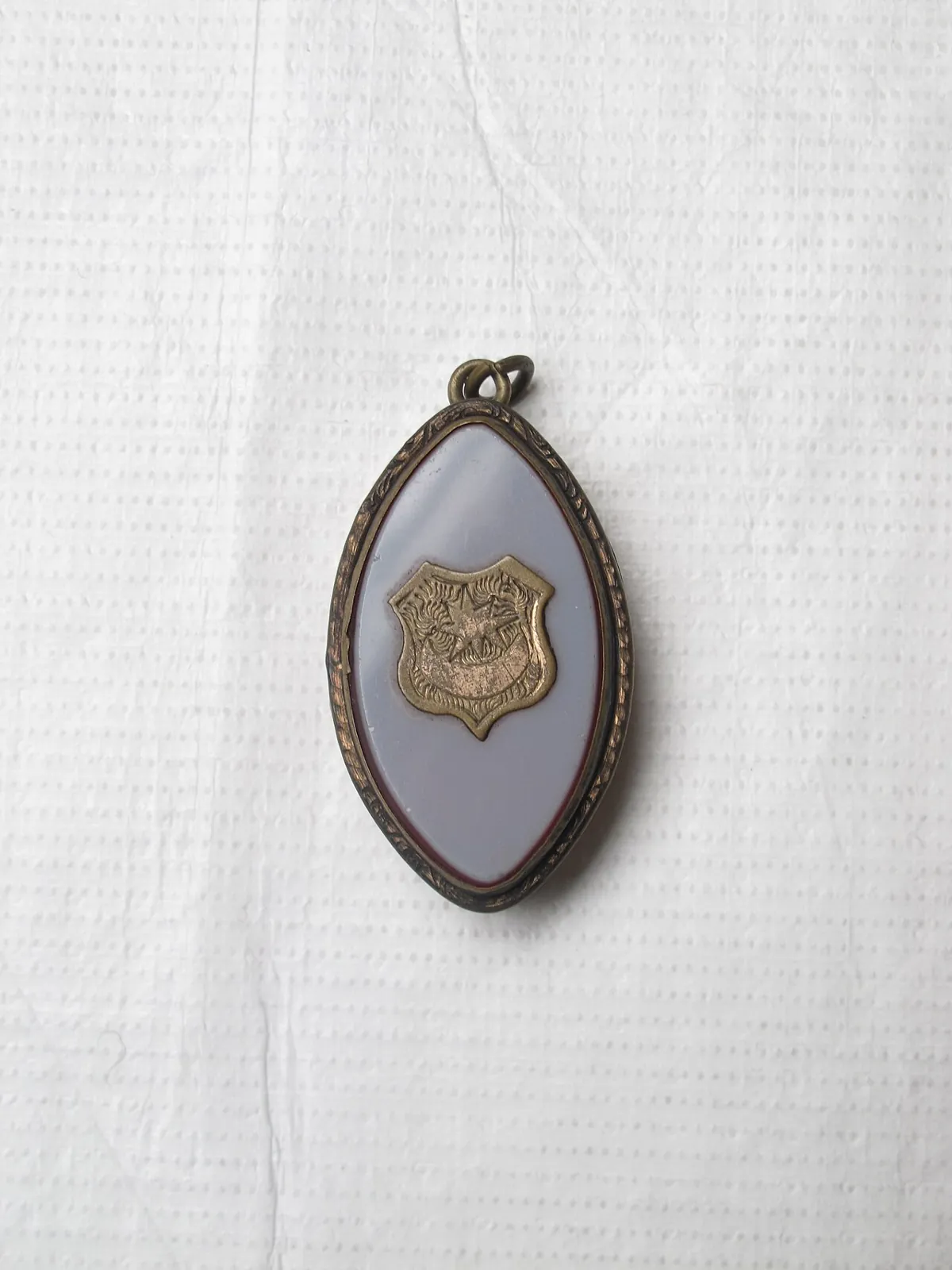
Inside the lodge room, a longstanding convention prohibits discussion of religion and politics during formal proceedings. This is sometimes described online as the “8-hour rule,” though that label is informal and the underlying principle varies in how strictly it is codified across jurisdictions. The purpose is straightforward: a membership drawn from diverse religious and political backgrounds requires some mechanism for preserving fraternal harmony, and removing the two most reliably divisive topics from the agenda serves that function. It is a convention rooted in pragmatism, not in any claim that religion or politics are unimportant. As for the frequently searched question of Freemasonry beliefs regarding marriage, the short answer is that no such doctrinal position exists. Grand lodge constitutions address general moral conduct, not the marital status or choices of members. The “marriage rules” that surface repeatedly in search queries appear to reflect cultural assumptions about fraternal organizations, or confusion with specific religious bodies that do regulate marriage, rather than anything found in Masonic law.
How Beliefs Differ Across Jurisdictions and Rites
One of the most consequential facts about Masonic principles explained as a unified system is that no such unified system exists. The fraternity operates through independent grand lodges, each sovereign within its own territory, and the doctrinal differences between them are real and historically significant. The United Grand Lodge of England, founded on June 24, 1717, requires candidates to profess belief in a Supreme Being and frames its obligations accordingly. The Grand Lodge of France took a sharply different path in 1877, removing the explicit requirement to acknowledge the Grand Architect of the Universe (G.A.O.T.U.) and opening its membership to men regardless of religious belief or its absence. This decision caused a formal rupture with the UGLE that has never been fully repaired, and the two bodies do not recognize each other as regular. Prince Hall grand lodges, established in the United States from 1784 onward and rooted in the experience of African American Masons who were excluded from predominantly white lodges, represent a third distinct tradition, one that maintains the theological requirements of mainstream Anglo-American regularity while carrying a separate and equally documented historical lineage.
These are not minor procedural variations. They reflect genuinely different answers to the question of what the fraternity is for: a moral institution grounded in theistic obligation, a philosophical society open to all ethical worldviews, or a brotherhood defined as much by social history as by ritual content. Any account of core values of Freemasonry that flattens these distinctions into a single set of beliefs is describing an abstraction, not an institution. Readers researching Masonic doctrine should identify which grand lodge or rite they are examining, because the answer they find in one jurisdiction may be directly contradicted by the practice of another.
Women in Freemasonry: Co-Masonry and Female Lodges
The question of women’s membership is one of the most debated structural issues in contemporary Freemasonry. The answer, historically, is straightforward: Anderson’s 1723 Constitutions, the foundational governing document drafted by James Anderson for the Premier Grand Lodge of England, specified that candidates must be “free men of good repute.” That single phrase effectively codified male-only membership for mainstream grand lodges, and the United Grand Lodge of England, along with the major grand lodges of the United States, continues to operate under that restriction today. For the UGLE and its recognized counterparts, the all-male composition is not incidental tradition but a formal constitutional requirement.
The Emergence of Co-Masonry
The first significant breach in that wall came from France. In January 1882, the lodge Les Libres Penseurs of Pecq initiated Maria Deraismes, a prominent French feminist and freethinker, into Freemasonry. The act was controversial enough that the lodge was suspended by its own grand lodge almost immediately. Deraismes and her collaborator Georges Martin responded by founding Le Droit Humain in 1893, a co-Masonic order (meaning mixed-gender in membership) that explicitly rejected sex-based exclusion as incompatible with Enlightenment principles of universal equality. Le Droit Humain spread internationally across the late nineteenth and early twentieth centuries and remains active today, with federations operating in more than sixty countries. Its founding represents the clearest historical instance of Masonic structure being deliberately redesigned around a philosophical objection to the original rules.
All-Female Grand Lodges and the Recognition Question
Parallel to co-Masonry, a separate tradition of all-female lodges developed independently. The Order of Women Freemasons in the United Kingdom was established in 1908 and has operated continuously since, conducting the same three degrees of Craft Masonry as their male counterparts. Neither the Order of Women Freemasons nor Le Droit Humain holds recognition from the UGLE, which defines regular Freemasonry as male-only by constitutional definition. The practical consequence is that members of recognized male lodges are generally prohibited from attending the meetings of unrecognized bodies, creating a formal separation even where individual Masons may hold sympathetic views. That said, recognition policies are not entirely static. Some grand lodges in continental Europe have begun internal discussions about the criteria for regularity, and a handful of smaller jurisdictions have moved toward softer stances. The broader landscape of freemason beliefs about women in membership reflects a genuine institutional tension: a fraternal tradition rooted in Enlightenment universalism that has, for most of its history, drawn a firm line at gender. How individual jurisdictions resolve that tension in the coming decades remains, at this point, an open institutional question.
Debunking Persistent Myths About Freemasonry Beliefs
Few institutions have attracted as many fabricated narratives as Freemasonry, and most of those narratives share a common feature: they collapse quickly under contact with primary sources. The three most durable myths, devil worship, Illuminati control, and global political domination, each have traceable origins, and none of those origins hold up to scrutiny. Understanding where these claims came from is as instructive as understanding why they persist.
| Myth Claim | Origin of the Claim | Historical Evidence | Verdict |
|---|---|---|---|
| Freemasons worship Lucifer | Leo Taxil’s fabricated writings, published from 1885 to 1897 | Taxil publicly admitted the hoax at a Paris press conference in April 1897; no Masonic ritual document supports the claim | Debunked by its own author |
| Freemasonry is the Illuminati | 19th-century pamphlets conflating two separate organizations | The Bavarian Illuminati was founded May 1, 1776, dissolved by 1787, and had its own distinct structure and goals | Historically false; separate organizations |
| Freemasons control world governments | Anti-Masonic political movements of the 1820s-1830s, revived periodically | The fraternity is a confederation of independent grand lodges with no shared treasury, no central authority, and no unified political platform | Structurally impossible by design |
| Freemasonry is a secret society plotting in the shadows | Popular culture, reinforced by selective reading of ritual secrecy | Grand lodges publish constitutions, membership figures, and charitable reports; meeting locations are publicly listed | A society with secrets, not a secret society |
The Lucifer myth has an unusually clean paper trail. Between 1885 and 1897, a French journalist named Gabriel Jogand-Pages, writing under the pen name Leo Taxil, published a series of sensational pamphlets claiming that Masonic lodges conducted Satanic rituals. Catholic newspapers across Europe reprinted the allegations widely. Then, on April 19, 1897, Taxil convened a press conference in Paris and announced that every word had been invented. The audience, which included clergy and journalists who had staked their credibility on his reporting, was not pleased. The historian Eugen Weber, among others, has documented the episode in detail. No credible Masonic document, no grand lodge constitution, and no authenticated ritual text supports the claim that Freemasonry beliefs include any form of Luciferian worship.
Freemasonry vs. the Illuminati: Two Distinct Organizations
The Bavarian Illuminati was founded on May 1, 1776, by Adam Weishaupt, a professor of canon law at the University of Ingolstadt. Weishaupt modeled some of the organization’s internal structure on Masonic lodge formats, and a number of its early members were also Freemasons. That overlap in membership is the factual kernel around which a great deal of mythology has grown. The two organizations were entirely separate in purpose, governance, and lifespan. The Illuminati sought to combat religious influence over public life and promote Enlightenment rationalism through a hierarchical, cell-based structure. Freemasonry operated through publicly registered lodges governed by grand lodge constitutions, with no comparable political agenda built into its framework. The Elector of Bavaria banned the Illuminati in 1785; the organization had effectively ceased to exist by 1787, a lifespan of eleven years. Freemasonry, founded in its modern speculative form in 1717, continues to operate across more than 150 countries. Treating these two organizations as interchangeable requires ignoring not only their distinct founding documents and leadership structures, but also the fact that one of them dissolved before the United States had ratified its Constitution.
The “world domination” claim founders on an equally simple structural fact. Freemasonry is not a unified global body. It is a confederation of independent grand lodges, each sovereign within its own jurisdiction, with no overarching authority, no shared financial reserves, and no mechanism for issuing binding political directives. The United Grand Lodge of England, the Grand Lodge of New York, and the Grand Orient de France do not report to a common superior. They do not share a budget. They occasionally recognize each other’s legitimacy, and sometimes withdraw that recognition over doctrinal differences, which is precisely the behavior of organizations that lack centralized control. A fraternity that has spent decades in internal disagreement over whether to require belief in a personal God is not a fraternity quietly coordinating the global financial system.
FAQ
Is Freemasonry a secret society?
The fraternity’s own standard formulation describes it as “a society with secrets, not a secret society.” Lodge addresses, membership rolls, and charitable records are publicly available in most jurisdictions. What members are asked to keep private are specific ritual elements: passwords, recognition grips, and the internal choreography of degree ceremonies.
The United Grand Lodge of England reinforced this openness in 1984 by publishing its basic principles as a public document, a step hard to reconcile with any claim to total secrecy. Institutional transparency and internal ritual privacy are not contradictions; most professional and fraternal organizations maintain both.
Do Freemasons worship the devil or practice Satanism?
No. The claim originates almost entirely from the Taxil Hoax, a deliberate fabrication by French writer Léo Taxil, who beginning in 1890 produced a series of documents alleging that lodges conducted Satanic rites. Taxil confessed publicly in 1897 that the entire affair was a fraud, staged partly to embarrass the Catholic press that had credulously republished his invented material.
No authentic Masonic constitution, ritual text, or official grand lodge document contains any reference to Satanic worship. Massimo Introvigne of the Center for Studies on New Religions has documented the Taxil affair extensively as a case study in manufactured religious panic, not evidence of any actual practice.
Are Freemasons required to follow a specific religion?
No specific faith is required. Mainstream grand lodges ask only that a candidate hold a belief in a Supreme Being, a standard broad enough to include Christians, Jews, Muslims, Hindus, Sikhs, and members of other traditions. The lodge does not prescribe how that Supreme Being is understood, named, or worshipped.
Atheists are generally ineligible under this standard, since the requirement functions as a moral anchor rather than a theological test. Albert Mackey’s Encyclopedia of Freemasonry (1874) describes this principle as the fraternity’s way of affirming shared moral ground without adjudicating doctrinal disputes between members of differing faiths.
Can women become Freemasons?
Not in lodges recognized by the United Grand Lodge of England, which limits membership to men. Alternative bodies have operated outside this framework for well over a century. Co-Masonic orders, admitting both men and women, emerged in France in the 1880s and spread internationally. Separately, all-female grand lodges developed their own independent structures.
The Order of Women Freemasons in the United Kingdom, founded in 1908, confers the same three degrees found in male lodges and maintains a full ceremonial structure. Its existence is not contested; it simply operates outside the recognition framework of mainstream grand lodges, much as several male-only bodies also operate outside that framework for other reasons.
What does 3-5-7 mean in Freemasonry?
The numbers appear in the Fellow Craft degree, the second of the three principal degrees, within an allegory built around a winding staircase. Each number corresponds to a distinct category of instruction: three represents the three degrees of the lodge itself; five refers to the five classical orders of architecture and the five senses; seven represents the seven liberal arts and sciences inherited from medieval university curricula.
The sequence functions as a mnemonic device, organizing a body of moral and intellectual teaching into memorable units. There is nothing numerologically mystical about the choice. The liberal arts framework was standard educational scaffolding across Europe long before any Masonic lodge formalized it into ritual allegory.