 Italiano
 English

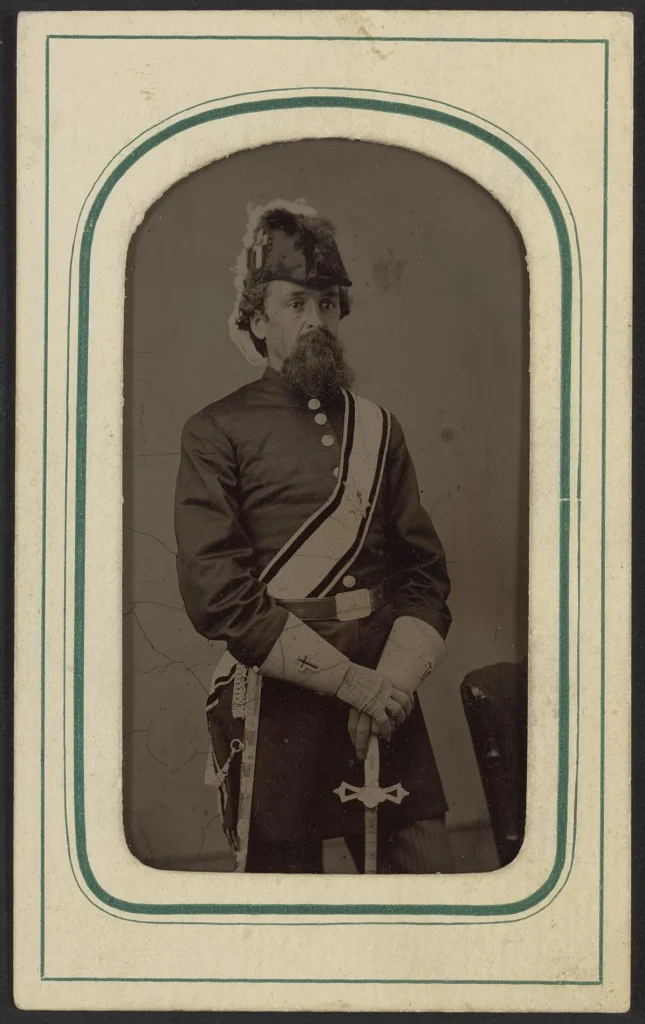
The York Rite is one of the two major appendant bodies of Freemasonry in the United States and one of the oldest organized systems of Masonic degrees in the English-speaking world. Where the Blue Lodge confers three foundational degrees, Entered Apprentice, Fellowcraft, and Master Mason, the York Rite extends that journey through a structured sequence of additional degrees organized across three distinct bodies: the Chapter of Royal Arch Masons, the Council of Royal and Select Masters, and the Commandery of Knights Templar. The name itself traces to the city of York, England, where Masonic tradition holds that an early assembly of stonemasons convened as far back as 926 AD, though the formal rite as practiced today took institutional shape in the late eighteenth and early nineteenth centuries. For the history buff, the York Rite offers a direct line into medieval guild culture and early modern fraternal organization. For the practicing Mason, it represents the most historically rooted path beyond the third degree. This article traces that path in full, from origins to governance, from degree names to the perennial comparison with the Scottish Rite.
What the York Rite Is, and What It Is Not
The York Rite is a collection of appendant bodies within Freemasonry that confers additional degrees beyond the three foundational degrees of the Blue Lodge. Membership requires prior attainment of the Master Mason degree. The rite comprises three distinct bodies: the Chapter of Royal Arch Masons, the Council of Royal and Select Masters, and the Commandery of Knights Templar.
Calling the York Rite a “higher” form of Freemasonry misreads how the structure actually works. The Blue Lodge, which confers the Entered Apprentice, Fellow Craft, and Master Mason degrees, remains the foundational and sovereign unit of the fraternity. Appendant bodies like this rite do not supersede it; they extend the allegorical and ceremonial content available to Master Masons who choose to pursue further degrees. The additional degrees carry their own distinct ritual narratives, drawing heavily on Old Testament themes, medieval chivalric orders, and early Christian symbolism. None of that makes them superior to what came before. They are lateral in character, not vertical, offering a different set of allegories rather than a higher rank within a single ladder of authority.
“York Rite” is primarily an American umbrella term, used since at least the mid-nineteenth century to group the Chapter, Council, and Commandery under a single administrative concept. In England, the situation is organized differently: the Supreme Grand Royal Arch Chapter of England administers Royal Arch Masonry as a body closely allied to the United Grand Lodge of England, while other component bodies operate under separate grand authorities. There is no single “York Rite” governing body in English Masonry the way American grand bodies function. Researchers who encounter the phrase “York Rite cults” in online searches should know the term reflects conspiratorial framing with no factual basis. Each component body operates under a published constitution, is overseen by an elected grand body, and maintains transparent membership rolls. These are among the most institutionally documented organizations in American fraternal history, not secretive splinter groups operating outside established Masonic oversight.
History and Origins of the York Rite
The Medieval Guild Roots and the Old Charges
The claim that Freemasonry traces its organized presence in England to a gathering at York in 926 AD rests on a specific body of documents known as the Old Charges, the earliest written constitutions of the operative stonemasons’ guilds. The most celebrated of these, the Regius Poem (dated by scholars to approximately 1390), recounts a legendary assembly convened by Prince Edwin, son of King Athelstan, at which the craft’s laws were supposedly codified. The narrative is vivid and specific, which is precisely why historians treat it with caution: no independent chronicle of the period, no royal record, no ecclesiastical register corroborates an assembly of that kind at York in that year. What the Old Charges do confirm is that medieval guild culture found York symbolically significant, and that later generations of speculative Freemasons inherited and amplified that symbolism. The distinction matters. The documents are real and historically valuable; the events they describe are legendary, functioning more as founding myth than as recoverable fact. Treating the 926 AD tradition as established history misrepresents the evidence; dismissing it as mere fiction ignores its genuine role in shaping how the fraternity understood its own identity across centuries.
Formal Consolidation in the Eighteenth Century
Whatever the medieval legends may claim, the documented history of York Rite Freemasonry begins in the eighteenth century. The Royal Arch degree, the keystone of the rite’s three-body structure, appears in reliable records by the 1740s and 1750s, with early chapters documented in Ireland and England. In the American colonies, the first recorded Royal Arch Chapter was established in Fredericksburg, Virginia, in 1753, the same town and lodge associated with George Washington’s Masonic initiation the previous year. That early American footprint is not incidental: the York Rite degrees spread rapidly through colonial networks precisely because the Royal Arch was already being worked in England before the Premier Grand Lodge and the rival Antients Grand Lodge had resolved their long dispute over whether the degree belonged inside or outside the standard lodge system.
The Council of Royal and Select Masters, which confers the Cryptic degrees, and the Commandery of Knights Templar developed as distinct organizational bodies through the late eighteenth and early nineteenth centuries, each eventually forming its own grand-body structure in the United States. The name “York Rite” itself entered common American usage partly through the influence of the York Grand Lodge of England, an independent grand lodge founded in 1725 and dissolved in 1792. That body’s actual influence on the American system was limited, and the connection is partly nominal, but the name stuck. By the mid-1800s, the General Grand Chapter of Royal Arch Masons (organized in 1798), the General Grand Council of Cryptic Masons, and the Grand Encampment of Knights Templar had each consolidated their respective jurisdictions, giving the York Rite masonry practiced in the United States the three-pillar structure that defines it today.
The Three Bodies of the York Rite
Chapter of Royal Arch Masons
The first body a Master Mason encounters in the York Rite is the Chapter of Royal Arch Masons, which confers four degrees in sequence: Mark Master, Virtual Past Master, Most Excellent Master, and Royal Arch Mason. The allegorical thread running through all four is the destruction of Solomon’s Temple by Nebuchadnezzar’s forces in 587 BCE and the subsequent efforts to rebuild it under Zerubbabel during the Persian period. Each degree advances the candidate through a different phase of that narrative, from the marking and identification of individual craftsmen’s work to the dramatic recovery of something lost. The Royal Arch degree, the fourth and culminating step, has historically been described by its practitioners as the completion of the third degree’s unresolved storyline. The United Grand Lodge of England went so far as to declare in its 1813 Articles of Union that “pure ancient Masonry consists of three degrees, including the Supreme Order of the Holy Royal Arch,” effectively treating the Royal Arch not as an addition but as the conclusion of the Master Mason degree. Chapters began appearing in England and the American colonies during the mid-eighteenth century, with records of Royal Arch conferrals in Fredericksburg, Virginia, dating to 1753.
Council of Royal and Select Masters (Cryptic Masonry)
The Council of Royal and Select Masters, commonly called Cryptic Masonry, occupies a distinctive position within the York Rite structure because its standing varies by jurisdiction. In some grand jurisdictions it is a required stop between Chapter and Commandery; in others it is treated as an optional side body that a candidate may bypass entirely. Where it is worked, the Council confers three degrees: Royal Master, Select Master, and, in most American jurisdictions, Super Excellent Master. The first two focus on a hidden vault said to have been constructed beneath Solomon’s Temple to preserve the secrets of the craft against the possibility of catastrophe, a theme that gives Cryptic Masonry its name. The word “cryptic” derives from the Greek kryptos, meaning hidden or concealed, and refers directly to that subterranean chamber of the ritual narrative rather than to any air of secrecy about the body itself. The Super Excellent Master degree, though sometimes conferred by Chapters in certain jurisdictions, dramatizes the fall of Jerusalem and the fidelity of the craftsman Hiram Abiff’s successor figures. Because the Cryptic degrees elaborate on material already introduced in the Chapter rather than advancing toward an entirely new narrative destination, some jurisdictions have concluded that candidates lose little by proceeding directly to the Commandery, which explains the inconsistency in how this body is treated across the United States.
Commandery of Knights Templar
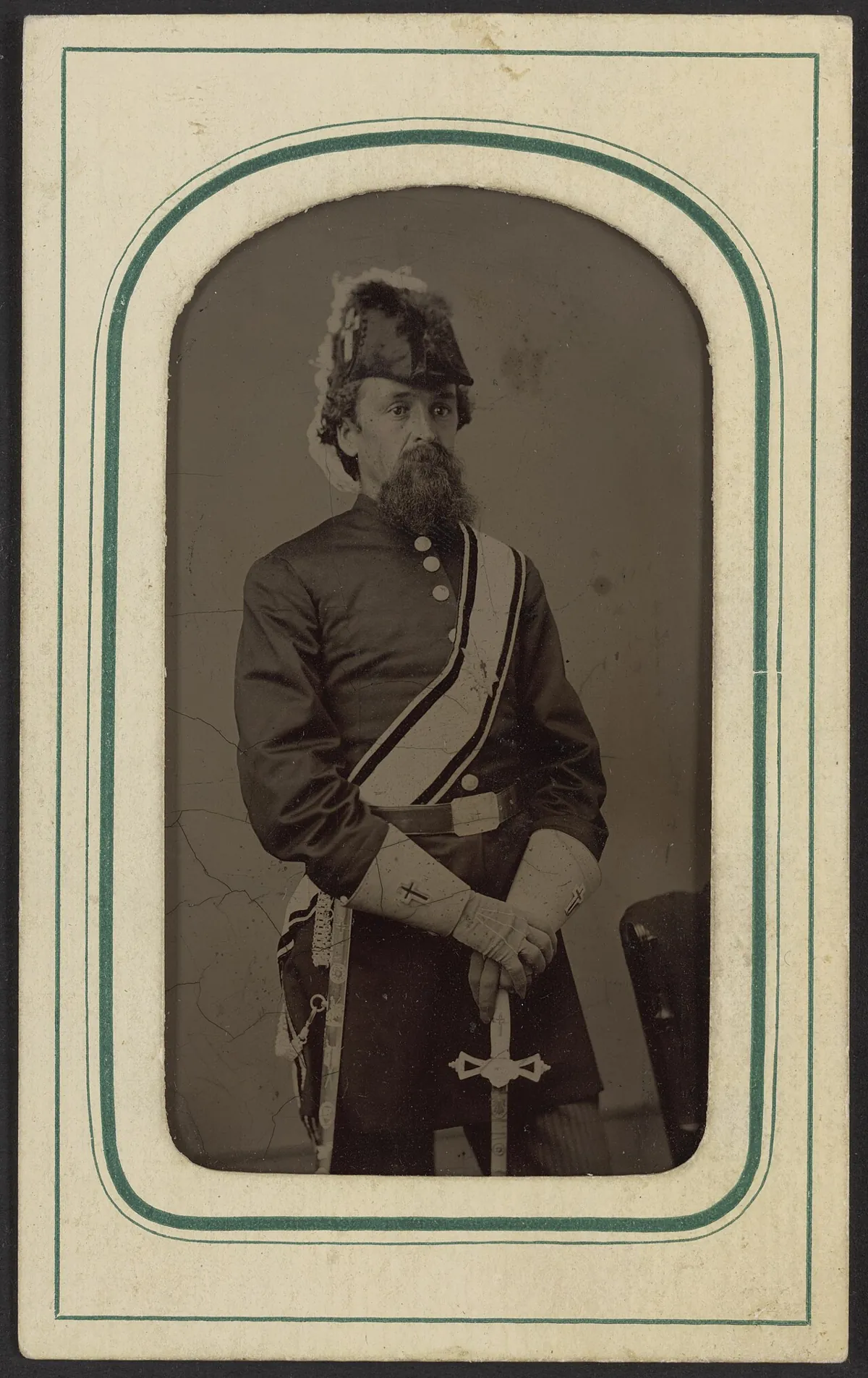
The Commandery of Knights Templar is, by almost any measure, the most distinctive body in the York Rite, and the one that generates the most historical curiosity. It is the only Masonic organization in the United States that explicitly requires a candidate to profess a belief in the Christian faith, a requirement that sets it apart from the broader fraternity’s tradition of demanding only a belief in a Supreme Being without specifying denomination or creed. The Commandery confers three Orders rather than degrees: the Illustrious Order of the Red Cross, the Order of Malta, and the Order of the Temple. The claimed lineage connecting this body to the medieval Knights Templar, the military religious order suppressed by Pope Clement V and Philip IV of France in 1307 and 1312, is historically contested. No documentary evidence establishes an institutional link between the suppressed order and eighteenth-century Masonic Commanderies. The connection appears to be allegorical and initiatic rather than genealogical, a point that Masonic historians including John J. Robinson in Born in Blood have examined at length, though Robinson’s own conclusions remain debated among scholars. What is clear is that Templar-themed Masonic bodies were flourishing in France and Scotland by the 1740s, well before any formal American Commandery structure emerged. The Grand Encampment of Knights Templar, which serves as the national governing body in the United States, was organized in 1816.
Beyond these three primary bodies, the York Rite College functions as an invitational appendant organization focused on Masonic education and historical research rather than the conferral of additional degrees. Membership is by invitation and is intended for York Rite Masons with a demonstrated interest in the history and philosophy of the rite. Its contribution is scholarly rather than ritual.
York Rite Degrees: A Complete Progression
The York Rite unfolds across three distinct bodies, each conferring a set of degrees that extend the allegorical narrative begun in the Blue Lodge. The total degree count ranges from ten to thirteen, depending on jurisdiction and whether optional degrees such as the Super Excellent Master are included. What holds the sequence together is a single sustained story: the search for something lost, its concealment across generations, and its eventual recovery. Every degree in the progression speaks to that theme in a different register, drawing on the Hebrew scriptures, the building of Solomon’s Temple, and, in the final body, the ideals of medieval Christian chivalry.
| Degree Name | Conferring Body | Primary Allegorical Theme |
|---|---|---|
| Mark Master Mason | Chapter of Royal Arch Masons | The rejected keystone and the value of skilled, honest labor |
| Most Excellent Master | Chapter of Royal Arch Masons | The completion and dedication of Solomon’s Temple |
| Royal Arch Mason | Chapter of Royal Arch Masons | The recovery of the Master’s Word from a hidden vault beneath the Temple ruins |
| Royal Master | Council of Royal and Select Masters | The transmission of sacred secrets before the Temple’s destruction |
| Select Master | Council of Royal and Select Masters | The construction of a secret vault as a repository of Masonic knowledge |
| Super Excellent Master (optional) | Council of Royal and Select Masters | The fall of Jerusalem and the faithfulness of Zedekiah’s guards |
| Order of the Red Cross | Commandery of Knights Templar | Zerubbabel’s defense of truth before the Persian court |
| Order of Malta | Commandery of Knights Templar | Christian chivalric obligation and the Hospitaller tradition |
| Order of the Temple | Commandery of Knights Templar | The Crusading ideal, Christian knighthood, and the defense of the faith |
The allegorical logic of the sequence rewards close attention. The Mark Master degree, which opens the Chapter’s work, centers on a single architectural element: the keystone, initially rejected by the overseers of the Temple and later recognized as essential. Most Excellent Master then stages the Temple’s completion, providing a moment of resolution before the deeper mysteries of the Royal Arch degree reopen the narrative. The Royal Arch, widely regarded as the symbolic capstone of York Rite freemasonry, presents the recovery of the Master’s Word from a concealed vault discovered during the rebuilding of the Temple under Zerubbabel. The Council degrees elaborate on that vault’s origins, with the Select Master degree depicting its secret construction. The Commandery of Knights Templar shifts the register entirely, moving from Hebrew scripture into Christian chivalric allegory. Candidates for these York Rite degrees must profess a belief in the Christian faith, which distinguishes the Commandery from the earlier bodies and from most other Masonic structures. The progression, taken as a whole, is less a ladder of rank than a layered narrative, each degree illuminating a different facet of the same underlying story.
Want to learn more?
York Rite vs. Scottish Rite: Key Differences
Both the York Rite and the Scottish Rite are appendant bodies open exclusively to Master Masons, meaning a candidate must have completed the three degrees of the Blue Lodge before petitioning either. That shared prerequisite is sometimes mistaken for a hierarchical relationship. It is not. The two rites are parallel systems, each conferring additional degrees that elaborate on themes already introduced in the Blue Lodge, and a Mason is entirely free to join one, both, or neither without affecting his standing in any other body.
The structural differences between them are substantial. The Scottish Rite operates under a single administrative umbrella, the Supreme Council, and confers degrees numbered 4 through 32 in sequence, with the 33rd degree reserved as an honorary distinction awarded by the Supreme Council itself. The York Rite distributes its degrees across three legally independent bodies: the Chapter of Royal Arch Masons, the Council of Cryptic Masons, and the Commandery of Knights Templar. No single governing authority sits above all three, which means a Mason can join the Chapter without ever petitioning the Commandery. That decentralized architecture has no equivalent in Scottish Rite masonry. The ceremonial style also diverges noticeably: York Rite degrees are typically conferred in full dramatic form by the local body, with officers performing the ritual work in detail. Many Scottish Rite jurisdictions in the United States have moved toward consolidated “one-day reunions,” in which multiple degrees are presented as staged theatrical performances before a large audience rather than worked individually for each candidate.
The most distinctive structural difference between the two systems is the Commandery of Knights Templar’s requirement of a Christian profession. Candidates for the Orders of the Temple and of Malta must affirm a belief in the Christian faith, making the Commandery the only body within mainstream American Freemasonry with an explicit religious prerequisite beyond a general belief in a Supreme Being. The Scottish Rite imposes no such requirement and draws its degree themes from a far broader range of philosophical and allegorical sources, including Kabbalistic, Rosicrucian, and classical traditions. Geographically, York Rite bodies have historically been strongest in the northeastern United States and in England, where the Royal Arch has been formally incorporated into the definition of “pure ancient Masonry” since the 1813 Articles of Union. The Scottish Rite, organized through its network of Supreme Councils, has achieved considerably broader international reach, with active councils across continental Europe, Latin America, and beyond.
Which Rite Should a Master Mason Choose?
The question is best answered by personal interest rather than prestige or degree count. A Master Mason drawn to Christian chivalric allegory, the medieval imagery of the Crusades, and the ceremonial traditions of knighthood will find that material concentrated in the Commandery of Knights Templar. A Mason more interested in philosophical and speculative degree work, with themes ranging from classical antiquity to Enlightenment thought, will likely find the Scottish Rite’s structured curriculum more engaging. Neither path confers authority over the other, and completion of one carries no weight in the governance of the other. The most reliable guidance on which bodies are active and well-attended in a given area comes from the relevant grand lodge or, in England, from the United Grand Lodge of England, since local vitality varies considerably by jurisdiction.
Requirements, Time Commitment, and Cost
Eligibility for York Rite freemasonry begins at a single, non-negotiable threshold: the candidate must be a Master Mason in good standing with a recognized Blue Lodge in the same jurisdiction. No body within the York Rite system, whether the Royal Arch Chapter, the Cryptic Council, or the Commandery of Knights Templar, will accept a petitioner who has not already received the three degrees of Craft Masonry. That prerequisite is uniform across every recognized grand body in the United States and the United Kingdom.
Beyond that baseline, requirements diverge slightly depending on which body a Mason wishes to join. The Royal Arch Chapter and the Cryptic Council extend membership to Masons of any monotheistic faith, consistent with the broader Masonic requirement of belief in a Supreme Being. The Commandery of Knights Templar, however, requires a profession of Christian faith. This reflects the Commandery’s historical identity as a chivalric order rooted in Christian knighthood, not a recent policy shift or a matter of jurisdictional discretion. Prospective members who are not Christian can complete the Chapter and Council degrees without restriction, and many do. The Commandery simply represents a separate commitment with a distinct theological prerequisite.
On the financial side, costs vary by jurisdiction and local body. Chapter dues in most US jurisdictions run between $50 and $150 per year; Council and Commandery fees tend to fall in a comparable range. Some bodies also charge one-time degree fees at conferral, which can add a modest sum to the first year’s expense. No central authority sets uniform pricing across the country, so the most reliable step is to contact the relevant local bodies directly. The General Grand Chapter of Royal Arch Masons, the General Grand Council of Cryptic Masons, and the Grand Encampment of Knights Templar each maintain online locator tools for US jurisdictions, making it straightforward to find the nearest active body and request current fee schedules.
The time investment deserves realistic framing. Completing all three bodies, from the Mark Master degree through the full Commandery sequence, typically requires attending degree conferrals spread across one to three years, depending on how frequently local bodies schedule their workings and how flexibly a candidate can arrange attendance. Some jurisdictions offer consolidated degree days or reunion-style weekends that compress the timeline; others confer degrees individually across a full calendar year. A Mason who joins an active Chapter in a metropolitan jurisdiction may move through the York Rite degree sequence considerably faster than one affiliated with a smaller rural body that meets quarterly. The realistic expectation is a sustained commitment rather than a single-weekend credential, which, by most accounts, is precisely the point.
York Rite Governance and Notable Organizations
The administrative architecture of the York Rite in the United States is deliberately decentralized, reflecting the independence of each constituent body. Three separate international organizations sit at the top of the structure: the General Grand Chapter of Royal Arch Masons International oversees the Chapter degrees, the General Grand Council of Cryptic Masons International governs the Cryptic Council bodies, and the Grand Encampment of Knights Templar of the USA holds jurisdiction over the Commandery system. None of these three bodies reports to a single unified authority. Each maintains its own constitution, officers, and triennial or biennial convocations, which means that a Mason pursuing the full York Rite sequence is, in a formal sense, joining three distinct organizational hierarchies rather than one.
Below the international level, state grand bodies handle day-to-day governance within their jurisdictions. A Grand Chapter charters and supervises local chapters, a Grand Council oversees councils working the Cryptic degrees, and a Grand Commandery grants warrants to individual commanderies. This three-tier model (international grand body to state grand body to local body) mirrors the structure familiar from the Blue Lodge system, though the parallel tracks mean a York Rite Mason must maintain membership across all three branches to remain active in each. In England, the equivalent organizations, including the Supreme Grand Chapter of Royal Arch Masons and the Great Priory of the United Religious, Military and Masonic Orders, are administered entirely independently and are not grouped under a “York Rite” label at all. The term is largely an American organizational convenience; English Masonry has historically treated the Royal Arch and the chivalric orders as extensions of the Craft rather than as a separate coordinated rite. Paul Revere, among the most historically documented York Rite Masons in American history, served as Grand Master of the Grand Lodge of Massachusetts and was an active Royal Arch participant, illustrating how prominent early American figures moved fluidly between the Blue Lodge and the Chapter system long before any unified administrative structure existed.
The York Rite College: Education Over Degrees
The York Rite Sovereign College of North America occupies a distinct position within this landscape because it confers no additional degrees. Founded in 1957, it is an invitational body open only to Masons who have already completed the recognized York Rite sequence, and its purpose is Masonic education rather than ritual advancement. Local units, called colleges, focus on the history, symbolism, and philosophy underlying the degrees a member has already received. Membership is extended by invitation from existing college members, keeping the body small and oriented toward serious study. For the historically minded Mason, the York Rite College is the educational capstone of the rite’s structure, a place where the degrees already conferred are examined in their full historical and symbolic context rather than simply worked in lodge.
Women and the York Rite in the Modern Era
Mainstream York Rite bodies in the United States, including the General Grand Chapter of Royal Arch Masons, the General Grand Council of Cryptic Masons, and the Grand Encampment of Knights Templar, restrict membership to men. This position is consistent with the regularity requirements set by the United Grand Lodge of England, which recognizes only lodges and appendant bodies that initiate men exclusively. The restriction is not unique to the York Rite; it reflects a broader constitutional stance shared by most mainstream grand lodges in the Anglo-American tradition. For women and mixed-gender seekers, parallel organizations do exist. Bodies such as the Order of Women Freemasons in the United Kingdom and the international federation Le Droit Humain confer equivalent degrees, including Royal Arch and chivalric grades, through their own ritual structures. These organizations are not recognized by mainstream grand bodies and operate on separate institutional tracks, but their ritual content draws from the same historical corpus that shaped the York Rite degrees.
The question of women’s admission is no longer merely theoretical within global Freemasonry. Several European grand lodges, particularly in Belgium and France, have moved toward recognizing mixed or women’s lodges, a development that has not yet found traction among US grand bodies. Within the American Masonic family, the most prominent organization open to women remains the Order of the Eastern Star, which, while not a York Rite body in any technical sense, is closely associated with York Rite families and requires that male members hold the third degree of the Craft. It functions as a companion organization rather than a continuation of the degree system. The broader conversation about inclusion continues to develop, with advocates on both sides grounding their arguments in Masonic landmarks and constitutional precedent rather than cultural trend. How that conversation resolves, and on what timeline, varies considerably by jurisdiction.
FAQ
What is the York Rite in Freemasonry?
The York Rite is an appendant body of Freemasonry that extends the three degrees of the Blue Lodge through a structured sequence of additional degrees, organized across three distinct bodies: the Chapter of Royal Arch Masons, the Council of Royal and Select Masters, and the Commandery of Knights Templar. Together, they form one of the two principal rite systems in American Freemasonry, the other being the Scottish Rite.
The name derives from the English city of York, which holds a prominent place in Masonic legend and in the fraternity’s early organizational history in Britain. That symbolic weight is historical, not administrative; American York Rite grand bodies operate independently of any English authority.
How many degrees are in the York Rite?
The total ranges from ten to thirteen, depending on jurisdiction and individual pursuit. The Chapter of Royal Arch Masons confers four degrees, running from Mark Master through the Royal Arch. The Council of Royal and Select Masters confers three: Royal Master, Select Master, and Super Excellent Master (the last considered optional in many jurisdictions). The Commandery of Knights Templar confers three Orders: the Order of the Red Cross, the Order of Malta, and the Order of the Temple.
Each degree carries its own allegorical theme, generally building on the symbolic narrative established in the Blue Lodge’s third degree.
What is the difference between the York Rite and the Scottish Rite?
The Scottish Rite confers degrees four through thirty-two under a single Supreme Council structure, while the York Rite distributes its degrees across three independent bodies, each governed by its own grand organization. The two systems are parallel paths, not competing ones. A Master Mason may join either or both without conflict.
The most consequential practical difference is the Commandery of Knights Templar, which requires a sincere profession of Christian faith. The Scottish Rite imposes no such religious requirement. For Masons who do not identify as Christian, the Chapter and Council degrees remain fully accessible; the Commandery does not.
Do you have to be a Master Mason to join the York Rite?
Yes. Membership in any of the three bodies requires that a candidate first hold the degree of Master Mason in good standing within a recognized Blue Lodge in the same jurisdiction. This prerequisite is universal across all recognized grand bodies in the United States and applies internationally as well.
The Commandery of Knights Templar adds a further requirement beyond Masonic standing: a sincere profession of Christian faith. Candidates who do not meet that criterion may still pursue the Chapter and Council degrees without restriction. Prospective members should verify current requirements with their state-level grand body, as procedural details vary by jurisdiction.
How much does it cost to join the York Rite, and how long does it take?
Costs vary by jurisdiction and typically include a one-time initiation fee per body plus annual dues. In the United States, annual dues for a single body commonly run from roughly $50 to $150, meaning membership in all three bodies carries a combined annual commitment of approximately $150 to $450. Initiation fees are separate and similarly variable.
Completing all three bodies generally takes one to three years, depending on local degree conferral schedules and the candidate’s availability. Because each body operates on its own calendar, the timeline is rarely linear. Prospective members should contact their state-level grand Chapter, Council, and Commandery directly for current fee schedules and conferral dates.