 Italiano
 English

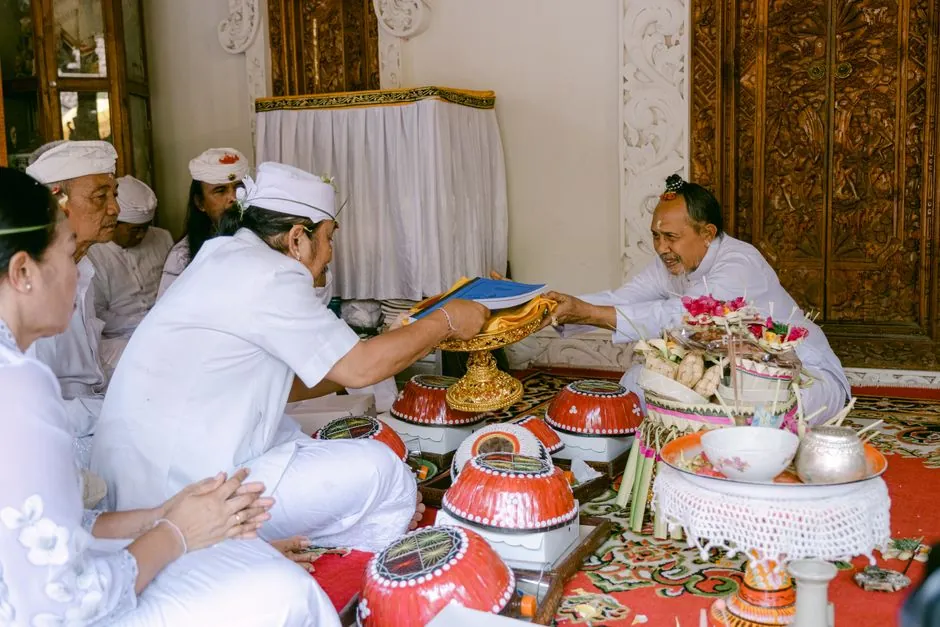
Is Freemasonry a religion? The United Grand Lodge of England answers that question without hesitation: “Freemasonry is not a religion, nor a substitute for religion.” That official position has been consistent for more than three centuries, yet the confusion persists, and it is not entirely without reason. Masonic lodges open their meetings with prayer, require candidates to profess belief in a Supreme Being, and employ ritual and symbol in ways that superficially resemble religious practice. The result is a durable public misunderstanding that cuts in two directions at once: critics from certain religious traditions treat Freemasonry as a rival faith or a covert one, while enthusiasts occasionally overstate its spiritual dimensions. Neither reading is accurate. Freemasonry is a fraternal organization with a moral and philosophical framework, one that draws on religious language and symbolism without constituting a religion in any doctrinal, creedal, or salvific sense. What follows is a careful examination of what Freemasonry actually requires of its members, how it relates to specific faith traditions, why institutional religious opposition developed, and where the line between “spiritual” and “religious” runs in Masonic practice.
The Official Answer: What Freemasonry Says About Itself
Freemasonry is not a religion. The United Grand Lodge of England, the oldest and most widely recognized Masonic governing body in the world, states this position explicitly in its official publications, and grand lodges across the United States echo the same declaration. The fraternity requires a belief in a Supreme Being, but that requirement falls well short of constituting a religious institution.
The UGLE’s own guidance document, Freemasonry and Religion, draws the line clearly: “Freemasonry is not a religion, nor is it a substitute for religion.” That sentence has appeared in official Masonic literature for decades, and it is not a defensive afterthought. It reflects a structural reality. Masonic constitutions, whether those of the UGLE or the grand lodges of New York, Texas, or California, prescribe no creed, no theology, and no path to salvation. Scholars who study religion comparatively, including sociologists working in the tradition of Emile Durkheim and Ninian Smart, typically identify those three elements as the core markers of a religious institution. Freemasonry, by design, provides none of them. The lodge opens with a prayer and closes with one, but the content of those prayers is deliberately non-denominational, addressed to what Masonic ritual calls the “Grand Architect of the Universe,” a phrase chosen precisely because it carries no sectarian freight.
What the fraternity does require, and what occasionally fuels the confusion about freemasons religious beliefs, is a declaration of faith in some form of deity. Atheists are not admitted to most mainstream lodges. That requirement is often misread as a religious test, but its purpose is different: it functions as a moral baseline, not a theological one. Members are not asked to adopt Masonic doctrine in place of their own. On the contrary, the fraternity actively encourages them to practice their existing faith outside the lodge. A Catholic attends Mass, a Methodist attends his chapel, a Muslim observes the five pillars, and all three may sit as brothers in the same lodge without any of those commitments being questioned or supplemented by Masonic teaching. The lodge, in this framing, is a civic and ethical space, not a competing congregation.
Why the Confusion Exists: Ritual, Symbolism, and the Supreme Being
The Supreme Being Concept: Secular Threshold or Religious Doctrine?
Of all the features that fuel the question of whether Freemasonry qualifies as a religion, the requirement to profess belief in a Supreme Being is the most frequently cited. Every candidate for initiation must affirm this belief before entering a lodge, and that single condition has led critics, theologians, and curious outsiders alike to conclude that something doctrinal is happening. The conclusion is understandable but imprecise. The United Grand Lodge of England’s Constitutions describe the requirement not as a statement of faith in any particular deity but as a moral prerequisite, a recognition that obligation and conscience extend beyond the individual self. Masonic scholars, including those writing for the Masonic Service Association of North America, consistently frame it as a threshold, not a creed. A Christian candidate brings his understanding of God to the altar; a Jewish candidate brings his; a Muslim candidate brings his. The lodge does not adjudicate between them, does not favor one tradition over another, and does not ask the candidate to revise his existing beliefs. That deliberate theological neutrality is what distinguishes a moral floor from a religious doctrine.
Masonic Ritual and Symbolism: Allegory, Not Liturgy
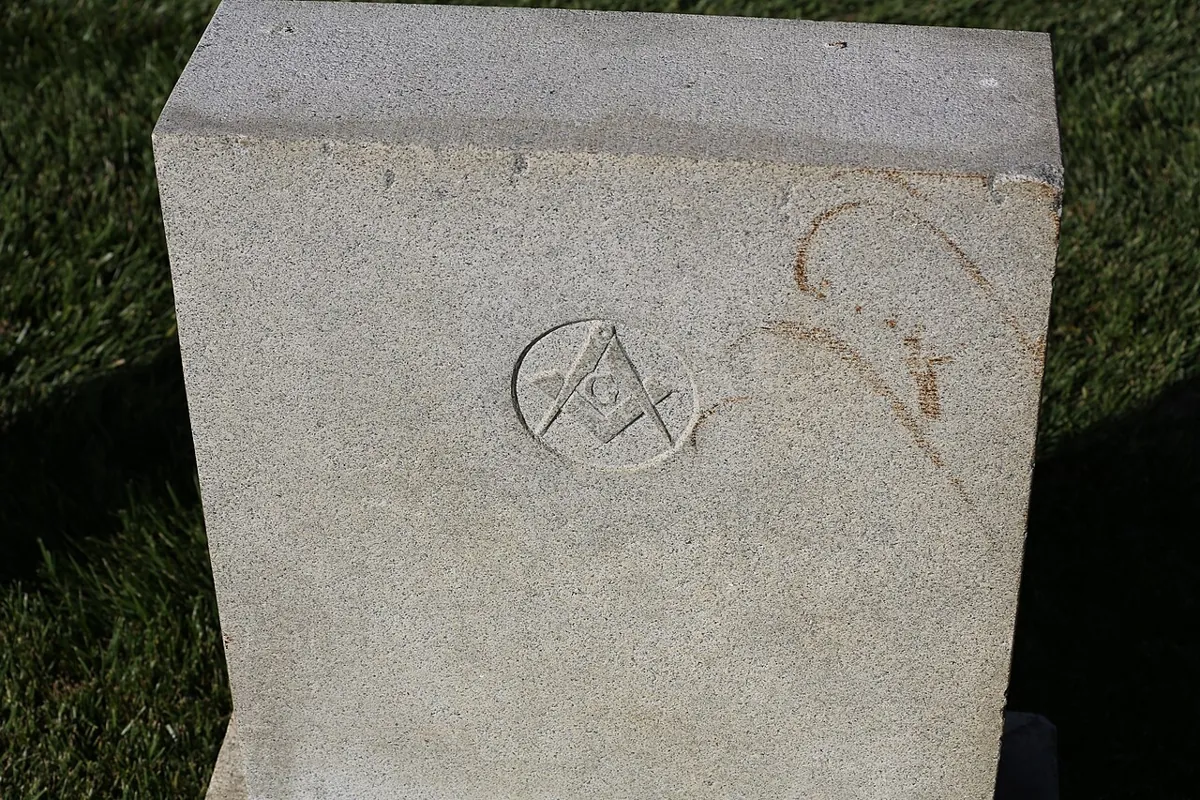
The visual and ceremonial texture of a lodge meeting compounds the confusion. The room opens with prayer. A Volume of Sacred Law, whether the King James Bible, the Torah, the Quran, or another scripture chosen by the candidate, rests open on the altar. Officers wear aprons and carry working tools. Degrees are conferred through scripted ritual with symbolic death-and-rebirth sequences. To an outside observer, the resemblance to religious ceremony is not imaginary. What that observer is seeing, however, is allegory operating in ceremonial form, not liturgy in any doctrinal sense. The degrees draw their imagery from the construction of Solomon’s Temple as described in the Hebrew scriptures, from medieval stonemason guild practices, and from Enlightenment-era moral philosophy. The square teaches rectitude of conduct; the compasses teach the importance of keeping passions within due bounds. These are ethical propositions dressed in architectural metaphor, not sacraments conferring grace or rites establishing communion with the divine. No Masonic degree claims to forgive sin, confer salvation, or define the nature of the afterlife. Both Masonic constitutions and academic historians of religion, including those writing in the Journal of the Royal Anthropological Institute, have drawn that distinction carefully.
The broader confusion is a product of surface resemblance. Freemasonry borrows the ceremonial furniture of religious life, the sacred text, the prayer, the solemn oath, the symbolic narrative, without adopting religion’s defining function: the mediation between humanity and the divine. What the fraternity actually endorses is a set of civic and moral virtues, honesty, charity, brotherly love, presented through symbol and allegory precisely because its membership spans every religious tradition. The architecture of the ritual was designed to be legible to a Baptist and a Deist sitting in the same room, which is a remarkable feat of Enlightenment engineering and also, inevitably, the source of two centuries of misreading.
Freemasonry and Specific World Religions: A Comparative Look
Can Christians Be Freemasons?
The relationship between Freemasonry and Christianity is not a single story. Protestant and Anglican traditions have, for the most part, tolerated or explicitly accepted Masonic membership throughout the fraternity’s modern history. The Church of England produced an internal report in 1987 that raised questions about compatibility but stopped well short of prohibition, and most Methodist and Baptist bodies in the United States have left the decision to individual conscience. The Catholic Church’s position is categorically different. The Congregation for the Doctrine of the Faith, in a declaration issued on November 26, 1983, reaffirmed that Catholics who enroll in Masonic associations are in a state of grave sin and may not receive Holy Communion. The document’s reasoning is precise: the prohibition rests not on a finding that Freemasonry constitutes a rival religion, but on concerns about religious indifferentism (the suggestion that all faiths are equally valid paths to moral truth) and the binding nature of secret oaths. That distinction matters. The Church objects to what it interprets as Masonry’s theological atmosphere, not to a specific Masonic creed, because no such creed is formally articulated.
The following table summarizes the official positions of major faith traditions, the primary reasons each cites, and the documented historical presence of Masonic membership within each community.
| Faith Tradition | Official Stance on Masonic Membership | Key Reason Cited | Historical Masonic Presence |
|---|---|---|---|
| Roman Catholicism | Prohibited (1983 CDF declaration) | Religious indifferentism; secret oaths incompatible with Church teaching | Some Catholic members historically, but officially excluded since 1738 |
| Protestant / Anglican Christianity | Generally permitted; left to individual conscience | No doctrinal conflict identified by most governing bodies | Substantial; many prominent Protestant Masons throughout the 18th and 19th centuries |
| Islam | Varies by country and scholar; banned in several majority-Muslim states | Concerns about secrecy, alleged foreign influence, or interfaith ritual | Documented membership in Ottoman-era lodges and in North Africa through the 19th century |
| Judaism | No prohibition; membership widely accepted | No doctrinal conflict; Solomonic symbolism seen as neutral or familiar | Significant since the early 18th century; Jewish Masons documented in London lodges by the 1720s |
| Hinduism / Buddhism / Sikhism | No central prohibition; grand lodges in Asia have operated for over a century | Volume of Sacred Law provision accommodates diverse scriptures | Grand Lodge of India and lodges in Sri Lanka active since the British colonial period |
Can Muslims and Jews Be Freemasons?
Jewish participation in Freemasonry is among the oldest and best-documented threads in the fraternity’s history. Records from London lodges in the 1720s include Jewish members, and the fraternity’s heavy use of Solomonic imagery, references to Hiram Abiff, and the symbolic architecture of the Temple of Solomon have never created doctrinal friction with Jewish theology. Scholars of Jewish history, including those at the Jewish Encyclopaedia (published 1901 to 1906), noted the fraternity’s appeal to Jewish professionals seeking a non-sectarian civic space in societies where formal exclusion was common elsewhere. The relationship has been one of long coexistence rather than institutional endorsement or conflict.
Muslim participation presents a more fragmented picture. There is no single global Islamic authority equivalent to the Vatican’s Congregation for the Doctrine of the Faith, so rulings on Masonic membership vary considerably across scholarly traditions and national contexts. Several majority-Muslim countries, including Saudi Arabia and Egypt at various points in their modern histories, have enacted legal or institutional bans on Masonic lodges, often citing concerns about secrecy, perceived Western political influence, or interfaith ritual rather than a finding that the fraternity is itself a religious organization. Conversely, Ottoman-era records document active lodges in Istanbul and Thessaloniki with Muslim members during the 19th century, and individual Islamic scholars have reached divergent conclusions depending on how they weigh the fraternity’s ritual obligations against its stated non-doctrinal character. The question, for Muslim individuals, remains one of personal scholarly consultation rather than settled consensus.
Freemasonry’s Stance on Atheism and Agnosticism
The Supreme Being requirement is not a formality buried in procedural fine print. For mainstream grand lodges, it is the threshold condition for membership, and it draws a clear line against atheism. The United Grand Lodge of England states in its Basic Principles that a candidate must believe in a Supreme Being, full stop. Most US grand lodges hold the same position. The reasoning is consistent across jurisdictions: if the obligations taken on the Volume of Sacred Law are to carry any moral weight, the candidate must believe in a power capable of holding him to account. Freemasonry does not specify which Supreme Being, but it insists there must be one. An atheist, by definition, cannot satisfy that requirement, and no amount of goodwill or philosophical sophistication changes the arithmetic.
Agnostics occupy a more ambiguous position, and practice genuinely varies by jurisdiction. Some grand lodges have admitted candidates who express uncertainty rather than outright denial, reasoning that sincere doubt is not the same as a settled rejection of any higher power. Others apply the requirement strictly and treat agnosticism as functionally equivalent to atheism for membership purposes. The sharpest institutional divergence on this question runs through the Grand Orient de France, which in 1877 removed the Supreme Being requirement from its constitutions entirely, opening membership to atheists and freethinkers. That decision remains the primary formal reason the UGLE withdrew recognition from the Grand Orient de France and has not restored it since. The Grand Orient represents what Masonic scholarship calls the liberal or adogmatic tradition, a distinct current within the broader fraternal movement that prioritizes civic and philosophical openness over theological consensus. Whether that tradition constitutes a legitimate expression of Freemasonry or a departure from it depends, predictably, on which grand lodge one asks.
Want to learn more?
Institutional Religious Opposition: The Catholic Church and Beyond
Why Does the Church Forbid Freemasonry?
The Catholic Church’s opposition to Freemasonry is one of the longest-running institutional disputes in modern Western religious history. Since Pope Clement XII issued In Eminenti on April 28, 1738, the Vatican has produced at least twenty papal documents addressing the fraternity. The most recent operative statement came not from a pope but from the Congregation for the Doctrine of the Faith: the November 26, 1983 Declaration signed by Cardinal Joseph Ratzinger, which concluded that Catholics who enroll in Masonic associations are “in a state of grave sin” and may not receive Holy Communion. That document remains binding today. What is worth noting, however, is what the Church’s objections do not include. Rome has never formally classified Freemasonry as a rival religion or a competing church. The prohibition rests on three distinct pillars: the binding nature of Masonic oaths, taken under penalty and regarded by the Church as morally impermissible; the principle of religious indifferentism, meaning the fraternity’s practice of treating all monotheistic faiths as equally valid paths to the divine, which Rome views as incompatible with Catholic doctrine on the uniqueness of Christ and the Church; and the concern over divided loyalty, the idea that a man cannot fully serve two institutional structures that each make serious demands on his conscience and conduct. These are objections to Masonic practice, not assertions that lodges are conducting a parallel liturgy. The distinction matters, because collapsing it produces exactly the kind of confusion the question “is freemasonry a religion” is designed to resolve.
Criticism from Religious Scholars and Theologians
Beyond the institutional Catholic position, a more granular debate has unfolded among academic theologians and Masonic scholars themselves. Albert Mackey, whose Encyclopedia of Freemasonry (first published in 1874) remains a foundational reference, described Freemasonry as having “a religious element” while insisting it was not a religion in any confessional sense. Mackey’s own framing has been used by critics to argue both sides, which is itself revealing. The Anglican clergyman Walton Hannah, in his 1954 study Darkness Visible, argued that Masonic prayer, directed to the “Grand Architect of the Universe” without reference to any specific deity, constitutes a form of worship and therefore makes the lodge a de facto religious assembly. Hannah’s critique was influential in shaping cautionary statements from some Methodist conferences and, to a lesser degree, from Church of England working groups. The Church of England’s own 1987 report, Freemasonry and Christianity, stopped well short of prohibition, acknowledging “some theological concerns” while declining to declare membership incompatible with Anglican faith. What the scholarly debate reveals is not a settled answer but a genuine ambiguity in the ritual itself. Prayer, symbolic death and rebirth, moral instruction through allegory: these elements brush against religious categories without fully inhabiting them. Whether that proximity makes Freemasonry a religious organization or simply an organization with religious aesthetics is a question that trained theologians, with access to the same ritual texts, have answered differently for over two centuries.
The pattern across these religious bodies is consistent: the sharpest critics object to specific Masonic practices on doctrinal grounds, while largely avoiding the claim that lodges constitute a church. Condemnation and classification are two different acts, and the institutions that have issued the former have generally been careful not to commit to the latter.
Is Freemasonry a Cult? Addressing the Fringe Claim
The word “cult” carries significant analytical weight when used by sociologists, and that precision matters here. Robert Lifton’s landmark 1961 study Thought Reform and the Psychology of Totalism established eight criteria for identifying cultic environments, including thought control, isolation from outside relationships, financial exploitation, and the demand for absolute obedience to a charismatic leader. Mainstream Freemasonry meets none of these criteria in any meaningful sense. There is no single living leader whose authority supersedes a member’s own conscience or religious commitments. Grand lodges operate through elected officers who serve fixed terms. Financial obligations are limited to annual dues, which vary by lodge but are publicly disclosed. Resignation from a lodge requires nothing more than a written notice, and the process is documented in lodge bylaws that members receive upon joining. The organization does not instruct members on how to vote, whom to marry, or what theology to hold.

Much of the “is freemasonry a religious cult” perception traces directly to the phrase “secret society,” a label that has outlasted its accuracy. In the United States and the United Kingdom, lodge locations are listed in public directories. In many jurisdictions, membership rolls are subject to legal disclosure requirements. Ritual texts, once genuinely restricted to initiates, have been in print since William Morgan’s 1826 Illustrations of Masonry and are freely available in libraries and online archives today. Scholars such as those writing for the Journal of the Royal Anthropological Institute have studied Masonic ritual as an open academic subject for decades. What remains private is largely ceremonial in character, closer to the internal traditions of a fraternal club than to the secrecy that genuine coercive organizations depend on for control. Members are explicitly encouraged, in lodge constitutions and grand lodge guidance alike, to keep their primary loyalties with their families, their faith communities, and their civic obligations. That instruction is the structural opposite of cultic isolation.
How Freemasonry Differs from a Religious Organization: Key Distinctions
Religious organizations, by most scholarly definitions, share a recognizable cluster of features: a defined theology, a path to salvation or liberation, doctrines about the afterlife, and sacramental rites that confer spiritual status on the participant. Freemasonry possesses none of these. Its three craft degrees, and the appendant degrees beyond them, are structured around moral allegory and philosophical reflection, not soteriological claims. A man who receives the third degree has not been absolved, sanctified, or initiated into a covenant with the divine. He has, according to the United Grand Lodge of England’s own published statements, received a system of morality veiled in allegory and illustrated by symbols. That is a meaningful distinction, not a semantic one. Churches baptize; lodges do not. Mosques proclaim the shahada as a condition of membership; lodges ask only that a candidate acknowledge a belief in a Supreme Being and come forward of his own free will. The prohibition on soliciting members is codified in Masonic constitutions across most grand lodge jurisdictions: a lodge may not recruit, advertise for candidates, or pressure anyone to petition. The initiative must come entirely from the individual. No evangelical tradition operates on that model.
Beyond ritual, the civic footprint of Masonic lodges resembles that of a service organization far more than a congregation. The Shriners Hospitals for Children network, funded largely through Masonic philanthropy, has provided over one million pediatric surgeries at no cost to families since its founding in 1922. Scholarship programs, disaster relief funds, and community outreach initiatives are standard lodge activities in the US and UK. Rotary International and the Lions Clubs operate on a structurally similar model: membership requires a belief in something (civic duty, professional ethics), the organization does charitable work, and no one pretends it is a church.
Freemasonry Across Different Countries and Religious Contexts
One of the more telling institutional facts about Freemasonry is its operational consistency across radically different religious environments. Grand lodges in Italy and Spain, both historically Catholic-majority nations with complex and sometimes adversarial relationships with the Church, function under the same core framework as grand lodges in Turkey and Lebanon, where the majority population is Muslim, and in India, where Hinduism, Islam, Sikhism, and Christianity coexist within a single jurisdiction. The Grande Oriente d’Italia, founded in 1805, and the Grand Lodge of Turkey, chartered in the mid-twentieth century, share foundational documents, degree structures, and the same prohibition on discussing religion or politics within the lodge room. That last point matters: a genuinely religious organization cannot bracket theology as a conversational prohibition without ceasing to be religious. The adaptability Freemasonry demonstrates across these contexts is precisely what allows it to function as a fraternal and civic body rather than a confessional one. No single world religion has achieved equivalent geographic and doctrinal flexibility without producing schism, reformation, or entirely new denominations. The lodge system absorbs cultural variation by design, because it never claimed to be a faith tradition in the first place.
The Role of Women in Freemasonry and Religious Considerations
The question of women’s membership in Freemasonry is frequently drawn into religious critiques of the fraternity, though the two issues are more organizational than theological. Mainstream grand lodges operating under the recognition of the United Grand Lodge of England (UGLE) restrict membership to men, a position the UGLE frames as a matter of fraternal tradition rather than doctrinal requirement. Separate bodies, most notably the Order of Women Freemasons and the co-Masonic order Le Droit Humain (founded in France in 1893), admit women and practice degrees structurally similar to those of mainstream lodges. Neither is recognized by the UGLE, placing them in a distinct institutional space, parallel to but formally separate from the mainstream lodge system.
Some religious critics point to the exclusion of women as evidence that Freemasonry operates as a patriarchal quasi-religious institution, drawing on the same organizational logic as male-only religious orders or clerical structures. Masonic bodies consistently push back on that reading, arguing that the fraternal model reflects historical and organizational convention, not a theology of gender. The more useful observation is that the debate over women’s admission is an evolving institutional question, one that different Masonic jurisdictions are navigating at different speeds, and that it maps poorly onto the criteria scholars use to define a religious body. Religions typically make doctrinal claims about the nature of the divine, salvation, and moral obligation. A membership policy, however traditional or contested, is not doctrine in that sense. Conflating the two obscures more than it clarifies, particularly when assessing whether freemasons religious beliefs amount to a coherent faith system or simply a set of shared ethical commitments within a structured fraternal organization.
FAQ
Is Freemasonry a religion or a cult?
Freemasonry is neither. The United Grand Lodge of England states explicitly in its Basic Principles that the fraternity is not a religion, does not offer sacraments, and is not a substitute for religious practice. Members are actively encouraged to maintain their own faith traditions.
The cult label fares no better under scrutiny. Standard sociological frameworks for identifying cults, such as those developed by Robert Lifton, point to thought control, financial exploitation, enforced isolation, and a single authoritarian leader. Masonic lodges meet none of these criteria. Membership is voluntary, resignation is unrestricted, lodge locations are publicly listed, and no central figure claims doctrinal authority over members’ private lives.
Can you be a Freemason if you’re an atheist?
Not within mainstream grand lodge jurisdictions. The UGLE and the vast majority of US grand lodges require candidates to profess belief in a Supreme Being as a formal condition of initiation. This requirement has been part of the fraternity’s foundational documents since the 1723 Constitutions of James Anderson.
The Grand Orient de France removed the requirement in 1877, opening membership to atheists and agnostics. The UGLE responded by withdrawing recognition, a status that has not changed. Agnostic candidates occupy a gray area that individual jurisdictions handle differently, with some grand lodges accepting a broadly theistic profession and others declining.
Why does the Catholic Church oppose Freemasonry?
The Church’s objections are doctrinal, not conspiratorial. Cardinal Joseph Ratzinger’s 1983 Declaration, issued by the Congregation for the Doctrine of the Faith, identifies three core concerns: the binding nature of Masonic oaths taken under penalty, the promotion of religious indifferentism (the view that all faiths are equally valid paths to truth), and potential conflicts of loyalty between fraternal and ecclesiastical obligations.
The Church does not classify the fraternity as a competing religion. Its position is narrower: that Catholic participation in Masonic lodges is gravely sinful and incompatible with Catholic doctrine. That distinction matters for understanding the nature of the objection.
Do Freemasons have to believe in Jesus Christ?
No. Mainstream grand lodges require belief in a Supreme Being but impose no Christological requirement. The Volume of Sacred Law placed on the lodge altar may be a Bible, a Quran, a Torah, or another scripture, depending on the candidate’s own tradition. The fraternity makes no determination about which faith is correct.
This theological openness is precisely why the fraternity has historically attracted members from Jewish, Muslim, Hindu, and Sikh backgrounds alongside Christians. It is also one reason certain Christian denominations have objected: the absence of a specifically Christian confession is read by some as doctrinal indifference rather than ecumenical respect.
What is the Supreme Being in Freemasonry?
Masonic constitutions use the terms Supreme Being and Grand Architect of the Universe without providing a theological definition. No lodge creed specifies which deity the phrase denotes. Each member is expected to understand the concept through the lens of his own religious tradition.
The requirement functions as a moral threshold rather than a shared doctrinal statement. By affirming belief in something beyond himself, the candidate signals an ethical orientation that the fraternity treats as a prerequisite for the obligations of brotherhood. It is a floor, not a ceiling, and it deliberately leaves the architecture above that floor to the individual.