 Italiano
 English

| 0 Comments | James Whitfield
The phrase “Grand Architect of the Universe” appears in Masonic ritual, philosophical treatises, and theological debate, yet it is routinely misunderstood by insiders and outsiders alike. Abbreviated in lodge practice as GAOTU, the term does not name a specific deity. It designates a conceptual framework: a supreme creative intelligence that members of different faiths can acknowledge without abandoning their own traditions. The concept predates organized Freemasonry by centuries, appearing in the writings of Plato, in Gnostic cosmology, and in the work of Protestant reformer John Calvin, who used the Latin phrase “architectus mundi” in his Institutes of the Christian Religion. When the Premier Grand Lodge of England was constituted on June 24, 1717, it inherited a fraternal culture already comfortable with this deliberately non-sectarian language. Understanding GAOTU means understanding why Freemasonry structured itself around theological inclusivity rather than doctrinal uniformity, and why that decision has provoked admiration and controversy in equal measure ever since.
Definition and Historical Origins of the Grand Architect of the Universe
The grand architect of the universe is a theological placeholder used in Freemasonry to denote a supreme creative intelligence without binding members to any specific denominational deity. The term is not a proper name but a functional concept, allowing men of differing faiths to share ritual space under a common, non-sectarian framework for the divine.
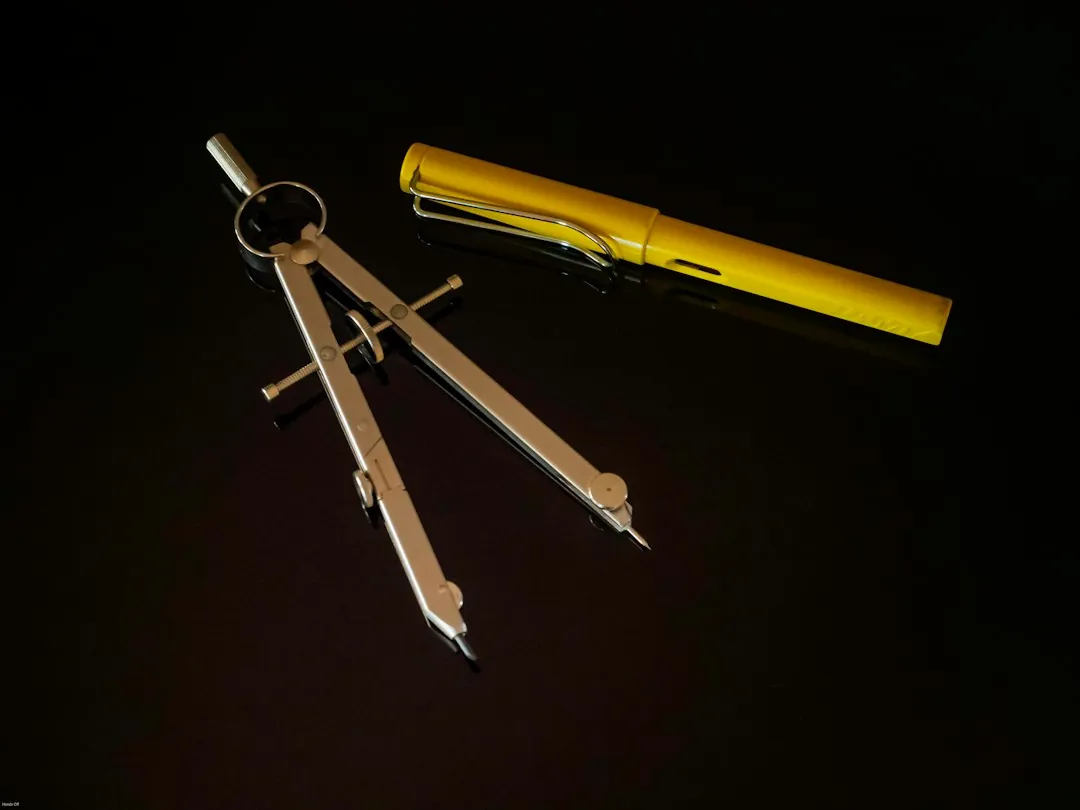
The phrase did not originate inside a lodge room. Its intellectual roots reach back to Plato’s Timaeus (c. 360 BCE), where the philosopher introduced the figure of the Demiurge, a divine craftsman who imposes rational order upon formless matter. The Demiurge does not create from nothing; it shapes, measures, and arranges, much as a master builder works from a blueprint. This image of a reasoning, geometry-wielding deity proved enormously durable. Neoplatonist philosophers, particularly Plotinus in the third century CE, elaborated the concept, and early Christian theologians absorbed it into their own accounts of divine creation, finding in the craftsman metaphor a bridge between Greek philosophy and scriptural cosmology.
By the sixteenth century, architect language for the divine had become standard theological currency. John Calvin employed the Latin phrase architectus mundi in his 1536 Institutes of the Christian Religion to describe God’s ordering role in creation. The phrase circulated widely across Renaissance and Reformation writing, appearing in sermons, philosophical treatises, and humanist correspondence long before any Masonic lodge formalized it as ritual vocabulary. When speculative Freemasonry coalesced in the early eighteenth century, it inherited a concept already centuries old, refined by philosophers and theologians rather than invented by fraternal ritual designers.
From Plato’s Demiurge to Renaissance Theology
The philosophical lineage connecting Plato’s divine craftsman to Masonic usage is neither straight nor simple. Neoplatonist thinkers, working between the third and sixth centuries CE, transformed the Demiurge from a relatively concrete figure into a more abstract principle of cosmic intellect. Marsilio Ficino, the Florentine humanist who translated Plato’s complete works into Latin in the 1480s, brought this tradition directly into Renaissance intellectual life, making the image of a geometrizing God accessible to educated Europeans who read Latin but not Greek. Christian humanists found the architect metaphor theologically safe precisely because it emphasized reason and order rather than mythology, and it mapped neatly onto the biblical account of God measuring and dividing creation. By the time operative stonemasons’ guilds were giving way to speculative lodges in the seventeenth century, the idea of a supreme divine builder was already embedded in the educated imagination on both sides of the Reformation divide.
Etymology: ‘Architect’ vs. ‘Geometrician’, Two Names, One Idea
Not all Masonic jurisdictions settled on the same title. Many lodges within the Scottish Rite tradition and several Continental obediences prefer Grand Geometrician of the Universe, a phrasing that foregrounds measurement and proportion rather than construction. The distinction is one of emphasis. Both titles draw from the same operative-craft metaphor: the master builder who lays out a structure with square, compass, and rule is also, by definition, a geometer. The word “architect” derives from the Greek arkhitekton, meaning chief builder or master craftsman, while “geometrician” stresses the mathematical precision that ancient and medieval thinkers associated with divine creation. The United Grand Lodge of England uses the phrase Great Architect of the Universe in its ritual workings, whereas French and Scottish bodies have historically favored the geometrician formulation. The underlying theological function, a non-denominational reference point for a supreme creative intelligence, remains identical across both usages.
GAOTU in Masonic Ritual and Practice
Anderson’s Constitutions and the Non-Sectarian Compact
When James Anderson published the Constitutions of the Free-Masons on January 17, 1723, he embedded a theological position that was, for its era, quietly revolutionary. The document required that a Mason “obey the moral law” and believe in “the glorious Architect of Heaven and Earth,” but it stopped there, deliberately refusing to name any deity in denominational terms. In an England still sorting out the aftershocks of the Reformation, where Test Acts barred non-Anglicans from public office and Catholic emancipation was still a century away, a fraternal body that officially welcomed Protestant Dissenters, Catholics, and Jews under the same roof was a structural anomaly. Anderson’s language made that coexistence possible precisely because it was vague enough to be sincere for everyone. No member was asked to abandon his creed; he was asked only to affirm that a creative intelligence stood behind the universe. The historian David Stevenson, writing on the Scottish origins of speculative Freemasonry, noted that this kind of doctrinal minimalism drew on earlier guild traditions, but Anderson formalized it as a founding principle rather than leaving it as informal custom. The decision shaped every grand lodge constitution that followed.
Practical Use: Ritual Phrases, Dedications, and the Volume of Sacred Law
The abbreviation T.G.A.O.T.U. (To the Glory of the Grand Architect of the Universe) appears at the head of official Masonic documents, warrants, and lodge communications across jurisdictions spanning six continents. The phrase is not ornamental. It functions as a formal dedication, the Masonic equivalent of the “Deo gratias” that heads ecclesiastical correspondence, anchoring every piece of lodge business within a framework of acknowledged higher purpose. Inside the lodge, the term surfaces at the opening and closing of every meeting, woven into the ritual questions and responses that structure the ceremony. During initiation, the candidate takes an obligation invoking the same language, committing himself before the Grand Architect of the Universe and the assembled brethren. At the center of the altar sits what Masonic ritual calls the Volume of Sacred Law, whichever scripture the candidate holds to be authoritative: a Bible, a Quran, a Torah, a Vedic text. The choice is the candidate’s. The altar remains the same; the book changes. That physical arrangement is the concept made tangible, a piece of theological architecture that requires no doctrinal agreement beyond the shared acknowledgment that the text on the altar matters.
The practical consequence of this framework is a kind of fraternal lingua franca. A Mason initiated in a London lodge under the United Grand Lodge of England and a brother raised in a Cairo lodge may hold personal theologies that are not merely different but, on specific doctrinal points, mutually incompatible. Yet both open their meetings with the same ritual invocation, address the same symbolic presence, and close under the same formula. The shared language does not resolve their theological differences; it brackets them, creating a ritual space where those differences are neither denied nor debated. Critics, including several ecclesiastical bodies, have argued that this bracketing is itself a theological position, one that implicitly subordinates revealed religion to a generic theism. That criticism is not unreasonable. It is also, from the fraternity’s perspective, precisely the point: the constitutions of 1723 were designed to hold a diverse membership together, and after three centuries, the architecture still stands.
The Grand Architect Across Religious Traditions
The GAOTU formula did not emerge in a theological vacuum. When eighteenth-century Masonic ritual writers reached for an architectural metaphor for the divine, they were drawing on a vocabulary that several major world religions had already developed, contested, or outright rejected. Mapping those positions side by side reveals why the concept functions as a genuine point of convergence for some traditions and a genuine point of friction for others.
| Tradition | Theological Parallel | Official Institutional Position | Compatibility with Masonic Use |
|---|---|---|---|
| Christianity (Protestant/Anglican) | Creator God; Calvin’s architectus mundi | No formal prohibition in most Protestant bodies | High (metaphor accepted as compatible) |
| Christianity (Roman Catholic) | Aquinas’s God as first cause and designer | Condemned by papal bull (1738, 1983 CDF declaration) | Low (institutional rejection, not theological) |
| Islam | Allah as Al-Khaliq (the Creator) | Prohibited in Egypt, Jordan, Malaysia, and others | Very low (abstraction viewed as incompatible with tawhid) |
| Judaism | Kabbalistic Ein Sof; God as cosmic craftsman in Proverbs 8 | No formal grand-lodge prohibition; individual rabbinic views vary | Moderate to high (structural resonance acknowledged) |
| Hinduism | Vishvakarman, divine craftsman of the gods | No formal institutional position | Moderate (structural resonance; Masonic scholars avoid claiming equivalence) |
| Buddhism (Theravada) | No creator-god concept | No formal prohibition; philosophical incompatibility noted | Low (concept of a supreme architect is doctrinally foreign) |
Christianity: Calvin, Aquinas, and the Architect Metaphor
John Calvin used the Latin phrase architectus mundi repeatedly in the Institutes of the Christian Religion (1536), treating the created order as evidence of a divine builder whose craftsmanship could be read in the proportions of nature. Thomas Aquinas, writing three centuries earlier, had similarly framed God as the ultimate efficient and formal cause of all structure. Both framings gave Protestant and Anglican ritual writers a ready-made scriptural adjacency when they incorporated the grand architect of the universe into lodge practice. The metaphor felt less like an invention than a borrowing.
The Roman Catholic Church’s objection, formalized in Pope Clement XII’s bull In Eminenti on April 28, 1738, was not primarily a rejection of the architectural language itself. The bull’s stated concerns centered on Masonic secrecy, the mixing of men from different religious backgrounds under a single oath, and the threat to civil order. The 1983 declaration by the Congregation for the Doctrine of the Faith reinforced that Catholics who join Masonic associations remain in a state of grave sin, a position unchanged today. The theological metaphor survived; the institutional objection did not.
Islam and the GAOTU: Points of Tension
Islamic scholarly objections to the GAOTU formula operate on a specific doctrinal ground: tawhid, the absolute oneness and unambiguous personhood of Allah. Reducing the divine to a philosophical category, even a majestic one like “grand architect,” risks what Islamic jurisprudence treats as an abstraction incompatible with direct Quranic revelation. The Egyptian fatwa authority, Dar al-Ifta al-Misriyyah, has issued rulings against Masonic membership on these grounds, citing both the interfaith oath structure and the depersonalization of God implicit in the GAOTU title. Jordan’s Islamic scholars have taken similar positions, and Malaysia’s National Fatwa Council formally prohibited Muslim participation in Freemasonry in 1985.
The concern is not merely political. The GAOTU formula requires a member to hold any conception of a supreme being, which, from a strict Islamic perspective, evacuates the specific content of divine revelation and replaces it with a lowest-common-denominator abstraction.
Judaism, Hinduism, and Buddhism: Parallel Concepts
Jewish mystical tradition offers perhaps the closest structural parallel to the GAOTU’s deliberately non-specific framing. The Kabbalistic concept of Ein Sof (literally “without end”) describes the divine in terms so absolute that no attribute, including personhood, fully captures it. Proverbs 8:27-30 further depicts Wisdom as present beside God during the act of creation, a passage that Masonic commentators have long cited as scriptural resonance for the architect metaphor. Neither parallel implies that Freemasonry is a Kabbalistic institution; the resonance is structural, not genealogical.
Hindu cosmology presents Vishvakarman, the celestial craftsman credited with designing the weapons of the gods and the city of Dwarka, as a figure whose function loosely mirrors the architect metaphor. Masonic scholars writing in the nineteenth century occasionally noted the parallel, though the United Grand Lodge of England has never claimed any formal equivalence.
Theravada Buddhism presents a genuine incompatibility rather than a tension. The tradition holds no concept of a creator deity whose design underlies the cosmos. The GAOTU freemasonry meaning presupposes a supreme being of some kind, which places it outside the doctrinal framework of Theravada entirely, a fact that Masonic regularity requirements (which ask candidates to profess belief in a supreme being) effectively acknowledge.
The Grand Architect in Gnostic and Hermetic Thought
Long before speculative Freemasonry formalized its theological vocabulary in the lodges of 18th-century Britain, a rich current of philosophical and esoteric thought had already been using architectural metaphors for the divine. The Hermetic tradition, rooted in the Corpus Hermeticum (a collection of Greek texts composed roughly between the 2nd and 3rd centuries CE and attributed to the legendary Hermes Trismegistus), describes a supreme divine intellect that imposes rational order upon formless matter. This language, rediscovered and translated by Marsilio Ficino in Florence in 1463, electrified Renaissance humanists and filtered steadily into the intellectual culture that eventually produced speculative Masonry. Rosicrucianism, a movement that emerged publicly in the early 17th century and shares a well-documented overlap in membership with the earliest recorded speculative lodges, leaned on the same builder-and-architect vocabulary for the divine, reinforcing a conceptual framework that lodges later standardized under the title of the Grand Architect of the Universe. The connection is one of shared metaphor, not doctrinal borrowing: Hermetic and Rosicrucian writers reached for the craftsman image because it expressed rational, purposive creation; Masonic ritual writers reached for it for exactly the same reason.
Why the Gnostic Demiurge Is Not the Masonic GAOTU
The most persistent misreading in popular writing about Freemasonry is the claim that the GAOTU freemasonry meaning traces back to the Gnostic Demiurge. The conflation is understandable on the surface: both figures are described as craftsmen who shape the material world. The structural difference, though, is fundamental. In Gnostic cosmology, the Demiurge (from the Greek demiourgos, meaning “craftsman” or “public worker”) is typically portrayed as an inferior, ignorant, or outright malevolent being, a secondary deity who fashions the physical cosmos in ignorance of the higher, transcendent God above him. For many Gnostic schools, the material world the Demiurge creates is itself a kind of prison, and humanity’s task is to escape it. The moral valence is unambiguously negative. The Grand Architect meaning within Freemasonry carries precisely the opposite charge: the GAOTU is a positive, supreme creative principle, the source of order, wisdom, and moral law. No Masonic ritual text, from the earliest printed exposures of the 18th century onward, associates this figure with deception, ignorance, or a hierarchy of lesser gods. Scholars such as Henrik Bogdan, writing on Western esotericism and initiatory orders, are careful to note that Masonic ritual drew on operative craft symbolism and broad monotheistic theology, not on Gnostic metaphysics. The two concepts are not variations on a theme; they are structurally opposite in moral valence, and treating them as equivalent distorts both traditions equally.
Want to learn more?
Visual Symbolism: How the Grand Architect Is Represented Iconographically
The Eye of Providence and Its Pre-Masonic History
The Eye of Providence, an open eye set within a radiating triangle, entered Christian iconography well before any Masonic lodge existed. Artists and theologians of the 16th century used it to represent the all-seeing nature of the Holy Trinity, and it appears in European church architecture and devotional prints throughout the 1600s. Pontormo’s work, Flemish altarpieces, and the frontispieces of Catholic catechisms all deployed the image as standard shorthand for divine omniscience. When the first grand lodges began formalizing their ritual vocabulary in the early 18th century, they inherited a symbol already saturated with meaning rather than inventing one from scratch. Lodges incorporated the eye-within-triangle as a visual emblem of the GAOTU’s watchfulness over the moral labor performed inside the lodge room, a superintending presence that observes whether the brother acts in accordance with the square and plumb. The symbol’s pre-Masonic pedigree is not incidental. It explains why the image resonated across different religious backgrounds within the fraternity: Protestant, Catholic, and Jewish members could each locate a familiar theological referent in the same glyph without requiring doctrinal agreement about what, precisely, that referent was.
The compass and square, arguably the most universally recognized emblems of the craft, carry a related layer of meaning when read through the lens of this theological concept. The compass, which traces arcs and circles, is associated with the heavens and with the divine act of cosmic ordering. The square, used to test right angles and true surfaces, governs earthly conduct and moral rectitude. Overlaid, the two instruments form a composite figure that Masonic ritual explicitly links to the tools of the supreme craftsman who designed and built the universe according to geometric law. This is not metaphor dressed up as architecture. It is a deliberate pedagogical device, one that asks initiates to understand moral behavior as a form of precision work, subject to the same standards a master builder would apply to stone. Completing the triad of principal symbols, the letter G displayed prominently in lodge rooms encodes the same idea in a single character. Masonic teaching assigns it a dual referent: Geometry, the science underlying all physical creation, and God, understood in the broad, non-sectarian sense the fraternity requires. The two readings are not accidental synonyms. They reflect a conscious effort to make the GAOTU concept legible at a glance, collapsing an entire philosophical position into one letter hanging above the altar.
Modern Secular and Scientific Interpretations
Enlightenment deism offers perhaps the most natural secular translation of the grand architect of the universe concept. Deism, broadly defined, holds that a rational creator set the universe in motion according to fixed natural laws and then withdrew from direct intervention in human affairs. That picture maps almost perfectly onto the GAOTU framework: a supreme intelligence responsible for cosmic order, venerated through reason rather than revelation. Several Founding Fathers who held Masonic membership, including Benjamin Franklin and George Washington, expressed theological views far closer to deism than to orthodox Protestant Christianity. Franklin, in his Articles of Belief and Acts of Religion (1728), described God in terms of an architect of infinite wisdom whose handiwork was legible in natural law, a formulation any lodge chaplain of the period would have recognized without difficulty. The GAOTU, in this reading, is not a personal deity who answers prayer but a philosophical anchor, a way of acknowledging that reason itself implies order, and that order implies a source.
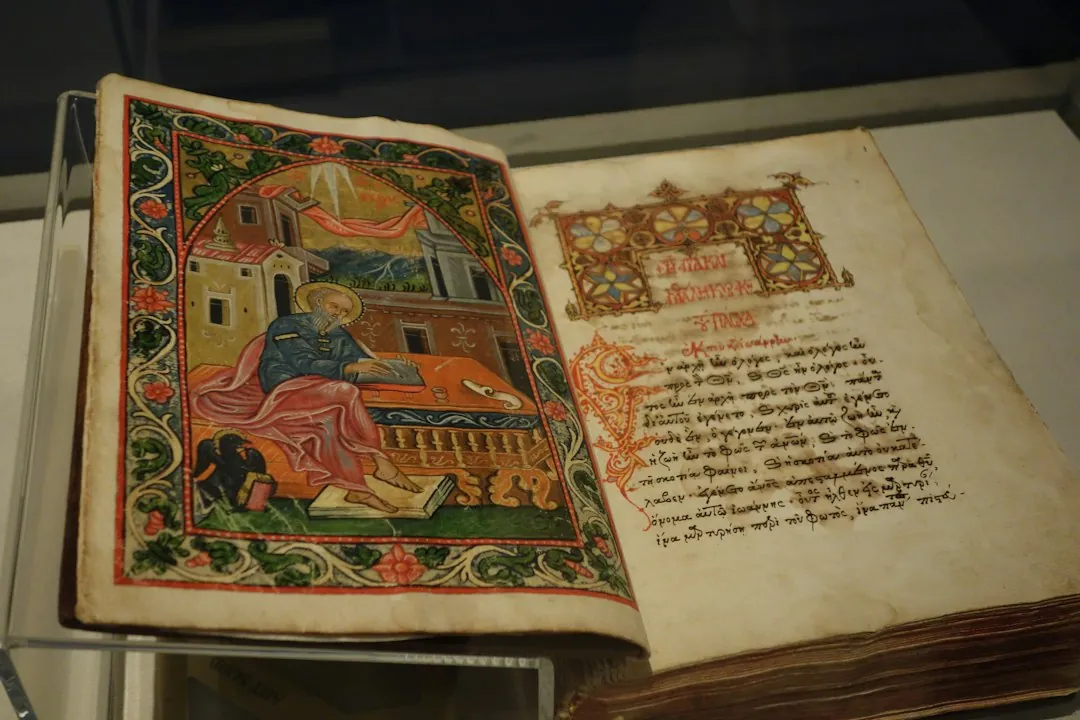
The secular drift has accelerated in certain jurisdictions since the nineteenth century. The Grand Orient de France voted in 1877 to remove the obligation to believe in a supreme being and the immortality of the soul, effectively opening membership to atheists and agnostics. The United Grand Lodge of England responded by withdrawing recognition, a rupture that has never fully healed. Popular writing sometimes extends the secular interpretation further still, invoking Albert Einstein’s references to “the Old One” as a cosmic synonym for the GAOTU. The comparison is evocative but historically imprecise: Einstein was not a Freemason, and his “God” was explicitly the God of Spinoza, a metaphor for natural law rather than a personal or architectural intelligence. What the comparison does illuminate is how the underlying idea, that the universe exhibits a rational structure that demands some name, persists well beyond the lodge room, in scientific culture, in philosophy of mind, and in the quiet convictions of people who find orthodox religion insufficient but pure materialism equally unsatisfying.
Criticism, Controversy, and Theological Debates
The Catholic Church’s Position: From In Eminenti to 1983
The Catholic Church’s opposition to Freemasonry is among the oldest and most formally documented in the history of institutional religion. Pope Clement XII issued In Eminenti on April 28, 1738, just twenty-one years after the founding of the first Grand Lodge in London, making it one of the earliest papal responses to the fraternity’s spread across Europe. The bull’s objections were multiple, but a central theological concern was that Masonic lodges required only a generalized belief in a supreme being rather than allegiance to the revealed God of Christian doctrine. The GAOTU concept, from Rome’s perspective, was not a respectful accommodation of diverse faith traditions. It was a reduction of divinity to an abstraction, a philosophical placeholder that could be filled by any deity or none in particular, and therefore incompatible with the Catholic understanding of a personal, revealed God.
This position never softened over time. The Sacred Congregation for the Doctrine of the Faith, under Cardinal Joseph Ratzinger, issued its Declaration on Masonic Associations on November 26, 1983, the same year the revised Code of Canon Law came into effect. The declaration stated explicitly that Catholics who enroll in Masonic associations “are in a state of grave sin and may not receive Holy Communion.” The theological reasoning remained consistent across nearly two and a half centuries: the GAOTU framework, by design, brackets the question of which God is meant, and Catholic doctrine holds that this bracketing is not neutrality but error. A God defined only by the attribute of being a supreme architect is, by that definition, not the Trinitarian God of Christian revelation.
The Grand Orient de France Schism: Atheism and the GAOTU Requirement
While the Catholic Church attacked the concept from one direction, a major rupture within Freemasonry itself attacked it from the opposite side. In September 1877, the Grand Orient de France voted to remove the requirement that candidates profess belief in a supreme being, making the GAOTU optional rather than obligatory. The United Grand Lodge of England responded swiftly, withdrawing recognition from the Grand Orient de France and declaring it an irregular body. The split has never been fully repaired. The English position held that belief in a supreme being is a landmark of the craft, a foundational requirement without which the fraternity loses its defining character. The French position, shaped in part by the secular republican culture of post-revolutionary France, argued that demanding any religious test, including a minimal theistic one, contradicted the fraternity’s stated commitment to universal brotherhood and freedom of conscience.
This schism remains the most consequential institutional debate the concept has ever generated. Secular critics today continue to press a version of the same argument: if Freemasonry presents itself as a fraternity that transcends sectarian division, then the GAOTU requirement itself becomes a form of exclusion, one that bars atheists and agnostics regardless of their ethical character or civic virtue. Some Protestant denominations press from yet another angle, arguing that a fraternity willing to accept any supreme being implicitly treats the God of Christian Scripture as interchangeable with other deities, a form of syncretism. The result is that the masonic concept of god has attracted sustained criticism from both those who find it too religious and those who find it not religious enough, a position that is, depending on one’s perspective, either a sign of careful balance or of irresolvable ambiguity.
Common Misconceptions About the Grand Architect of the Universe
The Leo Taxil Hoax and Its Lasting Damage
The most persistent slander attached to the concept of the grand architect of the universe traces back not to any Masonic document but to a deliberate fraud. Gabriel Jogand-Pagès, writing under the pen name Leo Taxil, spent the better part of the 1880s and 1890s producing a torrent of anti-Masonic pamphlets, books, and fabricated “exposés.” His most damaging invention was a quote attributed to Albert Pike, the prominent 19th-century Masonic author, in which Pike allegedly declared that Freemasonry worships Lucifer as its true god. The quote was entirely fabricated. On April 19, 1897, Taxil stood before a packed audience in Paris and admitted, with evident satisfaction, that the entire enterprise had been a hoax designed to embarrass both the Catholic press and the Masonic fraternity simultaneously. Historians of religion, including Massimo Introvigne in his scholarly work on anti-Masonic literature, have documented this confession thoroughly. What Taxil apparently did not anticipate was that his fabrications would outlive his admission by more than a century, circulating through conspiracy literature, early internet forums, and eventually social media, stripped of the 1897 retraction entirely.
The durability of the Taxil hoax says more about the appetite for sensational narratives than it does about Masonic theology. No authenticated Pike manuscript contains the Luciferian passage. The Albert Pike Memorial Foundation and independent historians of American Freemasonry have confirmed that the quote appears in none of Pike’s verified writings, including his substantial Morals and Dogma (1871). The fabrication persists because it is self-reinforcing: those who encounter it rarely encounter the 1897 confession in the same source.
Two additional misconceptions deserve direct treatment. First, the term GAOTU is not the name of a deity invoked in Masonic ritual. Lodge ceremonies do not include prayers addressed to the “Grand Architect” as a named divine being. The phrase functions as a descriptive title, a way of acknowledging a shared belief in a supreme creative intelligence without specifying the theology behind that belief. Second, the historical Bavarian Illuminati, founded on May 1, 1776, by Adam Weishaupt at the University of Ingolstadt and dissolved by government decree in 1785, had no formal theological doctrine comparable to the Masonic concept under discussion. The Illuminati was never a Masonic body. It recruited some Freemasons as members, as it recruited members from many educated circles, but it operated as a separate organization with distinct aims rooted in Enlightenment rationalism rather than symbolic craft tradition. Conflating the two, as popular culture routinely does, produces a fiction that neither institution’s historical record supports. The masonic concept of god encoded in the GAOTU title is deliberately broad and non-denominational; it was never designed as a secret name for any entity, infernal or otherwise.
FAQ
What does Grand Architect of the Universe mean?
Grand Architect of the Universe (commonly abbreviated GAOTU) is a non-denominational title for a supreme creative intelligence used in Masonic ritual. Its purpose is as practical as it is philosophical: it allows members of different faiths to participate in lodge ceremonies without requiring agreement on any specific theology.
The Masonic Service Association and most grand lodge constitutions describe the term as a symbolic reference to whatever supreme being a Mason personally acknowledges. It is a descriptive concept, not a proper name for a deity, and it carries no doctrinal content of its own. The meaning is deliberately left to each member’s own religious tradition to fill in.
Is the Grand Architect of the Universe the same as God?
That depends entirely on the tradition a Mason brings into the lodge. For most Christian and Jewish members, the title is understood as another name for the God of their faith. For deists, it describes a creator who set natural law in motion but does not intervene in human affairs. For members of some continental European lodges, particularly those in the French tradition, it functions as a philosophical abstraction rather than a personal deity.
The term is broad enough to accommodate all of these readings at once. That theological flexibility is both its strength as a fraternal device and the primary source of criticism from religious bodies, including the Catholic Church, that regard the deliberate ambiguity as incompatible with revealed religion.
Why do Freemasons use the term Grand Architect of the Universe instead of ‘God’?
James Anderson’s Constitutions of 1723 established that the fraternity should admit men of any faith who acknowledge a supreme being, a direct response to the sectarian conflicts that had fractured 17th- and 18th-century Europe. Using the word ‘God’ alone would have carried an implicitly Christian or Jewish framing that excluded other traditions.
GAOTU provided a shared vocabulary that Protestant, Catholic, Jewish, and later Muslim and Hindu members could each interpret through their own beliefs. In an era when religious difference routinely produced civil war, the lodge became a rare space of inter-faith coexistence, and the title was the linguistic instrument that made that possible.
What is the history of the Grand Architect concept before Freemasonry?
The idea predates speculative Masonry by roughly two thousand years. Plato’s Timaeus (c. 360 BCE) described a divine craftsman, the Demiurge, who imposes rational order on chaotic matter. Neoplatonist philosophers and later Christian theologians adapted this imagery extensively throughout the medieval and Renaissance periods.
By 1536, John Calvin was using the Latin phrase architectus mundi in his Institutes of the Christian Religion to describe the Creator’s relationship to the natural world. When speculative Freemasonry coalesced in the early 18th century, architect-of-the-universe language was already a well-worn fixture of European philosophical and theological writing, not a Masonic invention.
How is the Grand Architect of the Universe represented visually in Masonic symbolism?
Several distinct emblems carry this association. The Eye of Providence, an eye set within a triangle, is the most widely recognized, representing divine oversight of human moral conduct. The letter G displayed in lodge rooms encodes both ‘Geometry’ and ‘God,’ a dual reference to the Architect’s tools and nature.
The overlapping compass and square form a geometric figure that reinforces the same idea: the compass traditionally symbolizes heavenly proportion, the square earthly rectitude. Together they represent the instruments of a divine Architect who orders both the cosmos and human moral life. These are symbolic associations, not theological claims, and Masonic ritual treats them explicitly as working-tool allegory.
