 Italiano
  English
| 0 Comments | James Whitfield
Masonic ritual is the structured ceremonial practice at the heart of Freemasonry, a sequence of dramatic allegories, symbolic gestures, and moral instruction that has been performed in recognizable form since at least the early eighteenth century. The first Grand Lodge was constituted in London on June 24, 1717, and the ritual framework codified in the decades that followed remains the template for lodge work practiced across more than 170 countries today. That longevity is not accidental. Masonic ritual functions simultaneously as an initiation rite, a mnemonic system for ethical teaching, and a mechanism for fraternal cohesion, three purposes that any serious examination of the subject must hold together. What it is not, despite a persistent popular mythology, is a vehicle for secret oaths of political allegiance or occult power. The ceremonies draw on operative stonemason tradition, Renaissance humanism, and Protestant scripture, filtered through the Enlightenment sensibility of the men who formalized them. This article traces the historical origins of that framework, explains the structure of each of the three degrees, examines the symbols and officers who animate the ritual, and addresses the regional variations and modern transmission challenges that shape how Masonic ceremony is practiced today.
What Is Masonic Ritual? A Working Definition
Masonic ritual is a formalized sequence of allegorical drama, symbolic gesture, and moral instruction that structures the internal life of a Freemasons’ lodge. It is not a religious liturgy, a political ceremony, or an occult rite. The framework has been standardized since the early 18th century, with its foundations documented in primary sources that remain publicly available.
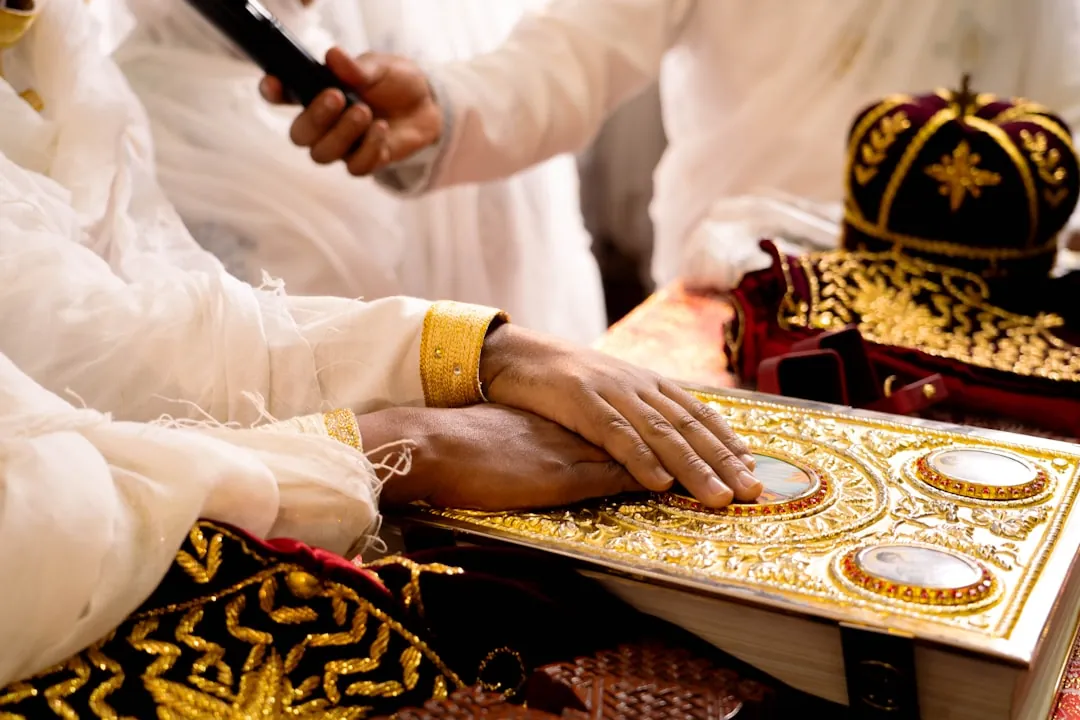
The term covers more ground than most outsiders assume. It encompasses the opening and closing procedures that begin and end every lodge meeting, the degree conferrals through which a candidate advances from Entered Apprentice to Fellow Craft to Master Mason, and the catechetical review (a structured question-and-answer exchange) that follows each degree to confirm the candidate’s comprehension of what he has just experienced. Anderson’s Constitutions of 1723, the earliest printed regulatory document of the premier Grand Lodge, already presupposed an established ceremonial framework. The United Grand Lodge of England‘s Book of Constitutions, in its successive editions, codified that framework further. Neither document invented the ritual from whole cloth; both reflect practices that had been accumulating in operative and speculative lodge culture for decades before 1717.
Ritual vs. Ceremony vs. Symbolism: Clarifying the Terms
Popular writing about Freemasonry uses “ritual,” “ceremony,” and “symbolism” as interchangeable synonyms. They are not. Ritual refers to the enacted procedure in its entirety: the scripted sequence of words, movements, and dramatic exchanges that constitute a lodge’s formal working. Ceremony is a narrower term for a single discrete event within that larger procedure, such as the first-degree initiation or the installation of a new Worshipful Master. Symbolism is the interpretive layer applied to both: the system of meaning that explains why a candidate approaches the altar in a particular posture, or why the working tools of each degree carry specific moral weight.
Conflating these three categories is the source of considerable confusion, both in sensationalist coverage and in well-intentioned popular history. A cable-tow is a physical object used in ritual; it becomes a symbol when the lodge explains what obligation and trust it represents. The distinction matters because critics of Freemasonry sometimes treat the symbolic interpretation as if it were the literal content of the procedure, while defenders sometimes dismiss the procedure itself as “merely symbolic” to deflect scrutiny. Both moves misrepresent how the system actually works. Masonic scholars such as Albert Mackey, writing in his Encyclopedia of Freemasonry (1874), were careful to maintain this distinction, even if later popularizers were not.
Historical Origins and Evolution of Masonic Ritual
The documented history of masonic ritual does not begin in candlelit lodge rooms or with gentlemen philosophers debating Enlightenment ideals. It begins, more prosaically, with working stonemasons in medieval England and the manuscript charges they carried to govern their craft. The Regius Manuscript, dated to approximately 1390, and the Cooke Manuscript, dated to approximately 1410, are the earliest surviving texts linking organized stonemason guilds to proto-Masonic obligations: moral duties, rules of conduct, and the expectation that a craftsman’s character was as important as his skill with a chisel. These documents describe nothing resembling a modern lodge ceremony, but they establish the intellectual and ethical vocabulary that speculative Freemasonry would later inherit wholesale. Ritual, in this context, was never invented from scratch. It was adapted, layered, and refined across centuries.
From Operative Guilds to Speculative Lodges
The transition from operative to speculative Masonry was gradual rather than sudden, accelerating through the 17th century as educated gentlemen, clergy, and aristocrats began joining guilds that had no practical need of their stonecutting abilities. What these new members brought was an appetite for allegory. The apron, worn by working masons to protect their clothing from stone dust, was reinterpreted as a symbol of labor and moral purity. The working tools, the square, the level, the plumb rule, stopped being instruments of construction and became metaphors for ethical self-improvement. The examination of a craftsman’s competence, once a practical test of trade knowledge, evolved into the ritual examination of a candidate’s moral readiness. This metaphorical transformation is not a later invention or a revisionist reading. Scottish lodge records from the early 17th century, including those of Lodge Mother Kilwinning, show non-operative members appearing alongside working masons well before the 1717 institutional watershed. The physical customs of the building site became the symbolic grammar of the lodge room.
Anderson’s Constitutions and the Codification of 1723
When the Premier Grand Lodge of London was formed on June 24, 1717, it represented an institutional consolidation rather than a philosophical invention. The organizational framework that gave this new body its regulatory coherence arrived six years later with the publication of The Constitutions of the Free-Masons by the Reverend James Anderson in 1723. Anderson’s text provided the first printed rulebook for lodge conduct: it outlined the duties of officers, the obligations of members, and the moral principles governing fraternal behavior. It did not publish ritual in the modern sense, since the actual ceremonial working was communicated orally and never committed to print in Anderson’s era, but it established the template of governance and moral expectation that grand lodges around the world still reference today. The 1723 Constitutions also made a notable theological adjustment, replacing the medieval requirement of Christian belief with a broader obligation to believe in “the religion in which all men agree,” a formulation that allowed the fraternity to expand across confessional boundaries. Later milestones compounded this codification. William Preston’s Illustrations of Masonry (1772) and Thomas Smith Webb’s Freemason’s Monitor (1797) standardized much of what American lodges practice today, giving the Preston-Webb tradition its enduring shape. What emerges from this long arc is a clear pattern: ritual texts in Freemasonry are living documents, revised by grand lodge committees and shaped by historical circumstance, not fixed scripture handed down unchanged from a single founding moment.
The Structure of a Lodge Meeting: Opening, Degree Work, and Closing
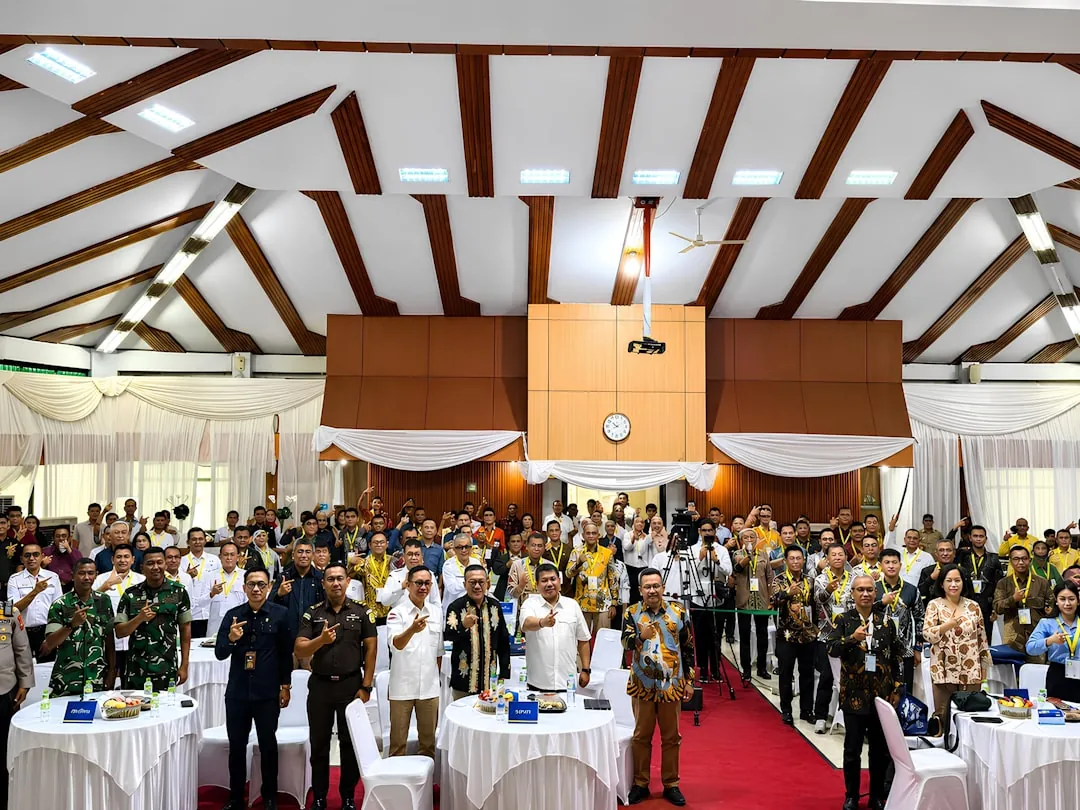
A lodge meeting follows a precise procedural architecture that any Freemason traveling from London to Louisville would recognize. The meeting opens with a formal ritual sequence in which the Worshipful Master declares the lodge “at labor” at a specified degree, confirms that all officers are at their stations, and invokes a non-denominational prayer. Nothing in that sequence is improvised. The language, the physical movements, and the order of events are drawn from the jurisdiction’s authorized ritual monitor, and deviations are noted and corrected. Once the lodge is formally opened, business may be conducted: minutes read, petitions considered, correspondence handled. The dramatic centerpiece of any lodge meeting, though, is degree work, the ceremonial conferral of the Entered Apprentice, Fellowcraft, or Master Mason degree upon a candidate. A full degree conferred properly can occupy an entire evening, which is why many lodges schedule degree nights separately from stated communications. The closing ritual mirrors the opening with equal formality: officers are acknowledged by station, the lodge is declared “at refreshment” (the traditional phrase for adjournment), and members are dismissed with a formal charge that varies by jurisdiction but typically calls on brothers to practice the craft’s moral teachings in daily life.
The Role of Ritual Officers and Their Responsibilities
The lodge’s ritual structure depends on a defined hierarchy of officers, each assigned specific ceremonial functions that cannot simply be redistributed on the night. The Worshipful Master presides from the East, directs all degree work, and is the sole authority who can open or close the lodge. The Senior Warden, stationed in the West, oversees the lodge “at labor” and assumes the Master’s authority in his absence. The Junior Warden, in the South, is responsible for the lodge “at refreshment” and traditionally supervises the conduct of members during breaks. The two Deacons, Senior and Junior, serve as messengers and escorts, guiding candidates through the physical movements of a degree and carrying communications between officers. Stewards assist the Junior Warden and prepare candidates before they enter the lodge room. The most singular office is the Tyler, who stands outside the lodge door, armed in many jurisdictions with a drawn sword, and ensures that no uninitiated person gains entry. The Tyler also prepares candidates immediately before their admission. Each of these roles carries specific words, gestures, and positions that must be executed in sequence for the degree to be considered properly conferred under most grand lodge constitutions.
Memorization and the Oral Tradition of Ritual Transmission
Ritual is not learned from a script handed to a new officer on his first night. Most grand lodges transmit their working through a mentorship system known as proficiency, in which an experienced Mason coaches a candidate or new officer through the required catechisms, responses, and charges until they can be delivered from memory. This oral tradition is deliberate. The United Grand Lodge of England, along with most North American grand lodges, discourages reading from a printed monitor during degree work on the grounds that reliance on a text breaks ceremonial continuity and signals to the candidate that the lodge has not done the work of preparation. Some jurisdictions go further: their ritual monitors, sometimes called “cipher books,” encode the working in abbreviated or symbolic notation precisely to prevent a non-initiate from reconstructing the full degree from the printed page alone. The practical result is that Masonic ritual is transmitted the way legal oral argument or liturgical chant once was, through repetition, correction, and sustained mentorship over months. A brother who has “passed proficiency” in a given degree has demonstrated that the material lives in his memory, not on a lectern in front of him.
The Three Degrees of Freemasonry: What Each Teaches
Freemasonry structures its core instruction around three progressive degrees, each building on the last in symbolic depth and moral expectation. The degrees are not academic credentials or military ranks. They are, as the United Grand Lodge of England describes them, a system of “moral and philosophical instruction” conveyed through ceremony, working tools, and allegory. Each degree presents a candidate with a specific set of symbols and a specific lesson, delivered in a form designed to be memorable precisely because it is dramatic.
| Degree Name | Symbolic Role | Primary Working Tools | Central Moral Theme |
|---|---|---|---|
| Entered Apprentice (First Degree) | The new candidate, entering the craft | 24-inch gauge, common gavel | Self-improvement and the discipline of time |
| Fellowcraft (Second Degree) | The journeyman, advancing in knowledge | Square, level, plumb rule | Intellectual cultivation and moral uprightness |
| Master Mason (Third Degree) | The completed craftsman, facing mortality | Trowel (and the tools of the previous degrees) | Fidelity, mortality, and the immortality of virtue |
The Entered Apprentice degree introduces the candidate to the lodge and its officers, and presents two working tools whose symbolism is deliberately practical in origin. The 24-inch gauge represents the division of the day into labor, refreshment, and service to God and a worthy brother. The common gavel represents the work of removing the rough edges of personal conduct. The lesson is straightforward: before a person can build anything of value for others, the raw material of the self must be shaped. The Fellowcraft degree widens the scope considerably. Its working tools, the square, the level, and the plumb rule, address morality, equality, and rectitude of conduct respectively. This degree also incorporates the liberal arts and sciences, with geometry receiving particular emphasis. The traditional explanation, drawn from standard ritual texts including the widely published Richardson’s Monitor of Freemasonry (1860), holds that geometry underlies all the arts and is the foundation on which the moral architecture of the craft rests.
The Hiram Abiff Legend and the Third Degree
The masonic initiation ceremony of the third degree centers on one of the most elaborate pieces of allegorical theater in any fraternal tradition. Hiram Abiff, identified in the ritual as the master architect of Solomon’s Temple and described as “the widow’s son,” is said to have possessed the secrets of a Master Mason. According to the legend as performed in lodge, three ruffians, each demanding those secrets, murder him in succession when he refuses to reveal them. His body is discovered, and the secrets are declared lost. The legend is not presented as history, and responsible Masonic sources have never claimed it as such. The name Hiram appears in the Hebrew Bible (1 Kings 7) as a skilled craftsman sent by the King of Tyre, but the elaborate narrative surrounding his death and the subsequent search for his body is the craft’s own allegorical construction, developed in recognizable form by the early eighteenth century.
The symbolic purpose of the narrative is a meditation on three things: fidelity to obligation, the universality of mortality, and the persistence of virtue beyond death. The candidate, during the 3rd degree masonic ritual, participates in a dramatic re-enactment that places them in the role of Hiram. The effect is intended to be contemplative rather than theatrical. As Masonic scholar Albert Mackey wrote in his Encyclopedia of Freemasonry (1874), the legend “is not a history but a philosophical myth.” That distinction matters. The drama works precisely because it operates at the level of symbol, not biography.
Want to learn more?
/masonic-symbolism/” title=”Masonic Symbolism Explained”>Masonic symbolism.”
Symbols and Their Significance in Masonic Ritual
Three objects sit at the center of every properly constituted lodge: the Square and Compasses, the Volume of the Sacred Law, and the Tracing Board. Each carries a specific allegorical weight explained explicitly during the degrees, leaving little room for guesswork about intended meaning. The Square and Compasses are the most universally recognized emblem in Freemasonry. The square, borrowed directly from operative stonemasonry, represents morality and right conduct, the standard by which a Mason is expected to measure his actions toward others. The compasses represent the discipline of keeping desire and passion within proper bounds. Neither symbol is presented as mystical. Both are rooted in the physical tools that medieval guild craftsmen used daily, and the ritual makes that derivation explicit. The Volume of the Sacred Law, placed open on the altar during every meeting, functions as a symbol of the divine standard by which members are expected to measure their conduct. The VSL is not fixed to a single text. Depending on the candidate’s faith, it may be the Bible, the Quran, the Torah, the Vedas, or another scripture that individual recognizes as authoritative. The United Grand Lodge of England’s Book of Constitutions addresses this directly, affirming that no single religious text is privileged above others in the lodge room. The Tracing Board, a painted or printed diagram displayed during each degree, serves as a visual curriculum. It illustrates the symbols and allegories under discussion in that particular degree, functioning more like a lecturer’s slide than a sacred icon. Popular accounts sometimes treat it as a mystical artifact, which misreads its practical pedagogical purpose.
Working Tools as Moral Metaphors
Each of the three degrees introduces a specific set of working tools drawn from the stonemason’s trade, and each tool is assigned a precise ethical meaning within the masonic initiation ceremony. In the First Degree, the candidate is presented with the 24-inch gauge, used by operative masons to measure stone, here reinterpreted as a symbol for dividing the day among labor, refreshment, and service. The common gavel, used to knock off rough edges from stone, represents the work of subduing personal faults and impulses. The chisel, which refines stone to its finished form, stands for the cultivation of the mind through education.
The Second Degree introduces the square, the level, and the plumb rule. The square, again, signifies morality. The level represents equality, the recognition that all members stand on the same ground regardless of social rank outside the lodge. The plumb rule signifies rectitude of conduct, the commitment to act uprightly in all circumstances. The Third Degree brings the skirret, pencil, and compasses, each tied to principles of planning, recording, and self-governance. The trowel, associated in some rites with the Third Degree or with the Mark Master degree in the York Rite, carries a particularly direct metaphor: spreading the cement of brotherly love to unite members into a coherent whole. What is notable across all these presentations is their consistency. The ritual does not claim that these tools possess power. It claims, straightforwardly, that they illustrate principles worth practicing, grounding masonic ritual and symbolism firmly in the craft tradition from which the fraternity draws its foundational language.
Fraternal Recognition: Grips, Signs, and Words
Every degree of the Craft confers three things on the candidate: a grip, a sign, and a word. Collectively, these fraternal recognition methods served a function that was entirely practical before it became ceremonial. A journeyman stonemason traveling from York to London in the fifteenth century had no diploma to present, no guild card to show. What he had was a handshake and a password, recognized by the master of a new lodge as proof that the man had been properly trained. The system migrated into speculative Freemasonry and was formalized as the fraternity expanded in the eighteenth century, with each of the three degrees of Freemasonry carrying its own distinct set of tokens. The grip is exchanged at close quarters; the sign is a physical gesture performed at a distance; the word, sometimes communicated in syllables between two parties rather than spoken whole, confirms the degree attained. Together they allow a Mason to identify himself to a brother he has never met, in any city where a lodge is warranted.
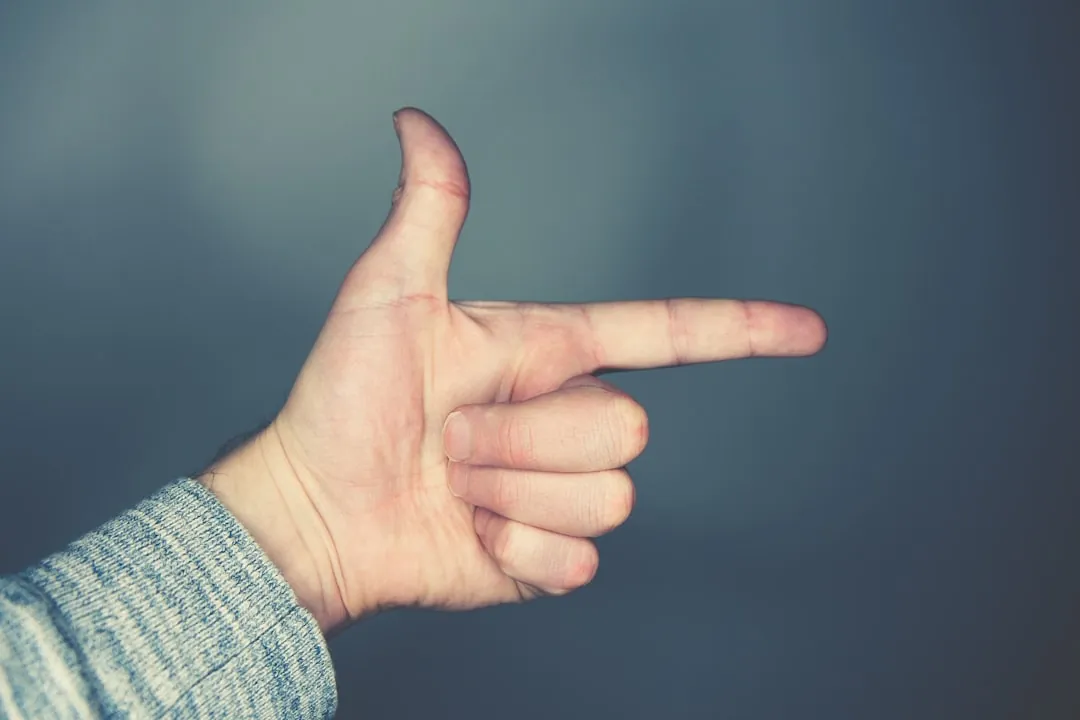
These tokens are what Freemasons actually mean when they speak of Masonic secrecy. The moral teachings of the fraternity, the allegorical drama of the degrees, the explanations of the working tools: none of this is hidden. The United Grand Lodge of England has published its Book of Constitutions openly since 1723, and the philosophical content of the ritual has been in print for nearly as long. What is withheld, by solemn obligation, is the specific vocabulary of recognition, because its value depends entirely on restricted circulation. The irony, noted by historians of the fraternity, is that this particular secret has been widely available since Samuel Prichard published Masonry Dissected in 1730, a pamphlet that laid out grips, signs, and words in enough detail to embarrass the Grand Lodge of England into revising some of its own ritual. Prichard was followed by a long tradition of exposé literature, so the masonic ritual meaning behind these tokens is accessible to any curious reader willing to spend an afternoon in a library. The obligation to keep them remains; the concealment, practically speaking, does not.
Regional and Jurisdictional Variations in Ritual Practice
One of the most persistent misconceptions about Freemasonry is that every lodge, in every country, performs an identical ceremony. The reality is considerably more varied. The United Grand Lodge of England (UGLE), founded on June 24, 1717, operates under its own constitution and has authorized several distinct ritual workings, the most widely practiced of which is the Emulation working, codified in the early nineteenth century and still used by a majority of English lodges today. Across the Atlantic, American grand lodges, each sovereign within its own state, have largely converged on the Preston-Webb tradition, a working shaped by the lectures of William Preston and later standardized by Thomas Smith Webb in his 1797 Freemason’s Monitor. Yet even within the United States, “standardized” is a relative term. A lodge in Massachusetts and one in Texas confer the same three degrees, but the precise wording of obligations, the arrangement of floor-work, and the cadence of catechetical instruction can differ enough that a visiting Mason from one state occasionally needs a moment to orient himself in another. Each state grand lodge maintains its own authorized ritual book, and deviations from that text are a matter of some constitutional seriousness.
The variation does not stop at geography. Different eras of Masonic history produced competing ritual families, and those families persist. The Ancient and Accepted Scottish Rite extends the degree system from three to thirty-three, each additional degree staging its own ritual drama, drawing on themes from Solomonic legend, medieval chivalry, Rosicrucian allegory, and Enlightenment philosophy. These degrees are elaborate in their own right, but they carry a crucial caveat: only the first three degrees, the so-called Blue Lodge degrees, are universal. Every Freemason, regardless of jurisdiction, has passed through those three. The higher degrees of the Scottish Rite, and the parallel structure of the York Rite, are voluntary extensions available only to those who have already completed the foundational work.
York Rite and Scottish Rite: Appendant Bodies and Their Rituals
The York Rite and the Scottish Rite are the two principal appendant bodies in American Freemasonry, each with its own ritual architecture. The York Rite is itself a cluster of three separate bodies: the Chapter (Royal Arch Masonry, degrees four through seven in its numbering), the Council (Cryptic Masonry), and the Commandery (Knights Templar, a body that explicitly invokes Christian chivalric symbolism). Each body confers its own degrees through independent ceremonies, and membership in one does not automatically confer membership in another. The Scottish Rite, by contrast, is a single administrative structure that confers the fourth through thirty-third degrees, organized into four bodies: Lodge of Perfection, Chapter of Rose Croix, Council of Kadosh, and Consistory. The thirty-third degree is an honorary rank conferred by the Supreme Council, not earned through sequential ritual work. Both rites are voluntary, both require the three Blue Lodge degrees as a prerequisite, and neither supersedes the authority of the grand lodge that governs a Mason’s home lodge. They are, in the language of Masonic governance, appendant rather than superior.
Masonic Secrecy, Misconceptions, and the Public Record
The idea that Masonic ritual exists in a hermetically sealed vault of secrecy is, at this point, historically difficult to defend. James Anderson’s Constitutions of the Free-Masons, published in 1723, laid out the moral and philosophical framework of the fraternity in plain English, available to anyone who could afford a copy. Seven years later, Samuel Prichard’s Masonry Dissected (1730) provided a detailed exposé of ritual dialogue and degree structure that went through multiple print runs and became something of a bestseller. The moral content, the allegorical architecture, the philosophical underpinnings: none of it has been genuinely hidden from the reading public for nearly three centuries. What grand lodges do protect, and what they describe openly as a matter of fraternal obligation rather than operational secrecy, is the specific system of recognition: the grips, the signs, and the passwords that allow members to identify one another. That is closer in function to a private club’s membership card than to state-level classified intelligence.
Conspiracy theories that frame the lodge room as a staging ground for political control or occult practice share a common methodological flaw: they rarely engage with the primary sources. The United Grand Lodge of England publishes its constitutions and regulatory documents on its official website. Those documents describe, in unremarkable institutional prose, an organization committed to charity, moral self-improvement, and fraternal fellowship. The gap between that published record and the “shadow government” narrative is not one that careful reading tends to close in the conspiracy theorist’s favor. The popular online framing of “weird Masonic ritual” compounds the problem by treating theatrical allegory as though it were literal practice, which is roughly the same interpretive error as reading a production of Hamlet as a firsthand account of Danish court intrigue. Allegory is the point; the drama is the vehicle, not the destination.
Psychological and Sociological Dimensions of Ritual Participation
Understanding why ritual participation matters to its members requires looking beyond the lodge room to what sociologists and anthropologists have documented about group cohesion. Robert Putnam’s research on social capital, most fully developed in Bowling Alone (2000), identifies fraternal organizations as historically significant generators of what he calls “bonding social capital,” the dense networks of trust and mutual obligation that form within tightly defined groups. Ritual is not incidental to this function; it is central to it. Shared ceremonial experience, particularly initiation, creates what anthropologists term a “liminal” transition, a structured passage from one social identity to another that binds participants to the group through the memory of a shared ordeal or commitment. Arnold van Gennep’s foundational work on rites of passage (1909) and Victor Turner’s subsequent elaboration of liminality both apply directly to the three-degree structure of the fraternity, which moves a candidate through separation, transition, and reincorporation in a sequence that mirrors initiation rites documented across cultures and centuries. This is not unique to the lodge. Military academies, religious orders, and collegiate fraternities employ structurally similar mechanisms. What distinguishes the Masonic version is the density of symbolic reference layered onto that structure, and the deliberate use of the stonemason’s craft as a moral vocabulary that translates across denominational and national lines.
FAQ
What exactly happens during a Masonic ritual ceremony?
A lodge ceremony follows a precise, scripted sequence. The lodge is formally opened at a specified degree, officers take their appointed stations, and the business of the evening proceeds according to a fixed order. When a candidate is present, a degree is conferred through an allegorical drama that incorporates symbolic working tools, formal charges, and fraternal recognition tokens.
The Masonic Service Association describes the experience as “a system of moral instruction veiled in allegory and illustrated by symbols.” Nothing in the ceremony is physically harmful or legally irregular. The drama is theatrical and didactic, closer in structure to a morality play than to anything more sensational.
Are all Masonic rituals the same across different lodges?
No. Each grand lodge jurisdiction maintains its own authorized working, and there are 51 grand lodge jurisdictions in the United States alone, plus independent grand lodges operating in over 170 countries. The three-degree structure and core symbolism remain consistent across jurisdictions, but wording, floor-work, and ceremonial detail vary considerably.
A Mason transferring from an English Emulation lodge to an American Preston-Webb lodge will recognize the underlying framework but may find the specific language and movements noticeably different. The architecture is shared; the interior decoration is not.
Why do Freemasons keep their rituals secret?
The protected elements are specific fraternal recognition tokens, including grips, signs, and words, undertaken as a matter of obligation at initiation. The moral and philosophical content of each degree is another matter entirely. Samuel Prichard’s Masonry Dissected, published in 1730, documented the teachings of each degree in considerable detail, and printed ritual books have followed ever since.
The United Grand Lodge of England has stated plainly that Freemasonry “is not a secret society” but rather “a society with secrets.” The distinction matters: the institution is publicly known and openly discussed; only the specific recognition system is withheld.
What are the three degrees of Freemasonry and what do they teach?
The three degrees are Entered Apprentice (First Degree), Fellowcraft (Second Degree), and Master Mason (Third Degree). The first introduces the candidate to the lodge and emphasizes personal self-improvement. The second shifts focus toward intellectual development, drawing on the framework of the seven liberal arts and sciences. The third presents the allegorical legend of Hiram Abiff, a meditation on fidelity and mortality that forms the emotional and philosophical core of the Blue Lodge curriculum.
All three degrees must be completed before a Mason is eligible to petition any of the appendant bodies, such as the Scottish Rite or the York Rite.
Do Masonic rituals have religious significance?
Candidates are required to affirm a belief in a Supreme Being before initiation, and lodge ceremonies include non-denominational prayer alongside reference to a Volume of the Sacred Law, which may be the Bible, the Quran, the Torah, or another recognized scripture depending on the candidate’s tradition. The institution does not prescribe a specific theology and does not function as a religion.
Religious responses to Freemasonry vary widely. The Catholic Church reaffirmed its prohibition on Catholic membership in a 1983 Vatican declaration. Many Protestant denominations and other faith traditions take no such position and permit participation. Each tradition’s stance reflects its own doctrinal reasoning, not any single universally agreed-upon assessment of what lodge ceremonies involve.
