 Italiano
  English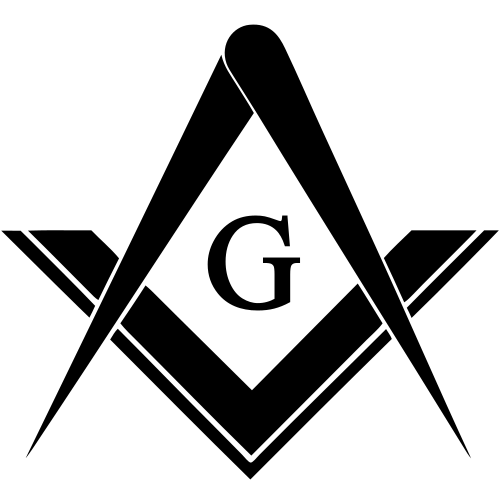
| 0 Comments | James Whitfield
Suspended at the center of the Square and Compasses, the letter G is arguably the most recognized and most misunderstood element in Masonic iconography. To the casual observer it looks like a typographical accident; to the initiated, it carries layered meanings that Masonic scholars have debated for centuries. The dominant interpretation holds that G stands simultaneously for Geometry and for God, or in the more theologically neutral Masonic phrasing, the Grand Architect of the Universe. Yet neither explanation fully exhausts the symbol. A third reading, rooted in esoteric tradition, points toward Gnosis, the pursuit of spiritual knowledge. A fourth, less commonly cited in lodge manuals but present in older Masonic literature, frames G as the Generative Principle, the creative force underlying all matter. The symbol’s precise origin is itself contested: documentary evidence places it in English lodge iconography no earlier than the mid-eighteenth century, though its conceptual roots run considerably deeper. This article traces each of those meanings in turn, examines how different Masonic jurisdictions and rites have interpreted the letter, and separates documented Masonic teaching from the conspiracy theories that have attached themselves to this single, deceptively simple glyph.
The Two Official Meanings: Geometry and God
What does the letter G mean in Freemasonry? Most Masonic jurisdictions formally recognize two answers: Geometry, the foundational science of the stonemason’s craft, and God (rendered in lodge ritual as the Grand Architect of the Universe), the supreme being to whom a Mason’s moral work is oriented. Both meanings are official, and both coexist by design.
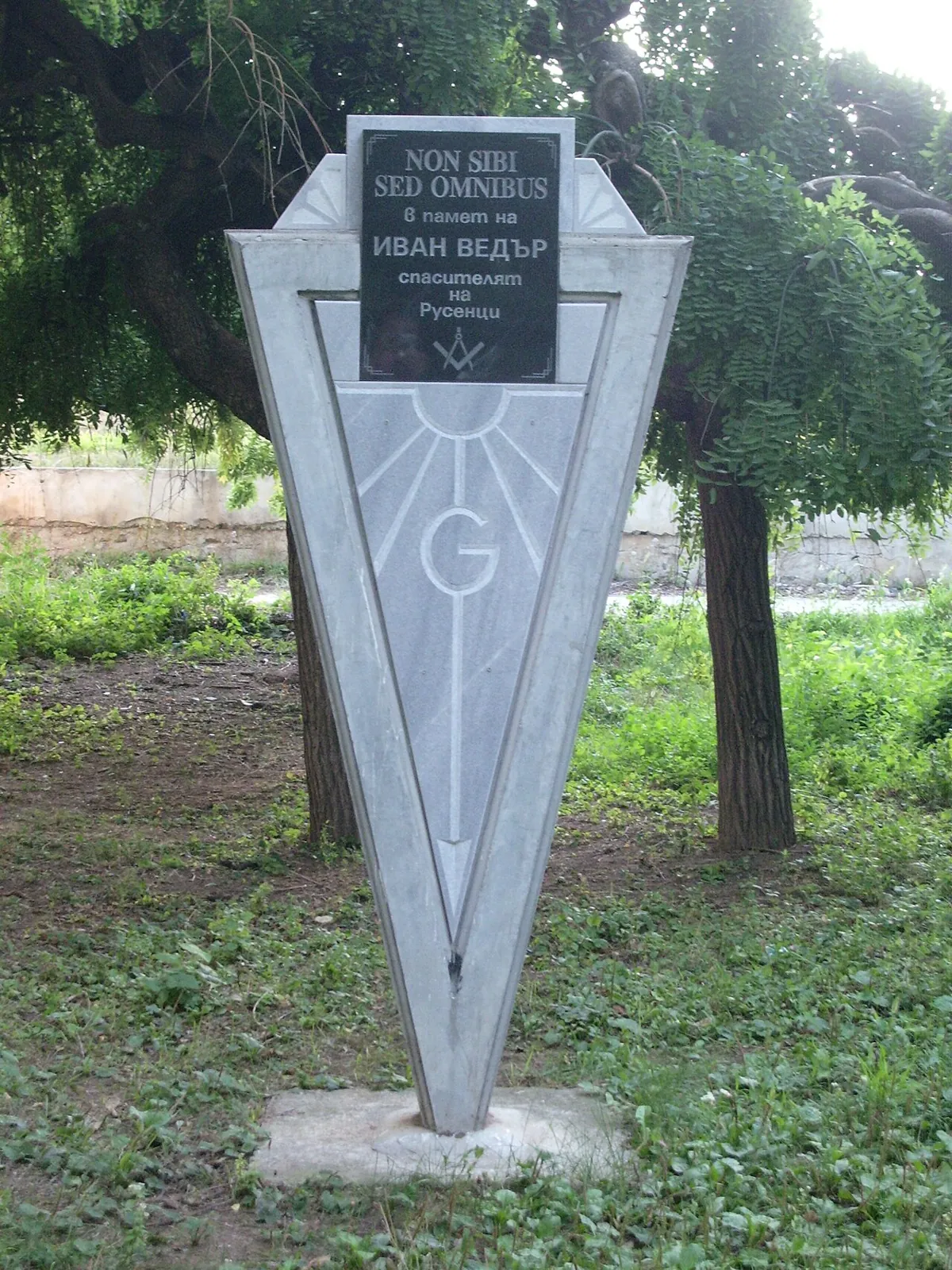
The dual reading is not an accident of sloppy symbolism. The United Grand Lodge of England‘s published ritual materials treat the letter, when displayed in the center of the square and compass, as a reminder of divine presence during lodge proceedings. Crucially, the phrasing “Grand Architect of the Universe” is deliberate in its generality. As the UGLE’s own explanatory literature makes clear, the lodge does not legislate the theological identity of that Architect. A Christian, a Jew, a Muslim, and a Deist can each read the same symbol through the lens of their own tradition without doctrinal conflict. The letter functions as a placeholder for the sacred, not as a confession of faith.
Geometry earns its place in that same frame through a line of reasoning that runs through centuries of Masonic pedagogy. The medieval stonemason’s guild depended on geometry as its primary operative science: the calculation of load-bearing arches, the setting of cornerstones, the proportioning of facades. When speculative Freemasonry inherited that symbolic vocabulary after the founding of the Premier Grand Lodge on June 24, 1717, geometry carried forward as the discipline that makes the hidden order of creation legible to human reason. The third-degree lecture preserved in many Anglo-American jurisdictions describes geometry as “the first and noblest of sciences,” the one through which the natural world reveals its underlying structure. In that framing, the two meanings of the letter G are not competing definitions but concentric ones: geometry is the method, and the Grand Architect is the source of the order that geometry discloses. One reads the symbol as a craft reference; the other reads it as a theological one. Masonic teaching holds, with characteristic tidiness, that both readings point toward the same truth.
Geometry: The Mathematical Foundation of the Craft
Medieval operative stonemasons did not treat geometry as an academic abstraction. It was the practical science behind every arch, vault, and flying buttress, the discipline that separated a master builder from a laborer. When speculative Freemasonry formally organized under the Premier Grand Lodge of England on June 24, 1717, it inherited that reverence wholesale. The working tools changed from literal instruments into moral metaphors, but geometry retained its status as the master-science of the Craft. That continuity of respect is precisely why the letter G carries such conceptual weight in the lodge room: it names the discipline that made the cathedral possible before it named anything else.
Sacred Geometry and the Working Tools
The square, the compasses, and the plumb line are not decorative props. Each is a geometric instrument with a specific function: the square tests right angles, the compasses describe circles and measure distances, and the plumb line establishes a true vertical. Taken together, they constitute a portable geometry kit, the same one an operative mason would have carried to a building site in the thirteenth century. The letter G, understood as a reference to geometry, acts as a conceptual anchor that unifies all three under a single intellectual principle. It reminds the Fellow Craft that the tools are not merely isolated symbols of virtue; they are expressions of one coherent science, each instrument a different application of the same underlying discipline. The symbolism is tighter than it first appears: the compasses literally draw the letter’s circular arc, and the square provides the straight lines that complete any geometric construction.
Anderson’s Constitutions and the Geometry Emphasis
The clearest early printed evidence for geometry’s privileged position in Masonic thought appears in The Constitutions of the Free-Masons, compiled by the Reverend James Anderson and published in 1723 under the authority of the Premier Grand Lodge. Anderson describes geometry as “the basis of architecture” and frames it as the science most worthy of a Mason’s serious attention, placing it above the other six liberal arts in practical and moral importance. This was not a casual editorial choice. Anderson was constructing a legitimizing narrative for a fraternity that had recently transitioned from operative craft to gentlemen’s philosophical society, and grounding Masonic identity in geometry gave the organization an intellectually respectable lineage traceable to Euclid, Pythagoras, and the builders of Solomon’s Temple. The 1723 text matters because it anchors the symbolic use of G in a datable, citable document rather than leaving it entirely to oral tradition. In the Fellow Craft degree, the letter is formally introduced alongside an extended treatment of the liberal arts and sciences, with geometry singled out as the most exalted of the seven. Researchers examining Masonic symbol meaning across different rites consistently find this degree as the primary locus where the G receives its geometric interpretation, a consistency that reflects Anderson’s foundational influence on Masonic ritual development throughout the eighteenth century.
God and the Grand Architect of the Universe
Why ‘Grand Architect’ Rather Than a Specific Divine Name
Freemasonry has, since the formation of the Premier Grand Lodge in London on June 24, 1717, required its members to profess belief in a Supreme Being. What it has never required is agreement on that Being’s name, nature, or tradition. The phrase Grand Architect of the Universe, rendered in Masonic shorthand as G.A.O.T.U., was a deliberate solution to a real institutional problem: how to maintain a shared ritual vocabulary across a fraternity whose membership included Anglicans, Catholics, Deists, and, in later centuries, Jews, Muslims, and practitioners of other faiths. An architectural metaphor applied to divinity carried enough resonance across traditions to function as common ground without collapsing into the creed of any single one. The builder-God appears in Plato’s Timaeus, in Enlightenment natural theology, and in the Book of Proverbs. The phrase belonged to no denomination and therefore offended none.
The letter G suspended in the lodge room operates within this framework as a visual anchor. Just as a cross, a menorah, or a mihrab orients worshippers within a specifically religious space, the G orients lodge members toward the idea of divine presence without prescribing its theological content. The United Grand Lodge of England’s official statements consistently describe this function in non-denominational terms, emphasizing that each member understands the symbol through the lens of his own faith. That framing is not evasion. It is the architectural logic of an institution built to hold theological diversity without fracturing over it.
Jurisdictional variation complicates the picture. In nineteenth-century American Freemasonry, particularly in jurisdictions shaped by Protestant revivalism, the G was frequently glossed in lodge catechisms and instructional pamphlets as standing explicitly for God in the Christian sense. Albert Mackey’s Encyclopedia of Freemasonry (1874) acknowledges this tendency while insisting it represents local practice rather than universal doctrine. The distinction matters: what a Grand Lodge in Virginia taught its candidates in 1850 does not define what a lodge in Edinburgh or Cairo understood the same symbol to mean. The letter G is less a fixed theological statement than a deliberate opening, a symbol whose meaning each tradition fills from its own reservoir.
Ancient Origins and the Historical Evolution of the Symbol
The letter G did not appear in the earliest visual vocabulary of organized Freemasonry. The Premier Grand Lodge was established on June 24, 1717, yet the earliest confirmed visual evidence of a G placed within the Square and Compasses dates to English lodge tracing boards and printed frontispieces from the 1730s and 1740s, a full generation after that founding moment. This gap matters. It suggests the symbol was not a founding element but an accretion, adopted as the fraternity formalized its iconographic language during a period of rapid institutional growth.
Scholars writing under the auspices of the Quatuor Coronati Lodge, warranted in 1886, have noted something that complicates any claim of universal symbolism: the G is, in practice, an English and American convention. Continental European lodges, including those operating under French and German grand bodies, routinely omit it from their iconography. Scottish lodges show similar variation. The symbol’s absence from these traditions is not an oversight; it reflects the fact that no foundational Masonic document ever mandated the G as a required element. What looks like a universal emblem to an American observer is, from a comparative perspective, a regional preference that hardened into orthodoxy.
The eighteenth-century expansion of Freemasonry across the American colonies accelerated that hardening considerably. As lodges multiplied from Massachusetts to Virginia, they drew heavily on English models, carrying the G into lodge rooms, aprons, and printed materials with consistent enthusiasm. By the time of the early Republic, the letter had become so embedded in Anglophone Masonic culture that later generations would treat it as timeless rather than contingent. The contrast with French and German lodge iconography, where the letter G Masonic symbol simply does not appear, is the clearest evidence that its dominance was a historical accident of transmission rather than a metaphysical necessity.
Modern Scholarly Debate on the G’s True Origin
Researchers affiliated with the Quatuor Coronati Lodge and independent Masonic historians continue to debate whether the G entered lodge iconography primarily for theological reasons (standing for God or the Great Architect), geometric ones (referencing Geometry as the foundational operative science), or pedagogical ones (serving as a mnemonic device for candidates receiving the Freemasonry G symbol explained in the context of degree instruction). None of these explanations rules out the others, and that overlap is precisely what makes consensus elusive. A symbol that can simultaneously invoke the divine, the mathematical, and the instructional resists reduction to a single origin story.
No definitive archival evidence has settled the question. The Masonic historian Robert Macoy, writing in the nineteenth century, favored the theological reading. Later researchers, including contributors to Ars Quatuor Coronatorum (the lodge’s published transactions), have pushed back with documentary analysis suggesting the geometric interpretation held priority in early printed catechisms. What both camps agree on is that the symbol’s meaning was almost certainly layered from the beginning, with different ritual contexts activating different readings. Treating any single interpretation as the correct one imposes a false tidiness on a tradition that has always been comfortable with productive ambiguity.
Want to learn more?
/understanding-masonic-symbols/” title=”Understanding Masonic Symbols”>Masonic symbols explained, where the Square and Compasses, the All-Seeing Eye, and the checkered floor are examined with the same historical rigor applied here.”
Gnosis and the Generative Principle: Esoteric Interpretations
Albert Pike and the Esoteric Tradition
Albert Pike’s Morals and Dogma of the Ancient and Accepted Scottish Rite of Freemasonry, published in 1871, remains the most cited source for esoteric readings of Masonic symbolism, and the letter G is no exception. Pike drew on Neoplatonic, Hermetic, and Gnostic philosophy, weaving a dense interpretive framework around symbols that most lodge members encountered in far simpler terms. For Pike, the G carried associations with Gnosis, the Greek word for direct, experiential spiritual knowledge as opposed to received belief. This was not a claim about what the symbol officially meant; Pike was explicit that his interpretations were personal and speculative. The 1871 preface to Morals and Dogma states plainly that “every one is entirely free to reject and dissent from whatsoever herein may seem to him to be untrue or unsound.” That disclaimer is routinely ignored by both enthusiastic esotericists and alarmed critics, which tells you something about how motivated readers approach a 900-page book.
The “Generative Principle” reading, also present in some nineteenth-century Continental Masonic literature, frames the symbol as a representation of creative force in nature. The intellectual lineage runs through Hermetic philosophy and its concept of a universal animating principle, ideas that circulated widely in European learned culture from the Renaissance onward and found a receptive audience in the higher-degree systems that developed after the founding of the Scottish Rite. Within this interpretive tradition, the letter is not merely an initial but a glyph pointing toward the source of natural order and regeneration. The connection to sacred geometry reinforces this reading: geometry, in Neoplatonic thought, was not just a practical discipline but a map of the rational structure underlying creation.
Both the Gnostic and Generative Principle interpretations belong to a distinct minority strand within Masonic thought. They are largely absent from Blue Lodge ritual, where the standard explanations of Geometry and the Grand Architect remain the operative framework. These esoteric readings surface primarily in Scottish Rite philosophical literature and in the writings of individual scholars working within the fraternal tradition. Treating them as hidden doctrine, or as the “real” meaning concealed beneath official teaching, misrepresents how Masonic symbolism actually functions: a layered system in which multiple readings coexist, none formally displacing the others. The Masonic G symbol is, in this sense, genuinely polysemous, and the fraternity has never moved to resolve that ambiguity by decree.
Variations Across Masonic Jurisdictions and Rites
The assumption that the letter G carries a single, universally agreed-upon meaning across all of Freemasonry collapses quickly under scrutiny. Masonic practice is not monolithic: it is organized through independent grand lodges and distinct rites, each with its own working tools, ritual texts, and symbolic emphases. The result is a patchwork of interpretations that varies not just by country but by the specific body a Mason affiliates with. A table of representative jurisdictions illustrates the range.

| Jurisdiction / Rite | Displays G in Square and Compasses | Primary Interpretation | Additional Esoteric Layer |
|---|---|---|---|
| Blue Lodge (US, UK, Canada, Australia) | Yes | Geometry and/or God (Grand Architect) | No |
| Grand Orient de France tradition (France, Belgium, Latin America) | No | Symbol not formally used; geometry concept retained in ritual language | No |
| Scottish Rite (higher degrees) | Yes (in Blue Lodge context) | Geometry and Grand Architect, with expanded Kabbalistic and philosophical layers | Yes |
| York Rite | Yes | Dual meaning: Geometry and God, without elaboration beyond the Craft degrees | No |
English-speaking jurisdictions in the United States, the United Kingdom, Canada, and Australia almost universally place the letter at the center of the square and compasses emblem. Lodges operating under the Grand Orient de France tradition, including those in Belgium and much of Latin America, typically omit it entirely. This is not an oversight: the Grand Orient’s 1877 revision of its constitution removed the requirement to acknowledge a Supreme Being, and the letter’s theological connotation made it a contested presence in those working environments. The symbol simply does not appear in their standard regalia or lodge rooms.
Scottish Rite Elaboration vs. York Rite Restraint
Within American Freemasonry, the Scottish Rite’s higher degrees introduce interpretive layers that go well beyond the Blue Lodge’s straightforward geometry-and-God framework. Ritual monitors associated with the Scottish Rite, including Albert Pike’s Morals and Dogma (1871), treat the letter as a gateway into broader philosophical and numerological discussion, connecting it to concepts of divine creative principle across multiple religious traditions. The York Rite, by contrast, preserves the simpler dual reading without elaboration, treating the symbol as settled rather than as an invitation to further inquiry.
Regional Protestant Influence in the American South
Geography added another variable inside the United States. Lodges in the American South historically placed heavier emphasis on the theological reading, a pattern that scholars of American religious history have linked to the region’s dominant Protestant culture. In communities where lodge membership and church membership overlapped significantly, the letter’s identification with God carried practical social weight that geometry alone could not. This regional inflection did not represent official grand lodge doctrine so much as a cultural habit that shaped how ritual language was delivered and understood from the lodge floor.
The G in Masonic Ritual and the Lodge Room
In a traditional lodge room, the letter G does not sit quietly in a corner. It appears as a luminous symbol suspended in the east, the cardinal direction that governs the Master’s chair and, in Masonic symbolism, represents the origin of light and knowledge. Depending on the jurisdiction and the lodge’s furnishings, it may hang above the Worshipful Master, appear at the center of the tracing board, or be incorporated into the lodge’s official seal. Its placement is not decorative. The east, as the direction of sunrise, carries deliberate symbolic weight in lodge architecture: the Worshipful Master opens the lodge from that position because light, in the allegorical grammar of the fraternity, proceeds from the east outward. The G, positioned there, participates in that same directional logic, functioning as a visual anchor for the ideas the lodge is meant to embody.
The moment when the letter’s meaning is formally addressed in ritual occurs during the Fellow Craft degree, the second of the three degrees in the York Rite and its equivalents. At that point in the degree sequence, the candidate has already received basic moral instruction in the Entered Apprentice degree. The Fellow Craft degree pivots toward intellectual and spiritual inquiry, introducing the seven liberal arts and sciences, with geometry occupying the foremost position. The appearance of the G at this juncture is deliberate: it marks a transition from conduct to contemplation, from the working tools of behavior to the broader questions of order, creation, and the candidate’s relationship to what Masonic ritual calls the Grand Architect of the Universe. Most printed ritual monitors available to researchers, including early editions of Duncan’s Masonic Ritual and Monitor (first published in 1866), reproduce the Fellow Craft lecture in a form that makes this pedagogical sequence explicit.
The G Within the Square and Compasses
The Square and Compasses are the most immediately recognizable emblem associated with the fraternity, reproduced on rings, lapel pins, building facades, and the covers of countless Masonic publications. Each tool carries its own symbolic freight: the square references moral rectitude and the obligation to act on the level with others, while the compasses suggest the discipline of circumscribing desire and keeping conduct within measured limits. Taken together, they represent the union of practical ethics and reasoned self-governance. The G at their center transforms this pairing into something more than a logo. It introduces a third element, one that points simultaneously toward geometry as the intellectual foundation of the builder’s craft and toward the divine presence that, in Masonic teaching, underlies all created order. The result is a unified visual statement about the relationship between human skill, moral geometry, and a governing intelligence beyond the individual craftsman. That compression of meaning into a single emblem explains why the symbol travels so well outside the lodge room, and why it continues to prompt questions from people who encounter it with no prior knowledge of Masonic symbol meaning or fraternal context. The G does not resolve the tension between its two primary referents; it holds them together, which is precisely what makes it worth examining.
Common Misconceptions and Conspiracy Theories About the Masonic G
The most persistent conspiracy claim attached to the letter G holds that it encodes a secret allegiance to the Bavarian Illuminati or some broader world-governing cabal. The historical record does not support this. The Bavarian Illuminati was founded on May 1, 1776, by Adam Weishaupt, a professor of canon law at the University of Ingolstadt. The Elector of Bavaria banned the organization in 1785, and it had effectively ceased to exist by 1787. The Masonic square and compass with its central G, by contrast, was already appearing in lodge documents and engravings decades before the Illuminati existed, and it continued to appear on lodge buildings, aprons, and printed materials long after that organization dissolved. The two groups shared some overlapping membership in certain German-speaking regions during a narrow historical window, but no institutional merger occurred, no shared doctrine was established, and no credible primary source supports the claim of a unified hidden agenda. Conflating them is a category error, not a discovery.
A second misconception treats the G visible on Masonic lodge facades and fraternal rings as a covert signal of hidden power. This reading inverts the actual situation: the symbol has been displayed openly and publicly for nearly three centuries because it is a fraternal emblem, not a cipher. Lodges in eighteenth-century Britain and colonial America placed the square and compass on their buildings as a straightforward declaration of identity, the same way a guild would hang its arms above a workshop door. There is nothing clandestine about a symbol carved in stone above a front entrance. Some online commentary also draws a connection between the Masonic G symbol and the gravitational constant G, formalized in physics during the late nineteenth century. The coincidence is purely typographical. The gravitational constant derives from Newtonian mechanics and the work of scientists including Henry Cavendish, whose 1798 torsion-balance experiment measured gravitational attraction with no reference to fraternal symbolism whatsoever. The letter G was simply the next available variable in a sequence of physical constants. No etymological, historical, or institutional thread connects the two uses of the same letter.
FAQ
Does the letter G mean the same thing in every Masonic lodge?
No. English-speaking jurisdictions, particularly in the United States and United Kingdom, consistently interpret the G as standing for Geometry and God (or the Grand Architect of the Universe). Many Continental European lodges, including those operating under the Grand Orient de France, do not display the symbol at all, reflecting a broader philosophical split over whether belief in a Supreme Being should be required of members.
Meaning also shifts across degree systems. The Scottish Rite introduces esoteric interpretive layers largely absent from standard Blue Lodge ritual, so even within a single national tradition, the symbol carries different weight depending on the context in which a Mason encounters it.
Why is the G placed at the center of the Square and Compasses?
The placement is pedagogical rather than decorative. The Square and Compasses represent the working tools of operative stonemasons repurposed as moral instruments, and the letter at their center identifies the animating principle behind that moral geometry. Its position signals that neither tool carries full meaning without the intellectual and spiritual framework the symbol represents.
Whether a lodge interprets that framework as God, the Grand Architect of the Universe, or Geometry itself, the visual logic holds: the surrounding instruments point inward toward a governing idea, not outward toward any external authority. The design is a diagram of priority, not merely an arrangement of emblems.
When was the letter G first added to Masonic symbolism?
The earliest documented appearances occur in English tracing boards and printed lodge materials from the 1730s and 1740s, roughly one to two decades after the formation of the Premier Grand Lodge of England on June 24, 1717. The adoption was gradual, not the result of any single governing decree.
Masonic historians affiliated with the Quatuor Coronati Lodge, the premier research lodge founded in London in 1884, have noted that the emblem was never universally adopted across all jurisdictions, which explains the variation in its use that persists to the present day.
Is the Masonic G connected to conspiracy theories about secret world control?
No credible historical evidence supports that connection. The emblem is a publicly displayed fraternal symbol that lodges have used openly on buildings, publications, and regalia for nearly three centuries. Far from concealing it, Masonic bodies have incorporated it into architecture and printed materials that anyone can examine.
Claims linking it to the Illuminati or hidden governance conflate two historically unrelated organizations. The Bavarian Illuminati, founded by Adam Weishaupt on May 1, 1776, was dissolved by government decree in 1785 and had no institutional continuity with Freemasonry before or after its suppression. The conflation is a modern rhetorical habit, not a historical finding.
What is the Generative Principle, and how does it relate to the Masonic G?
The Generative Principle is an esoteric interpretation found primarily in nineteenth-century philosophical Masonic literature, most notably in Albert Pike’s Morals and Dogma (1871). It frames the symbol as representing the creative force underlying all nature, drawing on Neoplatonic and Hermetic philosophy rather than on standard lodge catechism.
This reading is not part of Blue Lodge ritual instruction and was never adopted as binding Masonic doctrine. Pike himself was explicit on that point, describing such interpretations as personal speculation intended for readers who wished to explore the deeper philosophical currents behind fraternal symbolism, not as authoritative teaching that any lodge was obliged to transmit.
/it/simbolismo-occhio-onniveggente/” title=”The All-Seeing Eye”>All-Seeing Eye, and the checkered floor are examined with the same historical rigor applied here.”
