 Italiano
  English
| 0 Comments | James Whitfield
Masonic membership is older than the United States. When the Premier Grand Lodge of England was constituted on June 24, 1717, it formalized a system of fraternal organization that had been developing among operative stonemasons’ guilds for centuries. Today, the United Grand Lodge of England estimates global Masonic membership at roughly six million, spread across jurisdictions on every inhabited continent. Yet for most outsiders, the basic facts, who qualifies, what the process involves, what it costs, and what actually happens inside a lodge, remain genuinely unclear, buried under a mixture of official reticence and internet mythology. This guide cuts through both. It draws on publicly available constitutions, grand lodge publications, and the Masonic Service Association of North America to give a factual, jurisdiction-aware account of what Masonic membership means in practice: the requirements a candidate must meet, the three degrees through which every Mason progresses, the financial and time commitments involved, and the charitable and social culture that defines lodge life for the roughly one million Freemasons currently active in the United States alone.
What Masonic Membership Actually Is
Masonic membership is formal admission into a chartered lodge affiliated with a recognized grand lodge, conferring degrees, obligations, and privileges within a fraternal organization whose stated purpose is moral self-improvement through allegory and ritual. The institution is not a religion, a political body, or a covert power network, but a structured brotherhood with documented governance and published constitutions.
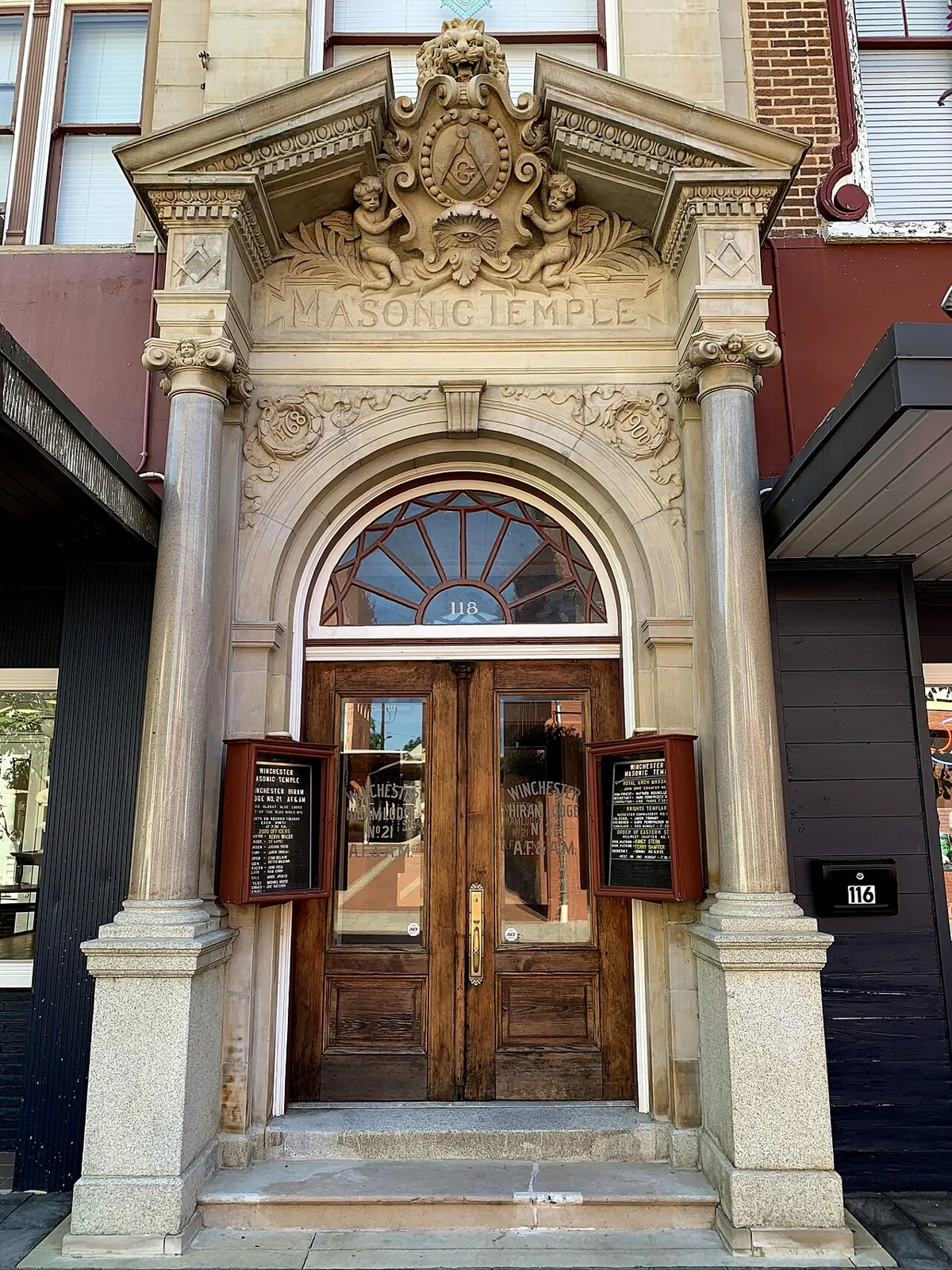
The United Grand Lodge of England’s Book of Constitutions defines Freemasonry as “a peculiar system of morality, veiled in allegory and illustrated by symbols.” That phrasing, unchanged in its essentials since the eighteenth century, is the clearest institutional self-description available. It signals that the organization’s core activity is philosophical and ethical instruction delivered through symbolic ritual, not commerce, politics, or theology. Conflating it with conspiratorial “secret societies” misreads both the historical record and the organization’s own governing documents, which are publicly available from most grand lodges.
The institution in its modern, speculative form dates to June 24, 1717, when four London lodges convened at the Goose and Gridiron alehouse and constituted the Premier Grand Lodge of England. That founding formalized a tradition whose symbolic vocabulary was borrowed from medieval operative stonemasons’ guilds and, by the seventeenth century, filtered through Renaissance humanist and Rosicrucian intellectual currents. That layered origin explains why the fraternity’s imagery ranges from working tools (the square, the compass, the plumb line) to abstract philosophical concepts drawn from classical and biblical sources.
The Lodge as the Foundation of Membership
Every Freemason belongs to a specific chartered lodge, not to Freemasonry as some undifferentiated global body. A lodge receives its charter from the grand lodge holding territorial jurisdiction over the region where it meets, and that charter is the legal and fraternal instrument that makes the lodge’s degree work recognized across the wider Masonic world. Membership is therefore always local before it is anything else: a man (or, in certain jurisdictions, a woman) is initiated into Lodge No. X in a specific city, under a specific grand lodge, with a specific warrant number on record.
This structure has real practical consequences. Recognition between grand lodges is not automatic; it is granted or withheld based on criteria including regularity of constitution and adherence to ancient landmarks. A member of a lodge under an unrecognized grand lodge cannot visit or participate in lodges under the United Grand Lodge of England or the major U.S. grand lodges. Joining a Masonic lodge is, in that sense, an act with specific jurisdictional consequences, not a generic affiliation with an abstraction.
Speculative vs. Operative Masonry
The distinction between operative and speculative Masonry is foundational to understanding what the fraternity actually does. Operative Masonry referred to the working craft guilds of medieval Europe, whose members built cathedrals and manor houses and used the tools of the trade literally. Speculative Masonry, the form that emerged in the seventeenth and eighteenth centuries, adopted that same toolkit as a vocabulary of moral metaphor. The square teaches rectitude of conduct; the level, equality among members; the plumb line, upright behavior. None of this involves actual stonework.
The 1723 Constitutions of the Free-Masons, compiled by James Anderson under the authority of the Premier Grand Lodge, codified this speculative framework for the first time in print. Anderson’s document drew on older guild charges but recast them as a philosophical program open to educated gentlemen regardless of their trade. That shift from craft skill to moral philosophy is precisely what allowed Freemasonry to spread rapidly through the professional and aristocratic classes of eighteenth-century Europe and the American colonies.
Requirements to Become a Freemason
The eligibility criteria for Masonic membership are more consistent across jurisdictions than popular myth suggests, yet they are not entirely uniform. Across mainstream Anglo-American grand lodges, four core requirements appear in virtually every constitution: the candidate must be an adult male, must profess belief in a Supreme Being, must demonstrate good moral character, and must submit a petition sponsored by at least one existing lodge member in good standing. The United Grand Lodge of England’s Book of Constitutions and the vast majority of US grand lodge bylaws share this framework, even when the fine print differs.
Age Requirements by Jurisdiction
The minimum age threshold is the most variable of the standard criteria. Most US grand lodges set the floor at 18, aligning with the general legal threshold for adult contracts. The United Grand Lodge of England, by contrast, requires candidates to be at least 21, a standard it has maintained for generations. A notable exception exists in several jurisdictions on both sides of the Atlantic: a candidate who is the son of a Master Mason (sometimes called a “Lewis” in English Masonic tradition) may petition as young as 18, even where the general minimum is higher. Prospective candidates should verify the specific rule with the grand lodge governing their state or country, as these details are publicly available in published constitutions.
The Sponsorship Requirement
A petition to join a lodge must ordinarily be vouched for by one or two lodge members in good standing, depending on the jurisdiction. This requirement has a practical consequence that surprises many prospective candidates: the first real step toward joining is not filling out a form but meeting a Freemason. Some jurisdictions permit unsolicited inquiries directly to a lodge secretary, and several grand lodges now maintain online contact forms specifically to connect interested men with local members. Cold applications are processed in these cases, but they remain less common than petitions introduced through personal acquaintance. The Masonic Service Association of North America notes that informal social contact with a lodge, attending open events or speaking with a member, is still the most reliable path to a sponsored petition.
Women, Co-Masonry, and Inclusive Jurisdictions
Mainstream “regular” grand lodges, those recognized by the United Grand Lodge of England or by US grand lodges in amity with it, restrict membership to men. This is a constitutional requirement, not an informal custom, and it has been a defining criterion of regularity since the 1723 Constitutions of the Free-Masons compiled by James Anderson. However, several well-established bodies operate outside that framework. The Order of Women Freemasons, founded in England in 1908, conducts the same three degrees using the same ritual structure as male lodges. Le Droit Humain, founded in Paris in 1893, is the largest co-Masonic order globally and admits both men and women on equal terms. These organizations are not recognized as “regular” by mainstream grand lodges, but they are serious, historically rooted institutions with their own constitutions and membership standards. Readers researching who can join Freemasonry should be aware that the answer depends entirely on which tradition they are considering.
The belief-in-a-Supreme-Being requirement deserves particular attention because it is routinely misread in both directions. It does not mandate Christianity, or any specific religion. The Volume of the Sacred Law placed on the lodge altar during a candidate’s obligation may be a Bible, a Quran, a Torah, or another scripture, at the candidate’s own discretion. What the requirement does exclude is declared atheism: a man who sincerely professes no belief in any higher power cannot take the obligation in good conscience under the terms most grand lodges set. This is a theological threshold, not a denominational one, and it has allowed men of widely different faiths to sit together in the same lodge since the 1717 founding of the first Grand Lodge in London.
The Three Degrees of Freemasonry
Every candidate who petitions a lodge enters the fraternity through a fixed, sequential structure. The three foundational degrees, conferred within what Freemasons call the Blue Lodge, define the complete arc of Masonic membership as recognized by regular grand lodge jurisdictions worldwide. No appendant body, honorary title, or higher-numbered degree changes that baseline: a man who holds the Third Degree is a Master Mason, and that status is the universally recognized credential of full membership.
| Degree | Symbolic Focus | Candidate’s Role in the Allegory | Typical Time to Confer |
|---|---|---|---|
| First Degree: Entered Apprentice | Preparation, moral foundations, and the tools of the rough ashlar | A newcomer entering the world of speculative craft, receiving basic instruction | One to two hours |
| Second Degree: Fellowcraft | Liberal arts, geometry, and the pursuit of intellectual refinement | A working craftsman advancing toward greater knowledge and skill | One to two hours |
| Third Degree: Master Mason | Mortality, fidelity, and the legend of Hiram Abiff | The candidate enacts the fate of the mythic architect of Solomon’s Temple | Two to three hours |
Each degree is conferred through a ritual ceremony combining allegorical drama, symbolic objects, and catechetical instruction delivered in a call-and-response format. The content is not, strictly speaking, secret: printed exposés appeared as early as 1723, and Samuel Prichard’s Masonry Dissected (1730) circulated widely enough to prompt official Masonic responses. What lodges regard as private is the experiential dimension, the particular texture of participating in the allegory rather than reading about it. The Third Degree centers on the legend of Hiram Abiff, the mythic chief architect of Solomon’s Temple. According to the allegory, Hiram is murdered by three ruffians seeking the Master’s word, and his fate becomes the moral core of the degree: a meditation on loyalty, integrity, and the confrontation with mortality that no craft skill can ultimately evade.
Beyond the Blue Lodge: Scottish Rite, York Rite, and Appendant Bodies
Once a brother has received the Third Degree, he becomes eligible to petition a range of appendant bodies that build on Blue Lodge symbolism without replacing it. The Scottish Rite, active in both a Northern and a Southern Jurisdiction in the United States, confers degrees numbered from the Fourth through the Thirty-Third, the last of which is an honorary distinction awarded by the Supreme Council. The York Rite follows a parallel track through Chapter, Council, and Commandery bodies, culminating in the chivalric degrees of the Knights Templar. Shriners International (formally the Ancient Arabic Order of the Nobles of the Mystic Shrine) requires Master Mason status for membership and is perhaps the most publicly visible appendant body in North America, known for its hospitals and its parade presence. None of these organizations supersede the Blue Lodge. The Masonic Service Association of North America is explicit on this point: the Master Mason degree remains the highest degree in Freemasonry, regardless of any appendant body’s numbering system. The additional degrees are best understood as elaborations, each offering a different allegorical lens on themes the Blue Lodge introduced.
The Application Process: From Inquiry to Initiation
The path from curiosity to initiation follows a sequence that has remained largely consistent across Anglo-American jurisdictions for well over two centuries. It begins, practically speaking, with finding a lodge. Grand lodge websites for every US state and most Canadian provinces maintain searchable lodge finders, typically organized by zip code or county. The Masonic Service Association of North America also maintains a directory of US grand lodges, a useful starting point for anyone unfamiliar with the administrative geography of the fraternity. Once a lodge is identified, the conventional expectation is that a prospective candidate attends at least one or two open events before any formal paperwork changes hands. This reflects the lodge’s interest in mutual acquaintance before a binding vote takes place.
The formal sequence runs as follows. A candidate obtains a petition form, has it signed by two lodge members in good standing who serve as sponsors, and submits it to the lodge secretary. From that point, the lodge takes over. The petition is read at a stated meeting, an investigation committee is appointed, and the committee’s findings are presented ahead of a ballot. That ballot is, in many jurisdictions, a secret vote of the full lodge membership conducted with white balls and black cubes or balls. The tradition of the “black ball” (a single negative vote sufficient to reject a petition) survives in some jurisdictions, though others now require two or three negative votes before a petition fails. The United Grand Lodge of England’s Book of Constitutions and the regulations of most US grand lodges address this procedure explicitly, and the specific rules vary enough that a candidate should ask a sponsor about local practice rather than assume uniformity.
The Investigation Committee and Ballot
Most lodges appoint a three-man committee whose job is to meet the candidate informally, usually at the candidate’s home or a neutral location, before the ballot is held. The tone of these conversations is deliberately conversational. The committee is conducting a character assessment, not a cross-examination. Topics typically include the candidate’s reasons for petitioning, his occupation, and his family circumstances, the last point reflecting the fraternity’s long-standing position that a man should not take on lodge obligations at the expense of domestic ones. Candidates who approach this meeting with straightforward honesty consistently report it as unremarkable. The committee then reports its findings to the lodge, and the ballot proceeds at the next stated meeting.
Proficiency and Catechism Between Degrees
Joining a Masonic lodge does not end with the first initiation. The fraternity confers three degrees, each with its own ceremony and its own body of symbolic instruction, and candidates are generally expected to demonstrate comprehension of one degree before advancing to the next. That demonstration takes the form of a catechism: a memorized question-and-answer dialogue covering the symbolism, obligations, and working tools of the preceding degree. The strictness of this requirement differs considerably by jurisdiction. Some grand lodges mandate full verbal proficiency before a candidate may receive the next degree; others accept a shorter form or allow written examination. The timeline from first degree to third degree (Master Mason) ranges from roughly six months in lodges that confer degrees in close succession, to a year or more in jurisdictions that enforce extended proficiency standards. Neither pace is inherently superior; they reflect different institutional philosophies about the depth of preparation a candidate should bring to each stage.
Want to learn more?
Masonic Membership Costs: Dues, Fees, and Regional Variation
Financial transparency is rarely the first thing prospective candidates ask about, yet the practical costs of Masonic membership vary enough across jurisdictions that a clear breakdown is worth examining before any petition is signed. The figures below reflect publicly available guidance from grand lodge websites, the Masonic Service Association of North America, and the United Grand Lodge of England’s 2024 subscription guidance, rather than promotional estimates.
| Cost Component | Average US Blue Lodge | United Grand Lodge of England | Prince Hall Grand Lodge (US avg.) |
|---|---|---|---|
| Initiation / Degree Fees (one-time) | $100, $500 | £200, £500 (lodge-dependent) | $75, $350 |
| Annual Lodge Dues | $100, $300 | £150, £400 | $75, $200 |
| Regalia (apron, gloves, one-time) | $50, $150 | £80, £200+ | $40, $120 |
| Appendant Body Dues (optional) | $100, $400/yr per body | Varies by chapter or council | $75, $300/yr per body |
| Charitable Contributions | Voluntary | Voluntary | Voluntary |
In most American Blue Lodges, the one-time initiation fee covers the conferral of all three craft degrees and typically runs $100 to $500, though lodges in major metropolitan areas sometimes charge more. Annual dues, which fund lodge operations and per-capita payments passed up to the grand lodge, generally fall between $100 and $300. In England, the United Grand Lodge of England’s 2024 published guidance places annual lodge subscriptions at roughly £150 to £400 depending on the province and individual lodge, with festive board dining fees charged separately. Regalia, primarily the lambskin apron and white gloves that carry their own symbolic language of Freemasonry, is a modest one-time purchase. Appendant bodies such as the Scottish Rite or Royal Arch carry their own annual dues, but membership in those bodies is entirely optional and no lodge member is compelled to join or donate beyond the stated dues schedule.
Time Commitment: Meeting Frequency and Degree Work
The financial cost of belonging to a lodge is straightforward to calculate; the time cost is more variable and depends almost entirely on how active a member chooses to be. Most Blue Lodges in the United States hold one stated (business) meeting per month, supplemented by separate evenings when degree work is conferred on new candidates. A dues-paying member who attends only stated meetings commits roughly twelve evenings per year, which is closer to a book club than a second job.
Members who take on officer roles or join a degree team face a substantially heavier schedule. Serving as a Worshipful Master, Senior Warden, or active degree team participant can mean four to eight lodge-related evenings per month, factoring in rehearsals and committee work. The Masonic Service Association of North America notes that officer progression through the lodge’s elected line typically spans seven years in larger jurisdictions, each year carrying incrementally greater responsibility. The structure rewards sustained engagement but does not punish selective participation, which is one reason Masonic lodge membership has historically attracted professionals with demanding careers who value the option to step back during busy seasons without losing standing.
Life Inside a Lodge: Meetings, Ritual, and Community
A stated lodge meeting follows a formal agenda that has changed remarkably little since the 18th century. The presiding officer opens the lodge with ritual ceremony, after which members proceed through reading of minutes, financial reports, balloting on petitions from prospective candidates, and either degree work (the conferral of one of the three symbolic degrees) or an educational lecture. The meeting closes with another ritual sequence. For a visitor expecting improvisation, the experience can feel almost liturgical in its precision. That consistency is intentional: the ritual structure is itself part of the instruction, teaching patience, order, and attention to symbolic detail through repetition rather than explanation.
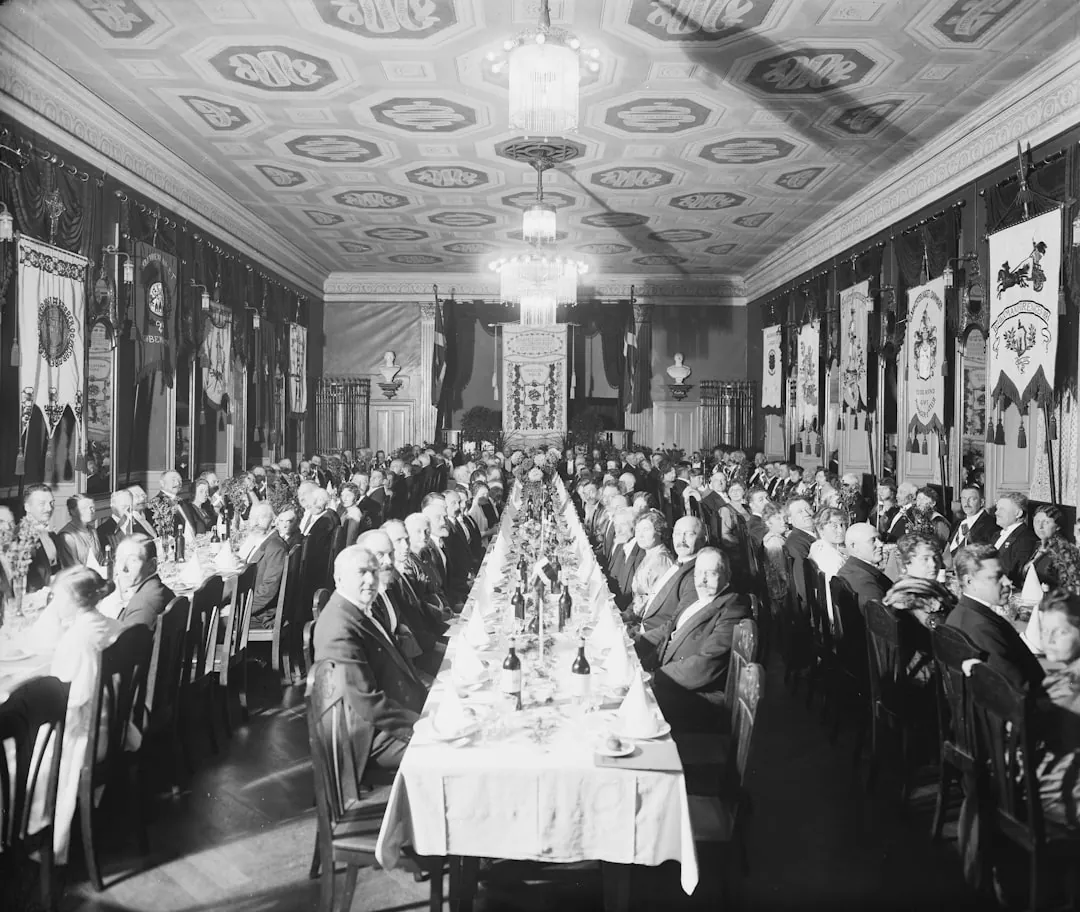
Beyond the formal calendar, lodge culture varies enormously from one jurisdiction to the next. Some lodges function primarily as philosophical study groups, hosting lectures on Masonic history, sacred geometry, and allegorical interpretation of the degrees. Others operate as social clubs with a strong charitable identity, where the ritual is respected but the fellowship dinner afterward is the real center of gravity. A prospective candidate would do well to visit more than one lodge before petitioning, since the culture of the individual lodge shapes the experience of Masonic lodge membership far more than any grand lodge regulation does. Grand lodges set the floor; individual lodges build the room.
Masonic Charitable Work and Community Service
Charitable giving is not an optional add-on to Masonic practice; it is embedded in the degrees themselves. The Entered Apprentice, receiving the First Degree, is taught that relief (the Masonic term for charity) stands as one of three principal tenets alongside brotherly love and truth. That foundational instruction has produced a philanthropic infrastructure of considerable scale. The Masonic Service Association of North America reports that US Masons contribute over $1.5 million per day to charitable causes. Beneficiaries include the Shriners Hospitals for Children network, which provides orthopedic and burn care to children regardless of ability to pay, and the Scottish Rite’s childhood language disorder clinics operating across dozens of American cities. Local lodges layer community-specific programs on top of these national institutions, from scholarship funds to food pantries, making the charitable footprint genuinely distributed rather than centralized.
Networking, Brotherhood, and the Social Dimension
Freemasonry has never formally positioned itself as a professional networking organization. Grand lodges in both the US and UK explicitly discourage members from soliciting business or personal advantage through lodge connections. In practice, though, the bonds formed across lodge membership have historically produced significant personal and civic relationships precisely because the fraternity draws together men from different occupations, social classes, and political perspectives who would rarely share the same social space otherwise. The historian Jessica Harland-Jacobs, in her 2007 study Builders of Empire, documents how this cross-class, cross-profession solidarity shaped civic life across the British Empire, creating networks of trust built on shared obligation rather than shared interest. That dynamic has not disappeared; it has simply become less visible as lodge membership numbers have contracted. For members of an active lodge today, the social fabric, the shared meals, the mutual support during illness or bereavement, often turns out to be what they value most, regardless of what first drew them to petition.
Masonic Membership Numbers: Trends, Decline, and the Modern Lodge
Masonic membership in the United States followed a trajectory common to many mid-century civic institutions: a dramatic postwar expansion, a long plateau, and then a sustained contraction. The Masonic Service Association of North America records a peak of approximately 4.1 million members in 1959, a figure that reflected the same social conditions driving record enrollment in the Rotary, the Elks, and the Knights of Columbus. By 2022, that number had fallen to roughly 1.1 million. The decline is substantial, but its causes are structural rather than scandalous. No single controversy drove men away from the lodge; the fraternity absorbed the same forces that hollowed out civic life across the board.
Robert Putnam’s Bowling Alone (2000) remains the most widely cited analysis of this phenomenon. Putnam documented how Americans progressively disengaged from clubs, unions, churches, and fraternal orders across the second half of the twentieth century, replacing collective participation with privatized leisure. The lodge lost members for the same reasons the bowling league did: longer commutes, dual-income households, television, and eventually the internet restructured how people spent their evenings. Attributing the drop in Masonic membership statistics to internal dysfunction or public scandal misreads the data; the Elks lost a comparable share of their membership over the same period without attracting any conspiracy narrative to explain it.
The more recent picture is less uniform. Some jurisdictions report stabilization since roughly 2015, and a few record modest growth in initiations. Researchers and lodge officers point to a counterintuitive dynamic: younger men, accustomed to a screen-saturated social environment, have found the lodge’s emphasis on in-person ritual, philosophical discussion, and earned fellowship genuinely distinctive. Interest in Masonic philosophy and symbolism has grown alongside broader popular curiosity about esoteric traditions, and some lodges have responded by leaning into their intellectual heritage rather than softening it for mass appeal. Whether this represents a durable reversal or a temporary stabilization is still unclear, but the narrative of unbroken decline no longer fits the full picture.
Prince Hall Freemasonry and Jurisdictional Diversity
Any accounting of Masonic lodge membership in the United States that ignores Prince Hall Freemasonry is structurally incomplete. Prince Hall grand lodges trace their origin to March 6, 1775, when Prince Hall and fourteen other free Black men were initiated into Irish Military Lodge No. 441 near Boston. After American lodges refused to grant them a working warrant, Hall petitioned the Premier Grand Lodge of England directly, receiving a charter for African Lodge No. 459 in Boston in 1784. That charter established the institutional foundation for a parallel and fully independent Masonic tradition, one that sustained fraternal, civic, and mutual-aid networks for African American men during periods when mainstream lodges practiced explicit racial exclusion.
Today, Prince Hall grand lodges operate in every US state and in several international jurisdictions, with their own grand lodge structures, ritual traditions, and membership rolls tracked separately from mainstream grand lodges. The majority of mainstream grand lodges now extend formal recognition to their Prince Hall counterparts, a process that accelerated in the 1990s and continued into the 2000s. Accurate Masonic membership numbers for the United States should, in principle, aggregate both streams, though the two sets of grand lodges report independently and consolidated figures are rarely published. Treating Prince Hall Freemasonry as a distinct branch with its own historical weight, rather than a footnote to the mainstream narrative, is essential to any honest account of the fraternity’s demographic and institutional reality.
Common Misconceptions About Masonic Membership
Few institutions attract as many persistent myths as Freemasonry, and most of those myths cluster around what membership actually entails. Three misconceptions in particular recur across decades of public debate, each one verifiable against primary sources and each one, on examination, straightforwardly wrong.
Freemasonry Is Not a Religion
The most durable confusion conflates fraternal ritual with religious practice. The United Grand Lodge of England’s constitution addresses this directly: it states that “Freemasonry is not a religion, nor a substitute for religion” and explicitly prohibits discussion of religion or politics at lodge meetings. The requirement that candidates profess a belief in a Supreme Being is a threshold condition for membership, not a doctrinal position. A Christian, a Muslim, a Jew, and a Sikh can sit in the same lodge without any expectation that they reconcile their theologies. The lodge is not a church, a mosque, or a temple; it is a fraternal body that treats personal faith as a prerequisite rather than a subject for deliberation. The Catholic Church’s longstanding objection to Freemasonry, most recently restated by the Congregation for the Doctrine of the Faith in 1983, rests on other grounds entirely, and that position is reported here as a fact of institutional history, not as a verdict on either organization.
Masonic Oaths Do Not Override Civil Law
The idea that joining a lodge requires swearing to protect fellow members from legal consequences has circulated since at least the eighteenth century. Modern Masonic obligations bind members to fraternal confidentiality covering ritual procedures and recognition signs, nothing more. Grand lodge public statements across multiple jurisdictions confirm that no provision of any Masonic obligation conflicts with a member’s legal or civic duties. This interpretation has held up in court. In several British and American proceedings where Masonic membership was raised as a potential conflict of interest, judges and legal commentators found no basis for the claim that lodge obligations supersede statutory law. The confidentiality involved is closer in character to the discretion expected of members of a private club than to anything resembling an oath of omerta.
Membership Carries No Financial Reward
Search queries around “Freemason salary” or the idea that Masonic membership confers career preferment reflect a misconception with a long cultural history but no factual foundation. Grand lodge codes across the United States and the United Kingdom universally prohibit using lodge affiliation for personal business gain. A member who solicits business from a brother Mason on the basis of that fraternal connection is in breach of lodge rules, not exercising a privilege of them. There is no remuneration associated with Masonic membership at any level, from Entered Apprentice through the thirty-third degree of the Scottish Rite. Annual dues flow in one direction only: from the member to the lodge, covering administration, charitable funds, and the upkeep of the lodge room. The financial relationship is a cost, not a benefit, and the Masonic Service Association of North America’s published membership data makes no reference to any income-generating mechanism because none exists.
FAQ
What are the basic requirements to become a Freemason?
In most US and UK jurisdictions, a candidate must be an adult male, typically aged 18 or 21 depending on the grand lodge, hold a belief in a Supreme Being of any faith, and be of good moral character. Sponsorship by at least one lodge member in good standing is also required. The United Grand Lodge of England’s Book of Constitutions and individual US grand lodge codes are the authoritative sources for jurisdiction-specific rules, and requirements can vary meaningfully from one state or province to another.
Candidates are expected to petition of their own free will. No lodge may solicit membership on behalf of the fraternity, a rule codified in most grand lodge constitutions.
How much does Masonic membership cost?
Initiation fees at US lodges typically fall between $100 and $500, with annual dues running $100 to $300 in most jurisdictions. English lodges generally charge between £150 and £400 per year. These figures cover lodge operating costs and, in many cases, a portion allocated to charitable funds.
Regalia (aprons, gloves, and similar items) and fees for appendant bodies such as the Scottish Rite or Royal Arch are additional expenses, but participation in those bodies is entirely voluntary. No member is required to make charitable donations beyond the stated dues in their lodge’s bylaws.
How long does it take to become a Master Mason?
The timeline depends on the jurisdiction and the individual lodge. Some lodges confer all three degrees (Entered Apprentice, Fellowcraft, and Master Mason) within six months; others require a year or more. The key variable is proficiency: in most jurisdictions, a candidate must demonstrate memorized catechism from each degree before advancing to the next.
There is no single minimum waiting period mandated across all grand lodges. A candidate moving between states or countries may also encounter different proficiency standards. Checking directly with the relevant grand lodge is the most reliable way to get accurate, jurisdiction-specific guidance.
Do women become Freemasons?
Mainstream regular grand lodges, including the United Grand Lodge of England and all US grand lodges, restrict their rolls to men. This has been the consistent position of regular grand lodges since the 1723 Constitutions of the Free-Masons compiled by James Anderson.
Recognized co-Masonic bodies and all-female grand lodges do exist and practice the same three-degree system. Le Droit Humain, founded in Paris in 1893, was the first mixed-gender order. The Order of Women Freemasons in England, founded in 1908, operates as an all-female grand lodge independently of the United Grand Lodge of England. Neither body holds regular recognition under mainstream grand lodge standards, but both are established, long-running institutions.
Is Freemasonry a religion?
No. The United Grand Lodge of England’s constitution states explicitly that “Freemasonry is not a religion, nor a substitute for religion.” A belief in a Supreme Being is required for admission, but the fraternity imposes no specific creed, doctrine, or form of worship, and members of widely differing faiths sit in the same lodge.
Under the constitutions of most grand lodges, discussion of religion and politics is formally prohibited at lodge meetings. This rule dates to the early 18th century and was designed to keep the fraternity from fracturing along sectarian lines. The requirement for theistic belief is a threshold condition, not a theological commitment to any particular tradition.
