 Italiano
  English
| 0 Comments | James Whitfield
Masonic rituals are structured ceremonial performances through which candidates advance through the degrees of Freemasonry, receiving moral instruction by way of allegory, symbol, and dramatic re-enactment. The earliest documented lodge rituals date to the 1696 Edinburgh Register House manuscript, predating the founding of the Premier Grand Lodge of England on June 24, 1717, by more than two decades. From that point forward, ritual became the connective tissue of the fraternity: the mechanism by which a stonemason’s guild vocabulary was transformed into a system of ethical philosophy. Three degrees form the core of what is called the Blue Lodge (Entered Apprentice, Fellowcraft, and Master Mason), and each confers its own obligations, symbols, and working-tool allegories. Despite centuries of speculation, leaked manuscripts, and online PDFs of varying accuracy, the rituals themselves are less sensational than their reputation suggests. They are, at their core, a theater of moral instruction, one that has remained remarkably consistent across jurisdictions while adapting, quietly, to each era it has passed through.
What Are Masonic Rituals?
Masonic rituals are scripted ceremonial procedures combining spoken word, symbolic gesture, and structured allegory, enacted by a lodge when conferring degrees upon candidates. They are not religious rites, occult practices, or theatrical performances staged for entertainment. Their purpose is moral instruction delivered through direct experience rather than lecture or text.
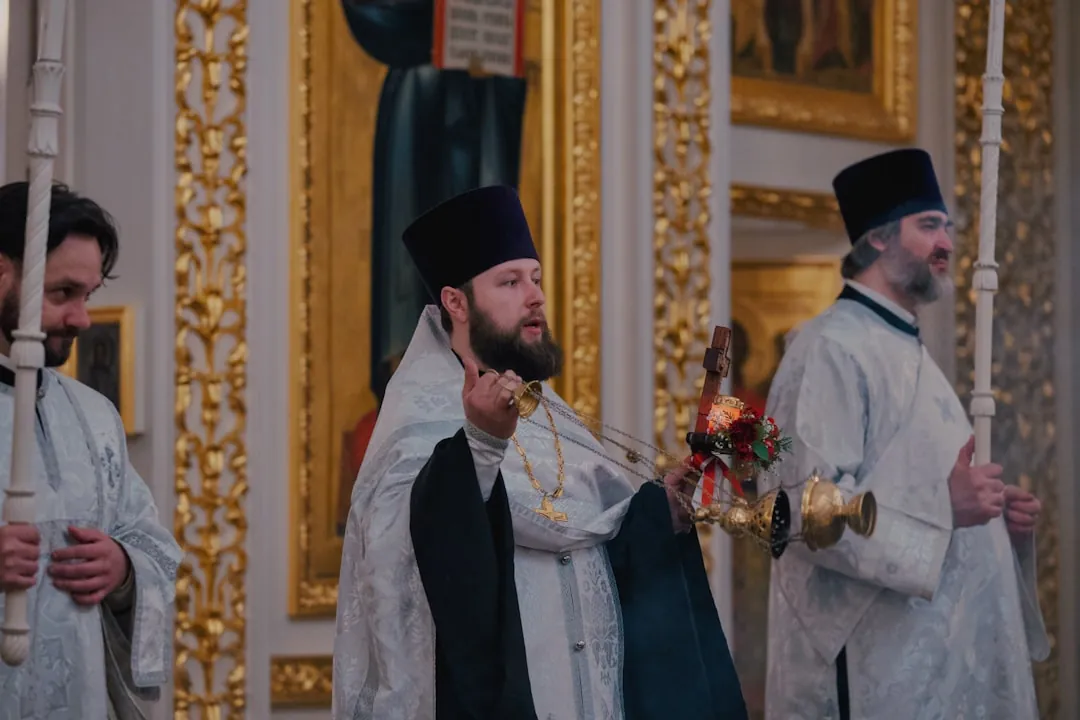
In Masonic usage, the word “ritual” has a precise technical meaning. It refers to a standardized written text, accompanied by a defined sequence of physical movements and symbolic gestures, that a lodge follows when admitting and advancing a candidate through the degrees of the Craft. The text is largely memorized by the officers conducting the ceremony, a practice that preserves both accuracy and solemnity. Different grand lodges maintain their own authorized versions, which is why “working the ritual” varies in detail between an English lodge operating under the United Grand Lodge of England and a lodge in the American South working the Webb-Preston tradition. The architecture of the ceremony, however, remains consistent: candidate, officers, symbolic furniture, and a narrative drawn from the allegory of the medieval stonemason’s craft.
The philosophical function of this structure is deliberate. Freemasonry’s moral philosophy, centered on brotherly love, relief, and truth, is not delivered to candidates through a pamphlet or a reading list. It is enacted. The candidate moves through the lodge room, takes obligations, handles working tools, and participates in dramatic sequences representing the journey from ignorance toward enlightenment, from the rough ashlar to the perfect ashlar. The lesson is experiential by design, drawing on a long tradition of initiatic pedagogy that predates Freemasonry and appears in various forms across historical fraternal and philosophical societies.
One distinction deserves emphasis because it is frequently misunderstood. Masonic lodge ceremonies open with a prayer and require that every candidate profess a belief in a Supreme Being, a requirement stated explicitly in most grand lodge constitutions. This has led some observers to treat the lodge as a quasi-religious institution. The Masonic Service Association and the United Grand Lodge of England have both addressed this directly: Freemasonry does not define the nature of that Supreme Being, prescribe any doctrinal position, or offer a path to salvation. A lodge might include a Christian, a Muslim, a Jew, and a Sikh among its members, each understanding the opening prayer through the lens of his own tradition. The ceremony is not worship. It is, in the organization’s own framing, a system of morality veiled in allegory and illustrated by symbols.
Origins and Historical Development of Masonic Rituals
The documentary trail for Masonic rituals begins not in London in 1717 but in Edinburgh in 1696. The Edinburgh Register House manuscript, dated to that year, is the earliest known written record of Masonic catechetical exchanges: the question-and-answer sequences used to test a candidate’s knowledge of lodge custom. Its existence confirms that formalized ceremonial practice predates the Premier Grand Lodge of England by at least two decades, and almost certainly by much longer. Scholars such as David Stevenson, in The Origins of Freemasonry (1988), have traced recognizable lodge structures in Scotland back to the late sixteenth century, suggesting that what the 1717 founders codified was an inheritance, not an invention.
From Guild Custom to Speculative Allegory
The transition from operative to speculative Masonry, which gathered pace through the late seventeenth century, did not discard the material culture of the working stonemason. It reinterpreted it. The leather apron worn to protect clothing from stone dust became an emblem of honest labor and moral purity. The square and compasses, instruments of physical measurement, were recast as tools for measuring conduct. The lodge itself, originally the on-site workshop where masons ate, slept, and settled disputes, was reconceived as a philosophical space structured around the cardinal points of the compass. This reframing was neither sudden nor uniform: operative and speculative members coexisted in many early lodges, and the allegorical layer was built incrementally over decades rather than declared at a single founding moment.
The 1723 Constitutions of James Anderson, commissioned by the Premier Grand Lodge, codified membership rules, lodge governance, and the obligations of a Mason toward his brethren. What Anderson conspicuously did not codify was ritual procedure itself. The ceremonial content was left unwritten, transmitted orally and by demonstration. That deliberate omission was not an oversight. It reflected both a desire to protect the forms from public scrutiny and a recognition that no single version yet commanded universal agreement. The pattern of omitting ritual detail from official printed documents has persisted in grand lodge governance to the present day.
The Antients, the Moderns, and the 1813 Union
In 1751, a rival body calling itself the Grand Lodge of England According to the Old Institutions was established, its members quickly nicknamed the “Antients” by their opponents. The original 1717 Grand Lodge, by contrast, was labeled the “Moderns,” a term its members found less flattering than intended. The schism was partly social, partly ethnic (the Antients drew heavily from Irish and working-class constituencies), and substantially ritual. The Antients accused the Moderns of having altered or abandoned elements of the traditional ceremony, including the Royal Arch, which the Antients regarded as integral to the third degree rather than a separate appendant body. Each Grand Lodge operated its own ritual variants for sixty-two years, producing a generation of English-speaking lodges with divergent ceremonial practice.
The Articles of Union signed on December 27, 1813, merged the two bodies into the United Grand Lodge of England and charged a Lodge of Reconciliation with producing a single, agreed ritual. The resulting compromise, ratified in 1816, forms the backbone of what is practiced in mainstream English lodges today. It did not, however, eliminate all variation. The Lodge of Reconciliation’s work was transmitted orally and never printed in an authorized text, which meant that regional differences and lodge-specific customs survived the merger. The 1813 union resolved the constitutional schism; it did not produce a single frozen ceremony, and the variation that traces back to those competing traditions remains audible in lodges across the English-speaking world.
The Three Degrees of Freemasonry: A Ritual Breakdown
First Degree: Entered Apprentice
The Entered Apprentice degree is the formal threshold of Blue Lodge membership, and its structure reflects that liminal quality with deliberate care. Before the ceremony begins, the candidate is prepared in an anteroom: divested of metal objects, partially undressed in a way that renders him symbolically vulnerable, and hoodwinked (blindfolded). The blindfold is not theatrical pageantry. It enacts the central theme of the degree, the passage from darkness into light, resolved at the moment of obligation when the hoodwink is removed and the candidate first perceives the lodge in full assembly. The working tools presented at this stage are the 24-inch gauge and the common gavel. The gauge teaches the division of the day into labor, refreshment, and service; the gavel teaches the removal of rough edges of conduct and character. Both are stonemason’s tools repurposed as moral instruments, a pattern that runs through every subsequent degree. An obligation, a solemn pledge administered on the Volume of Sacred Law, binds the candidate to the fraternity’s principles before he receives the recognition signs and words that identify him to other Entered Apprentices.
Second Degree: Fellowcraft
The Fellowcraft degree advances the candidate from foundational moral instruction toward intellectual development, and the shift in emphasis is architecturally encoded. The central allegory is the ascent of a winding staircase leading to the middle chamber of King Solomon’s Temple, where the Fellow Craft receives wages, meaning knowledge and its rewards. The staircase passes through a porch flanked by two great pillars, known in Masonic tradition as Jachin and Boaz, names drawn from the description of Solomon’s Temple in 1 Kings 7:21. Their symbolic meanings, stability and strength respectively, are explained in the degree’s lecture. That lecture also introduces the seven liberal arts and sciences: grammar, rhetoric, logic, arithmetic, geometry, music, and astronomy. Geometry receives particular emphasis, reflecting the operative stonemason’s dependence on it and the speculative Mason’s identification of it with the study of nature and the divine order underlying creation. The obligation and recognition signs of this degree are distinct from those of the first, marking a genuine advancement rather than a repetition.
Third Degree: Master Mason and the Legend of Hiram Abiff
The Master Mason degree occupies a different register from the two that precede it. Where the Entered Apprentice and Fellowcraft degrees are largely instructional, the third is dramatic, organized around the Legend of Hiram Abiff, the mythical architect of Solomon’s Temple. According to the legend, Hiram possessed the secrets of a Master Mason and was accosted by three ruffians who demanded those secrets. When he refused, they killed him. His body was eventually discovered and, in a ceremony that forms the emotional core of the degree, the candidate re-enacts Hiram’s fate and his symbolic restoration to life. The allegory is transparent in its intent: a meditation on mortality, on the integrity required to keep faith under mortal pressure, and on the fraternal bonds that persist beyond death. The Masonic Service Association of North America describes it as “the most solemn and moving ceremony in the Masonic system,” and most ritual scholars who have examined the degree concur that its power lies precisely in its refusal to resolve the legend neatly. The secrets lost with Hiram are never fully recovered, only substituted, a detail the degree treats not as failure but as a permanent reminder of human limitation. Completion of the Master Mason degree confers full rights within the Blue Lodge, though appendant bodies such as the Scottish Rite (which extends to the 32nd degree) and the York Rite build additional ceremonial structures on this foundation, each elaborating themes introduced in the three Blue Lodge degrees.
Symbols and Allegories in Masonic Ritual
Working Tools as Moral Instruments
At each of the three degrees, the candidate receives a formal presentation of working tools drawn directly from operative stonemasonry. The twenty-four-inch gauge and common gavel appear in the First Degree; the square and compasses dominate the Second; the trowel, along with the plumb and level, feature in the Third. None of these objects are handed over as souvenirs. Each comes with a scripted explanation that translates the physical function of the tool into a prescription for ethical conduct. The square, which a stonemason uses to test right angles, becomes in this context an instruction to regulate one’s actions by the moral law. The level, which ensures a horizontal surface, is presented as an emblem of equality among members regardless of social rank. The plumb, which tests vertical alignment, stands for uprightness of character. What makes this pedagogy distinctive is its sequencing: the candidate handles or observes the object within a dramatic ceremonial moment before the verbal explanation arrives. The symbol is encountered experientially first. The lesson follows. This is allegory functioning as a teaching method, not decoration, embedding abstract ethical concepts in a sensory and theatrical context that is far harder to forget than a lecture.
The trowel deserves particular attention. In operative masonry it spreads the cement that binds stones together. In speculative practice, Masonic ritual and symbolism assigns it the function of spreading the cement of brotherly love and affection. The metaphor is deliberately humble. There is no claim to cosmic transformation here, only the persistent, practical work of holding a community together. That combination of craft vocabulary and speculative philosophy is precisely what the founders of the premier Grand Lodge, established in London on June 24, 1717, inherited from the manuscript charges of the operative guilds and chose to preserve.
The Lodge Room as Symbolic Architecture
The physical space in which ceremonies take place is not a neutral meeting room rearranged for effect. The lodge room is a designed symbolic environment, and its layout is specified in ritual working. The room is oriented on an east-west axis: the Worshipful Master sits in the east, where the sun rises, and the Senior Warden in the west, where it sets. The Junior Warden occupies the south, representing the sun at its meridian height. This arrangement maps the officers’ roles onto the arc of the day, with the Master as the source of light and instruction. The altar, positioned at the center or toward the east depending on the jurisdiction, holds the Volume of the Sacred Law, the square, and the compasses: the three Great Lights of the lodge. The mosaic pavement beneath the feet of the candidate, a black-and-white checkered floor, represents the mingled good and evil of human existence, a visual reminder that the work of moral improvement takes place in an imperfect world.
Decorative elements in the lodge room carry equivalent weight. The letter G, suspended above the Master’s chair in many jurisdictions, refers simultaneously to geometry (the foundational science of the operative craft) and to the Great Architect of the Universe, the non-denominational term Freemasonry uses to acknowledge a supreme principle without prescribing a specific theology. The blazing star and the All-Seeing Eye appear in lodge furnishings and degree lectures as layered references to divine watchfulness and the pursuit of knowledge. Both symbols predate Freemasonry by centuries and entered lodge iconography from Renaissance emblematic literature and Christian devotional art. Treating them as occult insignia mistakes the library for the conspiracy.
Want to learn more?
/understanding-masonic-symbols/” title=”Understanding Masonic Symbols”>Masonic symbols and their documented meanings.”
The Role of Lodge Officers in Masonic Ceremonies
A Masonic lodge ceremony is not a solo performance. It is a coordinated production with a defined cast, each officer occupying a specific physical position in the lodge room and carrying a scripted ceremonial function. The spatial arrangement is itself meaningful: the principal officers are stationed according to an astronomical allegory that maps the sun’s daily arc onto the architecture of the room, so that the lodge’s geography becomes part of the ritual’s symbolic argument.
| Office Title | Symbolic Position in Lodge Room | Primary Ceremonial Function |
|---|---|---|
| Worshipful Master | East (rising sun) | Presides over all ceremonies; confers degrees; opens and closes the lodge |
| Senior Warden | West (setting sun) | Assists the Master; calls the lodge from labor to refreshment |
| Junior Warden | South (meridian sun) | Oversees the craft at midday; monitors conduct during refreshment |
| Senior Deacon | Right of the Master | Carries messages from Master to Senior Warden; guides the candidate |
| Junior Deacon | Right of the Senior Warden | Guards the inner door; assists in conducting the candidate through degrees |
| Tyler (Tiler) | Outside the outer door | Guards the entrance with a drawn sword; ensures only initiates are present |
The Worshipful Master holds the executive and ritualistic authority of the lodge from the East, delivering key lectures, conferring each degree, and pronouncing the formal opening and closing. The Senior and Junior Wardens in the West and South complete the solar triangle, their duties calibrated to represent different phases of the working day, a deliberate piece of astronomical allegory built into the lodge’s spatial logic. The two Deacons function as choreographed messengers: their physical movement through the lodge room, conducting the candidate from station to station, is not improvised but scripted, forming the kinetic backbone of the degree ceremony. The Tyler’s role is the oldest of all. Guarding the outer door with a drawn sword, the office appears in lodge records that predate the formation of the Premier Grand Lodge in 1717, suggesting it was inherited directly from the operative guild practices that Freemasonry drew upon when it formalized its structure. What holds the whole system together is rehearsal. Many jurisdictions assign degree teams, groups of officers who practice their parts collectively and treat the ceremony with the discipline of theatrical production. The Anderson Constitutions of 1723 already emphasized the importance of proper form in lodge proceedings, and that expectation has never quietly gone away.
Standardization and Variation: Rites, Jurisdictions, and the Question of Uniformity
The three degrees of the Blue Lodge form the bedrock of Freemasonry across virtually every jurisdiction on earth, yet anyone who assumes that uniformity extends to the precise wording, physical choreography, or supplementary lectures is in for a surprise. Grand lodges are sovereign bodies, and that sovereignty has always included the authority to govern ritual practice within their own territories. The result, across three centuries of independent development, is a global family of ceremonies that share a recognizable skeleton while differing considerably in the flesh that surrounds it. Variation is not a flaw in the system; it is a structural feature of a federation that has never had a single international governing authority.
Scottish Rite and York Rite: Beyond the Blue Lodge
For Masons who complete the three foundational degrees and seek further ceremonial work, two principal appendant bodies offer extended degree systems. The Scottish Rite, administered in the United States by two separate jurisdictions (the Southern Jurisdiction, headquartered in Washington, D.C., and the Northern Masonic Jurisdiction), extends the degree sequence from the 4th through the 32nd, with the honorary 33rd conferred by election for distinguished service. Each of these degrees carries its own ritual drama, drawing on themes from biblical history, chivalric tradition, and philosophical allegory. The Supreme Council of the Southern Jurisdiction, established in Charleston, South Carolina, in 1801, is the oldest Supreme Council in the world and serves as the organizational model for Scottish Rite bodies in dozens of countries.
The York Rite offers a parallel rather than a sequential path. It comprises three bodies: the Royal Arch Chapter, the Council of Royal and Select Masters (Cryptic Masonry), and the Commandery of Knights Templar. Each confers its own set of degrees or orders, with the Royal Arch in particular holding a special place in English Freemasonry, where it has been considered since 1813 as the formal completion of the third degree. A Mason need not pursue either appendant body; both are optional extensions of the Masonic initiation ritual framework, not prerequisites for full standing in a Blue Lodge.
Ritual Workings in England vs. the United States
The United Grand Lodge of England (UGLE) takes an unusually structured approach to ritual variation. Rather than prescribing a single authorized text, the UGLE recognizes several distinct ritual “workings,” each with a documented history and an approved status. Emulation working, developed and preserved by the Emulation Lodge of Improvement founded in 1823, is the most widely practiced. Taylor’s working, Oxford working, and Bristol working are among the other recognized variants, each differing in phrasing, certain ceremonial details, and the structure of the explanatory lectures. All are valid; none are identical. The Bristol working, notably, has preserved elements of pre-union practice that other workings revised after the 1813 merger of the Antients and Moderns grand lodges.
In the United States, the picture is more diffuse. Each of the fifty-plus grand lodge jurisdictions (one per state, plus several for Washington, D.C., and U.S. territories) maintains its own ritual, and there is no federal body with authority to standardize them. Some American lodges work from printed monitors, which are semi-public guides that accompany the secret oral portions; others rely on manuscript traditions passed down through lodge instruction. This decentralized landscape means that a Mason traveling from a lodge in Virginia to one in California may notice meaningful differences in the ceremony’s structure and language, even within the same three degrees. The existence of printed ritual exposés, beginning with Samuel Prichard’s Masonry Dissected in 1730, has long made portions of the ritual text accessible outside lodge walls, yet the tradition of oral transmission and memorization persists as a deliberate pedagogical choice. The point, as Masonic educators have consistently argued, is not secrecy for its own sake but the discipline of internalization: a candidate who has memorized a catechism has engaged with it differently than one who has simply read it.
Psychological and Philosophical Dimensions of Ritual Participation
Freemasonry has never pretended its ceremonies are merely administrative. From the earliest codified statements of Masonic purpose, the ritual framework was understood as a teaching mechanism, not a formality. The Anderson Constitutions of 1723 describe the fraternity’s aim as making good men better through shared moral instruction, and William Preston’s Illustrations of Masonry (1772) elaborated this into a systematic philosophy: that moral lessons absorbed through dramatic experience leave a deeper impression than the same lessons delivered by lecture. Preston’s argument was essentially pedagogical. A candidate who enacts a symbolic journey retains its meaning differently than one who simply reads about it. The degree structure reinforces this effect through deliberate repetition: each ceremony builds on the one before it, and when a raised Mason later witnesses a new candidate’s initiation, the familiar words and gestures arrive with accumulated meaning. The lodge, in this reading, is less a meeting room than a classroom that never quite closes.
Scholars outside the fraternity have reached comparable conclusions through different routes. Anthropologist Victor Turner, writing in the 1960s and 1970s on the structure of initiatory rites across cultures, identified what he called liminality: the threshold state in which a candidate is temporarily suspended between social identities, neither what they were nor yet what they will become. Turner observed that this structural feature, threshold crossing followed by symbolic death and rebirth and then reintegration into community, recurs across widely separated ritual traditions. Masonic degree work exhibits each of these phases with notable clarity, a point noted by several ritual studies scholars who have examined the degrees without endorsing any particular metaphysical interpretation of them. What these frameworks collectively suggest is that the ceremonies function on a cognitive level regardless of the candidate’s prior beliefs: the scripted, repetitive structure creates a distinct register of attention that ordinary social gatherings do not produce. Participants consistently report a heightened sense of occasion. Whether that translates into lasting moral improvement is a matter the individual lodge member must assess for themselves. The documented intent, preserved in printed monitors and ritual manuals going back to the eighteenth century, is that it should.
Modern Adaptations and the Enduring Tradition
Freemasonry in the late twentieth century faced a demographic reality that no amount of ceremonial gravity could postpone: membership in many grand lodges declined sharply after the 1960s peak, and the fraternity responded with practical adjustments. The most contested of these is the “one-day class,” a format in which all three degrees are conferred in a single compressed session rather than across separate lodge meetings spread over months. Critics within the fraternity argue that the compression strips the degrees of the reflective intervals that give them meaning; proponents counter that a candidate who actually shows up and receives the degrees is preferable to one who never petitions at all. The debate has not been resolved, and grand lodges remain divided on the practice. On a quieter front, digital tools have entered the lodge room through the side door: in several US and UK jurisdictions, officers now use dedicated apps or audio recordings to assist with the demanding memorization that ritual work requires. Older members sometimes regard this as a concession too far, though the irony is that printed ritual monitors, which are themselves a relatively modern convenience, once provoked similar objections.
The question of who may participate in these ceremonies is, strictly speaking, a jurisdictional one. Mainstream grand lodges recognized by the United Grand Lodge of England do not admit women, and that position has remained consistent. The parallel tradition of co-Masonic and women’s grand lodges, however, has operated openly since the Order of Women Freemasons was formally constituted in England in 1908, conferring the same three-degree structure with equivalent ritual content. Whatever one makes of the jurisdictional boundaries, the existence of these bodies confirms that the ritual framework itself is not considered gender-specific by a significant portion of the broader Masonic world. Beneath all of these adaptations, the core texts of the three degrees have remained structurally stable for well over two centuries. The obligations, the symbolic lectures, and the principal dramatic sequences that appear in Preston’s Illustrations of Masonry (first published in 1772) are recognizable in lodge workings performed today. That durability is partly institutional conservatism, and partly something more straightforward: the ceremonies work as vehicles for the ideas they carry, and there has been little pressure to replace what still functions.
Common Misconceptions About Masonic Rituals
Few subjects attract as much confident misinformation as Masonic ceremonies, and the misinformation tends to cluster around the same handful of misunderstandings. Addressing them directly, with sources, is more useful than a general disclaimer.
On Secrecy: What Lodges Actually Protect
The idea that Masonic ritual is locked behind impenetrable secrecy collapsed some time in the 18th century. Samuel Prichard’s Masonry Dissected, published in 1730, provided a detailed account of lodge ceremonies just thirteen years after the founding of the United Grand Lodge of England, and it became one of the best-selling pamphlets of the decade. Anti-Masonic literature in the 19th century, particularly following the Morgan Affair of 1826, produced further exposés in the United States. Today, detailed ritual texts for multiple jurisdictions circulate freely online. What lodges protect is not the content of the ceremonies but the solemnity of the experience: the difference between reading a screenplay and sitting in the theater. Members are asked not to trivialize the work, not to conceal it from historians.
Masonic Ritual and Religious Conflict
A persistent claim holds that Masonic lodge ceremony constitutes a rival religion or is incompatible with Christian practice. The historical record is more precise than that. The Catholic Church’s prohibition on Masonic membership dates to Pope Clement XII’s papal bull In Eminenti, issued in 1738, and the concern cited was the combination of secrecy and oath-taking, not the ritual content itself. The Congregation for the Doctrine of the Faith reaffirmed the prohibition in a 1983 declaration, again on procedural rather than doctrinal grounds. Many Protestant denominations and Jewish congregations have historically placed no such restriction on members. The ceremonies themselves invoke a non-denominational concept of a Supreme Being and draw heavily on Old Testament building imagery, particularly the construction of Solomon’s Temple. This is architectural allegory, not liturgy.
The Hiram Abiff Legend, the Illuminati Conflation, and the “8-Hour Rule”
Online searches for “weird” or “dark” Masonic initiation ritual frequently surface the legend of Hiram Abiff, the architect of Solomon’s Temple whose murder and symbolic resurrection form the dramatic core of the Third Degree. The legend is allegorical theater in the tradition of medieval mystery plays, not a literal enactment of violence. No candidate is harmed; the drama is explicitly understood by all participants as moral allegory about integrity and mortality. Conflating it with genuine violence requires either willful misreading or reliance on satirical accounts that were never intended as documentation.
The conflation with the Bavarian Illuminati is a separate error with a long pedigree. Adam Weishaupt’s organization, founded on May 1, 1776, and dissolved by electoral decree in 1785, was a distinct Enlightenment-era secret society that briefly recruited some Freemasons as individual members. It had its own structure, its own goals, and its own rituals. The Masonic Service Association and mainstream Masonic historians are consistent on this point: the two organizations were never unified, and the Illuminati ceased to function as an institution before the 19th century began. Finally, the so-called “8-hour rule” referenced in online forums is neither universal nor mystical. It is a practical guideline present in some jurisdictions, recommending that candidates not be intoxicated within eight hours of a ceremony, for the straightforward reason that initiation requires sustained attention. Different grand lodges handle this differently; none treat it as a cosmic requirement.
FAQ
What exactly happens during a Masonic initiation ritual?
The First Degree ceremony, known as the Entered Apprentice, follows a structured sequence that has remained broadly consistent since the early eighteenth century. The candidate is prepared in an anteroom, admitted to the lodge in a manner prescribed by the jurisdiction’s approved working, and then guided through a series of symbolic actions: an obligation taken on the Volume of Sacred Law, the presentation of working tools (the twenty-four-inch gauge and common gavel), and a symbolic movement from darkness to light.
The experience is theatrical and allegorical rather than physically demanding. Its moral themes, covering duty, self-improvement, and the search for knowledge, are consistent across all recognized grand lodges, even where the precise choreography differs.
Are Masonic rituals really secret, and why?
The broad outline of degree ceremonies has been publicly documented since Samuel Prichard’s Masonry Dissected, published in 1730, which printed a detailed exposure of lodge proceedings and became an immediate bestseller. What members protect through obligation (not legal enforcement) are the specific recognition signs, words, and tokens used to identify a fellow Mason.
The rationale is twofold: partly historical, rooted in the guild tradition of protecting trade knowledge, and partly philosophical. The fraternity holds that previewing a ceremony in full diminishes the experiential impact of its symbolism. Secrecy, in this reading, is a pedagogical tool as much as a protective one.
How long does it take to complete all three degrees of Masonic ritual?
In most jurisdictions, each of the three Blue Lodge degrees is conferred at a separate lodge meeting, so completion takes a minimum of several months. The actual timeline depends on lodge scheduling, meeting frequency, and whether the candidate can demonstrate sufficient proficiency in the catechetical questions from the preceding degree before advancing.
Some American grand lodges permit what are commonly called one-day classes, which compress all three degrees into a single session. The practice is permitted but debated within the fraternity: critics argue it trades depth of experience for convenience, while proponents point to accessibility for candidates with demanding schedules.
Do all Masonic lodges perform the same rituals?
No. The three-degree Blue Lodge structure is near-universal among recognized grand lodges, but the specific wording, physical choreography, and supplementary lectures vary by jurisdiction and approved working. The United Grand Lodge of England alone recognizes several distinct workings, including Emulation, Taylor’s, and Bristol, each with its own authorized text. American grand lodges are similarly varied, with each state grand lodge maintaining its own approved ritual.
Appendant bodies add further complexity. The Scottish Rite confers degrees numbered four through thirty-two (plus the honorary thirty-third), and the York Rite adds its own chapter, council, and commandery degrees, all with distinct ritual texts and themes.
How are Masonic rituals different from religious ceremonies?
Lodge ceremonies open with prayer and require candidates to affirm belief in a Supreme Being, but they are not acts of worship and carry no denominational affiliation. The United Grand Lodge of England’s Book of Constitutions explicitly states that Freemasonry is not a religion and does not substitute for one. The moral instruction delivered through its ceremonies uses broadly theistic language while remaining doctrinally neutral.
That distinction satisfies most Protestant denominations and has allowed members of many faiths to participate without perceived conflict. It has not, however, resolved the Catholic Church’s longstanding objections: the Vatican’s 1983 Declaration on Masonic Associations reaffirmed that Catholic membership in Masonic lodges remains forbidden.
