 Italiano
  English
| 0 Comments | James Whitfield
Few objects in American daily life attract as much conspiratorial scrutiny as the back of a one-dollar bill. The unfinished pyramid, the Eye of Providence hovering above it, the Latin mottos, all have been cited as proof that Freemasons secretly engineered the founding of the United States and embedded their symbols into its currency. The claim is vivid, persistent, and largely wrong. The Great Seal of the United States was designed between 1776 and 1782 by a committee that included Charles Thomson, William Barton, and Francis Hopkinson, none of whom were Freemasons. The Eye of Providence itself predates Freemasonry by centuries, appearing in Renaissance Christian art long before any lodge adopted it. That does not mean the symbols are without meaning or historical weight. It means the meaning is more interesting, and more complicated, than the conspiracy version allows. This article examines every major symbol on the reverse of the one-dollar bill, traces each one to its documented origins, and explains what Freemasonry actually does and does not have to do with American currency.
What Symbols Actually Appear on the Reverse of the One-Dollar Bill?
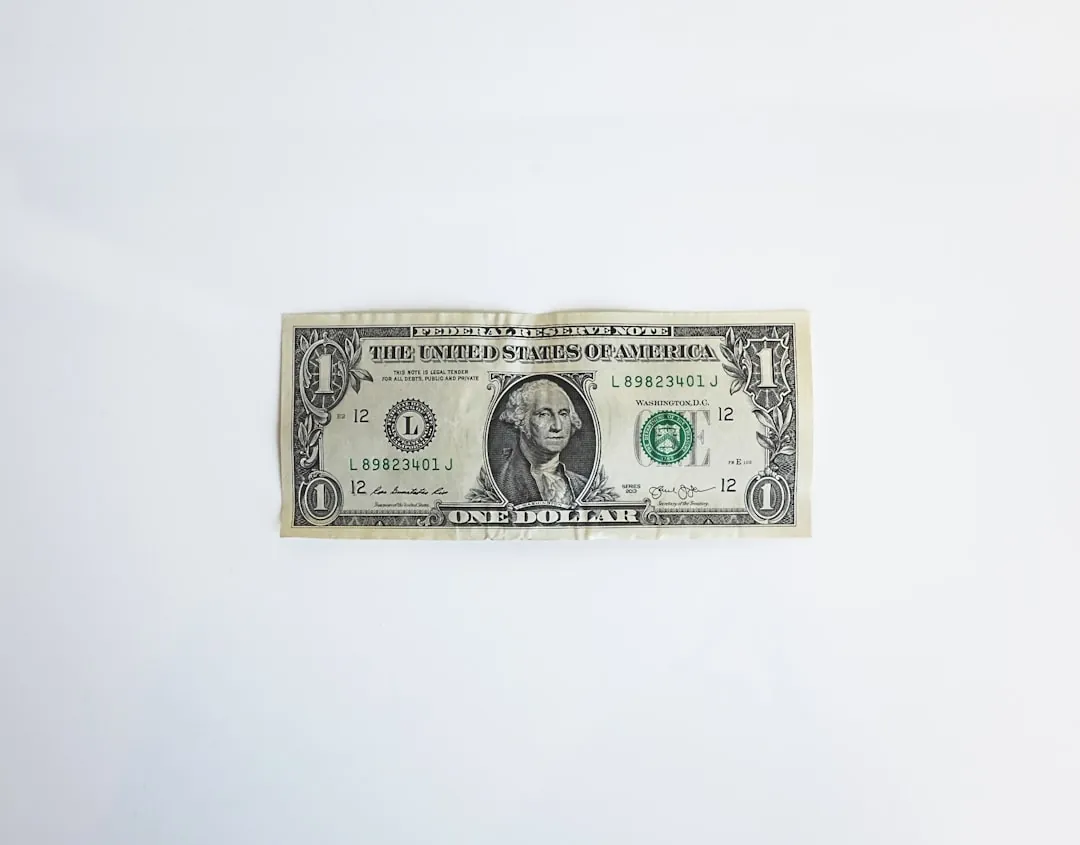
Several masonic symbols on the dollar bill are claimed by conspiracy theorists, but the documented record is more precise and less dramatic. The reverse of the one-dollar bill displays both sides of the Great Seal of the United States. It shows a bald eagle, an unfinished pyramid, the Eye of Providence, and several Latin mottos, all placed there in 1935.
The 1935 Decision: Why These Symbols Appeared on Currency So Late
Congress approved the Great Seal’s design on June 20, 1782, yet its reverse sat unused on currency for over 150 years. Treasury Secretary Henry Morgenthau Jr. and President Franklin D. Roosevelt made the decision to incorporate both sides of the Seal into the redesigned one-dollar bill in 1935. Roosevelt, who was a Freemason, found the reverse’s imagery personally compelling, particularly the phrase Novus Ordo Seclorum, which he associated with his New Deal agenda. His Secretary of Agriculture, Henry Wallace (also a Freemason), had lobbied for the inclusion. The timing is critical: this was a Depression-era political choice, not a founding-era Masonic conspiracy. Anyone arguing that the Seal’s placement on currency reflects a secret 18th-century plot has to explain a 153-year gap.
The left side of the bill carries the obverse of the Great Seal: a bald eagle clutching an olive branch in its right talon and a bundle of thirteen arrows in its left, a shield across its chest, the motto E Pluribus Unum on a banner in its beak, and a constellation of thirteen stars arranged in a six-pointed pattern above its head. The right side carries the reverse of the Seal: an unfinished pyramid of thirteen courses of stone, a radiant triangle containing the Eye of Providence at its apex, the Roman numerals MDCCLXXVI (1776) cut into the base, and the two Latin mottos Annuit Coeptis (“He has favored our undertakings”) and Novus Ordo Seclorum (“A new order of the ages”) above and below the pyramid respectively.
| Symbol Name | Location on Bill | Documented Design Source | Masonic Connection |
|---|---|---|---|
| Bald Eagle | Left reverse (Seal obverse) | Charles Thomson and William Barton, 1782 Seal committee | No |
| Olive Branch and Arrows | Eagle’s talons, left reverse | 1782 Seal committee; classical republican symbolism | No |
| E Pluribus Unum | Banner in eagle’s beak | Proposed 1776 by Franklin, Adams, and Jefferson; adopted 1782 | No |
| Unfinished Pyramid | Right reverse (Seal reverse) | William Barton’s 1782 design; strength and permanence symbolism | Disputed |
| Eye of Providence | Apex of pyramid, right reverse | Charles Thomson, 1782; pre-Masonic Christian iconography | Disputed |
| Annuit Coeptis / Novus Ordo Seclorum | Above and below pyramid | Charles Thomson, adapted from Virgil’s Aeneid and Eclogues | No |
| MDCCLXXVI | Base of pyramid | 1782 Seal committee; marks the year of independence | No |
Claimed ‘Hidden’ Symbols: The Owl, the Spider, and the Number 13
Beyond the documented imagery, a persistent cottage industry identifies “hidden” symbols in the bill’s engraving. The most common claims involve a small owl perched near the upper-right corner of the “1” shield, a spider lurking in the same area, and an elaborate web of occult meaning built around the number 13 (thirteen stars, thirteen arrows, thirteen stripes on the shield, thirteen letters in E Pluribus Unum). The number 13 requires no hidden explanation: it reflects the thirteen original colonies, a fact the Bureau of Engraving and Printing states plainly in its own documentation. As for the owl and the spider, the Bureau has confirmed these are not intentional design elements. Intaglio engraving, the process used for U.S. currency, produces fine crosshatched lines that the human eye is extraordinarily good at resolving into familiar shapes. That tendency has a name: pareidolia. The same cognitive process that finds faces in clouds finds owls in currency borders. No archival design brief, no engraver’s note, and no official record supports the claim that either image was deliberately placed.
The Eye of Providence: Origins That Predate Freemasonry by Centuries
The Eye in Egyptian, Christian, and Enlightenment Iconography
The Eye of Providence is old. Far older, in fact, than any Masonic lodge. The symbol’s earliest traceable ancestor is the Eye of Horus, a protective emblem in ancient Egyptian religion representing the watchful power of the divine. That visual idea, a single eye radiating authority and omniscience, traveled through centuries of Mediterranean religious art before it landed in the hands of Renaissance painters. Jacopo Pontormo’s 1525 Supper at Emmaus places a luminous triangular eye directly above the scene, functioning as a straightforward emblem of God’s all-seeing presence. This was not esoteric shorthand for a secret society. It was standard Christian iconography, readable by any educated viewer of the period. By the 17th and 18th centuries, the symbol appeared regularly in European church architecture, devotional prints, and Enlightenment-era political allegory, where it carried a consistent meaning: divine providence watching over human affairs. Charles Thomson, the secretary of the Continental Congress who finalized the Great Seal’s reverse design in 1782, worked squarely within this established visual tradition. His own written explanation of the seal describes “the Eye of Providence in a radiant Triangle” as signifying “the many signal interpositions of Providence in favour of the American cause.” Thomson cited classical and Christian sources in his notes. No document from the design committee, not a single letter, memo, or committee report, references Masonic symbolism as an influence.
When Did Freemasonry Adopt the Eye of Providence?
The fraternity’s relationship with the Eye of Providence has a surprisingly precise starting point. The earliest well-documented appearance of the symbol in a Masonic ritual context is Thomas Smith Webb’s Freemason’s Monitor, published in 1797. Webb described the All-Seeing Eye as a reminder that a Master Mason’s actions are observed by the Supreme Architect of the Universe, borrowing the symbol’s long-standing theological meaning and placing it within the lodge’s moral framework. This date matters enormously for any honest analysis of the dollar bill question. The Great Seal was designed and approved in 1782. Webb’s Monitor appeared fifteen years later. The sequence is not ambiguous: the Eye reached the Great Seal before it entered documented Masonic ritual, not after. The claim that masonic symbols dollar bill imagery proves Masonic authorship of the seal inverts the actual chronology. What the evidence shows is that both the seal’s designers and, later, Masonic writers drew on the same pre-existing Christian and Enlightenment iconographic vocabulary. Shared visual language is not proof of shared authorship. A cross appears on both a hospital and a church; that does not make medicine a religious institution. The Eye of Providence belonged to Western symbolic tradition long before any lodge put it on a tracing board, and that prior ownership is exactly what Thomson’s 1782 documentation records.
The Unfinished Pyramid: What It Actually Symbolizes
The pyramid on the reverse of the Great Seal is one of the most scrutinized masonic symbols dollar bill researchers cite, yet its designer left a clear paper trail. William Barton, a Philadelphia heraldist who contributed the pyramid motif in 1782, documented its meaning without ambiguity: the pyramid represents strength and permanence, and its thirteen courses of stone stand for the original thirteen states. Nothing in Barton’s notes, or in the subsequent explanations filed with Congress, connects the image to Masonic lodge symbolism or to the unfinished Temple of Solomon. The connection lives in inference, not in evidence.
The unfinished apex carries its own documented rationale. Charles Thomson, Secretary of the Continental Congress, explained in his formal notes to Congress that the incomplete summit signals a nation still under construction, open to future achievement. That reading belongs squarely to Enlightenment republican thought, where the idea of a polity perpetually improving itself was a serious intellectual position, not a decorative flourish. The Roman numerals MDCCLXXVI cut into the base reinforce the civic framing: they mark 1776, the year of the Declaration of Independence, anchoring the entire image in political history rather than fraternal tradition. Pyramids were also fashionable across European neoclassical design in the same period. French and British decorative objects, medals, and architectural drawings of the 1770s and 1780s used pyramid imagery freely, reflecting the era’s appetite for ancient motifs rather than any secret allegiance.
Annuit Coeptis and Novus Ordo Seclorum: What the Latin Actually Says
Both mottos on the reverse of the Seal trace directly to classical Latin poetry, and Thomson identified the sources himself. Annuit Coeptis (“He has favored our undertakings”) adapts a line from Virgil’s Aeneid (Book IX, line 625), where Ascanius calls on Jupiter to bless his aim. Novus Ordo Seclorum (“A new order of the ages”) comes from Virgil’s Fourth Eclogue, a poem the Renaissance and Enlightenment both read as a prophecy of renewal and a golden age. Thomson’s explanatory notes to Congress cite these passages explicitly. No Masonic ritual text uses either phrase, and no lodge document of the period invokes Virgil in this context. The mottos are humanist and classical in origin, chosen because educated men of the founding generation read Latin and recognized the allusions immediately. Treating them as coded fraternal messages requires ignoring the sources the designer named in writing.
The Great Seal of the United States: Design History and the People Behind It
Which Founding Fathers Were Freemasons, and Which Were Not
The claim that Freemasonry authored the Great Seal rests heavily on the assumption that the Founding Fathers were, as a group, Freemasons. The documented record tells a more complicated story. Among the members of all three design committees, confirmed Masonic membership is the exception, not the rule. Benjamin Franklin held membership in St. John’s Lodge in Philadelphia, a well-documented fact. William Hooper, sometimes listed in popular accounts, has no verified lodge affiliation in any grand lodge archive. John Adams, Thomas Jefferson, and most of the second committee (James Lovell, John Morin Scott, William Churchill Houston) left no credible record of Masonic initiation. Charles Thomson, the Secretary of Congress who synthesized the final design in 1782, was not a Freemason. William Barton, the Philadelphia lawyer and heraldist who contributed the pyramid and eye motif to Thomson’s draft, was likewise never documented as a lodge member. The Masonic Service Association and standard reference works on American Freemasonry do not list either man. Treating the Seal as a Masonic document because Franklin sat on the first committee is roughly as defensible as calling it a Quaker document because Jefferson owned a copy of William Penn’s writings.
Benjamin Franklin’s Rejected Proposals for the Great Seal
Franklin’s actual submission to the first committee in August 1776 described Moses standing on the shore of the Red Sea, staff raised, with Pharaoh’s army drowning in the waters behind him. The motto he proposed read: “Rebellion to Tyrants is Obedience to God.” No pyramid. No all-seeing eye. No square and compass. The design was rejected by Congress along with the other first-committee proposals, and Franklin never submitted a revised version. Jefferson proposed a scene of the Israelites in the wilderness; Adams suggested Hercules choosing between virtue and sloth. None of these images survived into the final Seal. When Charles Thomson and William Barton produced the accepted design in June 1782, they drew on European heraldic tradition and the widely circulated emblem books of the period, sources that had nothing to do with lodge ritual. The pyramid, which Barton introduced, appears in several 18th-century heraldic references as a symbol of permanence and strength, and the Eye of Providence above it was a standard Christian iconographic motif long before any Masonic lodge placed it on a tracing board. Franklin’s Masonic membership is a historical fact; his influence on the final Seal’s imagery is essentially zero, and the two points should not be conflated.
Congress appointed three successive committees to resolve the Seal question: the first in 1776 (Franklin, Adams, Jefferson), the second in 1780 (Lovell, Scott, Houston), and the third in 1782 (Rutledge, Middleton, Arthur Lee). Each committee produced proposals that Congress found unsatisfactory. The final synthesis fell to Thomson and Barton, two men working from heraldic and classical sources rather than lodge symbolism. The presence of one confirmed Freemason on the first committee does not constitute Masonic authorship of the document, any more than the presence of Anglicans among the signers makes the Declaration of Independence an Anglican text. Design history, in this case, is simply more interesting than the conspiracy version, and considerably better sourced.
Want to learn more?
Timeline: From the Great Seal’s Design to the Dollar Bill
The chronology of the masonic symbols dollar bill debate begins not in a lodge room but in a Philadelphia statehouse. On June 20, 1782, the Continental Congress approved the final design of the Great Seal of the United States. The reverse of that Seal, featuring an unfinished pyramid beneath a radiant eye, was ratified alongside the obverse. Yet the reverse was almost never used. Official documents, treaties, and commissions bore the eagle on the front face. The pyramid and eye sat in the records, largely dormant, for well over a century. No Founding Father ordered it stamped on coins or currency. No lodge voted to put it in circulation. The design existed on paper, and on paper it stayed.
The next date that matters is 1797, fifteen years after Congress approved the Seal. That year, Thomas Smith Webb published his Freemason’s Monitor, the text that first placed the Eye of Providence explicitly inside a Masonic instructional context. The symbol had existed in Christian iconography for centuries before that, and the Seal’s designers drew on those older traditions, not on lodge ritual. Webb’s adoption of the eye came after the Seal, not before it. The final date in this sequence is 1935, when President Franklin D. Roosevelt and his Secretary of Agriculture Henry Wallace approved placing both faces of the Great Seal on the redesigned one-dollar Federal Reserve Note. Wallace, whose spiritual interests ranged well beyond mainstream Protestantism, actively championed the inclusion of the pyramid side, which had been overlooked for generations. The gap between the Seal’s approval and its appearance on currency spans 153 years. Coordinated conspiracies rarely wait a century and a half to execute their signature move.
Debunking the Masonic Conspiracy: What Primary Sources Actually Show
What Modern Freemasons Say About the Dollar Bill
The most direct rebuttal to conspiracy claims about masonic symbols on the dollar bill comes from Freemasons themselves. The Masonic Service Association of North America has stated plainly that the Great Seal is not a Masonic document and that no lodge minutes, no fraternal correspondence, and no official Masonic record connects the organization to the Seal’s design. The United Grand Lodge of England echoes this position. These are not defensive disclaimers issued under pressure. They are statements of documented historical fact. Charles Thomson and William Barton, the two men who finalized the Seal’s design in 1782, were not Freemasons. Their names do not appear in any lodge membership rolls from the period. The conflation of their work with Masonic authorship has no evidentiary basis whatsoever.
The Eye of Providence is a separate matter worth addressing directly. It is a symbol that Freemasonry adopted from a much older Christian and classical tradition. It appears in Renaissance religious paintings, in Catholic devotional art, and in Protestant theological texts long before any Masonic lodge incorporated it into ritual iconography. Its presence on the Great Seal in 1782 reflects that broader cultural inheritance, not a fraternal one. The Seal’s designers drew on neoclassical and Christian visual vocabulary because that was the shared symbolic language of educated men in 18th-century America. To call the Eye a “Masonic symbol” on the dollar is to mistake adoption for invention.
The Latin phrase Novus Ordo Seclorum has generated its own mythology. It does not mean “New World Order.” The phrase is a direct adaptation of a line from Virgil’s Eclogues, Book IV, line 5: Magnus ab integro saeclorum nascitur ordo, which translates roughly as “The great order of the ages is born anew.” Charles Thomson adapted it to mean “A new order of the ages,” referring explicitly to American independence. Virgil wrote the line around 40 BCE. The idea that it encodes a plan for global governance requires ignoring both the Latin and the historical context entirely, which, it turns out, is not a difficult requirement for conspiracy literature to meet.
How the Conspiracy Theory Spread: From 19th-Century Anti-Masonry to YouTube
The narrative linking Freemasonry to secret control of American institutions did not originate with the internet. It has a traceable genealogy. The Anti-Masonic Party, founded in the late 1820s following the disappearance of William Morgan (who had threatened to publish Masonic ritual secrets), made fraternal conspiracy a mainstream political argument for the first time in American history. The party won gubernatorial races and sent members to Congress. Its pamphlets and newspapers established a template: take a real institution, attribute hidden power to it, and connect it to visible symbols in public life. The dollar bill’s reverse imagery was not yet widely circulated in that era, but the rhetorical structure was already in place.
The 20th century added new layers. Self-published pamphlets from the 1930s through the 1960s began explicitly linking the 1935 redesign of the dollar bill (when the Great Seal’s reverse first appeared on currency) to Masonic influence over Franklin Roosevelt’s administration. These texts circulated in far-right and nativist networks. By the 1990s, they fed into early internet forums. Then came video platforms. YouTube’s algorithm rewards engagement, and few topics generate more clicks than a confident narrator pointing at a pyramid and saying “they don’t want you to know.” Each iteration of the theory added fabrications: fabricated lodge records, misattributed quotes, invented timelines. The core claim never improved its evidence base, but the production quality got considerably better. The historical record, by contrast, has not changed at all.
Masonic Symbolism in American Architecture and Public Space
The debate over masonic symbols on the dollar bill often distracts from a more straightforward historical record: Freemasons left a visible, documented, and entirely public architectural footprint across the United States. These were not hidden acts. They were celebrated ones. On September 18, 1793, George Washington laid the cornerstone of the U.S. Capitol in a Masonic ceremony. He wore full Masonic regalia. The event was reported in the Gazette of the United States and attended by large crowds. Nearly a century later, on December 6, 1884, the capstone of the Washington Monument was set in place during another Masonic ceremony, covered by newspapers of the day. Both events were public, proud, and well-documented in the historical record. The Masons involved wanted people to know.
Genuine Masonic architectural influence is also visible in lodge buildings, memorial halls, and the Scottish Rite’s House of the Temple in Washington D.C., completed in 1915 and modeled after the Mausoleum at Halicarnassus. These structures carry Masonic symbolism openly, carved in stone and described in their own published literature. None of it needs to be decoded from a map or a banknote. When an organization actually controls a building, it tends to put its name on the door.
The Washington D.C. Street Grid: Separating Map from Myth
A persistent claim holds that Pierre Charles L’Enfant’s 1791 street plan for the capital encodes a Masonic pentagram, compass, and square in its diagonal avenues. Cartographic analysis does not support this. Urban historians and geographers who have mapped the actual street layout find that the alleged pentagram requires selecting only certain streets, ignoring others, and accepting incomplete lines that were never built as planned. L’Enfant himself was not a Freemason, and his design correspondence, preserved in the Library of Congress, describes functional and aesthetic goals rooted in French Baroque city planning, not fraternal geometry. The diagonal avenues radiating from key circles were inspired by Versailles and other European capitals. Forcing a Masonic reading onto that grid is a matter of selective perception, not cartographic evidence. The streets that would “complete” the symbols simply do not exist. A symbol that needs missing pieces to work is not a symbol. It is a coincidence with ambition.
Currency Symbols and Masonic Connections in a Global Context
The Eye of Providence and the pyramid did not belong exclusively to any single tradition, fraternal or otherwise. Both motifs circulated widely across the visual culture of the Enlightenment long before any treasury official reached for a design brief. The reverse of the 1782 medal struck for the French Académie française features the Eye of Providence framed by radiating light, with no Masonic connection documented in the Académie’s own records. Portuguese and Hungarian currency carried the same symbol at various points in the eighteenth and nineteenth centuries. Several South American republics, including Argentina and El Salvador, embedded the radiant eye in their official national seals during the Age of Revolution, drawing on the same neoclassical repertoire that informed the Great Seal of the United States. The pyramid motif followed an identical pattern: it appeared on the currency and official seals of multiple nations founded during that same revolutionary period, reflecting a Europe-wide fashion for neoclassical forms rather than any coordinated influence. No central bank or treasury department of any country has entered Masonic lodge involvement into its official records as a reason for selecting these symbols. The archival silence is not suspicious; it simply reflects that designers were reaching for shared iconographic conventions, not fraternal ones.
What the global spread of these images actually reveals is the reach of a common Enlightenment vocabulary, one built around liberty, reason, and divine providence. Freemasonry absorbed that vocabulary enthusiastically, which is why its ritual imagery overlaps so heavily with the imagery of revolutionary-era governments. But overlap is not origin. The brotherhood drew from a well that architects, painters, medal-engravers, and constitution-drafters were all drawing from simultaneously. Treating the Eye of Providence on the dollar bill as a freemason symbol on the dollar requires ignoring the dozens of non-Masonic contexts in which the identical image appeared across the Atlantic world at the same moment in history. A symbol shared by the French Académie, the Republic of El Salvador, and a Philadelphia engraver working on a national seal is, by any reasonable standard of evidence, a product of its era, not a product of any single organization’s agenda.
FAQ
Are the symbols on the dollar bill actually Masonic?
Not by any documented origin. The Great Seal’s reverse, featuring the pyramid and the Eye of Providence, was designed in 1782 by Charles Thomson and William Barton, neither of whom was a Freemason. The Eye of Providence did not appear in a fraternal ritual context until Thomas Smith Webb’s Freemason’s Monitor in 1797, a full fifteen years after Congress approved the Seal.
The Masonic Service Association has stated publicly that the Great Seal is not a Masonic document. A symbol appearing in two places does not make one the source of the other.
Why is the Eye of Providence on the dollar bill?
Charles Thomson, who finalized the Great Seal’s design in 1782, recorded in his notes to Congress that the Eye of Providence represented “the eye of Providence in the zenith”, signifying divine oversight of the new republic. The imagery came from Renaissance Christian iconography, where it was a standard theological motif, not from lodge ritual.
The Eye reached American wallets only in 1935, when the Franklin Roosevelt administration’s Treasury Department placed both sides of the Great Seal on the redesigned one-dollar Federal Reserve Note. The gap between 1782 and 1935 is worth keeping in mind.
Why is there an unfinished pyramid on the dollar bill?
Heraldic expert William Barton introduced the pyramid into the 1782 Great Seal design as a conventional symbol of strength and permanence. The thirteen courses of stone represent the original thirteen states. The unfinished apex reflects an Enlightenment conviction that the republic remained, and always would remain, a work in progress.
The Roman numerals at the base, MDCCLXXVI, record 1776, the year of independence. Thomson’s own explanatory notes to Congress document all of this. None of it references fraternal symbolism, lodge practice, or any Masonic source.
Did Freemasons design the Great Seal of the United States?
No. Three separate committees worked on the Seal between 1776 and 1782, and the final design was synthesized by Charles Thomson and William Barton, neither of whom held Masonic membership. Benjamin Franklin, the most prominent Mason on the first committee, proposed a Moses-parting-the-Red-Sea design that Congress rejected entirely.
No Masonic lodge records, no founding-era correspondence, and no congressional documentation connect the fraternity to the Seal’s final imagery. The claim persists not because of evidence but because of the appeal of a tidy narrative.
Does ‘Novus Ordo Seclorum’ mean ‘New World Order’?
No. The phrase is adapted directly from Virgil’s Eclogues (IV.5): “Magnus ab integro saeclorum nascitur ordo”, meaning “The great order of the ages is born anew.” Charles Thomson’s own notes to Congress translate the motto as “a new order of the ages,” referring specifically to American independence as a turning point in history.
The “New World Order” reading is a 20th-century reinterpretation with no grounding in the documented design record. Thomson was paraphrasing a Roman poet, not drafting a blueprint for global governance.
