English
  Italiano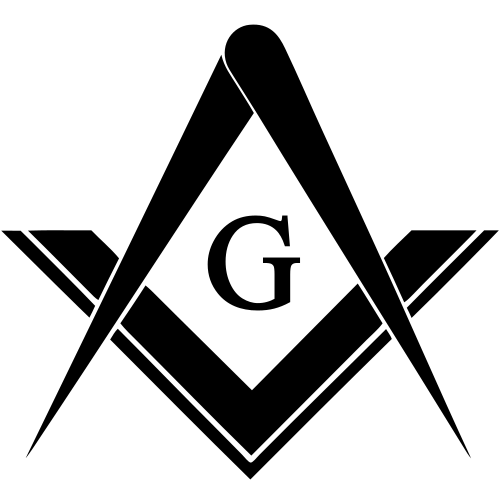
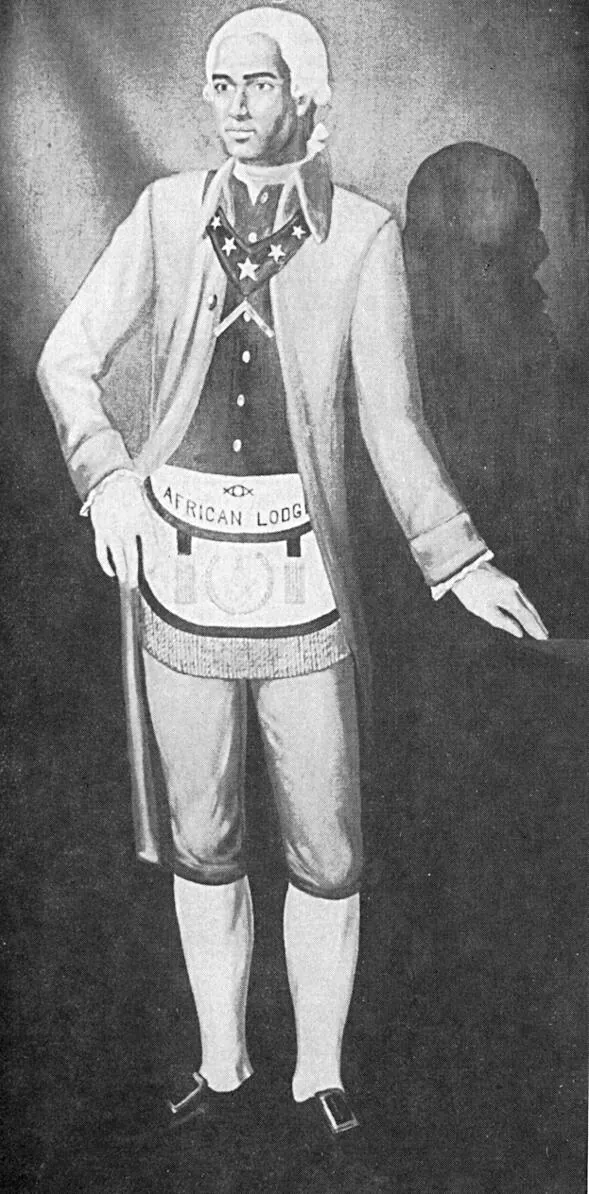
Prince Hall Freemasonry is not a splinter movement or a parallel curiosity. It is one of the oldest and most consequential branches of American Freemasonry, with a documented founding that predates the United States Constitution. On March 6, 1775, a British Army lodge in Boston initiated Prince Hall and fourteen other free Black men, making them the first African Americans to enter the Masonic fraternity on American soil. When postwar American lodges refused to recognize them, Hall petitioned the Premier Grand Lodge of England directly and received a charter for African Lodge No. 459 on September 29, 1784. That charter was legitimate, traceable, and has never been revoked. What followed over the next two and a half centuries was the construction of an independent Masonic institution that would become deeply intertwined with the struggle for civil rights, Black intellectual life, and community self-determination across the United States. Today, Prince Hall Freemasonry encompasses forty-four recognized Grand Lodges, operates in every US state and several countries, and maintains the same three-degree Blue Lodge structure practiced in mainstream Masonry, with a history that is, in several respects, more thoroughly documented than many of its counterparts.
Who Was Prince Hall?
Prince Hall Freemasonry is the tradition of Masonic lodges founded by and for African Americans, tracing its institutional origin to 1775 when Prince Hall and fourteen other free Black men were initiated into a British military lodge in Boston. The tradition grew into a parallel grand lodge system that today encompasses millions of members across the United States and beyond.
The man behind that founding was born around 1735, though the precise circumstances of his birth remain a subject of historical debate. Some researchers place his origins in Barbados; others argue for Boston itself. What the documentary record does confirm is his presence in Boston by the 1760s, his status as a free Black man, and his increasingly prominent role in the civic life of colonial Massachusetts. Hall was a Methodist minister, a leather worker by trade, and an activist whose reform commitments extended well beyond any single institution. In 1777, he was among the signatories of a petition submitted to the Massachusetts legislature calling for the abolition of slavery, a document co-signed by other free Black Bostonians and notable for its careful legal reasoning. A decade later, in 1787, he submitted a separate petition requesting that the Commonwealth establish a school for Black children, an appeal that illustrates the breadth of his vision: fraternal legitimacy was one tool among several in a sustained campaign for civic equality.
Understanding that context is essential to reading Hall’s Masonic career accurately. He did not seek initiation as a curiosity or a social aspiration. For a free Black man navigating a society structured to deny him standing, membership in a recognized fraternal order represented a claim to moral and civic personhood that the surrounding culture was determined to withhold.
Hall’s Initiation at British Military Lodge No. 441
On March 6, 1775, Prince Hall and fourteen other free Black men were initiated into Lodge No. 441, attached to the 38th Regiment of Foot of the British Army, then garrisoned in Boston. The event is not a matter of legend or oral tradition: it is recorded in surviving lodge minutes, making it one of the most thoroughly documented initiations in early American Masonic history. The timing is striking. The battles of Lexington and Concord were still six weeks away, and Boston was a city under mounting political tension. That a British military lodge would initiate a group of free Black colonists in that atmosphere speaks to the universalist language of Masonic brotherhood, however inconsistently that language was applied in practice.
The African Lodge Permit and Its Limitations
Following their initiation, Hall’s group did not receive a full lodge charter. Instead, Lodge No. 441 granted them a permit authorizing the men to meet, march in Masonic processions, and conduct Masonic burial rites for deceased members. The permit explicitly excluded one central Masonic function: the conferral of degrees. In practical terms, Hall’s group could assemble under Masonic identity but could not initiate new members or advance existing ones through the ritual degrees that define full lodge activity. This restriction was not incidental. It defined the group’s subordinate status within the existing structure and made clear that recognition from a higher authority was necessary. Hall responded by writing directly to the Premier Grand Lodge of England in London, beginning the correspondence that would eventually produce a full charter and set the institutional foundation for African American Freemasonry as an independent tradition.
The Founding of African Lodge No. 459
On September 29, 1784, the Premier Grand Lodge of England granted a charter to a group of Black Freemasons in Boston, Massachusetts, making official what American lodges had repeatedly refused to acknowledge: that Prince Hall and his brethren had a legitimate claim to Masonic standing. Hall had first sought recognition from provincial American lodges and, after those requests were turned away without recorded justification, directed his petition across the Atlantic. The English response was unambiguous. The charter named Hall as Master and authorized the formation of a properly constituted lodge under English authority, not a self-created body operating outside recognized Masonic jurisdiction.
The 1784 Charter: Legitimacy and Its Documentation
The original charter is a matter of documented historical record, held and referenced by Prince Hall Masonic bodies as the foundational proof of their institutional legitimacy. Its existence is not disputed by serious Masonic historians. African Lodge No. 459 was formally constituted on May 6, 1787, in Boston, the three-year gap between the charter’s issuance and the lodge’s formal constitution explained by the practical realities of transatlantic communication and the physical delivery of documents across an ocean in the late eighteenth century. What the charter established was that the lodge operated under full English authority. This distinction has been central to every recognition debate that followed over the next two centuries: African American Freemasonry in the Prince Hall tradition did not invent its own credentials. It received them from the same source that warranted lodges throughout the British Empire.
The lodge’s number, 459, placed it within the regular registry of the Premier Grand Lodge, alongside hundreds of other warranted lodges worldwide. When American grand lodges later claimed that Prince Hall bodies were irregular or clandestine, they were making a jurisdictional and political argument, not a historical one. The charter’s text contradicted that framing directly.
From African Lodge to Prince Hall Grand Lodge
Hall’s organizational ambitions extended well beyond Boston. In 1792, he facilitated the formation of a second lodge in Philadelphia and a third in Providence, Rhode Island, establishing the skeleton of what would become a national network. These were not splinter groups or informal gatherings; they were constituted under the authority African Lodge No. 459 had inherited from England, and they represented the first deliberate effort to build an interconnected structure of African American Freemasonry across multiple states.
Prince Hall died in December 1807, before that network reached its full institutional form. In the years following his death, the surviving lodges reorganized. African Lodge eventually renamed itself the Prince Hall Grand Lodge in his honor, formalizing the transition from a single warranted lodge into an independent Masonic jurisdiction capable of warranting new lodges on its own authority. That shift, from subordinate lodge to sovereign grand lodge, is the structural moment from which the entire modern Prince Hall Grand Lodge system descends. By the early nineteenth century, what had begun as one petition to London had become the institutional foundation for a parallel Masonic universe, operating across American cities with its own hierarchy, its own officers, and its own documented chain of authority reaching back to 1784.
Prince Hall Freemasonry vs. Mainstream Freemasonry: Recognition and Distinction
The question of recognition has defined the institutional relationship between Prince Hall Masons and mainstream American Freemasonry for nearly two centuries. That relationship, for most of its history, was not one of fraternal acknowledgment but of deliberate exclusion dressed in procedural language. Understanding how that changed, and where things stand today, requires separating the bureaucratic terminology from the social history underneath it.
| Dimension | Prince Hall Freemasonry | Mainstream (Predominantly White) US Freemasonry |
|---|---|---|
| Founding Authority | Charter granted by the Provincial Grand Lodge of England (1784); descended from African Lodge No. 459 | Derived from grand lodges established after the 1717 founding of the Premier Grand Lodge of England |
| UGLE Recognition Status | Formally recognized as regular by the United Grand Lodge of England in 1994 | Long-standing recognition by UGLE; varies by individual grand lodge |
| Current Mutual Recognition (US) | Recognized by a majority of US mainstream grand lodges as of the early 2000s | Most have extended formal recognition; a small number of Southern grand lodges were the last holdouts |
| Ritual and Degree Structure | Three-degree Blue Lodge system; same working tools and comparable ritual texts | Three-degree Blue Lodge system; same working tools and comparable ritual texts |
The “Clandestine” Label and Its Racial Origins
Masonic historians, including those writing for the Masonic Service Association, have documented at length that the “clandestine” designation applied to Prince Hall lodges had no defensible basis in Masonic procedure. African Lodge No. 459 held a legitimate charter issued by the Premier Grand Lodge of England in 1784. Its founding was, by any technical standard, regular. The label “clandestine” in Masonic usage ordinarily signals a lodge operating without proper authority, conducting irregular initiations, or violating the landmarks of the Craft. None of those conditions applied. What did apply was racial segregation, operating through institutional channels that preferred procedural-sounding language to an honest accounting of their motives. The designation persisted across the 19th century and well into the 20th, effectively barring Prince Hall Masons from visitation rights and inter-lodge recognition that white members took as a given.
Recognition Restored: From 1994 to the Present
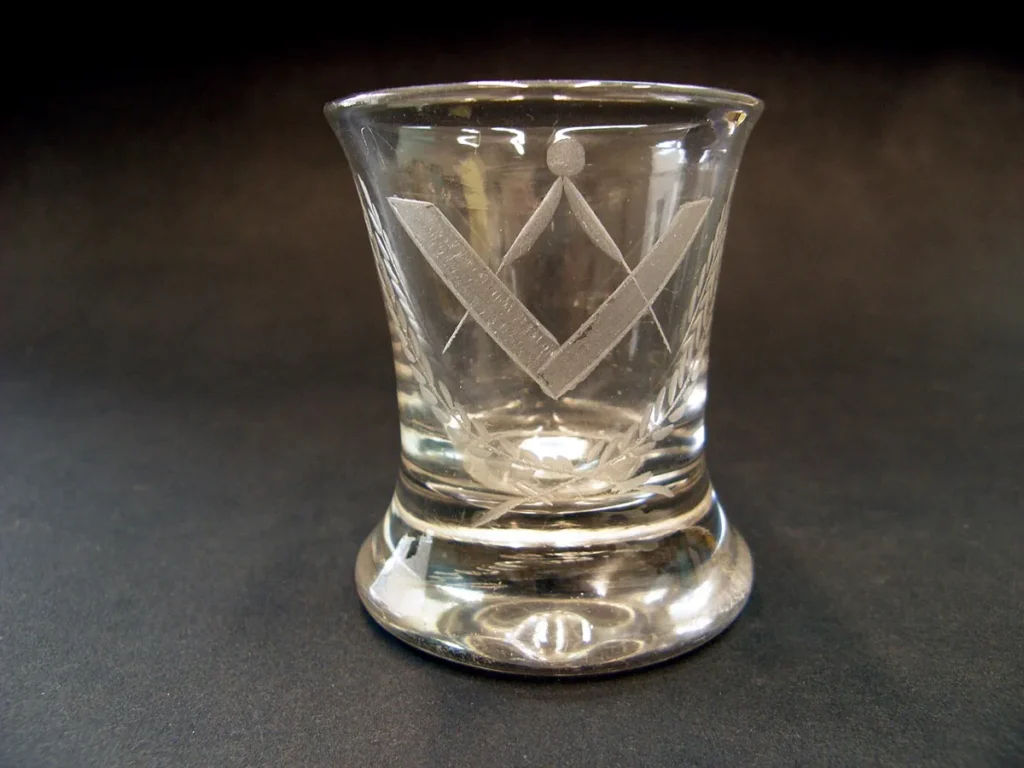
The turning point at the international level came in 1994, when the United Grand Lodge of England formally recognized Prince Hall Grand Lodges as regular constituent bodies of Freemasonry. That endorsement carried considerable weight: the UGLE is widely regarded as the oldest continuously operating grand lodge in the world, and its recognition effectively settled the question of regularity on the global stage. Within the United States, the process moved more slowly and unevenly. By the early 2000s, a majority of mainstream state grand lodges had extended formal mutual recognition to their Prince Hall counterparts, though several grand lodges in the South were among the last to act. Ritually and structurally, the convergence was never really in question. Prince Hall Freemasonry operates the same three-degree Blue Lodge system, employs the same working tools (the square, the compasses, the plumb, and the level), and follows ritual texts closely comparable to those used in mainstream lodges. The differences between the two traditions have always been institutional and historical, rooted in the politics of race in America, not in any divergence of Masonic doctrine or practice.
Organization and Structure of Prince Hall Grand Lodges
Prince Hall Freemasonry operates through a decentralized network of forty-four Prince Hall Grand Lodges, each sovereign within its own jurisdiction. This structure mirrors mainstream American Masonry almost exactly: no single national body governs all Prince Hall grand lodges, and each jurisdiction sets its own membership requirements, dues schedules, and charitable programs within the broader framework of Masonic landmarks. The oldest of these bodies is the Most Worshipful Prince Hall Grand Lodge, Free and Accepted Masons, based in Massachusetts, which traces its direct institutional lineage to African Lodge No. 459, the original charter granted by the United Grand Lodge of England in 1784. That unbroken lineage gives the Massachusetts grand lodge a particular historical authority within the broader Prince Hall community, though it exercises no formal administrative power over its sister grand lodges in other states.
The Three Degrees in Prince Hall Lodges
Like all regular Masonic bodies, Prince Hall lodges confer the three foundational degrees of Blue Lodge Freemasonry: Entered Apprentice, Fellowcraft, and Master Mason. The progression is sequential and obligatory. A candidate enters as an Entered Apprentice, advances to Fellowcraft upon demonstrating proficiency, and completes the foundational curriculum upon receiving the Master Mason degree. Prince Hall lodges confer these degrees using ritual forms substantially consistent with those of mainstream American grand lodges, with content built around moral instruction through allegorical drama and the symbolism of medieval stonemasonry. No higher degree within the appendant bodies is accessible to a candidate who has not first been raised to Master Mason.
The conferral of these degrees is the primary activity of any constituent lodge, and the quality of that work has long been a point of institutional pride. Grand lodge inspection systems, which vary by jurisdiction, exist partly to ensure the ritual is performed with care and that candidates receive a meaningful experience rather than a perfunctory ceremony.
Appendant Bodies: Eastern Star, Scottish Rite, and York Rite
Master Masons who seek further Masonic education have access to a range of concordant and appendant bodies operating within the Prince Hall tradition. The Prince Hall Scottish Rite confers degrees from the Fourth through the Thirty-Second (and, by special honor, the Thirty-Third), organized into valley bodies corresponding to the Scottish Rite’s standard chapter, council, and consistory structure. The Prince Hall York Rite similarly offers Royal Arch chapters, Cryptic councils, and Commanderies of Knights Templar for those who wish to pursue that branch of Masonic development.
Among all the appendant bodies, the Order of the Eastern Star has historically carried particular social and cultural weight in African American Freemasonry. Founded on a co-ed model that formally includes women affiliated with Master Masons, the Eastern Star provided a recognized institutional space for women at a time when most civic and fraternal organizations excluded them entirely. In Prince Hall communities throughout the twentieth century, Eastern Star chapters often served as anchors of mutual aid, charitable work, and community organizing alongside the lodges themselves. Each of these appendant bodies operates under its own governing structure, separate from the grand lodge system, but membership eligibility runs through the Blue Lodge degrees that every Prince Hall Mason holds as the foundation of his Masonic identity.
Want to learn more?
Prince Hall Freemasonry and African American History
Prince Hall Freemasonry has never been a purely ceremonial institution. From its earliest years, the lodge served as one of the most consequential platforms for Black civic life in American history. Prince Hall himself demonstrated this immediately: in 1777 and again in 1787, he submitted formal petitions to the Massachusetts General Court calling for the abolition of slavery. These documents rank among the earliest organized anti-slavery petitions in the young republic, and they were drafted not by a political party or a church congregation but by the master of African Lodge No. 459. The lodge was, from the outset, a mechanism for collective advocacy, not merely a venue for ritual and fellowship.
Mutual Aid and Community Infrastructure
Before Black-accessible banks, hospitals, or insurance companies existed, Prince Hall lodges provided members with death benefits, legal advocacy, and community solidarity. That function made the fraternity indispensable to free Black communities in both the North and South. Throughout the 19th century, as public institutions either excluded African Americans outright or offered them degraded access, the lodge network stepped into the gap. Members pooled resources to cover funeral costs, support widows and orphans, and retain legal counsel for brothers facing discriminatory prosecution. This mutual aid infrastructure was not incidental to the fraternity’s purpose; for many members, it was the most immediate and practical reason to join. Historian Loretta Williams, in her study of Black Freemasonry, documents how these networks of material support gave free Black communities a degree of economic resilience that would otherwise have been structurally impossible in antebellum America.
The same network extended into political resistance. Prince Hall lodges provided organizational cover and logistical support for conductors and stationmasters connected to the Underground Railroad. The abolitionist press, including publications associated with figures such as Martin Delany, who was himself a committed Prince Hall Mason, drew heavily on lodge membership rolls for contributors, subscribers, and distributors. Delany’s career as a physician, journalist, and later a Union Army officer illustrates how the lodge functioned as a professional and ideological incubator, not simply a fraternal club.
Prince Hall Masonry and the Civil Rights Movement
The tradition of civic engagement carried forward with remarkable continuity into the 20th century. Several of the most consequential figures in the American civil rights movement held membership in Prince Hall lodges. Thurgood Marshall, who argued Brown v. Board of Education before the Supreme Court in 1954 and later became the first African American Justice, was a Prince Hall Mason. So was Medgar Evers, the NAACP field secretary in Mississippi whose assassination in June 1963 galvanized national attention. The lodge did not simply produce individuals who happened to be activists; it provided organizational infrastructure, a philosophical vocabulary rooted in the language of equality and brotherly obligation, and a ready network of trusted relationships across city and state lines. The Harlem Renaissance of the 1920s and 1930s similarly concentrated a striking number of Prince Hall Masons among its leading intellectual and artistic figures, from W.E.B. Du Bois’s broader circle to the professional networks that sustained Black publishing, law, and medicine in New York. For African American professional life across two centuries, membership in Prince Hall Masonry functioned as both a credential and a community, in a society that systematically withheld both from Black men.
Notable Prince Hall Masons Throughout History
The roster of documented Prince Hall Masons reads less like a membership list and more like a syllabus for African American history. Among the earliest figures, Absalom Jones and Richard Allen, both founders of the African Methodist Episcopal Church in 1816, maintained ties to Prince Hall lodges in Philadelphia during the late eighteenth and early nineteenth centuries. Their fraternal affiliations were not incidental. The lodge provided organizational infrastructure, networks of mutual aid, and a framework of structured brotherhood that reinforced the institutional ambitions driving their religious work. Frederick Douglass, whose break with William Lloyd Garrison in the 1840s signaled a new phase of abolitionist strategy, held documented connections to the fraternity, as did Booker T. Washington and W.E.B. Du Bois. The fact that Washington and Du Bois, whose public disagreements over accommodation versus agitation defined a generation of political debate, shared a common fraternal tradition is historically striking. The lodge, it appears, was broad enough to contain men who agreed on almost nothing else.
The twentieth century extended that pattern into law, politics, and civil rights organizing. Thurgood Marshall, who argued Brown v. Board of Education before the United States Supreme Court in 1954, was a Prince Hall Mason, a detail that places the fraternity squarely inside one of the most consequential legal moments in American constitutional history. Medgar Evers, co-founder of the Mississippi chapter of the NAACP and a civil rights martyr assassinated in June 1963, also held Prince Hall affiliation. Moving into electoral and activist politics, Jesse Jackson and Al Sharpton both maintained documented connections to the fraternity, alongside a substantial number of mayors, state governors, and members of Congress across the latter half of the century. The cumulative picture is not of a secret society steering events from behind closed doors, but of a civic institution that attracted men already oriented toward public life and collective responsibility, and gave them a common ritual vocabulary to go with it.
Membership Requirements and the Path to Joining
The requirements for joining a Prince Hall lodge follow the same foundational criteria that govern mainstream Freemasonry across North America. Candidates must be adult men, with the minimum age set at either eighteen or twenty-one depending on the jurisdiction. They must profess a belief in a Supreme Being, present themselves as men of good moral character, and, critically, petition the lodge of their own free will. The fraternity does not solicit members; the expectation, rooted in Masonic tradition since the earliest operative guilds, is that a man approaches the lodge rather than the other way around. Prospective candidates are encouraged to identify their state’s Prince Hall Grand Lodge through official grand lodge websites or to make direct contact with a lodge in their area. No central recruitment apparatus exists, and that is by design.
One point deserves particular clarity, because it is frequently misunderstood: Prince Hall Freemasonry is not racially exclusive. Membership is open to men of any background who meet the standard requirements. The fraternity’s African American identity is historical and cultural, a product of the circumstances under which African Lodge No. 459 was chartered in 1784 and the century of exclusion that followed. It is not a membership criterion. Once a candidate submits a formal petition, a lodge committee conducts an investigation, typically involving personal interviews and character references, before the membership votes by ballot. A favorable ballot from current members is required for admission. The process is deliberate, and intentionally so: the lodge is admitting a brother for life, not a dues-paying subscriber.
Charitable and Community Service Programs
Community service is not an optional add-on within Prince Hall Masonry. It is treated as a direct expression of the fraternity’s founding values, which were shaped by men navigating a society that denied them basic civic rights. Prince Hall lodges across the country maintain active scholarship programs, funding college education for students who would otherwise lack access. Voter registration drives, a practice with deep roots in the post-Reconstruction era, remain a visible priority in many jurisdictions. Literacy initiatives, mentorship programs, and disaster relief efforts round out a service portfolio that reflects the fraternity’s long-standing position that moral improvement and community uplift are inseparable obligations. The Masonic Service Association of North America has documented similar commitments across mainstream lodges, but within the African American Freemasonry tradition, these programs carry an additional historical weight: they extend a mission that Prince Hall himself articulated in his 1797 charge to the African Lodge.
Regional Variations: State-by-State Lodge Landscape
The forty-four Prince Hall Grand Lodges operating across the United States function as fully independent sovereign bodies. This means that dues structures, meeting schedules, specific charitable priorities, and even certain procedural details vary from one jurisdiction to the next. The Most Worshipful Prince Hall Grand Lodge of Massachusetts, which traces its lineage directly to the 1784 charter, operates under a distinct set of bylaws from, say, its counterpart in California or Texas. For prospective members, this decentralization has a practical implication: information gathered from one state’s grand lodge website may not accurately reflect the requirements or programs of a lodge two states over. Researchers studying the broader landscape of African American fraternal organizations face the same variability. The authoritative source for any jurisdiction-specific question is always the relevant state grand lodge, not a generalized overview. Consulting those bodies directly remains the only reliable path to accurate, current information.
Prince Hall Freemasonry in the 21st Century
Precise membership figures for Prince Hall Masonry are not centrally published, and the fraternity’s decentralized structure across dozens of independent grand lodges makes a single authoritative count difficult to establish. Masonic researchers and historians, including those writing for the Phylaxis Society, a scholarly body dedicated to Prince Hall Masonic research, estimate active membership in the hundreds of thousands across the United States, with additional lodges operating in the United Kingdom, Canada, the Caribbean, and West Africa. That geographic spread reflects both the historical diaspora of the fraternity’s founding generation and its continued resonance among communities of African descent worldwide. Lodge records and grand lodge proceedings show that peak membership, like that of mainstream American fraternal organizations, occurred somewhere in the mid-twentieth century, with a gradual contraction beginning in the 1960s and continuing through subsequent decades.
The normalization of mutual recognition between Prince Hall grand lodges and mainstream (predominantly white) grand lodges represents one of the most consequential structural shifts in American Masonry over the past thirty years. As of the early 2020s, the vast majority of mainstream grand lodges in the United States have formally extended recognition to their Prince Hall counterparts, a process that gained serious momentum in the 1990s. The United Grand Lodge of England had recognized Prince Hall grand lodges decades earlier, creating quiet but persistent institutional pressure on American bodies to follow. Full recognition means that members of recognized grand lodges may visit one another’s lodges, a privilege denied for most of American Masonic history on grounds that most historians now characterize plainly as racial exclusion. The remaining holdouts are few, and their position is increasingly anomalous within the broader Masonic world.
Contemporary Challenges and Modernization
Prince Hall grand lodges are navigating pressures familiar to every American fraternal organization: an aging membership base, competition from other civic and professional networks, and the persistent challenge of explaining institutional relevance to generations who did not grow up with fraternal culture as a social default. For Prince Hall Masonry, these challenges carry additional weight. The fraternity is not simply a membership organization managing a decline in dues revenue; it is the custodian of a documented history of resistance, institution-building, and civic leadership stretching back to 1775. That history is both an asset and a responsibility. Grand lodges across the country have responded with varying degrees of urgency, investing in digital outreach, academic partnerships, and public programming that connects the fraternity’s archive to contemporary conversations about African American civic life and historical memory. Online forums, social media communities, and podcasts dedicated to African American Freemasonry have introduced the fraternity’s story to younger audiences who may arrive through an interest in Black history broadly before developing any specifically Masonic curiosity. Whether that visibility translates into sustained membership growth remains an open question, but it has shifted the fraternity’s public profile, moving it further from the margins of popular historical awareness and closer to the center of serious scholarly and cultural attention.
FAQ
What is the difference between Prince Hall Freemasonry and regular Freemasonry?
The ritual core is identical. Both traditions work the same three-degree Blue Lodge structure, use the same working tools, and operate on the same foundational principles of brotherly love, relief, and truth. The distinction is institutional and historical, not philosophical.
Prince Hall lodges were established because white American lodges refused to recognize free Black Masons in the 18th century. That exclusion forced a parallel institutional structure into existence. The United Grand Lodge of England formally recognized Prince Hall Grand Lodges as regular in 1994, and a majority of mainstream US grand lodges have since extended mutual recognition, acknowledging what the historical record had long made clear: the two traditions share the same legitimate Masonic lineage.
Who was Prince Hall and why did he found his own Masonic lodge?
Prince Hall (c. 1735-1807) was a free Black man, Methodist minister, and civic activist based in Boston. In 1775, he and fourteen other free Black men were initiated by a British Army lodge attached to the 38th Regiment of Foot. That initiation was entirely regular. The problem came after the Revolutionary War, when American lodges declined to recognize them.
Hall did not choose separation. He responded to exclusion by petitioning the Premier Grand Lodge of England directly, and in 1784 received a legitimate charter establishing African Lodge No. 459. The founding of a distinct institution was a consequence of discrimination, not a preference for segregation. Hall remained an outspoken abolitionist until his death in 1807.
Is Prince Hall Freemasonry open to men who are not African American?
Yes. No racial restriction exists in the membership requirements. The fraternity’s African American identity is historical and cultural, rooted in the circumstances of its 18th-century founding, but eligibility criteria center on moral character, a belief in a Supreme Being, and being an adult male.
Men of any background who meet those standards and are accepted by a lodge’s membership may petition for initiation. Individual Prince Hall Grand Lodges set their own specific eligibility rules within that framework, so requirements can vary by jurisdiction. The principle is consistent: membership is defined by character, not ancestry.
How many Prince Hall Masons are there today?
No single centralized membership figure is published. Estimates from Masonic historians and researchers place active membership in the hundreds of thousands, spread across forty-four US Prince Hall Grand Lodges and additional international jurisdictions in the Caribbean, Canada, and West Africa.
Like mainstream American Masonry, the fraternity reached peak membership in the mid-20th century and has experienced gradual decline since. Even so, it remains one of the largest African American fraternal organizations in the United States, with a civic and cultural footprint that extends well beyond its formal membership rolls.
What degrees and ranks exist in Prince Hall Freemasonry?
The foundational structure consists of three degrees: Entered Apprentice (First Degree), Fellowcraft (Second Degree), and Master Mason (Third Degree). These are conferred in the Blue Lodge and are identical in structure to those worked in mainstream regular Masonry worldwide.
Master Masons may pursue additional degrees through appendant bodies. The Prince Hall Scottish Rite confers degrees numbered from the 4th through the 33rd, expanding on Masonic allegory and philosophy. The Prince Hall York Rite offers a separate sequence of degrees and orders. Neither appendant body supersedes the Master Mason degree, which remains the foundational rank within the tradition.