 Italiano
  English
| 0 Comments | James Whitfield
Jachin and Boaz are the two bronze pillars that stood at the entrance of Solomon’s Temple in Jerusalem, described in 1 Kings 7:15-21 and 2 Chronicles 3:15-17. Their construction is dated to approximately the tenth century BCE, during the reign of King Solomon, and their destruction came with the Babylonian sack of Jerusalem in 586 BCE. In the intervening millennia, these two columns have accumulated a weight of interpretation far exceeding their original architectural function. Jewish tradition reads them as symbols of divine covenant and national strength. Freemasonry, which adopted the pillars as central emblems no later than the early eighteenth century, treats them as the threshold between the profane world and the sacred space of the lodge. Esoteric traditions have layered onto them meanings ranging from alchemical duality to Kabbalistic cosmology. This article traces Jachin and Boaz from their biblical description through their material construction, their religious significance in Judaism, their adoption into Masonic ritual, and their enduring presence in Western art, architecture, and popular culture, separating documented history from interpretive tradition at each step.
What Are Jachin and Boaz?
Jachin and Boaz are the two bronze pillars that stood at the entrance portico of Solomon’s Temple in Jerusalem, as recorded in 1 Kings 7:21. Free-standing and non-load-bearing, they flanked the doorway as monumental markers rather than structural supports. Their names, their placement, and their dimensions have informed religious scholarship and Masonic tradition for centuries.
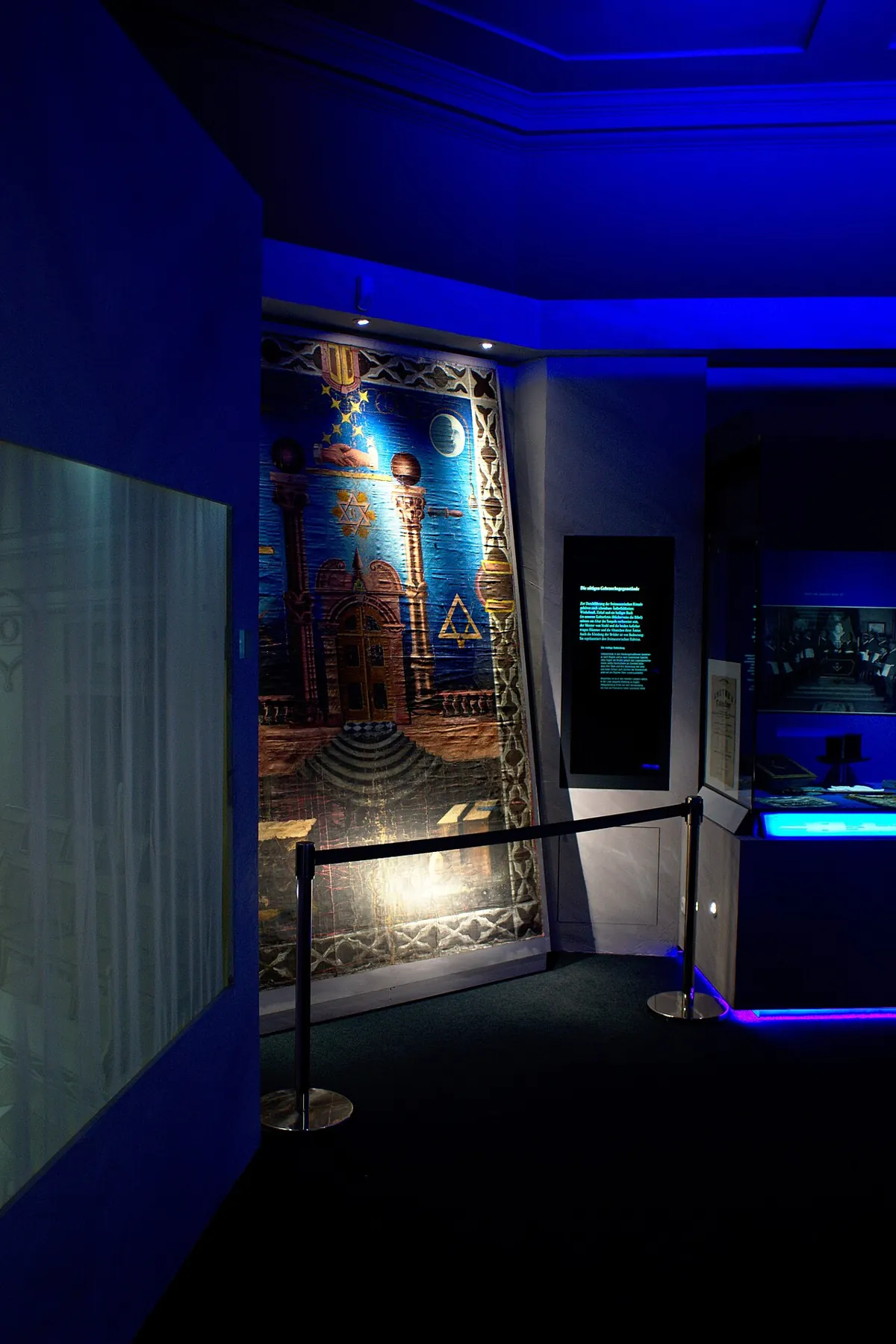
The distinction between the two is precise and consistent across the primary sources. Jachin, pronounced JAY-kin in common English rendering, from the Hebrew Yākîn, stood on the right, or south side of the entrance. Boaz, BOH-az, from the Hebrew Bōʿaz, stood on the left, or north side. That placement is not incidental: both the biblical text and later Masonic ritual treat the positional asymmetry as meaningful, assigning distinct symbolic values to each column. Jachin translates broadly as “He establishes” or “He will establish”; Boaz carries the meaning “In strength” or “In him is strength.” Taken together, the pairing reads almost like a dedicatory inscription cast in architectural form.
The physical pillars did not survive antiquity. According to 2 Kings 25:13, Nebuchadnezzar’s forces broke them apart and carried them off as bronze scrap when Jerusalem fell in 586 BCE. Yet their symbolic life continued without interruption. The measurements preserved in 1 Kings 7 and 2 Chronicles 3, eighteen cubits in height, twelve cubits in circumference, with elaborately cast capitals of lily-work and pomegranate ornament, gave later interpreters, architects, and fraternal traditions enough material to reconstruct and reinterpret the pillars long after the Temple itself had ceased to exist. That afterlife, as much as the original construction, explains why Solomon’s Temple columns remain a live reference point in religious art, esoteric literature, and the symbolic language of Freemasonry today.
Biblical Origins: The Primary Sources
Reconciling the Measurement Discrepancies
The two principal scriptural accounts of Solomon’s Temple pillars agree on the essentials but diverge on one conspicuous detail. 1 Kings 7:15-22 records each pillar as eighteen cubits tall with a circumference of twelve cubits, hollow bronze shafts cast by the Phoenician metalworker Hiram of Tyre, topped with capitals five cubits high and decorated with lily-work, chainwork, and two rows of pomegranates. 2 Chronicles 3:15-17, written several centuries later and drawing on related but distinct source material, gives a combined height of thirty-five cubits for both pillars, a figure that, divided equally, yields seventeen and a half cubits per column, not eighteen. Scholars in the Old Testament textual criticism tradition generally attribute the gap to one of two causes: the use of different cubit standards (the “royal” cubit of roughly 20.6 inches versus the common cubit of approximately 17.5 inches), or a copying error introduced during transmission of the Chronicler’s text, possibly a misread numeral in an earlier manuscript. The Hebrew University Bible Project and commentators including John Gray in his critical commentary on Kings note that neither account was written as an architectural specification, both are theological narratives in which precise measurement serves symbolic rather than engineering purposes. The discrepancy tells us as much about how ancient scribes handled inherited data as it does about the actual dimensions of the columns.
The Craftsman: Hiram of Tyre
Both accounts name the same artisan. In 1 Kings 7:13-14, he is called Hiram, a Tyrian bronzesmith, son of a widow from the tribe of Naphtali and a father from Tyre, described as “filled with wisdom, understanding, and skill.” 2 Chronicles 2:13-14 calls him Huram-abi, a slight variant that some translators render as “Huram my master craftsman,” reflecting a difference in the underlying Hebrew. The biblical figure is a skilled metalworker in Solomon’s employ, responsible not only for the two great pillars but for the bronze sea, the ten lavers, and much of the temple’s ornamental metalwork. His role in the scriptural record is professional and honorable, but essentially human. What happened to that characterization in later tradition is a different matter: Masonic ritual transformed Hiram into Hiram Abiff, a central figure in the third-degree ceremony whose legend, involving betrayal, murder, and symbolic resurrection, has no direct basis in the biblical text. That elaboration belongs to the interpretive tradition, not to 1 Kings or Chronicles, and the distinction matters when evaluating what the pillars meant to their original builders versus what they came to mean in rituals practiced in Masonic lodges three millennia later.
The columns’ destruction is recorded with equal precision. 2 Kings 25:13-17 and Jeremiah 52:17-23 both describe Babylonian forces under Nebuchadnezzar breaking the pillars apart in 586 BCE and carrying the bronze to Babylon, a detail that underscores their material value and, for later interpreters, their status as objects worthy of conquest. The Jeremiah passage notes that “the bronze of all these vessels was beyond weight,” a phrase that would echo through centuries of commentary on the temple’s lost splendor.
The Meaning of the Names: Etymology and Interpretation
The two names etched into Solomonic tradition have attracted sustained philological attention precisely because the biblical text offers them without explanation. For Jachin, transliterated from the Hebrew Yākîn, the scholarly consensus is relatively stable: the name derives from the root כּוּן (kwn), a verb meaning “to establish” or “to make firm.” The resulting translation, “He will establish” or “God establishes,” carries an unmistakably theological register. It is not a description of bronze or masonry; it is a declaration of divine intent. Boaz (Bōʿaz) is more contested. The majority reading parses it as a compound of bō (“in him”) and ʿaz (“strength”), producing “In him is strength” or simply “By strength.” A minority of Old Testament scholars, including some contributors to the Anchor Yale Bible Dictionary, have proposed that Boaz here is simply a personal name borrowed from the wider Israelite onomasticon, a possibility the text neither confirms nor excludes.
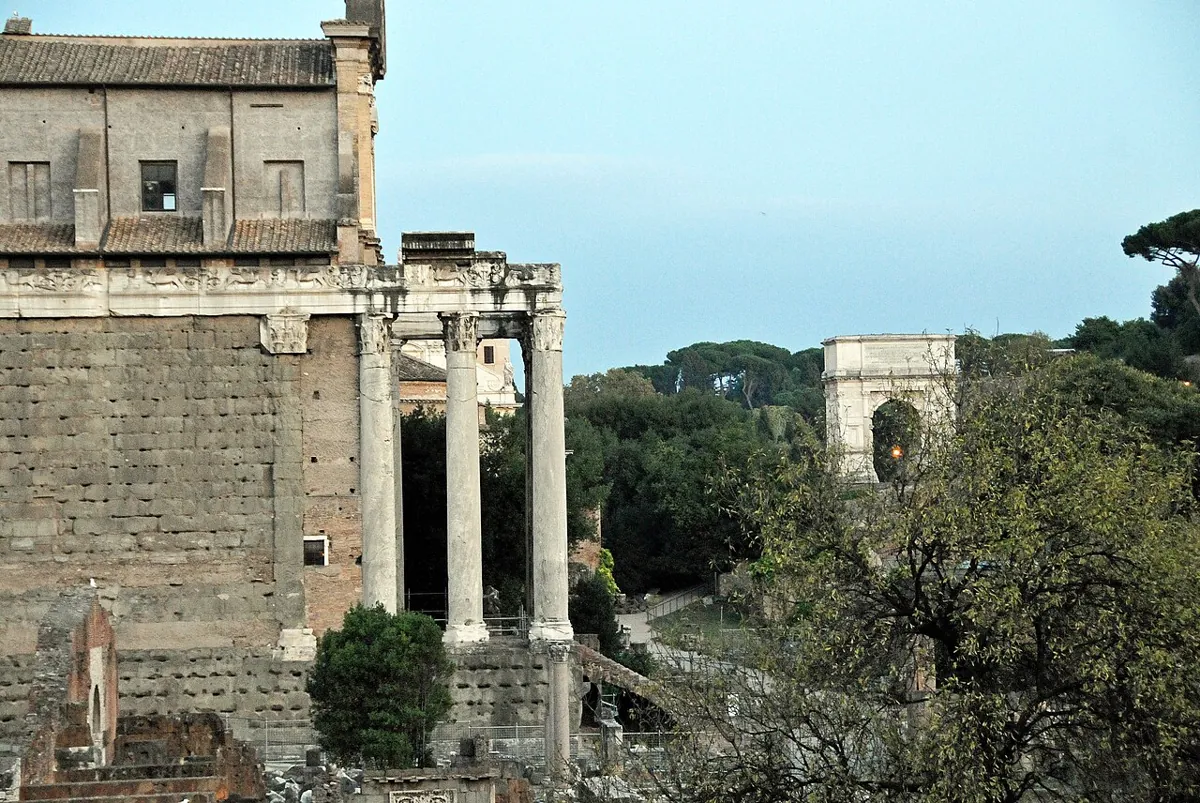
Why Solomon named the pillars at all, let alone with these particular words, is a question the biblical authors decline to answer. First Kings 7:21 records the act without commentary: Hiram “set up the right pillar and called its name Jachin, and he set up the left pillar and called its name Boaz.” No dedicatory speech follows. The biblical historian John Monson, in his comparative work on Syro-Palestinian temple architecture, has argued that the names are the opening words of longer royal benedictions delivered at the Temple’s dedication, making the pillars inscribed proclamations rather than architectural features with incidental labels. Under this reading, the bronze columns functioned as monumental cue cards for liturgical recitation, a practice with parallels in Egyptian and Mesopotamian temple contexts. Taken together, the two names form a compressed theological statement: divine establishment (Yākîn) achieved through strength (Bōʿaz). Whether that pairing was deliberate or the product of later interpretive tradition has occupied commentators from the Talmud to the nineteenth-century Masonic pillars literature.
Jachin and Boaz in the Broader Biblical Narrative
Neither name is unique to the Temple account, and that fact complicates any clean symbolic reading. Boaz appears independently in the Book of Ruth as the wealthy Bethlehemite landowner who acts as kinsman-redeemer to Ruth and Naomi, and who is an ancestor of King David and, by extension, of Solomon himself. Whether Solomon’s architects chose the name as a deliberate dynastic allusion or whether the coincidence is purely onomastic remains debated. The genealogical connection is at minimum suggestive: a pillar named for the great-great-grandfather of the Temple’s builder carries a different weight than an arbitrary label. Jachin, meanwhile, appears as a personal name in Genesis 46:10, listed among the sons of Simeon who descended into Egypt with Jacob, and again in the priestly genealogies of Numbers 26:12 and 1 Chronicles 24:17. These occurrences show that Yākîn was a living name in Israelite usage, not a term coined for the Temple. Carol Meyers, in her commentary on the Books of Kings, cautions against over-reading the shared names as a coded system; the biblical world recycled theophoric and virtue names freely. What can be said with confidence is that both names belonged to a recognizable semantic field, lineage, strength, divine favor, that made them fitting for the entrance to Israel’s central sanctuary.
Architectural and Material Details: What the Pillars Actually Looked Like
Three separate biblical texts describe the physical construction of the two pillars, and they do not entirely agree. First Kings 7:15-22 provides the most detailed account, attributing the work to Hiram of Tyre, a craftsman in bronze whose skill the text emphasizes before listing any measurements. Second Chronicles 3:15-17 records the same construction but with a notably different height figure. Jeremiah 52:17-23, written after the Babylonian destruction of Jerusalem in 586 BCE, describes the pillars at the moment of their dismantling, a kind of forensic inventory that adds details about wall thickness absent from the earlier accounts. Read together, the three passages offer a composite portrait that is more precise than any single source, while also demonstrating how ancient scribal transmission could introduce variation in numerical data.
| Measurement | 1 Kings 7:15-22 | 2 Chronicles 3:15-17 | Jeremiah 52:17-23 |
|---|---|---|---|
| Height (cubits) | 18 cubits (~27 ft / ~8.2 m) | 35 cubits (~52 ft / ~15.9 m), likely a combined figure for both pillars | 18 cubits (~27 ft / ~8.2 m) |
| Circumference | 12 cubits (~18 ft / ~5.5 m) | Not specified | 12 cubits (~18 ft / ~5.5 m) |
| Capital Height | 5 cubits (~7.5 ft / ~2.3 m) | 5 cubits (~7.5 ft / ~2.3 m) | 3 cubits (~4.5 ft / ~1.4 m) |
| Wall Thickness | 4 fingers (hollow interior) | Not specified | 4 fingers (hollow interior) |
| Primary Material | nəḥōšet (bronze/copper alloy) | nəḥōšet (bronze/copper alloy) | nəḥōšet (bronze/copper alloy) |
On the question of material, all three accounts use the Hebrew nəḥōšet, a term that older English translations rendered as “brass”, a word that simply meant any copper-based alloy in early modern English. Modern scholarship, drawing on archaeometallurgical analysis of contemporary Levantine artifacts, favors bronze or a high-copper alloy consistent with Late Bronze Age and Early Iron Age casting technology in the region. The capitals themselves were elaborate: each rose five cubits above the shaft and was decorated with lily-work at the rim, interlaced chainwork, and two rows of pomegranates, 200 per capital according to 2 Chronicles 4:13, though Jeremiah 52:23 counts 96 on the exposed side of a single capital. The pomegranate, a symbol of fertility and abundance across the ancient Near East, appears extensively in Phoenician decorative programs, consistent with the text’s identification of Hiram of Tyre as the craftsman. Crucially, the pillars bore no structural load. Unlike the columns of a Greek peristyle, they stood free of the Temple façade, framing the entrance as a monumental threshold rather than supporting any roof or lintel. Their function was entirely ceremonial, a distinction that would later carry considerable weight in the symbolic language of Freemasonry.
Connections to Ancient Near Eastern Temple Architecture
Free-standing paired columns at temple entrances were not a Solomonic invention. The practice belongs to a well-documented tradition across the ancient Near East. At Tell Tayinat in southern Turkey, ancient Kunulua, capital of the Syro-Hittite kingdom of Patina, excavations conducted by the Oriental Institute beginning in the 1930s uncovered a ninth-century BCE temple with a columned portico whose plan closely parallels the biblical description of Solomon’s Temple. The Assyrian palace complex at Khorsabad (ancient Dur-Sharrukin), built by Sargon II around 717 BCE, similarly employed colossal paired figures flanking gateways as symbolic markers of transition between profane and sacred or royal space. Egyptian temple pylons, which framed entrances with paired towers and often incorporated tall flagpoles, served an analogous monumental function centuries earlier. What distinguishes the Solomonic pillars within this tradition is the explicit naming, Jachin and Boaz, and the theological weight the biblical narrative places on that act of naming, a feature without a clear parallel in the Phoenician or Mesopotamian parallels identified to date.
Modern Archaeological and Scholarly Consensus
No physical remains of the two pillars have ever been recovered. The Temple Mount in Jerusalem remains one of the most politically sensitive archaeological sites on earth, and systematic excavation beneath the current platform is not possible under present conditions. What archaeology has confirmed is the broader material culture of tenth-century BCE Jerusalem: the existence of a significant administrative center, evidence of monumental construction consistent with the resources the biblical account attributes to Solomon’s reign, and a metallurgical tradition capable of producing large cast-bronze objects. The comparative architectural evidence from Tell Tayinat and related sites lends credibility to the general form described in 1 Kings 7, and scholars such as John Monson, writing in Biblical Archaeology Review (2000), have argued that the Tell Tayinat temple represents the closest known structural parallel to the Solomonic building. The textual discrepancies, particularly the divergent capital height in Jeremiah 52, are generally explained by scholars as either scribal copying errors or the possibility that the capitals were modified during the Temple’s four-century history before its destruction. What the evidence does not support is either confident physical reconstruction or outright dismissal of the accounts as purely legendary.
Want to learn more?
Religious Significance in Judaism
In rabbinic literature, the two bronze columns at the entrance to Solomon’s Temple were never understood as purely architectural features. Talmudic and midrashic sources treat them as threshold markers, liminal objects that defined the boundary between ordinary space and consecrated ground. The worshipper who crossed between them was not simply entering a building; the act signaled a conscious transition from the profane world into the domain of the sacred. The Mishnah tractate Middot, which preserves detailed measurements and descriptions of Temple architecture, reflects this by treating every structural element as theologically loaded rather than incidentally functional.
The destruction of the First Temple by Nebuchadnezzar II in 586 BCE registers in rabbinic sources as a catastrophe measured not only in political terms but in sacred losses. The Ark of the Covenant is the most frequently cited absence, but some traditions place the pillars among the gravest losses too, objects whose destruction signaled the severing of a direct, material connection to the divine presence. The sequel sharpens this: when the Second Temple was completed in 516 BCE, the pillars were not reconstructed. Their absence was not an oversight. Some strands of Jewish thought treat that omission as itself meaningful, a permanent, visible reminder that the restored Temple, however legitimate, was not the full restoration of what had been lost. The silence where the columns once stood carried its own weight.
Kabbalistic Mapping: The Two Pillars and the Tree of Life
The most influential reinterpretation of the two columns within Jewish mysticism comes through the Kabbalistic tradition, particularly as developed in the Zohar, the foundational text of medieval Jewish esotericism, compiled in thirteenth-century Spain and attributed to the circle of Moses de León. Within the Kabbalistic framework of the Sefirot, the ten divine attributes arranged on the Tree of Life, the right pillar corresponds to Chesed (Mercy) and the left to Gevurah (Severity or Strength). Jachin, on the right, represents the expansive, nurturing force; Boaz, on the left, the contracting, judgmental force. Between them runs the middle pillar, Tiferet at its heart, representing balance and the reconciliation of opposing principles.
This triadic structure, expansion, contraction, equilibrium, gave later interpreters a ready-made philosophical vocabulary for discussing duality and its resolution. When eighteenth-century Masonic ritual writers began constructing the symbolic architecture of the symbolic language of Freemasonry, the Kabbalistic mapping of the pillars provided an intellectually respectable framework connecting lodge symbolism to a deep vein of Jewish mystical thought. Whether early Masonic ritual designers drew directly on Kabbalistic texts or absorbed the framework through intermediary sources, Renaissance Hermeticism, Christian Kabbalah, or the widely circulated works of scholars like Johann Reuchlin, remains a matter of scholarly debate. The structural logic, though, is identical: two opposing principles held in tension, with the initiate passing between them toward a middle path. The Kabbalistic tradition did not invent Masonic pillar symbolism, but it furnished the interpretive grammar that made that symbolism legible to an educated eighteenth-century audience already familiar with esoteric traditions.
Jachin and Boaz in Freemasonry
Freemasonry did not invent the symbolism of the two pillars, it inherited and reframed it. When James Anderson published the Constitutions of the Free-Masons in 1723, the Temple of Solomon had already been established as the symbolic blueprint for lodge architecture, with Anderson explicitly situating the fraternity’s organizational ideals within the tradition of the Temple’s builders. The pillars Jachin and Boaz appear in lodge furnishings no later than that early eighteenth-century period, and their presence has been a structural constant in Anglo-American lodge design ever since. What Freemasonry added to the biblical account was a layered interpretive framework: Jachin came to represent the active, solar, and establishing principle, the force that initiates, while Boaz was cast as its complement, receptive, lunar, and sustaining. This duality maps directly onto the lodge’s organizational geography, with the east (the Worshipful Master’s station) and the west (the Senior Warden’s station) functioning as architectural counterparts, just as the two Masonic pillars flank the entry to the sacred space.
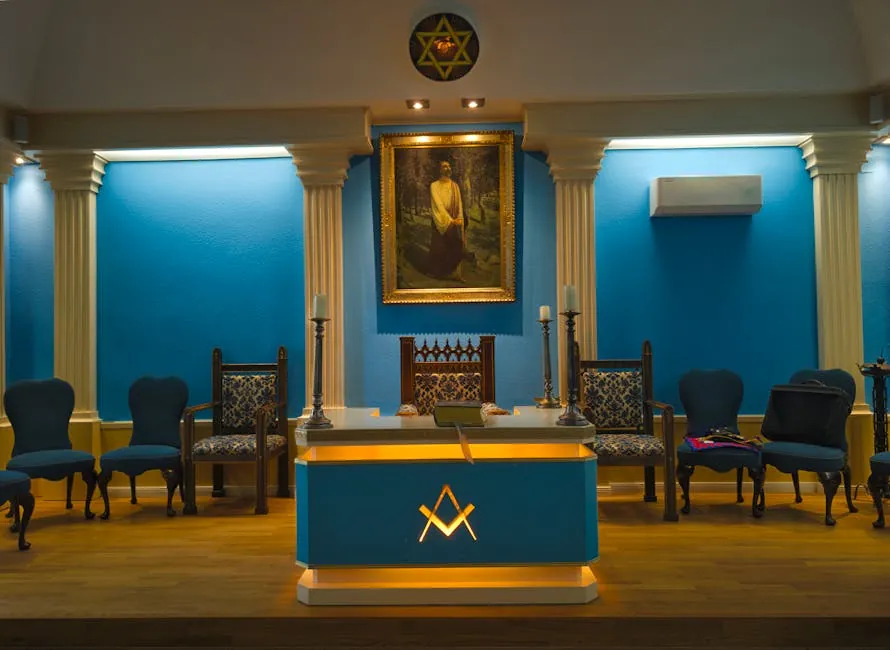
The physical arrangement of the columns in most Anglo-American lodge rooms places representations of the two pillars near the stations of the Senior and Junior Wardens, though exact positioning varies by rite and jurisdiction. In some Continental European lodges, the Wardens carry the columns as portable emblems of office, a practice that literalizes the symbolic weight each officer bears. The connection to the Hiram Abiff legend deepens the pillars’ significance: in the Masonic allegory, Hiram, identified as the Temple’s master architect, is the craftsman who produced the two columns. His murder, and the fraternity’s ritualized response to it, is narratively inseparable from the pillars he raised. They stand, in this reading, not merely as architectural features but as monuments to the integrity of craft and the cost of keeping secrets.
Jewish vs. Masonic Interpretations: A Comparative View
In Jewish interpretive tradition, the pillars described in 1 Kings 7 are understood in historical and liturgical terms. Rabbinic commentary, including discussions preserved in the Talmud tractate Yoma, treats them as markers of divine presence at the Temple entrance, their names, meaning “He shall establish” and “In strength,” read as a theological statement about the covenant between God and the Davidic dynasty. The pillars are not initiatory symbols; they are architectural theology. Freemasonry diverges sharply: the fraternity transforms the pillars from static monuments into pedagogical tools. Where Jewish tradition situates them within a specific historical and covenantal context, the Masonic reading strips away the dynastic particularity and recasts the columns as universal principles, applicable to any candidate, in any century, seeking moral and philosophical orientation. Both traditions agree the words Jachin and Boaz carry deliberate theological weight. They part ways on what that weight signifies and to whom it speaks.
The Pillars in Masonic Ritual Degrees
The pillars are introduced by name in the Entered Apprentice degree, the first of three degrees in both the York Rite and the Scottish Rite, making them among the earliest formal symbols a candidate encounters. Publicly available Masonic monitors, including Richardson’s Monitor of Freemasonry (1860) and Webb’s Freemason’s Monitor (1808), describe the candidate being directed to the two columns as emblems of strength and establishment, with the explanation that a Mason’s moral and civic life should rest on both qualities equally. The Jachin and Boaz symbolism resurfaces in later degrees, particularly in the Royal Arch degree of the York Rite, where the recovery of lost knowledge tied to the Temple’s destruction gives the pillars an additional layer of meaning, they become markers of what was known, lost, and partially restored. The Fellow Craft degree, the second in the standard progression, elaborates on the pillars’ architectural dimensions, drawing on the biblical description of the chapiters, lily-work, and pomegranate ornaments to frame a lesson about the relationship between outward craft and inward virtue. Across all these references, the pedagogical intent holds: the Solomon’s Temple columns are not historical curiosities but active symbols meant to orient the initiate’s understanding of his own moral architecture.
Esoteric and Mystical Interpretations Beyond Freemasonry
The two pillars did not remain the exclusive property of biblical scholarship or Masonic ritual. By the nineteenth century, they had migrated into a broader esoteric landscape, Hermeticism, Rosicrucianism, and ceremonial magic, where each tradition reshaped the symbol to fit its own philosophical architecture. What these traditions share is the interpretive move of reading the columns as a diagram of duality itself: not merely two pieces of cast bronze standing at a temple entrance, but a map of opposing cosmic forces held in productive tension. These are interpretive overlays, not extensions of biblical doctrine or Masonic teaching. Each tradition adapted the image for its own ends, and conflating them produces more confusion than insight.
Within Hermetic and Rosicrucian frameworks, the pillars typically represent the fundamental polarity of manifest existence, light and dark, active and passive, solar and lunar. This reading draws partly from Kabbalistic sources, particularly the two outer pillars of the Tree of Life: Jachin is associated with the pillar of Mercy (Chesed), and Boaz with the pillar of Severity (Geburah), with the middle path of balance running between them. The Hermetic Order of the Golden Dawn, founded in London in 1888, institutionalized this spatial metaphor by placing two physical pillars, one black, one white, at the threshold of its initiation chamber. Candidates passed between them as a ritual enactment of crossing from the uninitiated world into a space structured by esoteric knowledge. The Golden Dawn’s ritual architecture drew on Masonic lodge design, Kabbalistic cosmology, and Egyptian Revival aesthetics simultaneously, a synthesis that was emphatically its own creation rather than a transmission of any single older tradition.
Jachin and Boaz in Tarot Iconography
The most widely reproduced image of the two pillars in popular culture may not be a lodge engraving or a temple illustration, it is a playing card. In the Rider-Waite Tarot, published in December 1909 by the Rider Company, the High Priestess card depicts a seated figure flanked by two columns, one black and one white, bearing the letters B and J. The deck was illustrated by Pamela Colman Smith, a Golden Dawn member, working under the explicit direction of Arthur Edward Waite, a prolific occult author and Freemason. Waite’s design instructions drew on the same Kabbalistic-Hermetic synthesis the Golden Dawn had already encoded into its initiation rituals. The Tarot pillars are at least two interpretive steps removed from the biblical originals: first through Masonic ceremonial use, then through Golden Dawn reinterpretation, and finally into the compressed visual language of a card meant to evoke threshold knowledge and hidden wisdom.
The High Priestess sits between the pillars rather than passing through them, a detail Waite considered significant, positioning her as the guardian of the veil that hangs behind her rather than as an initiate crossing into the unknown. For Tarot readers working within the Rider-Waite tradition, the Jachin and Boaz symbolism on this card signals duality, mystery, and the liminal space between the known and the concealed. That reading is coherent within its own tradition. It is, however, a long interpretive journey from the description in 1 Kings 7:21, where two bronze columns simply mark the entrance to Solomon’s porch, no veil, no seated guardian, no letters inscribed on their surfaces.
Cultural and Historical Legacy: From the Renaissance to the Present
The two pillars never stayed inside the Temple. From the moment Renaissance humanists began treating the Hebrew Bible as an architectural sourcebook, Jachin and Boaz entered the broader vocabulary of Western design and iconography, a journey that has carried them, somewhat improbably, from Florentine treatises to tattoo parlors.
Renaissance Architecture and the Temple as Blueprint
When Andrea Palladio published I Quattro Libri dell’Architettura in 1570, he included a detailed reconstruction of Solomon’s Temple drawn partly from Josephus and partly from his own proportional reasoning. Palladio was not alone: the Spanish architect Juan Bautista de Toledo had already embedded Temple-derived measurements into the Escorial palace complex, begun in 1563, and the Jesuit theorist Juan Bautista Villalpando would later produce a monumental three-volume commentary on Ezekiel (1596-1604) arguing that God himself had dictated the Temple’s dimensions, and by extension, the principles of classical architecture. In this intellectual climate, the twin columns at the Temple’s entrance were proof that sacred proportion was encoded in scripture. The influence was practical: church façades across Italy, France, and the Habsburg territories incorporated paired freestanding columns at their portals, echoing the Solomonic precedent even when the builders made no explicit theological claim about it.
The Pillars in Masonic Lodge Architecture
By the eighteenth century, the transition from architectural theory to fraternal furniture was almost inevitable. Masonic lodge buildings worldwide incorporated physical representations of the columns as their most recognizable furnishing, flanking the Senior Warden’s station in the lodge room, rendered in wood, plaster, or stone according to the lodge’s means. The ornate Victorian-era lodges of London and Edinburgh, many of which survive intact, invested heavily in their column work: gilded capitals, globes representing the terrestrial and celestial spheres, inscribed plinths. American lodge rooms of the same period followed suit; in Philadelphia, Boston, and Cincinnati, purpose-built Masonic temples erected between roughly 1850 and 1920 treated the paired columns as the visual anchor of the entire interior. The United Grand Lodge of England’s lodge-room specifications have long described the placement and symbolic function of both columns in detail, ensuring a consistency across jurisdictions that few other Masonic furnishings enjoy.
Popular Culture and the Aesthetics of Ancient Wisdom
Dan Brown’s The Lost Symbol (2009) brought the Solomon’s Temple columns to a readership of millions, embedding them in a thriller plot that treated Masonic symbolism as a cipher for suppressed historical truth. The novel’s popularity accelerated what was already a visible trend: the pillars had begun appearing in video game iconography, heavy metal album art, and, most durably, tattoo culture. The Jachin and Boaz tattoo phenomenon reflects something specific about how ancient symbols migrate through secular modernity. The pillars carry unmistakable historical weight, biblical, architectural, fraternal, without requiring the person who wears them to subscribe to any particular doctrine. They function, in the language of semiotics, as floating signifiers: legible as “ancient wisdom” or “hidden knowledge” to a general audience while remaining available for more precise interpretation by those who know the source material. The symbolism has been stripped of its ritual context, recontextualized as aesthetic shorthand, and detached from the initiatory framework that gave it meaning inside a lodge room. Whether that constitutes cultural diffusion or cultural dilution depends entirely on who is doing the counting.
FAQ
What do Jachin and Boaz represent?
Jachin carries the Hebrew meaning of “he will establish”; Boaz means “in strength” or “by strength.” Together they form a theological pairing: divine establishment and enduring power. In the Hebrew Bible, their position at the Temple entrance marks the threshold between the profane world and sacred space.
In Freemasonry, the same duality maps onto lodge values, one pillar representing the act of founding or ordering, the other the fortitude required to sustain what is built. Esoteric traditions have extended this further, reading the pair as expressions of cosmic duality: active and passive, solar and lunar. That interpretation belongs to later allegorical commentary, however, not to any scriptural source.
Why did Solomon name the pillars Jachin and Boaz?
1 Kings 7:21 records the names without offering any explanation for them, a silence that has kept scholars busy for centuries. The most widely accepted hypothesis is that each name was the opening word of a royal or priestly benediction recited at the Temple’s dedication, effectively turning the bronze columns into inscribed proclamations of God’s covenant with the Davidic dynasty.
Read in sequence, the two names form a compact theological statement: “God will establish [this house] in strength.” This reading is supported by comparative ancient Near Eastern practice, in which monumental pillars at temple entrances often bore dedicatory inscriptions or invocations. The names were likely chosen to be heard as well as seen.
What is the significance of Jachin and Boaz in Freemasonry?
The twin pillars are introduced in the Entered Apprentice degree, the first of the three craft degrees, as representations of the entrance to King Solomon’s Temple and, by extension, to the lodge itself. The United Grand Lodge of England’s ritual assigns them to the stations of the Junior and Senior Wardens, anchoring the symbolism in the lodge’s working structure.
Their paired meanings, establishment and strength, map directly onto core Masonic values: wisdom in founding, fortitude in sustaining. As furnishings, miniature or illustrated versions of the columns appear in lodge rooms worldwide, making them among the most immediately recognizable elements of the symbolic language of Freemasonry.
What materials were Jachin and Boaz made from?
According to 1 Kings 7:15, both columns were cast from nəḥōšet, Hebrew for bronze, though older English translations render it “brass.” Each stood approximately 18 cubits tall (roughly 27 feet / 8.2 meters), was hollow, and had walls four fingers thick. The separately cast capitals were elaborately decorated with pomegranates, lily-work, and chainwork.
No physical remains exist. After the Babylonian destruction of Jerusalem in 586 BCE, the bronze was melted down and carried off, an event recorded in 2 Kings 25:13. Everything known about their dimensions and ornamentation derives entirely from the biblical text and its ancient commentaries.
Where were Jachin and Boaz located in Solomon’s Temple?
Both 1 Kings 7:21 and 2 Chronicles 3:17 place the columns at the ulam, the entrance portico or vestibule of the Temple. The right (south) side held Jachin; the left (north) side held Boaz. Critically, they were free-standing structures, bearing no structural load whatsoever.
Their function was entirely ceremonial: they framed the gateway between the outer courts and the sacred interior, creating a monumental threshold that announced the transition from ordinary space to consecrated ground. This free-standing, boundary-marking role is precisely what made them so available for later symbolic reinterpretation, architectural ornament with no engineering obligation is almost inevitably read as pure meaning.
