 Italiano
  English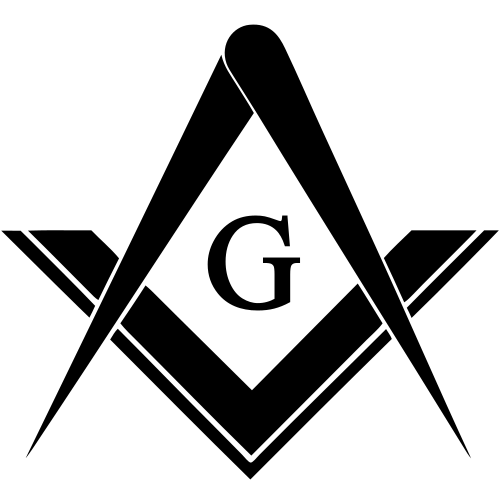
| 0 Comments | James Whitfield
Freemasonry has been intricately linked to the Enlightenment, a period characterized by intellectual and philosophical advancements that shaped modern thought. Emerging in the 18th century, Freemasonry embraced Enlightenment ideals such as reason, liberty, and the pursuit of knowledge. This article delves into the historical context of Freemasonry during the Enlightenment, highlighting key figures, their contributions, and the role of Masonic lodges in promoting Enlightenment principles. By understanding this relationship, we can appreciate how Freemasonry influenced contemporary society and continues to evoke both intrigue and controversy.

Introduction to Freemasonry and Enlightenment
Freemasonry enlightenment connects the philosophical ideals of the Enlightenment with the principles of Freemasonry, reflecting a shared pursuit of knowledge, reason, and progress. Both movements emerged prominently in the 18th century, influencing cultural and intellectual landscapes across Europe and the Americas.
Freemasonry, a fraternal organization tracing its roots back to medieval stonemasons’ guilds, gained prominence in the 18th century as lodges became centers of enlightenment influence. Freemasonry’s emphasis on moral development and intellectual discourse resonated with the Enlightenment’s advocacy for reason and scientific inquiry. The Enlightenment, spanning the late 17th to 18th centuries, sought to illuminate human understanding through reason, challenging traditional doctrines and promoting individual liberty.
The historical significance of both Freemasonry and the Enlightenment lies in their transformative impact on society. Freemasonry offered a structured environment where individuals could engage in philosophical and ethical discussions, aligning with the Enlightenment’s ideals of progress and rational thought. The 1723 Constitutions of Freemasonry, reflecting these principles, emphasized the importance of knowledge and morality, illustrating the interconnectedness of the two movements. This symbiotic relationship fostered an environment where enlightenment symbols and the meaning of freemason beliefs merged, contributing to cultural and intellectual advancements.
Historical Context of Freemasonry
The origins of Freemasonry are intricately tied to the cultural and intellectual currents of the Enlightenment. As the 18th century dawned, Europe was a continent in flux, marked by profound shifts in political and philosophical thought. It was in this dynamic environment that the first Masonic lodges began to take shape, offering a space where ideas could be freely exchanged. These early lodges were more than mere social clubs; they were crucibles for the spirit of inquiry that defined the freemasonry enlightenment.
The 18th century was characterized by a growing emphasis on reason, science, and individualism-hallmarks of the Enlightenment. In this period, Freemasonry found fertile ground, as it resonated with the era’s ideals of progress and intellectual exploration. The lodges served as forums for discussing the new ideas that were reshaping society. Influential Enlightenment philosophers, such as Voltaire and Montesquieu, interacted with Freemasons, and their works often echoed the principles that Freemasonry upheld. This exchange of ideas was instrumental in shaping the beliefs and practices within Masonic lodges.
Enlightenment influence on Freemasonry is particularly evident in the 1723 publication of the Constitutions of the Freemasons, a foundational document that codified the principles and organizational structure of the fraternity. This document reflected the rationalist spirit of the time, emphasizing moral development and intellectual freedom. Freemasonry’s symbolic language also drew from Enlightenment thought, integrating concepts of balance and harmony that paralleled the period’s architectural innovations. The freemasonry enlightenment symbol, often represented by tools of the stonemason’s craft, encapsulated the era’s quest for knowledge and self-improvement.
Key Enlightenment Figures in Freemasonry
Voltaire’s Masonic Influence
Voltaire, a central figure of the Enlightenment, was initiated into Freemasonry in 1778, shortly before his death. His association with Freemasonry reflected his dedication to Enlightenment ideals such as reason, tolerance, and the pursuit of knowledge. Voltaire’s Masonic involvement allowed him to engage with like-minded individuals who valued intellectual discourse and the improvement of society. His influence within Freemasonry was significant, as he championed the use of reason over superstition, a core tenet of the Enlightenment movement. This alignment made Voltaire an iconic figure in promoting Enlightenment values within the Masonic lodges of his time.
Benjamin Franklin’s Masonic Role
Benjamin Franklin, another luminary of the Enlightenment, joined the ranks of Freemasonry in 1731. His contributions to Masonic thought were profound, as he embodied the Enlightenment’s emphasis on reason, liberty, and scientific inquiry. Franklin’s role in Freemasonry was not merely symbolic; he actively participated in the dissemination of Enlightenment ideals through his writings and diplomatic efforts. As a prominent Freemason, Franklin advocated for the principles of freedom and democracy, which resonated deeply with both Masonic beliefs and the broader Enlightenment movement. His influence extended beyond the lodges, impacting the formation of democratic institutions in the emerging American nation.
Both Voltaire and Franklin exemplified the deep connection between Freemasonry and the Enlightenment. Their involvement in Freemasonry during the 18th century highlighted how the organization served as a conduit for Enlightenment influence. These key figures used their Masonic platforms to promote ideals such as intellectual freedom, moral virtue, and the betterment of society. Their contributions helped shape the meaning of Freemasonry during this transformative period, illustrating how Enlightenment philosophies were woven into the fabric of Masonic thought and practice.
The Role of Masonic Lodges in Enlightenment Thought
Masonic lodges played a pivotal role during the Enlightenment, acting as vibrant hubs for intellectual exchange. These lodges provided a unique space where individuals from diverse backgrounds could come together, fostering debates and discussions on philosophy, science, and the principles of the Enlightenment. This environment encouraged members to challenge prevailing norms and to explore new ideas, which was instrumental in promoting Enlightenment thought. The lodges were not only places of camaraderie but also served as incubators for progressive ideas that would influence wider societal change.
Within the walls of these lodges, the promotion of Enlightenment principles was evident. Members engaged in activities that underscored values such as reason, liberty, and equality, which were central to the Enlightenment movement. The rituals and symbols of Freemasonry, such as the square and compass, were imbued with meanings that resonated with Enlightenment ideals. These elements of Masonic tradition did not merely serve ceremonial purposes but were instrumental in shaping the intellectual landscape of the time. The rituals often emphasized personal development and ethical living, which aligned with the broader Enlightenment ethos of self-improvement and rational thought.
Want to learn more?
Freemasonry’s Influence on Modern Society
Freemasonry and Enlightenment thought have together shaped many aspects of modern society, notably influencing democratic ideals that are foundational today. The principles of equality, liberty, and fraternity, which were championed during the Enlightenment, resonate strongly with Freemason beliefs. These ideals are evident in the establishment of democratic institutions that prioritize individual rights and civic responsibility, reflecting the Enlightenment’s influence on freemasonry enlightenment thought.
Moreover, Freemasonry has played a significant role in fostering civic engagement and social movements. Throughout history, Masonic lodges have often served as venues for discussing progressive ideas and encouraging participation in societal reforms. The 18th century, in particular, saw Freemasonry as a catalyst for change, as it provided a platform for Enlightenment thinkers and reformists to collaborate. This connection between freemasonry 18th century ideals and modern civic activism continues to inspire those who seek social justice and community improvement today.
Contemporary perceptions of Freemasonry are shaped by its historical contributions and enduring symbolism. While some associate Freemasonry with secrecy and exclusivity, many recognize its commitment to moral and ethical development. The Enlightenment architecture of Masonic symbols, such as the square and compass, serves as a reminder of the organization’s philosophical roots and its ongoing relevance. Indeed, the freemasonry enlightenment meaning persists in contemporary discussions about ethics, governance, and societal progress, highlighting Freemasonry’s enduring impact on modern culture.
Common Misconceptions about Freemasonry and Enlightenment
The intersection of Freemasonry and the Enlightenment is fertile ground for misconceptions, often clouded by myths and misinformation. A frequent misunderstanding involves the nature of Masonic secrecy. While secrecy is indeed a component of Freemasonry, it is primarily ceremonial and traditional, rather than an indication of hidden agendas. The Masonic Service Association clarifies that the supposed secrecy is more about discretion in personal matters and the privacy of Masonic rituals, which are largely symbolic.
Another common myth is the association of Freemasonry with conspiracy theories. Contrary to popular belief, Freemasonry does not control governments or financial institutions. Historical documents, such as the 1723 Constitutions authored by James Anderson, outline the principles of Freemasonry, emphasizing moral and ethical behavior rather than political influence. The conflation of Freemasonry with conspiracy theories often arises from the misinterpretation of its symbols and rituals, which are rooted in allegory and tradition.
The relationship between Freemasonry and religion is also frequently misunderstood. Freemasonry is not a religion, nor does it require its members to adhere to any specific faith. Instead, it promotes a belief in a Supreme Being, allowing for a diverse membership that respects individual religious beliefs. This inclusivity was particularly significant during the 18th century when religious tolerance was not a given. Thus, freemasonry enlightenment meaning lies in its encouragement of philosophical inquiry and ethical conduct, reflecting the broader Enlightenment ideals of reason and progress.
The Legacy of Freemasonry in Enlightenment Ideals
Freemasonry has long been associated with the ideals of the Enlightenment, a period marked by a profound emphasis on reason, science, and intellectual exchange. This connection persists, as Freemasonry continues to embody Enlightenment values through its commitment to personal development, equality, and the pursuit of knowledge. The freemasonry enlightenment legacy is evident in its rituals and teachings, which promote critical thinking and the improvement of society.
Masonic symbols play a pivotal role in modern interpretations of these Enlightenment ideals. Symbols such as the square and compass, which represent reason and morality, are not merely relics of the past but are actively used to convey the enduring principles of Freemasonry. The freemasonry enlightenment symbol serves as a reminder of the movement’s foundational beliefs and its ongoing influence in promoting intellectual freedom. These symbols offer a visual language that transcends time, connecting present-day members with the Enlightenment thinkers who valued reason and progress.
The significance of Freemasonry in promoting intellectual freedom cannot be overstated. By fostering a community where ideas could be freely exchanged, Freemasonry played an instrumental role in advancing the principles of the Enlightenment. This tradition of open dialogue and debate continues to thrive within Masonic lodges today. The emphasis on education and philosophical inquiry remains central to freemason beliefs, underscoring the movement’s enduring commitment to the ideals of intellectual liberty and progress. Freemasonry’s influence during the Enlightenment is a testament to its foundational role in shaping modern thought and values.
FAQs about Freemasonry and Enlightenment
What is the significance of Freemasonry in the Enlightenment?
Freemasonry played a pivotal role during the Enlightenment, a period marked by intellectual and cultural growth in the 18th century. At its core, Freemasonry embodied the values of reason, tolerance, and progress that were central to the Enlightenment. The organization provided a space for the exchange of ideas among influential thinkers, contributing to the period’s ethos of questioning traditional authority and valuing scientific inquiry. The symbolic language of Freemasonry, including tools like the square and compass, reflected an Enlightenment focus on knowledge and self-improvement, thus bridging the gap between esoteric traditions and contemporary thought.
How did Freemasonry influence modern democratic ideals?
The influence of Freemasonry on modern democratic ideals is significant. During the 18th century, Masonic lodges served as forums for discussing revolutionary ideas about governance and individual rights. The fraternity’s emphasis on equality and fraternity resonated with Enlightenment thinkers who were advocating for democratic reforms. Many early Masonic constitutions, such as the 1723 Constitutions, articulated principles of liberty and justice that would later be echoed in the founding documents of various democratic nations. This connection underscores the profound impact of Freemasonry on the shaping of modern political systems.
What is the relationship between Freemasonry and religious beliefs?
Freemasonry maintains a unique relationship with religion, being inclusive of members from diverse faiths while requiring a belief in a Supreme Being. This requirement aligns with the Enlightenment’s emphasis on religious tolerance and personal spirituality. However, Freemasonry is not a religion in itself and does not promote any specific religious doctrine. Instead, it encourages moral development and ethical behavior, which are seen as universal values. The fraternity’s focus on individual enlightenment and understanding aligns with the broader Enlightenment movement’s quest for personal and collective improvement through reason and dialogue.

FAQ
What is Enlightenment in Freemasonry?
Enlightenment in Freemasonry refers to the integration of the core values of the Enlightenment-reason, liberty, and knowledge-into the fabric of Masonic thought and practice. This alignment reflects the broader intellectual movement of the 18th century, which emphasized rational thought and empirical evidence over tradition and superstition. Freemasonry adopted these principles, encouraging its members to seek personal growth and societal improvement through informed discourse and ethical conduct.
How did Freemasonry represent the ideals of the Enlightenment?
Freemasonry embodied the ideals of the Enlightenment through its commitment to reason, moral philosophy, and the pursuit of knowledge. Within Masonic lodges, members engaged in discussions that championed scientific inquiry, individual rights, and the betterment of society. These gatherings provided a forum for intellectual exchange, where ideas central to the Enlightenment could be explored and debated, ultimately influencing broader societal progress.
What is the significance of Freemasonry in the Enlightenment?
The significance of Freemasonry in the Enlightenment lies in its role as a catalyst for intellectual exchange and the dissemination of progressive ideas. Masonic lodges served as venues where Enlightenment thought could flourish, attracting thinkers and leaders who were instrumental in advancing concepts such as liberty, equality, and fraternity. This environment not only fostered individual enlightenment but also contributed to the broader cultural and political transformations of the era.
How did Freemasonry influence modern democratic ideals?
Freemasonry’s influence on modern democratic ideals is evident in its advocacy for liberty, equality, and fraternity-principles that are foundational to democratic governance. By promoting these ideals within its lodges, Freemasonry helped to shape the political and social landscapes of the time. The emphasis on civic engagement and moral responsibility within the Masonic tradition has had a lasting impact on the development of democratic societies worldwide.
Why is Freemasonry controversial?
Freemasonry is often considered controversial due to misconceptions about its secretive nature and alleged connections to conspiracy theories. While Freemasonry values privacy and discretion, these characteristics have led to suspicion and misunderstanding. Additionally, its complex relationship with various religious beliefs has sparked debate. However, Freemasonry’s true focus remains on moral development, fellowship, and community service, rather than any hidden agendas.
