 Italiano
  English
| 0 Comments | James Whitfield
The All-Seeing Eye, an open eye enclosed within a triangle, often surrounded by radiating light, is one of the most recognized and most misunderstood symbols in the Western visual tradition. Its formal name, the Eye of Providence, signals its oldest documented meaning: divine watchfulness over human affairs. The symbol appears in ancient Egyptian funerary art, in Renaissance Christian iconography, on the reverse of the Great Seal of the United States adopted in 1782, and in the ritual regalia of Freemasonry. Each of those contexts carries a distinct set of meanings, and conflating them, as popular culture and conspiracy media routinely do, produces a distorted picture of all four. This article traces the symbol’s documented history from its pre-Christian roots through its adoption by fraternal and governmental institutions, examines what Freemasonry actually teaches about it, compares it with related protective symbols such as the Hamsa and the Nazar, and addresses the conspiracy narratives that have attached themselves to the image since the late eighteenth century. The goal is a clear-eyed account, pun acknowledged, grounded in historical sources rather than speculation.
What Is the All-Seeing Eye? Definition and Visual Description
All-Seeing Eye symbolism refers to the iconographic tradition of depicting a single, open human eye, often enclosed within an equilateral triangle and surrounded by radiating light, as an emblem of divine omniscience. Known formally as the Eye of Providence, the symbol carries a specific theological meaning in Western art: God’s watchful presence over human affairs. Its recorded use in Christian iconography predates any Masonic lodge by centuries.
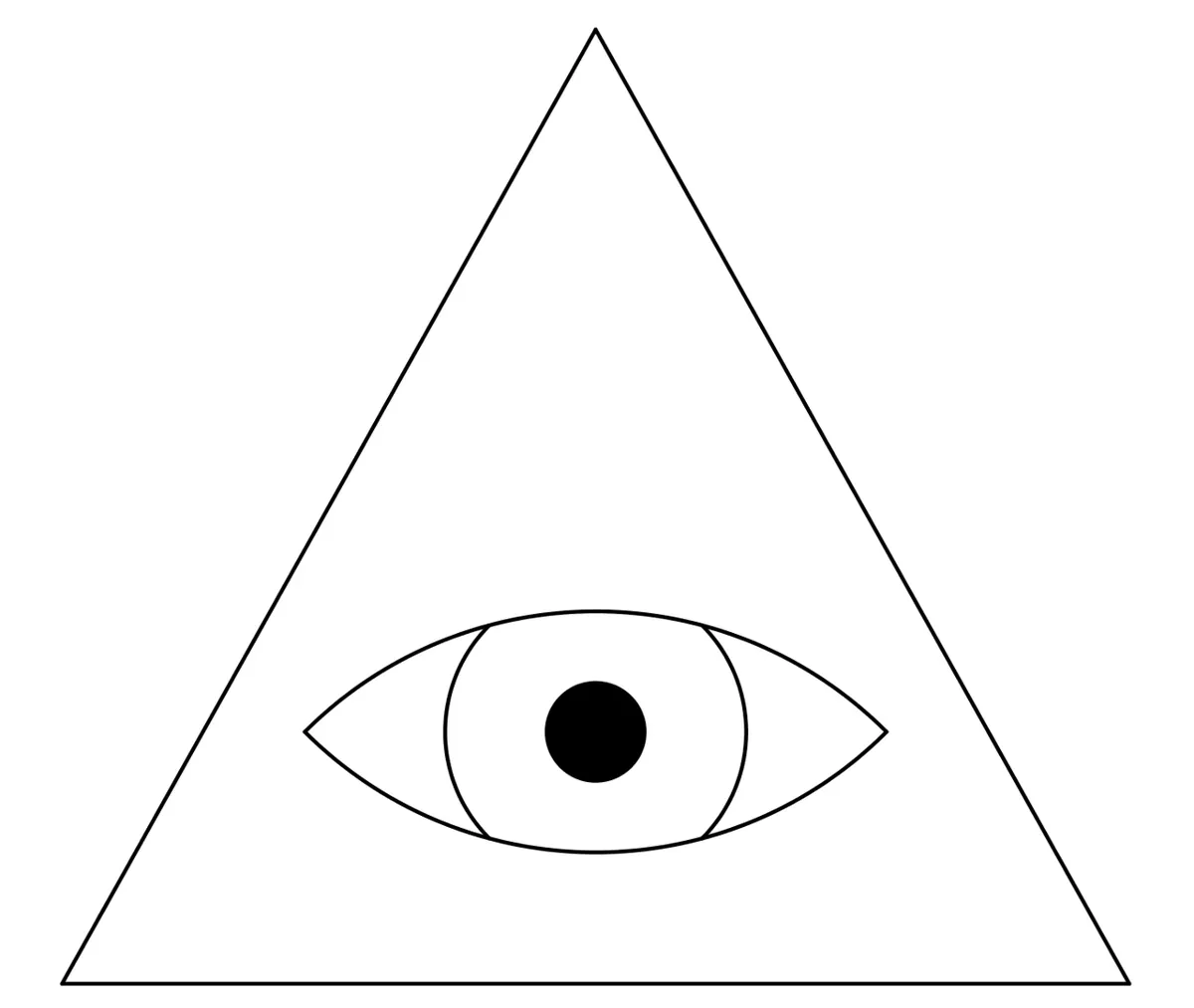
Three components form the canonical image. The eye itself, always rendered open and frontal, signifies awareness that cannot be averted or deceived. The equilateral triangle draws on a long tradition of Trinitarian geometry in Christian art, where equal sides represent the co-equality of Father, Son, and Holy Spirit. The radiating lines, sharp beams, a soft glory, or a full sunburst, serve as visual shorthand for divine light, the same convention found in representations of the sun, halos, and theophanic clouds across centuries of European religious painting. Each element carries independent symbolic weight before the three are assembled into a single device.
One distinction worth fixing early: the Eye of Providence is not the Nazar, the Turkish blue glass bead used as a ward against malevolent stares. It is not, in strict Egyptological terms, the Eye of Horus, which belongs to a separate mythological system with its own iconographic rules. And it is not an invention of the Bavarian Illuminati, an organization founded in 1776 and dissolved by government decree in 1785, long after the Eye of Providence had already appeared on altarpieces, church ceilings, and printed Bibles across Europe. Conflating these distinct traditions is the most common error in popular writing on the subject.
Visual Design Variations: Rays, Triangles, and Color Conventions
The triangle is structurally common but not universal. In ecclesiastical paintings and engravings from the sixteenth and seventeenth centuries, the eye often floats within a cloud or glory without any triangular frame, suggesting the Trinitarian geometry was a later standardization rather than an original feature. Some Baroque altarpieces embed the triangle so prominently that it dominates the composition, with the eye reduced to a secondary detail at its center. The all seeing eye triangle pairing that modern audiences recognize as the default form became most widely fixed through printed currency and civic architecture in the eighteenth and nineteenth centuries.
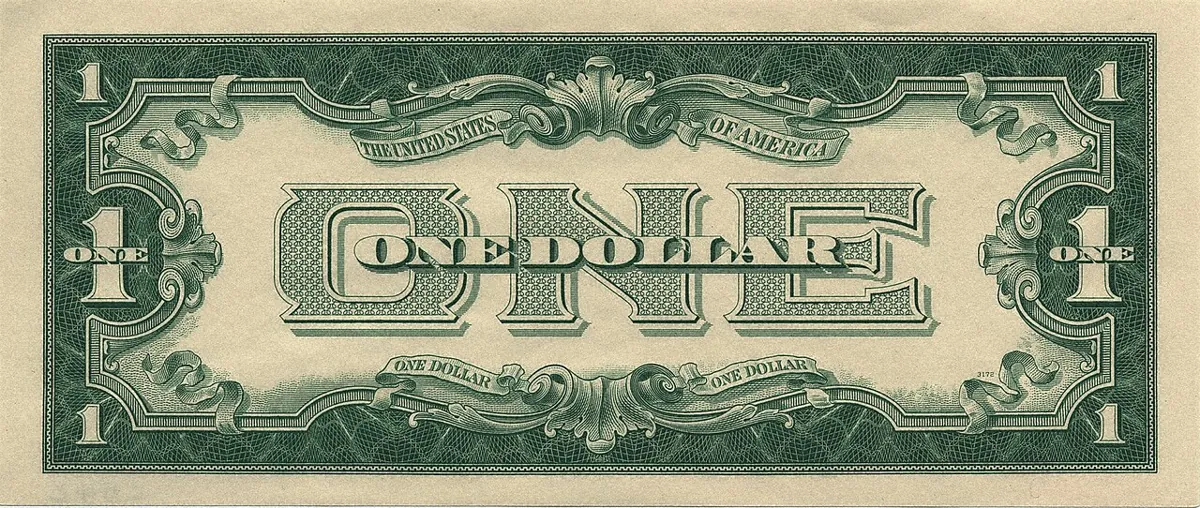
Color conventions shift markedly by context. On the reverse of the United States one-dollar bill, the device appears in monochrome green, a function of printing technology and currency tradition rather than symbolic choice. In ecclesiastical art, gold and blue dominate: gold for divine light, blue for heaven. Contemporary tattoo culture favors high-contrast black linework, often stripped of the triangle entirely, producing an image visually closer to a standalone eye than to the theological original. These variations signal how far a given usage has traveled from the symbol’s doctrinal roots: the further from the triangle and the glory, the more the image functions as cultural shorthand rather than theological statement.
Historical Origins: From Ancient Egypt to Renaissance Christianity
The Eye of Horus and the Eye of Providence: Separating Two Distinct Symbols
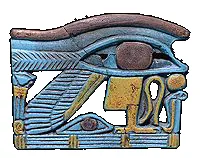
Few conflations in popular iconography are as persistent, or as easily corrected, as the equation of the ancient Egyptian Eye of Horus with the Christian Eye of Providence. The two symbols share a superficial resemblance: both are stylized eyes, and both carry connotations of divine watchfulness. The similarities end there. The Wedjat, as Egyptologists properly call it, was a protective amulet associated with the falcon-headed god Horus and, by extension, with the sun and moon as cosmic eyes. Its distinctive markings, the teardrop and spiral beneath the eye, are specific to Egyptian artistic convention and carry no geometric relationship to the equilateral triangle that frames the later Christian symbol. In funerary practice, Wedjat amulets were placed on mummies to ensure safe passage into the afterlife; the theology was one of protection and restoration, not omniscient surveillance. The Eye of Providence, by contrast, emerged from a monotheistic framework in which a single, all-knowing God observes human conduct. The triangle enclosing it represents the Holy Trinity, Father, Son, and Holy Spirit, a doctrinal concept that has no parallel in the Egyptian religious system. Treating these two symbols as the same thing, or as stages in a single continuous tradition, misrepresents both cultures’ religious histories.
The Eye in Christian Art Before Freemasonry
The concept of a watching divine eye reaches back well before Christianity. In Greek literature, the phrase “the eye of Zeus” appears as a metaphor for divine omniscience, the idea that no human action escapes the notice of the gods is a recurring motif in Hesiod and later Stoic philosophy. What distinguishes the Christian development is the systematic fusion of that concept with Trinitarian geometry. By the late medieval period, the equilateral triangle had become a standard shorthand for the Trinity in European ecclesiastical art, appearing in illuminated manuscripts, cathedral stonework, and devotional woodcuts centuries before the founding of the first Grand Lodge in London on June 24, 1717.
Datable examples of the eye-within-triangle motif in Christian contexts are not difficult to find. The Flemish painter Pontormo included a radiant eye in a triangular glory in his Supper at Emmaus (1525), now in the Uffizi. Jacopo Pontormo’s work predates Speculative Freemasonry by nearly two centuries. More systematically, the Council of Trent (1545-1563), convened to consolidate Catholic doctrine against the spread of Protestantism, generated a wave of Counter-Reformation devotional imagery in which the Eye of Providence functioned as a direct statement of God’s omniscience and the Church’s authority. The symbol spread across church ceilings, catechism illustrations, and altar paintings throughout Catholic Europe during the late sixteenth and seventeenth centuries. By the time operative stonemasons’ guilds began transitioning into speculative lodges in the early eighteenth century, the All-Seeing Eye symbolism was already a well-established piece of Christian visual vocabulary, not an invention of the fraternity, but a borrowing from it.
The All-Seeing Eye in Freemasonry: Ritual Meaning and Fraternal Context
The Great Architect of the Universe and the Eye’s Theological Role
Freemasonry’s adoption of the Eye of Providence is traceable to a specific moment in the fraternity’s literary history. Thomas Smith Webb’s Freemason’s Monitor, published in 1797, describes the symbol explicitly as the “All-Seeing Eye of God”, a reminder that a Mason’s every action falls under divine observation. Webb was not introducing a novelty; he was codifying a symbol that had already migrated from Christian devotional art into the visual grammar of the early American fraternity. What the Monitor did was fix its meaning in print, and that meaning was unambiguously theological.
The theological framework that gives the symbol its context is the Masonic concept of the Grand Architect of the Universe, often abbreviated in lodge literature as G.A.O.T.U. This is a deliberately non-denominational designation for the deity that Masonic ritual requires members to acknowledge, without prescribing which deity that must be. A Christian Mason understands the Grand Architect as the God of Scripture; a Jewish Mason as the God of the Torah; a Muslim Mason as Allah. The Eye of Providence functions as the visual shorthand for this shared but undefined divine presence, a symbol capacious enough to carry monotheistic meaning across confessional lines. Masonic ritual literature is consistent on this point: the Eye does not represent a particular religion’s god, a secret hierarchy, or any occult power structure. It represents omniscience in the moral sense, the idea that conduct matters because it is always observed.
The Eye in Masonic Regalia and Lodge Décor
Within the physical culture of Freemasonry, the Eye of Providence appears in several distinct contexts, each reinforcing the same symbolic logic. On tracing boards, the painted or printed instructional diagrams used to illustrate degree lectures, the Eye typically appears at the apex of a triangle or radiating with light from above, situating it as the highest point in a symbolic hierarchy. It recurs on aprons, the fraternity’s most personal piece of regalia, where its placement serves as a constant personal reminder of moral accountability. In the lodge room itself, the most significant placement is in the east, above or near the Worshipful Master’s chair. The east holds a consistent symbolic value across Masonic ritual: it is the direction of rising light, the seat of wisdom, and the point from which the lodge’s presiding officer, standing in for the sun at its meridian, governs the work. Positioning the Eye there reinforces enlightenment and moral oversight as its operative meanings, not surveillance in any sinister sense. The all-seeing eye masonic tradition, read in this context, is less mysterious than it appears from the outside: it is a piece of working symbolism doing exactly what the ritual texts say it does, in a fraternal setting that has been largely open to scholarly examination since at least the 19th century. The gap between what the symbol means inside a lodge and what popular culture imagines it means is, to put it plainly, considerable.
Christian and Religious Interpretations of the All-Seeing Eye
Within mainstream Christian theology, the Eye of Providence is not a subversive or anti-religious image, it is, in origin, a devotional one. The symbol entered Western sacred art as a straightforward visual shorthand for divine omniscience, and its presence in church architecture and liturgical iconography long predates any Masonic adoption. Understanding that lineage is essential to answering the question of whether All-Seeing Eye symbolism carries an inherently anti-Christian charge, and the historical record answers clearly: it does not.
Biblical References to Divine Watchfulness
Three scriptural passages form the theological backbone of the Eye of Providence’s meaning in Christian art. Proverbs 15:3 states that “the eyes of the Lord are everywhere, keeping watch on the wicked and the good”, a verse that practically invites visual translation. Psalm 33:18 narrows the focus devotionally: “the eye of the Lord is on those who fear him, on those whose hope is in his unfailing love.” Hebrews 4:13 supplies the most comprehensive formulation: “Nothing in all creation is hidden from God’s sight. Everything is uncovered and laid bare before the eyes of him to whom we must give account.” Taken together, these passages established a robust theological warrant for representing God’s watchfulness as a single, all-perceiving eye. Medieval and Renaissance artists working within the Church’s commission did not need to look to esoteric sources; the scriptural justification was already explicit.
Catholic and Protestant Usages
In Catholic tradition, the Eye enclosed within an equilateral triangle became a recognized emblem of the Holy Trinity, the three equal sides representing Father, Son, and Holy Spirit, the eye at the center signifying divine omniscience. This configuration appears in the iconographic programs of hundreds of European churches, from Baroque ceiling frescoes in Rome to Gothic revival facades in Bavaria. The Pontifical’s ceremonial imagery has drawn on the motif for centuries. The symbol was, in short, ecclesiastically sanctioned long before any lodge incorporated it. Protestant usage is less liturgically codified but no less present. Reformed church art and hymnody employed the watching eye as a metaphor for God’s providential care, drawing directly on Psalm 33:18. The difference is largely one of register: Catholic usage tends toward formal iconographic programs, Protestant usage toward illustrative and devotional contexts. The theological meaning, however, is consistent across both traditions.
The confusion about whether the Eye of Providence is a Christian symbol or something more sinister arises almost entirely from its later adoption by Freemasonry, and from the Catholic Church’s historically cautious stance toward the fraternity. Since Pope Clement XII’s papal bull In Eminenti of April 28, 1738, the Church has periodically prohibited Catholic membership in Masonic lodges, a position most recently reaffirmed by the Congregation for the Doctrine of the Faith in 1983. This institutional tension between Catholicism and Freemasonry led some observers to retroactively read the shared symbol as evidence of ideological contamination, a conclusion the chronology does not support. The symbol moved from the Church to the lodge, not the other way around. As for Islamic and Jewish visual traditions, both are broadly aniconic regarding divine representation, so the Eye of Providence is not a native symbol in either. That said, the underlying theological concept maps closely: the Quranic epithet al-Basir, “the All-Seeing”, is one of the ninety-nine names of Allah, and Jewish scripture is equally emphatic about God’s omniscient gaze. The symbol differs; the theology converges.
Want to learn more?
/understanding-masonic-symbols/” title=”Understanding Masonic Symbols”>Masonic symbols explained on this site.”
The All-Seeing Eye on the US Dollar Bill and the Great Seal
Few images in American iconography generate more conspiratorial heat than the unfinished pyramid crowned by a radiant eye on the reverse of the one-dollar bill. The symbol is real, its history is documented, and that history is considerably less dramatic than the theories surrounding it. The Eye of Providence above the pyramid was incorporated into the reverse of the Great Seal of the United States in 1782, designed not by shadowy initiates, but by two men whose names and religious affiliations are a matter of public record.
Who Designed the Great Seal? Setting the Record Straight
The reverse of the Great Seal was the work of Charles Thomson, Secretary of the Continental Congress, and William Barton, a Philadelphia heraldist and lawyer. Neither man was a Freemason. Thomson was a Presbyterian elder; Barton was an Episcopalian. Their design drew on the visual vocabulary of 18th-century Christian iconography, in which the Eye of Providence, God’s watchful omniscience rendered as a single eye within a triangle, had appeared in church architecture, devotional prints, and Protestant theology for well over a century before any American lodge was founded. The choice of the symbol reflected the Enlightenment-era deism prevalent among the founders: a conviction that a providential God observed and guided human affairs, not a coded signal to a fraternal brotherhood.
The pyramid beneath the eye carries its own straightforward symbolism. Its thirteen courses of stone represent the thirteen original colonies, a reading confirmed in Thomson’s own explanatory notes submitted to Congress. The Latin motto arching above the eye, Annuit Coeptis (“He has favored our undertakings”), is drawn directly from Virgil’s Aeneid, Book IX, line 625, a classical literary reference, not a Masonic cipher. The phrase Novus Ordo Seclorum below the pyramid, so frequently cited as evidence of a “New World Order,” translates as “a new order of the ages” and signals the birth of a new republic, a meaning Thomson spelled out explicitly in his 1782 report to Congress.
Perhaps the most telling detail in this entire debate is chronological. The reverse of the Great Seal, including the Eye of Providence above its unfinished pyramid, did not appear on American currency until 1935, when Secretary of the Treasury Henry Morgenthau approved its addition to the one-dollar bill. That is 153 years after the seal’s original design, and the decision was driven largely by the aesthetic enthusiasm of Vice President Henry Wallace, who admired the imagery’s symbolic resonance with the New Deal era. The long gap between design and circulation is not the fingerprint of a secret society operating across generations; it is the mundane result of bureaucratic timing. The seal’s reverse had simply never been used on an official printed document before Wallace and Morgenthau brought it to paper currency, a fact that the Department of State’s Bureau of Public Affairs has confirmed in its published history of the Great Seal.
The All-Seeing Eye vs. the Evil Eye and the Hamsa: Comparative Symbolism
The eye is one of the most ancient and cross-cultural of human symbols, which is precisely why three very different traditions end up being conflated in popular conversation. The Eye of Providence, the Nazar amulet, and the Hamsa all deploy the eye motif to invoke watchfulness, but their cultural origins, theological meanings, and ritual functions are entirely distinct. Lumping them together because they share a visual element is roughly equivalent to arguing that a church steeple and a minaret are the same building because both point upward.
| Symbol | Cultural Origin | Primary Meaning / Function | Religious Tradition | Connection to Freemasonry |
|---|---|---|---|---|
| Eye of Providence | Renaissance Christian Europe; ancient Egyptian antecedents | Divine omniscience; God’s benevolent, all-seeing gaze | Christian (Catholic and Protestant iconography) | Adopted into Masonic symbolism by the late 18th century |
| Nazar (Evil Eye Bead) | Mediterranean and Middle Eastern cultures; Turkey, Greece, Iran | Apotropaic deflection of the “evil eye” curse caused by envious gaze | Folk tradition across Islam, Eastern Orthodoxy, and secular practice | None documented |
| Hamsa | North Africa and the Levant; ancient Near Eastern roots | Protective amulet against harm and the evil eye | Islam (Hand of Fatima), Judaism (Hand of Miriam), Berber tradition | None documented |
The Nazar: Deflecting the Gaze, Not Representing It
The Nazar, that cobalt-blue glass bead ubiquitous in Turkish bazaars and now available as a smartphone emoji (🧿), operates on a fundamentally different logic than the Eye of Providence. The latter symbolizes a benevolent divine gaze looking down upon humanity; the Nazar is designed to intercept and neutralize a malevolent gaze directed by a human. The concept of the evil eye, harm caused by envious or ill-wishing looks, is documented across Mediterranean and Middle Eastern cultures for millennia, appearing in ancient Sumerian texts and in the writings of Plutarch. The Nazar is an apotropaic amulet: it wards off a curse. It carries no documented connection to All-Seeing Eye symbolism as it developed in Christian or Masonic contexts, and the 🧿 emoji, for all its popularity, represents this Turkish folk amulet, not the Eye of Providence, not any Masonic emblem.
The Hamsa: A Palm Raised Against Harm
The Hamsa is a palm-shaped amulet, typically depicted with an eye at its center, found across Islamic, Jewish, and North African Berber traditions. In Islamic practice it is known as the Hand of Fatima, referencing the daughter of the Prophet Muhammad; in Jewish tradition it is called the Hand of Miriam, after the sister of Moses. Both names point to the same protective function: shielding the bearer from the evil eye and general misfortune. Scholars of material religion, including those working within the framework of the Israel Antiquities Authority‘s documented artifact collections, trace the Hamsa’s form to pre-Abrahamic Near Eastern protective imagery. Like the Nazar, it belongs to folk protective magic rather than systematic theology, and no Masonic ritual or documented lodge practice has ever incorporated it. The shared eye motif across all three symbols reflects a universal human intuition, that eyes perceive and that perception carries power, but intuition is not genealogy. These are parallel developments, not a single tradition wearing different costumes.
Conspiracy Theories, the Illuminati, and the Modern Misreading of the Symbol
A Timeline of the Symbol’s Adoption Across Cultures and Institutions
The most effective rebuttal to any conspiracy narrative is chronology. The Eye of Providence has a documented paper trail stretching back centuries before the organizations most often accused of weaponizing it even existed. Jacopo Pontormo’s 1525 fresco in the Capponi Chapel in Florence depicts a radiant eye within a triangle as straightforwardly Christian iconography. By the late 15th and early 16th centuries, the motif appeared routinely in European church art, woodcuts, and devotional manuscripts, always as a representation of divine omniscience, never as a fraternal emblem. The 1782 Great Seal of the United States, designed by Charles Thomson and William Barton, placed the Eye of Providence above an unfinished pyramid; Thomson’s own notes record the meaning plainly: “the Eye of Providence watching over our new nation.” Thomson was not a Freemason. The symbol reached Thomas Smith Webb’s Freemasons’ Monitor only in 1797, fifteen years after the Great Seal and more than a decade after the Bavarian Illuminati had already been dissolved by government decree. The dollar bill did not carry the reverse of the Great Seal until 1935, when Secretary of Agriculture Henry Wallace, on aesthetic, not esoteric, grounds, recommended its inclusion to President Roosevelt. That is a 153-year gap between the seal’s design and its mass-circulation appearance, which leaves no room for a coordinated secret-society campaign.
The Bavarian Illuminati, founded on May 1, 1776, by Adam Weishaupt, a professor of canon law at the University of Ingolstadt, is the organization most frequently grafted onto this timeline without justification. The Elector of Bavaria banned it in 1785; it had effectively ceased to exist by 1787. Some members held simultaneous membership in Masonic lodges, dual affiliations were common among educated German men of that era, but the Illuminati was never a Masonic body, and the United Grand Lodge of England’s historical records contain no evidence that the two organizations shared doctrine, ritual, or symbols. Weishaupt’s group did not adopt the Eye of Providence as an emblem. The association is a 20th-century invention, not an 18th-century fact.
The All-Seeing Eye in Popular Culture: Music, Film, and Tattoo Culture
If the historical record is clear, popular culture has been considerably less careful. The symbol’s migration into secular aesthetics accelerated sharply across the 20th century: horror and thriller films used the radiating eye as shorthand for surveillance and menace; album artwork in rock, hip-hop, and electronic music borrowed its geometric authority for visual impact with no theological or fraternal intent. Tattoo culture absorbed it as a generically “mystical” design, stripping away whatever specific meaning it once carried. Each adoption was largely innocent of historical context, and each one added another layer of cultural noise that made the original meaning harder to locate. The internet proved decisive: platforms that reward visual pattern-matching over archival research could place a rapper’s album cover, a Masonic lodge frontispiece, and a dollar bill side by side and invite users to draw connections that no primary source supports. The result is what historians of religion call symbol drift, a documented image detaches from its origin context and accumulates meanings its creators never intended. The Eye of Providence did not become a conspiracy emblem because secret societies put it everywhere. It became one because a visually striking symbol, encountered repeatedly in unrelated contexts, is irresistible to a narrative that mistakes coincidence for coordination. Lay out the chronology plainly, 15th-century church fresco, 1782 government seal, 1797 Masonic adoption, 1935 banknote, and the conspiracy narrative collapses under its own arithmetic.
Psychological and Esoteric Interpretations Beyond Freemasonry
The eye as a symbol of divine or cosmic awareness belonged to no single tradition. By the nineteenth century, overlapping esoteric movements had adopted it on their own terms. The Theosophical Society, founded in New York in 1875 by Helena Blavatsky and Henry Steel Olcott, incorporated the eye motif into its syncretic visual vocabulary alongside Egyptian, Hindu, and Western Hermetic imagery. For Theosophists, the symbol expressed universal spiritual perception, a concept drawn from multiple ancient sources, not borrowed from Masonic lodge ritual. The Hermetic Order of the Golden Dawn, active in Britain from 1888 onward, similarly folded the eye into its ceremonial iconography as part of a deliberately eclectic assemblage. Both organizations were self-conscious about that eclecticism; their published documents make clear they were constructing new synthetic frameworks, not transmitting a secret Masonic inheritance. The conflation of these movements with Freemasonry says more about the pattern-matching tendencies of later commentators than about any documented historical link.
A more rigorous framework for understanding why the eye recurs across such disparate traditions comes from analytical psychology. Carl Jung identified the watching eye as an archetypal image, one that surfaces reliably across cultures because it maps onto a universal human experience: the awareness of being observed, and the reflexive capacity to observe oneself. In Jungian terms, the symbol externalizes the faculty of consciousness itself. That is precisely why it appears independently in contexts as different as the Ajna chakra of Hindu and Buddhist tradition, the so-called third eye located at the center of the forehead, and the Eye of Providence in Western Christian art. The Ajna chakra carries its own elaborate symbolic history rooted in Tantric and yogic texts; it shares the eye motif with All-Seeing Eye symbolism of the West, but no documented historical transmission connects the two lineages. What they share is not a common origin but a common cognitive substrate: across cultures, the eye is the organ most immediately associated with awareness, judgment, and presence. That convergence is anthropologically interesting. It is not evidence of a unified secret doctrine.
FAQ
Is the All-Seeing Eye a Masonic symbol?
Yes, but not exclusively. Freemasonry adopted the Eye of Providence in the late 18th century; Thomas Smith Webb’s Freemason’s Monitor (1797) is among the earliest documented sources, framing it as a representation of the Great Architect of the Universe’s omniscience. That adoption, however, came at least three centuries after the symbol had already established itself in Christian ecclesiastical art.
Treating it as a distinctly Masonic emblem misreads the historical record. The fraternity borrowed an existing symbol from a broader visual tradition, it did not invent one.
Why is the All-Seeing Eye on the US dollar bill?
The Eye of Providence appears on the reverse of the Great Seal of the United States, finalized in 1782 by Charles Thomson and William Barton, neither of whom held Masonic membership. The seal’s designers drew on Enlightenment-era concepts of divine providence, not lodge ritual. The image did not appear on the one-dollar bill until 1935, a 153-year gap that makes any theory of coordinated fraternal influence hard to sustain on the evidence.
The symbol reached American currency through a Treasury Department redesign under Henry Morgenthau, not through any organized effort by a secret society.
What does the All-Seeing Eye mean in Christianity?
In Christian iconography, the Eye of Providence, typically set within a triangle representing the Trinity, signifies God’s omniscience and watchful care over humanity. The image draws on scriptural passages including Psalm 33:18 (“the eye of the Lord is on those who fear him”) and Proverbs 15:3. Catholic and Protestant churches incorporated the motif into architecture and devotional art from at least the 15th century onward.
Mainstream Christian theology has not treated the symbol as problematic; its meaning within the tradition is straightforwardly theological rather than esoteric.
Is the All-Seeing Eye a symbol of the Illuminati?
No. The historical Bavarian Illuminati, founded by Adam Weishaupt on May 1, 1776, and dissolved by government decree in 1785, did not use the Eye of Providence as an organizational emblem. No primary documents from the group support that claim. The association is a modern conspiracy narrative, not a historical fact.
The eye motif predates Weishaupt’s organization by centuries, and the Great Seal of 1782 was designed by figures with no connection to the Illuminati. The timeline alone dismantles the theory.
What is the difference between the All-Seeing Eye and the evil eye (Nazar)?
The two are functionally opposite. The Eye of Providence represents a benevolent divine gaze, a watching, protective deity. The Nazar, the blue eye bead common in Turkish and broader Mediterranean cultures, is an apotropaic amulet: an object designed to deflect harm caused by an envious or malevolent gaze directed at the wearer.
They share the eye as a visual motif, but they emerge from entirely different cultural and theological traditions, one rooted in Abrahamic theology, the other in pre-Islamic folk practice, with no documented historical connection between them.
